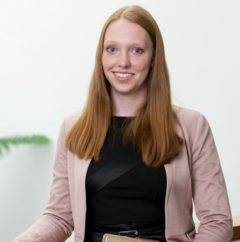
Jennifer Chen is an Associate Professor in the Department of Chemistry at York University's Faculty of Science. She leads a research group focused on designing nanomaterials for optical sensing, biomedical diagnostics, and solar energy conversion , with an emphasis on plasmonic nanostructures and hybrid materials. Research spans analytical, inorganic, and physical chemistry Eligible supervisor for Physics and Astronomy graduate students Key funding: CFI, NSERC, Ontario Research Fund Her work bridges fundamental studies of materials interfaces with applications in healthcare and sustainability. Recent publications explore charge transfer mechanisms and DNA-nanoparticle interactions for biosensing. 2022: J. Mater. Chem. A on Mn-doped quantum dots 2020: Analyst and ACS Appl. Nano Mater. on DNA-based sensing 2018: JPCC on interfacial charge dynamics 2013: JACS on plasmonic microRNA detection Major awards include the Canadian Society for Chemistry Fred Beamish Award (2019), Nano Ontario Early-Career Award (2018), and Top 40 Under 40 Analytical Scientist (2018). Her group has trained 15+ graduate students, including PhD graduates Brian and Anthony.
Dr Ian Davidson is a Senior Research Fellow at the Optoelectronics Research Centre (ORC), University of Southampton, Faculty of Engineering and Physical Sciences. He is a key researcher in the Hollow-Core Fibre group, focusing on advanced optical fibre fabrication, characterization, and application in photonic systems. His research interests include: Hollow-Core Fibre Technology Micro-Structured Optical Fibres Photonics and Quantum Optics Semiconductor Deposition and Integrated Optics Optical Fibre Sensing and Raman Spectroscopy Fibre-Based Gas Dynamics and Pressure Sensing Dr Davidson's recent publications (2022–2025) demonstrate a strong trend in developing next-generation hollow-core fibres with enhanced stability, reduced loss, and novel functionalities for applications in sensing, spectroscopy, and laser delivery. His work spans high-impact journals such as Science Advances , Optics Express , ACS Photonics , and IEEE Journal of Selected Topics in Quantum Electronics , reflecting his leadership in the field of optical fibre innovation. He currently supervises PhD students Elizaveta Elistratova and Abhishek Vijayakumar, contributing to training the next generation of photonics researchers. No scientific awards or prizes are currently listed in the provided text. Dr Davidson collaborates extensively within the ORC and with external partners on projects involving fibre fabrication, gas dynamics, and photonic device integration. He has no listed teaching responsibilities, but his research supervision plays a central role in academic mentorship. He is affiliated with advanced research infrastructure at the Optoelectronics Research Centre, a world-leading institute in photonics.
Amir Farokh Payam is a Senior Lecturer in Electronics and Software at the School of Engineering, Ulster University, UK since 2019. He holds a PhD in Electronics Engineering-Nanotechnology and has previously worked at Instituto de Ciencia de Materiales de Madrid (2012–2015), Durham University (2016–2018), and University of Bristol (2018–2019). Education: B.Sc. and M.Sc. in Electrical and Electronics Engineering, PhD in Electronics Engineering-Nanotechnology His research focuses on dynamic Atomic Force Microscopy (AFM) , NEMS/MEMS , Surface Science , and Applied Nonlinear Control . Recent work explores nonlinear harmonics in AFM, solid-liquid interfacial dynamics, and single-cell biomechanical profiling. He leads projects on quantum sensor fabrication and cancer cell viscoelasticity analysis. Key trends in his 15 most recent publications (2025–2023) include advancements in nanoscale imaging , multifrequency AFM , viscoelastic material analysis , and biomedical applications such as viral protein sensing and corneal cell profiling. Collaborative projects span institutions in Ireland, Spain, and the UK. Scientific Awards: Editor's Highlights in Journal of Applied Physics (2018) and Nanotechnology (2015) Best Innovative Idea, Second International R&D Award of Iran (2012) Distinct Graduate Student, University of Tehran Visiting Study Scholarship, Instituto de Microelectronica de Madrid (2010) M.Sc. First Class Student (top among 15) He serves as Unit Director for Mechatronics II and Electronics II modules and supervises BEng/MEng research projects. Active research grants include Royal Society funding (2024–2026) for cancer cell biomechanics and an ongoing 2022–2026 project on solid-liquid interface dynamics.
Gábor Magyarfalvi is an Assistant Professor and Lecturer at Eötvös Loránd University, affiliated with both the Institute of Chemistry and the Department of Inorganic Chemistry. His office is located at 1117 Budapest, Pázmány Péter sétány 1/a. (Room 542), and he can be contacted via email at gmagyarf@elte.hu or phone extension 6587. His research focuses on physical and inorganic chemistry, with specialization in spectroscopy, astrochemistry, and computational methods. Key areas include matrix isolation techniques for studying interstellar molecule formation (e.g., H 2 catalysis via polyaromatic hydrocarbons), photochemical generation of reactive intermediates, and conformational dynamics of biomolecules. His work extensively employs low-temperature matrix isolation coupled with laser spectroscopy and quantum chemical calculations. Magyarfalvi's publications demonstrate consistent themes: 60% focus on low-temperature photochemistry and spectroscopy of small molecules (e.g., nitrogen/sulfur compounds, amino acids), 30% on peptide/protein conformational analysis using vibrational circular dichroism (VCD) and NMR, and 10% on methodological developments in computational chemistry. Recent works increasingly explore astrochemistry and quantum tunneling phenomena.
Wenbin Lu is an Assistant Professor in the Department of Astronomy at the University of California Berkeley, where he conducts theoretical research on high-energy transient phenomena. He is also affiliated with the Theoretical Astrophysics Center at UC Berkeley. PhD in Astronomy, University of Texas at Austin (2018) Bachelor in Physics, Peking University (2013) Professor Lu specializes in extreme astrophysical events that serve as natural laboratories for studying physics under conditions of high energy density, strong gravity, and intense magnetic fields. His work integrates multiple physical domains including plasma physics, relativistic hydrodynamics, radiative transfer, and stellar dynamics. He maintains active collaborations with researchers worldwide and encourages student involvement in his projects. Analysis of his recent publications reveals a strong focus on tidal disruption events and fast radio bursts, with increasing emphasis on multi-messenger approaches and theoretical modeling of observational data from facilities like JWST, Chandra, and radio telescopes. His work demonstrates consistent theoretical innovation in explaining complex transient phenomena. Burke Fellow at Caltech (2018-2021) Lyman Spitzer Fellow at Princeton University (2021-2022) Professor Lu actively mentors students and postdocs, with many projects originating from discussions with junior researchers. He teaches courses in Radiation and Stars at UC Berkeley. His research is supported by multiple grants that enable computational modeling and observational collaborations across various wavelengths. His theoretical work often involves complex numerical simulations of astrophysical phenomena, particularly focusing on the hydrodynamic evolution of stellar debris in tidal disruption events and plasma processes in fast radio burst emission mechanisms.
Dr. John W. McClory is a Professor of Nuclear Engineering at the Air Force Institute of Technology (AFIT) , where he has been affiliated since 2008. He serves as the Director of Nuclear Expertise for the Advancing Technology (NEAT) Center, Director of the Nuclear Weapons Effects Graduate Certificate Program, and holds the AFTAC Endowed Term Chair for Materials. His academic career spans military service as a former Army officer and teaching at the United States Military Academy. Education : Ph.D. in Nuclear Engineering (AFIT, 2008), M.S. in Physics (Texas A&M, 1993), B.S. in Physics (Rensselaer Polytechnic Institute, 1984) Dr. McClory’s research focuses on radiation effects on military electronics , nuclear forensics , and nuclear weapon proliferation . His work includes neutron detection , scintillator development , and radiation transport modeling , with applications in nuclear security and materials science . His recent publications emphasize radiation-hardened materials , computational modeling of nuclear effects , and machine learning applications in nuclear forensics . Collaborative projects span neutron spectroscopy , high-power microwave detection , and radiation-induced defect analysis in semiconductors. Scientific Awards : MOAA AFIT Outstanding Military Professor (2010) Dr. Leslie M. Thornton Teaching Excellence Award (2011) Military Legion of Merit (2012) Dean's Distinguished Teaching Professor Award (2019) Ohio Magazine Excellence in Education Honoree (2013) Dr. McClory has advised 22 PhD and 41 MS students and secured 25 research grants . He leads the NEAT Center and contributes to nuclear weapons effects curriculum and AFTAC materials research .
Carson Slabaugh is an Assistant Professor in the Department of Aeronautics and Astronautics and holds a courtesy appointment in the Department of Mechanical Engineering at Purdue University. His research focuses on advanced propulsion systems, particularly combustion dynamics in rotating detonation engines (RDEs), rocket combustors, and ramjet configurations. He leads studies on high-pressure flames, laser diagnostics, and fuel injection mechanisms. Key research areas include detonation wave propagation, pressure gain combustion, and the application of advanced optical diagnostics (e.g., CARS, PLIF) to study transient phenomena in extreme environments. His work addresses challenges in next-generation propulsion systems, including hydrogen-blend fuels, methane-oxygen rocket ignition, and solid-fuel ramjet performance. Recent studies emphasize geometric optimization of RDEs, fuel injection dynamics under detonation conditions, and the impact of flow parameters on combustion stability. Collaborations involve experimental validation with high-speed imaging and computational fluid dynamics (CFD) modeling to bridge theoretical predictions with real-world performance. Slabaugh’s laboratory develops novel diagnostic tools for megahertz-rate imaging of mixing and combustion processes, advancing understanding of transient flame structures and instability mechanisms. His contributions aim to improve efficiency and operability of propulsion systems for aerospace and terrestrial applications.
Prof. Dr. Sebastian Schlücker is a full professor in the Department of Physical Chemistry at the University of Duisburg-Essen , where he leads the Molecular Biophotonics and Nanodiagnostics research group within the Faculty of Chemistry. He is actively engaged in research, teaching, and academic leadership, with a strong focus on advanced spectroscopic techniques for biomedical and analytical applications. His research interests lie at the intersection of nanophotonics, plasmonics, and bioanalytical chemistry . Key areas include surface-enhanced Raman spectroscopy (SERS) , single-particle spectroscopy , laser diagnostics , and the design of functionalized metal colloids for biosensing and tumor diagnostics. He emphasizes a theory-guided approach combining simulation and experiment to tailor nanoparticle properties. His recent publications (2023–2025) reflect a strong trend toward quantitative, label-free molecular diagnostics , point-of-care testing , and in situ monitoring of catalytic and biological processes . The work spans fundamental plasmonics to clinical applications, particularly in cancer detection and immunoassays using SERS nanotags. International Raman Innovation Prize He mentors students and researchers, supervises theses, and collaborates widely across disciplines. His group develops advanced instrumentation, including portable SERS readers , fs-laser laboratories , and automated nanoparticle synthesis systems (e.g., BONAPARTE robot). He teaches master’s courses such as NanoBioPhotonics and Optical Spectroscopy , and is involved in STEM outreach.
Zachary Aman is a Professor in the School of Engineering , Chemical Engineering department at the University of Western Australia . His research focuses on gas hydrates , flow assurance , and subsea pipeline management , with applications in petroleum engineering and hydrocarbon processing . Research Output: 127 publications Grants: 53 funded projects H-index: 39 Research interests include: Hydrate formation kinetics and rheology Subsea flowline stability and inhibition Hydrocarbon separation under high-pressure Novel composite materials and ionic liquids for hydrate management Article Trends highlight his work on hydrate probability models , flowloop experiments , and environmental applications like oil spill modeling and CO 2 capture. His recent work explores nanostructured additives and transient simulation tools for energy and environmental systems. Grants and Supervision reflect 53 funded projects and 19 supervised works, indicating active mentorship and industry collaboration.
David Cory is a Professor and Canada Excellence Research Chair Laureate in Quantum Information Processing at the University of Waterloo's Department of Chemistry. He is affiliated with the Institute for Quantum Computing and the Waterloo Institute for Nanotechnology. His research focuses on quantum information science, neutron interferometry, structured light applications, and spin systems. Cory's work bridges quantum physics, materials science, and biomedical imaging, with contributions to quantum control, entanglement, and advanced neutron beam technologies. He has pioneered methods for generating structured neutrons and developing quantum measurement devices, including phase grating neutron interferometers. Scientifically, Cory has advanced quantum simulations of mesoscopic systems, explored thermal state structures in quantum models, and applied structured light for biomedical diagnostics. His recent articles highlight innovations in neutron Airy beam generation, robust micro-macro entanglement, and psychophysical studies of light perception. Awards include the Canada Excellence Research Chair, recognizing his leadership in quantum technologies. Awards: Canada Excellence Research Chair Laureate in Quantum Information Processing Labs/Teams: Institute for Quantum Computing, Waterloo Institute for Nanotechnology
Paul Midgley is the Professor of Materials Science at the University of Cambridge , affiliated with the Department of Materials Science & Metallurgy . His research focuses on advancing electron microscopy techniques for nanoscale structural analysis. BSc, MSc, PhD from the University of Bristol Research Interests: Development of 3D electron tomography, precession electron diffraction (PED), and multi-dimensional imaging techniques to study materials at atomic and nanoscale resolutions. Applications span semiconductor nanowires, catalysts, pharmaceuticals, and metal-organic frameworks (MOFs). Notable Trends: Recent work emphasizes nanoscale heterogeneities in halide perovskites, mechanochemical amorphisation of MOFs, and structural analysis of pharmaceutical formulations using 3D electron diffraction. Collaborations integrate machine learning and advanced reconstruction algorithms. Scientific Awards: Fellow of the Royal Society (FRS) Honorary Fellow of the Royal Microscopical Society (HonFRMS) MAE (Materials Ageing and Environment) Award Labs & Teams: Leads the Electron Microscopy Group at Cambridge. Research involves dual beam SEM-FIB, EDX, and EBSD techniques for mesoscale tomography. Collaborates with institutions in the UK, Europe, and globally.
Prof. Dr. Ulrich Kleinekathöfer is a Full Professor of Theoretical Physics at Constructor University (formerly Jacobs University Bremen) in the School of Science. His research focuses on computational physics and biophysics, particularly on light-harvesting complexes, membrane transport, and quantum dynamics in biological systems. He leads the Computational Physics and Biophysics research group and coordinates the MSCA Doctoral Training Network "PhotoCaM". His educational background includes: PhD from Max-Planck-Institut für Strömungsforschung, Göttingen (1996) Diploma in Physics from Universität Göttingen (1993) Habilitation in Physics from Technische Universität Chemnitz (2002) Prof. Kleinekathöfer's research spans multiple areas of computational biophysics and theoretical physics. His primary interests include excitation energy transfer in light-harvesting complexes , molecular transport through membrane channels and nanopores , and quantum dynamics in open systems . His group develops and applies advanced computational methods including molecular dynamics simulations, quantum chemistry calculations, and machine learning approaches to study these phenomena. A significant portion of his work focuses on photosynthetic systems, particularly how energy is transferred and converted in natural light-harvesting complexes, with implications for renewable energy technologies. His recent publications demonstrate a strong trend toward integrating machine learning with traditional computational methods, particularly in the fields of quantum chemistry and molecular dynamics. There's a clear focus on multifidelity approaches that balance computational efficiency with accuracy. His work spans from fundamental quantum dynamics to applied research on antibiotic transport mechanisms, showing remarkable breadth while maintaining depth in computational methodology development. His notable recognition includes: Tan Chin Tuan Exchange Fellowship, NTU Singapore (2019) Prof. Kleinekathöfer has supervised numerous PhD students and postdoctoral researchers, with a current group comprising several PhD candidates and research associates. His research is supported by multiple funding sources including the Deutsche Forschungsgemeinschaft (DFG), European Union through MSCA Doctoral Network PhotoCaM, and previously through the Innovative Medicines Initiative "Translocation" and Marie Curie Training Program "Translocation". His collaborative network spans internationally, with partnerships at institutions in Germany, USA, Greece, and Switzerland. The Computational Physics and Biophysics Group operates within Constructor University's research infrastructure, utilizing high-performance computing resources for their simulations. The group maintains active collaborations with experimental groups to validate and inform their computational models, creating a strong interdisciplinary research environment focused on understanding fundamental biophysical processes at the molecular level.
Matthew R. Edwards is an Assistant Professor of Mechanical Engineering at Stanford University, affiliated with the School of Engineering. His research focuses on high-power lasers and plasma physics, developing optical diagnostics for fluids and plasmas, and exploring light-matter interactions. He holds a PhD and prior degrees from Princeton University in Mechanical and Aerospace Engineering, followed by a Lawrence Fellowship at Lawrence Livermore National Laboratory. Education : PhD in Mechanical and Aerospace Engineering, Princeton University (2019) MA in Mechanical and Aerospace Engineering, Princeton University (2015) BSE in Mechanical and Aerospace Engineering, Princeton University (2012) Research Interests : Edwards' work bridges mechanical engineering and plasma physics, emphasizing ultrafast laser-plasma interactions, plasma-based optical components, and applications in energy science. His lab, the SAPPHIRE Laser Laboratory, explores femtosecond laser technologies for creating novel optical elements (e.g., plasma gratings, holographic lenses) and advancing laser-driven particle acceleration, fusion research, and diagnostic tools. Key areas include: Design of plasma-based optical components for high-power laser control Simulation of laser-matter interactions at relativistic intensities Development of compact light and particle sources Research Trends : His recent articles (2024–2025) highlight advancements in plasma gratings, relativistic birefringence, and laser wakefield acceleration. Notable contributions include ionization-based compression of ultrafast laser pulses and polarization control in underdense plasmas. Awards/Grants : No awards explicitly listed, but his Lawrence Fellowship indicates prior recognition. His work aligns with grants in plasma physics and laser technology. Labs/Teams : He leads the SAPPHIRE Laser Laboratory , collaborating with the PULSE Institute and National Ignition Facility (NIF) on plasma optics and high-energy laser applications.
Prof. Carolin Müller is an Assistant Professor of the Theory of Electronically Excited States at Friedrich-Alexander-University Erlangen-Nürnberg (FAU), leading the Computational PhotoChemistry (CPC) group since November 2023. Her research focuses on quantum chemistry, chemoinformatics, and spectroscopy, aiming to develop efficient computational methods for predicting light-driven chemical processes. She holds a PhD from Friedrich Schiller University Jena (2021) and postdoctoral experience at the University of Luxembourg (2022–2023) and Friedrich Schiller University Jena (2021–2022). Her work emphasizes machine learning integration for optimizing photochemical reactions and designing photocatalysts. Key achievements include contributions to the TEA Challenge 2023 on machine learning force fields and developing the SpaiNN model for excited-state simulations. Awards include the Thuringian Research Award (2023) and the Albert-Weller Award (2022). Research Interests: Light-driven processes, molecular design, excited-state dynamics, computational chemistry. Publications: Over 50 peer-reviewed articles, including high-impact contributions on machine learning in chemistry and photocatalytic systems. Grants/Awards: Multiple accolades for her innovative work in chemical compound space exploration and photocatalysis. Labs/Teams: CPC group at FAU, collaborating with institutions like the University of Luxembourg and Jena. Müller actively promotes interdisciplinary collaboration through conferences (e.g., Chemical Compound Space Conference 2026) and mentoring initiatives like the ARIADNE program.
Prof. Dr. Kai Tittmann is a Professor at the University of Göttingen and MPI-NAT Fellow leading the Department of Molecular Enzymology within the Göttingen Center of Molecular Biosciences (GZMB). His research is based at the Albrecht-von-Haller-Institute for Plant Sciences at the University of Göttingen. Professor Tittmann's research focuses on the molecular reaction mechanisms of enzymes (biocatalysts). His work particularly emphasizes enzymes with vitamin-derived cofactors , metal ions , and Schiff base-forming enzymes . His laboratory employs a multidisciplinary approach combining high-resolution X-ray crystallography , steady-state and transient kinetic methods , NMR spectroscopy , and theoretical studies to characterize enzyme reaction intermediates. The knowledge gained from these mechanistic studies is directly applied to redesign enzymes for biocatalytic applications and drug design . This translational approach bridges fundamental biochemical understanding with practical applications in biotechnology and medicine. His work contributes significantly to the scientific community at the intersection of structural biology, enzymology, and biocatalysis.