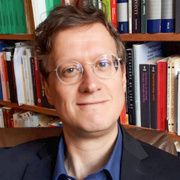
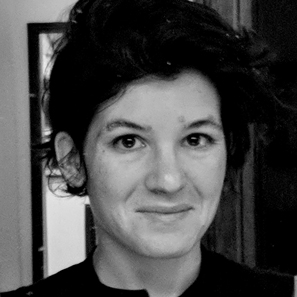
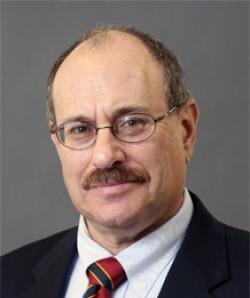
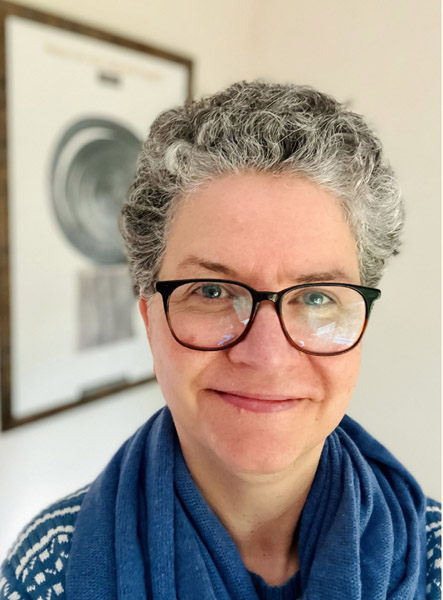
Prof. Dr. Oliver Müller is a Professor at the Department of Philosophy, University of Freiburg, and serves as Vice Dean of the Faculty of Philosophy. His academic journey includes a doctorate from Humboldt University Berlin (2005) and a habilitation in Philosophy (2012). Müller leads research on Philosophical Anthropology, Philosophy of Technology, and Ethics, with a focus on human-machine interactions and Anthropocene ethics. He supervises doctoral and postdoctoral researchers across projects like livMatS and BrainLinks-BrainTools. Research interests span neuroethics, transhumanism, and socio-technological systems, emphasizing ethical frameworks for emerging technologies. Publications explore AI ethics, drone warfare, and phenomenological embodiment, reflecting interdisciplinary engagement with neuroscience and environmental philosophy. Honors include the MTZ Bioethics Award and Heisenberg Fellowship. Müller directs participatory discourse initiatives bridging art and science, fostering public engagement with technological ethics. His work advances critical dialogues on human enhancement and ecological responsibility in the digital age.
Professor Stephen Cave is the Academic Director of the Leverhulme Centre for the Future of Intelligence (CFI) and Co-Director of the Institute for Technology and Humanity at the University of Cambridge. With a PhD in Philosophy from Cambridge, he previously served as a policy advisor and diplomat in the British Foreign Office for nearly a decade before returning to academia. Education: PhD in Philosophy, University of Cambridge Current Roles: Academic Director (CFI), Co-Director (Institute for Technology and Humanity) Media Engagement: Regular contributor to Financial Times , Guardian , New York Times , and media appearances on BBC and NPR His research bridges philosophy and ethics of technology , with two primary strands: (1) the ethics of AI and robotics , focusing on responsible AI development and societal impact through works like AI Narratives and Feminist AI ; and (2) the ethics of life-extension and immortality , explored in Immortality and Should You Choose to Live Forever? . Recent publications analyze algorithmic fairness, gender representation in AI narratives, and digital death. The articles listed reflect his engagement with responsible AI frameworks , cultural portrayals of AI , and existential implications of life extension . His work often synthesizes historical, ethical, and cultural perspectives to address contemporary challenges in AI governance and mortality philosophy.
Anya Bernstein is a Professor of Anthropology at Harvard University, affiliated with the Committee on the Study of Religion and the Department of Anthropology. Her research focuses on speculative futures, science/technology interfaces, religion, and death/immortality studies. She holds a BS in Linguistics (Georgetown), MA in Visual Anthropology (University of Manchester), and PhD in Anthropology (NYU). Currently on leave during AY 2025-26, she leads the Human Futures project funded by the Research Council of Norway. Key research themes include transhumanist immortality movements in Russia, Buryat Buddhist revitalization, and Pleistocene Park's ecological engineering. Her books Religious Bodies Politic (2013) and The Future of Immortality (2019) received major academic awards. Notable projects include ethnographic films like In Pursuit of the Siberian Shaman and ongoing work on Arctic ecosystem restoration. Grants include National Science Foundation, Fulbright, and Mellon Fellowships. Her work bridges anthropology of religion, sci-tech studies, and environmental humanities, with 30+ peer-reviewed articles in top journals like American Ethnologist and Cultural Anthropology .
Gina Stamm is an Associate Professor of French at the University of Alabama, Department of Modern Languages & Classics. Her work bridges environmental humanities, speculative literature, and queer/feminist theory, focusing on 20th-21st century French and francophone Caribbean literature. PhD in French, Emory University (2016), with certificates in Psychoanalytic Studies and Comparative Literature MA in French, Miami University (2010) Stamm specializes in ecocritical analysis , examining how surrealism, feminist utopias, and post-exotic literature engage with ecological crises. Her research spans topics like queer ecology , vegetal transhumanism , and postcolonial environmental trauma , often through interdisciplinary lenses combining psychoanalysis and postcolonial theory. Recent publications explore intersections of racial capitalism , intergenerational trauma , and botanical agency in francophone Caribbean contexts. She actively translates works like Antoine Volodine's Songes de Mevlido and participates in podcasts such as ASLE EcoCast, discussing plant-oriented critical theory and speculative narratives. Her scholarship contributes to evolving frameworks in ecopoetics , nonhuman subjectivity , and decolonial environmentalism , with affiliations to academic institutions in France and the Caribbean.
Swiss Federal Institute of Technology in LausanneSwitzerland
Yuval Noah Harari is a historian, philosopher, and lecturer at the Department of History at the Hebrew University of Jerusalem. Born in Haifa, Israel in 1976, he received his PhD from the University of Oxford in 2002. He is best known as the author of the internationally acclaimed books Sapiens: A Brief History of Humankind (2014), Homo Deus: A Brief History of Tomorrow (2016), 21 Lessons for the 21st Century (2018), Nexus: A Brief History of Information Networks from the Stone Age to Artificial Intelligence , and the Unstoppable Us children's series. Harari's research focuses on macro-historical questions including the relationship between history and biology, the essential difference between Homo sapiens and other animals, justice in history, historical directionality, human happiness throughout history, and the ethical questions raised by science and technology in the 21st century. His work bridges history, biology, philosophy, and economics, taking both macro and micro perspectives to understand not only what happened and why, but also how it felt for individuals. His books have sold over 45 million copies in 65 languages, with Sapiens alone selling 25 million copies since its publication. He is considered one of the world's most influential public intellectuals today. Harari has given keynote speeches at major international forums including the World Economic Forum in Davos and has presented as a digital avatar in a TED talk. Sapiens spent 96 consecutive weeks in the top 3 of the Sunday Times bestseller list Co-founded Sapienship, an international social impact company focused on education and storytelling, with his husband Itzik Yahav Regularly speaks at major international events on topics of technology, history, and the future of humanity Harari's recent work focuses on the challenges of the information age, particularly the crisis of truth and trust in an era of disinformation and artificial intelligence. He explores how humans can navigate the complex ethical questions raised by emerging technologies while maintaining democratic values and human dignity.
Sara Martín Alegre is a Professor in the Department of English and German Studies at the Autonomous University of Barcelona (UAB). She specializes in Gender Studies, Science Fiction, and Cultural Analysis, with a focus on posthumanism and masculinity in media. Her research explores themes such as gender fluidity, AI ethics, and the intersection of popular culture with academic discourse. She has directed numerous research projects and supervised doctoral theses, including works on human-eating monsters in film and transhumanism in literature. Her teaching includes courses on contemporary Anglophone literature, gender studies, and Victorian literature. She actively collaborates in publishing initiatives, such as e-books with students and academic monographs on topics like masculinities in cinema and science fiction. Her work bridges traditional literary analysis with modern digital humanities, emphasizing the role of popular fiction in academic exploration. Award-winning scholar and author, her contributions include monographs like *Detrás de la máscara: masculinidades americanas en el documental contemporáneo* (2023) and edited volumes on topics ranging from children in cinema to 21st-century miniseries. Her research highlights the sociopolitical implications of gender representation in media, from Shakespearean adaptations to modern science fiction narratives.
Mehdi Achouche is an Associate Professor at Sorbonne Paris Nord University (USPN), where he focuses on film and television studies with an emphasis on science fiction and utopian narratives . His academic affiliations include the Pléiade Research Center (Multidisciplinary Research in Literature, Languages, Human Sciences, and Society) and the IdA (Institut des Amériques) as a representative of USPN. Education: PhD in Film Studies (2011) from Université de Grenoble Current Role: Teaching and research at Sorbonne Paris Nord University His research explores technological progress , transhumanism , and technological utopianism in American popular culture, particularly analyzing representations in English-language cinema and TV series . Key themes include: Intersections of science fiction and political discourse Evolution of reboot culture in Hollywood Gnostic spiritualism in techno-utopian narratives Digital immortality through mind uploading Science as political tool in historical contexts Article trends show sustained engagement with science fiction (5/15), film analysis (6/15), and television studies (5/15), spanning 1980s films to 2024 media reviews. His recent 2024 reviews focus on contemporary transmedia adaptations and global sci-fi narratives.
Maxwell J. Mehlman serves as Distinguished University Professor and Arthur E. Petersilge Professor of Law at Case Western Reserve University School of Law, where he also co-directs the Law-Medicine Center. Additionally, he holds a professorship in the Department of Bioethics at the Case Western Reserve University School of Medicine. His dual appointments bridge the critical intersection of law, medicine, and ethics. Dr. Mehlman earned his Juris Doctor from Yale Law School in 1975 and holds two bachelor's degrees—one in Political Science from Reed College (1970) and another in Philosophy, Politics and Economics from Oxford University (1972), where he studied as a Rhodes Scholar. Before joining the Case Western Reserve faculty in 1984, he practiced law with Arnold & Porter in Washington, D.C., specializing in federal regulation of health care and medical technology. Mehlman's research spans the complex terrain where medical practice, legal frameworks, and ethical considerations converge. His work focuses particularly on genetic engineering, biomedical enhancement, patient-physician relationships, military bioethics, and the legal implications of medical practice guidelines. He explores how emerging biotechnologies challenge existing social structures and ethical norms, with particular attention to issues of equality, justice, and individual rights in the era of human enhancement. His publications reveal a consistent focus on the societal implications of biomedical advances, particularly in genetic engineering and human enhancement. Mehlman's scholarship demonstrates how legal frameworks struggle to keep pace with rapid scientific developments, often creating ethical dilemmas that require innovative policy solutions. His work on medical malpractice guidelines shows his interest in practical applications of bioethics in healthcare delivery systems. Co-author of Access to the Genome: The Challenge to Equality Co-editor with Tom Murray of the Encyclopedia of Ethical, Legal and Policy Issues in Biotechnology Co-author of Genetics: Ethics, Law and Policy , the first casebook on genetics and law Mehlman has dedicated his career to examining the governance challenges posed by emerging biomedical technologies. His research on DIY gene editing, military bioethics, and performance enhancement in sports demonstrates his commitment to addressing ethical questions before they become widespread societal problems. His work bridges theoretical ethical frameworks with practical legal applications, making significant contributions to both academic discourse and policy development in bioethics.
Xavier Casanovas Combalia is a Professor at the IQS School of Engineering (Ramon Llull University) and holds the Chair of Ethics and Christian Thought . With dual doctorates in Philosophy (University of Barcelona) and Mathematics (Polytechnic University of Catalonia), he previously served as director of the Center d'Estudis Cristianisme i Justícia (2014-2021). His research focuses on political theology , philosophical anthropology , and technoethics , with an emphasis on sustainability, economics, and ethics. Research Trends: His recent publications examine the crisis of progress narratives , post-secular spirituality , and ethical implications of AI . Projects like MobilePressure address digital well-being in families, while the SEE (Sustainability, Economics, and Ethics) initiative explores broader socio-ethical frameworks.
Scott L. Pratt is Professor and Department Head of Philosophy at the University of Oregon. His work spans American philosophy, logic, and Indigenous thought, with a focus on decolonial methodologies and educational philosophy. As co-director of the Central European Pragmatist Forum and PLURILOG research project, he bridges interdisciplinary studies of logic and cultural plurality. Beloit College (BA) University of Minnesota (PhD) His research examines how logic shaped colonization and informs anti-colonial efforts, as seen in his forthcoming book Against Critical Reason . Articles highlight intersections of pragmatism, Indigenous agency, and critiques of Eurocentric epistemologies. Academic leadership includes past roles as Vice Provost and Dean of the Graduate School. Scientific Awards: 2024 Joseph L. Blau Prize 2022 Inter-American Philosophy Prize Pratt teaches courses on American philosophy, Native American philosophy, and advanced logic. He co-founded the Josiah Royce Society and served as President of the Society for the Advancement of American Philosophy, contributing to faculty union organizing at the University of Oregon.
Oliver Krüger is a Full Professor of Religious Studies in the Department of Social Sciences at the University of Fribourg, Switzerland. Appointed in 2007, he has served as president of the Swiss Association for the Study of Religion (2011-2014) and is a Fellow of the International Centre for Advanced Studies Morphomata at the University of Cologne. His academic journey spans from studying Sociology, Archaeology and Religious Studies in Bonn to research positions at Princeton University and Heidelberg University, establishing him as a leading scholar at the intersection of religion, media, and digital culture. Dr. Krüger studied Sociology, Archaeology and Religious Studies at the University of Bonn (1994-1999), working with scholars including Werner Gephart, Karl Hoheisel, and Wolfgang Gantke. He received his doctorate in 2003 from the University of Bonn with a dissertation on "Virtuality and Immortality: The Visions of Posthumanism," which was awarded by the German Association for the History of Religion. His academic development included research at Heidelberg University's Collaborative Research Center Ritual Dynamics (2002-2005) on Wicca movement communication online and at Princeton University's Center for the Study of Religion (2005-2007) exploring alternative funeral culture in the United States. Professor Krüger's research focuses on the intersection of religion, media, and digital culture, with particular emphasis on posthumanism and transhumanism. His work critically examines how religious concepts and practices transform in digital environments, analyzing phenomena like online rituals, virtual communities, and the religious dimensions of emerging technologies. He has developed significant theoretical frameworks for understanding "virtuality" as "the availability of the unavailability" and has consistently challenged normative preconceptions in the study of religion and media. His scholarship demonstrates how religious studies frameworks can illuminate technological discourses that often present themselves as purely secular. His publications reveal a consistent trajectory from early work on internet-based religious communities to current explorations of AI, posthumanism, and digital religion. Recent works increasingly analyze the relational aspects between secular and religious interpretations of technological progress, showing how posthumanist visions often replicate traditional religious patterns while claiming scientific objectivity. Krüger's approach emphasizes dynamic, relational perspectives over static definitions of religion, contributing significantly to paradigm shifts in the field. Professor Krüger has received notable recognition for his scholarly contributions, including: Dissertation Prize from the German Association for the History of Religions (2003/2004) Fellowship at the International Centre for Advanced Studies Morphomata, University of Cologne (2012/13) At the University of Fribourg, Krüger supervises graduate students researching digital religion, posthumanism, and media theory. He has edited several special journal issues that have shaped scholarly discourse, including "Theory and Methodology" (2005), "Religion and Ecology" (2022), and "The Dynamics of Religion, Media and Community" (2022). His habilitation thesis "Media-based religion. Problems and perspectives of media research in religious studies and the sociology of knowledge" (2012) comprehensively examines the history and research field of religion and media. Professor Krüger has been instrumental in developing academic networks around digital religion and posthumanism. He co-founded and edits the journal AЯGOS (Argonauts), which focuses on innovative approaches in religious studies. At Fribourg, he leads research initiatives examining the intersection of religion, media, and technology, fostering collaborations between scholars in religious studies, sociology, philosophy, and digital humanities. He has also worked extensively on the history of religious studies, particularly on Edmund Hardy (1852-1904), contributing to a more nuanced understanding of the discipline's development.
Jennifer Takhar is an Associate Professor at SKEMA Business School in Lille, France, specializing in Marketing. Previously, she held positions at Institut Supérieur de Gestion (2018–2024) and has been a Research Associate at Celsa Sorbonne Université since 2006. She earned her Doctorate in Social Sciences from Sorbonne Université in 2008. Her research focuses on intersections between biotechnology markets and consumer behavior, particularly in menopause advocacy, transhumanist consumption, and FemTech industries. Key areas include digital health movements, embodied health activism, and qualitative marketing methodologies. She has published in top journals like Social Science & Medicine , Marketing Theory , and Journal of Marketing Management . Dr. Takhar’s work addresses urgent issues such as equitable menopause care, the impact of social media on health perceptions, and the commodification of reproductive technologies. Recent projects include editing All Change! Marketing and Consuming the Menopause Transition (Routledge, 2025) and exploring transhumanist visions in biotechnology markets. She serves on the editorial boards of Journal of Marketing Management and Journal of Customer Behavior . Her interdisciplinary approach bridges marketing theory with critical cultural studies, addressing ethical and societal impacts of technological advancements in healthcare.
Catherine Grant is an Honorary Professor at Aarhus University, Denmark, and Visiting Senior Research Fellow at the University of Reading, UK. She previously served as Professor of Digital Media and Screen Studies at Birkbeck, University of London (2017–2020), and held academic roles at institutions including the University of Sussex and University of Kent. Her research focuses on videographic criticism, essay filmmaking, Latin American cinemas, and screen studies methodologies. Grant earned a PhD in Mexican literature and feminist theory from the University of Leeds (1991) and a First Class B.A. in Modern Languages (1986). She pioneered the use of audiovisual essays in film studies, co-founding and editing the award-winning [in]Transition: Journal of Videographic Film and Moving Image Studies until 2024. Her work explores film authorship, found-footage techniques, and digital media practices. Her research interests span essay filmmaking, world cinema, and the intersection of theory and practice in film studies. Over 200 of her video essays have been showcased globally, emphasizing experimental methodologies and critical engagement with cinematic form. Grant has received the Society for Cinema and Media Studies Award of Distinction (2014–2015). She co-edited significant volumes on world cinema, Latin American cinema, and videographic criticism, and maintains influential platforms like Audiovisualcy and Film Studies For Free .
Stefan Lorenz Sorgner is a Professor of Philosophy at John Cabot University in Rome, where he teaches and conducts research at the intersection of philosophy, technology, and ethics. He is internationally recognized as a leading expert in transhumanism and posthumanism, particularly for developing the concept of Euro-Transhumanism rooted in Nietzschean thought. Sorgner holds multiple prestigious research affiliations, including Fellow at the Institute for Ethics and Emerging Technologies (IEET), Research Fellow at the Ewha Institute for the Humanities in Seoul, and Visiting Fellow at the Ethics Centre of Friedrich-Schiller-University Jena. He is the founding and current Editor-in-Chief of the Journal of Posthuman Studies , a peer-reviewed academic journal published by Penn State University Press since 2017. His research interests include the ethical implications of gene editing, artificial intelligence, brain-computer interfaces, digital data, and human enhancement technologies. He is the Director and Co-Founder of the Beyond Humanism Network and serves as academic advisor to Humanity+. Sorgner is a frequent speaker at major international conferences such as TEDx, the World Humanities Forum, and the Venice Biennale, and is regularly cited in global media including Die Zeit , Il Sole 24 Ore , and Philosophy Now . Sorgner’s recent publications reveal a consistent thematic focus on the philosophical, ethical, and aesthetic dimensions of posthuman futures. His works analyze the shift from the ontology of Being to Becoming, explore the art of the hybrid and the chimera, and advocate for a pluralistic, ethically grounded approach to technological advancement. He emphasizes the importance of responsibility, empathy, and cultural critique in navigating the posthuman paradigm shift. Scientific Recognition and Influence: Described as “Germany's leading post- and transhumanist philosopher” by Rainer Zimmermann (University of Applied Sciences Düsseldorf). Wolfgang Welsch (Friedrich-Schiller-Universität Jena) identifies him as “one of the worldwide leading experts on trans- and posthumanism.” Gianni Vattimo (University of Turin) praises the “profound originality” and philosophical depth of his work. Julian Savulescu (University of Oxford) calls We Have Always Been Cyborgs “an eye-opening, wide-ranging and all-inclusive study” and “highly recommended.” Advising and Public Engagement: Academic Advisor of Humanity+, a global nonprofit supporting human enhancement. Director and Co-Founder of the Beyond Humanism Network, fostering interdisciplinary dialogue on posthuman futures. Regular media commentator and public speaker, actively shaping public discourse on technology and ethics. Research Centers and Networks: Member of the Beyond Humanism Network (founder and director). Research Fellow at the Ewha Institute for the Humanities (Seoul). Visiting Fellow at the Ethics Centre, Friedrich-Schiller-University Jena. Fellow at the Institute for Ethics and Emerging Technologies (IEET).
Dr. Thomas Ward is an Associate Professor of Philosophy at Baylor University's College of Arts and Sciences. His research focuses on the history of philosophy, particularly medieval thinkers like John Duns Scotus and Thomas Aquinas. He holds a Ph.D. from UCLA, an M.Phil. from Oxford University, and a B.A. from Biola University. Ward's work bridges metaphysics, theology, and medieval philosophy, with notable publications including translations of Duns Scotus's 'Treatise on the First Principle' (2024) and books like 'Ordered by Love: An Introduction to John Duns Scotus' (2022). His research spans topics such as divine ideas, natural law, and medieval theories of form and hylomorphism. Recent articles (2020–2024) explore Scotus’s voluntarism, Ockham’s ethics, and Aquinas’s views on human nature. Ward’s scholarship engages deeply with late medieval scholasticism, emphasizing theological and metaphysical themes. His office is located in Morrison Hall 226, and he maintains an active academic website.