René Ketting is a Professor at the Faculty of Biology, Johannes Gutenberg University Mainz (JGU), and Scientific Director at the Institute of Molecular Biology (IMB), Mainz. His research focuses on small RNA-driven gene regulatory mechanisms in the germline, particularly piRNAs and their role in controlling transposable elements and epigenetic inheritance.
Hans Zischler serves as Professor at the Institute of Anthropology, Johannes Gutenberg University Mainz since 2002, following prior roles as Research Group Leader in Primate Genetics at the German Primate Center (1997-2002) and postdoctoral positions at LMU Munich and MPI of Psychiatry. His academic foundation includes a Dr. rer. nat. from MPI of Psychiatry & LMU Munich (1991) and a Diploma from University of Tübingen (1985). Zischler's research integrates evolutionary anthropology with molecular genetics, specializing in sperm genomics, non-coding RNA mechanisms, and host-parasite coevolution. His work employs multi-omics approaches to investigate transgenerational inheritance patterns and molecular adaptations, with significant contributions to understanding epigenetic regulation in reproductive biology. Analysis of his 2020-2023 publications reveals a concentrated focus on human sperm molecular architecture, particularly R-loop structures and modified non-coding RNAs (YsRNA, piRNA), alongside comparative studies of parasite genomics. This body of work demonstrates consistent application of genomic, transcriptomic, and proteomic methodologies to address fundamental questions in evolutionary biology and reproductive medicine. Based at the Institute of Anthropology and Evolutionary Biology (iomE) at Johannes Gutenberg University Mainz (Anselm-Franz-von-Bentzel-Weg 7), his research group maintains active collaborations across multiple institutions as evidenced by extensive co-authorship networks in recent publications.
Tisha King Heiden is a Professor in the Department of Biology at the University of Wisconsin-La Crosse, specializing in reproductive physiology, reproductive toxicology, and developmental toxicology using fish models to investigate environmental contaminants. She serves on the International Joint Commission Health Professionals Advisory Board and holds active grants from the Freshwater Collaborative of Wisconsin. Her educational background includes: PhD, University of Wisconsin-Milwaukee Great Lakes WATER Institute (2005) MS, University of North Carolina - Greensboro (1998) BS, University of Wisconsin - Stevens Point (1996) Professor King-Heiden's research examines how pesticides, PFAS, triclosan, and heavy metals affect embryonic development, neurobehavior, and reproductive outcomes in zebrafish and fathead minnows. Her work bridges toxicology, endocrinology, and environmental science to address aquatic ecosystem risks and potential human health implications. Current projects focus on PFAS 'forever chemicals' and neonicotinoid insecticides, emphasizing real-world exposure scenarios and ecological relevance. Recent publications (2022-2024) reveal strong emphasis on contaminant mixtures, behavioral endpoints, and transgenerational effects. Her studies frequently demonstrate how sublethal exposures impair critical functions like foraging, survival, and reproductive fitness—providing data for regulatory risk assessments. Collaborations span multiple UW System institutions and address pressing issues like 'forever chemicals' in freshwater systems. Scientific recognition includes: Prairie Springs Environmental Leadership Award for faculty Top 5 Exceptional Paper in Environmental Toxicology and Chemistry (2014) Professor King-Heiden actively mentors students through hands-on research, with 28 documented advisees across publications. She secured two major Freshwater Collaborative grants: a five-year teaching initiative building water-career pipelines and a PFAS toxicity research project supporting student stipends. Her lab provides training in advanced toxicology methods while tackling urgent environmental challenges. Her research group integrates field and laboratory approaches to study contaminant impacts, preparing students for careers in environmental science through grant-funded projects and collaborative networks across Wisconsin's freshwater research community.
Dr. Célia Baroux is a Professor and Group Leader in the Department of Plant Developmental Genetics at the Institute of Plant Biology, University of Zurich. Her research program investigates the functional dynamics of chromatin organization in plant reproductive development, with significant contributions to understanding nuclear architecture and epigenetic regulation. Her primary research interests focus on: 3D genome organization in epigenetic regulation Chromatin dynamics during cell fate specification Nuclear envelope interactions in plant cells Reproductive development in Arabidopsis Evolutionary aspects of epigenetic mechanisms Analysis of her recent publications (2020-2022) reveals a consistent focus on chromatin architecture, with particular emphasis on histone modifications, nuclear positioning, and transposable element regulation. Her work bridges molecular genetics, epigenomics, and developmental biology, often employing innovative technical approaches like inducible gene systems in ovules. Dr. Baroux actively contributes to the scientific community through editorial roles at Frontiers in Plant Science and co-founding the INDEPTH Academy, which serves as a collaborative platform for researchers studying nuclear domains in plants. Her extensive publication record demonstrates consistent productivity in high-impact plant science journals. Her laboratory maintains an active research program with international collaborations, as evidenced by multi-institutional publications spanning Switzerland, France, the UK, and beyond. The lab's work combines molecular genetics, advanced imaging, and computational approaches to unravel fundamental mechanisms of plant reproduction.
Léa Faivre serves as a Researcher within the Schubert Group at the Institute of Biology, Free University of Berlin, affiliated with the Department of Biology, Chemistry, Pharmacy. Her work centers on plant epigenetics, investigating molecular mechanisms of gene regulation without DNA sequence alterations. Research focuses include: Epigenetic inheritance in plant development Chromatin remodeling in environmental adaptation Transgenerational epigenetic memory Non-coding RNA roles in plant stress responses No scientific awards or student supervision details were documented in the source material. She operates within the Schubert Group laboratory infrastructure at Königin-Luise-Str. 12-16, Room 106, Berlin, contributing to ongoing epigenetic research in plant systems.
Assoc. Prof. Ovidiu Paun is an Associate Professor at the Department of Botany and Biodiversity Research within the Faculty of Life Sciences at the University of Vienna, Austria, where he has served since 2019 following a tenure-track Assistant Professor position (2015-2019). He leads the Plant Ecological Genomics research group, focusing on understanding why and how organisms diversify through fundamental evolutionary processes of adaptation and divergence. Paun earned his PhD in Evolutionary Biology from the University of Vienna (2005), with a dissertation on "Evolution of apomixis in the Ranunculus cassubicus group," supervised by Elvira Hörandl and Tod Stuessy. Prior to this, he completed a degree in Horticulture from the University of Agronomical Sciences in Bucharest, Romania (2000). His postdoctoral training included prestigious Marie Curie and Erwin Schrödinger Fellowships at Royal Botanic Gardens Kew (2006-2010). His research integrates molecular data with environmental context to investigate natural populations of both model and non-model organisms, exploring the origin of biodiversity and its dynamics. With particular interest in understanding the role of the environment in evolutionary processes, Paun has made significant contributions to the exploration of epigenetic variation in evolution. His integrative approaches, built upon a genomics core, aim to understand how lineages speciate and spread across niches, including novel environments. Analysis of Paun's recent publications reveals a strong focus on polyploidy, adaptation mechanisms, and speciation processes across diverse plant systems. His work spans from orchids (Dactylorhiza) to bromeliads (Tillandsia), examining parallel adaptation, epigenetic contributions to evolution, and the genomic basis of ecological divergence. A recurring theme is the investigation of how environmental factors shape evolutionary trajectories through both genetic and epigenetic mechanisms. 2013 START Prize from the Austrian Science Fund (FWF) 2009 Elected fellow of the Linnean Society, London 2007 Marie Curie Fellowship from the EU Commission 2006 Erwin Schrödinger Fellowship from the Austrian Science Fund (FWF) 2006 Best Presentation Award from the Systematics Association 2002 IAPT Award for young investigators in Plant Systematics Paun has secured substantial research funding including an FWF Stand-alone grant (P35275-B, 2022-2026, €600K), multiple Marie Curie Intra-European Grants (2022-2024, €359K total), and a prestigious START grant (Y661, 2013-2022, €1.2M). He serves as a reviewer for numerous funding agencies including ERC, NSF, and DFG, and has organized international symposia on evolutionary epigenetics and speciation genomics. His laboratory employs integrative genomic approaches to investigate adaptation mechanisms and speciation processes, with particular emphasis on how organisms respond to environmental challenges and how this shapes biodiversity patterns.
Shawn Ahmed is a Professor at the University of North Carolina at Chapel Hill in the Department of Genetics and Molecular Biology . His research focuses on telomere biology , genome silencing , epigenetic inheritance , and cellular immortality using the model organism Caenorhabditis elegans . Research Interests: Ahmed's work explores how telomeres are maintained through telomerase and small RNAs, mechanisms of transposon silencing via piRNAs, and transgenerational epigenetic stress that affects fertility and aging. His studies also investigate telomere-associated nuclear foci and their inheritance across generations. Publication Trends: Over three decades, Ahmed's publications span chromosomal stability , stress response pathways , small RNA dynamics , and imaging technologies like light sheet microscopy. Recent work (2023-2024) emphasizes aging modulation and insulin signaling in C. elegans .
Gurudutt Pendyala, PhD, is the Robert Lieberman Endowed Professor of Anesthesiology and a full Professor in the Department of Anesthesiology at the University of Nebraska Medical Center's College of Medicine. He maintains an additional appointment as Adjunct Professor in the Department of Genetics, Cell Biology and Anatomy, reflecting his interdisciplinary research approach. His research program investigates neurobiological mechanisms of addiction through several interconnected domains: Neuroinflammatory responses to psychostimulants (methamphetamine, nicotine) and opioids at synaptic levels Impacts of prenatal drug exposure on fetal synaptic development Sex-specific differences in substance abuse neurobiology MicroRNA-mediated synaptic regulation in addiction Extracellular vesicles as biomarkers and mediators in drug addiction and HIV-associated neuropathology Dr. Pendyala's recent publications (2021) demonstrate consistent focus on opioid/psychostimulant research using systems biology, epigenetic analysis, and transgenerational models. These works collectively highlight his laboratory's expertise in molecular neuroscience and neuropharmacology. He has been honored with the Robert Lieberman Endowed Professorship in recognition of his scientific contributions. His research is supported by three active NIH grants: R01DA059177 (2023-2026): Investigating placental/fetal alterations from maternal oxycodone exposure R21ES034956 (2023-2025): Examining extracellular vesicle-mediated neurotoxicity of deltamethrin R01DA046852 (2018-2023): Exploring extracellular vesicles in methamphetamine relapse mechanisms and sex differences
Dr. Jiali Zhu serves as a Research Fellow at the Max Planck Institute of Molecular Plant Physiology, where she is embedded in Department 2 under Prof. Köhler's leadership, focusing on Plant Reproductive Biology and Epigenetics. Her research centers on epigenetic mechanisms in plant reproduction, specifically investigating siRNA biogenesis and functional roles during reproductive processes in Arabidopsis thaliana and Capsella rubella . This work bridges plant genetics, molecular epigenetics, and reproductive biology to understand regulatory networks controlling seed development and transgenerational inheritance. No scientific awards were documented in the provided materials. Dr. Zhu operates within Prof. Köhler's specialized research group, contributing to cutting-edge studies on epigenetic regulation in plant reproduction through molecular and genomic approaches.
Adrian Bird is the Buchanan Professor of Genetics at the University of Edinburgh's School of Biological Sciences and a Fellow of both the Royal Societies of London and Edinburgh. Previously, he served as Director of the Wellcome Trust Centre for Cell Biology from 1999 to 2011, Governor of the Wellcome Trust from 2000-2010, and Deputy Chairman from 2007. Currently, he serves as a trustee of Cancer Research UK and the Kirkhouse Trust. Professor Bird's research focuses on genetics, epigenetics, and molecular biology, with particular emphasis on DNA methylation, Rett Syndrome, and CpG island biology. His work has significantly advanced our understanding of how epigenetic mechanisms regulate gene expression and contribute to neurological disorders. His recent publications demonstrate ongoing research in chromosome organization, transgenerational epigenetic inheritance, and the molecular mechanisms of DNA methylation. Bird's work continues to explore how epigenetic modifications influence gene expression patterns and contribute to disease states, particularly in neurological conditions. Professor Bird has received numerous prestigious awards for his contributions to science: Howard Hughes International Fellowship Louis-Jeantet Prize for Medicine Gairdner Foundation prize Gabor Medal of the Royal Society GSK Medal of the Royal Society Charles Rodolphe Brupbacher Prize Shaw Prize for life science and medicine Spanish BBVA award Bird leads an active research group with significant funding from organizations including the Wellcome Trust and Simons Foundation. His laboratory focuses on understanding the molecular mechanisms of epigenetic regulation, particularly in relation to neurological disorders like Rett Syndrome. The Bird Lab maintains strong collaborations with researchers worldwide and has developed important resources for the scientific community.
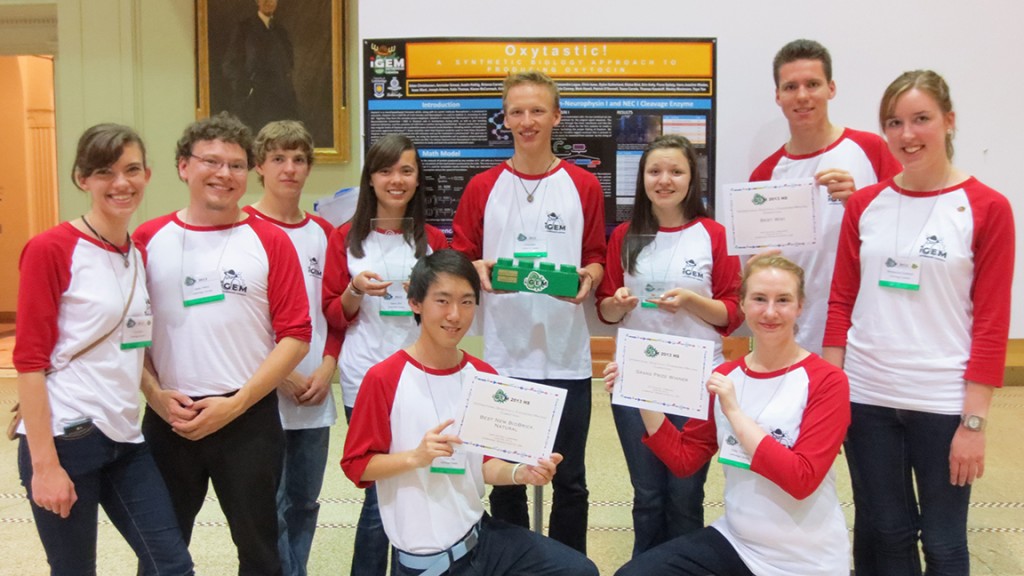
Dr. Gerlinde Metz is a Professor at the University of Lethbridge, conducting research at the Canadian Centre for Behavioural Neuroscience (CCBN). Her work focuses on understanding how stress and environmental factors influence motor recovery following brain damage, with particular emphasis on stroke, Parkinson's disease, and spinal cord injury. Dr. Metz earned her B.Sc. in Biology, M.Sc. in Biology (Behavioural Neuroscience), and Ph.D. in Biology (Neuroscience), followed by postdoctoral training in Behavioural Neuroscience. Her primary research interests include the influence of environment and stress on motor recovery following brain damage, the impact of prenatal stress and preterm birth on development, and aging and age-related disease. Dr. Metz has extensive expertise in multiple sclerosis, spinal cord injury, stroke, models of Parkinson's disease, motor system and recovery of movement, perinatal programming of disease, motor development and aging, stress, and preterm birth. Analysis of Dr. Metz's recent publications reveals a consistent focus on stress responses in neurological conditions. Her work spans Parkinson's disease models, stroke recovery mechanisms, and transgenerational effects of stress on preterm birth. The research demonstrates interdisciplinary approaches combining behavioral neuroscience, neuroendocrinology, and epigenetics to understand how stress impacts neurological recovery and development. Dr. Metz has received notable recognition including: AHFMR Senior Scholar (2008-2015) Dr. Metz has successfully secured multiple research grants from prestigious agencies including the Canadian Institutes of Health Research, Natural Sciences and Engineering Research Council, Alberta Heritage Foundation for Medical Research, and Canada Foundation for Innovation. Her research team includes graduate students, undergraduate researchers, and collaborators from other institutions including the University of Alberta and University of Calgary. Dr. Metz leads the Metz Lab at the University of Lethbridge, which focuses on behavioral neuroscience approaches to understanding stress responses in neurological conditions. Her lab has mentored students who have gone on to win significant awards, including Zac Erickson who received the Shire ADHD Scholarship and Isaac Ward who led the Lethbridge High School iGEM team to win the Green Brick grand prize at MIT.
Dr. Mark McAuley is a nutritional biochemist and Programme Leader for the BSc (Hons) in Biochemistry degree at the University of Salford, School of Science, Engineering & Environment. He joined the university in 2023 and is affiliated with the Biomedical Research Centre. With a diverse academic background spanning biochemistry, computer science, and education, Dr. McAuley brings a comprehensive interdisciplinary perspective to his research and teaching. Dr. McAuley's educational journey includes: Bachelor's Degree in Biochemistry (1997-2000) from The University of Ulster Master's Degree in Computer Science (2000-2001) from The University of Ulster PhD in 'the Biology of Ageing' (2003-2007) from Newcastle University Postgraduate Certificate in Education (PGCE) (2008-2009) from Liverpool Hope University Higher Education Postgraduate Certificate (2011-2012) from Liverpool Hope University Education (Senior Fellowship) Graduate Certificate (2020) from Higher Education Academy Current pursuit of Leadership and Management in HE Graduate Diploma (2022-2025) from University of Chester Dr. McAuley's research centers on understanding the biological mechanisms of aging through mathematical modeling of biological systems. His work particularly focuses on how aging disrupts cholesterol metabolism and DNA methylation patterns, and how nutritional interventions can potentially improve healthspan. His interdisciplinary approach combines nutritional biochemistry with computational modeling to address fundamental questions about the aging process, resulting in publications spanning computational biology, epigenetics, and cardiovascular science. With 47 documented research outputs spanning from 2005 to 2025, Dr. McAuley has established a consistent publication record focused on aging research. His recent work shows a clear trajectory toward increasingly sophisticated computational approaches to understanding age-related biological changes, with significant contributions in 2023-2025 on topics including electrochemical sensors for cancer diagnosis, DNA methylation patterns, vascular dementia, and mathematical modeling of metabolic pathways. Dr. McAuley's professional journey reflects diverse experiences across academic and research domains: Previous work at the Northern Ireland Centre for Diet and Health Academic positions at several UK universities Several years as a secondary school teacher Current role as Programme Leader for Biochemistry at University of Salford since 2023
Emma Sofie Timm Aller is a Postdoc at the Department of Plant and Environmental Sciences, Section for Molecular Plant Biology, within the Faculty of Science at the University of Copenhagen. She is affiliated with the DynaMo Center for dynamic molecular interactions, where she investigates plant-environment interactions through molecular and epigenetic lenses. Her academic credentials include: MSc in Biology-Biotechnology from the University of Copenhagen (2013-2015) BSc in Biology-Biotechnology from the University of Copenhagen (2009-2013) Dr. Aller's research examines how plants develop phenotypic variation to cope with environmental stress through non-genetic mechanisms, with particular focus on stress signal communication across plant generations. She employs advanced bioinformatic techniques to analyze sequencing data and map molecular networks affected by stressors. Her work bridges computational biology with experimental plant science to address climate resilience challenges. Publication analysis reveals consistent emphasis on epigenetic regulation of plant plasticity, with recent work expanding from foundational trait stability studies (2018) to comprehensive transgenerational inheritance frameworks (2022). The research trajectory demonstrates increasing integration of multi-omics approaches to dissect stress response pathways. As an active member of the DynaMo Center, she collaborates within interdisciplinary teams studying dynamic molecular interactions in plant systems. Her current work continues to explore epigenetic memory mechanisms while investigating stress signal transmission between neighboring plants.
Patricia Fauque holds a dual academic-clinical position as Professor (PU) and Hospital Practitioner (PH) with statutory researcher status at a Paris-based institution, likely affiliated with the Cochin Institute given contextual directory placement. Her work bridges fundamental research and clinical applications in human reproduction. Her research program focuses on genomic and epigenetic mechanisms across the reproductive continuum: Germline development and gametogenesis Embryonic epigenetic reprogramming Molecular pathophysiology of infertility Transgenerational epigenetic inheritance Clinical correlates of reproductive disorders This integrative approach examines how genetic and epigenetic factors influence fertility, pregnancy outcomes, and developmental origins of health and disease, with particular emphasis on translating basic science discoveries into clinical understanding.
Francisco Miralles is a Statutory Researcher at Universite Paris Cite's Faculty of Medicine, based at the Cochin Institute (Institut Cochin). His work operates under the institutional framework of CLAS Cochin - CAES and Eco2, focusing on reproductive science within the broader themes of Cellular Plasticity and Reproduction. His research spans genomics, epigenetics, and pathophysiology across the reproductive continuum from gametes to birth. Key interests include cellular reprogramming mechanisms during embryonic development, transgenerational epigenetic inheritance, and molecular pathways underlying reproductive disorders. This work integrates genomic technologies with clinical pathophysiology to address fundamental questions in human reproduction. Dr. Miralles collaborates within the Cochin Institute's research ecosystem, which bridges INSERM, CNRS, and hospital clinical units. His laboratory investigates molecular signatures of gamete quality, implantation biology, and fetal developmental programming, with emphasis on translating basic discoveries into clinical reproductive medicine applications.