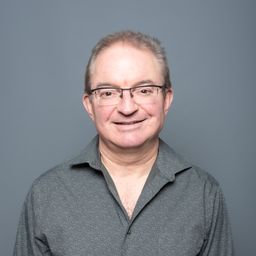
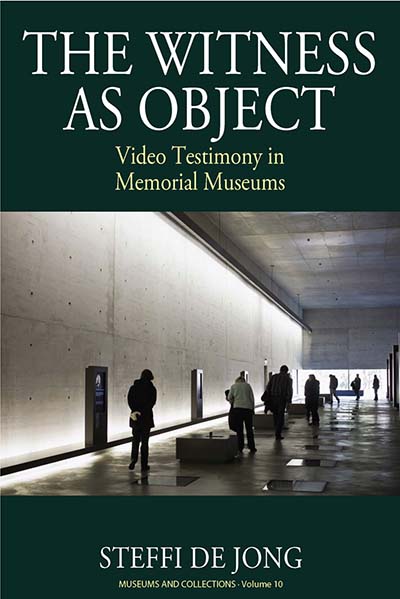
Steffi de Jong is Associate Professor of Public History and History Didactics at NTNU's Department of Historical and Classical Studies. She holds a PhD from NTNU and previously held positions at Maastricht University and University of Cologne. Research encompasses: Museum representation of historical testimony Digital memory of the Holocaust Re-enactment as historical practice Sensory dimensions of public history Virtual reality in memorial culture Her publications critically examine how technologies like VR transform Holocaust commemoration, arguing that simulated experiences create new forms of 'post-witnessing'. Recent projects include Gerda Henkel Foundation-funded research on historical re-enactment origins and analyses of digital Holocaust memory. Monographs include 'The Witness as Object' (Berghahn, 2018), which analyzes video testimony in memorial museums, and edited volumes on choreomusicology and women's musical leadership.
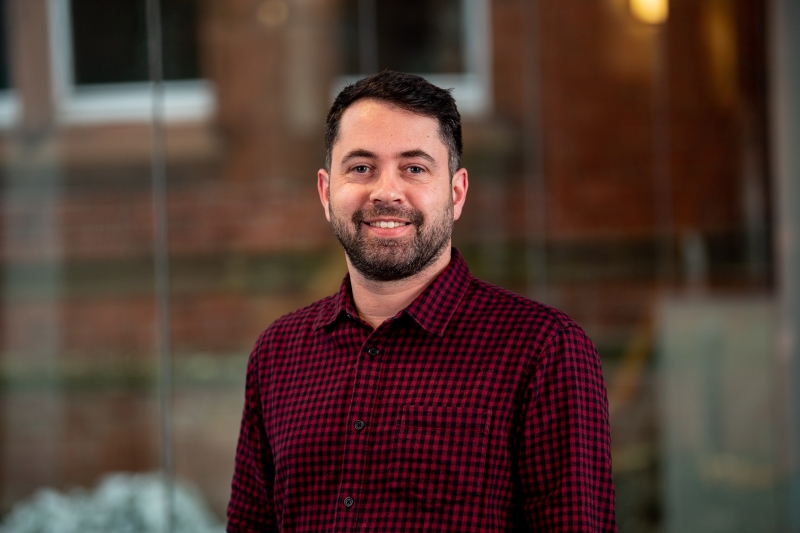
Harald Rohracher is a Professor at the Department of Theme (TEMA) , Linköping University , affiliated with the Theme Technology and Social Change (THEME) . His research focuses on sociotechnical transitions for climate-neutral cities , examining energy systems, digitalization, and governance strategies. Grants: Formas, Horizon Europe, Vinnova Labs: STRIPE (Sociotechnical Research on Infrastructures, Politics, and Environment), Biogas Solutions Research Center Students: Adam Svensson, Stella Huang, Gavin Nilsson Lewis, Giorgi Kankia Rohracher investigates how households , social movements , and policy frameworks interact in transformative processes. His recent work explores smart grid politics , decentralized energy systems , and urban food digitalization , emphasizing power dynamics and governance experiments. He leads projects on transdisciplinary education for climate governance, positive energy districts , and collective experimentation across Sweden and Spain. His scientific grants highlight institutional support for sustainability research, while his research teams bridge academic, governmental, and civil society actors.
Professor Patrick Diamond is a leading academic in Public Policy at Queen Mary University of London's School of Politics and International Relations. He holds a BA, MPhil from Cambridge, and a PhD from Sheffield. His work focuses on UK productivity, regional inequality, governance structures, and social democratic ideologies. He has held senior roles in UK government, including Head of Policy Planning in Downing Street, and has been a Local Councillor in Southwark. Currently, he chairs Policy Network, advises international organizations, and serves on boards of think-tanks and trusts. His research explores policy advisory systems, Brexit impacts, and Labour Party evolution. He has authored over 20 books and numerous articles, including seminal works on British political history and governance reform. He has secured significant research funding from ESRC, Research England, and others. Educational Background: BA, MPhil (Cambridge); PhD (Sheffield). Research Interests: UK productivity, regional inequality, comparative governance, policy advisory systems, Northern Ireland governance, social democracy, and British Labour Party dynamics. He has led projects on English governance post-Brexit, well-being mapping in London, and economic change in East London. Awards and Grants: ESRC Productivity Institute grant (2022-25), Research England Impact Fund (2023-24), multiple ESRC Impact Acceleration Awards. Fellowships include Visiting Fellow at Kellogg College (Oxford), Policy Fellow at the Ministry of Justice Strategy Unit, and Academy of Social Sciences membership. Students and Supervision: Supervised PhD candidates including Matthew Lloyd, Fathima Sulaiman, and Karl Pike, focusing on British politics, governance, and policy analysis. Active in mentoring doctoral research on political leadership and spatial policy. Public Engagement: Advises international bodies like the Latin American Development Bank and Humana International. Serves on boards of Dartington Service Design Lab and Prisoners’ Education Trust. Regularly contributes to media outlets including BBC Radio 4, Guardian, and Financial Times.
Prof. Fatih Terzi is a faculty member in the Department of Urban and Regional Planning at Istanbul Technical University's Faculty of Architecture. His research focuses on sustainable urban development, resilience, ecology, GIS applications, and smart cities. He has held visiting researcher positions at Clemson University (USA), University College London, and Technical University Berlin. He has led projects supported by EU, TÜBİTAK, and others, addressing ecological planning, risk reduction, and urban regeneration. His work bridges academic research with practical urban planning, including projects with municipalities and the Ministry of Environment. He has received multiple awards for research and design, including the Best Paper Award (2025) and TÜBİTAK recognitions. Education: PhD in Urban and Regional Planning from Istanbul Technical University (2010), MSc in Urban Planning (2004), BSc in Urban and Regional Planning from Yıldız Technical University (2000). Research interests include spatial strategic planning, ecological cities, and climate-sensitive urban design. He uses urban modeling and GIS to address sustainability challenges. His recent projects include Istanbul's flood risk analysis, green space strategies, and sustainable city planning in Kayseri and Malatya. Notable awards include the 2024 TÜBİTAK award for urban resilience projects and the 2023 Istanbul Technical University Academic Performance Award. He has also been recognized for design competitions, including the İzmir Ecological Living Area Project (2021) and the 2017 Balkan Architectural Biennale Urbanism Grand Prix. Prof. Terzi holds administrative roles at Istanbul Technical University, including Merkez Danışma Kurulu Üyeliği (2023–present). He oversees academic projects on urban resilience, smart cities, and ecological planning, contributing to both national and international initiatives.
Pascal BOUVRY is a full Professor of parallel computing and optimization techniques at the University of Luxembourg's Department of Computer Science , within the Faculty of Science, Technology and Medicine (FSTM) . He currently serves as the Dean of the FSTM and leads the Parallel Computing and Optimisation group . Additionally, he oversees the University's High Performance Computing (HPC) infrastructure. His research focuses on parallel computing, optimization algorithms, distributed systems, and their applications in bioinformatics and distributed environments. Prof. BOUVRY holds a Ph.D. in Computer Science from the University of Grenoble (France) and has extensive industry experience, including roles as CEO/CTO of tech firms and leadership in telecom and financial services sectors. He has pioneered initiatives like the Master in High-Performance Computing and Technopreneurship programs at the University of Luxembourg. His research interests span GPU programming paradigms , federated learning , distributed optimization , and trustworthy AI . Recent work includes advancements in HPC education frameworks, federated learning frameworks (e.g., FedPref), and quantum circuit optimization. He contributes to editorial boards of journals like IEEE Transactions on Sustainable Computing and IEEE Cloud Computing Magazine. Prof. BOUVRY has held international leadership roles, including as Honorary Chair of conferences and active participation in technical committees. His educational efforts emphasize bridging academic research with industrial applications, particularly in HPC and AI.
Pierre Baldi is a Distinguished Professor of Computer Science and Director of the Institute for Genomics and Bioinformatics at the University of California, Irvine (UCI). He is affiliated with the Donald Bren School of Information and Computer Sciences. His research spans artificial intelligence, machine learning, bioinformatics, and communication networks, with notable projects in protein structure prediction, gene expression modeling, and neutrino physics collaborations like DUNE. Baldi’s work bridges theoretical foundations (e.g., neural network theory) and applied domains, including medical imaging and fusion technology. Key research interests include AI-driven biomedical applications, neural network theory, and interdisciplinary projects such as the DUNE neutrino experiment. His contributions to neural network engineering were recognized with the 2023 INNS Dennis Gabor Award, highlighting his paradigm-changing impact on computational neuroscience and physics. Baldi’s academic leadership includes directing UCI’s Institute for Genomics and Bioinformatics, fostering collaborations in computational biology and AI. His recent work explores AI’s role in healthcare, climate modeling (e.g., ClimSim-Online), and fundamental physics challenges like neutrino oscillation studies.
Dr. Lucy Hederman is an Associate Professor in Computer Science at Trinity College Dublin (TCD), affiliated with the O'Reilly Institute. Her research focuses on leveraging data and documents to support clinical decision-making, particularly in healthcare knowledge work. She has led interdisciplinary projects addressing data integration for rare diseases (e.g., ANCA-vasculitis, MND) and socio-technical challenges in adopting patient-generated health data (PGHD) into clinical practice. Dr. Hederman has secured over €xxxk in research funding and leads the Heterogeneity and Interoperability (H&I) challenge in the SFI-funded ADAPT 2 Centre. Her educational background includes advanced studies in computer science and healthcare informatics, though specific degree details are not explicitly stated in the text. She has supervised 4 PhDs, 2 research MScs, and co-supervised 6 PhDs, while currently mentoring 8 graduate students. Her career includes founding TCD spinouts PBOC and BIOLOGIT, which align with her research in health informatics and technology. Key research interests include: Interdisciplinary collaboration between clinicians, researchers, and technologists Data harmonization for multi-national clinical studies (e.g., FAIRVASC, Precision-ALS) Development of clinical decision support systems (CDSS) Design of mobile health (mHealth) tools for underserved populations Recent work emphasizes FAIR principles for healthcare data and socio-technical factors influencing PGHD adoption. She has contributed to over 70 peer-reviewed publications and actively participates in initiatives like the EU-funded TRANSFORM project and HRB Primary Care Research Centre. Dr. Hederman’s professional memberships include the Irish Computer Society, ACM, and Healthcare Informatics Society of Ireland. Her research has impacted healthcare practices in Ireland, with many MSc student projects influencing local health services.
Charles Baden-Fuller is the Centenary Professor of Strategy and leader of the Strategy Group at Bayes Business School , City St George’s, University of London . He is concurrently a Senior Fellow at the Wharton School, University of Pennsylvania . Recognised among the world’s top strategy scholars, he has directed major multi-institutional research initiatives and served as Editor-in-Chief of Long Range Planning (1999-2010). Education & Qualifications BA (Oxon) – University of Oxford MA Economics – Cornell University PhD – London School of Economics Research Interests Charles’s work lies at the intersection of strategic management , business model innovation and digital transformation . His early research explained how mature firms can be rejuvenated and how alliances create competitive advantage. More recently he has advanced the concept of business models , investigating what they are, how they evolve, and how managerial cognition shapes their deployment in increasingly digitalised environments. Empirical settings span biotechnology, financial services, automotive software ecosystems and creative industries. Publications & Impact With over 80 refereed journal articles and five influential books—including the seminal Rejuvenating the Mature Business (Harvard Business Press)—his scholarship has shaped both academic theory and managerial practice. Recent articles (2021-2025) focus on digital platform alliances, entrepreneurial networking logics, and AI-enabled business model design. Honours & Awards Fellow of the Strategic Management Society (SMS Fellow, 2009) Fellow of the British Academy of Management Fellow of the British Academy Fellow of AACSB Doctoral Supervision & Research Funding He has supervised to completion more than six PhD students, many now faculty at leading universities. His research has attracted over £4 million in grants from the European Union , UK ESRC , EPSRC and the Mack Institute-Wharton , supporting multi-university teams at Bayes, Sussex, LSE, CREATE-Glasgow, Grenoble EM and Wharton. Professional & Outreach Roles Beyond academia, Charles serves as director or strategic advisor to several high-technology start-ups and as trustee of a major charity. He is a frequent keynote speaker for industry and policy audiences, and his research findings have been featured in the Financial Times , Management Today and other leading media.
Mikkel N. Schmidt is an Associate Professor in the Department of Applied Mathematics and Computer Science at the Technical University of Denmark (DTU). His research focuses on statistical modeling, Bayesian methods, and their applications in science and industry. He has held visiting roles at Columbia University (2007) and Cambridge University (2008-2009). His work integrates probabilistic modeling with computational inference to address complex problems in diverse fields such as molecular discovery, optical communication, and brain connectivity analysis. Education highlights include visiting scholar and postdoctoral experiences at top-tier institutions. Research interests span statistical methodology development, machine learning applications, and interdisciplinary problem-solving. Current projects involve Bayesian neural networks for molecular discovery and federated learning optimization. Advising efforts include supervising multiple PhD students in areas like molecular discovery and denoising diffusion models. Notable collaborations involve work on materials science, quantum communication, and medical signal processing. His contributions bridge theoretical advancements with practical industrial applications, emphasizing interdisciplinary innovation.
Peter Aronsson is the Rector of Linnaeus University since 2017, reappointed until 2026. He holds a professorship in History and has served as Pro Vice-Chancellor, Deputy Vice-Chancellor, and Dean of the Faculty of Arts and Humanities. His research focuses on local/regional history, democratic political culture, history education, and cultural heritage utilization. He coordinates international projects exploring national museums' roles in shaping historical narratives and has authored/co-authored over 100 publications, including books such as National Museums: Studies from around the World . He chairs the Swedish Council for Higher Education's board and sits on the transparency council for Kalmar and Kronoberg County Administrative Boards. His work emphasizes the societal relevance of cultural heritage and history education, advocating for museums as agents of democratic dialogue. Key contributions include founding the Center for Applied Heritage at Linnaeus University, which explores heritage's transformative societal potential. Education: PhD in History from Lund University (1992) Research Groups: Center for Applied Heritage, EuNaMus project Key Projects: EUNAMUS, HistCon, Nordic Spaces Leadership Roles: Vice-Chancellor (2017–present), Pro-Rector (2016–2017), Dean (2013–2015) His articles analyze historical consciousness, museum politics, and heritage management. Recent work addresses post-war Baltic cultural heritage, Nordic identity construction, and the political dimensions of historical narratives. He actively blogs on Open Science and academic governance, emphasizing universities' role in societal challenges.
Luigi Acerbi is an Associate Professor in the Department of Computer Science at the University of Helsinki, where he leads the Machine and Human Intelligence research group. He is also an active member of the Finnish Center for Artificial Intelligence (FCAI) and ELLIS (European Laboratory for Learning and Intelligent Systems). His research focuses on probabilistic machine learning and computational neuroscience, particularly on developing efficient methods for statistical inference, Bayesian models of perception, and resource-constrained rationality. His work bridges machine learning and cognitive science, with applications in Bayesian optimization, simulation-based inference, and image completion. The recent publications highlight a strong trend toward unifying probabilistic conditioning across diverse tasks using transformer-based meta-learning frameworks like the Amortized Conditioning Engine (ACE). These works emphasize amortized inference, flexible latent variable modeling, and the integration of prior knowledge at runtime, enabling efficient and scalable Bayesian methods for complex problems. Scientific Affiliations: University of Helsinki, Department of Computer Science Finnish Center for Artificial Intelligence (FCAI) ELLIS (European Laboratory for Learning and Intelligent Systems) Education: PhD in Computational Neuroscience, Doctoral Training Centre, Edinburgh, UK Advisor: Sethu Vijayakumar and Daniel Wolpert Visiting work at Computational and Biological Learning Lab, Cambridge Postdoctoral Experience: Alex Pouget’s lab, University of Geneva, Switzerland Wei Ji Ma, New York University, USA Collaboration with the International Brain Laboratory Luigi Acerbi mentors PhD students including Daolang Huang and Nasrulloh Loka, and collaborates widely with researchers such as Samuel Kaski. He has contributed to open-source tools like PyVBMC and is involved in community initiatives such as the EurIPS conference. His work is supported by grants from the Research Council of Finland, Business Finland, and the UKRI Turing AI World-Leading Researcher Fellowship. He leads a research lab focused on amortized probabilistic inference, with ongoing projects including PriorGuide and Stacked VBMC, aiming to make Bayesian methods more practical and accessible for real-world scientific and engineering applications.
Sanjeev Dewan is a Professor of Information Systems and Associate Dean of Masters Programs at the Paul Merage School of Business, University of California, Irvine. He also serves as Faculty Director of the Master of Science in Business Analytics program. Prior to joining UCI in 2001, he held faculty positions at the University of Washington and George Mason University. PhD, University of Rochester MS, University of Rochester Bachelor of Technology, Indian Institute of Technology, Delhi His research focuses on the economics of digital platforms , social and mobile analytics , and the valuation of technology investments . He investigates how information technology creates business value, impacts consumer behavior, and influences firm performance. His work spans electronic markets, Web 2.0 technologies, IT productivity, and the digital divide. The most recent publications reveal a strong emphasis on empirical analysis of digital platforms , including studies on gender bias in open source communities, quality certification in the sharing economy (e.g., Airbnb), personalized ranking in app stores, and mobile health applications. His research frequently uses large-scale datasets to examine behavioral patterns, market dynamics, and the economic implications of IT innovations. Faculty Service Award for 2023-24, UCI Paul Merage School of Business Best Paper Award, INFORMS 2019 e-Business Cluster Faculty Service Award for 2016-17, UCI Paul Merage School of Business Best Paper Award, INFORMS Conference on Information Systems and Technology (2009) INFORMS Service Award (2009) INFORMS Certificate of Appreciation (2008) Beta Gamma Sigma Honor Society (1991) University of Rochester Fellowship (1985–1990) Sanjeev Dewan has advised numerous PhD students who have secured faculty positions at leading institutions such as the University of Wisconsin-Madison, HKUST, Penn State, and the University of Hong Kong. His editorial service includes senior editor roles at Information Systems Research and associate editor at Management Science . He has also chaired tracks at ICIS and served as program co-chair for PACIS. There is no indication of external grant funding in the provided text, but his sustained publication record and leadership roles suggest significant research activity and institutional support. He is actively involved in academic leadership and research dissemination, contributing to major conferences and editorial boards. His work bridges theory and practice, particularly in digital platform ecosystems and analytics-driven decision-making.
Brent Doberstein is an Associate Professor in the Department of Geography and Environmental Management at the University of Waterloo, Faculty of Environment. His research and teaching focus on disaster risk reduction, climate change adaptation, and sustainable resource management, particularly in developing countries across Asia and in Canada. His research interests include: Hazards and disaster risk reduction Climate change adaptation and managed retreat Post-disaster reconstruction and institutional capacity building Sustainable resource and environmental management Parks and protected areas Over the next five years, he is particularly interested in supervising graduate students in themes related to disaster risk reduction, climate adaptation, and managed retreat. His recent publications reflect a strong emphasis on community resilience, policy evaluation, and cross-national comparisons, especially in Southeast Asia and Canada. Key trends in his work include the integration of local knowledge, social equity in disaster recovery, and innovative frameworks like the PARA model for flood risk management. His scientific contributions are recognized through publications in leading journals such as International Journal of Disaster Risk Reduction , Climate and Development , and Disasters . Dr. Doberstein actively supervises graduate students, many of whom are co-authors on his recent publications. He has taught courses including GEOG101, GEOG306, GEOG356, and led field research in Indonesia. He has also been involved in research projects related to flood recovery in Canada and post-disaster adaptations in countries like the Philippines, Bangladesh, and Thailand. He leads research initiatives centered on post-disaster adaptations at individual, community, and national levels, often working with interdisciplinary teams and international collaborators. His work contributes significantly to policy development and community resilience planning in vulnerable regions.
Alex Wilson is an Associate Professor at Queen's Business School, Queen's University Belfast. He holds leadership roles including Director of Internationalisation and Direction of Reputation and Rankings at Queen's Business School, and previously held directorships at Loughborough University's School of Business and Economics. Research Interests: Open Strategy, Digital Strategizing, Strategy as Practice, Future of Management Education. Expertise in qualitative methods, IT/social media's role in strategic work, and business school innovation. His research explores how technology mediates strategic processes, organizational legitimacy, and the evolving purpose of business schools. He has advised on strategic initiatives for institutions globally and contributed to defining digital strategizing frameworks. Key Achievements: Recipient of CABS Research Fellowships (2017, 2018) Dean’s Award for Early Career Teaching Excellence (2015) Led studies on Singapore Management University's strategic evolution and UK business school competitiveness. Advises PhD students focusing on topics like corporate sustainability tensions, services offshoring, and Christian values in business. Active in hosting international delegations and delivering invited talks on open strategy and digital transformation.
Retsef Levi is the J. Spencer Standish (1945) Professor of Operations Management at the MIT Sloan School of Management, affiliated with the MIT Operations Research Center. He co-directs the Leaders for Global Operations (LGO) Program. His work focuses on data-driven decision models for healthcare systems, supply chain optimization, and risk management. Levi holds a PhD in Operations Research from Cornell University and has led industry collaborations with major hospitals and organizations like the FDA and Walmart Foundation. Education: PhD in Operations Research, Cornell University, 2005 Bachelor’s in Mathematics, Tel-Aviv University, 2001 Research Interests: Levi’s research addresses complex decision-making under uncertainty in healthcare, supply chains, and logistics. Key areas include food safety analytics, risk-based sampling, and predictive modeling for zoonotic diseases. He designs algorithms for inventory control, appointment scheduling, and healthcare resource allocation. Articles Overview: Recent work spans AI-driven epidemiological models, supply chain cybersecurity, and agricultural market interventions. His articles emphasize practical applications of operations research in healthcare and public health. Awards: NSF Career Grant INFORMS Optimization Prize (2008) Wagner Prize (2013) Harold W. Kuhn Award (2016) Advising & Grants: Advised 10 PhD students and 34 master’s students. Led multi-million-dollar projects like the Walmart Foundation initiative for China’s food safety. Active in hospital process optimization and FDA risk management contracts. Labs & Teams: Runs MIT’s Food Supply Chain Analytics and Sensing Initiative, collaborating with global partners on predictive risk tools and healthcare analytics.


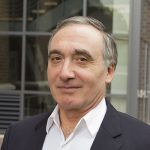
/prod01/channel_3/media/tcd/scss/headshots/Lucy-Hederman-BW-1.jpg)