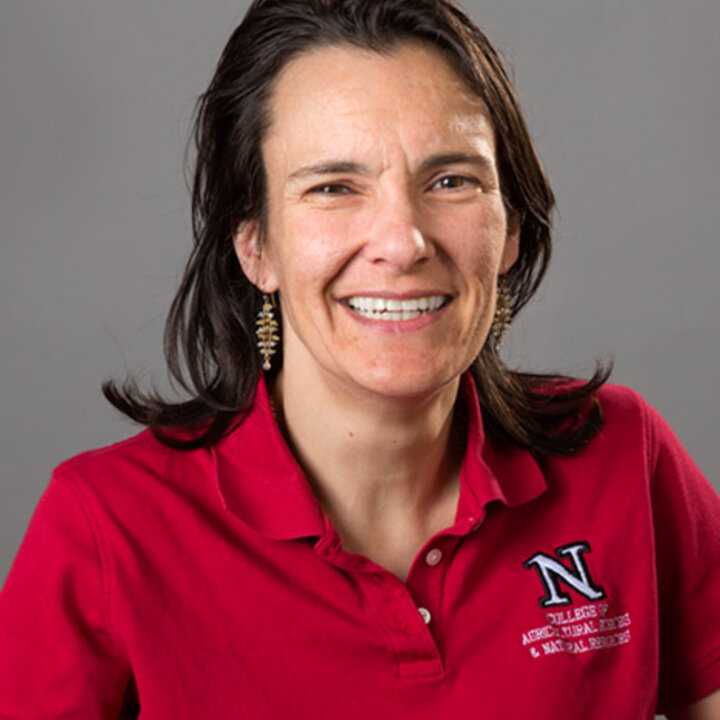
Jennifer L. Clarke is a Professor in the Department of Statistics at the University of Nebraska–Lincoln and Director of the Quantitative Life Science Initiative. She holds leadership roles in enabling big data integration across the University of Nebraska system through collaborative research programs. Her affiliations include the Institute of Agriculture and Natural Resources (IANR) and the College of Agriculture and Natural Resources. Dr. Clarke's research focuses on statistical methodology for high-dimensional data, computational biology, bioinformatics, and bacterial genomics. Her work bridges statistical innovation with applications in oncology, microbiome analysis, and agricultural phenomics. Key areas include predictive modeling, machine learning, and genomic/metagenomic data integration. Her recent publications span cancer biomarker discovery, plant phenotyping methodologies, and microbial community analysis, reflecting her interdisciplinary approach. Articles emphasize translational applications like therapeutic target identification and precision agriculture. Dr. Clarke leads initiatives fostering collaboration between statisticians and domain scientists, including the Quantitative Life Science Initiative and contributions to the Agricultural Genome-to-Phenome Initiative (AG2PI). Her work advances data-driven solutions for healthcare and food security challenges. Notable projects include developing statistical tools for microbiome studies, analyzing root architecture via 3D imaging, and investigating cranberry-derived compounds' cancer-inhibitory mechanisms. Her methodological contributions include hybrid clustering techniques and predictive model validation frameworks.
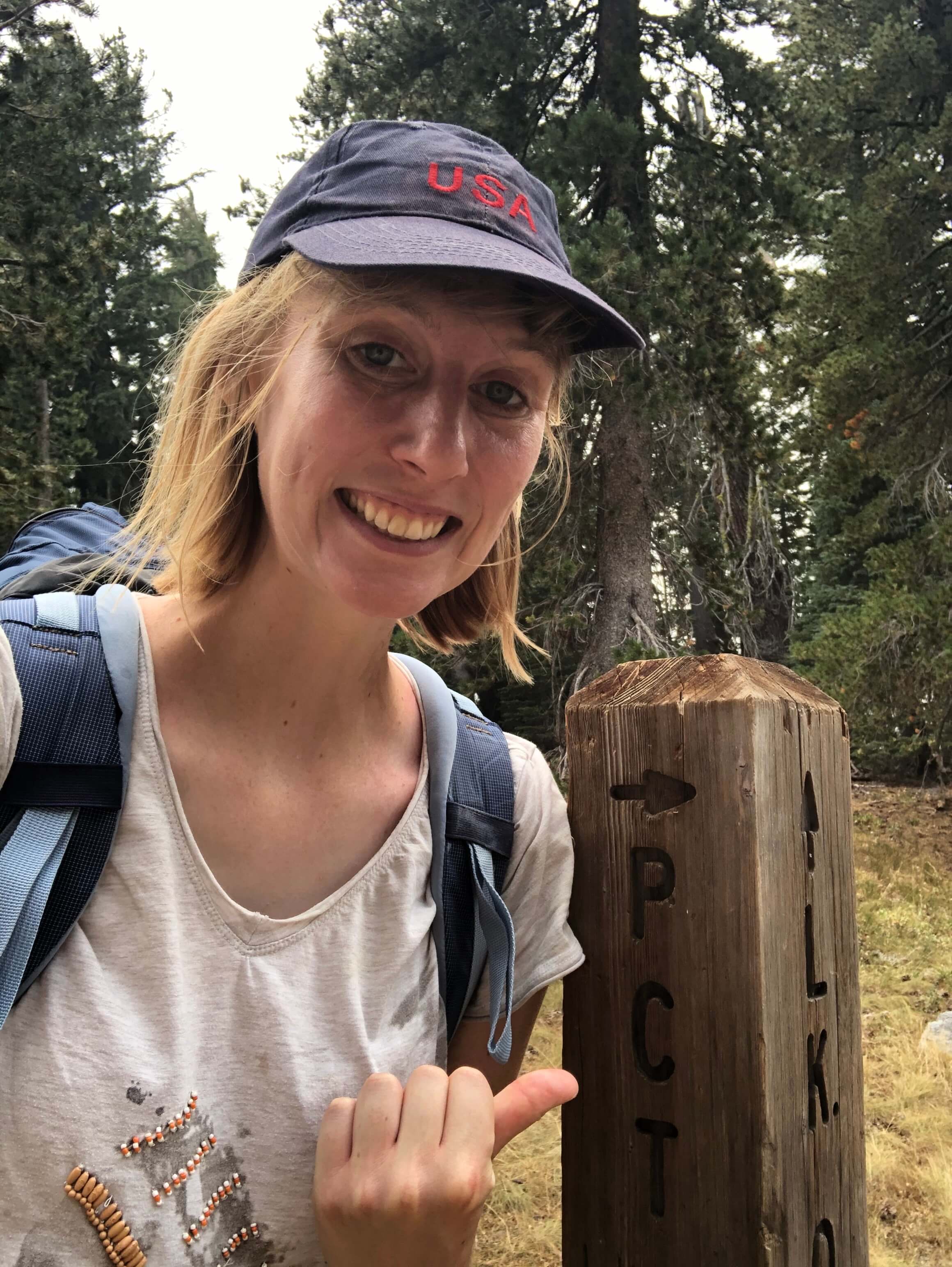
Claire Donnat is an Assistant Professor in the Department of Statistics at the University of Chicago, specializing in statistical and machine learning methods for graph-structured and high-dimensional data. Her work bridges theoretical innovation with applications in biomedical research, environmental science, and public health. Education: B.S. and M.S. in Applied Mathematics from Ecole Polytechnique; Ph.D. in Statistics from Stanford University (2020). Her research focuses on three methodological directions: (1) statistical foundations for graph neural networks (GNNs), (2) structured estimation with graph constraints, and (3) multimodal data integration with uncertainty quantification. Key applications include thermotolerance in photosynthetic microbes, family network analysis for child welfare, and spatial transcriptomics. The 15 most recent publications highlight her work in GNNs, CCA, tensor modeling, and epidemic analysis, with keywords spanning statistics, machine learning, and network science. Her methodological contributions address challenges in sparsity, graph topology, and heterogeneous data fusion. Scientific Awards: Facebook Research Award (2021), C3.AI COVID Grand Challenge winner (2020), Lumiata hackathon winner (2020), Stanford Centennial Award (2019), and others. Claire's research group actively recruits postdocs and students for projects involving graph-based modeling, data integration, and biomedical applications. She also provides research consulting in statistical methodology and graph modeling for life sciences.
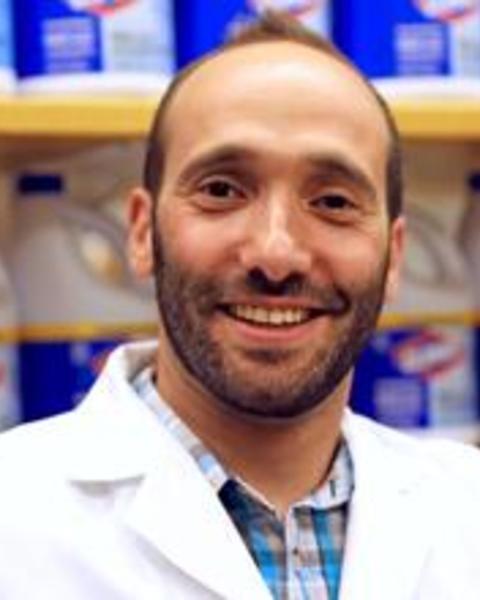
Prof. Dr. Oliver Krüger is a behavioral ecologist and evolutionary biologist at Bielefeld University 's Faculty of Biology , where he leads the Department of Animal Behaviour since 2013. His research spans avian and marine mammal systems, focusing on life history strategies, parasite-host interactions, and environmental adaptation. Education: Biology studies at Bielefeld University (1994-1996) MSc in Oxford (1996-1997) PhD at Bielefeld University with Fritz Trillmich and Jan Lindström (1998-2000) Research Themes: Behavioral ecology, evolutionary biology, and population dynamics across tropical and temperate ecosystems. Key projects include NC³ (Niche Choice/Construction) and studies on Galápagos sea lions, common buzzards, and pinniped species. Scientific Leadership: Spokesperson, SFB TRR 212 "NC³" (2018-2025) Advisory Board member: German Ornithologists Union, IUCN SSC pinniped group, German Primate Centre Peer review roles: Humboldt Foundation, DFG, HFSP, NSF Awards: Leopoldina Prize (2001) Niko Tinbergen Award (2008) DFG Heisenberg Professorship (2010-2015)
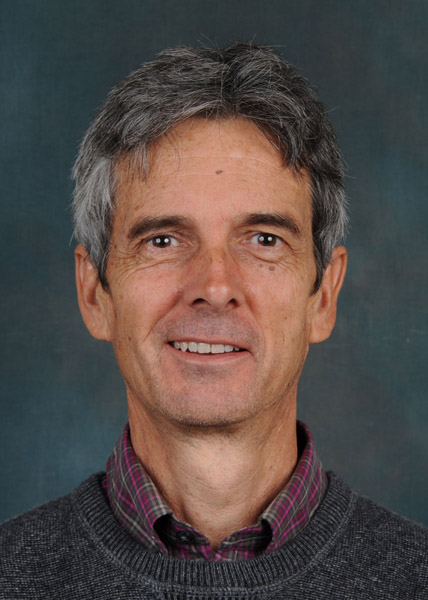
Christopher E. Nelson is an Assistant Professor in the Department of Biomedical Engineering at the University of Arkansas, College of Engineering. His lab focuses on developing biologically inspired strategies for controlled drug and gene delivery, particularly in the context of gene therapy and regenerative medicine. He is actively supported by the NIH, DoD, and Arkansas Bioscience Institute. Education: Postdoctoral Fellow – Duke University Ph.D. – Vanderbilt University B.S. – University of Arkansas Research Focus: Dr. Nelson’s lab integrates genome editing technologies with targeted delivery systems to address challenges in treating genetic diseases and promoting tissue regeneration. Major themes include CRISPR/Cas9 delivery , gene regulation in wound healing , and safe-harbor genome integration in skeletal muscle. His work spans viral and non-viral delivery vehicles , including lipid nanoparticles and AAV vectors, with a strong emphasis on preclinical validation in models of Duchenne muscular dystrophy and inflammatory disease. Scientific Awards: Controlled Release Society Postdoctoral Fellowship The Hartwell Foundation Postdoctoral Fellowship NIH Pathway to Independence Award (K99/R00) Funding & Support: The Nelson Lab is currently funded by: NIH NIGMS R35 DoD CDMRP DMD IDEA Award Arkansas Bioscience Institute University of Arkansas Engineering & Honors Colleges Lab & Team: The Nelson Lab is a dynamic, interdisciplinary team working at the intersection of gene editing, biomaterials, and regenerative medicine. They regularly present at national conferences such as ASGCT and NCUR, and mentor undergraduate researchers through SURF and Honors College grants.
Prof. Veronika Somoza is a leading academic in Nutritional Systems Biology, currently affiliated with the University of Vienna and Technical University of Munich (TUM). She holds a professorship in Molecular Food Science and has led key research groups such as the Institute of Physiological Chemistry and the Christian Doppler Laboratory for Bioactive Aromatics. Her career includes roles at institutions like the German Research Institute for Food Chemistry (Garching) and the University of Wisconsin-Madison. Education: Diplom (Justus Liebig University Giessen, 1991), PhD (University of Vienna, 1995), Habilitation (Kiel University, 2002) Research Focus: Bioactive food compounds, flavor chemistry, taste receptor signaling, and gastrointestinal physiology Her work bridges food science and human health, particularly in understanding how food ingredients influence digestion, inflammation, and disease. Notable contributions include discoveries on bitter peptide effects on gastric acid secretion and flavor perception modulation. Awards: FEMA Excellence in Flavor Science (2016), ACS AGFD Fellow (2020), Hans Adolf Krebs Prize (2004) Prof. Somoza has pioneered methodologies in atomic force microscopy for foodborne virus detection and developed bitterness-masking compounds for pharmaceuticals. Her interdisciplinary approach integrates nanobiophysics with nutrition to advance functional food design and clinical applications.
Dr. Michael Baym is an Associate Professor of Biomedical Informatics at Harvard Medical School with affiliate appointments in Microbiology and the Laboratory of Systems Pharmacology, and as an Associate Member of the Broad Institute. He leads the Baym Lab, which studies microbial evolutionary genomics and antibiotic resistance through a hybrid of experimental, computational, and theoretical approaches. His research focuses on: Antibiotic Resistance Evolution and practical interventions Mobile Genetic Elements (plasmids, phages, transposons) Computational Genomic Algorithms for big data analysis Synthetic Biology tools and technologies Key recent publications explore phage discovery systems , phylogenetic compression of microbial genomes, and RNA-guided gene drives in plasmids. His work is supported by multiple NIH/NIGMS and NSF grants including a MIRA award. Scientific honors include: Packard Fellowship (2018) Pew Biomedical Scholarship (2020) Sloan Research Fellowship (2020) A. Clifford Barger Excellence in Mentoring Award (2021) SSQBio Mentorship Award (2022) The lab actively trains PhD students and postdoctoral fellows with alumni occupying academic and industry positions globally. Current team members include researchers from interdisciplinary backgrounds working at the intersection of experiment, computation, and theory .
Dana Pe'er is a Professor and Chair of the Computational and Systems Biology Program at the Sloan Kettering Institute (SKI) of Memorial Sloan Kettering Cancer Center. She is also an Investigator of the Howard Hughes Medical Institute and holds the Alan and Sandra Gerry Endowed Chair. Dr. Pe'er leads an interdisciplinary research group that combines advanced genomics approaches with machine learning to address fundamental questions in biomedical science, with particular focus on cancer biology, developmental biology, and immunology. Dr. Pe'er earned her PhD from Hebrew University in Jerusalem, Israel. Her academic journey includes a postdoctoral fellowship with George Church at Harvard Medical School. Before joining Memorial Sloan Kettering Cancer Center in 2016, she held faculty positions at Columbia University. Dr. Pe'er's research focuses on understanding cellular plasticity, the consequences of intra-tumor heterogeneity, cancer evolution and metastasis, and the mechanisms by which regulatory circuits go awry in disease. Her lab combines single-cell and spatial profiling technologies with machine learning approaches to investigate gene regulation, cellular plasticity, and cell-cell communication in the contexts of cancer, immunity, and development. They are particularly interested in how organisms develop from a single cell to generate diverse cell types, how epigenetic control rewires during development, and how cells communicate to execute multicellular responses. Analysis of Dr. Pe'er's recent publications reveals a strong focus on developing computational methods for single-cell and spatial genomics data analysis. Her work spans cancer types including pancreatic, prostate, colorectal, and breast cancer, with emphasis on tumor heterogeneity, metastasis mechanisms, and cellular plasticity. A significant portion of her research involves creating novel algorithms and tools like CellRank, REUNION, and SEACells that enable researchers to extract meaningful biological insights from complex genomic datasets. 2023 Class of 2023 Inductee - American Academy of Cancer Research (AACR) Academy 2023 Innovator Award - International Society for Computational Biology (ISCB) 2021 Fellow - International Society for Computational Biology (ISCB) Howard Hughes Medical Institute Investigator (2021) 2019 Ernst W. Bertner Memorial Award - University of Texas MD Anderson Cancer Center 2016 Lenfest Distinguished Faculty Award - Columbia University 2014 Director's Pioneer Award - National Institutes of Health 2014 Overton Prize - International Society for Computational Biology (ISCB) Dr. Pe'er is known for her dedicated mentorship approach, describing herself as "a mama bear" who cares deeply about her trainees while expecting independence, innovation, and hard work. She mentors numerous PhD students and postdocs in her lab. Her HHMI Investigator award provides approximately $9 million over seven years, enabling ambitious research directions. She also collaborates extensively with the Single-cell Analytics and Innovation Lab (SAIL) at MSK to generate new data from emerging technologies, working closely with wet-lab collaborators at MSK and beyond to apply computational methods to cutting-edge datasets across multiple disease areas. The Pe'er Lab is an interdisciplinary group of computational biologists with diverse backgrounds ranging from pure mathematics to clinical medicine. They work closely with wet-lab collaborators to apply their computational methods to cutting-edge datasets across cancer, immunology, and developmental biology. The lab is described as open, supportive, collaborative, and fun, with access to world-class facilities at the Sloan Kettering Institute. Dr. Pe'er's work continues to push the boundaries of computational biology and cancer research, with the ultimate goal of developing more effective, personalized therapies for cancer patients.
David Serre is a Professor in the Department of Microbiology and Immunology at the University of Maryland School of Medicine, with an additional appointment at the Institute for Genome Sciences. His research focuses on developing genomic approaches to study eukaryotic pathogens, particularly Plasmodium vivax, the leading cause of malaria outside Africa. His laboratory investigates parasite responses to antimalarial drugs, host immune responses, and mosquito vector biology using genomic and transcriptomic techniques. Education 1997–2000: Engineering degree in Chemistry, École Nationale Supérieure de Chimie, Montpellier, France 2000–2004: PhD in Biology, Max Planck Institute for Evolutionary Anthropology, Leipzig, Germany 2004–2007: Postdoctoral fellowship, McGill University and Genome Quebec Innovation Centre, Montreal, Canada Research Focus Dr. Serre’s work integrates genomics to study Plasmodium vivax’s drug resistance, relapse mechanisms, and interactions with hosts and vectors. Key areas include: Genomic assays to characterize parasite drug responses Transcriptomic analysis of host immune responses Genomic studies of Anopheles mosquitoes as malaria vectors Recent Trends in Publications Recent work highlights genomic and transcriptomic approaches to dissect Plasmodium vivax biology, including: Single-cell RNA sequencing to resolve transcript isoforms and stage-specific expression Analysis of relapse dynamics and drug resistance mechanisms Microbiome studies in mosquitoes and environmental contexts Grants & Advising No explicit grants or advisee names are listed in the provided text. Collaborators include institutions like the Max Planck Institute, McGill University, and the Institute for Genome Sciences. Labs & Teams His lab is affiliated with the University of Maryland School of Medicine and the Institute for Genome Sciences, focusing on genomic and molecular approaches to infectious diseases.
Dr. Pamela D. Roberts is a Professor of Plant Pathology and State Extension Specialist for Vegetable Pathology at the University of Florida's Southwest Florida Research and Education Center (SWFREC) in Immokalee, FL. She holds a B.Sc. in Horticultural Sciences from Kansas State University, an M.S. in Plant Pathology from the University of Hawaii, and a Ph.D. in Plant Pathology from the University of Florida. Her research focuses on sustainable disease management in vegetables and specialty crops, emphasizing integrated management strategies for bacterial and fungal-like pathogens. She leads the Florida Extension Plant Disease Diagnostic Laboratory at SWFREC, offering diagnostic services and disease management recommendations. Her extension programs include educational outreach on plant diseases and field demonstrations of integrated management techniques. Dr. Roberts has received prestigious awards such as the UF/IFAS Jim App Team Award and the Dallas Townsend Distinguished Extension Award. She serves as Editor-in-Chief of the American Phytopathological Society journal Plant Health Progress . Her work spans disease diagnosis, epidemiology, and pathogen evolution, with a strong emphasis on crops like tomato, pepper, and citrus. Her research publications address topics such as Xanthomonas pathogen diversity, remote sensing for disease detection, and sustainable agricultural practices. She collaborates on projects involving molecular diagnostics, pest management strategies, and crop resilience. Ongoing efforts include combating bacterial spot diseases, whitefly-transmitted viruses, and citrus black spot.
Philip Poole is a Professor of Plant Microbiology at the University of Oxford's Department of Plant Sciences and Senior Research Fellow at Somerville College. His research focuses on plant-microbe interactions, nitrogen fixation, and rhizosphere microbiology. He has led major international projects including the BBSRC-NSF Synthetic Symbioses program (2014-2019) and the India-UK Nitrogen Fixation Consortium (2016-2019). With 26 grants as PI from the UK's BBSRC, he has secured over £10.5 million in funding. His work includes pioneering bacterial Lux biosensors for metabolite analysis, transcriptomics under sterile conditions, and metatranscriptomics in soil to study microbiome-plant interactions. Current projects model nitrogen fixation biochemistry in legume nodules and investigate rhizobia lifecycle transitions from rhizosphere colonization to symbiotic bacteroid differentiation. He co-directs the Oxford Centre for Plants for the 21st Century and serves on editorial/advisory boards for Microbiology UK, The Journal of Bacteriology, and Pivot Bio. His contributions include elucidating the ammonia-alanine pathway for nitrogen secretion and demonstrating symbiotic auxotrophy dependencies in bacteroids. Key achievements include developing global mutagenesis strategies (INSeq) and advancing understanding of microbial community structures in the rhizosphere. His research integrates molecular, genetic, and systems biology approaches to address global challenges in sustainable agriculture.
Christopher Buckley is the Kennedy Professor of Translational Rheumatology and Director of Clinical Research at the Kennedy Institute of Rheumatology, University of Oxford. He holds concurrent roles as Director of NIHR Infrastructure for Birmingham Health Partners. His research focuses on fibroblast biology in rheumatoid arthritis (RA), stromal cell interactions, and translational medicine approaches to stratified therapy. He leads the Arthritis Therapy Acceleration Programme (A-TAP), advancing precision medicine strategies for immune-mediated inflammatory diseases. Educations: BSc Biochemistry, University of Oxford (1985) MBBS Medicine, Royal Free Hospital, London (1990) DPhil in Molecular Medicine (Wellcome Trust Fellowship) under Prof. John Bell (Oxford) Research Interests: Pathogenic fibroblast subpopulations in RA and systemic sclerosis Tissue-resident memory T cells in chronic inflammation Spatial transcriptomics of synovial and tendon tissues Pro-resolving fibroblast networks during inflammation resolution Development of biomarkers for disease flare/remission Awards & Leadership: MRC Senior Clinical Fellowship (2001) Arthritis Research UK Professorship (2002) Director, Birmingham NIHR Clinical Research Facility (2012-2017) Key Projects: Leading A-TAP's stratified pathology approach for drug development Investigating Wnt signaling in stromal inflammation Developing cellular atlases of joints using spatial transcriptomics
Bertram Müller-Myhsok is a Research Professor and Research Group Leader at the Max Planck Institute of Psychiatry in Munich, Germany. His research focuses on statistical genetics and transcriptomic data analysis in psychiatric disorders, particularly major depression, PTSD, schizophrenia, and their treatment responses. He integrates machine learning with genetic and clinical data to develop predictive models and stratified treatment approaches. Professional activities include leadership roles in the International Max Planck Research School for Translational Psychiatry and collaborations with institutions like the Institut du Cerveau (Paris) and Bernhard Nocht Institute (Hamburg). His work spans genetic epidemiology, psychiatric genomics, and precision medicine, with over 400 publications in high-impact journals. Key research areas include identifying genetic risk factors for mental disorders, developing polygenic scores, and leveraging omics data to uncover disease mechanisms. He leads projects like Psych-STRATA, a Horizon Europe-funded initiative advancing personalized psychiatry through pharmacogenomics.
Dr. Rong Fan is the Harold Hodgkinson Professor of Biomedical Engineering and Professor of Pathology at Yale University. His research focuses on developing and applying single-cell and spatial omics technologies to study immune systems, cancer, and aging. His lab has pioneered technologies like the IsoCode microchip for high-throughput protein profiling, and spatial multi-omics platforms (e.g., DBiT-seq, spatial-ATAC-seq) to analyze tissue complexity at cellular resolution. He co-founded IsoPlexis, Singleron Biotechnologies, and AtlasXomics to commercialize these innovations. Education: PhD in Chemistry from UC Berkeley (2006), B.S. in Applied Chemistry from University of Science and Technology of China (1999). Postdoctoral training at Caltech before joining Yale in 2010. Research interests include CAR-T cell therapy optimization, spatial epigenomics, and multi-omics integration. Key achievements include discovering biomarkers predictive of CAR-T efficacy and defining spatial genomic landscapes in cancer and neuroinflammation. Awards: NSF CAREER Award, Packard Fellowship, election to AIMBE, CASE, and NAI. Serves on advisory boards for Bio-Techne and Yale Ventures. Active in training future scientists via the Yale Biomedical Engineering and Yale School of Medicine programs.
Yang Luo is a Kennedy Trust Senior Research Fellow in Data Science at the University of Oxford's Kennedy Institute of Rheumatology. His research bridges statistical genomics and computational immunology to unravel genetic contributions to immune-mediated traits, with a focus on the major histocompatibility complex (MHC) region. His work leverages large biobank datasets (UK Biobank, Biobank Japan), gene expression resources (GTEx), and proteomic data to decode molecular mechanisms linking genetic variation to disease risk. Specific interests include tuberculosis genetics, multi-ancestry polygenic risk scores, and single-cell eQTL modeling. Recent publications highlight expertise in HLA association studies, evolutionary immunogenetics, and disease-specific cell state dynamics. Key contributions include constructing a global HLA haplotype panel and developing novel statistical methods for admixed population genetics. Scientific Awards: Kennedy Trust Senior Research Fellow in Data Science His lab integrates computational and experimental approaches to translate genetic findings into clinical applications for immune disorders.
Vitaly Kheyfets, PhD, serves as Associate Professor in the Department of Pediatrics-Critical Care Medicine at the University of Colorado Anschutz Medical Campus School of Medicine, where he directs research at the intersection of pediatric critical care and cardiopulmonary pathophysiology with emphasis on pulmonary arterial hypertension (PAH). His primary research focuses on right ventricular adaptation to pulmonary hypertension, utilizing machine learning-driven multi-omics analysis to identify disease biomarkers and molecular networks. He pioneers computational fluid dynamics approaches for hemodynamic modeling in congenital heart conditions like Glenn physiology, while also investigating sleep oscillatory patterns as neurodegenerative biomarkers. His methodology integrates proteomics, spatial transcriptomics, and pressure waveform analysis to dissect vascular remodeling mechanisms. Publication trends reveal a strong emphasis on translating computational models into clinical applications for PAH prognostication, with recent work developing AI-cooperative diagnostic platforms and characterizing microvascular changes in the right ventricle. Cross-disciplinary collaborations span proteomics, imaging, and sleep neuroscience, demonstrating consistent innovation in both pulmonary hypertension and neurodegenerative disease biomarker discovery.