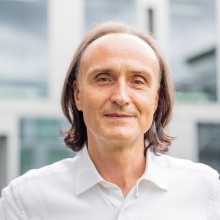
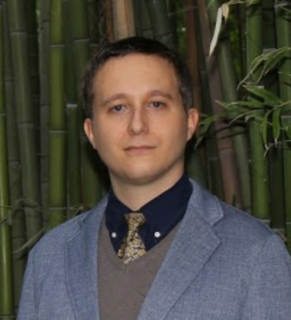
Frank Leymann is a Professor at the Institute for Architecture of Application Systems, University of Stuttgart. His research spans quantum computing, cloud systems, middleware, and business process management. Affiliation: University of Stuttgart, Institute for Architecture of Application Systems Key Projects: PlanQK, EniQmA, OpenTOSCA, SeQuenC Academic Recognition: Over 30 years of publications in service computing and quantum technologies Research Interests: His work focuses on quantum software engineering , hybrid quantum-classical systems , and cloud application architectures . Notable contributions include TOSCA standardization for cloud deployment and systematic studies on quantum optimization. Recent Publications: 2025-2024 articles emphasize quantum algorithm expressivity , cross-chain blockchain transactions , and post-quantum security . Earlier works (2023-2021) address quantum workflow provenance , QAOA optimization , and IoT platform architectures . Technical Leadership: Director of a multidisciplinary team developing frameworks like OpenTOSCA and tools for quantum application deployment.
Alessandro Giuseppi is an Assistant Professor in Tenure Track at the University of Rome La Sapienza's Department of Computer, Control, and Management Engineering (DIAG). He leads research in intelligent control systems and smart networks at the Network Control Laboratory, while serving as CTO of the startup Automation Intelligence and Control (AICO). As Associate Editor for IEEE Transactions on Automation Science and Engineering and International Journal of Control, Automation, and Systems , he bridges academic research with practical applications. M.Sc. & Ph.D. in Automatic Control from La Sapienza National Scientific Qualification for Associate Professor (2023) Active in EU/National funded projects since 2016 His research spans intelligent systems, network control, and AI integration in automation. Publications emphasize federated learning, deep learning applications, and control theory advancements across domains like autonomous vehicles, healthcare, and industrial automation. Key awards include the Minerva Prize (twice) and Telespazio's T-TeC. Recent publications address: (1) Federated learning with adaptive topologies, (2) Healthcare AI for diabetes management and portal hypertension diagnosis, (3) Industrial AI for manufacturing quality control, and (4) Smart network control in 5G/6G telecommunications. 2023 Premio Minerva - Best Postdoctoral Researcher 2021 Premio Minerva - Best PhD Candidate 2021 Best ETRI Journal Paper 2020 Telespazio Technology Contest Winner As course instructor, he teaches Intelligent and Hybrid Control, Automazione, and Laboratorio di Automatica. His leadership extends to co-founding startup AICO and collaborating with CRAT research consortium on Horizon Europe projects.
Prof. Wil van der Aalst is a full professor at RWTH Aachen University leading the Process and Data Science (PADS) group. He holds part-time affiliations with multiple institutions, including the Fraunhofer-Institut für Angewandte Informationstechnik (FIT) , Technische Universiteit Eindhoven (TU/e) , and Queensland University of Technology (QUT) . Additionally, he is a distinguished fellow of Fondazione Bruno Kessler (FBK) and serves on the Board of Governors of Tilburg University . His research focuses on process mining , leveraging business process management , Petri nets , and process modeling to analyze and optimize workflows. His work intersects with software engineering , big data , and data engineering , emphasizing the application of data science to process-aware systems. Wil van der Aalst has been recognized with numerous scientific awards, including the prestigious Alexander-von-Humboldt Professorship (2018), doctor honoris causa from Hasselt University (2012), and Distinguished University Professor title at TU/e (2013). He is an IFIP Fellow and elected member of several European academies. He has co-chaired major academic conferences such as Business Process Management , IEEE International Conference on Services Computing , and Petri Nets . His editorial contributions span journals like Business & Information Systems Engineering and IEEE Transactions on Services Computing . He advises organizations including Celonis and Fluxicon and has been cited over 100,000 times (h-index 148).
Rob Dickerson is an Assistant Professor of Computer Science at Augustana, specializing in programming languages and formal methods with a focus on practical software engineering applications. His research bridges theoretical principles and real-world implementation challenges. His primary research interests include relational verification , e-graph applications , and modular program logic . He develops techniques for aligning programs, inferring library specifications through data-driven methods, and verifying relational properties across multiple executions. Current projects include KestRel for program alignment and RHLE for relational ∀∃ properties. Key contributions span publications at premier venues including OOPSLA, APLAS, and PLDI workshops. His work on Elrond received a Distinguished Artifact Award at OOPSLA 2021. Notable publications examine relational verification (2025), e-graph-based alignment (2025), and modular verification of relational properties (2022). Distinguished Artifact Award (Elrond, OOPSLA 2021) Dickerson maintains active industry connections through prior work at Square and participates in academic service through venues like the PurPL seminar at Purdue. Outside academia, he engages in épée fencing and amateur piano/violin performance.
Dirk Müller is a Professor of Software Technology/Operating Systems at the Faculty of Computer Science/Mathematics, Dresden University of Applied Sciences (HTW Dresden). He has been in this position since 2016 and is an active member of the Faculty Council since June 2021. He was awarded IEEE Senior Member status in April 2023. His academic journey includes a doctorate in Engineering from the University of Kassel in 2006, habilitation at Chemnitz University of Technology in 2014, and prior research positions at Philipps University of Marburg and Florida State University. 1995-2002: Studies in Medical Informatics at University of Leipzig 2003-2006: Research Assistant/Doctoral Student at University of Kassel 2006-2008: Research Associate at Philipps University of Marburg 2008-2014: Academic Councillor at Chemnitz University of Technology 2014-2016: Private Lecturer at TU Chemnitz 2016-present: Professor at HTW Dresden Professor Müller's research focuses on real-time systems and scheduling, model-driven software development, digitalization in companies and administration, and the concept of information. His work particularly emphasizes Rust language applications in software engineering. He has published extensively on real-time scheduling algorithms, mixed-criticality systems, and embedded systems. His teaching responsibilities include Operating Systems I, Software Engineering I & II, Model-Driven Software Development, and Programming in Rust. His publication record shows a consistent focus on real-time systems, with a clear progression from theoretical scheduling algorithms to practical implementations. His recent work has expanded into public administration digitization and biometric conference systems, while maintaining his core expertise in scheduling theory. The publications demonstrate strong international collaboration, particularly with researchers like Matthias Werner, Alejandro Masrur, and Robert Baumgartl. IEEE Senior Member (2023) Erdős number: max. 4 Strict Erdős number: max. 5 Professor Müller actively supervises student theses, with over a dozen bachelor's and diploma theses completed between 2023-2025. His students work on diverse topics including Rust programming, workflow automation, user experience optimization, and real-time event processing. He serves as a reviewer for multiple prestigious journals including IEEE Transactions on Parallel and Distributed Systems, Real-Time Systems, and The Computer Journal. He also acts as Senior Editor for Computer Science Books at Versita. His laboratory work focuses on practical implementations of real-time systems, often using Raspberry Pi as a platform for traffic analysis and other embedded applications. His research group maintains strong connections with industry, as evidenced by the applied nature of student projects at companies like IntraConnect GmbH.
Lena Maier-Hein serves as one of Helmholtz Imaging's center coordinators at the German Cancer Research Center (DKFZ), head of the Intelligent Medical Systems division, managing director of the Data Science and Digital Oncology cross-topic program, and is a full professor at Heidelberg University. She also holds the position of managing director at the National Center for Tumor Diseases (NCT) Heidelberg. Her research focuses on machine learning-based biomedical image analysis with specific emphasis on surgical data science, computational biophotonics, and validation of machine learning algorithms. As a fellow of both the Medical Image Computing and Computer Assisted Intervention (MICCAI) society and the European Laboratory for Learning and Intelligent Systems (ELLIS), she leads significant initiatives including presidency of the MICCAI special interest group on challenges and chairing the international surgical data science initiative. Her publication portfolio demonstrates strong focus on algorithm validation, surgical data science, and medical imaging AI, with recent work addressing critical issues in reproducibility, bias in medical AI, and practical clinical implementation. The articles reveal consistent themes around establishing rigorous validation frameworks, developing practical surgical AI tools, and addressing real-world deployment challenges in medical imaging. Her notable scientific recognition includes: 2013 Heinz Maier Leibnitz Award of the German Research Foundation (DFG) 2017/18 Berlin-Brandenburg Academy Prize European Research Council (ERC) starting grant (2015-2020) ERC consolidator grant (2021-2026) She serves on the editorial boards of prestigious journals including Nature Scientific Data, IEEE Transactions on Pattern Analysis and Machine Intelligence, and Medical Image Analysis, demonstrating her leadership in establishing standards for medical imaging research. Her work bridges fundamental AI research with practical clinical applications, particularly in surgical settings where real-time decision support is critical.
Kerstin Droß-Krüpe is a Senior Lecturer in Ancient History at the University of Kassel, specializing in Roman Egypt's economic and social structures through papyrological analysis. Her research bridges textile production, gender dynamics, and reception studies, particularly focusing on Eastern monarchs in Baroque opera. Doctorate (Marburg, 2010) and Habilitation (Kassel, 2020) Awarded Privatdozentin title by Kassel University (2020) Senior Academic Councillor at Ruhr University Bochum (2021–2025) Her scholarship explores: Textile industry organization in Roman Egypt Gender roles in ancient economic systems Cultural transmission through Baroque opera adaptations Principal-agent theory in Roman trade Persian and Semitic dress as historical narrative tools Recent publications analyze: Textile terminology standardization Tax compliance mechanisms Color symbolism in imperial documentation Lease agreements for commercial spaces Apprenticeship contracts Recognitions include: Mariann-Steegmann Foundation support for habilitation monograph Pasold Research Fund grants for textile analysis DAAD funding for international conference participation She contributes to: Academic editorial boards (GIS.science, Archaeological Textile Review) Dictionary of Techniques in Antiquity steering committee EU DressID Project sub-teams
Dr. Muhammed Miah serves as Dean of the College of Business and Professor/Interim Chair of the Business Information Systems Department at Tennessee State University, with 17+ years of academic leadership including a postdoctoral fellowship at UNC Chapel Hill. His educational credentials include: Post Doc - University of North Carolina Chapel Hill, 2010 Ph.D. Computer Science - University of Texas at Arlington, 2009 M.B.A. Computer Information Systems - Quinnipiac University, 2003 M.S. Computer and Information Science - University of New Haven, 2001 B.S. Civil Engineering - Khulna University of Engineering and Technology, 1994 Dr. Miah's research bridges technological innovation with socioeconomic impact, particularly in developing economies. His work demonstrates consistent focus on blockchain applications across healthcare and real estate sectors, AI-driven diagnostic systems for pandemic response, and fintech solutions for financial inclusion. Recent publications reveal increasing emphasis on mobile technology's role in healthcare workforce development and socioeconomic implications of digital financial systems, often incorporating data analytics approaches to address real-world constraints in resource-limited settings. His recognitions include: Distinguished Scholar Award, European Journal of Scientific Research (2021) Distinguished Research Paper Award, CONISAR 2011 STEM Scholarship and Dean's Fellowship during PhD studies Government of Bangladesh Scholarship during undergraduate studies As an active editorial board member for multiple journals, Dr. Miah maintains strong scholarly engagement while leading business education initiatives. His leadership combines technical expertise in information systems with practical understanding of economic development challenges, particularly through his ongoing research in developing nation contexts.
Konstantinos Kallas serves as Assistant Professor of Computer Science at the University of California, Los Angeles (UCLA), commencing his appointment in January 2025. Previously affiliated with the University of Pennsylvania as evidenced by his 2020 PLDI contribution, his research bridges theoretical formal methods with practical systems engineering across multiple high-impact conferences including PLDI, POPL, and SPLASH. His research program centers on enhancing computational efficiency and correctness in systems software, with three flagship projects defining his trajectory: PaSh for automatic shell script parallelization, Durable Functions for stateful serverless computing semantics, and DiffStream for differential testing of stream processing. These efforts consistently target the intersection of programming language theory and real-world systems constraints, particularly in parallelism, concurrency, and cloud-native environments where correctness guarantees are challenging to implement. Analysis of his publication history since 2020 reveals a methodological pattern: developing formal semantic models to enable practical optimizations in distributed systems. His work increasingly focuses on serverless architectures and data-intensive pipelines, with recent contributions emphasizing automated verification techniques. The evolution from shell script optimization (2020-2021) to serverless state management (2021-2022) demonstrates strategic expansion into cloud computing's hardest problems. Dr. Kallas actively contributes to the academic community through program committee service for PLDI (2022, 2025), POPL (2021, 2022, 2023), and SPLASH (2020-2023), including leadership roles as Publicity Co-Chair for PLDI 2025 and 2026. His June 2024 announcement confirms recruitment for Fall 2025 students at UCLA, targeting researchers interested in systems, compilers, and programming languages who can advance his work on correctness-preserving parallelization and serverless computing.
Assoc. Prof. Dr. Boyan Kolev Zhekov serves as Associate Professor in the Department of Computer Science at the University of Information Technology and Management in Ruse (UniBIT), Bulgaria, with additional scientific supervision roles in doctoral programs at ISTICN and ASOIU. His institutional footprint spans teaching, research leadership, and cross-organizational collaboration in national IT research initiatives. Research activities concentrate on high-impact domains where theoretical computer science meets operational security challenges: Cybersecurity : Developing self-improving cybercrime investigation techniques and security assessment methodologies for information systems/networks, with specialized focus on EU tax administration data protection Blockchain Innovation : Researching secure multi-party computation applications and transaction identification systems for financial assets Big Data Ecosystems : Architecting analytical frameworks for IoT data and learning experience optimization using machine learning Human-Technology Integration : Modeling user experience in workflow management systems and examining legal-technical interfaces in electronic printing As a dedicated doctoral supervisor, Dr. Zhekov guides 11 candidates across these interconnected fields, with research outputs directly addressing Bulgaria's and the EU's evolving cybersecurity infrastructure needs. His supervision portfolio demonstrates exceptional versatility in bridging theoretical rigor with practical implementation in critical national security contexts.
Chase Gaiefsky serves as a Part-time Adjunct Professor in Nova Southeastern University's Department of Philanthropy/Public Administration/Real Estate while holding a concurrent executive role as VP of Acquisitions and Development at Kenco Communities. With over five years of teaching experience, he bridges academic theory with active South Florida land development practice across Miami-Dade, Broward, and Palm Beach counties. His academic credentials include: M.S. in Real Estate Development from Nova Southeastern University B.S. in Business Administration from Nova Southeastern University Gaiefsky's expertise centers on transactional real estate disciplines where academic instruction meets industry execution. His courses REE 3301 (Real Estate Principles, Practices, and Law) and REE 4312 (Construction Cost Estimating) integrate live deal analysis from Kenco Communities, emphasizing financial underwriting, contract negotiation, and residential development workflows. This practitioner-focused approach provides students with actionable skills for land acquisition and development careers. While maintaining his primary industry role at Kenco, Gaiefsky leverages his $200M+ pipeline management experience at Lennar and D.R. Horton to contextualize classroom learning. His professional network offers students direct exposure to major residential developers, though formal research mentorship or graduate advising isn't part of his part-time academic appointment.
Bartosz Zieliński is a Lecturer in the Department of Computer Science within the Faculty of Physics and Applied Computer Science at the University of Lodz. His academic work spans multiple disciplines including quantum computing, database systems, concurrency programming, and formal methods. He maintains an active research profile with numerous publications in prestigious journals and conferences. His research interests focus on the intersection of theoretical computer science and practical applications. Zieliński has made significant contributions to quantum geometry, particularly in noncommutative geometry and quantum spheres, while also exploring database theory through allegories and formal concept analysis. His work on concurrency programming, especially in Python, demonstrates practical applications of theoretical concepts in modern software development. Analysis of his publications reveals a strong pattern of interdisciplinary research connecting mathematics with computer science. His early work focused on quantum computing and noncommutative geometry, while more recent publications emphasize database systems, access control mechanisms, and programming language theory. This evolution shows a trajectory from pure mathematical research toward more applied computer science topics with practical security and database implications. Zieliński actively contributes to the academic community through publications in journals such as Journal of Noncommutative Geometry, Axioms, and various conference proceedings. His blog demonstrates engagement with practical programming topics, particularly concurrency in Python and Windows systems programming. As a faculty member, Zieliński teaches in the Department of Computer Science, with documented office hours on Tuesdays from 12:00-14:00. His technical blog showcases expertise in Python concurrency, Windows systems programming, and PowerShell scripting, indicating a strong practical component to his teaching approach alongside his theoretical research.
Trond Aalberg is a Professor at Oslo Metropolitan University's Faculty of Social Sciences within the Department of Archivistics, Library and Information Science. His research focuses on semantic technologies, metadata standards, and information behavior with strong applications in digital libraries and cultural heritage systems. He maintains an active research profile with significant contributions to bibliographic modeling frameworks like CIDOC CRM and IFLA LRM. His primary research interests include Semantic Web technologies, Information Retrieval systems, Metadata schema design, Ontology development, and Digital Library infrastructure. Current work examines user information needs in cultural heritage contexts, compound object presentation in search interfaces, and the application of pervasive learning games in educational settings. His research bridges theoretical information science with practical implementations in library systems and educational technology. Professor Aalberg leads the Information Systems based on Metadata (METAINFO) research group. His publication trends show consistent contributions to major venues including Cataloging & Classification Quarterly , ACM Transactions on Computing Education , and TPDL conferences. Recent work demonstrates growing interdisciplinary connections between information science, computer science education, and cultural heritage documentation. He actively contributes to professional discourse through conference presentations at events like CoLIS, KORG, and NIKT. His work on peer assessment tools and educational game design reflects strong engagement with computing education challenges. While no formal awards are documented in the provided materials, his sustained publication record across multiple formats (research articles, textbooks, dissemination) indicates significant scholarly impact. Aalberg maintains strong institutional engagement through OsloMet's research infrastructure. His work on metadata standards connects with international initiatives including IFLA's Library Reference Model development. The METAINFO research group serves as his primary academic home, focusing on metadata-driven information systems across cultural heritage and educational contexts.
Zhiyuan Wan is an Associate Professor in the College of Computer Science and Technology at Zhejiang University, China. His academic career spans multiple prestigious institutions across North America and Asia, with a focus on advancing software engineering practices through empirical research and tool development. Dr. Wan's educational background includes: Ph.D. in Computer Science from Zhejiang University (2014) His postdoctoral journey featured positions at: University of British Columbia, Canada (2019-2020) Singapore Management University (2018) Zhejiang University (2016-2020) Lehigh University, United States (2014-2015) Dr. Wan's research program centers on empirical software engineering with particular expertise in blockchain technologies and software security. His work bridges theoretical insights with practical tool development, focusing on: Smart contract security and vulnerabilities in cryptocurrency ecosystems Code search and recommendation systems for developer productivity Empirical studies of developer practices and challenges Impact of machine learning on software development workflows His approach combines rigorous empirical methods with practical tool building to address real-world challenges faced by software practitioners. Analysis of Dr. Wan's recent publications reveals a strategic evolution toward blockchain security research, beginning around 2020 with studies on smart contract security and expanding to cover NFT ecosystems, Solana blockchain transactions, and cross-chain vulnerabilities. His work consistently applies empirical methods to uncover practical insights while developing tools that directly address identified challenges in software development. Dr. Wan actively contributes to the software engineering community through service on program committees for major conferences including ASE, ICSE, ESEC/FSE, and ISSTA. His academic leadership extends to mentoring relationships with students and collaborators across international institutions, though specific advisees are not documented in the provided materials.