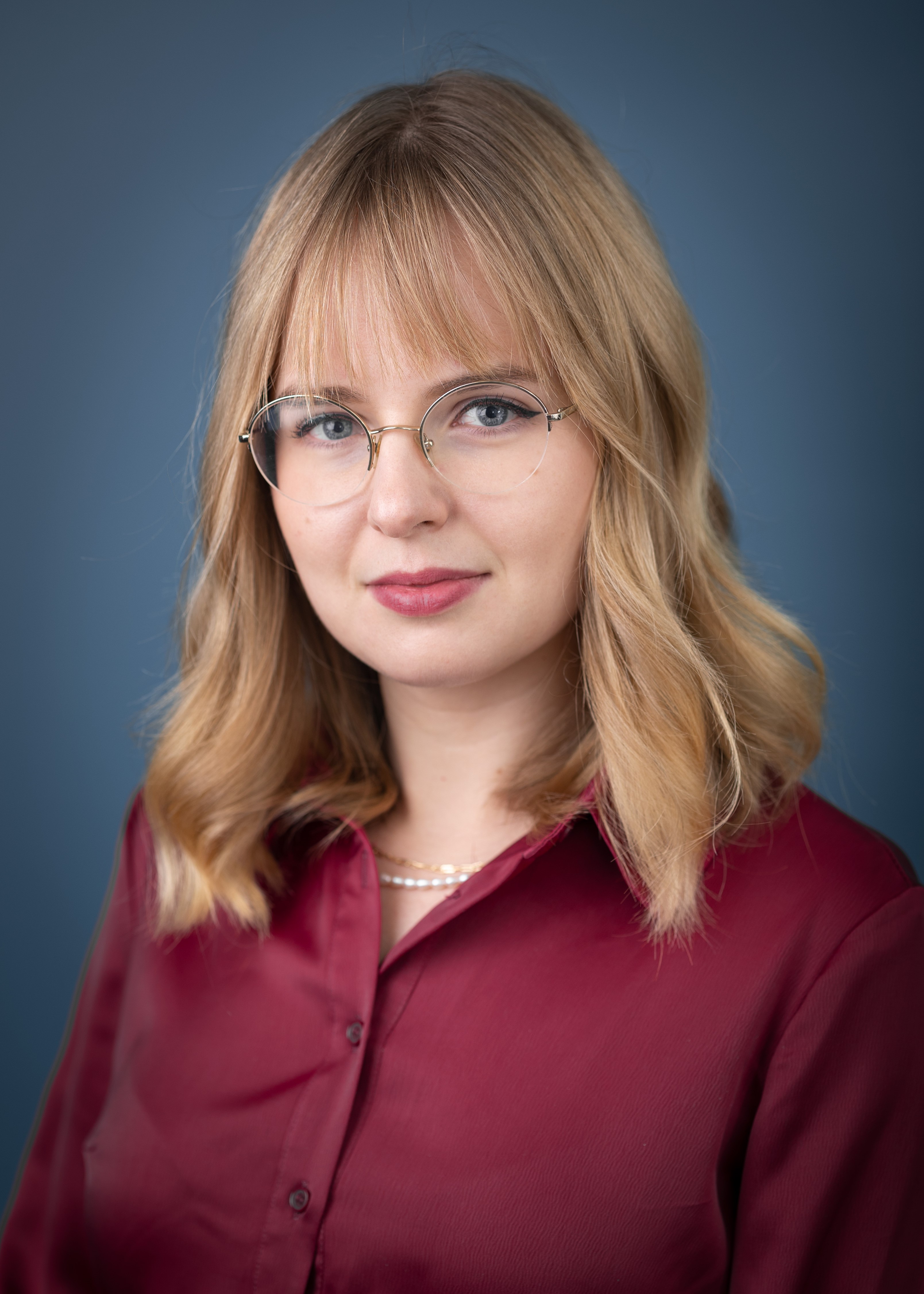
Elena Tuzhilina is an Assistant Professor in the Department of Statistical Sciences at the University of Toronto, specializing in machine learning, applied statistics, and computational biology. Her research focuses on statistical tools for chromatin 3D spatial structure reconstruction and analyzing emotional disorders' impact on brain function. Ph.D. in Statistics from Stanford University Specialist's degree from Moscow State University Two-year Data Science program at Yandex School Her research spans high-dimensional data analysis , dimension reduction , and statistical modeling in biological contexts. She has developed novel algorithms for chromatin conformation reconstruction and pandemic trajectory modeling. Recent publications focus on canonical correlation analysis , low-rank matrix approximation , and 3D genome architecture , with applications in computational biology and neuroscience. Dorothy Shoichet Women Faculty in Science Award JSM Student Travel Award Outstanding Teaching Assistance at Stanford Stanford Teaching Assistant Award Elena supervises PhD students and postdoctoral fellows across disciplines including statistical sciences, biochemistry, and applied mathematics. She has secured multiple grants including a NSERC Discovery Grant and University of Toronto Accelerator Grant .
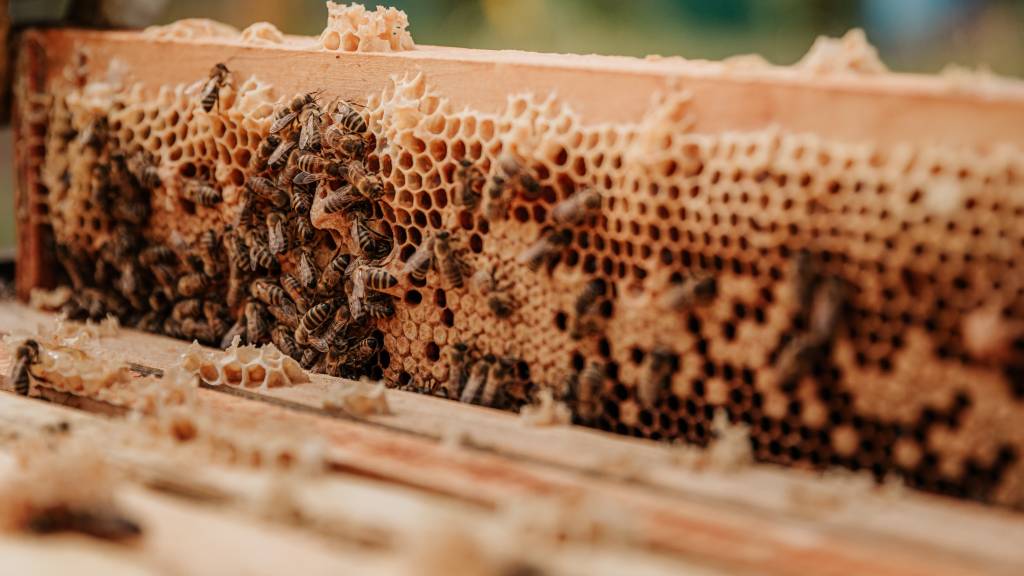
Farshad Arvin is a Professor of Robotics in the Department of Computer Science at Durham University. Prior to this, he held academic positions at The University of Manchester (2018-2022) and worked as a Research Assistant at the University of Lincoln (2012-2015). He holds a BSc in Computer Engineering (2004), an MSc in Computer Systems Engineering (2010), and a PhD in Computer Science (2015). His research focuses on Swarm Robotics , Bio-inspired Swarms , and Autonomous Multi-agent Systems . He pioneered the Swarm & Computation Intelligence Laboratory (SwaCIL) at Durham, leading projects like H2020-FET RoboRoyale (€3.27M), Horizon Europe Sensorbees (€3.2M), and BioDiMoBot (€8M), with total funding exceeding £4M. Recent publications highlight advancements in swarm trajectory optimization (T-STAR), collision-free multi-robot coordination, and bio-hybrid environmental monitoring. His work integrates bio-inspired algorithms with practical applications in autonomous vehicles, aerial drones, and hazardous environments. Scientific Awards: Marie Skłodowska-Curie fellowship Notable Projects: EU H2020-FET RoboRoyale (2021-2026) Horizon Europe Sensorbees (2024-2029) Horizon Europe BioDiMoBot (2025-2030) H2020-FET Robocoenosis (2020-2025) Supervision: Mentors 8 postgraduate students at Durham, including Hanadi Alhamdan, Hang Wang, and Honghao Pan.
Helen Oleynikova is a Lecturer at the Department of Mechanical and Process Engineering at ETH Zürich, where she is part of the Autonomous Systems Lab. She works on the intersection of perception and planning, particularly for micro-aerial vehicles. Her research focuses on real-time onboard mapping, planning, and localization using visual-inertial systems and signed distance fields. Research Interests: Helen's work spans robotics, autonomous systems, and computer vision, with a focus on enabling safe and efficient navigation in complex environments. She specializes in visual-inertial odometry, SLAM, 3D mapping using signed distance fields, and real-time path planning for MAVs. Her projects often involve embedded systems and FPGA-based high-speed vision for obstacle avoidance. Publication Trends: Her recent publications (2023–2019) show a consistent focus on real-time, onboard algorithms for autonomous navigation. Key themes include signed distance function maps, collision-free motion generation, global localization, and efficient exploration. She frequently publishes in top-tier robotics conferences such as ICRA and IROS, and journals like IEEE RA-L and Journal of Field Robotics. Professional Experience: Senior Researcher, Autonomous Systems Lab, ETH Zürich Senior Software Engineer, Isaac 3D Perception, Nvidia Senior Scientist, Microsoft Mixed Reality and AI Lab, Zürich Software Engineer, Google (StreetView) Contributor, Willow Garage (ROS, TurtleBot Arm) Education: PhD in Robotics, ETH Zürich (2019) MSc in Robotics, ETH Zürich BSc in Robotics, Olin College of Engineering (2011) Advising and Grants: While no formal students are listed, she has collaborated extensively with researchers at ETH Zürich and industry labs. Her work has been supported through institutional affiliations and industry research roles. She has contributed to open-source robotics software, particularly in ROS-based systems for manipulation and navigation. Labs and Teams: Helen is a key member of the Mobile Manipulation team at the Autonomous Systems Lab at ETH Zürich. She has also been involved in projects at Nvidia, Microsoft, Google, and Willow Garage, focusing on real-world deployment of autonomous systems.
Chen-Yu Wei is an Assistant Professor in the Department of Computer Science at the University of Virginia. He holds a Ph.D. from the University of Southern California (2022), and M.S. and B.S. degrees from National Taiwan University (2015, 2012). His research focuses on interactive machine learning, emphasizing robust and adaptive algorithms for non-stationary/adversarial environments, sample-efficient reinforcement learning, and decentralized multi-agent systems. Education: Ph.D., Computer Science, University of Southern California, 2022 M.S., Electrical Engineering, National Taiwan University, 2015 B.S., Electrical Engineering, National Taiwan University, 2012 Research interests include reinforcement learning, game theory, and algorithmic economics. He has received prestigious awards such as the COLT and ALT Best Paper Awards (2021-2022) and the Simons-Berkeley Research Fellowship (2022). His work bridges theory and practice, addressing challenges in adversarial environments and multi-agent coordination. Current research group members include Haolin Liu (PhD), Braham Snyder (PhD), Kingsley Kim (Undergraduate), and Rishik Balerao (Undergraduate). Teaching includes courses on Reinforcement Learning, Artificial Intelligence, and Algorithmic Economics. He co-organizes the RL Meetup and Theory Seminar at UVA.
Dong Ngo Duy is an Associate Professor in the Department of Civil & Environmental Engineering at Monash University, where he serves as the Head of the Transport Section. He holds a PhD in Traffic Flow Theory and Simulation from Delft University of Technology and has held academic positions at the University of Leeds (UK), University of Canterbury (NZ), and now Monash University (Australia). PhD, Traffic Flow Theory, Technische Universiteit Delft (2006) MSc, Traffic Engineering, Linköpings Universitet (2002) His research focuses on Connected and Autonomous Vehicles (CAVs) , Traffic Flow Theory , Data Fusion , and Urban Network Optimization . He applies AI and machine learning to model, predict, and control multi-modal traffic systems, aiming to develop smart city platforms for sustainable transport in mega-cities. The recent trend in his publications (2022–2025) reflects a strong focus on intelligent transportation, including trajectory planning, risk-aware control, car-following modeling using neural symbolic regression, and intercity mobility analysis. His work bridges theoretical modeling with practical applications in emerging connected environments. Scientific Awards: UK Research Council (EPSRC) Advanced Fellow Award (2011–2016) in Connected and Autonomous Vehicles Dong Ngo Duy actively supervises PhD students and contributes to major research initiatives in intelligent transport systems. His work aligns with UN Sustainable Development Goals, particularly in sustainable cities and transport. He previously chaired the Connected Traffic Systems Lab at the University of Canterbury and continues to lead impactful research in transport innovation.
Liji Shen is Professor of Operations Management and Chairholder at WHU – Otto Beisheim School of Management, Campus Vallendar, Germany. She is affiliated with the Supply Chain Management Group and leads research in scheduling, optimization, and sustainable manufacturing. Her academic journey includes a Ph.D. and Habilitation from Technische Universität Dresden, and she has held visiting scholar positions at institutions including École des Mines de Saint-Étienne and Huazhong University of Science and Technology. Ph.D. (Dr.rer.pol.), summa cum laude, Technische Universität Dresden (2009) Habilitation, Technische Universität Dresden (2015) Master of Business Administration (Dipl.-Kffr.), Technische Universität Dresden (2006) Liji Shen's research focuses on Operations Management , particularly scheduling optimization in manufacturing systems. Her work spans flexible job shops , parallel machine scheduling , energy-efficient production , and sequence-dependent setup times . She applies advanced techniques such as evolutionary algorithms , hybrid metaheuristics , and mathematical programming to solve complex industrial problems. Her recent publications emphasize sustainability through energy-aware scheduling and time-of-use pricing models. The 15 most recent publications highlight a consistent research trajectory in production scheduling , with increasing emphasis on energy efficiency , distributed manufacturing , and real-world constraints like eligibility and delivery times. Her work frequently appears in top journals such as European Journal of Operational Research , IEEE Transactions on Evolutionary Computation , and Computers & Operations Research , often in collaboration with leading researchers like Dauzère-Pérès, Mönch, and Buscher. Scientific Awards: European Journal of Operational Research, Best Paper Award (2021) DFG and TU Dresden, 'Support the Best' Prize for Outstanding Researchers (2013) Dr. Feldbausch-Prize for Best Dissertation, TU Dresden (2010) Scholarship for Young Researchers in Saxony (2006–2009) DAAD Prize for Best Foreign Students (2007) Best Master’s Thesis, German Operations Research Society (2007) Liji Shen has been an active advisor and researcher, leading projects in operations research and industrial optimization. Her editorial role on Operations Research Perspectives underscores her standing in the academic community. She has directed research labs and collaborated internationally, contributing to both theoretical advancements and practical applications in manufacturing and logistics. No specific grants are mentioned, but her sustained publication record and leadership roles indicate strong research support. She leads the Operations Management research group at WHU, focusing on algorithmic solutions for complex scheduling problems. Her team investigates energy-aware production, hybrid flow shops, and distributed systems, aiming to bridge the gap between theoretical models and industrial implementation. The lab collaborates with researchers across Europe and China, fostering a global research network in operations research and supply chain management.
Peter K. Allen is a Professor of Computer Science at Columbia University's School of Engineering and Applied Science, with a career spanning over three decades in robotics research. His work focuses on robotic grasping , 3D vision and modeling , and medical robotics , where he has made significant contributions to autonomous manipulation and sensor integration. Current affiliation: Columbia University Robotics Lab Academic rank: Professor Key research areas: Robotics, Computer Vision, Artificial Intelligence Education A.B. in Mathematics-Economics from Brown University M.S. in Computer Science from University of Oregon Ph.D. in Computer Science from University of Pennsylvania (recipient of CBS Foundation Fellowship, Army Research Office Fellowship) Research Interests Allen's research bridges fundamental robotics challenges with applied domains. His work on robotic grasping explores low-dimensional subspaces and semantic task suitability, while 3D vision contributions include illumination coherence and texture registration methods. In medical robotics , he develops surgical imaging tools and BCI-enabled grasping systems. Recent publications show trends in: Deep learning for robotic manipulation (2017-2022) Human-robot interaction through BCI and augmented reality Deformable object manipulation (garments, thin shells) Multi-modal sensing (vision-tactile fusion) Scientific Recognition NSF Presidential Young Investigator Award Best Student Paper Award (2007) for collaborative work Over 30 years of continuous funding from NSF, Army Research Office, and medical grants Teaching and Mentorship He has taught graduate courses in robotics (COMS 4733/6731) since 2010, emphasizing hands-on projects with advanced platforms like Baxter, PR2, and Fetch robots. His lab provides immersive training in: 3D photography Humanoid robotics Autonomous navigation Grasp planning
Assoc. Prof. Hana Vančová, PhD., is a dedicated academic at Trnava University's Faculty of Education, where she has served as an Associate Professor in the Department of English Language and Literature since 2013 (promoted from Assistant Professor following her 2022 habilitation). Currently Deputy Head of Department for Education, she oversees curriculum development and serves as study advisor for single-subject and combined English language teacher education programs at bachelor's, master's, and doctoral levels. Her institutional commitment spans over a decade with full-time employment since 2013. Education: 2004–2009: Master of Arts (Mgr.) in English Language and Literature – Slovak Language and Literature, Faculty of Education, Trnava University 2009–2012: Doctor of Philosophy (PhD.) in Pedagogy, Faculty of Education, Trnava University 2019: Professional Development: "Teaching languages in the digital era: the best apps, web platforms and ICT solutions for learning languages", Institute for Training, Employability and Mobile Learning Hana Vančová's scholarly work centers on English pronunciation pedagogy , with pioneering research in technology-enhanced instruction . Her primary domains include phonetics and phonology , lexicology , and digital language learning tools , investigating how AI, mobile applications, and multimedia resources optimize pronunciation acquisition. She bridges theoretical linguistics with practical classroom applications through ergonomic educational design, emphasizing learner-centered methodologies that address sociolinguistic factors like accent identity and intelligibility. Her habilitation thesis established her as a key innovator in pronunciation technology. Analysis of Vančová's publication trajectory (2014-2024) reveals a decisive shift from foundational studies on Slovak learners' pronunciation errors toward cutting-edge research on AI-driven pronunciation training. Her recent work explores karaoke-based methods and ethical AI implementation in CALL (Computer-Assisted Language Learning), highlighting human-AI interaction dynamics. The consistent thread is her commitment to making pronunciation instruction accessible through technological innovation, with publications increasingly addressing inclusivity, ethical considerations, and ergonomic design in digital language learning environments. While no specific scientific awards are documented beyond her academic promotion, Vančová's habilitation procedure—evaluated by an international committee including scholars from Poland, Czech Republic, and Slovakia—represents significant scholarly recognition. Her work has received 36 citations (14 foreign, 22 domestic) as of 2021. As study advisor for English language teacher training programs, Vančová mentors students across bachelor's, master's, and doctoral studies, guiding curriculum development for profile subjects in phonetics, lexicology, and digital language education. She maintains structured consultation hours (Wednesdays 10:00-11:30, study advising 11:30-13:00 via MS Teams) and demonstrates sustained research productivity through monographs, textbooks, and peer-reviewed articles. Though specific grant funding isn't detailed, her habilitation thesis exemplifies capacity for substantial scholarly projects with practical pedagogical impact. No dedicated laboratories or formal research teams are documented; Vančová's academic activities operate within the Department of English Language and Literature framework, focusing on individual research initiatives and departmental leadership in educational technology integration.
Dr. Shervin Shirmohammadi is a Professor at the University of Ottawa's Faculty of Engineering, specifically within the School of Electrical Engineering and Computer Science. With an impressive h-index of 41 and over 6,800 citations across 473 publications, his research has made significant contributions to the fields of computer vision, biomedical instrumentation, and health monitoring systems. His academic journey spans over two decades, beginning with work on communication architectures for virtual environments in 2001 and evolving toward practical healthcare applications. Dr. Shirmohammadi's research interests center on Computer Vision , Image Processing , and Embedded Systems with a strong focus on healthcare applications including nutrition monitoring, mental health assessment, and driver safety systems. His most influential work examines computer vision applications for health monitoring, particularly food calorie measurement systems that use smartphone cameras to analyze nutritional content. His research has evolved to include EEG-based systems for ADHD detection and serious games for autism therapy, demonstrating a consistent trajectory toward practical healthcare solutions using advanced instrumentation techniques. Dr. Shirmohammadi maintains active collaborations with researchers including A. Yassine (118 joint publications), D. Ahmed, Ali Asghar Nazari Shirehjini, and B. Hariri. His publications appear primarily in IEEE Transactions on Instrumentation and Measurement, reflecting his strong connection to the instrumentation and measurement community.
Ricardo Azambuja Silveira is a Professor at the Federal University of Santa Catarina, Brazil, with a distinguished research career spanning over two decades in the fields of multi-agent systems, intelligent tutoring systems, and semantic web technologies for education. His work bridges artificial intelligence with educational technology, creating innovative frameworks for adaptive learning environments and intelligent educational agents. Dr. Silveira's research interests focus on developing agent-based approaches to enhance educational experiences through technologies like BDI (Belief-Desire-Intention) architectures, ontology-based systems, and multi-context reasoning. His work particularly emphasizes the integration of intelligent agents with learning management systems to create personalized educational experiences. His recent publications demonstrate a continued evolution from foundational multi-agent frameworks to sophisticated neural-symbolic integrations and context-aware educational technologies. Throughout his career, he has published over 60 scholarly works, with consistent output from 2001 through 2024, demonstrating sustained research productivity. His publication trends show a clear trajectory from early work on JADE (Java Agent Development Framework) for distance education to current research on neural-symbolic integration in agent systems. The majority of his publications appear in prominent conferences like PAAMS, MICAI, and ICAART, reflecting his standing in the multi-agent systems community. Dr. Silveira has mentored numerous researchers who have become his frequent collaborators, including Arnoldo Uber Junior, Rodrigo Rodrigues Pires de Mello, and Thiago Ângelo Gelaim. His research has been supported through various academic grants that enabled the development of frameworks like Sigon (a multi-context system framework) and iEnsemble (for committee machine learning). He has been actively involved in the organization of academic events, particularly the Methodologies and Intelligent Systems for Technology Enhanced Learning (MIS4TEL) conference series, where he has served as both participant and organizer. His work contributes significantly to the theoretical foundations and practical implementations of intelligent educational technologies.
Katharina Kaltenbrunner serves as an Associate Professor in Business Administration at the University of Salzburg (Paris Lodron Universität Salzburg), where she maintains an active research profile with publications extending through 2025. Her institutional affiliation is evident from her university email address (Katharina.Kaltenbrunner@plus.ac.at) and ORCID profile. Her research interests focus on nonprofit marketing, blood donation behavior, partnership capabilities, disaster management, and volunteer tourism. Kaltenbrunner's work examines how dynamic partnership capabilities influence blood donation behavior, with particular attention to organizational context variables and emotional appeals through electronic word of mouth (e-WOM). She investigates how strategic relationships between blood donors and donation agencies can be optimized, and extends this research framework to areas like volunteer tourism and disaster management. Her recent publications demonstrate a strong focus on blood donation systems and partnership dynamics, with multiple publications in 2025 addressing these themes from different methodological angles. This research trajectory shows consistent development from her earlier work on disaster management exercises like Taranis 2013. Her scientific recognition includes: Best Paper Award (2024 with Stötzer) Best Paper Award (June 25, 2025 with Scheibmayr) Best Reviewer Award (March 23, 2018) Leopold-Kunschak Wissenschaftspreis 2009 (April 17, 2009) Maria Schaumayer Anerkennungspreis (2020) Kaltenbrunner has led significant research projects including 'Individual and organizational determinants of multiple blood donation' (2018-2024) as Project Manager, and 'Administrative evaluation of the international disaster management exercise Taranis 2013' (2012-2013). Her academic activities are extensive, with 78 recorded activities including 49 presentations, 12 event organizations, and 9 committee memberships spanning from 2005 to 2025. Her research has practical applications in public health campaign design, nonprofit management, and disaster response coordination, with evidence of ongoing collaborations with researchers like Scheibmayr and Stötzer across multiple publications and presentations.
Michele Gattullo serves as an Assistant Professor within the Department of Mechanics, Mathematics & Management at the Polytechnic University of Bari, Italy, specializing in design methods for industrial engineering (ING-IND/15). His research bridges cutting-edge extended reality technologies with practical industrial applications, focusing on human-centered solutions for manufacturing, maintenance, and workplace design. Dr. Gattullo's research portfolio centers on Augmented Reality, Virtual Reality, and Biophilic Design, with significant contributions to Human-Computer Interaction in industrial contexts. He investigates how nature-inspired elements in virtual workspaces enhance employee well-being and productivity, while simultaneously developing practical AR tools for assembly guidance, technical documentation, and maintenance support. His work uniquely integrates ergonomics, cognitive psychology, and industrial engineering to optimize human-technology interaction in complex production environments. Analysis of his 15 most recent publications reveals two dominant research trajectories: biophilic design frameworks for virtual/metaverse workspaces (2023-2025) and industrial AR authoring methodologies. The biophilic stream establishes evidence-based guidelines for digital nature integration, while the AR stream delivers validated tools like ADAM and minimal AR approaches that streamline technical documentation creation. Both trajectories emphasize user experience validation through rigorous industrial studies, demonstrating strong interdisciplinary impact across computer science, industrial engineering, and environmental psychology. Scientific Awards: No awards or honors were documented in the available sources. Advising and Grants: The provided materials contain no information regarding graduate student supervision, research grants, or funding sources. His academic profile emphasizes publication output over mentoring activities or project financing details. Laboratories and Teams: While Dr. Gattullo's research involves advanced XR technologies, the source text does not specify laboratory facilities, research groups, or collaborative teams associated with his work at Politecnico di Bari.
Benjamin Garner serves as Associate Professor of Marketing in the College of Business at the University of Central Arkansas (UCA), maintaining an active research program from his office in COB 312I. His contact information includes email bgarner3@uca.edu and phone (501) 450-5329, reflecting ongoing institutional affiliation. Dr. Garner's research centers on consumer behavior in experiential marketing contexts with three primary thrusts: Social media engagement dynamics in wine tourism and farmers' markets Authenticity construction through scarcity and sustainability messaging Innovative business education pedagogy including flipped classroom methodologies Analysis of his 2021-2025 publications reveals consistent methodological emphasis on ethnographic observation and text-mining of user-generated content across platforms like Facebook, Instagram, and Twitter. His work uniquely bridges agricultural marketing contexts with digital communication strategies, particularly examining how language structures influence consumer perceptions of authenticity. No scientific awards or student advising information appears in available records. Similarly, grant funding details and laboratory affiliations remain undocumented in the provided materials, though his publication output indicates sustained research activity across multiple scholarly domains.
Ulrich Schroeders is a Professor of Psychological Diagnostics at the University of Kassel, where he has been employed since October 2017. His work focuses on developing and validating psychological assessment tools, with particular expertise in cognitive diagnostics and educational measurement. He teaches various programs for approximately 500 students annually and serves as a supervisor for teacher training students preparing for their oral state examinations in Pedagogy/Psychology. Dr. Schroeders earned his PhD from Humboldt University of Berlin in 2010 with a dissertation titled "Measurement of Cognitive Abilities Using Modern Technologies: Artifacts, Equivalence, and New Constructs." Prior to that, he completed his Diploma in Psychology at Julius-Maximilians-University Würzburg in 2004 with a thesis on diagnosing dyscalculia in first-grade students. His research spans several key areas in psychological assessment. He specializes in technology-based competency diagnostics, developing innovative methods for measuring cognitive abilities and school competencies. A significant portion of his work involves applying Machine Learning and metaheuristics to psychometric problems, particularly in structural equation modeling. His methodological expertise includes advancing techniques in Local Structural Equation Modeling (LSEM) and Meta-Analytic Structural Equation Modeling (MASEM), with applications across educational and clinical psychology contexts. Analysis of Dr. Schroeders' recent publications reveals a strong focus on computational approaches to psychological assessment. His work frequently employs optimization algorithms like Ant Colony Optimization and Bee Swarm Optimization to address challenges in test construction and validation. There's a clear trajectory toward game-based and technology-enhanced assessment methods, as seen in studies using Mastermind and Wordle as assessment tools. His research also demonstrates growing interest in applying machine learning to predict behavioral outcomes, including juvenile delinquency, suicide risk, and psychotherapy outcomes. Dr. Schroeders has secured significant research funding, including projects funded by the German Research Foundation (DFG) and the Hector Foundation. His current projects include "Facing the Replication Crisis in Machine Learning Modeling" (2025-2027) and "PINGUIN: Potenzialidentifikation IN der GrUndschule" (2024-2027), which focuses on identifying elementary students' initial competencies. He leads the development of the BEFKI assessment system (Berliner Test zur Erfassung fluider und kristalliner Intelligenz), which includes versions for different age groups (5-7, 8-10, and 11+). His methodological toolbox includes specialized approaches for test construction and validation, particularly focusing on optimization algorithms applied to psychological measurement problems.
Dr. Amal Zouaq is a Full Professor in the Department of Computer Engineering and Software Engineering at Polytechnique Montréal. She holds the FRQS (Dual) Chair in AI and Digital Health, serves as Director of the LAMA-WeST research laboratory, and is an Associate Member of MILA. Her work bridges artificial intelligence with applications in digital health, cultural heritage, and educational technologies, positioning her at the forefront of interdisciplinary AI research in Canada. Her research focuses on Artificial Intelligence , particularly Natural Language Processing and the Semantic Web . Specific interests include knowledge representation, ontology learning, SPARQL query generation, bias mitigation in language models, and clinical text processing. Her work spans multiple domains including healthcare, cultural heritage, and educational technology, with emphasis on developing practical AI solutions that address real-world challenges in knowledge management and information extraction. Analysis of her recent publications reveals a strong trajectory in advancing NLP techniques for knowledge-intensive applications. Her work increasingly focuses on domain-specific applications in healthcare and cultural heritage, with growing emphasis on ethical AI considerations like bias mitigation. The research demonstrates progression from foundational semantic web technologies toward more sophisticated neural approaches while maintaining strong theoretical grounding in knowledge representation. Scientific Recognition: Holder of the FRQS (Dual) Chair in AI and Digital Health Dr. Zouaq has supervised 23 graduate students to completion, including 1 PhD and 22 Master's theses, with research spanning ontology learning, knowledge representation, and NLP applications. Her supervision record demonstrates consistent mentorship in cutting-edge AI research with practical applications across multiple domains. She actively serves on program committees for major conferences in knowledge engineering, data mining, and semantic web technologies. She directs the LAMA-WeST (Web, Semantics and Text) laboratory , which specializes in natural language processing and artificial intelligence research. The lab focuses on knowledge representation, semantic technologies, and their applications in healthcare, cultural heritage, and educational contexts. As a member of IVADO and MILA, she collaborates with leading AI researchers across Montreal's vibrant AI ecosystem.