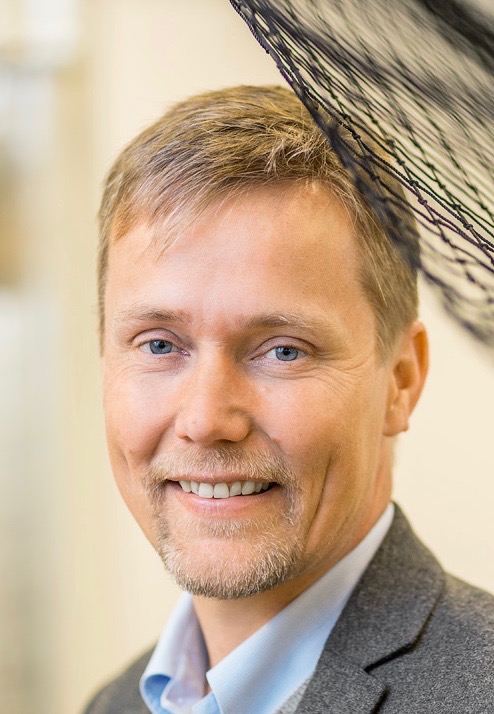
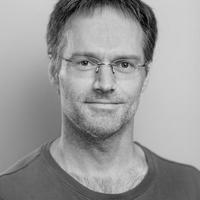
Fariya Sharmeen is an Associate Professor of Mobility and Urban Planning at KTH Royal Institute of Technology's School of Architecture and the Built Environment (ABE), affiliated with the Digital Futures Faculty. She holds a PhD from Eindhoven University of Technology and has previously served as Assistant Professor at Radboud University, Lecturer at Bangladesh University of Engineering and Technology (BUET), and research fellow at institutions including TU Delft and Imperial College London. Her research focuses on sustainable mobility transitions, social network dynamics in travel behavior, and policy responses to emerging transport technologies like MaaS and cycling innovations. Notable honors include the 2017 Piet Rietveld Award for transport research and a 2013 Royal Geographic Society award for transport geography. Sharmeen advises doctoral and master’s students on topics such as urban transformation and mobility governance. She coordinates courses like Sustainable Mobility (FAG3187) and leads projects like Bicification and ENCom. Her work integrates quantitative methods with policy analysis, addressing challenges in both global north and south contexts.
Karl Henrik Johansson is a Professor at the School of Electrical Engineering and Computer Science, KTH Royal Institute of Technology in Stockholm, Sweden, where he also serves as the Founding Director of Digital Futures. He is a Fellow of both IEEE and the Royal Swedish Academy of Engineering Sciences, and has held leadership positions including Immediate Past President of the European Control Association and IEEE Control Systems Society Vice President Diversity, Outreach & Development. Dr. Johansson earned his MSc in Electrical Engineering and PhD in Automatic Control from Lund University. His academic journey includes visiting positions at prestigious institutions such as UC Berkeley, Caltech, and NTU. His research focuses on networked control systems and cyber-physical systems with applications in transportation, energy, and automation networks. His work investigates fundamental challenges in connecting physical world systems through communication networks, exploring how wireless communication and sensor technology can enhance system robustness, reliability, energy efficiency, and safety. Current research directions include security of cyber-physical systems, distributed optimization, multi-agent systems, and applications to intelligent transportation and energy networks. Analysis of his recent publications reveals a strong focus on distributed optimization algorithms, secure networked control, multi-agent systems, and applications to transportation and energy networks. His work increasingly integrates machine learning techniques with traditional control theory, addressing challenges in privacy-preserving distributed computation, resilient state estimation, and resource allocation in complex networked systems. IEEE Control Systems Society Hendrik W. Bode Lecture Prize (2024) Swedish Research Council Distinguished Professor (2018-2027) Wallenberg Scholar (2009-2026) IFAC Young Author Prize IEEE CSS Distinguished Lecturer (2017-2019) IFAC Outstanding Service Award IEEE Fellow Dr. Johansson has supervised over 100 postdocs and PhD students, with many now holding prominent positions at institutions worldwide. His research has been supported by significant grants including the Swedish Research Council Distinguished Professor Grant (2018-2027), multiple Wallenberg Foundation grants, and numerous EU and national research projects. He has directed major research centers including ACCESS Linnaeus Centre (2009-2016) and Strategic Research Area ICT TNG (2013-2020). His research group operates within the Digital Futures initiative and maintains strong connections with industry partners through projects like the Integrated Transport Research Lab (supported by Scania and Ericsson) and Smart Mobility Lab. The group actively collaborates with international institutions and participates in major EU-funded projects addressing challenges in cyber-physical systems, transportation, and energy networks.
Magnus Bång is a Senior Associate Professor at the Department of Computer and Information Science (IDA) at Linköping University, affiliated with the Artificial Intelligence and Integrated Computer Systems (AIICS) division. His research focuses on advancing human-AI collaboration, automation systems, and AI applications in domains like cyberphysical production, air traffic management, and process industries. He has contributed to interdisciplinary projects involving real-time human-automation interfaces, explainable AI dashboards for industrial processes, and safety-critical systems integration. His work bridges theoretical AI advancements with practical implementations in sectors such as aviation and maritime logistics. Notable collaborations include research with the Swedish Maritime Administration to enhance shipping efficiency through AI and interactive visualization. He actively participates in EU-funded initiatives like the Horizon 2020 projects targeting autonomous systems and air traffic control. Research interests span MLOps for industrial systems, glyph-based communication design for human-automation teams, and operator modeling across traffic management domains. His publications emphasize cross-disciplinary solutions to challenges in automation and human-centric AI design.
Mikael Johansson is a Professor at Kungliga Tekniska Högskolan (KTH), specializing in Control Technology . He teaches and coordinates courses such as Distributed Optimization (FEL3311) and various advanced-level degree projects in computer science, electrical engineering, and systems engineering. His research spans Control Systems , Machine Learning , and Optimization , with a focus on asynchronous algorithms, federated learning, and applications in energy systems and construction. His work includes 15 recent publications on topics like neural networks, distributed optimization, and battery technology. Notable areas of contribution are in asynchronous learning, federated learning with privacy constraints, and quasi-Newton methods for optimization. His research bridges theoretical advancements with practical applications in urban design, healthcare, and autonomous systems.
Gurjot Singh is a Research Fellow at the Department of Computer and Information Science (IDA) at Linköping University, Sweden. His research focuses on cybersecurity in aviation systems, next-generation communication networks, and industrial IoT security. He collaborates with prominent researchers like Andrei Gurtov and Suleman Khan, contributing to projects such as SEC-AIRSPACE and Post Quantum Secure Handover Mechanisms. His work spans vulnerability assessments, secure protocol design, and post-quantum cryptography applications. Education details are not explicitly stated, but his research aligns with advanced cybersecurity and network engineering domains. Key research interests include aviation cyber risk assessment, secure data link communications, and privacy-preserving authentication mechanisms for IoT and industrial environments. Publications emphasize cybersecurity challenges in aviation, industrial networks, and IoT, with recent work addressing quantum-resistant protocols and drone remote identification security. Collaborations include contributions to conferences like NordSec and AIAA DATC. He is affiliated with the cybersecurity lab at LiU, supporting educational programs like Digital4Business, which integrates AI and cybersecurity expertise. His role in the Database and Information Techniques (ADIT) division highlights involvement in interdisciplinary research groups.
Jorge Gil is an Associate Professor in Urban Analytics and Informatics at Chalmers University of Technology's Department of Architecture and Civil Engineering. His research focuses on integrated urban models, Smart Cities, City Information Modelling (CIM), and Urban Digital Twins, with applications in sustainable mobility, social inclusion, energy transition, and circular economy. He develops GIS solutions and open science methodologies. Teaching includes GIS, sustainable mobility, and spatial data science courses. He supervises Bachelor, Master's, and PhD students. Current projects include LogiNets (logistics network flows analysis), ComCy (cycling safety), and FlowSense (traffic flow data). Key research outputs span agent-based modeling of waste sorting behavior, mobility equity analysis, and multimodal urban network frameworks. He co-authored over 50 publications and actively contributes to interdisciplinary urban planning initiatives.
Saleh Javadi is a Senior Lecturer at the Department of Mathematics and Natural Sciences at Blekinge Institute of Technology (BTH) in Karlskrona, Sweden. He is actively engaged in research and teaching within the field of systems engineering. His educational background includes: B.Sc. in Electrical-Control Engineering from Amirkabir University of Technology (2009) M.Sc. in Electrical, Electronic and Systems Engineering from The National University of Malaysia (2013) Ph.D. in Systems Engineering from Blekinge Institute of Technology (BTH) (2021) Saleh Javadi's research focuses on signal processing, machine learning, and computer vision , with applications spanning remote sensing, intelligent transportation systems, and AI-driven industrial optimization. His work bridges theoretical advancements with practical implementations, particularly in SAR imagery analysis, drone-based agricultural monitoring, and traffic surveillance systems. His recent publications demonstrate a strong focus on remote sensing technologies, particularly Synthetic Aperture Radar (SAR) image processing and analysis. There's a clear trend toward applying machine learning techniques to solve complex problems in aerial and satellite imagery, traffic monitoring, and agricultural applications. His research shows interdisciplinary connections between computer vision, signal processing, and practical engineering applications. Saleh Javadi has received significant recognition for his innovative work: Innovator of the Year award (SKAPA – Innovation Prize in Memory of Alfred Nobel) in Blekinge for innovative efforts in optimizing and reducing energy consumption in industries by using artificial intelligence ÅForsk Entrepreneur's prize at the Swedish Innovation Council Day – Swedish Incubators & Science Park's annual conference in May 2019 Dr. Javadi is involved in practical applications of his research through projects such as "Artificiell intelligens AI kan reducera ogräsfrön i utsäde" (ongoing) and "Bekämpa Renkavle med hjälp av drönare och Artificiell Intelligens (AI)" (completed). His work demonstrates a strong commitment to translating academic research into real-world solutions that address industrial and environmental challenges. His research appears to be conducted within a collaborative framework, working with colleagues on drone technology, SAR image analysis, and AI applications across multiple domains including agriculture, maritime monitoring, and transportation systems.
Erik Prytz is a Senior Associate Professor in Cognitive Science at the Department of Computer and Information Science (IDA) at Linköping University. His research focuses on applying human factors principles to improve safety-critical systems, particularly in emergency response domains such as first aid, disaster medicine, and prehospital care. He holds a PhD in Human Factors Psychology and has served in roles including Director of the Forum Securitatis graduate school and Program Chair for the Cognitive Science BSc program. Education: PhD in Human Factors Psychology (Old Dominion University, 2014), MSc in Cognitive Science (LiU, 2010). Research Interests: Simulation-based training, stress and mental workload, emergency responder teamwork, and human-system interaction in crisis scenarios. His work emphasizes interdisciplinary collaboration, combining cognitive science, computer science, and medicine to enhance emergency response systems. Recent projects explore driver behavior toward emergency vehicles, ad-hoc responder group dynamics, and optimal placement of bleeding control kits in public spaces. He contributes to initiatives like the Center for Advanced Research in Emergency Response (CARER) and the Forum Securitatis graduate school. Erik’s teaching includes courses on human factors, distributed cognition, and emergency response systems. He actively participates in curriculum development and quality assurance committees within the Faculty of Arts and Sciences.
Jana Tumova is an Associate Professor at the Division of Robotics, Perception and Learning, KTH Royal Institute of Technology. Her research focuses on designing algorithms for safe, purposeful autonomous systems using formal methods to ensure rigorous specifications and guarantees. Applications span autonomous driving, UAV exploration, and network control. She teaches courses like Artificial Intelligence (DD2380) and leads the Robotics, Reading Group (FDD3316) . Her work emphasizes formal methods integration with AI, safety-critical control, and human-robot interaction. Notable research directions include risk-aware planning, belief space control, and contingency planning under uncertainty. She has published extensively on motion planning, robust control synthesis, and multi-agent systems. Key technical contributions include techniques like Belief Control Barrier Functions , Backward Underapproximate Reachability (BURNS) , and Transitional Grid Maps . She actively participates in interdisciplinary initiatives like the Control for Societal-Scale Challenges: Roadmap 2030 .
Zhou Zhou is an Assistant Professor (tenure track) in Neuronic Engineering at KTH Royal Institute of Technology's Department of Biomedical Engineering and Health Systems. He is affiliated with the Digital Futures Faculty, a cross-disciplinary research center focusing on digital technologies for societal challenges. His research focuses on neurotrauma prevention, prediction, and protection through computational modeling, machine learning, and biomechanical validation. Dr. Zhou holds a PhD from KTH (2019) and completed postdoctoral training at Stanford University, specializing in sports safety and concussion prevention. His work is supported by VINNOVA, Swedish Research Council, and others. He received the 2025 Göran Gustafsson Prize for young researchers. Research interests include in silico modeling, fluid mechanics, and safety standardization for helmets. Zhou teaches courses such as Biomechanics and Neuronics (HL2035/CH213V) and leads labs in human and animal neurotrauma modeling. He seeks postdoctoral candidates for rat neurotrauma research. Education: PhD in Biomedical Engineering, KTH (2019); Postdoc at Stanford University (Sports Safety) Key Projects: InSilicoHealth ITN, helmet evaluation via virtual testing Labs/Teams: Neuronic Engineering Division, Digital Futures Collaboratory
Krister Wolff is an Associate Professor of Adaptive Systems at the Department of Mechanics and Maritime Sciences (M2) at Chalmers University of Technology. He also serves part-time as Vice Head of Department for Education. His research focuses on applying artificial intelligence, machine learning, and bio-inspired methods to robotics, autonomous systems, and self-driving vehicles. He teaches in the international Master's program in Complex Adaptive Systems. His work includes projects such as AI-supported vehicle suspension design, propeller optimization using genetic algorithms, and developing interactive robots for social distancing in healthcare settings. He has contributed to over 39 publications and 9 research projects, collaborating with organizations like VINNOVA and the Swedish Transport Administration. Notable projects include ISOLDE for hospital robots and Tactical Decision-Making in Autonomous Driving funded by the Wallenberg Foundation. Key areas of expertise include reinforcement learning for autonomous vehicles, evolutionary algorithms in design optimization, and driver behavior modeling in critical scenarios. His research bridges theory and practical applications, emphasizing collaboration between academia and industry.
Yacine Atif is a Professor of Information Technology at the University of Skövde, affiliated with the School of Informatics and Department of Information Technology. He maintains an active research profile with numerous publications spanning from 2002 to the present, demonstrating sustained academic contribution in his field. His research interests focus on Internet of Things (IoT), Cybersecurity, Cyber-Physical Systems, Digital Transformation, Cloud Computing, and Educational Technologies. Professor Atif's work bridges theoretical research with practical applications, particularly in smart city technologies, critical infrastructure protection, and educational innovations. His research has evolved from early work in e-commerce trust (2002) to contemporary work on metaverse learning experiences (2023) and vehicle collision prediction (2025). Analysis of his recent publications (2018-2025) reveals a strong focus on cybersecurity applications for cyber-physical systems, particularly in critical infrastructure protection. His work demonstrates a progression from foundational IoT concepts toward sophisticated integration of machine learning and cognitive approaches in security analysis. The research portfolio shows consistent collaboration with both academic and industry partners across multiple countries. Professor Atif leads or contributes to significant research projects including the ongoing 'Intelligent Driver Support Systems and Safety Enhancement' (I2Connect) project (2023-2026) focused on developing next-generation Advanced Driver Assistance Systems for trucks, and previously led the 'Infrastructure Resilience – ELVIRA' project (2017-2020) which developed time-based infrastructure dependency analysis for power-grid risk assessment. His teaching responsibilities include multiple courses at both bachelor's and master's levels, with course credits ranging from 3 to 7.5 credits across various technology domains. His office is located in room PA420K at the University of Skövde, and he can be contacted at yacine.atif@his.se or by phone at 0500-448312.
Trisha Rajput is an Assistant Professor at the School of Business, Economics and Law , University of Gothenburg , where she teaches international trade law to both law and management students. Her research focuses on international economic law, with particular emphasis on trade facilitation, global value chains and the intersection of law and digital technology in international commerce. Education Doctor of Laws (PhD), University of Leeds, UK – thesis on WTO coordination with non-WTO regimes in public international law. LL.M. in European and International Business Law, University of Leeds, UK. LL.B., India – prior lecturing experience at Rajiv Gandhi National University of Law. Research Interests Dr Rajput’s work lies at the nexus of international trade law , public international law and emerging digital technologies . Current projects investigate how digital infrastructures—ranging from AI-based transport systems to blockchain-enabled single-window environments—can enhance supply-chain finance for SMEs along the China-Europe railway corridors. Her scholarship also critically examines normative conflicts between WTO rules and other specialist international regimes. Publications Overview Spanning 2013-2024, her publications reveal a consistent focus on (i) trade-facilitation mechanisms (single-window reforms, paperless trade initiatives), (ii) regulation of risk in multimodal transport, and (iii) technology governance such as AI transparency in customs and blockchain adoption in export-oriented firms. Collaborative work with scholars from law, logistics and management disciplines underlines an interdisciplinary approach. Research Funding & Projects European Union funded project on trade facilitation and global value chains. Principal investigator, “Role of Digital Infrastructures in Financing SMEs” (2019-2022). Co-investigator, “Transition to AI-based Transport Systems” (2020-2021). Contact & Location Room C620, Department of Law, Vasagatan 1, SE-411 24 Göteborg, Sweden. Email: trisha.rajput@law.gu.se
Svein Kleiven is a Professor and Head of the Division of Neuronic Engineering at KTH Royal Institute of Technology's Digital Futures Faculty. His research focuses on biomechanics, particularly injury biomechanics and the effects of external forces on the human head. He leads interdisciplinary projects involving Karolinska Institutet and RISE, aiming to reduce head injuries through advanced modeling and safety system design. Research Interests: Kleiven's work spans traumatic brain injury (TBI), helmet and pavement safety, finite element modeling, and forensic biomechanics. His team develops personalized human body models (e.g., SAFER models) to simulate real-world accidents and improve injury prevention. Recent projects include studying axonal membrane mechanics via molecular dynamics and optimizing rubberized asphalt for fall protection. Publications: Kleiven publishes extensively on head injury mechanics, sports safety, and computational methods. His 2025 work on axonal membranes and 2024 studies on pedestrian safety exemplify his focus on bridging simulation and clinical applications. Awards: No specific awards listed, but his contributions to safety standards and helmet design are internationally recognized. Collaborates with industries like automotive and sports equipment sectors. Labs/Teams: Leads the Neuronic Engineering Division at Digital Futures, a cross-disciplinary center merging engineering, AI, and healthcare. Involved in EU projects like PIPER and SAFER initiatives.
Jonas Sjöberg is a Full Professor of Mechatronics at Chalmers University of Technology, where he leads the Mechatronic research group in the College of Engineering. His research spans multiple aspects of mechatronic systems with a strong focus on automotive applications. Sjöberg holds leadership roles in numerous research projects related to autonomous vehicles, vehicle control systems, and transportation safety. His research interests encompass a broad spectrum of mechatronics applications, with particular emphasis on model-based methods, signal processing, control systems, system identification, and optimization for design and product development of mechatronic systems. Sjöberg's work bridges theoretical control engineering with practical automotive applications, especially in the domains of Automotive Active Safety and Hybrid Electric Vehicles. Analysis of Sjöberg's recent publications reveals a strong research trajectory focused on autonomous vehicle technologies, with particular attention to vehicle dynamics control, intersection safety, road surface condition estimation, and optimization of vehicle maneuvers. His work demonstrates a consistent approach of applying advanced control theory to solve real-world transportation challenges, with increasing emphasis on machine learning techniques integrated with traditional control systems. Sjöberg actively supervises research and education at both undergraduate and graduate levels while leading multiple research projects funded by VINNOVA, the European Commission, and other organizations. His research group collaborates extensively with both academic institutions and industry partners in the automotive sector. His laboratory work focuses on mechatronic systems development, particularly for automotive applications including autonomous bicycles, bus docking systems, and vehicle control algorithms. The research group maintains strong connections with the automotive industry, particularly in Sweden's robust vehicle technology ecosystem.