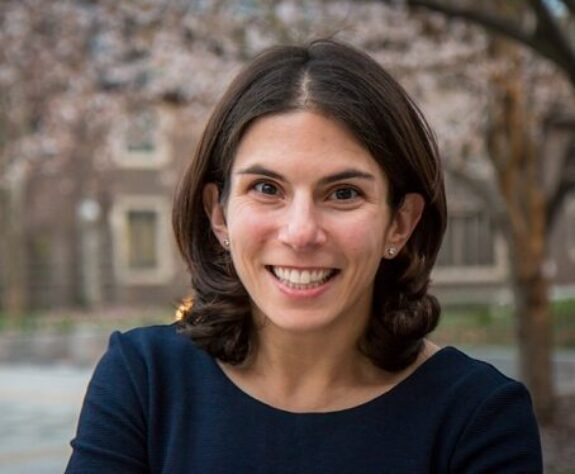
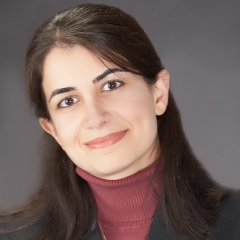
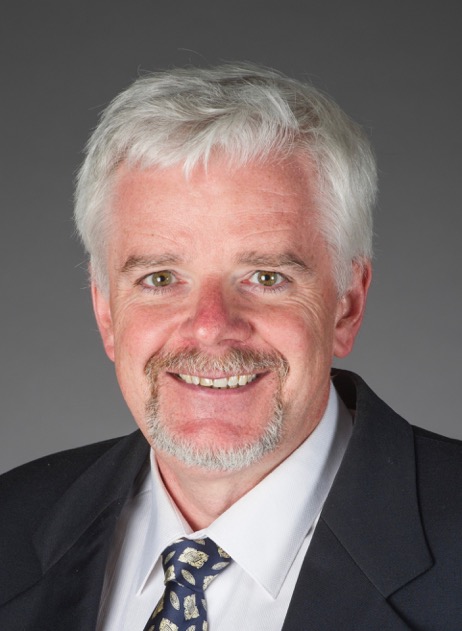
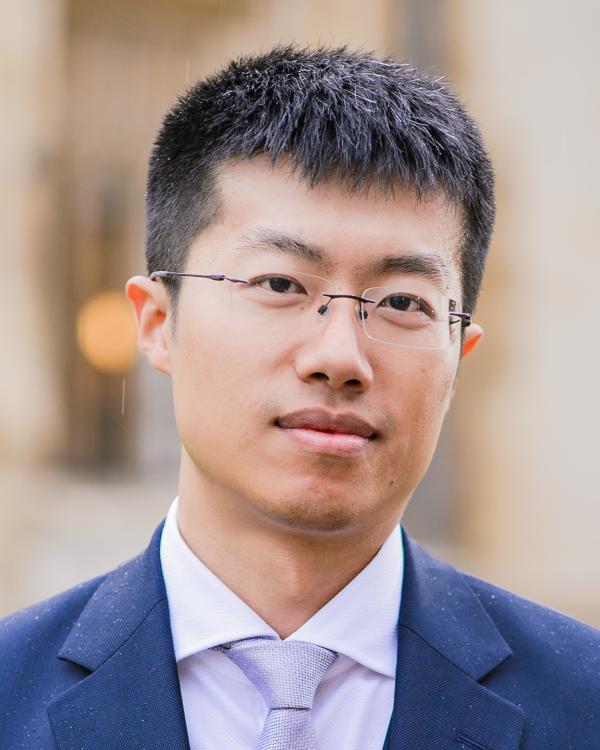
T. Donna Chen is an Assistant Professor in the Department of Civil and Environmental Engineering at the University of Virginia. Her research focuses on sustainable transportation systems, transportation economics, travel demand modeling, and crash safety. Ph.D., Civil Engineering, University of Texas at Austin (2015) M.E., Civil Engineering, University of Texas at Arlington (2008) B.S., Civil Engineering, Texas A&M University (2005) Her work explores the impacts of new vehicle technologies on traveler behavior and the environment, with an emphasis on modeling shared autonomous electric vehicle operations, pricing schemes, and life-cycle emissions. She also investigates spatial patterns of electric vehicle adoption and roadway safety for cyclists. Recent publications highlight her contributions to transportation electrification, fleet management, and safety analysis. Key themes include sustainability , autonomous systems , economic modeling , and urban mobility . American Society of Civil Engineers ExCEEd Fellow (2017) NSF IGERT Fellow (2013-2015) FHWA Eisenhower Fellow (2012-2013) Dr. Chen teaches courses on transportation infrastructure design and economics. Her funded projects include research on green vehicle adoption, connected vehicle planning, and dynamic tolling frameworks. She is affiliated with the Transportation Research Board, ASCE TD&I, ITS America, ITE, and Women’s Transportation Seminar.
Dr. Chandranath Adak is an Assistant Professor at the Department of Computer Science and Engineering, Indian Institute of Technology Patna (IIT Patna), and concurrently serves as a Visiting Fellow at the School of Computer Science, University of Technology Sydney (UTS), Australia. He holds a Ph.D. in Analytics from UTS (2019) and previously served as an Assistant Professor at Indian Institute of Information Technology Lucknow (IIITL) and the Centre for Data Science at JIS Institute of Advanced Studies, Kolkata. Education: Ph.D. (Analytics), University of Technology Sydney (2019) M.Tech., Computer Science and Engineering, University of Kalyani (2014) B.Tech., Computer Science and Engineering, West Bengal University of Technology (2012) Research Interests: His work spans Computer Vision, Deep Learning, Reinforcement Learning, Document Image Analysis, and AI-driven solutions for healthcare, forensics, and industrial automation. He has pioneered methods in biomarker detection using electrochemical sensors combined with ML models, handwriting analysis for educational and forensic applications, and anomaly detection in industrial systems. His research bridges theoretical advances with real-world applications, such as medical diagnostics and quality control systems. Publications: His recent work includes innovations in biosensor-based medical diagnostics, handwriting evaluation systems, and transformer networks for historical document analysis. These contributions reflect a focus on interdisciplinary applications of AI across healthcare, cultural heritage preservation, and industrial automation. Awards: Start-up Research Grant, SERB, India (2022) Dr. Kalam Doctoral Scholarship, UTS (2018) IEEE CIS Graduate Student Research Grant (2017) Senior Member, IEEE (2024) Teaching & Supervision: Taught courses at UTS including 'Introduction to Data Analytics' and supervised research in machine learning and computer vision. His mentorship emphasizes hands-on experience with AI tools and real-world problem-solving. Labs & Teams: Engaged in collaborative projects at UTS's CIBCI Centre and Griffith University's IIIS, focusing on computational intelligence and sensor-driven AI systems.
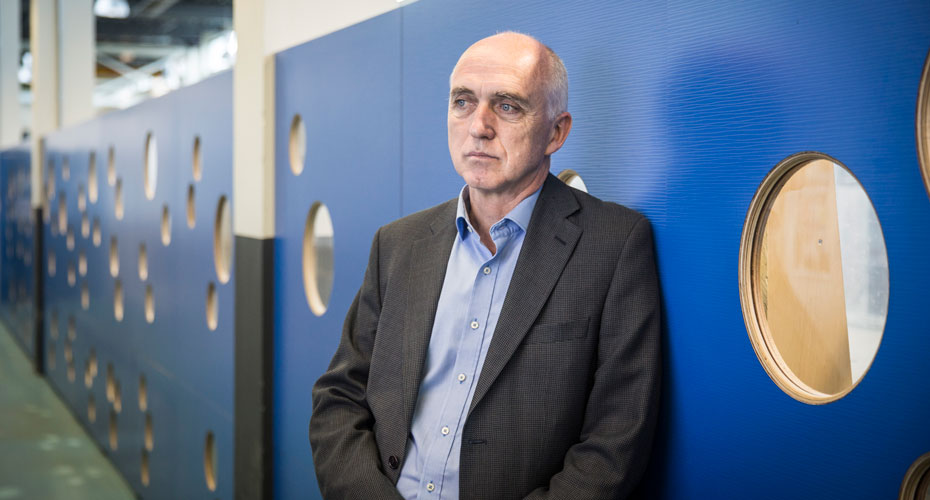
Professor Eugene O'Brien serves as Professor of Civil Engineering within the School of Civil Engineering at University College Dublin's College of Engineering and Architecture. His research focuses on critical structural assessment methodologies for long-span bridges, with particular expertise in traffic load modeling and bridge safety evaluation. His research interests center on structural engineering challenges related to bridge infrastructure, specifically traffic load assessment for long-span bridges , structural health monitoring systems , and sustainable infrastructure management . Professor O'Brien pioneered camera-based monitoring techniques to overcome limitations of traditional Weigh-in-Motion sensors during congested traffic conditions, enabling more accurate safety assessments of aging bridge infrastructure. His work addresses the critical gap in quantifying traffic loading on bridges with spans up to 2 kilometers, where conventional methods fail during stop-and-go traffic scenarios. Analysis of his 15 most recent publications reveals a consistent research trajectory focused on probabilistic modeling of traffic loads, with increasing sophistication in handling extreme events and long-term infrastructure performance. His work spans fundamental statistical methods for load effect prediction, practical applications in real-world bridge assessments, and environmental considerations regarding infrastructure carbon footprints. The research demonstrates strong methodological evolution from basic traffic modeling to comprehensive lifetime assessment frameworks incorporating sustainability metrics. As co-founder and director of Roughan O'Donovan's subsidiary Innovative Solutions (ROD-IS), Professor O'Brien has translated research into practice through significant projects including the Malahide Railway Viaduct assessment (2009), EU-funded bridge lifespan simulation tools (2011), vibration reduction systems for bridge cables, and structural assessments for major international projects including the Ting Kau Bridge in Hong Kong, the Forth Road Bridge in Scotland, and the Chacao Channel Bridge in Chile. His consultancy work demonstrates direct application of academic research to critical infrastructure challenges worldwide. Professor O'Brien's research group operates at the intersection of structural engineering and sustainable infrastructure management, with particular emphasis on extending bridge service life through accurate safety assessment. Their work on the Chacao Channel Bridge demonstrates practical implementation of traffic monitoring systems using toll data to manage truck loads, while their environmental impact analysis shows how accurate safety assessments reduce unnecessary bridge replacements, thereby lowering the carbon footprint of transportation infrastructure through extended service life of carbon-intensive materials like concrete and steel.
Daniel Rodríguez is Chancellor’s Professor of City & Regional Planning at UC Berkeley and Director of the Institute for Transportation Studies. His research examines transportation-land development interactions and their environmental/health consequences, with focus on climate adaptation strategies, equity in urban mobility, and health impacts in Latin American cities. Current projects analyze behavioral responses to extreme heat, green space benefits, and low-emission zones. Education: PhD, University of Michigan (2000) MS, Transportation, MIT (1996) BS, Business Administration, Fordham University (1994) Rodríguez employs interdisciplinary approaches to study how physical urban attributes influence behavior and health. His work integrates transportation policy, environmental planning, and health geography, emphasizing low-income communities. Research utilizes geospatial analysis, epidemiological methods, and behavioral modeling to inform urban sustainability. Publications focus on transportation equity (45%), urban health (35%), and climate adaptation (20%), with strong emphasis on Latin America. Recent articles demonstrate innovative spatial analysis techniques including computer vision and multi-city ecological studies. Awards: Best Paper, Risk Analysis (2015) Excellence in Safety Research Award, RWJF/CDC (2015) Fred Burggraf Award, TRB (2000) Advises doctoral students and teaches sustainable mobility, transportation policy, and active transportation planning. Leads research teams on SALURBAL project analyzing urban health determinants across 11 countries. Future work focuses on climate-resilient infrastructure financing and mega-city mobility transitions.
Megan S. Ryerson holds the UPS Chair of Transportation and serves as Associate Chair of City and Regional Planning at the University of Pennsylvania's Stuart Weitzman School of Design. Previously, she was Associate Dean for Research (2018–2023), demonstrating sustained leadership in academic administration while maintaining an active research profile focused on transportation systems integration. Her educational credentials include: Ph.D. in Civil and Environmental Engineering, University of California, Berkeley (2010) B.Sc. in Systems Engineering, University of Pennsylvania (2003) Ryerson's research pioneers the integration of intercity transportation into urban planning frameworks, with foundational work in aviation infrastructure planning , airline demand forecasting , and transportation resilience . She investigates airport competition dynamics across megaregions, airline disaster recovery protocols, and fuel-efficient flight planning methodologies. Her scholarship actively bridges civil engineering and urban planning disciplines to design transportation systems that are inherently safe , efficient , and resilient against disruptions. Analysis of her 15 most recent publications reveals a pronounced shift toward transportation equity since 2022, particularly examining driver education accessibility ('driver training deserts') and bikeshare infrastructure allocation. This equity focus coexists with continued aviation research, while pandemic-era studies on transportation behavior (2020–2023) demonstrate methodological adaptability through quasi-experimental designs and real-world crisis response analysis. Her scientific recognition includes: UPS Chair of Transportation (prestigious endowed professorship) Dr. Ryerson has significantly expanded urban planning pedagogy by incorporating megaregional transportation systems into core curricula. Her leadership as former Associate Dean for Research reflects active engagement with funding agencies and research administration, though specific grant details aren't documented in source materials. Current work emphasizes translating research into equitable policy frameworks, particularly for vulnerable transportation populations.
Paul Lu is a Professor in the Department of Computing Science at the University of Alberta, Faculty of Science. His research focuses on high-performance computing, parallel and distributed systems, cloud computing, and bioinformatics. He holds a B.Sc. (1991), M.Sc. (1993) in Computing Science from the University of Alberta, and a Ph.D. in Computer Science from the University of Toronto (2000). His research explores software systems, including operating systems, virtual machines, and parallel programming. Recent work emphasizes high-performance data transfers and IaaS cloud computing. He teaches courses such as MINT 706: Internet Application and Programming, covering internet protocols and client-server programming. Publications highlight contributions to network optimization, machine learning-driven protocol selection, and distributed systems. His work bridges theoretical advancements with practical applications in cloud infrastructure and wide-area networks.
Rida Khatoun is a Professor in Cybersecurity at the Computer Sciences and Networks (Infres) Department at Télécom Paris. He holds a M.Sc. in Computer Engineering and a Ph.D. from the University of Technology of Troyes (UTT), France, awarded in 2004 and 2008, respectively. His research focuses on cybersecurity in networks, including cloud computing security, IoT security, vehicular networks security, intrusion detection systems, and blockchain technology. He has taught at Telecom Paris since 2014, Shanghai Jiao Tong University (SJTU) since 2016, and other institutions in China and France since 2005. His work spans theoretical frameworks and practical solutions for network security challenges. Key research areas include DDoS attack detection, vehicular communication security, and cryptographic protocols. He leads the Cybersecurity and Cryptography (C²) research team and is affiliated with the Laboratoire Traitement et Communication de l'Information (LTCI). His contributions include developing secure routing protocols (e.g., ASROP), statistical trust systems in wireless networks, and blockchain-based authentication for IoT. He has authored over 115 publications, including peer-reviewed articles and conference proceedings, with recent work addressing vehicular platooning security, TLS handshake optimization for C-ITS, and machine learning for cyberbullying detection. Rida’s academic activities include teaching courses on network security protocols, wireless network fundamentals, and QoS mechanisms. He collaborates internationally, contributing to smart city cybersecurity architectures and 6G programmable communications. His research emphasizes practical cybersecurity solutions for emerging technologies, ensuring robust protection against evolving threats in vehicular, IoT, and cloud environments.
Professor Yasamin Mostofi is a faculty member in the Department of Electrical and Computer Engineering at the University of California, Santa Barbara. She is also affiliated with the Department of Computer Science and the Center for Control, Dynamical Systems and Computation. Her work bridges wireless systems, robotics, and machine learning. PhD, Stanford University MS, Stanford University MS, Sharif University of Technology Research Interests : Her lab focuses on wireless systems and autonomous agents , developing novel mathematical models for RF sensing and communication-aware robotics. Current directions include WiFi/millimeter wave/6G-based imaging and analytics, networked robotics for cellular systems, human-robot collaboration, and machine learning integration. Recent Publications : Her work spans through-wall crowd analytics , robot-assisted connectivity , and vision-aided wireless sensing , with applications in smart health, security, and retail optimization. Key trends include cross-modal integration (WiFi and vision), synthetic data generation, and real-world clinical validation. Scientific Recognition : Presidential Early Career Award for Scientists and Engineers (PECASE) Antonio Ruberti Prize, IEEE Control Systems Society NSF CAREER Award IEEE Region 6 Outstanding Engineer Award IEEE Fellow (2020) Advising and Leadership : She mentors PhD students in systems research, with graduates joining leading companies like Qualcomm and Google. She co-founded NPJ Wireless Technology (Nature Portfolio) and serves on editorial boards including IEEE Transactions on Control of Network Systems .
Assoc Prof Ying Chen is an Associate Professor at the National University of Singapore , affiliated with the Department of Mathematics, Asian Institute of Digital Finance (as Academic Director of PhD Program in Digital FinTech 2022–2024), Risk Management Institute (2019–2023), Department of Statistics and Data Science (2019–2023), and Department of Economics (2018–2023). She also contributes to NUS Graduate School for Integrative Sciences and Engineering since 2016. Research Interests include: AI forecasting and quantum computing for finance Nonstationary time series and functional data analysis Energy data analytics and precision medicine Network autoregression and spatial-temporal modeling Explainable AI and citation metrics Portfolio liquidation and market-making algorithms Article Trends demonstrate expertise in: Adaptive forecasting for gas flows and electricity prices Blockchain network influence detection Quantum computing applications in finance Functional autoregression with mixed predictors Credit rating fairness and explainability High-resolution implied volatility modeling Scientific Awards include: ISI Elected Member (2016–) International Statistical Institute Council (2023–2027) IASC Scientific Secretary (2017–2019, 2023–2025) Advisory roles for EU FIN-TECH and xAIM projects
Prof. Martin Haenggi is the Frank M. Freimann Professor of Electrical Engineering and Concurrent Professor in the Department of Applied and Computational Mathematics and Statistics at the University of Notre Dame. He holds a Dr.sc.techn. (Ph.D.) from ETH Zurich and has been at Notre Dame since 2000. His research focuses on stochastic geometry and wireless networks, including cellular, heterogeneous, vehicular, and millimeter-wave systems. He has held sabbaticals at UCSD (2007–2008), EPFL (2014–2015), and ETH Zurich (2021–2022). Education: Dipl.-Ing. (M.Sc.), ETH Zurich, 1995 Dr.sc.techn. (Ph.D.), ETH Zurich, 1999 Research interests emphasize stochastic geometry for analyzing network performance, including coverage, interference, and reliability in wireless systems. Key areas include meta distributions, spatial-temporal analysis, and network optimization. His work has been recognized with IEEE Fellow status, Clarivate Highly Cited Researcher distinction, and NSF CAREER Award (2005). Grants and Awards: NSF Award (Deep Stochastic Geometry: 2020–2023) NSF Award (Toward a Stochastic Geometry for Cellular Systems: 2015–2019) Rice Prize (2017), Best Survey Paper Award (2017), and Best Tutorial Paper Award (2010) from IEEE Communications Society Teaching includes advanced courses on stochastic geometry, wireless networks, and signal processing. His lab focuses on theoretical and applied aspects of network modeling, with collaborations in industry and academia.
Prof. Hans van Lint is a Professor of Traffic Simulation and Computing at Delft University of Technology (TU Delft), where he holds the Anthony van Leeuwenhoek Chair since 2013. He is affiliated with the Department of Transport & Planning within the Faculty of Civil Engineering and Geosciences. His research focuses on the intersection of traffic flow theory, data analytics, and traffic simulation, with applications in estimating and predicting traffic states in networks. He has supervised numerous PhD students and contributed to valorization projects translating research into practical solutions. Van Lint earned his MSc in Civil Engineering in 1997 and returned to TU Delft for his PhD, which he completed in 2004 on 'Freeway Travel Time Prediction.' He has held roles including Assistant Professor (until 2009), Associate Professor, and has served as Director of Education for the MSc Transport, Infrastructure and Logistics program from 2010–2016. His research interests include traffic simulation frameworks, data assimilation techniques, and the development of tools for traffic state estimation. He has authored influential papers on topics such as microscopic traffic modeling, congestion pattern analysis, and macroscopic fundamental diagrams. His work emphasizes bridging theoretical models with real-world applications, enhancing traffic management and infrastructure planning. Van Lint teaches courses like 'Transport & Planning' and 'Interdisciplinary Fundamentals,' reflecting his commitment to both research and education. He actively contributes to TU Delft's labs, including the Traffic Dynamics, Modelling and Control Lab, advancing interdisciplinary approaches to mobility challenges.
Habib Ullah is an Associate Professor in Data Science at the Norwegian University of Life Sciences (NMBU), Norway, where he conducts research at the intersection of computer vision and machine learning. He is affiliated with the Institute of Data Science under the Faculty of Science and Technology. He has previously held academic positions at COMSATS University Islamabad, Pakistan, and the University of Ha'il, Saudi Arabia, and served as a postdoctoral researcher at The Arctic University of Norway. Educational Background: PhD in Information and Communication Technology (Computer Vision), University of Trento, Italy (2011–2015) MSc in Electronics and Computer Engineering, Hanyang University, South Korea (2007–2009) BSc in Computer Systems Engineering, NWFP University of Engineering and Technology, Pakistan (2002–2006) Habib Ullah's research is primarily focused on computer vision and machine learning, with applications in aquaculture, agriculture, and human behavior analysis. He investigates underwater fish feeding sounds using audio classification, develops zero-shot learning models for recognizing unseen classes, and applies deep learning to detect stress in salmon via skin dot patterns. He also explores AI-driven controlled environment agriculture, leveraging sensors and automation for optimal crop growth. His work emphasizes practical AI solutions for real-world challenges in environmental and biological domains. The recent publications highlight a strong trend in leveraging deep learning for zero-shot and semi-supervised learning, particularly in computer vision tasks such as sea ice classification, crowd anomaly detection, and agricultural monitoring. His research spans remote sensing, biomedical signal processing, and human activity recognition, demonstrating interdisciplinary versatility. The keywords reflect a focus on robust feature representation, knowledge transfer, and model generalization. Scientific Awards and Funding: Industrial PhD grant 'Advancing Controlled Environment Agriculture AI' from The Research Council of Norway (Project number 354125, 2 million NOK, 2024) Team member (Coordinator-Participant) in the Battery Cell Assembly Twin (BatCAT) project funded by Horizon Europe (7 mEuro, 2023–2027) Development of an AI-Based Image Analysis System for Monitoring Plant Status (Funding: 1.8 mNOK, starting 2025) Habib Ullah actively supervises PhD projects and contributes to academic service through editorial and organizational roles. He has served as an Associate Editor for IEEE Access, Guest Editor for MDPI Remote Sensing, and Editor of the Springer book Machine Learning Techniques and Sensor Applications for Human Emotion, Activity Recognition, and Support (ML-SHEARS) . He has also been a Track Chair and Program Committee Member for several international conferences, reflecting his leadership in the academic community. His research is supported by significant grants and collaborative projects, indicating strong institutional and international engagement. He is involved in multiple research teams and projects, including the BatCAT project on battery manufacturing and AI applications in controlled environment agriculture with RIFT LABS AS. His lab work integrates deep learning, sensor fusion, and data analytics for environmental and biological monitoring systems.
Dr. Li Wan is an Associate Professor in Urban Planning and Development at the Department of Land Economy, University of Cambridge, and a Fellow of Gonville and Caius College. He serves as Director for the MPhil in Planning, Growth and Regeneration and is a co-investigator of the Centre for Smart Infrastructure and Construction. Dr. Wan is also a Trustee of the IJURR Foundation and leads a research group focused on understanding urban land and transport development through applied modeling and data analytics. Dr. Wan holds a BArch, MPhil, and PhD from the University of Cambridge. Prior to joining Land Economy, he worked in Architecture and Engineering Departments, giving him a highly interdisciplinary perspective. His research focuses on spatial economic modeling of urban land use and transport systems, with recent interests including strategic planning at city/regional levels, impact studies of flexible working, micromobility, and electric vehicles. Dr. Wan's research group has produced significant work in city digital twins, as evidenced by his 2023 book Digital Twins for Smart Cities: Conceptualisation, challenges and practices . His publications span urban analytics, transport emissions, spatial equilibrium modeling, and economic geography, demonstrating the interdisciplinary nature of his work. Recent research trends show increasing focus on post-pandemic urban dynamics, digital governance, and sustainable mobility solutions. His research group has secured funding from initiatives like AI@Cam for projects examining how local authorities use AI for urban decision-making. Dr. Wan actively supervises PhD and MPhil students, with his group comprising researchers working on diverse urban topics from land-use efficiency to micromobility impacts. As an educator, Dr. Wan teaches courses including Tripos Paper 10 - The Built Environment, PGR01 - Urban and Environmental Planning, PGR02 - Urban and Housing Policy, PGR05 - Place-based Policy, and RM03 – Spatial Analysis and Modelling. His group has presented at major international conferences including CUPUM and ICML, reflecting his active engagement in the academic community.
Ninette Pilegaard is a Professor and serves as Deputy Head of Division and Head of Section for Transport Policy at the Department of Technology, Management and Economics, Technical University of Denmark (DTU). Her academic career spans multiple research domains with significant contributions to transportation policy and economics. Her research interests focus on transportation policy analysis with particular expertise in: Road charging systems and pricing mechanisms Bicycle infrastructure and safety analysis Commuting behavior and accessibility impacts Car ownership and usage patterns Relationship between transportation accessibility and labor market outcomes Dr. Pilegaard's scholarly work demonstrates a strong empirical approach combining transportation engineering with economic analysis. Her recent publications reveal a consistent focus on evidence-based policy evaluation, particularly in the Danish context. She frequently employs quasi-natural experimental methods to assess transportation policy impacts, with particular attention to road pricing, cycling infrastructure, and the economic implications of transportation systems. Her research has been supported by major funding bodies including Innovation Fund Denmark and Forskningsrådsfinansiering, and has resulted in publications in high-impact transportation journals such as Transportation Research Parts A and D, and Journal of Safety Research. As an academic supervisor, Dr. Pilegaard has served as Main Supervisor for PhD projects, including the 'Productivity and agglomeration' project. She has been actively involved in numerous research collaborations both within DTU and with external partners. Her laboratory work focuses on transportation data analysis, particularly utilizing Danish transportation datasets to examine policy impacts. She has developed expertise in analyzing hospital data for traffic safety research and has contributed to methodologies for assessing infrastructure effects on traffic accidents.
Associate Professor Jiwon Kim is a leading researcher in Transport Engineering at the University of Queensland's School of Civil Engineering. She serves as Director of Higher Degree by Research and was a DECRA Fellow from 2019-2022. Holding degrees from Korea University and Northwestern University, she specializes in AI/ML applications for transportation systems. PhD, Northwestern University BS & MS, Korea University Her research focuses on Artificial Intelligence and Machine Learning applications in transportation, including: Deep learning for traffic management Reinforcement learning in mixed traffic environments Multi-agent systems for urban mobility optimization Spatiotemporal trajectory analysis Recent publications demonstrate expertise in: Eco-driving strategies Traffic incident prediction Queue length estimation Crash risk modeling Scientific recognition includes: ARC DECRA Fellowship (2019-2022) She supervises doctoral students in: Transportation data analytics Autonomous vehicle systems Intelligent traffic management Current projects explore real-time traffic monitoring, synthetic mobility data generation, and connected vehicle technologies.