University of North Carolina at Chapel HillUnited States
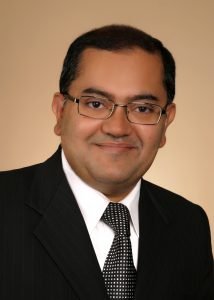
Samarjit Chakraborty is the William R. Kenan, Jr. Distinguished Professor in the Department of Computer Science at the University of North Carolina at Chapel Hill. He previously held the Chair of Real-Time Computer Systems at the Technical University of Munich (2008–2019) and was an assistant professor at the National University of Singapore (2003–2008). His research spans real-time embedded systems, cyber-physical systems (CPS), and automotive security. Research Interests include distributed embedded systems, hardware/software co-design, low-power systems, energy storage, electromobility, and sensor network-based information processing. His work addresses challenges in scheduling algorithms for autonomous vehicles, timing predictability in automotive networks, and safety-critical controller implementations. Recent Publications highlight advancements in Timing analysis for automotive networks Energy modeling of Bluetooth Low Energy Autonomous vehicle perception computing Security in automotive systems Flexible manufacturing with process dynamics Scientific Awards include the ETH Medal, European DAAD Outstanding Doctoral Dissertation Award, multiple best paper awards at conferences (ISLPED, ICCD, RTCSA, etc.), the 2023 Humboldt Professorship, and IEEE Fellowship. Advising active PhD students: Clara Hobbs, Shengjie Xu, Sharmin Aktar, and postdoc Enrico Fraccaroli. His research is supported by NSF grants and industry partnerships with General Motors, Intel, Google, BMW, Audi, Siemens, and Bosch.
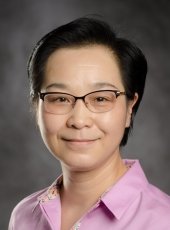
Bo Chen is a Professor in the Department of Mechanical Engineering – Engineering Mechanics and the Department of Electrical & Computer Engineering at Michigan Technological University. She directs the Intelligent Mechatronics and Embedded Systems (IMES) Laboratory, focusing on advanced controls, optimization, and artificial intelligence for connected and autonomous vehicles, electric vehicle–smart grid integration, and smart mobility. PhD in Mechanical and Aeronautical Engineering from the University of California, Davis (2005) Visiting Professor at Argonne National Laboratory (2014–2015, 2016) Sabbatical at Oak Ridge National Laboratory (2022–2023) Dr. Chen's research spans Mechatronics , Embedded Systems , Hybrid Electric Vehicles , and Cyber-Physical Systems . Her work includes vehicle-to-grid integration , battery control systems , and cybersecurity for automotive systems . Recent publications highlight advancements in predictive control algorithms for hybrid vehicles, consensus-based frequency regulation , and plausibly deniable encryption systems for mobile devices. Funded by the National Science Foundation, Department of Energy, and industry partners, her research has secured over $10 million in grants. ASME Fellow Best Paper Award (2008 IEEE/ASME MESA Conference) Top Cited Article Award (Journal of Computers & Graphics) Best Survey Paper Award (IEEE Transactions on ITS) Co-recipient of four Best Student Paper Awards Dr. Chen has held leadership roles as Chair of the Technical Committee on Mechatronics and Embedded Systems (IEEE ITS Society), Chair of the ASME Design Engineering Division's Technical Committee, and Associate Editor for IEEE Transactions on Intelligent Transportation Systems (2012–2019). She organized multiple international conferences and co-edited special issues on intelligent transportation systems.
Jun Li is a Professor at the University of Oregon within the College of Arts and Sciences . He serves as the Director of the Network & Security Research Laboratory and Founding Director of the Center for Cyber Security and Privacy. His academic career spans over 100 peer-reviewed publications and significant contributions to cybersecurity, networking, and distributed systems. PhD (UCLA, 2002) - Outstanding Doctor of Philosophy M.E. (Chinese Academy of Sciences, 1995) - Presidential Scholarship B.S. (Peking University, 1992) His research focuses on Cyber Security & Privacy , Computer Networking , and Distributed Systems , particularly examining: DDoS defense mechanisms Internet routing security DNS security Blockchain applications IoT security protocols Social bot detection Recent work (2023-2024) emphasizes adaptive DDoS filtering, cryptojacking detection, and security frameworks for smart homes. His publications span top-tier venues like IEEE Transactions on Dependable and Secure Computing , ACM Transactions on Internet of Things , and INFOCOM . Scientific honors include: ACM Recognition of Service Award University of Oregon Faculty Excellence Award Ripple Faculty Fellowship Multiple best paper awards He has received funding from the NSF (including CAREER award), DHS , Intel , Narus , Ripple , and the State of Oregon . His work extends to patents in hybrid peer-to-peer security protocols.
Rui Ning is an active Assistant Professor in the Department of Computer Science at Old Dominion University (ODU), within the Batten College of Engineering & Technology. His academic journey includes a B.S. in Computer Science & Engineering from Lanzhou University (China), an M.S. in Computer Science from the University of Louisiana at Lafayette, and a Ph.D. in Electrical & Computer Engineering from ODU. Dr. Ning's research focuses on cybersecurity, privacy-preserved AI, and secure AI systems, with particular emphasis on backdoor detection in neural networks, federated learning security, and privacy-preserving deep learning. His work bridges theoretical security mechanisms with practical implementations in real-world AI systems, addressing critical vulnerabilities in modern machine learning frameworks. Analysis of his publication trends reveals a strong focus on adversarial machine learning, with increasing attention to multimodal AI security since 2022. His research shows consistent growth in addressing sophisticated attack vectors while developing practical defense mechanisms applicable to industry settings. Notably, his work spans both theoretical contributions and practical implementations, often achieving high acceptance rates at top-tier conferences. Mark Weiser Best Paper Award, IEEE PERCOM, 2018 Best In-session Presentation Award, IEEE INFOCOM, 2019 NSF CRII Award, 2022 Ph.D. Researcher of the Year, ODU ECE, 2019 Dr. Ning actively mentors graduate students, currently supervising multiple Ph.D. candidates and an M.S. student at ODU. His grant portfolio demonstrates significant research impact, with over $1.5 million in funding as PI or Co-PI from sources including NSF, DoD, NSA, and industry partners like Interdigital. His research addresses critical challenges in AI security with practical applications for cybersecurity infrastructure. Dr. Ning also contributes substantially to academic service as a reviewer for top conferences and journals, and serves on program committees for major AI and security venues.
Luis Miguel Bergasa is a Full Professor at the Department of Electronics, University of Alcalá (UAH), with a career spanning over 25 years. He leads the RobeSafe Lab (since 2010) and serves as Director of Digital Transformation at UAH (since 2022). His academic roles include heading the Department of Electronics (2004–2010) and coordinating multiple educational programs. He teaches Perception Systems (Master in Industrial Engineering) Intelligent Control Systems (Computer Science) Computer Vision (Computer Science) His research focuses on Perception Systems for Intelligent Vehicles , emphasizing driver behavior analysis, scene understanding, and sensor fusion via deep learning. He has authored over 300 papers and holds 9 patents. Notable recognitions include being ranked #81 in Computer Science (Spain) by Research.com (2025) and receiving 30+ awards in Robotics/Automotive fields. Recent publications highlight advancements in Transformer-based driver action recognition (2025) Infrastructure-vehicle cooperative frameworks (2025) 3D semantic segmentation for autonomous perception (2024) Simulation-to-reality gap bridging (2024) Scientific Leadership Senior Editor, IEEE Transactions on ITS (2025) International Program Committee roles in 15+ conferences (2024–2025) Co-founder of Vision Safety Technologies Ltd (2009–2016) He supervises 9 active PhD students and has advised 14 former PhD candidates. His group collaborates with institutions in Germany, USA, China, and Spain, including KIT, UC Berkeley, and Northwestern Polytechnic University.
Constantin Grigo is a PhD researcher at the Technical University of Munich (TU Munich), actively engaged in the Continuum Mechanics group. His work focuses on Uncertainty Quantification (UQ) and Machine Learning (ML), particularly for applications in maritime safety, bicycle traffic modeling, and stochastic systems. He has presented his research at major conferences like SIAM UQ and WCCM, and has been recognized with Student Travel Awards from SIAM UQ 2018 and SIAM CSE 2019. Education: Master of Science in Physics, LMU Munich (2015) Bachelor of Science in Physics, LMU Munich (2012) Year abroad at Grenoble INP (2010-2011) Research Interests: Probabilistic machine learning for coarse-graining high-dimensional systems Bayesian model and dimension reduction Stochastic differential equations in heterogeneous media Microscopic traffic simulation for bicycles and autonomous vehicles Digital twin applications for maritime and urban mobility Reduced-order modeling of random materials Selected Awards: SIAM UQ 2018: Student Travel Award Winner SIAM CSE 2019: Student Travel Award Winner His publications span topics such as data-driven scenario specification for autonomous vehicles, bicycle maneuver prediction using neural networks, and physics-constrained surrogates for UQ. He also contributes to open-source simulation tools like SUMO for traffic modeling.
Sarah Kaufman serves as Director of the NYU Rudin Center for Transportation and Assistant Clinical Professor of Public Service at New York University's Wagner Graduate School of Public Service. Her work bridges academic research and practical policy solutions for urban transportation systems, with emphasis on equity, technology, and resilience. Her research spans transportation policy, urban planning, emergency management, and climate change adaptation. Key focus areas include mobility equity (notably the "pink tax" on transportation), micromobility systems, autonomous vehicle governance, and disaster response protocols. She investigates how technology and policy can create more inclusive and resilient urban mobility networks, with particular attention to gender disparities and climate vulnerabilities. Analysis of her 15 most recent publications reveals consistent themes in transportation equity, emerging technologies, and crisis management. Her work demonstrates methodological diversity—from agent-based modeling (MATSim-NYC) to policy analysis of scooter sharing—and maintains strong practical relevance through partnerships with transportation agencies. Notable trends include the evolution of micro-mobility regulation, gender-based mobility disparities, and transportation's critical role in pandemic and extreme weather response. As Director of the Rudin Center, she leads a multidisciplinary research team that produces policy-influential reports on congestion pricing, transit innovation, and sustainable mobility. The center serves as a hub for collaboration between government agencies, industry stakeholders, and community organizations, translating academic research into actionable transportation solutions for New York City and beyond.
Dr. Weert Canzler is a senior researcher and head of the Research Group "Digital Mobility and Social Differentiation" at the Berlin Social Science Center (WZB), where he has been affiliated since 1994. His career spans leadership roles including Deputy Chair of WZB's Academic Council (2000-2007), Senior Researcher in Science Policy (2009-2019), and current Speaker of the Leibniz Research Alliance "Energiewende" since 2013. His work critically examines mobility transitions through social science lenses, integrating energy policy, technological innovation, and societal transformation. Dr. Canzler's academic credentials include: Diploma in Political Science (minor in Economics and Law) from the Free University of Berlin (1985) Ph.D. in Sociology from the Technical University of Berlin (1995) Habilitation in Social Science Based Mobility Research from the Technical University of Dresden (2015) His research centers on the societal dimensions of mobility systems, with particular focus on the Energiewende 's impact on transportation. He investigates how digitalization reshapes travel behavior, the cultural entrenchment of automobility, and policy frameworks for equitable mobility transitions. His approach bridges sociology, urban planning, and technology assessment, emphasizing that sustainable mobility requires reimagining social practices alongside infrastructure. Current work analyzes autonomous vehicle fleets, parking policy reforms, and the psychological dimensions of driving freedom in congested cities. Analysis of Dr. Canzler's 2022-2025 publications reveals intensifying focus on post-pandemic mobility patterns and multi-crisis contexts (climate, energy, geopolitical). His scholarship increasingly addresses implementation barriers for autonomous shuttles, the political economy of parking reform, and narrative-building for mobility transitions. A distinctive thread examines winners/losers dynamics in public space reallocation, with growing attention to educational outreach for future mobility literacy. His interdisciplinary methodology combines qualitative analysis with policy evaluation. While specific grant awards aren't documented in available sources, Dr. Canzler's leadership of major research initiatives implies significant funding oversight. As head of a WZB research group and Leibniz Alliance speaker, he directs collaborative projects involving multiple institutions. His extensive co-authorship patterns suggest active mentorship of junior researchers, though formal student advising isn't explicitly referenced in his public profile. Dr. Canzler co-founded WZB's mobility research group in 1998 with Andreas Knie and currently leads the "Digital Mobility and Social Differentiation" team. Through the Leibniz Research Alliance, he coordinates nationwide energy transition research across 18 institutes. His teams maintain strong policy linkages with German federal ministries and international bodies, frequently translating research into practical guidance for urban planners and transport authorities.
Erin C. Strumpf is affiliated with the Department of Economics at McGill University in Montréal, Canada. She is also associated with the Centre Interuniversitaire de Recherche en Analyse des Organisations (CIRANO) and the Centre Interuniversitaire de Recherche en Économie Quantitative (CIREQ) , both in Montréal. Her research primarily focuses on health economics, public policy, and the intersection of labor markets with health care systems. Key Research Areas: Health economics, public policy, primary care systems, Medicaid impacts on labor supply, maternal and infant health, econometric methods (particularly difference-in-differences and quasi-experimental designs). Notable Trends in Publications: Recent work examines breast cancer data reliability (2024), patient enrollment policies (2025), and the economic impacts of health policies on labor markets (2017, 2010). Earlier studies (2016–2018) analyze maternal leave, chronic disease in aging populations, and health disparities linked to socioeconomic factors. Labs/Teams: Collaborates with interdisciplinary teams at CIRANO and CIREQ, focusing on policy evaluation and health systems analysis. Her work often involves quasi-experimental methods and longitudinal data from OECD countries, Canada, and the U.S.
Dr. Sarah Wolf serves as Head of the Junior Research Group 'Mathematics for Sustainability Transitions' at Free University of Berlin's Department of Mathematics and Computer Science and as a Senior Researcher and Board Member at the Global Climate Forum (GCF). Her dual affiliation bridges rigorous mathematical modeling with real-world sustainability policy, focusing on complex socio-ecological systems through an interdisciplinary lens since joining GCF's Green Growth initiative in 2012. Wolf earned her PhD in Mathematics from Freie Universität Berlin in 2010 with the thesis 'From Vulnerability Formalization to Finitely Additive Probability Monads,' developed during interdisciplinary work at the Potsdam Institute for Climate Impact Research. Her academic foundation combines pure mathematics with applied climate impact research, establishing her unique approach to formalizing sustainability concepts. Her research centers on agent-based modeling of socio-technical systems, with core expertise in sustainability transitions , green growth mechanics , and sustainable mobility . She develops mathematical frameworks to clarify vulnerability concepts while embedding simulations in stakeholder dialogues through innovations like the 'Decision Theatre Triangle.' This work uniquely positions mathematics as both analytical tool and communication medium for climate policy. Analysis of her 15 most recent publications reveals an evolutionary trajectory from foundational vulnerability formalization (2009-2012) toward applied stakeholder-integrated modeling (2021-2023). Her work consistently bridges mathematical rigor with policy relevance, showing increasing emphasis on participatory approaches while maintaining computational sophistication in agent-based systems. No scientific awards are documented in the source material, though her leadership in the MATH+ junior research group indicates competitive funding attainment. As group head, she directs research strategy and likely mentors junior researchers, though no formal student advisees are listed. Wolf leads the 'Mathematics for Sustainability Transitions' junior research group within FU Berlin's Biocomputing Group, collaborating with institutions like the Potsdam Institute. Her team develops computational frameworks for green growth transitions, emphasizing stakeholder co-creation through platforms like the Decision Theatre while maintaining strong ties to GCF's global policy networks.
Chihiro Matsui is an Associate Professor at the Department of Mathematical Structure Theory, Graduate School of Mathematical Sciences, University of Tokyo. Her research focuses on quantum solvable models and solvable stochastic processes, leveraging algebraic structures like quantum groups and the Yang-Baxter equation to derive exact physical quantities. She has made significant contributions to understanding supersymmetry emergence in quantum field theories from non-supersymmetric spin chains and extending asymmetric exclusion processes to multi-state applications. University of Tokyo, Graduate School of Mathematical Sciences Research fields: Mathematical Physics, Quantum Integrable Systems, Stochastic Processes Her work on quantum solvable models connects many-body scattering decomposition to integrability, while her studies on multi-state asymmetric exclusion processes explore applications in traffic engineering and micromeritics through higher-dimensional Temperley-Lieb representations. Recent articles analyze weak ergodicity breaking and partially solvable quantum systems. Scientific awards include the Statphys27 Poster Award (2023), NTT Com Online Prize (2014), and a Best Poster Award Bronze Prize (2013). She serves on the editorial board of the Journal of the Physical Society of Japan since 2017.
Dr. Nicole Niebuhr is an Assistant Professor in the Department of Criminology, Criminal Justice, and Legal Studies at the University of West Florida. She joined UWF in 2019 after earning her doctoral degree from Sam Houston State University. Her academic appointments include teaching courses in Research Methods and Victimology. Education Bachelor's degree in Sociology from University of Wisconsin La-Crosse Master's and Doctoral degrees in Criminal Justice and Criminology from Sam Houston State University Research Focus Dr. Niebuhr's research spans criminal careers, corrections systems, criminological theory development, and program evaluation methodologies. Her work examines desistance patterns, the psychological impact of punishment on risk perception, employment-related stress among formerly incarcerated individuals, and comparative criminal decision-making between offenders and college populations. She has conducted empirical evaluations of specialized courts including juvenile drug courts and mental health probation systems. Her methodological expertise includes correctional officer attrition analysis, recidivism prediction modeling, and experimental designs in offender behavior studies. Geographic focus areas include Texas and Florida criminal justice systems. Publication Trends Recent publications demonstrate her focus on recidivism predictors, deterrability stability across offender populations, employment-corrections linkages, and criminal justice system processing of marginalized groups. Methodologies emphasize longitudinal analysis, comparative offender sampling, and program effectiveness metrics. Professional Activities Dr. Niebuhr maintains research partnerships with correctional agencies including the Texas Department of Criminal Justice, focusing on evidence-based policy development. No awards, grants, research labs, or supervised students were documented in the source material.
Sadie Creese is Professor of Cybersecurity in the Department of Computer Science at the University of Oxford. She serves as Director of the Global Cyber Security Capacity Centre at the Oxford Martin School and Director of the Oxford Martin Programme on AI Threat Detection. Additionally, she is a Governing Body Fellow at Worcester College and Chair of Examiners for the MSc in Computer Science. Professor of Cybersecurity, Department of Computer Science, University of Oxford Director, Global Cyber Security Capacity Centre, Oxford Martin School Director, Oxford Martin Programme on AI Threat Detection Governing Body Fellow, Worcester College Chair of Examiners for MSc in Computer Science Sadie Creese holds a DPhil in Computer Science from the University of Oxford, an MSc in Computation, and a BSc (Hons) in Mathematics and Philosophy. Her academic background bridges theoretical computer science with practical applications in security. Her research spans multiple domains of cybersecurity including cyber situational awareness, visual analytics for cybersecurity, predicting organizational cyber-value-at-risk, agent-based simulations for malware propagation, threat modeling and detection, network defense, and cyber-resilience strategies. She also studies national cybersecurity capacity, working with countries and international organizations worldwide. Her interdisciplinary approach integrates insights from computer science, social sciences, and policy studies to address complex security challenges in an interconnected digital world. Analysis of her recent publications reveals a consistent focus on practical cybersecurity applications with strong emphasis on human factors in security systems. Her work bridges technical security mechanisms with organizational and human elements, particularly in areas like insider threat detection, risk communication, and security operations. The research demonstrates a trajectory toward more integrated security frameworks that consider both technical vulnerabilities and human behaviors within complex systems. Sadie Creese has been recognized as one of The 50 most influential women in cyber-security UK . Her work with the Global Cyber Security Capacity Centre has influenced national cybersecurity strategies worldwide, and she actively contributes to policy discussions through platforms like the World Economic Forum's AI Governance Alliance. The 50 most influential women in cyber-security UK Professor Creese has supervised numerous PhD and Master's students including Mary Bispham, Rodrigo Carvalho, Elizabeth Phillips, Marcel Stolz, and Meredydd Williams. Her research has been supported by significant grants including AXIS-sponsored projects on cyber-risk modeling, World Economic Forum collaborations on cybersecurity futures, and Lloyds Register Foundation funding for cyber security research related to the Industrial Internet of Things. She leads major interdisciplinary projects that bridge technical security research with policy implications. Principal Investigator on AXIS-sponsored project 'Analysing Cyber-Value-at-Risk, Residual Risk and models for Systemic Cyber-Risk' Collaboration with World Economic Forum's Shaping the Future of Cybersecurity Platform Co-Chair of Lloyds Register Foundation sponsored Foresight review of cyber security for the Industrial Internet of Things Professor Creese founded and directs the Global Cyber Security Capacity Centre (GCSCC) at the Oxford Martin School, which conducts research into national cybersecurity capacity. She was also the founding Director of Oxford's Cybersecurity Network (now CyberSecurity@Oxford), established in 2008. Her team includes senior researchers like Ioannis Agrafiotis, Louise Axon, and Michael Goldsmith, who collaborate on projects spanning cyber analytics, security protocols, and identity management. The GCSCC works with governments and international organizations to build cybersecurity capacity globally, while the Oxford Martin Programme on AI Threat Detection focuses on emerging security challenges posed by artificial intelligence technologies.
Fabian Monrose is a Professor at the Georgia Institute of Technology, holding the Julian T. Hightower Chair in Cybersecurity. His career spans leadership roles at the University of North Carolina at Chapel Hill (UNC), Johns Hopkins University, and Bell Labs. He earned his Ph.D. in Computer Science from New York University's Courant Institute in 1999. Dr. Monrose specializes in cybersecurity, with research focusing on malware analysis, network security, and hardware threats. His work has earned Best Paper Awards at IEEE and USENIX conferences, along with the AT&T Best Applied Security Paper Award . He has published over 100 papers and led collaborative efforts at institutions like RENCI. Dr. Monrose's recent publications include studies on TLS certificate risks, hardware trojans, and AI-aided malware evasion. Best Paper Award at IEEE Symposium on Security & Privacy Best Paper Award at USENIX Security Symposium Outstanding Research in Privacy Enhancing Technologies Award AT&T Best Applied Security Paper Award Best Student Paper Award (2013) His research trends emphasize practical security solutions , including defensive registration strategies, automated bug analysis, and IoT threat mitigation. Dr. Monrose has also contributed to cybersecurity education through gamified platforms and secure autograding systems.
Xiaoshu Lu serves as an Adjunct Professor in the Department of Civil Engineering at Aalto University's School of Engineering, Finland. His primary contact is xiaoshu.lu@aalto.fi with phone number +358503503021, and his research profile is accessible via Aalto University's research portal. His research spans CO2 sequestration, rock mechanics, and sustainable construction, with emphasis on enhanced rock weathering for carbon capture, diamond bit fragmentation mechanisms, and biomass-to-energy systems. Interdisciplinary work includes agricultural engineering applications in plant disease detection and transportation engineering for traffic flow forecasting using graph neural networks. Recent publications (2024-2025) reveal dominant themes in geological CO2 storage and rock mechanics, featuring experimental studies and comprehensive reviews. While most work focuses on environmental/geotechnical civil engineering, select publications demonstrate cross-disciplinary reach into computer vision and transportation systems. Key accolades include: Napier Shaw Bronze medal (2006) Best 2012 Research Paper Competition from Aalto University School of Engineering (2013) Second prize in China's Innovation and Entrepreneurship Competition for Overseas Talents (2017) Honourable Tang Aoqing Professorship at Jilin University, China (2013-present) No details regarding graduate student supervision or research grants appear in the source material. He contributes to the 'Performance in Building Design and Construction' research group at Aalto University.