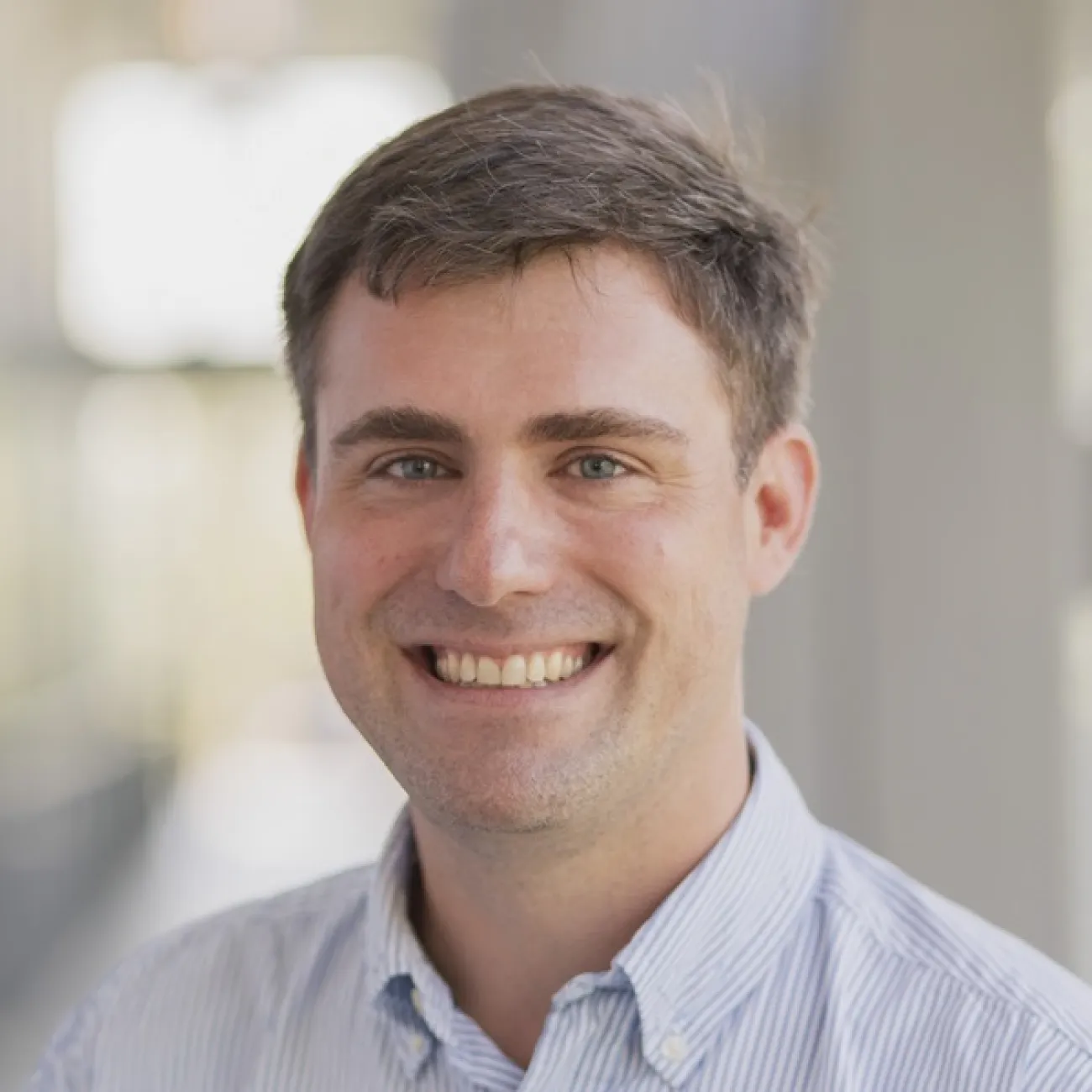
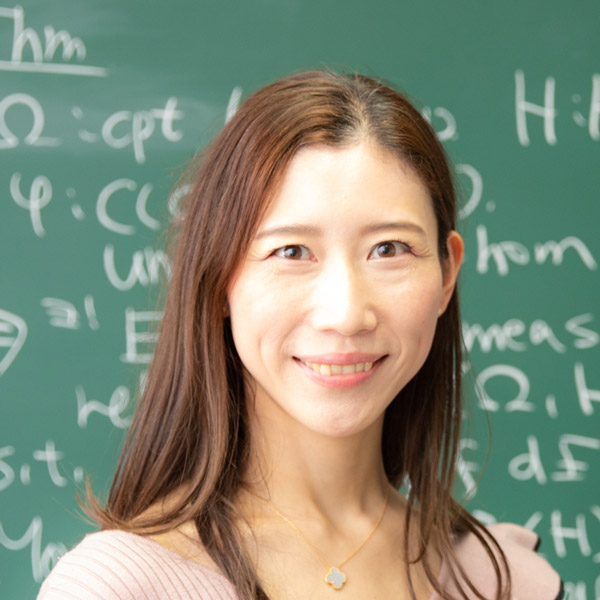
Elif Ak is a Researcher at Istanbul Technical University's Department of Computer Engineering, College of Engineering. Her work focuses on cutting-edge network technologies and digital twin systems. Current research in 6G communication frameworks Active in AI-enabled network management Digital twin methodology specialist Her research interests span Digital Twin , 6G Networks , and Machine Learning applications in telecommunications. Recent publications highlight advancements in backbone network security , UWB localization , and semantic communication systems. Key publication trends show 7 Scopus citations with 33 Mendeley readers, featuring collaborations with international experts in IEEE Transactions and Communications Magazine . Research outputs (21 total) demonstrate consistent annual contributions since 2019.
Professor Tom Rye is a faculty member at Edinburgh Napier University within the School of Engineering and The Built Environment . His work focuses on Transport Policy , Sustainable Transport , and Public Transport Governance , with specific expertise in institutional dynamics, policy implementation, and urban mobility. Research Themes Transport economics and social equity Smart cities and mobility innovation Freight policy and collaborative governance Institutional analysis in transport planning Notable Contributions Hybrid policy implementation theory EU-funded projects on sustainable mobility (PROSPERITY, DYNAMO, CIVITAS CAPITAL) Analysis of formal/informal governance structures Supervision Director for Clare McTigue's bus policy research Second supervisor for Shelly-Ann Julien's port efficiency study Grants £187,417 (EU Park4SUMP) £254,160 (EU PROSPERITY) £62,823 (EU CIVITAS CAPITAL)
Jorg Liebeherr is a Professor in the Department of Electrical and Computer Engineering at the University of Toronto, holding the Nortel Chair of Network Architecture and Services. His research focuses on computer networks , particularly network calculus , self-organizing networks , protocol design , and traffic scheduling . Education: Diplom-Informatiker (with distinction), University of Erlangen (Germany), 1988 PhD, Computer Science, Georgia Institute of Technology, 1991 His recent work includes low-cost LoRa mesh networks for environmental sensing and mathematical frameworks for traffic control in 5G and IoT systems. Publications span journals like IEEE Internet of Things Journal and conferences such as IEEE Infocom and ACM Sigmetrics . Scientific Awards: IEEE Fellow (2008) Outstanding Service Award, IEEE ComSoc TC on Computer Communications (2006) ACM Sigmetrics Best Student Paper Award (2005) NSF CAREER Award (1996) Advising and Grants: Supervised 15+ theses (MASc/PhD) and secured grants from NSF, Virginia Engineering Foundation, and industry partners. Labs: Leads the Network Research Lab and HyperCast projects, an open-source platform for application-layer internetworking.
Hatem Abou-Zeid is an Assistant Professor at the Department of Electrical and Software Engineering in the Schulich School of Engineering , University of Calgary. He holds Adjunct Professor appointments at Queen’s University, Carleton University, and Ontario Tech University, Canada. With a Ph.D. in Electrical and Computer Engineering from Queen’s University (2014), his academic journey includes 7 years of industry research at Ericsson and Cisco , where he led R&D projects resulting in 15+ patents. Queen's University (Ph.D., Electrical and Computer Engineering) Arab Academy for Science, Technology and Maritime Transport (B.Sc. and M.Sc., Electronics and Communications Engineering) His research focuses on 5G/6G wireless networking , immersive communications , and robust machine learning for networks. Recent projects explore trustworthy AI , joint sensing and communication , and pediatric brain-computer interfaces (BCI) . He has published extensively in top venues like IEEE JSAC , GLOBECOM , and IEEE Transactions on Networking , with over 60 publications and 19 patent filings. His scientific awards include the Research Excellence Award 2023 (UCalgary), Early Research Excellence Award 2023 (Schulich), and Best Paper Awards at EMBC 2024 (as advisor) and IEEE ICC 2022 . He leads the WAVES Research Group , mentoring 10+ graduate students and postdocs. Collaborations span institutions like the Hotchkiss Brain Institute and industry partners such as Ericsson and European Space Agency .
Professor Sebastian Stein is a faculty member in the Electronics and Computer Science department at the University of Southampton, specializing in artificial intelligence and multi-agent systems. He holds a PhD from the University of Southampton (2008) and an MEng in Computer Science from the University of Warwick. His research focuses on citizen-centric AI, mechanism design, and applications in smart energy, transportation, and disaster response. He leads or collaborates on projects such as the EPSRC-funded 'Citizen-Centric Artificial Intelligence Systems' and 'Future Electric Vehicle Energy networks supporting Renewables (FEVER)'. Education: PhD in Multi-Agent Systems (University of Southampton, 2008), MEng Computer Science (University of Warwick) Research Groups: Agents, Interaction and Complexity research group His work emphasizes incentive engineering in dynamic systems, sequential decision-making under uncertainty, and societal challenges like smart mobility and electric vehicle infrastructure. Key awards include the Blue Sky Ideas Award (AAMAS-2021) and Best Demonstration Award (AAMAS 2025). He currently supervises multiple PhD students in computer science and engineering.
Robson E. De Grande is an Associate Professor in the Department of Computer Science at Brock University, Canada. He holds a PhD from the University of Ottawa (2012) and BSc/MSc degrees from the Federal University of São Carlos, Brazil. His research focuses on vehicular networks, intelligent transportation systems, distributed systems, and cloud computing. He serves on program committees for conferences like DS-RT, MobiWac, and MSWiM, and has organized multiple workshops and special sessions. Education: PhD in Computer Science, University of Ottawa, Canada (2012) MSc and BSc in Computer Science, Federal University of São Carlos, Brazil (2006, 2004) Research Interests: Vehicular Networks (5G, Handover Management) Edge Computing and IoT Performance Modeling/Simulation High-Performance Distributed Systems Intelligent Transportation Systems Publications: Over 100 peer-reviewed articles across journals like IEEE Transactions on ITS, Elsevier Internet of Things, and conferences like IEEE ICC and ACM MobiWac. Recent work emphasizes ML-driven vehicular network optimization and distributed simulation frameworks. Teaching: Teaches Advanced Computer Networks (COSC 4P14), Parallel Computing (COSC 3P93), and graduate-level Mobile Cloud Computing courses. Research Team: Supervises PhD/MSc students and undergraduate researchers in topics like vehicular edge computing, traffic prediction, and simulation systems.
Teo Hock Hai is Provost's Chair Professor of Information Systems at the National University of Singapore's School of Computing, serving as Director for Humanities & Social Sciences Research in the NUS Office of the Deputy President. He previously headed the Department of Information Systems (2008-2015) and served as Vice-Dean for Corporate Communications. He holds PhD, MSc, and BSc degrees in Computer and Information Sciences from NUS. His research integrates Health Informatics , Digital Transformation , and Open Innovation , with current projects including multilingual dementia detection tools, AI-powered smoking cessation platforms, diabetes management apps, and crew fatigue prediction systems. His work emphasizes the design of IT artifacts to improve health outcomes, decision-making, and educational systems. His publications focus on AI applications in healthcare decision-making, behavioral responses to environmental data, digital platform architectures, and gamification strategies. Recent work examines AI's role in diagnostic workflows, pollution impact on exercise behavior, and emotion-driven information diffusion during health crises. Awards include the Information Management Research Award MIS Quarterly Reviewer of the Year (2004) Multiple best paper awards at international conferences He leads projects funded by national agencies and industry partners including Singapore Airlines, focusing on healthcare AI and digital resilience. He teaches doctoral courses on contemporary IS theories and mentors graduate researchers in health informatics and digital innovation.
Alex X. Liu is a Professor in the Department of Computer Science & Engineering at Michigan State University (2016-2022), currently serving as Chief Information Security Officer and President of Midea Software Engineering Institute. His academic career includes roles as Associate Professor (2012-2016) and Assistant Professor (2006-2012) at the same institution. He holds a Ph.D. and M.S. in Computer Science from The University of Texas at Austin, and a B.S. in Computer Science from Jilin University, China. Education Ph.D. in Computer Science (UT Austin, 2006) M.S. in Computer Science (UT Austin, 2002) B.S. in Computer Science (Jilin University, 1996) Liu's research focuses on Dependable computing , Networking algorithms , Cloud computing , Mobile computing , Privacy computing , and Computer/network security . His work spans secure systems, network protocols, and resource optimization in distributed environments. Recent publications address quantum neural networks , microservices autoscaling , RFID tag recognition , network traffic classification , and hybrid physical-layer authentication , demonstrating expertise at the intersection of AI and network security. Key trends include deep learning applications for cloud systems and robust security protocols. Scientific Awards IET Fellow (2021) IEEE Fellow (2019) ACM Distinguished Scientist (2019) Withrow Distinguished Scholar Awards (Senior 2019, Junior 2011) NSF CAREER Award (2009) IEEE & IFIP William C. Carter Award (2004)
Riadul Islam serves as an Assistant Professor in the Department of Computer Science and Electrical Engineering at the University of Maryland, Baltimore County (UMBC), maintaining his primary office in room 316 of the Information Technology and Engineering (ITE) Building. His academic appointment focuses on hardware design and verification within the institution's engineering framework. His educational qualifications include: Ph.D. in Computer Engineering from UCSC (2017) M.A.Sc. in Electrical and Computer Engineering from Concordia University, Montreal (2011) B.Sc. in Electrical and Electronic Engineering from Bangladesh University of Engineering and Technology (2007) Professor Islam's research centers on VLSI CAD tools and low-power digital/mixed-signal IC design , with significant contributions to current-mode clock networks, vehicular security systems, and error-robust circuit architectures. His work increasingly integrates machine learning for design automation while exploring neuromorphic computing applications and secure hardware implementations. This multidisciplinary approach bridges traditional IC design with modern AI-driven optimization techniques. Analysis of his 2023-2025 publications reveals three dominant research thrusts: (1) Machine learning applications in early-stage Design Rule Checking (DRC) prediction and clock network optimization, (2) Graph-based intrusion detection systems for automotive networks (particularly CAN bus security), and (3) Event-based vision systems and neuromorphic computing architectures. These areas demonstrate consistent innovation in merging hardware design with AI/ML methodologies for enhanced system reliability and efficiency. He directs the UMBC VLSI and SoC Research Group , which develops energy-efficient clocking networks, secure vehicular communication protocols, and compute-in-memory architectures. The lab maintains active collaboration with industry partners on hardware security and neuromorphic computing initiatives while supporting graduate student research in cutting-edge IC design methodologies.
Chihiro Matsui is an Associate Professor at the Department of Mathematical Structure Theory, Graduate School of Mathematical Sciences, University of Tokyo. Her research focuses on quantum solvable models and solvable stochastic processes, leveraging algebraic structures like quantum groups and the Yang-Baxter equation to derive exact physical quantities. She has made significant contributions to understanding supersymmetry emergence in quantum field theories from non-supersymmetric spin chains and extending asymmetric exclusion processes to multi-state applications. University of Tokyo, Graduate School of Mathematical Sciences Research fields: Mathematical Physics, Quantum Integrable Systems, Stochastic Processes Her work on quantum solvable models connects many-body scattering decomposition to integrability, while her studies on multi-state asymmetric exclusion processes explore applications in traffic engineering and micromeritics through higher-dimensional Temperley-Lieb representations. Recent articles analyze weak ergodicity breaking and partially solvable quantum systems. Scientific awards include the Statphys27 Poster Award (2023), NTT Com Online Prize (2014), and a Best Poster Award Bronze Prize (2013). She serves on the editorial board of the Journal of the Physical Society of Japan since 2017.
Professor Patrick Rinke leads the Chair of AI-based Materials Science at the Technical University of Munich (TUM), within the TUM School of Natural Sciences and Department of Physics. His research group develops advanced electronic structure and machine learning methods to address critical challenges in materials science, surface science, physics, chemistry, and nanoscience. Professor Rinke's research spans multiple cutting-edge domains including electronic structure theory development, machine learning applications for materials science, data-driven materials discovery, biomaterials engineering, atmospheric science applications, clean energy materials, and hybrid materials systems. His work integrates advanced computational methods with practical applications across diverse scientific fields, particularly focusing on how artificial intelligence can transform traditional materials research. Analyzing his recent publications reveals strong trends in applying machine learning techniques to materials discovery, with particular emphasis on Bayesian optimization methods, active learning approaches for molecular data, and efficient dataset generation strategies. His research spans from fundamental electronic structure theory to practical applications in biomaterials, atmospheric science, and renewable energy technologies. Professor Rinke has received several prestigious awards including the August-Wilhelm Scheer visiting professorship (2017), a German Science Foundation research scholarship (2007), the Outstanding Postdoctoral Research Achievement Award from UC Santa Barbara (2009), recognition as an Outstanding Referee for Physical Review journals (2014), and the Institute of Physics Computational Physics Group Thesis Prize (2003). Professor Rinke actively contributes to the academic community through teaching and supervision. For the Winter term 2025/26, he is teaching courses including Academic Writing Skills, Introduction to Machine Learning for Materials Science, Current Topics in AI-Based Materials Science, and Machine Learning for Natural Sciences. His research group includes several team members working on diverse projects spanning the intersection of AI and materials science.
Constantin Grigo is a PhD researcher at the Technical University of Munich (TU Munich), actively engaged in the Continuum Mechanics group. His work focuses on Uncertainty Quantification (UQ) and Machine Learning (ML), particularly for applications in maritime safety, bicycle traffic modeling, and stochastic systems. He has presented his research at major conferences like SIAM UQ and WCCM, and has been recognized with Student Travel Awards from SIAM UQ 2018 and SIAM CSE 2019. Education: Master of Science in Physics, LMU Munich (2015) Bachelor of Science in Physics, LMU Munich (2012) Year abroad at Grenoble INP (2010-2011) Research Interests: Probabilistic machine learning for coarse-graining high-dimensional systems Bayesian model and dimension reduction Stochastic differential equations in heterogeneous media Microscopic traffic simulation for bicycles and autonomous vehicles Digital twin applications for maritime and urban mobility Reduced-order modeling of random materials Selected Awards: SIAM UQ 2018: Student Travel Award Winner SIAM CSE 2019: Student Travel Award Winner His publications span topics such as data-driven scenario specification for autonomous vehicles, bicycle maneuver prediction using neural networks, and physics-constrained surrogates for UQ. He also contributes to open-source simulation tools like SUMO for traffic modeling.
Erin C. Strumpf is affiliated with the Department of Economics at McGill University in Montréal, Canada. She is also associated with the Centre Interuniversitaire de Recherche en Analyse des Organisations (CIRANO) and the Centre Interuniversitaire de Recherche en Économie Quantitative (CIREQ) , both in Montréal. Her research primarily focuses on health economics, public policy, and the intersection of labor markets with health care systems. Key Research Areas: Health economics, public policy, primary care systems, Medicaid impacts on labor supply, maternal and infant health, econometric methods (particularly difference-in-differences and quasi-experimental designs). Notable Trends in Publications: Recent work examines breast cancer data reliability (2024), patient enrollment policies (2025), and the economic impacts of health policies on labor markets (2017, 2010). Earlier studies (2016–2018) analyze maternal leave, chronic disease in aging populations, and health disparities linked to socioeconomic factors. Labs/Teams: Collaborates with interdisciplinary teams at CIRANO and CIREQ, focusing on policy evaluation and health systems analysis. Her work often involves quasi-experimental methods and longitudinal data from OECD countries, Canada, and the U.S.
Lars Pforte is a Lecturer in the Faculty of Science & Engineering at Maynooth University, affiliated with the Mathematics and Statistics department. He holds a PhD in Mathematics and a Masters Degree in Geocomputation. PhD in Mathematics Masters in Geocomputation His research spans both pure mathematics and applied geospatial analysis. Key areas include: Representation theory of finite groups Urban airspace traffic management (UTM) Road safety analysis Data imputation in space-time series While his recent publications focus on algebraic structures like symplectic modules for the Klein-four group and permutation module vertices, he also applies Bayesian statistical methods to urban analytics and transportation safety. No scientific awards are explicitly mentioned in the available information.
Dr. Ramon Antonio Rodriguez Zalepinos is an Associate Professor at the Department of Software Engineering, Faculty of Computer Science, National Research University Higher School of Economics (HSE). With 16+ years of scientific and teaching experience, he specializes in geospatial data systems, distributed databases, and high-performance computing. Doctor of Science in Computer Science (2024) Candidate of Technical Sciences (2013) Master's in Computer Science (2008, Donetsk National Technical University) His research focuses on geospatial array databases , distributed systems , and Big Earth Data engineering , particularly through his ChronosDB and Quantum Tensor DBMS projects. He has pioneered cloud-native solutions for multi-terabyte environmental datasets and developed novel approaches for in-database road traffic simulations. Key publication trends show 7+ years of contributions to VLDB and SIGMOD conferences, with special emphasis on: Quantum-enhanced geospatial processing Web-based array database systems Cellular automata integration High-speed raster data aggregation Scientific recognition includes: Best Teacher award (2017-2021, 2023) HSE Personnel Reserve member Additional post-doctoral funding (2024-2027) Multiple publication bonuses (2019-2023) He supervises student research in geospatial data science and leads projects on satellite data processing systems, with implementations at major institutions including Amazon and Planet Labs.