Markus TatzgernView profile
Professor
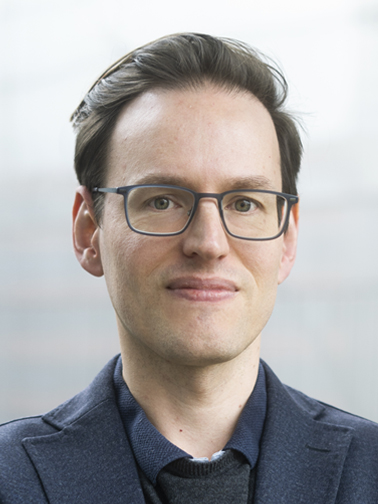
Dr. Markus Tatzgern serves as Professor for Mixed Reality and Game Development and Head of Research at the Department for Creative Technologies, Salzburg University of Applied Sciences. He leads the Digital Realities Lab, a multi-disciplinary research group focused on human-centered solutions at the intersection of software, design, and creative engineering for technology interaction. His academic foundation includes a Master of Science and Doctorate with highest distinction from Graz University of Technology. He furthered his expertise through post-doctoral research at the Christian Doppler Laboratory for Handheld Augmented Reality, recognized as a world-leading facility in mobile AR. Tatzgern's research spans Augmented Reality, Virtual Reality, Mixed Reality, and Human-Computer Interaction with emphasis on practical applications. His work addresses critical challenges in view management, haptic feedback systems, industrial procedure visualization, medical imaging interfaces, and game development. Key contributions include novel techniques for eye-perspective rendering, breathing-based VR interaction, and latency compensation in medical robotics. His publication trajectory reveals evolving focus from foundational AR visualization (2010-2016) toward applied XR solutions in healthcare, industrial training, and user experience optimization (2017-2024). Recent work demonstrates increasing integration of physiological inputs, real-world safety applications, and enterprise-grade XR prototyping. Scientific recognition includes: Honorable Mention for Best Paper at CHI 2022 for 'AirRes Mask' breathing interface Honorable Mention for Best Paper at IEEE 3DUI 2017 for adaptive rendering techniques As Head of Research, Tatzgern actively shapes the field through program committee roles and peer review for top venues including ACM CHI and IEEE VR. His four patents in AR visualization demonstrate translational impact from academic research to practical applications. The Digital Realities Lab operates as an innovation hub where software engineers, designers, and creative technologists collaborate on next-generation interaction paradigms. Current projects emphasize medical XR applications, industrial training systems, and accessibility-focused AR solutions for vulnerable populations.