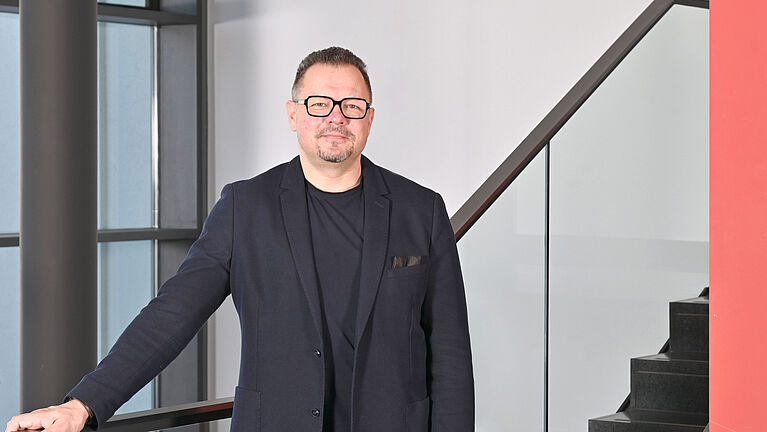
Steffen Riedl is a Professor of Road Construction at the University of Applied Sciences Erfurt , specializing in civil engineering and transport infrastructure. He serves as Vice-President for Academic Affairs and a member of FH Erfurt's Senate. Research focuses on asphalt maintenance, cold recycling, and pavement diagnostics Teaches bachelor’s courses on road engineering fundamentals Active in standardization committees including FGSV Education: Diplom degree in Civil Engineering (2000, TU Darmstadt) Doctorate in Engineering (Dr.-Ing., 2006) His work emphasizes load-bearing capacity analysis using Falling Weight Deflectometer (FWD) technology and thin-layer asphalt construction for sustainable infrastructure. Recent publications examine cold recycling techniques and pavement preservation. Professional Affiliations: Chair of Gütegemeinschaft AKB (Cold-Mix Asphalt Quality Association) Member of Forschungsgesellschaft für Straßen- und Verkehrswesen (FGSV) Active in Thuringian and Hessian road engineering associations As a certified expert for asphalt construction methods, he contributes to technical standards and has led multiple research projects on pavement longevity and maintenance technologies.
Professor Michael Pitt serves as the Director of Teaching and Learning at The Bartlett School of Sustainable Construction, University College London (UCL) . He is also a Professor of Facilities Management and has held academic positions at Liverpool John Moores University and Heriot Watt University. With over 200 publications, his work bridges academic research and industry applications in facilities management (FM) and sustainable construction. Academic Roles: Professor of Facilities Management (UCL), Reader, Lecturer International Collaborations: Visiting Professor at University of Malaya, Malaysia; partnerships with Malaysian Public Works Department (JKR) and CREAM (Malaysian Property Research Centre) Research Interests focus on facilities management, sustainability, and digital twin technology. Key areas include: Productivity and efficiency in workplace environments Sustainability strategies and performance measurement Digital twins for healthcare and infrastructure resilience Indoor environmental quality (IEQ) and occupant concentration Medical waste management in developing countries Climate-responsive building design for elderly populations Scientific Contributions include editorial leadership as Editor of the Journal of Facilities Management since 2001 and Fellow of the Royal Institution of Chartered Surveyors since 2000. His recent publications emphasize AI-driven asset management, blockchain-integrated healthcare systems, and climate adaptation strategies. Teaching encompasses modules on Service Operations Management and Principles of Facilities and Asset Management for the MSc in Digital Innovation in Built Asset Management at UCL.
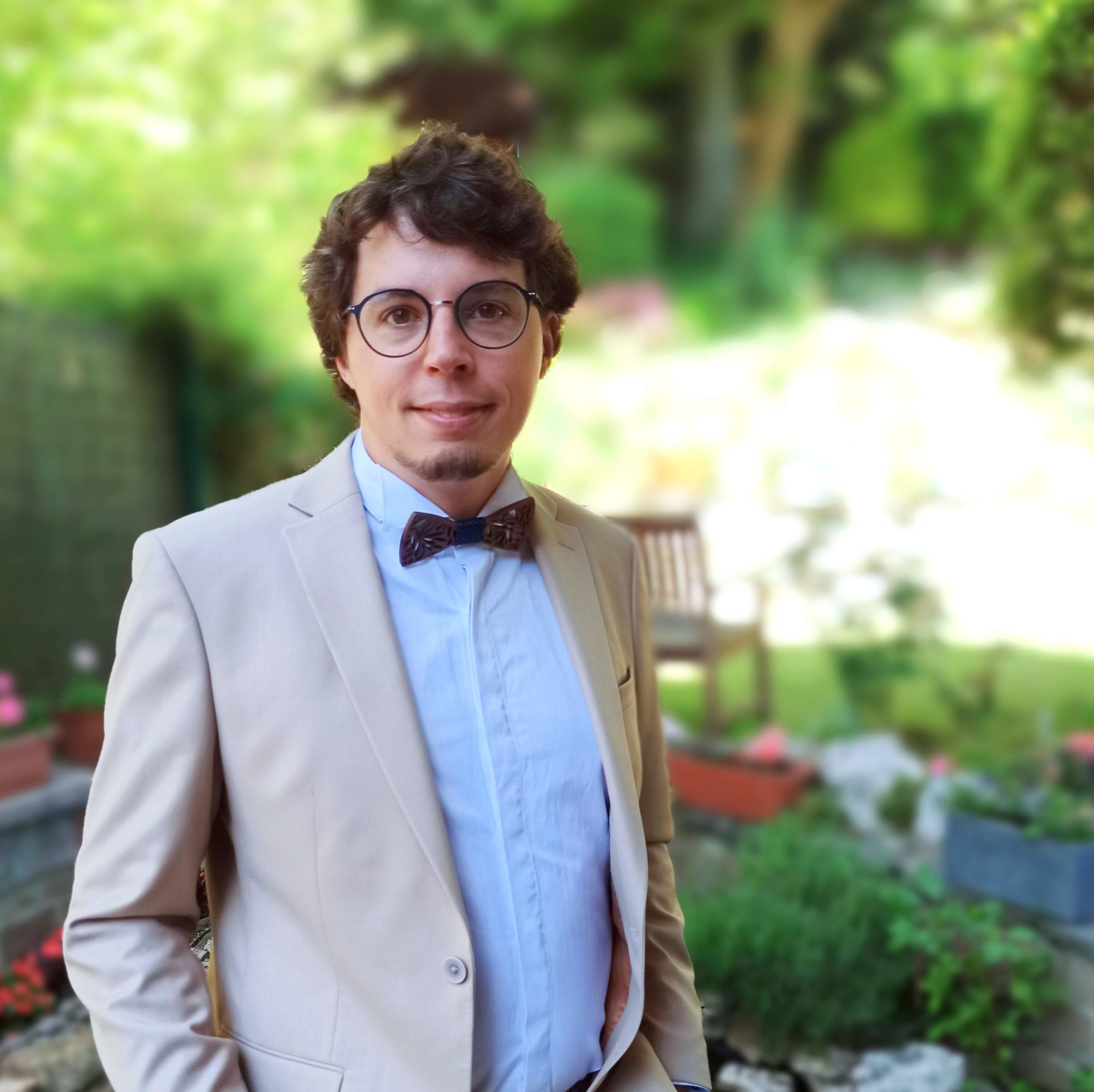
Tom Barbette is an Assistant Professor in the Computer Engineering Center (INGI) department at the Louvain Polytechnic School (EPL) of Université catholique de Louvain (UCLouvain), Belgium. He leads the Efficiency of Networked Systems Group , focusing on programmable networks, SmartNICs, NFV, data-centers, and high-speed packet processing. PhD (2018) from Université de Liège (advisor: Laurent Mathy) Post-doctoral research at KTH, Sweden (2018-2021) and UCLouvain (2021-2022) His research explores redefining internet communication paradigms through programmable infrastructure like SmartNICs and P4. Key themes include: High-speed networking and load-balancing Sub-atomic communication models for disaggregated systems KERNEL bypass techniques for performance optimization He has contributed to major conferences like SIGCOMM, NSDI, and CoNEXT, with patents on network interface optimization. His group collaborates on projects such as: ASNI (SmartNICs programming interface) HIRT (High-speed Forward Erasure Correction) Reframer (Network stream optimization)
Bruce DENBY is a Professor at Sorbonne University specializing in speech processing, telecommunications, and indoor localization. His research spans multiple disciplines including computer science, physics, and environmental science with significant contributions across these fields. His primary research interests include: Silent Speech Interfaces and speech restoration technologies Indoor localization using wireless networks and GSM fingerprints Telecommunications and signal processing Environmental modeling of road dust and air pollution Machine learning applications in speech recognition Dr. DENBY's research trajectory shows evolution from early work in high energy physics to speech processing and wireless communications, with recent publications (2022-2025) demonstrating continued innovation in WiFi analytics, client density mapping, and future speech interfaces. His work increasingly integrates deep learning techniques while maintaining focus on practical applications, particularly for speech restoration and privacy-preserving network analysis. Notable scientific achievements: Chester Sall Award Paper (2012) for work on FPGA-based FM broadcast receivers Significant contributions to the Silent Speech Challenge benchmark with deep learning approaches Development of the NORTRIP model for road dust emissions Highly cited work on Silent Speech Interfaces (over 500 citations) Dr. DENBY has secured research funding across multiple domains, collaborating with institutions across Europe. His work demonstrates strong interdisciplinary connections between speech technology, wireless communications, and environmental science, with applications ranging from assistive technologies to urban air quality management.
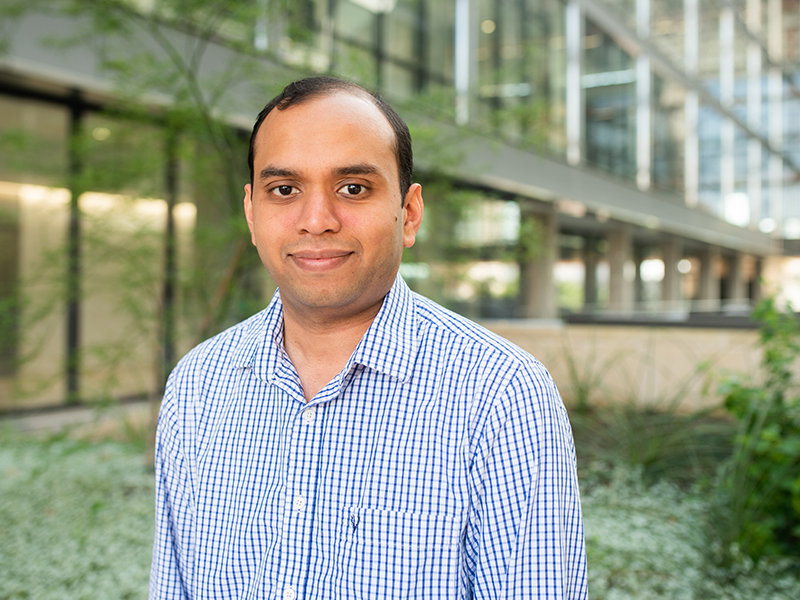
Krishna Kumar is an Assistant Professor in the Department of Civil Engineering at The University of Texas at Austin, holding the J. Neils Thompson Centennial Teaching Fellowship. His expertise lies in Geotechnical Engineering and Sustainable Systems Engineering, with a focus on multi-scale modeling of natural hazards, landslides, earthquakes, and debris flows. He employs advanced computational techniques such as the material point method, discrete element method, and lattice Boltzmann method, alongside high-performance computing and big data frameworks for infrastructure system modeling. Education: Ph.D., University of Cambridge, 2015 M.S., Indian Institute of Technology Madras, 2010 B.E., Anna University, 2008 Research Interests: His technical interests include computational geomechanics, granular material simulations, and the integration of machine learning with physics-based models. Recent work emphasizes inverse analysis using differentiable neural networks, explainable AI for geotechnical risk assessment, and innovative teaching methods like murder mysteries to enhance engineering education. Publications Trend: His articles from 2023–2025 highlight advancements in hybrid numerical methods (e.g., finite element-material point method), machine learning-driven simulations of granular flows, and computational tools for predicting geotechnical hazards. Cross-disciplinary themes include AI explainability, granular material behavior under cyclic loading, and scalable city-level traffic modeling. Teaching & Innovation: Beyond technical research, he explores pedagogical innovations such as gamified learning through murder mystery scenarios to engage students in complex engineering concepts.
Vaneet Aggarwal is Professor at Purdue University's Edwardson School of Industrial Engineering. His research spans machine learning, reinforcement learning, and quantum computing applications in optimization problems. He develops novel algorithms for complex systems including data centers, networks, and stochastic control environments. Research Focus : Aggarwal's work integrates deep reinforcement learning with combinatorial optimization to solve large-scale engineering problems. Current projects address quantum neural networks, fair resource allocation in bandit settings, and traffic engineering through learning-optimization hybrids. Recent Publications : Recent articles demonstrate consistent focus on theoretical guarantees for learning algorithms, including regret analysis in MDPs, sample complexity of diffusion models, and constrained optimization methods. His quantum machine learning research explores tensor networks for enhanced computational efficiency.
Dr. Abd Al Salam Al-Sabah is an Assistant Professor/Lecturer at the School of Civil Engineering, University College Dublin (UCD). He holds dual roles as a Research Fellow at UCD and an Associate at Arup, focusing on structural design and advanced manufacturing. His research includes digitally manufactured steel connections (via the AMASS project), structural health monitoring (SHM), and AI-driven design. He has contributed to projects like the Dublin Airport Control Tower and Bord Gáis Energy Theatre. He coordinates modules such as Design of Structures 2/3 and Case Studies . Key grants include the SFI-funded AMASS project (2016–2021). Education: PhD from UCD (Civil Engineering). Awards include the 2010 Institution of Structural Engineers-Ireland Branch Lecture Prize. His work integrates academic research with industry collaboration, emphasizing sustainable construction and innovative testing methods. Recent studies involve the Post-installed Screw Pullout (PSP) test for concrete strength assessment and the TRUSS project for aging infrastructure solutions.
Michael Opoku Agyeman is a Professor of Computer Engineering at the University of Northampton, affiliated with the Faculty of Arts, Science and Technology. He leads the Computer Systems Engineering programme and serves as the Science and Technology Postgraduate Research Lead. His research integrates Electronics, Business, and Pedagogy, with a focus on IoT, embedded systems, and educational equity. Education includes a PhD in Embedded Systems (Glasgow Caledonian University), an MSc (London South Bank University), and a BSc in Electrical Engineering (KNUST, Ghana). Additional qualifications include an MA in Education and an Executive MBA. Research spans: Electronics/Engineering: High-performance computing, IoT, wireless networks. Business/Management: Neuromarketing, strategic use of biometrics. Pedagogy: Inclusive education, technology-enhanced learning. Recent publications emphasize AI in healthcare (cancer diagnostics, cataract detection) and cybersecurity, reflecting interdisciplinary innovation. He secured funding for projects on BAME student attainment and academic misconduct. Awards include the Diamond Early Career Research Award (2019) and International Changemaker of the Year (2018). He supervises doctoral candidates in computing and engineering and directs the Centre for Advanced and Smart Technologies.
Prof. Alf Kimms is a full professor at the University of Duisburg-Essen, holding the chair of Logistics and Traffic Management. He previously served as a full professor at the Technical University of Freiberg (2001–2006). His research focuses on applying operations research methods to logistics, supply chain optimization, revenue management, and evacuation planning. He earned his Ph.D. in Business Administration from the University of Kiel (1996) and his postdoctoral lecturer qualification (2001), both focusing on project management and production scheduling. Kimms' academic career is marked by contributions to high-impact journals such as European Journal of Operational Research and Annals of Operations Research . He has led projects for companies like Bayer, Lufthansa, and DaimlerChrysler, emphasizing practical applications of optimization. A 2005 Handelsblatt ranking placed him among Germany’s top ten business administration professors. He actively participates in professional societies, including the German OR Society (GOR), where he founded the Revenue Management working group. His research spans network design, disaster response logistics, cooperative game theory, and airline alliance strategies. Notable projects include evacuation modeling for urban areas and revenue management frameworks for broadcasting industries. Kimms reviews for the German Research Foundation (DFG) and serves on international conference committees, balancing academic rigor with industry collaboration.
Dr. Mashrur “Ronnie” Chowdhury is the Eugene Douglas Mays Chair of Transportation and holds triple professorial appointments in Automotive Engineering, Civil Engineering, and Computer Science at Clemson University. He is the founding director of the USDOT UTC National Center for Transportation Cybersecurity and Resiliency (TraCR) and the USDOT UTC Center for Connected Multimodal Mobility (C2M2), and co-director of the Complex Systems, Analytics and Visualization Institute (CSAVI). Education B.S., Civil Engineering – Bangladesh Institute of Technology, 1988 M.S., Transportation – Morgan State University, 1991 Ph.D., Civil Engineering – University of Virginia, 1995 Research Interests Dr. Chowdhury’s scholarship converges at the intersection of cyber-physical systems , connected and autonomous vehicles , and smart-city transportation . His work advances secure, resilient, and data-rich mobility by integrating big-data analytics , artificial intelligence , and vehicle-to-everything (V2X) communication . Core themes include: Cyber-Physical Systems for Connected and Autonomous Vehicles Cyber-Physical Systems for Smart Cities Transportation Cybersecurity and Resiliency Big-Data-driven Intelligent Transportation Systems Sustainable and Green Transportation Solutions Publication Landscape Between 2009 and 2015, Dr. Chowdhury authored or co-authored more than 45 refereed journal articles. These works collectively trace an evolution from foundational traffic simulation and incident-management studies to cutting-edge research on connected vehicle security , energy-efficient electrified transportation , and big-data-enabled urban mobility analytics . A pronounced emphasis on cyber-physical security , overweight-truck infrastructure impacts , and real-time AI applications is evident across the portfolio. Scientific Awards & Honors Wilbur Smith Distinguished Transportation Educator Award (2015) AASHTO High-Value Research Project Award (2014) Faculty Mentoring Award, CECAS (2013) McQueen Quattlebaum Faculty Achievement Award (2012) National Academy of Engineering Indo-U.S. Frontiers of Engineering Invited Speaker (2012) Clemson Board of Trustees Award for Faculty Excellence (2011, 2010) IDEaS Professor, CECAS (2010) Frank A. Burtner Award for Excellence in Advising (2010) Murray Stokeley Award for Excellence in Teaching (2009) Fellow, American Society of Civil Engineers (ASCE) Senior Member, IEEE Advising & Grants Dr. Chowdhury has mentored more than 30 Ph.D. and M.S. students whose names appear as first or co-authors on his publications. His research funding portfolio includes multi-million-dollar grants from the U.S. Department of Transportation (USDOT) through two national UTC centers—TraCR and C2M2—focused on cybersecurity and multimodal mobility innovation. Laboratories & Teams He directs the Connected Transportation Lab located in 351 Engineering Innovation Building and maintains an office in 216 Lowry Hall. These facilities host interdisciplinary teams of graduate researchers, post-docs, and visiting scholars advancing next-generation connected and autonomous transportation systems.
Dr. Jijomon Chettuthara Moncy is a Research Fellow at the University of East London, affiliated with the Childhood & Social Care research institute. Their work bridges cognitive science, biomedical engineering, and clinical neuroscience, focusing on applications of machine learning in healthcare and driver safety. Research interests include cognitive load assessment via physiological signals (heart rate/blood pressure), EEG-based neuroimaging analysis, and translational neuroscience. Their studies explore interventions like transcranial direct current stimulation (tDCS) for bipolar depression, alongside machine learning models predicting clinical outcomes. Recent publications (2025) address driver cognitive load measurement using biometric data and EEG-based biomarkers for treatment response prediction in mental health. These works contribute to both theoretical understanding and practical applications in human-computer interaction and clinical decision-making. No academic awards or grants are explicitly listed in the provided profile. Advising activity remains unspecified in current records.
Issam Khoury is an Associate Professor and Director of the Ohio Research Institute for Transportation and the Environment (ORITE) at Ohio University's Russ College of Engineering and Technology. He holds a Ph.D. (Ohio University), M.S. (Ohio University), and B.S. (Ohio State University) in Civil Engineering. His research focuses on structural instrumentation, pavement performance testing, and geotechnical data analysis. Khoury has extensive experience in highway research projects for agencies like ODOT and FHWA, including work on perpetual pavements, bridge instrumentation, and material testing. He has co-authored over 40 technical reports and papers on topics like pavement durability, fiber-reinforced materials, and forensic infrastructure analysis. His applied research aids in improving transportation infrastructure design and maintenance strategies. Key contributions include instrumentation of test roads (e.g., US 23 in Delaware, OH) and bridges, and validation of ODOT’s design methodologies. Education: Ph.D., Civil Engineering, Ohio University M.S., Civil Engineering, Ohio University B.S., Civil Engineering, Ohio State University Research Highlights: Khoury’s work emphasizes field data collection and analysis, including sensor installation for pavements and bridges. He evaluates material properties (e.g., concrete, asphalt) and develops tools like the JPCP Design Catalog for New York State. His research bridges lab testing (e.g., MEPDG material inputs) and real-world infrastructure performance. Grants & Projects: Leads projects funded by Ohio Department of Transportation (ODOT), FHWA, and others. Recent efforts include optimizing perpetual pavement thickness, analyzing culvert corrosion, and investigating tree-pavement interactions for urban infrastructure resilience. Labs/Teams: Directs ORITE, which specializes in transportation and environmental research. Collaborates with the Accelerated Pavement Load Facility for large-scale testing.
Marvin Halling is the Department Head and Professor in the Department of Civil and Environmental Engineering at Utah State University (USU). He holds a PhD in Applied Mechanics from the California Institute of Technology (1995), an MS in Civil Engineering from Stanford University (1986), and a BS in Civil Engineering from USU (1985). He is a licensed Structural Engineer (Utah) and Civil Engineer in Utah and California. His research focuses on structural dynamics, bridge engineering, seismic design, and structural health monitoring. He has led the SMASH Lab (Systems, Materials and Structural Health Laboratory) and pioneered projects like dynamic testing of bridges, instrumentation for infrastructure evaluation, and retrofitting techniques using advanced materials. Award highlights include Fellow of the American Society of Civil Engineers (2008), multiple Utah Engineering Educator of the Year Awards (2007, 2005, 2004, 2002), and the USU College of Engineering Professor of the Year (2001). His teaching spans courses like Structural Dynamics, Structural Analysis, and Experimental Methods in Structural Engineering. He has mentored over 30 graduate students since 2008, contributing to research projects in bridge testing, materials science, and infrastructure resilience. Halling’s work emphasizes practical applications, such as field verification of bridge weigh-in-motion techniques, long-term monitoring of bridge performance, and innovative solutions for aging infrastructure. His collaborations with the Utah Department of Transportation (UDOT) have produced technical reports on prestress loss in bridge girders, seismic retrofitting, and dynamic bridge behavior under extreme conditions.
Dr. Byungseok Kang is a Lecturer in Computing at the University of Derby's College of Science and Engineering. His research focuses on advanced networking technologies, particularly in the domains of Internet of Things (IoT), wireless sensor networks, and distributed systems. With expertise spanning cloud computing integration and network protocol optimization, Dr. Kang develops innovative solutions for scalable and efficient communication infrastructures. His research primarily investigates energy-efficient routing protocols, mobility management frameworks, and autonomous network architectures. Recent projects explore IoT-based platforms for real-world applications including drone-based sensing systems and cloud-integrated service platforms. Dr. Kang's work emphasizes practical implementations through experimental testbeds and performance evaluations. Analysis of Dr. Kang's recent publications reveals a consistent focus on optimizing network performance under constrained resources. His work demonstrates strong thematic alignment with emerging needs in low-latency communication systems and distributed computing infrastructures, particularly relevant for next-generation IoT ecosystems.
Dr. Gabriel Ibarra-Mejia is an Associate Professor of Public Health Sciences at the University of Texas at El Paso (UTEP), combining clinical expertise as an MD with a PhD in Ergonomics. His research focuses on occupational health disparities, environmental exposures (e.g., PM2.5, BTEX compounds), and musculoskeletal injury prevention in vulnerable populations, particularly along the U.S.-Mexico border. He leads NIH/CDC/EPA-funded projects like the $200K environmental health impact assessment near the Bridge of the Americas and studies PM2.5 exposure at border crossings. His work integrates biomechanical modeling, biomarker analysis, and community-engaged research to develop culturally appropriate interventions. Notable collaborations include Texas Tech and UC Berkeley in expanding climate-related health research, such as valley fever trends and heat stress in outdoor workers. He prioritizes health equity through bilingual health literacy programs and ergonomic training for Hispanic/Latino communities. Dr. Ibarra-Mejia has over 85 peer-reviewed publications and serves in leadership roles at ASTM International and the Human Factors Society. Recent studies emphasize dust events' health impacts, short-term air pollution effects, and occupational risks for construction workers. His interdisciplinary approach addresses both clinical and engineering challenges, translating research into practical safety solutions and environmental justice advocacy. Grants: $200K NIH project, $142K CDC study, collaborations with EPA Leadership: President of International Ergonomics and Safety Organization Labs/Teams: Interdisciplinary environmental health teams, community-engaged research initiatives