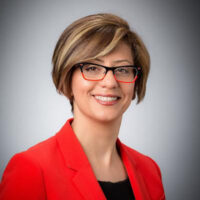
Dr. Saiedeh Razavi is an Associate Professor and the inaugural Chair in Heavy Construction at McMaster University's Department of Civil Engineering, directing the McMaster Institute for Transportation and Logistics (MITL). She holds a multidisciplinary background with degrees in Computer Engineering (B.Sc., Sharif University), Artificial Intelligence (M.Sc., Iran), and Civil Engineering (Ph.D., Waterloo). Her research focuses on smart infrastructure, connected mobility, and construction safety, funded by NSERC and the Ontario Ministry of Transportation. Key areas include transforming construction management through AI, autonomous vehicles, and smart work zones. Education: B.Sc. (Sharif), M.Sc. (Iran), Ph.D. (Waterloo) Research Interests: Smart cities, connected vehicle systems, data fusion, risk analysis, and sustainable logistics Leadership Roles: Director of MITL, Associate Chair (Research), and lead of national/international multidisciplinary projects Her work bridges academia, government, and industry to enhance mobility and safety. Notable grants include NSERC funding for transformative transportation systems. Awards include teaching excellence and innovation in team-based projects. Grants & Projects: NSERC, Ontario Ministry of Transportation, and industry collaborations Labs/Teams: MITL, CPS-based construction safety initiatives, and autonomous vehicle research groups
Dr. Jean-Christophe Nave is an Associate Professor in the Department of Mathematics and Statistics at McGill University. He holds a PhD from the University of California, Santa Barbara (2004), under advisors Xu-Dong Liu and Sanjoy Banerjee. Prior to McGill, he served as a Lecturer and Instructor at MIT's Mathematics Department (2005-2010). His research focuses on numerical analysis, partial differential equations, fluid mechanics, and computational methods for interface problems. He has led research groups involving postdocs, PhD, and undergraduate students, collaborating on projects like the Correction Function Method for PDEs and the Characteristic Mapping Method for advection problems. Education: Ph.D. in Applied Mathematics from UCSB (2004). Affiliations include the Institut des Sciences Mathematiques Steering Committee, Centre de Recherches Mathematiques Applied Math Lab, and CNRS-UMI. Active in teaching courses like Numerical Analysis I/II and Non-Linear Dynamics at McGill, with sabbatical periods noted in recent years. Research interests span numerical methods for PDEs, fluid-structure interaction, and multi-phase flows. His work integrates computational geometry and invariant numerical techniques, addressing challenges in complex fluid dynamics and interface-driven phenomena. Over 40 peer-reviewed publications and continuous contributions to the field of computational applied mathematics. Scientific advising includes over 20 graduate and undergraduate students, with notable alumni now in academia and industry. Collaborations include projects on volcano dynamics, fiber drawing instabilities, and concentrated solar power systems. His methods have advanced numerical simulations for engineering and physical systems involving discontinuous coefficients and sharp interfaces.
SangHyung Ahn is a Lecturer at the School of Civil Engineering , University of Queensland (UQ), since 2017. He joined UQ as a postdoctoral research fellow in 2015 after earning his PhD in Civil Engineering (Construction Engineering and Management) from Purdue University, USA. Prior to his academic career, he worked as an assistant manager at Hyundai Engineering and Construction Co., Ltd. (2003-2007) and holds an MBA in international business from Hanyang University and a B.Sc in Civil Engineering from Korea University. Research Focus: Construction process modelling with virtual reality, decision support systems for construction, automation of data-driven simulation modelling, sensor-based operations analysis, and integration of Building Information Modelling (BIM). Teaching: Coordinates undergraduate courses Introduction to Project Management (CIVL3510) and Construction Engineering Management (CIVL4522) . Research Trends: His recent publications highlight interdisciplinary work in transportation engineering, structural design, and AI-driven simulation tools. Key themes include application of machine learning to car-following models, drone-based vehicle identification, and optimization of public transport systems using agent-based simulations. Supervision: Available for supervision, with completed supervision of PhD and Master’s theses on topics such as BIM-LCA integration, pedestrian trajectory analysis, and AI-driven driving behavior models.
Wenhao Ding is a Research Scientist at NVIDIA's Autonomous Vehicle Group, focusing on enhancing the safety and robustness of physical autonomous systems, particularly autonomous vehicles. His research integrates multi-modal large language models, reinforcement learning, and causal discovery to improve model reasoning capabilities. He holds a Ph.D. from Tsinghua University's Department of Electronic Engineering, with a thesis on 'Generative AI for Critical Digital Twins.' Key research interests include safety-critical scenario generation, causal representation learning, and offline reinforcement learning. His work emphasizes closed-loop simulation for autonomous systems and has led to contributions like the SafeBench benchmarking platform and the RealGen scenario generation framework. He has received the 2022 Qualcomm Innovation Fellowship. Notable collaborations include projects with Prof. Marco Pavone at Stanford and internships at Amazon Lab126 (Astro team) and Bosch Center for AI. He actively reviews for top conferences (ICML, NeurIPS, CVPR) and journals (IEEE T-ITS, RA-L). His recent focus on privacy risks in robotics and causal-aware driving models underscores his commitment to trustworthy AI systems. He organizes conferences like the 2024 IEEE International Automated Vehicle Validation Conference and co-hosted the Secure and Safe Autonomous Driving (SSAD) Workshop at CVPR 2023. His interdisciplinary work bridges theory and practice, addressing critical challenges in autonomous systems' safety and generalization.
Dr. Johnson Xuesong Shen is an Associate Professor at the School of Civil and Environmental Engineering , University of New South Wales . His work integrates Digital Twins , Building Information Modeling (BIM) , and Construction Automation with a focus on robotics, AI, and LiDAR/UAS technologies. Research Interests: Digital Twins, BIM, Construction Robotics, Emissions Modeling, LiDAR/UAS, Structural Health Monitoring Education: Ph.D. in Construction Engineering and Management, The Hong Kong Polytechnic University His publications span 2025–2005, emphasizing construction automation , environmental impact reduction , and innovative tunneling solutions . Recent work includes IoT-Bayes fusion for real-time safety monitoring and life cycle analysis of construction waste. Scientific Awards: Vice Chancellor's Award for Teaching Excellence, UNSW, 2014 Best PhD Student Paper Award, CONVR, UK, 2013 Postdoctoral Fellowship, University of Alberta, 2011-2013 Best Paper Award, ASCE Construction Research Congress, 2010 Dr. Shen mentors 9 PhD candidates in areas like 3D object detection , fuel consumption modeling , and UAV-based LiDAR . His grants include $5.98M from the Australian Research Council (2022–2027) for resilient infrastructure systems and projects on modular construction and intelligent tunneling .
Federico Toschi is a Full Professor at Eindhoven University of Technology (TU/e), holding joint appointments in Applied Physics and Mathematics and Computer Science departments. His research focuses on multi-scale transport phenomena, combining statistical physics, fluid dynamics, and computational methods. He leads projects in the 4TU Centre for Multiscale Phenomena and EAISI. Education: PhD in Physics (University of Pisa, 1998) and academic background at Scuola Normale Superiore di Pisa. Interdisciplinary expertise in fluid dynamics turbulence, Lagrangian turbulence, crowd dynamics, and Lattice Boltzmann methods. Recipient of APS Fellow (2015), Euromech Fluid Mechanics Fellow (2012), and Ig Nobel Prize for Physics (2021). Research emphasizes turbulence modeling, pedestrian dynamics, and active matter, with applications in environmental flows and crowd management. His work bridges computational innovations with experimental validations. Recent articles explore kinetic data-driven turbulence modeling, pedestrian flow optimization, and turbulence effects in biological systems. Projects include digital twins for seismicity modeling and rarefied gas dynamics. Teaches fluid mechanics, computational physics, and chaos theory courses. Founded Flow Matters Holding BV, applying research to practical solutions.
Alejandro Tirachini is an Associate Professor in Transport Planning at the University of Chile, specializing in transportation systems research with emphasis on public transport optimization, emerging technologies, and socio-economic impacts. His work bridges engineering, urban planning, and policy analysis to address global mobility challenges. His research spans public transport operations, road transportation systems, autonomous vehicle integration, and sustainable mobility solutions. Key methodologies include agent-based modeling, statistical analysis, and mathematical programming for optimization. Tirachini investigates environmental externalities, economic systems in transport, and behavioral responses to innovations like real-time information apps and teleworking. Analysis of his 2023-2025 publications reveals a strong focus on practical transport solutions: bus scheduling algorithms, electrification barriers, real-time information impacts, and railway barrier effects. His work consistently compares developed and developing country contexts, with significant Chilean case studies. Methodologically, he combines quantitative techniques with socio-technical analysis to evaluate policy interventions across environmental, economic, and behavioral dimensions.
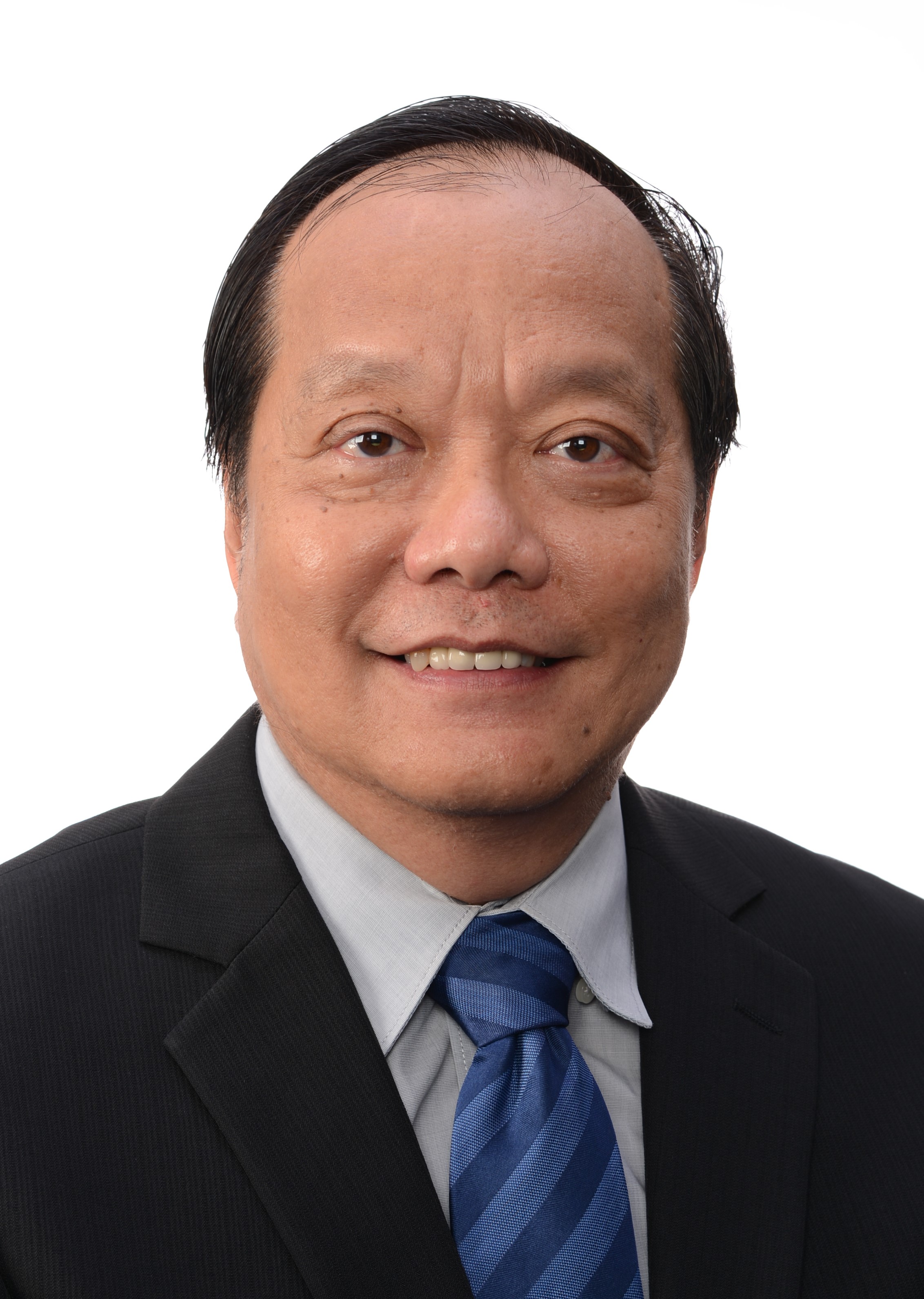
Professor Chin Hoong Chor is a Professor in the Department of Civil Engineering at the National University of Singapore (NUS), affiliated with the Faculty of Engineering. He specializes in transportation systems modeling, safety assessment, and congestion management. As a registered professional engineer and road safety auditor, he has contributed to numerous projects with Singapore’s land authorities and private companies. He holds leadership roles including Vice Chairman of the Chartered Institute of Logistics and Transport and Editorial Board membership for the International Journal of Transport Management. Qualifications include a BEng and MEng from NUS and a PhD in Transportation Engineering from the University of Southampton. His research interests span vehicle detection using image processing, traffic conflict analysis, and public transport optimization. Notable awards include the NUS Faculty Innovative Teaching (Gold) Award (2001/2002) and the UK Institution of Civil Engineers Webb Prize (2003). Education: BEng in Civil Engineering, National University of Singapore MEng in Civil Engineering, National University of Singapore PhD in Transportation Engineering, University of Southampton His research focuses on quantitative safety analysis, traffic flow modeling, and smart city initiatives. Recent work explores maritime collision risk modeling and sentiment analysis for transportation planning. He actively contributes to government committees and has authored over 40 peer-reviewed papers on traffic management and safety. Awards: Faculty Innovative Teaching (Gold) Award, 2001/2002 UK Institution of Civil Engineers Webb Prize 2003 Prof Chin has undertaken traffic impact studies and road safety reviews in Singapore, collaborating with public and private sectors. His work bridges academic research and practical policy implementation, emphasizing sustainable urban mobility solutions.
Professor Lynette Cheah is a leading academic in sustainable transport, holding the position of Professor and Chair of Sustainable Transport at the University of the Sunshine Coast (UniSC), Queensland, Australia. She directs the Sustainable Mobility Research Laboratory, focusing on data-driven models and digital tools to reduce transport environmental impacts. Her expertise spans smart cities, urban freight, transport modeling, and policy assessment. Educations: PhD in Engineering Systems (MIT) MSc in Management Science and Engineering (Stanford University) BSc in Civil and Environmental Engineering (Northwestern University) Research Interests: Lynette’s work integrates interdisciplinary approaches to address sustainable mobility challenges. Key areas include electric mobility, low-carbon transport infrastructure, transport equity, urban freight optimization, and climate policy. She collaborates with urban planners, computer scientists, and policymakers to translate research into real-world impact, such as leading UN climate reports and advising Singapore’s Public Transport Council (2019–2024). Publications & Awards: Lynette has authored over 70 peer-reviewed articles, including high-impact journals like Transportation Research and Nature Energy . Notable awards include the 2023 TRB Best Applied Research Paper Award and the 2020 Graedel Prize. Her work has been featured in CNN, Nature, and ChannelNewsAsia. Grants & Collaborations: Current projects include electric mobility lifecycle assessments, universal basic mobility trials, and low-carbon transport infrastructure studies. Past collaborations include foresight studies for Singapore’s 2040 urban mobility vision and material flow analyses for vehicle lightweighting. Labs & Teams: She leads the Sustainable Mobility Research Laboratory at UniSC, fostering innovation in smart city technologies and sustainable transport systems.
Dr. Frank Loh is a researcher at the Department of Computer Science III, University of Würzburg, specializing in energy efficiency, network performance, and Quality of Experience (QoE) in communication networks. His work focuses on optimizing LoRaWAN deployments, serverless computing, and edge-cloud environments, with an emphasis on reducing message collisions and improving resource utilization. He actively contributes to methodologies for gateway placement, traffic modeling, and energy consumption metrics. Research Areas Energy Efficiency in Communication Networks Quality of Service (QoS) and Quality of Experience (QoE) LoRaWAN Network Planning Edge and Serverless Computing Network Resource Analysis Recent Publications 2025: Energy modeling for 6G base stations 2025: Server cluster resilience via Markov models 2024: Serverless computing in edge-cloud environments 2024: LoRaWAN channel access optimization
Christos G. Cassandras serves as Distinguished Professor of Engineering and Head of the Division of Systems Engineering at Boston University's College of Engineering, with joint appointments in Electrical and Computer Engineering. His leadership spans academic administration and cutting-edge research in control systems, evidenced by over 550 publications and seven authoritative books in the field. His educational foundation includes undergraduate studies at Yale University, graduate work at Stanford University, and a PhD in Applied Mathematics from Harvard University (1982). This multidisciplinary background underpins his research approach. Dr. Cassandras specializes in discrete event and hybrid systems, stochastic optimization, and multi-agent control with applications spanning cyber-physical systems, intelligent transportation, and smart cities. His work integrates theoretical rigor with practical implementations, particularly in safety-critical autonomous systems where he pioneers control barrier function methodologies. Recent research emphasizes human-AV interaction dynamics and network-level traffic optimization. Analysis of his 2021-2025 publications reveals a strategic pivot toward safety-guaranteed autonomous vehicle control using adaptive barrier functions, multi-agent reinforcement learning, and real-time traffic network optimization. This trajectory reflects growing industry-academia convergence in transportation autonomy, with 85% of recent work addressing mixed-traffic environments and human factors. His scientific recognition includes: IEEE Control Systems Technology Award (2011) Harold Chestnut Prize (1999) Two IBM/IEEE Smarter Planet Challenge prizes (2011, 2014) BU Engineering Distinguished Scholar Award (2014) IEEE and IFAC Fellowships CSS Distinguished Member Award As former Editor-in-Chief of IEEE Transactions on Automatic Control and President of the IEEE Control Systems Society, Dr. Cassandras has shaped global research directions. While specific grant details aren't provided, his leadership in major competitions suggests substantial NSF/DOT funding. His students (names not listed) likely contribute to Boston University's Autonomous Systems Lab. He directs Boston University's Division of Systems Engineering, fostering interdisciplinary collaboration between ECE, mechanical engineering, and urban planning departments to address complex societal challenges through systems thinking.
Prof. Laura Vargas Koch serves as Junior Professor at RWTH Aachen University, leading the Teaching and Research Unit of Algorithmic Game Theory and Discrete Mathematics (GDM). Her interdisciplinary work bridges mathematics, computer science, and economics through rigorous theoretical frameworks. Her research focuses on: Algorithmic Game Theory : Analyzing fair pricing mechanisms and equilibrium structures in traffic flow systems Combinatorial Optimization : Developing approximation algorithms for clustering problems and graph-based optimization Analysis of her 2021-2025 publications reveals evolving expertise in dynamic traffic modeling, routing game equilibria, and auction mechanism design. Her work consistently addresses theoretical foundations while maintaining practical relevance to transportation networks and resource allocation systems. The GDM unit under her direction provides specialized coursework and fosters collaborative research at the intersection of discrete mathematics and economic modeling.
Professor Washington Yotto Ochieng serves as Head of the Department of Civil and Environmental Engineering and Chair Professor in Positioning and Navigation Systems at Imperial College London. He directs the Centre for Active Resilience and Security (CARS) and maintains key affiliations with the Centre for Systems Engineering and Innovation, Centre for Transport Engineering and Modelling, Institute for Molecular Science and Engineering, and Space Lab. His extensive advisory roles include the Science Museum Group Board of Trustees, Royal Institute of Navigation Presidency, and Royal Academy of Engineering Africa Steering Committee. His educational background includes a BSc (First Class) in Engineering from the University of Nairobi and MSc (Distinction) and PhD in Civil Engineering from the University of Nottingham. He received an honorary DSc from Technical University of Kenya in 2023. Ochieng's research pioneers critical infrastructure resilience, user-centric mobility, and positioning/navigation/timing (PNT) systems. He has designed satellite navigation systems (including Europe's EGNOS and GALILEO) for multi-domain applications and advanced Air Traffic Management and Intelligent Transport Systems. His work integrates geomatics, transportation engineering, and sustainable mobility to solve global urban infrastructure challenges, with recent emphasis on decarbonization and AI-driven solutions. His 2024-2025 publications reveal strong trends in sustainable transportation decarbonization, AI-optimized traffic management, and resilient urban positioning systems. Research focuses on hydrogen fuel cell trains, carbon-efficient aviation, and deep reinforcement learning applications for emission reduction, demonstrating interdisciplinary integration of engineering, environmental science, and artificial intelligence to address climate challenges. Fellow of the Royal Academy of Engineering (2013) Harold Spencer-Jones Gold Medal from Royal Institute of Navigation (2019) Doctor of Science (honoris causa) from Technical University of Kenya (2023) Elder of the Order of the Burning Spear (EBS) from Kenya (2023) Commander of the Order of the British Empire (CBE) (2024) Ochieng provides strategic guidance to UK Government bodies (Government Office for Science, Department for Transport, FCDO), European Parliament, and European Court of Auditors. His advisory work shaped the Blackett Review on Satellite-derived Time/Position, UK Space Strategy, and Future of Mobility report. He chairs the Science Museum London Advisory Board and leads FCDO's Sustainable Urban Economic Development program in Africa, with significant grant influence through UK National Physical Laboratory and Department for International Development. He directs the Centre for Active Resilience and Security (CARS) and leads Space Lab initiatives, focusing on mission-critical PNT systems and infrastructure resilience. His teams collaborate with international consortia including RTCM Special Committee 134 and US Institute of Navigation, developing next-generation navigation solutions for safety-critical applications across transport, aviation, and urban environments.
Jung Yun Bae serves as Assistant Professor in Mechanical and Aerospace Engineering at Michigan Technological University with a secondary appointment in Applied Computing within the College of Computing, joining MTU in 2019 after five years as Research Professor at Korea University's Intelligent Systems and Robotics Laboratory. Her academic credentials include: PhD in Mechanical Engineering from Texas A&M University MS in Mechanical Engineering from Hongik University BS in Mechanical Engineering from Hongik University Dr. Bae's research program centers on Robotics with emphasis on Multi-robot systems, particularly Coordination of Heterogeneous Robot Teams and Vehicle Routing Problems. Her work develops operational strategies for multi-agent autonomous vehicle systems through Multi-robot System Control and Optimization techniques, extending to Autonomous Navigation and Operational Research applications. Current investigations focus on underwater robotics coordination and neuroevolution approaches for connected vehicle systems. Analysis of her recent publications reveals consistent focus on workload-balanced task allocation for heterogeneous robot teams across challenging environments. Her underwater robotics research addresses tether management and entanglement avoidance, while neuroevolution applications target autonomous vehicle control at uncontrolled intersections and hybrid powertrain optimization, bridging robotics with operations research and artificial intelligence. Prior to MTU, Dr. Bae maintained affiliation with Korea University's Intelligent Systems and Robotics Laboratory. Her current work at MTU connects with the Great Lakes Research Center context, though specific laboratory details aren't provided in available materials.
Ikjot Saini is a Professor at the University of Windsor’s Faculty of Engineering, co-leading the SHIELD Automotive Cybersecurity Centre of Excellence, Canada’s first organization addressing threats in connected transportation. Her research focuses on automotive cybersecurity, vehicular networks, and privacy-preserving technologies. She has supervised doctoral students Shiva Nejati and Kunj Dhonde, and contributed to courses in the University’s Continuing Education program, specializing in cybersecurity education for professionals. Her work includes pioneering studies on blockchain-based security for connected autonomous vehicles (CAVs), machine learning-driven intrusion detection systems, and privacy-enhancing mechanisms like pseudonym-changing strategies. She has been recognized with the K.W. Michael Siu Award from the APMA Institute for Automotive Cybersecurity (2020). Saini’s research bridges theoretical advancements with real-world applications, ensuring vehicles and infrastructure remain secure against evolving cyber threats. Her contributions span academic publications, industry partnerships, and policy recommendations, positioning her as a leader in vehicular cybersecurity. Ongoing projects emphasize eco-efficiency in cybersecurity solutions and adversarial modeling for privacy evaluation.