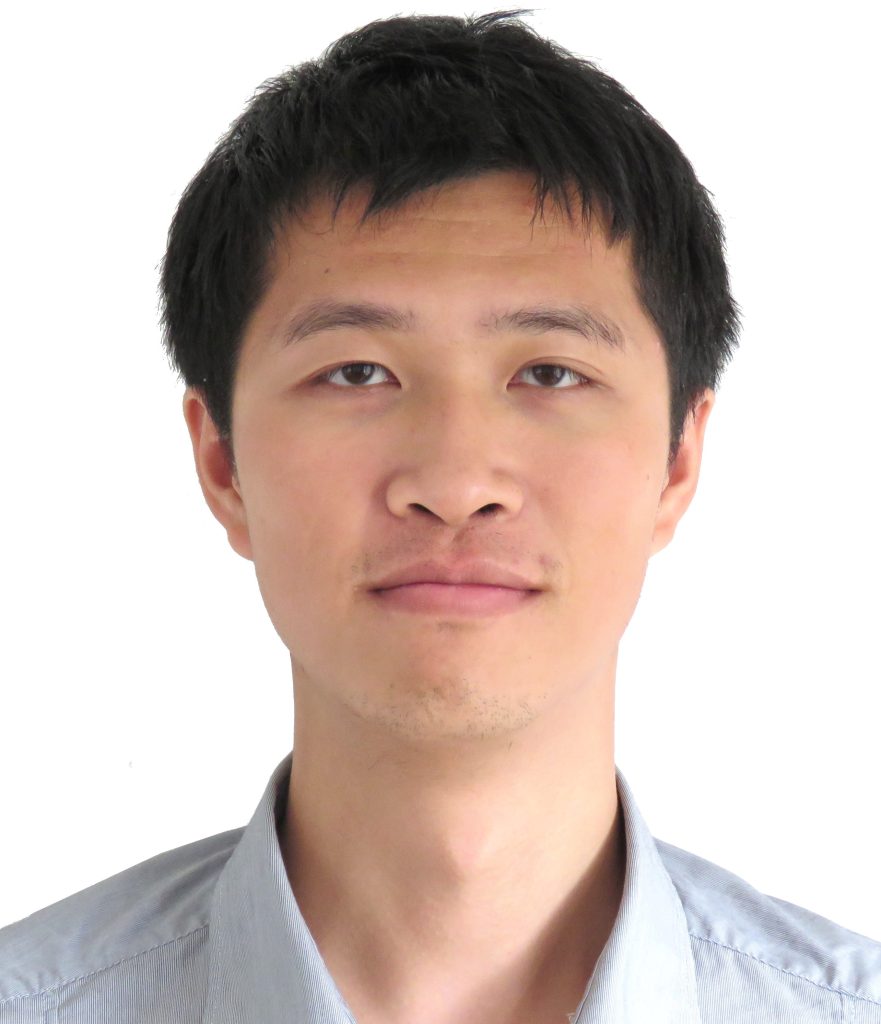
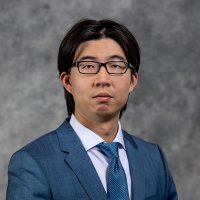
Ikjot Saini is a Professor at the University of Windsor’s Faculty of Engineering, co-leading the SHIELD Automotive Cybersecurity Centre of Excellence, Canada’s first organization addressing threats in connected transportation. Her research focuses on automotive cybersecurity, vehicular networks, and privacy-preserving technologies. She has supervised doctoral students Shiva Nejati and Kunj Dhonde, and contributed to courses in the University’s Continuing Education program, specializing in cybersecurity education for professionals. Her work includes pioneering studies on blockchain-based security for connected autonomous vehicles (CAVs), machine learning-driven intrusion detection systems, and privacy-enhancing mechanisms like pseudonym-changing strategies. She has been recognized with the K.W. Michael Siu Award from the APMA Institute for Automotive Cybersecurity (2020). Saini’s research bridges theoretical advancements with real-world applications, ensuring vehicles and infrastructure remain secure against evolving cyber threats. Her contributions span academic publications, industry partnerships, and policy recommendations, positioning her as a leader in vehicular cybersecurity. Ongoing projects emphasize eco-efficiency in cybersecurity solutions and adversarial modeling for privacy evaluation.
Andreas Grothey is a Senior Lecturer in the School of Mathematics at The University of Edinburgh, a position he has held since 2011. He completed his MSc in Numerical Algebra and Mathematical Computing at the University of Dundee (1995) and his PhD in Optimization at the University of Edinburgh (2001), supervised by Ken McKinnon. His research focuses on stochastic programming, interior point methods, decomposition approaches, high-performance computing, and energy systems optimization. He has contributed to energy planning, power grid reliability, and emergency response strategies for power networks. Grothey has advised seven PhD students, including work on unit commitment, top-percentile traffic routing, and power flow optimization. His projects include the OOPS solver, CESI energy integration center, and the Structured Modelling Language (SML). Recent work addresses pandemic policy optimization and exascale computational challenges. Education: MSc in Numerical Algebra and Mathematical Computing (University of Dundee, 1995) PhD in Optimization (University of Edinburgh, 2001) Research Interests: Stochastic Programming Interior Point Methods Decomposition Methods High-Performance Computing Energy Systems Optimization Advising & Projects: PhD Supervision (7 students, 2007–2022) OOPS Parallel Solver Development CESI Energy Systems Integration SML Structured Modelling Language Labs/Teams: Member of the Edinburgh Research Group on Optimization, leading projects in power grid stability and energy planning.
Dr. Hwan-Sik Yoon is an Associate Professor in the Department of Mechanical Engineering at The University of Alabama, where he focuses on applying Artificial Intelligence (AI) and Machine Learning (ML) to automotive, transportation, and manufacturing systems. His research spans modeling, simulation, and control of dynamic systems, with a strong emphasis on connected and automated vehicles (CAVs), energy-efficient routing, and sensor fusion technologies. Ph.D., Mechanical Engineering, Ohio State University, 2002 M.S., Mechanical Engineering, Ohio State University, 1998 B.S., Physics Education, Seoul National University, Korea, 1994 Dr. Yoon’s research integrates AI/ML into applications such as traffic signal control , excavator manipulator pose estimation , hybrid electric vehicle powertrain control , and factory floor safety monitoring . He is also involved in additive manufacturing , vision-based control systems , and reinforcement learning -driven automotive innovations. Recent publications highlight trends in deep reinforcement learning for vehicle energy efficiency, sensor fusion for traffic surveillance, and neural networks for dynamic system control. His work addresses challenges in multi-component failure analysis and real-time edge computing platforms . NSF Outstanding Faculty Advisor Award (2019) College of Engineering Faculty Productivity Award, Tennessee Tech University (2012) Dr. Yoon leads the Intelligent Structures and Systems Laboratory and serves as the lead CAVs faculty advisor for the University of Alabama’s EcoCAR student team, which has achieved national recognition in advanced vehicle technology competitions.
Evita Papazikou serves as a Lecturer in Transport Engineering at the School of Engineering, University of the West of England (UWE Bristol), where she contributes to the Centre for Transport and Society and collaborates with the Bristol Robotics Laboratory's Connected & Autonomous Vehicles Centre. Her academic qualifications include: Civil Engineering (BEng and MEng) from Aristotle University of Thessaloniki MSc in Planning, Organisation, and Management of Transport Systems, Aristotle University of Thessaloniki PhD in Automated Systems and Driver Behaviour (Road Safety) from Loughborough University, sponsored by the Insurance Institute for Highway Safety with access to SHRP2 NDS data Dr. Papazikou's research focuses on road safety, connected and automated vehicles, driver behaviour analysis, and smart infrastructure. She investigates accident causation through statistical modeling, develops driver monitoring systems, and explores human factors in transportation. Her work integrates traffic simulation with mobility data fusion from vehicles, sensors, and infrastructure to enhance safety in future mobility systems, particularly in cooperative, connected, and automated environments. Her recent publications (2023-2025) reveal a concentrated research trajectory examining safety impacts of dedicated lanes for autonomous vehicles, parking policy implications in automated eras, and driver fatigue management. She consistently employs naturalistic driving data and traffic microsimulation to analyze driver-vehicle-environment interactions, with increasing emphasis on real-world intervention effectiveness and environmental sustainability in mobility systems. Scientific Awards: No specific awards were mentioned in the provided information. Dr. Papazikou has secured significant research funding through competitive programs including Horizon 2020, Innovate UK, and the Department for Transport. Her project portfolio demonstrates substantial industry collaboration, particularly with Ford, and includes: LEVITATE: Assessing societal impacts of Connected and Automated Vehicles SafetyCube: Developing an innovative road safety decision support tool i-DREAMS: Creating a smart driver and road environment assessment system DDRST: Building a data-driven road safety tool for hotspot identification TRIP: Developing a driver culpability assignment tool for road injury prevention She actively contributes to interdisciplinary research through her affiliations with the Centre for Transport and Society and the Bristol Robotics Laboratory's Connected & Autonomous Vehicles Centre, where she bridges engineering, human factors, and policy development for next-generation transportation systems.
Lingxi Li is a Professor at the Elmore Family School of Electrical and Computer Engineering at Purdue University's Indianapolis campus. His research focuses on modeling complex systems, connected and automated vehicles, intelligent transportation systems, and parallel intelligence. He holds a Ph.D. from the University of Illinois at Urbana-Champaign (2008), and master's and bachelor's degrees from the Chinese Academy of Sciences (2003) and Tsinghua University (2000). Research Interests: Dr. Li's work bridges control systems, transportation engineering, and AI, with emphasis on human-machine interaction, autonomous vehicle systems, and scenario-based traffic modeling. His projects include developing frameworks for Industry 5.0 collaboration, enhancing traffic flow prediction through parallel learning, and advancing safety in micro-mobility systems like e-scooters. Recent Publications: Over 15+ articles (2023-2025) explore topics such as game-theoretic vehicle interaction modeling, vision-language systems for autonomous driving, and acoustic SLAM technologies. These studies reflect a focus on real-world validation and system integration in smart transportation. Labs & Initiatives: Leads research in autonomous mining systems and scenario engineering for intelligent vehicles, leveraging parallel intelligence concepts. Collaborates on projects like ParallelWorkforce (Industry 5.0 frameworks) and SceNDD++ (naturalistic driving datasets).
Cathy Wu is the Class of 1954 Career Development Associate Professor in Civil and Environmental Engineering at MIT, affiliated with the Institute for Data, Systems, and Society (IDSS). Her research bridges machine learning, optimization, and urban systems, with a focus on mixed autonomy systems in mobility. She holds degrees from MIT (B.S., M.Eng in EECS) and a Ph.D. from UC Berkeley (EECS). Education: B.S. and M.Eng in Electrical Engineering and Computer Science, MIT (2012-2013) Ph.D. in Electrical Engineering and Computer Science, UC Berkeley (2018) Research Interests: Reinforcement Learning and Machine Learning Large-scale Optimization and Control Theory Mobility Systems and Urban Infrastructure Implications of AI and Automation Her work emphasizes interdisciplinary collaboration, involving transportation, computer science, and public policy. She founded the Interdisciplinary Research Initiative within the ACM Future of Computing Academy to advance cross-disciplinary computing research. Key Projects: Includes Flow (open-source RL framework for traffic control), eco-driving incentive mechanisms, and mixed autonomy traffic optimization. Her articles address congestion mitigation, autonomous vehicle integration, and scalable supervision strategies. Awards: Recipient of fellowships, best paper awards, and teaching honors (specific names unlisted). Engagement: Collaborations with institutions like Microsoft Research, OpenAI, and Caltrans. Active in policy-oriented initiatives and education through IDSS programs.
J. Haadi Jafarian is an Assistant Professor in the Department of Computer Science and Engineering at the University of Colorado Denver, where he leads the Active Cyber and Infrastructure Defense (ACID) Lab. He earned his Ph.D. from the University of North Carolina Charlotte in 2017. Research Interests: Active Cyber Defense (Moving Target Defense, Cyber Deception) Big Data Analytics for Cyber Threat Intelligence Security for Cyber-Physical Systems & Critical Infrastructures Cyber Resilience and Automation Recent Publications highlight innovations in traffic obfuscation, adversarial machine learning, and deception-based threat detection. His work spans network security, cybersecurity analytics, and scalable defense frameworks. Teaching includes: CSCI 4743/5743: Cyber and Infrastructure Defense (Fall 2023) CSCI 4742/5742: Cyber Programming and Analysis (Spring 2023) CSCI 4741: Cybersecurity Principles (Spring 2022) CSCI 4800: Web Application Development (Spring 2021) CSCI 3761: Computer Networks (Spring 2020) Labs & Teams: The ACID Lab focuses on developing proactive cyber defense strategies, including moving target defense, deception techniques, and security analytics for critical infrastructure.
Gabor Orosz is a Professor at the University of Michigan in both the Department of Mechanical Engineering and Department of Civil and Environmental Engineering . His work bridges nonlinear dynamics and control , time delay systems , and connected automated vehicles , with a focus on traffic flow optimization and vehicle safety . Education: PhD in Engineering Mathematics, University of Bristol, UK (2006) MSc in Engineering Physics, Budapest University of Technology and Economics, Hungary (2002) Research Focus : Orosz's research explores the intersection of vehicle automation , connectivity , and nonlinear dynamics . He investigates time delay effects in teleoperation , intent-sharing protocols for cooperative maneuvering , and control barrier functions for safety-critical systems . His work spans theoretical analysis, numerical validation, and real-world experimentation. Article Trends : Recent publications highlight advancements in latency mitigation for remote driving , nonholonomic vehicle control , intent-sharing frameworks , and energy-efficient strategies for connected vehicle systems . Themes include delayed feedback , stochastic communication , and safety-guaranteed control . Awards & Appointments : NSF CAREER Award (2014) Fulbright Scholar at Budapest University of Technology (2023-2024) Editorial roles in Vehicle System Dynamics (2020) and Time Delay Systems (2017) Student Mentorship : Orosz has advised numerous PhD students, including Anil Alan (2024, TU Delft), Chaozhe He (2018, University at Buffalo), and Tamás Molnár (2020, Wichita State University). His alumni work at institutions like Toyota Research Institute , Ford Motor Co. , and Zoox . Labs & Teams : He leads research at the University of Michigan's Mechanical Engineering Department and collaborates with international institutions such as Caltech and Budapest University of Technology . His team focuses on experimental validation of connected vehicle systems and delay-tolerant control .
Ozan K. Tonguz is a Professor in the Department of Electrical and Computer Engineering at Carnegie Mellon University's College of Engineering. He holds appointments with CyLab and the Carnegie Mellon-Portugal program, focusing on advanced research in telecommunications, networking, and intelligent transportation systems. His educational background includes: Ph.D. in Electrical Engineering from Rutgers University (1990) M.S. in Electrical Engineering from Rutgers University (1986) B.S. in Electronic Engineering from the University of Essex (1980) Tonguz's research spans telecommunications and networking with emphasis on vehicular networks, wireless communications, cybersecurity, and smart infrastructure systems. His work bridges theoretical networking concepts with practical transportation applications, particularly in vehicle-to-vehicle and vehicle-to-infrastructure communications. He has published approximately 300 papers in IEEE journals and conference proceedings and authored the book 'Ad Hoc Wireless Networks: A Communication-Theoretic Perspective' (Wiley, 2006). His recent publications demonstrate a strong focus on vehicular networks and intelligent transportation systems, with particular attention to traffic flow optimization, virtual traffic light systems, and the application of wireless communication technologies to solve urban transportation challenges. His research has evolved from fundamental networking concepts to applied transportation solutions with real-world implementation potential. Tonguz actively mentors PhD students and has founded Virtual Traffic Lights, LLC, a CMU spinoff company addressing transportation problems through innovative communication paradigms. His work has received attention from IEEE Spectrum and other technical publications, highlighting the practical significance of his research in intelligent transportation systems. He leads research efforts in vehicular ad hoc networks, wireless ad hoc and sensor networks, self-organizing networks, smart grid applications, and security. His Virtual Traffic Lights technology has demonstrated potential to increase urban traffic flows by 60% during rush hours, with implications for reducing commute times, mitigating congestion, and supporting greener environments.
Flavio Esposito is an Associate Professor in the Computer Science Department at Saint Louis University's School of Engineering. He also serves as a Research Institute Fellow and CS Graduate Coordinator. His office is located in ISE 234D at 3450 Lindell Blvd, St. Louis, MO. Dr. Esposito's research focuses on cyber-physical systems and networked systems, including network virtualization, network management, Software-Defined Networks (SDN), network architectures, and wireless networks. He has a strong interest in interdisciplinary applications of these technologies to medicine and agriculture. His work bridges theoretical networking concepts with practical implementations. His publications span key areas in networking research, with recent work focusing on congestion control algorithms, virtual network embedding, recursive network architectures, and edge computing applications. The research trends show a progression from foundational networking protocols toward more sophisticated applications integrating machine learning, edge computing, and cyber-physical systems, with increasing emphasis on real-world applications in diverse domains. Outstanding Graduate Mentoring Faculty Award from the School of Engineering (2021) Finalist for the Undergraduate Mentoring Award in the College of Arts and Sciences Multiple NSF research awards including US Ignite, ICE-T, CNS Core, CC* Integration, CPS:TTP, and ModernCARE projects COMCAST Innovation Fund Award (January 2020) International Center for Responsible Gaming (ICRG) Award ($150K) Dr. Esposito actively mentors PhD and MS students, with numerous current and past students who have gone on to positions at major tech companies, universities, and research institutions. He has been a Principal Investigator on multiple significant research grants totaling millions of dollars. He co-founded Spaghetti Code Labs with former PhD student Alessandro Sangiorgi, whose cybersecurity educational app WeeNet has achieved 5.7M+ downloads. He leads several research labs and teams focused on cyber-physical systems, with current openings for PhD students, visiting researchers, and postdocs working on networks, learning, edge computing, and applications to medicine and agriculture. His teams have developed numerous software systems including Software Mutant, Neighborhood Method Prototype, VINEA, ProtoRINA, and BUtorrent.
Professor Lyudmila Mihaylova is a distinguished academic at the University of Sheffield's School of Electrical and Electronic Engineering, where she holds the position of Professor of Signal Processing and Control. She has established herself as a leading researcher in the fields of signal processing, Bayesian methods, and autonomous systems, with significant contributions to particle filtering techniques for intelligent transportation systems. Her work bridges theoretical developments with practical applications across multiple domains including transportation, healthcare, and industrial automation. Prof. Mihaylova's research interests center on nonlinear filtering, sequential Monte Carlo methods, statistical signal processing, and sensor data fusion. Her work spans both theoretical advancements and practical implementations, with particular focus on high-dimensional problems including vehicular traffic flow estimation, image processing, and localization in sensor networks. She has extensive experience with various image modalities such as optical, thermal, LIDAR, SAR, and hyperspectral imaging. Her group actively develops novel methods for autonomous intelligent systems focusing on sensing, tracking, decision making, and machine learning applications. Analysis of Prof. Mihaylova's recent publications reveals a strong trend toward uncertainty quantification in machine learning models, particularly for safety-critical applications. Her work increasingly integrates traditional signal processing techniques with modern deep learning approaches, with applications spanning sewer inspection robotics, medical diagnostics (particularly sleep apnea detection), UAV swarm tracking, industrial manufacturing, and autonomous vehicle systems. A significant portion of her recent research focuses on developing robust methods that can handle incomplete or outlier-corrupted data while providing reliable uncertainty estimates. Among her notable professional achievements: President of the International Society of Information Fusion (ISIF) Senior member of the IEEE Signal Processing Society Associate Editor for IEEE Transactions on Aerospace and Electronic Systems Associate Editor for Elsevier Signal Processing Journal Prof. Mihaylova has successfully mentored numerous PhD students and postdoctoral researchers, many of whom have gone on to prominent academic and industry positions. Her research has been supported by major funding bodies including EPSRC, EU, MOD/DSTL, and industry partners, with recent projects including 'Protecting Environments with UAV Swarms' (InnovateUK, 2022-2024), 'ShiRAS: Towards Safe and Reliable Autonomy in Sensor Driven Systems' (NSF-EPSRC, 2019-2023), and 'Confident safety integration for Cobots' (Lloyd's Register Foundation, 2019-2020). Her research group follows a collaborative approach with the philosophy 'We share knowledge, we grow.' Prof. Mihaylova maintains active research collaborations with institutions worldwide and has held previous academic positions at Lancaster University (2006-2013) and University of Bristol (2004-2006), along with research visiting positions at the University of Ghent, Katholic University of Leuven, and the Bulgarian Academy of Sciences.
Andreas Malikopoulos is a Professor at Cornell University's School of Civil & Environmental Engineering and Director of the Information and Decision Science Lab (IDS Lab). Previously, he held roles as the Terri Connor Kelly and John Kelly Career Development Professor at the University of Delaware (UD) and founding Director of UD's Sociotechnical Systems Center. He also served as the Alvin M. Weinberg Fellow at Oak Ridge National Laboratory (ORNL), Deputy Director of ORNL's Urban Dynamics Institute, and Senior Researcher at General Motors R&D. His research focuses on cyber-physical systems (CPS), stochastic control, and learning-driven approaches for optimizing energy efficiency and sustainable mobility in smart cities and transportation systems. Education: PhD (Mechanical Engineering, University of Michigan, 2008), M.S. (Mechanical Engineering, University of Michigan, 2004), Diploma (National Technical University of Athens, 2000). Research Interests: Analysis and control of CPS, stochastic scheduling, game theory, and mechanism design applied to emerging mobility systems (e.g., autonomous vehicles, electric vehicles). He emphasizes integrating learning and control for socially optimal solutions in transportation networks. Awards: IEEE ITS Young Researcher Award (2019), UD’s Outstanding Junior Faculty Award (2020), Alvin M. Weinberg Fellowship (2010), and recognition as a NAS Kavli Frontiers of Science Scholar (2012). He is an IEEE Senior Member, ASME Fellow, and serves on editorial boards of leading journals. Teaching: Focuses on optimal decision-making, control theory, and emerging mobility systems. Courses include stochastic optimal control and game theory at Cornell. Labs: Leads the IDS Lab, which develops scalable frameworks for CPS and smart city applications. Current projects include coordinated routing for mixed-traffic systems and AI-driven recommendations for autonomous vehicles.
Kaidi Yang is an Assistant Professor at the National University of Singapore (NUS) in the Department of Civil and Environmental Engineering, specializing in Intelligent Transportation Systems and related fields. He holds a PhD from ETH Zurich (2019), an M.Sc. in Control Science and Engineering from Tsinghua University (2014), and dual bachelor’s degrees in Automation and Mathematics from Tsinghua University (2011). His research focuses on advancing traffic control, connected/automated vehicles, shared mobility systems, and data privacy in transportation. He has contributed to developing algorithms for efficient traffic signal control, platooning coordination, and privacy-preserving data sharing in transportation networks. Education: Ph.D., Civil and Environmental Engineering (Transportation), ETH Zurich, 2019 M.Sc., Control Science and Engineering, Tsinghua University, 2014 B.Sc./B.Eng., Dual Degrees in Pure/Applied Mathematics and Automation, Tsinghua University, 2011 Yang has received prestigious awards including the Swiss National Science Foundation’s Postdoc Mobility Fellowship (2021–2022) and the IEEE ITS Conference Best Student Paper Award (2020). He serves as an Associate Editor for the IEEE Conference on Intelligent Transportation Systems (2024). His work bridges theoretical advancements in operations research, robotics, and machine learning with practical applications in urban mobility systems. Recent efforts emphasize integrating privacy-preserving techniques into traffic management and optimizing mixed-autonomy platoon control.
Li Song is a Professor and holds the Lesch Centennial Chair & Lloyd G. and Joyce Austin Presidential Professor at the University of Oklahoma's Aerospace & Mechanical Engineering Department. He leads the Building Energy Efficiency Lab and serves as AME Associate Director for Research. His expertise spans building energy systems, HVAC optimization, and fault detection technologies. Education: Ph.D. (Thermal/Fluid Science, 2004) from University of Nebraska-Lincoln; M.S. (Thermal/Fluid Science, 1996) from Harbin Institute of Technology; B.S. (Thermal Energy Systems, 1993) from Shengyang University of Civil Engineering and Architecture. Research focuses on energy-efficient HVAC systems, fault detection algorithms, and building performance analytics. Notable contributions include the ULEM-FDD system for high-performance buildings and virtual sensor technologies for airflow/water flow measurement. Awards include the ConocoPhillips Energy Prize (2011 finalist) and Bes-Tech Innovation Award (2006). Publications emphasize HVAC control strategies, energy modeling, and IoT-enabled diagnostics. Courses taught include Thermodynamics, Energy Efficient Building Systems Design, and HVAC Systems Engineering.
Dr. Kaiqun Fu is an Assistant Professor in the McComish Department of Electrical Engineering and Computer Science at South Dakota State University (SDSU). He holds a Ph.D. and M.S. in Computer Science from Virginia Tech (2021 and 2016). His research focuses on spatial data mining, spatiotemporal event analysis, graph neural networks, and urban computing applications such as traffic impact prediction and social media-driven insights. He also explores physics-informed machine learning for power systems and interdisciplinary topics like 'deaths of despair' in rural areas. Education: Ph.D. in Computer Science, Virginia Tech, 2021 M.S. in Computer Science, Virginia Tech, 2016 Research Interests: His work emphasizes machine learning and deep learning applications in spatial-temporal domains, including: Graph neural networks for traffic incident prediction Social media analysis for urban challenges Physics-informed models for power grid stability Citation forecasting in scientific publications Grants & Projects: NSF CRII ($174,734): Spatiotemporal impacts of traffic events via graph neural networks (2024–2026) NSF EAGER ($300,000): Socio-economic impacts of emerging technologies (2024–2026) SDSU RSCA ($10,118): Graph transformer-based location learning (2023–2024) Professional Involvement: He chairs ACM SIGSPATIAL's SRC committee, serves on SDSU's Computer Science curriculum committees, and is an IEEE member. He co-edits Frontiers in Big Data and advises on interdisciplinary projects like climate-impacted grid security (NSF RII Track-2, $750,000). Labs/Teams: Collaborates with interdisciplinary groups focusing on smart cities, data-driven infrastructure resilience, and GeoAI applications.