Dr. Luke Glowacki is an Assistant Professor in the Department of Anthropology at Boston University, with affiliations to the Center for Innovation in Social Science and African Studies Center. His research focuses on human evolution, warfare dynamics, and social behavior in small-scale societies, particularly among Ethiopian/South Sudanese pastoralists. Education: PhD, Harvard University His work combines fieldwork with computational modeling to understand intergroup violence, cooperation, and cultural evolution. Publications span Science , PNAS , and Nature Human Behaviour , with popular science contributions to New York Times and Washington Post . He co-founded the Omo Valley Research Project in 2019. Research Trends: Recent publications emphasize social network impacts on conflict (2025), cultural evolution of rituals (2024), and subsistence-behavior links (2023). Key themes include warfare origins, cooperation mechanisms, and methodological innovations in studying mobile populations.
Scott Miller is a Lecturer in the Department of Industrial & Systems Engineering at Texas A&M University. His research focuses on physical layer security, wireless communication systems, and signal processing in harsh environments. He specializes in visible light communication (VLC), acoustic telemetry, and hybrid FSO-mmWave systems. Key contributions include secure IM-OFDMA system design, IQ imbalance analysis, and medium-specific communication protocols for downhole monitoring. Research interests span secure communication protocols, network coding, cognitive radio networks, and system reliability in fading channels. He has pioneered work on VLC-based downhole gas pipeline monitoring using hydrogen/nitrogen mediums and developed learning-based link selection approaches for hybrid wireless systems. His work emphasizes practical applications in industrial telemetry and secure wireless transmission. Notable trends in his publications include: Advancements in physical layer security mechanisms for uplink systems Innovative use of non-traditional mediums (e.g., CO₂, hydrogen) for VLC Integration of machine learning for signal detection and link optimization Robustness analysis of hybrid FSO-mmWave networks under various impairments His research bridges theoretical communication frameworks with real-world industrial applications, addressing challenges in energy, oil/gas sectors, and secure IoT deployments.
Dr. Ye Tian serves as Director of the Chinese Language Program and Lecturer in Foreign Languages at the University of Pennsylvania. Previously, he taught at Harvard University, Middlebury College, and Bucknell University. He holds a Ph.D. in Education, Society, and Culture from UC Riverside, specializing in Chinese language education with a focus on educational technology and sociocultural/historical methodologies. His research explores challenges posed by AI to language teaching, curriculum design, and cross-cultural pedagogy. Notable work includes studies on speech-to-text tools, proficiency grading standards, and historical analyses of early Chinese education in the U.S. He has published widely in journals like Chinese as a Second Language and contributed to edited volumes on modern Chinese literature and cultural education. Dr. Tian's academic contributions span over a decade, with recent focus on integrating digital tools (e.g., ChatGPT) into language learning. His articles highlight technological advancements' dual impact on teaching practices and the need for adaptive methodologies. He also investigates sociocultural barriers in language programs, advocating for inclusive curricula. Led the development of UPenn’s Chinese Language Program, emphasizing innovation in course design and resource ecology reconfiguration during the pandemic. His work bridges traditional pedagogical frameworks with modern technological innovations, fostering global Chinese language education.
Yan Cao is an Associate Professor in the Department of Mathematical Sciences at the School of Natural Sciences and Mathematics, The University of Texas at Dallas, where he has served since 2006 after joining as an Assistant Professor. His research bridges computer vision, pattern theory, and biomedical applications with a focus on mathematical foundations for shape analysis. His educational background includes: Ph.D. in Applied Mathematics from Brown University (2003) M.S. in Mathematics from The University of Iowa (1997) B.S. in Computational Mathematics from Peking University (1996) Dr. Cao's research centers on enabling computers to recognize shapes and understand structural variations through advanced mathematical frameworks. He investigates 2D/3D shape analysis using tools like diffeomorphic matching and geometric PDEs, addressing fundamental challenges in three-dimensional geometry where traditional methods like medial axis transforms are inadequate. His work spans medical image analysis, computational anatomy, and computer vision, with emphasis on translating theoretical advances into biomedical applications such as medical imaging and anatomy modeling. His publication record reveals a consistent focus on diffeomorphic deformation techniques applied to medical imaging and computer vision. Key trends include the development of spectral methods for mesh deformation, atlas-based segmentation for anatomical structures, and quantitative approaches for spinal cord and diffusion tensor imaging. These works demonstrate interdisciplinary integration of computer science, mathematics, and biomedical engineering with strong emphasis on practical medical applications. His scientific recognition includes: IEEE International Conference on Computer Vision Travel Award (2005) Brown University's Stella Dafermos Award for academic excellence (2003) Multiple graduate fellowships from Brown University, The University of Iowa, and Peking University Dr. Cao has secured significant research funding including a $273,650 NSF grant for diffeomorphic deformation of textured shapes (2009-2012) and a $63,891 NIH subcontract for spinal cord perfusion measurement (2009-2011). He teaches advanced mathematics courses including Mathematical Analysis, Real Analysis, and specialized topics in medical image analysis, while maintaining active collaborations evidenced by invited talks at Texas A&M University-Commerce, Peking University, and UT Southwestern Medical Center. His research operates within UT Dallas's interdisciplinary mathematical sciences environment, leveraging collaborations across medical imaging and computational fields without dedicated lab facilities specified in available records.
Mark Sexton is a Principal Lecturer and Academic Lead at the School of Film, Media and Creative Technologies, University of Portsmouth, where he has been contributing since 2007. He serves as Associate Head (Academic) in the Faculty of Creative & Cultural Industries and leads initiatives in teaching, learning, assessment, and curriculum development. He has led the accreditation of multiple courses and contributed to academic governance at institutional and external levels. His research centers on Digital Musicology , intersecting traditional musicology with digital tools and computational methods. Key interests include: Generative Music and Algorithmic Composition Spatial Audio and Sound Design Music for Games and Interactive Media Creative Coding and Machine Learning in Music Digital Humanities in Creative Practice His recent publications (2023) explore the works of Ligeti, Birtwistle, Beethoven, and original cast recordings using digital analysis techniques. These works reflect a consistent trend in applying computational and digital methods to musicological inquiry and creative applications. Mark is actively involved in interdisciplinary research projects, including AI-driven sound design and computational score analysis. He collaborates with institutions and researchers across the UK and contributes to innovation in digital arts. Professional affiliations include: Incorporated Society of Musicians Alan Turing Institute – AI & Arts Interest Group Society for Music Theory – Jazz Interest Group Audio Engineering Society (AES) Media in the Digital Age – Turing Special Interest Group He advises on academic practice, curriculum innovation, and assessment design. His leadership extends to course development and quality assurance. He has also served as an external examiner and workshop facilitator. Mark is a practicing musician, composer, and sound engineer, enriching his academic work with professional creative experience. He previously served as Head of the Music Department at Northbrook College, Sussex, before joining the University of Portsmouth.
Amir Masoud Molaei is a Research Fellow at the School of Electronics, Electrical Engineering and Computer Science, Queen's University Belfast. His research focuses on advanced radar imaging techniques, antenna engineering, and signal processing, with particular emphasis on near-field localization, MIMO systems, and computational imaging using metasurface antennas. He has collaborated extensively on projects involving millimeter-wave systems, sparse array configurations, and security applications. His work integrates theoretical models like Kirchhoff migration with experimental validation, emphasizing hardware-efficient designs and algorithmic improvements. Key themes include overcoming challenges in mutual coupling effects, optimizing dynamic antenna configurations, and enhancing 3D imaging resolution. He has explored applications ranging from medical imaging to security systems, with a strong focus on real-time processing and experimental validation. Notable contributions include pioneering studies on reconfigurable metasurface antennas for radar and computational imaging, as well as algorithmic advancements in direction-of-arrival estimation and mixed-field source localization. His research bridges electromagnetic theory, signal processing, and practical hardware implementations, often addressing trade-offs between computational efficiency and accuracy. Molaei has published over 40 papers since 2021, with a focus on IEEE journals and conferences. His work frequently addresses challenges in signal reconstruction, sparse sampling techniques, and the integration of machine learning with traditional signal processing methodologies.
Maryam Fathollahi is an Associate Professor of Finance at the University of Oklahoma's Price College of Business. She holds a Ph.D. in Finance from the University of Arizona, an MBA in Finance, and degrees in computer engineering. Her research focuses on empirical corporate finance, capital structure dynamics, mergers & acquisitions, and applications of machine learning (neural networks, NLP) in financial analysis. Her work bridges traditional finance theory with computational methods, examining how labor markets and product markets influence corporate financial decisions. Recent publications explore employee flight risk's impact on capital structure and anticompetitive effects of horizontal acquisitions. No scientific awards or grants are explicitly listed in the provided text. She teaches at Price College, which has over 6,300 students across undergraduate, graduate, and executive programs.
Dr. Rainer Freudenthaler is an academic staff member and researcher at the Mannheim Center for European Social Research (MZES) and the Institute for Media and Communication Studies at the University of Mannheim. He holds a PhD from the University of Mannheim (2021), focusing on online media debates surrounding Germany’s refugee policy. His research emphasizes democratic public spheres, online media dynamics, and automated content analysis, particularly examining bias in news media regarding ethnic and religious minorities. Education: Bachelor’s in Media Economics (Stuttgart Media University) Master’s in Media and Communication Studies (University of Mannheim) PhD in Media and Communication Studies (University of Mannheim, 2021) Research Interests: Democratic public sphere conditions and online counterpublics Role of traditional vs. alternative media in societal discourse Automated content analysis methodologies Racial and cultural bias in journalistic reporting Key Project Collaboration: Implicit and Explicit Racism in News and Social Media with Prof. Wessler, Dr. Müller, Dr. Chan, and Katharina Ludwig, applying machine learning to analyze media bias. Publications focus on media analysis methodologies, political communication dynamics, and online discourse patterns, with recent work emphasizing synthetic news corpora validation and toxic online engagement trends. Methodological Expertise: Automated content analysis, machine learning applications in media studies, and computational social science techniques.
Verena Radinger-Peer is an Assistant Professor at the Institute of Landscape Development, Recreation and Conservation Planning , part of the University of Natural Resources and Life Sciences Vienna (BOKU) . She focuses on the role of universities as drivers for sustainability transitions, with expertise in regional development, transdisciplinary research, and ecosystem services. Her work bridges academic knowledge with societal needs, particularly in rural and mountainous regions.
Dr. Benjamin Winkeljann serves as a Group Leader at the Department for Pharmacy, Ludwig-Maximilians-University Munich, and as a Principal Investigator at the Comprehensive Pneumology Center Munich (CPC-M), Helmholtz Munich. He simultaneously holds the position of Co-Founder & CEO at RNhale GmbH since 2023. His academic trajectory includes completing his PhD in Mechanical Engineering at the Technical University of Munich, followed by postdoctoral positions at both LMU Munich and TUM's Department of Mechanical Engineering and Munich School of Bioengineering. Dr. Winkeljann's research centers on nanomedicine and advanced drug delivery systems, with specialized expertise in RNA therapeutics and pulmonary delivery platforms. His work uniquely bridges engineering principles with pharmaceutical applications, developing novel delivery systems for siRNA and other nucleic acids. He employs integrated experimental and computational methodologies to optimize drug carrier systems, with particular focus on endosomal escape mechanisms that determine therapeutic efficacy. His engineering background provides a distinctive perspective on pharmaceutical challenges that traditionally fall within pure pharmacy disciplines. His publication record reveals a clear progression from fundamental studies on polymer-RNA interactions toward increasingly applied research on pulmonary delivery systems. Recent work demonstrates integration of machine learning with traditional drug delivery approaches, reflecting his engineering background. The articles collectively address the critical bottleneck of efficient intracellular delivery in nucleic acid therapeutics, with growing emphasis on translational applications. His research shows strong interdisciplinary character, combining mechanical engineering, computational modeling, and pharmaceutical sciences. As a Group Leader completing his Habilitation, Dr. Winkeljann likely supervises PhD students and postdoctoral researchers, though specific advisees aren't listed in available materials. His position at the intersection of academia (LMU), research centers (CPC-M), and industry (RNhale GmbH) demonstrates a strategic approach to translational research, aiming to accelerate the path from discovery to clinical application. He operates within Prof. Olivia Merkel's research ecosystem at LMU, contributing engineering expertise to the lab's focus on "novel non-viral and targeted nanosized RNA delivery systems" for applications in cancer immunology, inflammatory diseases, and respiratory viruses.
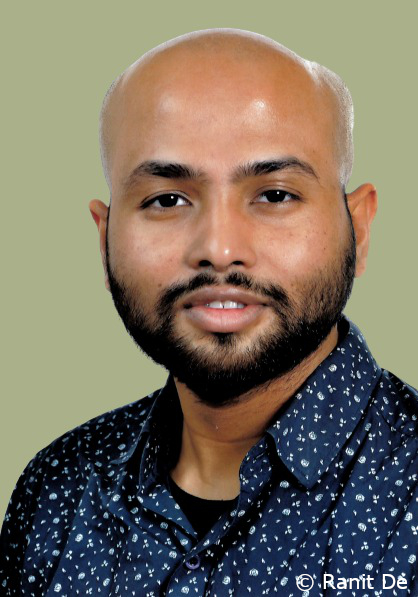
Ranit De is a Doctoral Researcher in the Department of Biogeochemical Integration at the Max Planck Institute for Biogeochemistry in Jena, Germany. De is affiliated with the International Max Planck Research School for Global Biogeochemical Cycles (IMPRS-gBGC) and works in the Model-Data Integration research group under Dr. Nuno Carvalhais. De's educational background includes: Ph.D. candidate (2021-present) at the International Max Planck Research School for Global Biogeochemical Cycles M.Sc. in Geo-information Science and Earth Observation (Water Resources and Environmental Management) from the University of Twente, Netherlands (2019-2021) B.Tech. in Agricultural Engineering from Sam Higginbottom University of Agriculture, Technology and Sciences, India (2015-2019) De's research focuses on understanding the global carbon cycle through advanced hybrid modeling techniques that combine physically based models with machine learning approaches. De specializes in simulating gross primary production at sub-daily scales using eddy-covariance data and light use efficiency-based models, with particular expertise in understanding interannual variability in terrestrial ecosystem fluxes. Analysis of De's recent publications reveals a strong research trajectory examining how temporal variation of hydrological parameters can improve model performance, investigating parametric uncertainties in land surface models, and exploring the relationship between spatiotemporal variability of model parameters and their controlling factors. De's work bridges the gap between traditional physical modeling and modern data-driven approaches. De has presented research at notable conferences including the EGU Mary Anning conference in June 2025 and the ICOS Science Conference 2024, demonstrating active engagement with the global scientific community. De's methodological innovations in model-data integration contribute significantly to improving biogeochemical models for better climate predictions and understanding carbon cycle dynamics under changing environmental conditions.
Dan Casas is a Senior Applied Scientist at Amazon in Seattle and an Associate Professor (Profesor Titular) on leave from King Juan Carlos University in Spain. His research spans the intersection of Computer Graphics, Computer Vision, and Machine Learning with a focus on 3D reconstruction, modeling, and animation of virtual humans and clothing. He has authored over 40 high-impact publications in top venues including SIGGRAPH, CVPR, and NeurIPS, and holds 3 international patents. Dr. Casas received his M.Sc. degree (2009) from Universitat Autònoma de Barcelona (Spain), including a research visit at Carnegie Mellon University. He earned his Ph.D. in Computer Graphics (2014) from the University of Surrey (UK), supervised by Prof. Adrian Hilton. He completed postdoctoral research at the University of Southern California's Institute for Creative Technology (2014-2015) and the Max Planck Institute in Saarbrücken (2015-2016). His research interests center on creating realistic virtual humans and digital clothing through advanced techniques in computer vision and machine learning. Casas has pioneered methods for 3D reconstruction of humans and garments from video input, physics-based simulation of soft-tissue deformations, and data-driven approaches to character animation. His work bridges the gap between theoretical computer graphics and practical applications in virtual reality, digital fashion, and immersive communication. Analysis of his recent publications reveals a consistent focus on human digitization, with increasing emphasis on machine learning approaches. His work has evolved from traditional computer graphics techniques toward neural representations and diffusion models, particularly in the areas of 3D garment simulation and human avatar creation. The trend shows growing integration of physics-based modeling with data-driven approaches to achieve both realism and computational efficiency. Marie Skłodowska-Curie Individual Fellowship (2015) FBBVA Leonardo Fellowship (2021) Medal from the Royal Academy of Engineering of Spain for Young Researcher Award (2023) i3 certification (outstanding researcher) from Spanish Ministry of Universities (2022) Winner of 2021 IEEE Retail Digital Transformation Grand Challenge Multiple Outstanding Reviewer Awards at top conferences (CVPR, BMVC, 3DV) Dan Casas has successfully advised multiple PhD students including Suzanne Sorli, Cristian Romero, Raquel Vidaurre, and Igor Santesteban (now at Meta Reality Labs), with several ongoing students including Melania Prieto-Martin, Gonzalo Gómez-Nogales, and Andrés Casado-Elvira. He has secured significant research funding as Principal Investigator, totaling over €1.2 million from Spanish Ministry of Science projects, EU H2020 programs, and industry fellowships including the FBBVA Leonardo Fellowship. His leadership extends to conference organization as Area Chair for ICCV 2023 and General Chair for ACM i3D 2020. Dr. Casas leads research in digital human modeling with applications in virtual reality, fashion technology, and immersive communication. His team develops advanced techniques for creating personalized 3D avatars from minimal input (like smartphone videos), addressing challenges in geometry, appearance, and physical simulation of virtual humans and their clothing.
Popescu-Belis Andrei serves as an Associate Professor at the University of Applied Sciences and Arts Western Switzerland (HES-SO), specifically within the Institute of Information and Communication Technologies (IICT) at HEIG-VD campus in Yverdon-les-Bains. His academic work spans teaching computer science fundamentals and advanced natural language processing concepts across both undergraduate and graduate programs. His research interests focus on Natural Language Processing , Machine Translation , and Human-Machine Dialogue systems, with particular emphasis on low-resource language scenarios. His work addresses challenges in speech-to-speech translation, subword tokenization, neural machine translation optimization, and creative applications like poem generation. Recent publications through 2025 demonstrate his ongoing contributions to the field, particularly in multilingual NMT training schedules and low-resource language processing pipelines. Analysis of his 15 most recent publications reveals consistent focus on practical solutions for language barriers, with increasing attention to reinforcement learning applications and creative language generation. His work on GPoeT demonstrates the intersection of traditional literary forms with modern language models, while his research on low-resource translation pipelines addresses real-world community interpreting needs. He has led significant research projects including Digital Lyric (2019-2020), a collaboration with UNIL (University of Lausanne) to develop systems for aiding poem generation for a public exhibition at Morges Castle. This project demonstrates his interdisciplinary approach bridging computational linguistics with creative applications. His academic contributions include: Development of specialized training pipelines for low-resource neural machine translation Innovative approaches to speech-to-speech translation for community interpreting Novel methods for constrained language model applications in creative writing Significant contributions to understanding subword tokenization mechanics Popescu-Belis maintains active research collaborations across institutions, as evidenced by his work with UNIL and various international conference publications. His teaching portfolio includes courses in natural language processing, data preparation, unsupervised machine learning, and computer science fundamentals, demonstrating his commitment to both theoretical and practical aspects of the field.
Lionel Pichon is a leading researcher at the Laboratory of Electrical and Electronic Engineering of the University of Paris. His primary affiliations include the Department of Electrical and Electronic Engineering of Paris, where he specializes in advanced electromagnetic research. His work focuses on Electromagnetics , Electromagnetic Compatibility (EMC) , and Wireless Power Transfer , with particular emphasis on composite materials, biomedical applications, and automotive systems. Expertise in numerical methods (FDTD, FIT, DGTD) for electromagnetic simulations Pioneer in shielding effectiveness analysis for composite materials Developer of AI-driven approaches for dielectric property characterization Over 70 publications since 2017 highlight his contributions to fields like inductive power transfer systems, medical device EMC, and GPR imaging techniques. Collaborates extensively with institutions globally, including research on antenna design for implantable medical devices and electromagnetic compatibility in healthcare facilities. Current research trends emphasize machine learning integration with traditional electromagnetic analysis to optimize system performance and safety standards.
Mairaj Syed is an Associate Professor in the Department of Religious Studies at the University of California, Davis, within the College of Letters and Science. He advises undergraduate students and supervises teaching assistants, playing an active role in departmental education and mentorship. His office is located in 903 Sproul Hall, and he can be reached at msyed@ucdavis.edu. Education: M.A., Ph.D. in Religion – Princeton University B.A. in Business – University of Texas at Austin His research lies at the intersection of classical Islamic thought and modern computational methodologies. He specializes in Islamic law, hadith literature, ethical and legal theory, and Islamic intellectual history, with a growing focus on digital humanities. His work integrates natural language processing (NLP) and machine learning (ML) to analyze and translate classical Islamic texts, particularly in theology, law, philosophy, and mysticism. He is developing a fully annotated digital corpus of Islamic thought and pioneering automated translation models for specialized religious discourse. His current and recent projects reflect a dual trajectory: one focused on data-driven analysis of hadith literature from the first three centuries of Islam, and another on applying Islamic ethical and political thought to contemporary moral challenges. This combination of deep philological engagement and technological innovation positions him at the forefront of digital Islamic studies. Scientific Awards and Honors: Fulbright Fellow (2014) UC Davis Academic Senate Faculty Large Grant for Hadith Information Network Project (2018) Middle Ages in the Wider World Summer Research Grant for Hadith Information Network Project (2018) College of Letters and Science Fellow (2020–2023) Mairaj Syed has over a decade of teaching experience and mentors undergraduate students in Religious Studies. He has secured competitive research grants supporting his work on the Hadith Information Network Project, indicating strong institutional and external support. While specific grant amounts and advising of graduate students are not mentioned, his fellowship awards and research leadership suggest active involvement in academic leadership and funding acquisition. He leads innovative research initiatives that bridge traditional Islamic scholarship with cutting-edge computational tools. His lab-like digital research projects, particularly the Hadith Information Network and the development of NLP models for Islamic texts, represent collaborative, interdisciplinary efforts that likely involve students and researchers, though specific team members or lab names are not provided in the text.