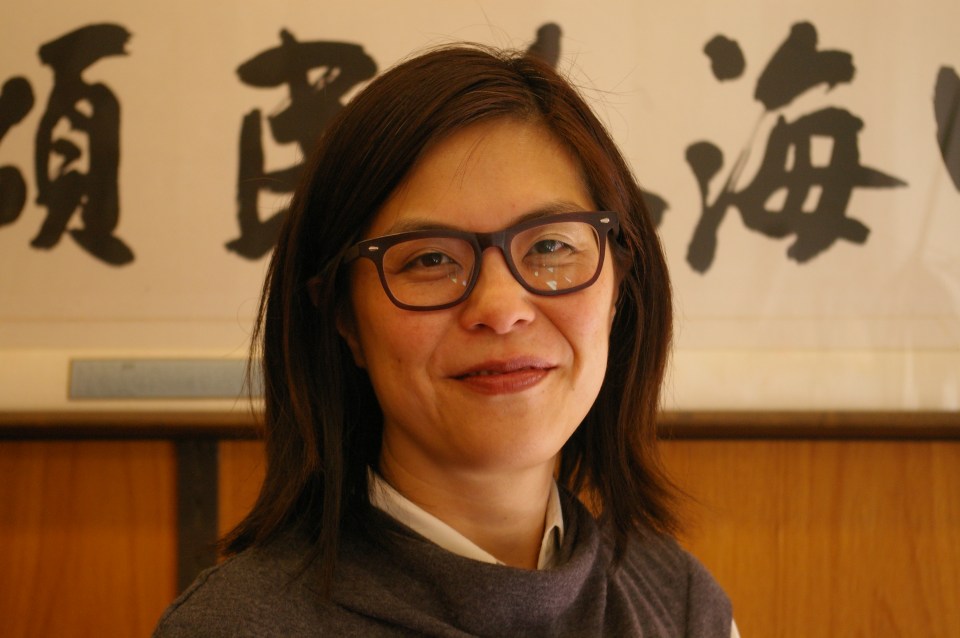
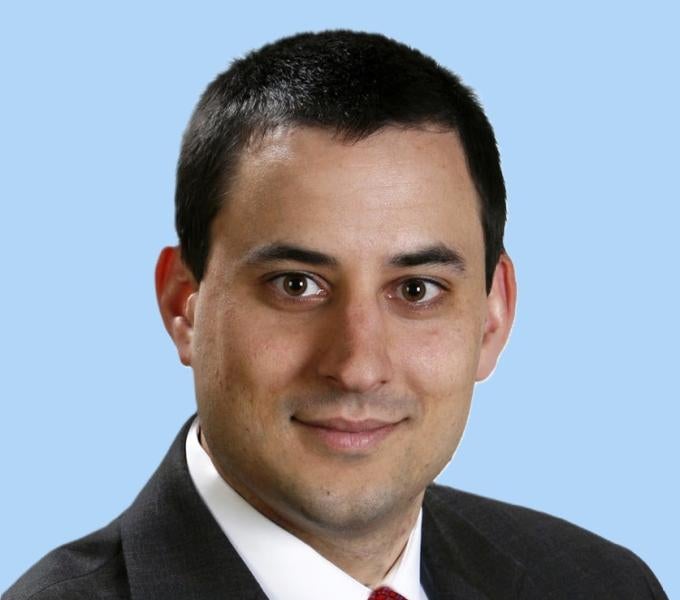
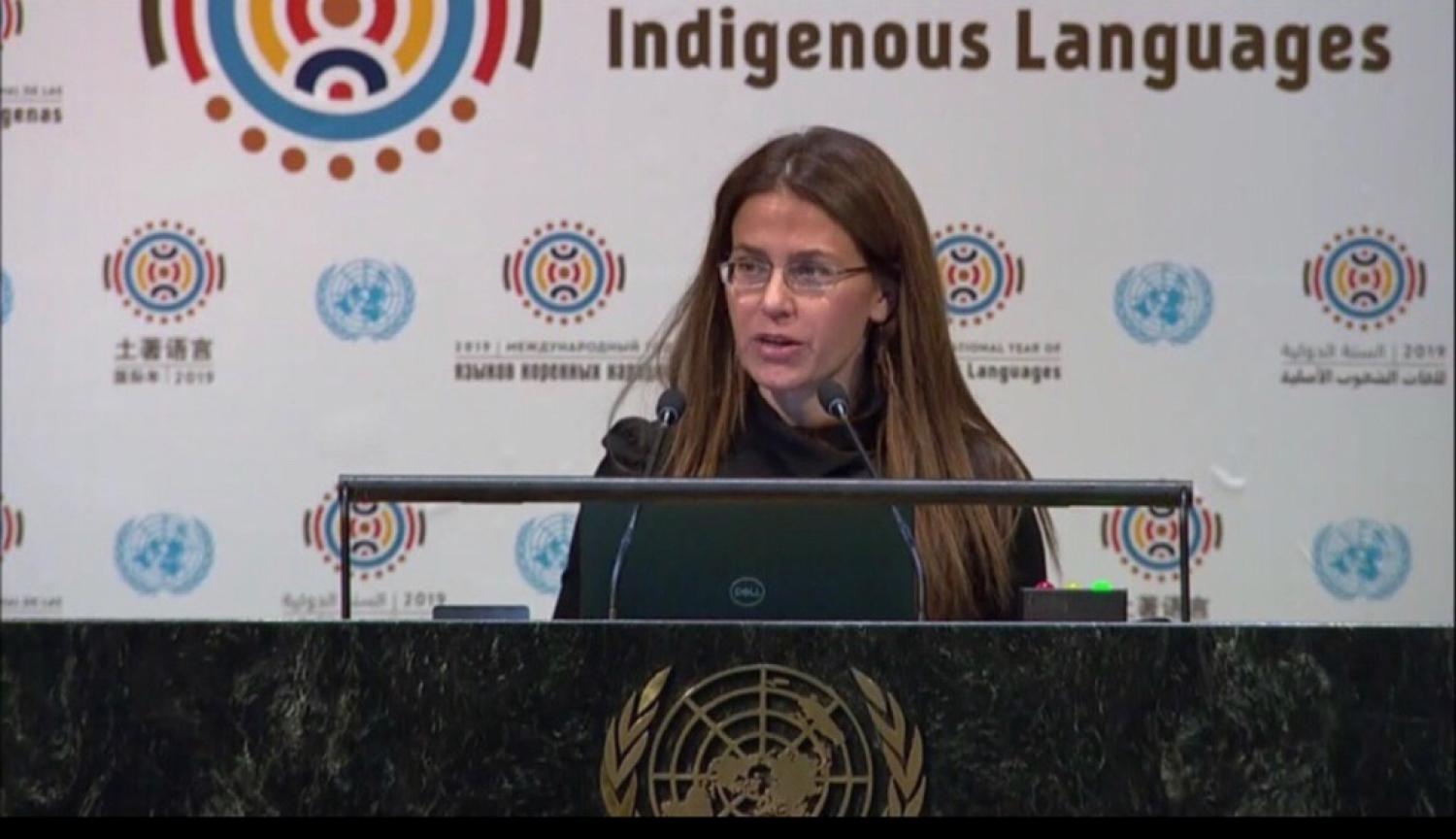
Stacey Lantagne is a Professor of Law at Western New England University School of Law , joining in 2022. Her research explores the intersection of digital creativity and intellectual property law, focusing on fanfiction and internet memes. She actively engages with pop culture and fan studies communities as a presenter and guest speaker. Education : B.A. summa cum laude, Boston College (English major, Computer Science minor) J.D. cum laude, Harvard Law School Her work addresses evolving legal challenges in digital communication, trademark expansion, and fair use doctrine. Articles like “Building a Better Mousetrap” and “Mutating Internet Memes” highlight her expertise in copyright law’s adaptation to internet culture. She serves on the Legal Committee of the Organization for Transformative Works , advocating for fan creators. Prior roles include teaching at the University of Mississippi and Loyola University New Orleans, along with intellectual property litigation experience at Goodwin Procter and Drinker Biddle & Reath.
Alan Marco is an Associate Professor at the Jimmy and Rosalynn Carter School of Public Policy within Georgia Tech's Ivan Allen College of Liberal Arts. His research focuses on innovation policy, patent economics, and intellectual property strategy. Previously, he served as Chief Economist at the U.S. Patent and Trademark Office (USPTO), where he co-created PatentsView.org and led the Cancer Moonshot Patent Challenge. Research interests span antitrust regulation, patent valuation, technology markets, and empirical legal studies. Marco holds a Ph.D. in economics from UC Berkeley and a B.A. from Skidmore College. Publications demonstrate expertise in patent analytics, with recent work examining strategic citation behaviors, FRAND royalty calculations, and links between antitrust enforcement and innovation. Research methodologies emphasize large-scale data analysis of USPTO records, litigation outcomes, and market transactions.
Graeme B. Dinwoodie is a University Distinguished Professor and Global Professor of Intellectual Property Law at Chicago-Kent College of Law, Illinois Institute of Technology, where he also serves as Co-Director of the Program in Intellectual Property Law. He has held prestigious academic positions at the University of Oxford (2009-2018), where he was Director of the Oxford Intellectual Property Research Centre and a Professorial Fellow of St. Peter's College, and Queen Mary College, University of London (2005-2009). Prior to his Oxford appointment, he led Chicago-Kent's intellectual property program for several years. Dinwoodie earned his J.S.D. from Columbia Law School, LL.M. from Harvard Law School, and LL.B. in Private Law (first class honors) from the University of Glasgow. He was the Burton Fellow at Columbia Law School (1988-89) and a John F. Kennedy Scholar at Harvard Law School (1987-88). Before entering academia, he practiced intellectual property law at Sullivan and Cromwell in New York. A leading international authority in trademark law, design law, and international intellectual property law, Dinwoodie's research focuses on the intersection of national and international IP systems, trademark theory and doctrine, and the evolving landscape of digital copyright. His work explores how trademark law serves consumer interests, the challenges of harmonizing IP systems across jurisdictions, and the role of international organizations like WIPO in shaping global IP norms. He has made significant contributions to understanding territoriality in trademark law and the impact of digital technologies on IP enforcement. Dinwoodie's extensive publication record reveals a consistent focus on the tension between national sovereignty and international harmonization in intellectual property law. His recent work examines the implications of Brexit for IP systems, the evolving role of internet intermediaries in IP enforcement, and the normative foundations of trademark law. He has increasingly focused on the practical application of IP law in digital contexts while maintaining his foundational work on international IP architecture. Scientific Awards and Recognition: Inducted into the IP Hall of Fame (2020) Recipient of the Ladas Memorial Award from the International Trademark Association (2008) Awarded the Pattishall Medal for Teaching Excellence in trademarks and trade identity law (2008) Three-time recipient of the Goldman Prize for Excellence in Teaching (University of Cincinnati) Elected to membership in the American Law Institute (2003) Named Norman and Edna Freehling Scholar (2001) Dinwoodie has served in significant advisory roles, including as a consultant to the World Intellectual Property Organization on private international law matters, an adviser to the American Law Institute Project on Principles on Jurisdiction and Recognition of Judgments in Intellectual Property Matters, and a consultant to the United Nations Conference on Trade and Development on the Protection of Traditional Knowledge. He currently serves as an adviser on the ALI's project on the Restatement of Copyright Law. He has held leadership positions as past chair of the Intellectual Property Section of the Association of American Law Schools and president of the International Association for the Advancement of Teaching and Research in Intellectual Property (ATRIP) from 2011 to 2013. As Co-Director of the Intellectual Property Program at Chicago-Kent, Dinwoodie helps shape one of the nation's leading IP law programs. His work with the Center for Design, Law & Technology reflects his commitment to addressing contemporary challenges at the intersection of law and innovation. Through his extensive scholarship, teaching, and professional service, Dinwoodie continues to influence both the theoretical foundations and practical applications of intellectual property law worldwide.
Dr. Marsha A. Echols is a Professor at Howard University School of Law and Director of The World Food Law Institute, specializing in international food regulation, trade law, and dispute resolution. She teaches commercial law, international business transactions, and world food law. Education: B.A., Howard University (Phi Beta Kappa) J.D., Georgetown University Law Center LL.M., Free University of Brussels LL.M. and J.S.D., Columbia University Law School Her research focuses on intersections between international trade law, food safety standards, and cultural protections. She has held leadership roles in the District of Columbia Bar's International Dispute Resolution Committee and served as a WTO Panelist and UN Administrative Tribunal member. Scientific Awards: Phi Beta Kappa Honor Society Professor Echols has lectured globally at institutions including Harvard Law School, HEC Paris, and the University of Nantes, and participates in Codex Alimentarius Commission meetings. Her publications emphasize geographical indications, biotechnology disputes, and agrodiversity protections.
Assistant Professor Aman Gebru at the University of Houston Law Center specializes in Intellectual Property Law , Copyright Law , and Traditional Knowledge governance. His research addresses challenges in protecting communal authorship (e.g., memes, collaborative projects) and bioprospecting frameworks for indigenous communities. Research Trends : Gebru's work spans 2024: Cultural Appropriation in trademark law 2023: Copyright's failure to address group creativity 2022: Knowledge Commons for bioprospecting 2021: Biopiracy solutions and vaccine IP during pandemics 2019-2012: Land rights in Ethiopia, bioprospecting regulations Key Contributions : He advocates for legal reforms in traditional knowledge protection , communal ownership , and fair benefit-sharing in resource exploitation. His articles propose frameworks for balancing proprietary rights with public goods.
Theodore R. Essex is a Professorial Lecturer in Law at The George Washington University and currently serves as an Administrative Law Judge with the United States International Trade Commission, adjudicating international patent and trademark disputes. His professional trajectory includes: Current role as Administrative Law Judge at the United States International Trade Commission Prior service as Judge at the Office of Medicare Hearing and Appeals (OMHA) Attorney position at the Veterans Administration USAF JAG officer career culminating as Chief of General Tort Claims Division, including trial attorney duties and legal training Early career as public defender for Franklin County Ohio (until 1985) and private practice trial attorney in Ohio (1980-1982) His research focuses on Intellectual Property Law, International Trade Law, Administrative Law, and Litigation, directly informed by his adjudication of complex international intellectual property cases at the ITC. Education: BA, Miami University of Ohio JD, The Ohio State University
Aaron Perzanowski is the inaugural Thomas W. Lacchia Professor of Law at the University of Michigan Law School , specializing in the intersection of intellectual property , personal property , and technology law . His work critically examines ownership in the digital economy , legal frameworks for libraries , and social norms in creative industries such as tattooing and clowning. Education BA, Kenyon College JD, University of California, Berkeley Research Trends Perzanowski's recent scholarship emphasizes digital ownership , the right to repair movement , and copyright policy for emerging technologies . His articles often address consumer rights , regulatory challenges , and interdisciplinary legal theory . Scientific Awards Inaugural Thomas W. Lacchia Professor of Law Microsoft Research Fellow at University of California, Berkeley Academic Career Previously taught at Case Western Reserve University and Wayne State University Visiting Professor at University of Notre Dame
Michael D. Frakes is the A. Kenneth Pye Distinguished Professor of Law at Duke Law School and Professor of Economics in the Duke Economics Department. He is also a Research Associate at the National Bureau of Economic Research and Co-Editor-in-Chief of the American Law and Economics Review since late 2023. Education: BS in Economics (MIT, 2001), JD (Harvard, 2005), PhD in Economics (MIT, 2009). Prior Affiliations: Cornell Law School, Northwestern University School of Law, Visiting Professor at Harvard and NYU. Frakes conducts empirical research at the intersection of health law, torts, and innovation policy. His work examines how legal and financial incentives influence healthcare delivery, racial disparities in health outcomes, and patent office dynamics. He has secured NIH R01 grants to study medical liability's impact on care quality and pharmaceutical patent databases. His recent publications focus on pharmaceutical patent strategies, medical malpractice reform, and racial concordance in healthcare. While no explicit awards are listed, his grants and editorial leadership highlight his influence in empirical law and economics.
Lisa P. Ramsey is a Professor of Law at the University of San Diego School of Law, where she teaches Trademark Law, International Intellectual Property, Civil Procedure, Trademark Litigation, Intellectual Property Survey, and Intellectual Property Seminar. She joined the USD law faculty in 2004, progressing from Assistant Professor (2004-2006) to Associate Professor (2006-2009) and then to full Professor (2009-present). Professor Ramsey's research focuses on the intersection of trademark law and free speech rights, examining how trademark protection can conflict with First Amendment protections. Her scholarship addresses potential conflicts between trademark laws and free expression, explaining how trademark protection of certain inherently valuable words, symbols, and product features can harm fair competition and freedom of expression. She has written extensively on non-traditional trademarks, the impact of Supreme Court decisions like Matal v. Tam on trademark registration, and the application of First Amendment principles to trademark enforcement. Her publications reveal a consistent focus on balancing trademark rights with free expression, with particular attention to how trademark law affects artistic expression, political speech, and competition. Recent work examines the implications of the Supreme Court's decisions in cases like Jack Daniel's v. VIP Products and Vidal v. Elster for trademark enforcement and registration. Thorsnes Prize for Outstanding Legal Scholarship (2020-2021) Class of 1975 Endowed Professorship (2017-2018) Order of the Coif Women of Influence in Law 2025 Honoree (San Diego Business Journal) Professor Ramsey actively participates in professional organizations, serving on the Trademark Law Committee of the American Intellectual Property Law Association and contributing to the International Trademark Association's Model Trademark Law Guidelines. She has testified before the U.S. Senate Judiciary Committee's Intellectual Property Subcommittee regarding the First Amendment implications of the proposed No FAKES Act. Her upcoming book, 'Trademarks and Free Speech: Conflicts and Resolutions,' is scheduled for publication by Cambridge University Press in December 2025.
Sally M. Abel is a prominent legal professional currently serving as Chair of the Trademark Group at Fenwick & West, LLP, a high-technology-focused law firm based in Palo Alto, California. Concurrently, she holds the Herma Hill Kay Lecturer position at the University of California, Berkeley School of Law, where she teaches international trademark law and practice. Her expertise spans international trademark counseling, domain name systems, and cyberspace-related intellectual property rights. She has been recognized globally for her contributions, including inclusion in The Best Lawyers in America (2010) and being named one of the most highly regarded trademark practitioners in Who's Who Legal (2008). Ms. Abel has held significant leadership roles in academic and legal institutions, including participation in the International Ad Hoc Committee (IAHC) and the World Intellectual Property Organization (WIPO). She serves on INTA’s International Amicus Committee and Panel of Neutrals. Scientific Awards: The Best Lawyers in America 2010 (Intellectual Property Law) Who's Who Legal 2008 (Top Trademark Practitioner)
Kelu Sullivan is an Adjunct Professor at the University of Iowa School of Law, where she teaches Antitrust Law and Intellectual Property Advocacy. She is also a partner at Kelly IP, LLP in Washington, DC, specializing in trademark and copyright law, including international portfolio management, licensing, and litigation. Education: BA from George Mason University (2004) JD from the University of Virginia (2007) Kelu focuses on aligning legal strategies with business goals, particularly in managing large trademark portfolios and cross-departmental collaboration. Her professional engagements span both academic instruction and active legal practice.
Eugenia Lean is Professor of Chinese History at Columbia University's Department of East Asian Languages & Cultures and serves as Vice Provost for Faculty Affairs and Director of the Weatherhead East Asian Institute. Her distinguished academic career at Columbia began in 2002 after teaching at the University of North Carolina, Chapel Hill. Education: BA from Stanford University (1990) MA from University of California, Los Angeles (1996) PhD from University of California, Los Angeles (2001) Professor Lean specializes in modern Chinese history with particular expertise in the history of science and technology, gender studies, and the history of affect. Her research explores the intersections of industrial development, consumer culture, mass media, and emotional politics in late imperial and modern China, with a focus on Republican-era China. She approaches Chinese history through critical theory frameworks and contributes significantly to historiographical debates in East Asian studies. Her publications reveal a strong focus on vernacular industrialism, intellectual property regimes, and the cultural dimensions of scientific and technological development in China. The works demonstrate a consistent interest in how local Chinese actors engaged with global scientific and industrial knowledge while developing distinctive approaches to manufacturing, branding, and knowledge production. Her scholarship bridges traditional historical methods with insights from gender studies, science and technology studies, and cultural history. Scientific Awards: John K. Fairbank prize for the best book in modern East Asian history (2007) Faculty Mentoring Award for faculty in Columbia's Graduate School of Arts and Sciences (2013-2014) Institute for Advanced Studies fellowship (2017-2018) National Endowment of the Humanities fellowship (2017-2018) Featured in "Top Young Historians," History News Network (fall 2008) Professor Lean has supervised numerous graduate students at Columbia and received recognition for her exceptional mentorship. Her research has been supported by prestigious fellowships including those from the Institute for Advanced Studies and the National Endowment for the Humanities. As Director of the Weatherhead East Asian Institute, she leads one of the premier centers for East Asian studies in the United States, fostering interdisciplinary research and academic exchange.
Ralph G. Fischer is an Adjunct Professor of Law at the University of Pittsburgh School of Law, specializing in intellectual property law, including patent, trademark, copyright, and unfair competition. His practice spans technical fields such as mechanical, electrical, e-commerce, biotech, and computer systems. He advises on licensing, litigation, and registration of intellectual property rights. Education: JD, University of Pittsburgh School of Law, Magna Cum Laude BS, Case Western Reserve University Research Interests: Ralph focuses on intellectual property litigation, international agreements, technology law, and the intersection of technical innovation with legal frameworks. He has represented clients in patent litigation, trademark oppositions, and reexamination proceedings. Awards: 2013 Pennsylvania Super Lawyers® Rising Stars (top 2.5% of Pennsylvania lawyers) ABA/BNA Intellectual Property Law Student of the Year Samuelson/Glushko Fellowship Professional Contributions: Ralph has secured patents for diverse technologies, handled landmark cases like Ren Judkins v. HT Window Fashions Corp. , and registered notable trademarks such as vTour and TheSnipLine. His fellowship research explored bilateral FTA negotiations' impact on intellectual property rights, published in the Loyola of Los Angeles International and Comparative Law Review.
Kristen A. Carpenter serves as Council Tree Professor of Law and Director of the American Indian Law Program at the University of Colorado Law School. She is a leading scholar in American Indian Law, Indigenous rights, cultural property, and human rights with extensive international engagement. Professor Carpenter's research focuses on Indigenous peoples' rights in domestic and international contexts, with particular expertise in cultural property, religious freedom, language rights, and tribal sovereignty. Her work bridges legal theory with practical applications for Indigenous communities, examining how legal frameworks can better serve Indigenous self-determination and cultural preservation. Her scholarship reveals a consistent trajectory toward strengthening Indigenous rights through multiple legal frameworks. Early work established foundational concepts in cultural property and religious freedom, while more recent publications address emerging challenges in language preservation, international diplomacy, and migration. A significant portion of her research examines the practical implementation of the United Nations Declaration on the Rights of Indigenous Peoples. North American member of the UN Expert Mechanism on the Rights of Indigenous Peoples (EMRIP), appointed in 2017 Justice of the Shawnee Tribe's inaugural Supreme Court Regular speaker at UN forums including the International Year of Indigenous Languages kickoff Author of influential casebook Case and Materials on Federal Indian Law Professor Carpenter actively engages with Indigenous communities through teaching, scholarship, and service. She directs the American Indian Law Program at Colorado Law, teaches courses in American Indian Law, Cultural Property Law, and Indigenous Peoples in International Law, and mentors students through the Native American Law Students Association. Her scholarship informs both academic discourse and practical legal strategies for Indigenous rights advocacy worldwide.
Jennifer Stanley is a Lecturer and partner at Fenwick’s San Francisco office, specializing in intellectual property and commercial law. Her expertise spans contract law, copyright, patents, trademarks, and the intersection of law with technology and AI. She leads Fenwick’s copyright group and games industry group, while co-leading the firm’s technology transactions group and digital media & entertainment and consumer technologies & retail industry groups. Known for balancing legal rigor with practical deal-making, she serves as a key advisor to global digital entertainment and game companies.