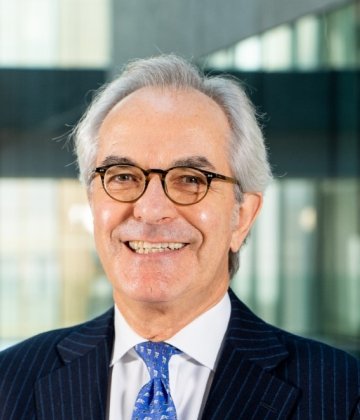
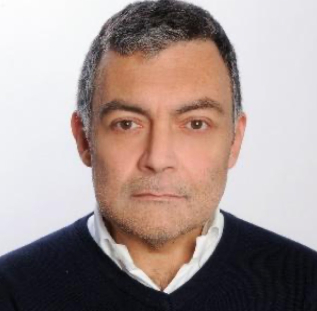
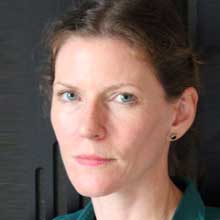
Luca De Benedictis is a Professor of International Economics and Network Analysis at the University of Macerata's Department of Economics and Law. His research focuses on international trade empirics, including trade specialization measurement, network analysis, and causal models. He has authored numerous articles on topics like gravity models, migration impacts, and historical trade networks. His work spans journals such as the Journal of the Royal Statistical Society and Network Science . He teaches courses in International Economics and Network Analysis. His research interests include economic geography, policy evaluation, and applied econometrics. Notable projects include analyzing the Erasmus Program's inclusivity, Roman road networks' legacy, and immigration's effect on trade. De Benedictis has secured funding from EU initiatives like COSTNET and GeComplexity, focusing on network data science and economic systems. He serves on editorial boards of journals like Italian Economic Journal and Journal of Historical Network Research . His work bridges theoretical models with empirical applications in trade, migration, and policy.
Maurizio Dallocchio is a Full Professor of Corporate Finance at Bocconi University and SDA Bocconi School of Management. He served as Dean of SDA Bocconi (2003–2007) and has held leadership roles in academic and professional institutions, including Chair of the Audit Committee of the European Investment Bank (EIB). His research focuses on corporate valuation, mergers & acquisitions (M&A), and sustainable finance. Dallocchio founded DGPA & Co., a corporate finance consultancy, and advises public and private entities globally. He has taught at leading institutions like London Business School and NYU Stern School of Business. Educational Background: Ph.D. in Business Administration, Bocconi University Advanced studies at London Business School and New York University Stern School of Business Research Interests: Prof. Dallocchio’s work emphasizes corporate restructuring, ESG integration in finance, and strategic valuation methodologies . Recent studies explore environmental performance in emerging markets and the resilience of conglomerates during economic crises. He advocates for sustainable investment strategies that balance financial returns with societal impact. Professional Engagements: Board member roles at Klepierre Management, General Finance, and Podravska Banka Past Director of the Master in Corporate Finance program at SDA Bocconi Labs/Teams: Leads research initiatives at Bocconi’s Corporate Finance and Real Estate Department, collaborating with global institutions on projects involving corporate governance, M&A analytics, and sustainable development.
Stefano Rossi is a Full Professor of Finance at Bocconi University's Department of Finance, serving as Chair of the Department. He holds affiliations with the Centre for Economic Policy Research (CEPR) and the European Corporate Governance Institute (ECGI), and serves on editorial boards for journals including Journal of Law, Finance, and Accounting and European Financial Management . His research focuses on corporate governance, bankruptcy, debt financing, sovereign borrowing, and quantitative trading, with publications in top journals such as The Journal of Finance and Journal of Monetary Economics . He has received international recognition, including awards for his work on ownership evolution. Prior to Bocconi, he taught at institutions including the Stockholm School of Economics and Cornell University. He earned his BA/MSc from Bocconi and a PhD in Finance from London Business School. Prof. Rossi's research explores intersections between corporate finance and public policy, with recent work analyzing credit cycles, municipal bankruptcy law, and liquidity shocks in insurance markets. His articles frequently address systemic financial risks and institutional frameworks governing corporate and sovereign debt. Awards include the ECGI Best Paper Prize for his collaborative research on ownership dynamics. Teaching spans corporate finance, valuation, and financial markets at undergraduate, graduate, and executive levels. He has developed courses at Bocconi's undergraduate, MBA, and PhD programs, emphasizing practical applications of theoretical finance models. His comprehensive curriculum includes mergers & acquisitions and private equity strategies. Key contributions include studies on shareholder voting mechanisms, sovereign default dynamics, and the impact of tax policies on corporate behavior. His work often bridges academic rigor with real-world policy implications, influencing both academic discourse and regulatory practices.
Giuseppe Fontana is an Associate Professor of Political Economy (SECS-P/01) at the University of Sannio (UNISANNIO) in the Department of Law, Economics, Management and Quantitative Methods (DEMM). He has maintained an active research profile for over two decades, establishing himself as a significant contributor to Post-Keynesian economics and monetary theory. His research interests include: Post-Keynesian Economics Monetary Theory and Endogenous Money Macroeconomic Policy and Financial Stability Financialization and Socioeconomic Impacts Economic Methodology and History of Economic Thought International Trade and Exchange Rate Theory Stock-Flow Consistent Modeling Fontana's scholarly trajectory demonstrates a consistent focus on heterodox economic approaches, particularly Post-Keynesian theory. His work evolved from theoretical contributions in the early 2000s to increasingly policy-relevant analyses of contemporary economic challenges. His recent publications show special attention to the Eurozone crisis, the impact of the COVID-19 pandemic on European economies, and the theoretical foundations of monetary production. He frequently employs stock-flow consistent modeling to provide comprehensive analyses of macroeconomic phenomena, challenging mainstream economic frameworks with alternative theoretical perspectives. Fontana has established important collaborations with scholars like Emiliano Brancaccio, Riccardo Realfonzo, and Marc Lavoie, demonstrating his integration within international networks of heterodox economists. His work has been published in leading heterodox economics journals including the Cambridge Journal of Economics, Journal of Post Keynesian Economics, and Review of Political Economy, as well as in edited volumes with major academic publishers like Palgrave Macmillan and Edward Elgar.
Armando Rungi is a Professor of Economics at IMT School for Advanced Studies in Lucca, Italy. He teaches econometrics, international economics, and macroeconomics to PhD students. In addition to his academic role, he serves as a research fellow at the Observatory on Foreign Firms in Italy and has consulted for the European Commission, OECD, and UNCTAD on international trade and investment issues. His research focuses on international economics, industrial organization, applied econometrics, and statistical learning. Recent work emphasizes the organization of multinational enterprises, global value chains, labor markets, cyber-resilience of supply chains, and the integration of econometric and machine learning tools for policy evaluation and predictive analysis. His recent publications explore topics such as the impact of trade agreements, multinational enterprises' strategies, and the application of machine learning in predicting firm behaviors and evaluating economic policies. A common theme is the analysis of supply chain resilience, corporate ownership structures, and the effects of globalization on firms' competitiveness and productivity. No scientific awards are mentioned in the provided information. No advisees or grant details are listed in the text. His professional activities include consulting roles and research collaborations. He is affiliated with the Observatory on Foreign Firms in Italy, which evaluates the impact of multinational companies and strategies to attract foreign investment in Italy.
Alberto Brugnoli is a Full Professor in Applied Economics at the University of Bergamo, Italy, where he has served since 2020. He holds the UNESCO Chair on Human Rights, International Cooperation and Sustainable Development and serves as Delegate for International Cooperation in Developing Countries at the University of Bergamo. His academic career spans over 30 years with progressive appointments from Researcher to Full Professor. Brugnoli's research focuses on International Development Cooperation, Sustainable Development, Local Development, Regional Governance and Policy, Migration, Municipal Financing, and Trade. His work demonstrates a strong international dimension through collaborations with institutions like Fundação Getulio Vargas (Brazil), McGill University (Canada), OECD, and the European Commission. His recent publications show a clear trajectory toward sustainability, decarbonization, and economic transition topics. His research output reveals a progression from traditional economic policy topics toward contemporary challenges of sustainability, climate change, and social development. The most recent publications (2022-2025) predominantly address decarbonization, sustainable economic transitions, and regional development strategies, reflecting current global economic policy priorities. Award by the Scientific Committee of the First Report on Finance of the Rosselli Foundation (2012) Award by the NATO Assistant Secretary General for Public Diplomacy (2009) Recognition from Università Bocconi for editorial contributions (1999) Brugnoli has advised numerous international research projects and has extensive teaching experience in Development Economics, Regional Economics, and International Cooperation. His leadership extends to serving as President of the Master's Degree Program in Human Rights, Migration and International Cooperation (2018-2022) and various delegate roles at the University of Bergamo.
Sandra Paterlini is a Full Professor in the Department of Economics and Management at the University of Trento, Italy. She holds academic roles including Co-Chair of the ERCIM Working Group on Optimization Heuristics and Vice-Chair of the IEEE Task Force on Portfolio Optimization. Her career includes visiting positions at institutions such as the University of Minnesota and Ludwig-Maximilians-Universität München. She earned a PhD in Computational Methods for Financial and Economic Decisions from the University of Bergamo, an MSc in Financial Mathematics from the University of Warwick, and a Laurea in Economics from the University of Modena and Reggio E. Her research focuses on quantitative finance, risk management, portfolio optimization, and network analysis, with applications to ESG, systemic risk, and financial stability. Key research contributions include methodologies for sparse graphical modeling, systemic risk analysis, and ESG scoring frameworks. She has received multiple awards for research excellence and serves on editorial boards of journals like Computational Statistics & Data Analysis and Frontiers in Applied Mathematics and Statistics . Her work bridges academia and policy, with contributions to the European Central Bank’s Financial Stability Directorate and involvement in global conferences on computational finance and econometrics.
Stéphanie Novak is a Full Professor at the Department of Comparative Linguistic and Cultural Studies, Ca' Foscari University of Venice. Her research focuses on European institutions, transparency, accountability, collective decision-making, and international negotiations. She has published extensively in journals like the Journal of Common Market Studies and Global Policy, and co-edited a volume with Jon Elster on majority decisions. Current Assignments: Member of the Steering Committee of the Ca' Foscari International College; Delegate for Internationalization Research Interests include: EU institutional transparency and accountability Collective decision-making and consensus Intergovernmental relations and crises Legislative process conflict-resolution International negotiation dynamics Democratic compromise in supranational contexts Her 2023-2024 publications analyze transparency dilemmas, consensus fragility, and digital policy interoperability. Earlier works (2005-2020) examine voting norms, institutional hypocrisy, and EU global representation. Scientific Awards: Dalloz-Bibliothèque de thèses prize (doctoral thesis) Editorial Involvement: Associate Editor, Journal of European Policies (since 2017) Editorial Board, La Fabrique du Politique (since 2018) Former Board Member, La Vie des Idées (2009-2021) Grants & Projects: POLiN Project (2023-2025): Interoperability in EU digital health policies Universalism and Right of Man Project (2023-2026): Late Enlightenment political conditions Observatoire des Institutions Européennes (2014-2021): EU institutions and transparency
Maurizio Conti is a Full Professor of Economics at the Department of Economics, University of Genova . He holds a PhD from the University of Essex and an MSc from the University of Warwick, with additional affiliations as an IZA Research Fellow and board member of the Italian Association of Labor Economics (AIEL) . Educational Background : PhD in Economics (Essex, 2004); MSc Economics (Warwick, 2000); Laurea in Business and Economics (Genova, 1998). Research Focus spans labour economics , industrial economics , and transport economics . Key topics include: Impact of labour market institutions (e.g., employment protection, unions) on firm investment in physical/human capital Transport infrastructure effects on productivity, house prices, and regional development Policy evaluation in regulated industries and public procurement Recent Publications analyze high-speed rail impacts, cooperative industrial relations, and firm dynamics under regulatory frameworks, with methodologies ranging from quasi-experimental designs to cross-country comparative analyses. Scientific Recognition : IZA Research Fellow (since 2006) Organized conferences like the Genoa Labour Workshop and participated in COMPIE and NERI networks Teaching includes courses on MICROECONOMICS , Economic Policy , and Transport Economics , with a focus on applied analysis, productivity measurement, and regulatory frameworks.
Paolo Sellari is an Associate Professor in the Department of Political Science at Sapienza University of Rome, where he contributes significantly to research and teaching in political and economic geography, geopolitics, and infrastructure security. He is affiliated with the research group Geopolitics of the Sea and plays a key role in the Master in Geopolitics and Global Security , contributing to curriculum development and academic supervision. Department: Department of Political Science University: Sapienza University of Rome Email: paolo.sellari@uniroma1.it His research interests span a broad yet interconnected spectrum, including maritime geopolitics, Mediterranean and Arctic strategic dynamics, Chinese foreign policy (especially the Belt and Road Initiative), infrastructure as instruments of power, and the geopolitics of climate change. He also explores unconventional intersections such as sports and geopolitics. His scholarly work emphasizes spatial dimensions of power, resilience, and connectivity in a rapidly transforming global order. The analysis of his recent publications (2023–2025) reveals a strong thematic consistency focused on maritime routes, infrastructure security, and the evolving geopolitical roles of the Mediterranean and Arctic regions. His work frequently addresses the interplay between physical geography and power projection, with a particular interest in how climate change, technological evolution, and strategic investments reshape global and regional orders. He contributes to both academic journals and reference works, including the Italian Encyclopedia. While specific scientific awards are not listed in the provided texts, his consistent publication record in reputable venues and leadership in advanced academic programs suggest recognition within the academic community. Sellari advises students through the Master in Geopolitics and Global Security and is involved in organizing seminars and educational content. Although no direct mention of grants is made, his editorial roles and institutional leadership imply active engagement in academic projects and collaborations. He supervises thesis work and contributes to academic discourse through prefaces, introductions, and editorial reviews. He is a core member of the Geopolitics of the Sea research group, which focuses on maritime spatial dynamics, naval security, and the geopolitical implications of oceanic infrastructure and climate change. This group serves as a hub for interdisciplinary research connecting geography, political science, and security studies.
Paolo Colla is an Associate Professor of Finance at Bocconi University and serves as Director of the International Economics and Finance B.Sc. Program. His research focuses on asymmetric information in financial markets, corporate financing strategies, and market fragmentation. He has published extensively in leading journals such as the Journal of Finance and Review of Financial Studies. Key topics include price manipulation in FX markets, debt structure dynamics, and the impact of legal frameworks on financial instruments. His work bridges theoretical finance with practical applications, addressing issues like sovereign debt pricing and regulatory policy implications. Teaching responsibilities include courses on financial modeling, derivatives, and institutional finance. His research has explored diverse themes, including the dissemination of short-sellers' information and strategic trading behaviors in fragmented markets. Despite no explicit mention of awards or grants, his prolific publication record underscores his scholarly contributions to corporate finance and financial markets.
Ivan Franceschini is a Research Fellow at the Department of Asian and North African Studies, Ca' Foscari University of Venice, and a Postdoctoral Fellow at The Australian National University's Coral Bell School of Asia Pacific Affairs. His work focuses on Chinese labor movements, civil society, and political transformations. University: Ca' Foscari University of Venice Department: Department of Asian and North African Studies Email: ivan.franceschini@unive.it Franceschini's research spans labor activism, NGO strategies, and historical narratives in China. His publications in journals like The China Quarterly and Pacific Affairs analyze state-labor relations, digital activism, and garment industry exploitation. He co-edits the Made in China Journal , exploring labor and civil society dynamics. Key article trends include comparative labor studies across China and Cambodia, legal mobilization by workers, and historical reinterpretations such as the Taiping Rebellion. His 2019 work on collective bargaining and 2018 comparative analysis of garment workers highlight systemic labor challenges.
Angelo Castaldo is an Associate Professor in Public Finance at the Faculty of Law, Sapienza University of Rome, with a Ph.D. in Law and Economics from the University of Siena and an M.Sc. in Economics from the University of York. He serves as Chair of the Graduate Program in European Studies (LM-90) and the Master in Competition and Regulation of Markets (CORE), while also holding roles at international institutions like Zhongnan University of Economics and Law in China. Education: Ph.D. in Law and Economics, University of Siena M.Sc. in Economics, University of York, UK Master in Law and Economics, University of Siena Research Focus: Public Finance Law and Economics Environmental Crime Analysis Occupational Safety and Health Competition Policy Technological Innovation Impact His recent publications analyze workplace accident determinants, environmental crime drivers, and taxation policies for sin goods, employing empirical methods across European and Italian contexts. Current research projects focus on technology's impact on occupational safety and public investment incentives for workplace health improvements. He actively participates in academic conferences and serves as co-managing editor for public finance working papers at Sapienza University of Rome.
Christian Egenhofer is a Research Associate at the European University Institute's Florence School of Transnational Governance , where he focuses on climate change governance, energy economics, and regulatory policy. He also holds Visiting Professor roles at SciencesPo and the College of Europe . Education: Master's in Business Administration (University of Konstanz), LLM (Public Law, A-grade) Previous Affiliation: Senior Research Fellow and Head of Energy, Climate, and Resources team at CEPS (2000-2019) His research bridges energy innovation and transnational governance, with recent outputs analyzing EU clean industrial deals, carbon pricing frameworks, and energy efficiency policies. Collaborative work includes technical assessments for EU directives and comparative studies on climate-neutrality transitions. Key Research Themes: Climate finance mechanisms, electricity market reforms, decarbonization policy design, and carbon pricing strategies.
Giorgio Fagiolo is a Full Professor of Economics at Sant'Anna School of Advanced Studies. His work spans agent-based computational economics, economic networks, and macroeconomic policy analysis. University: Sant'Anna School of Advanced Studies (Scuola Superiore Sant'Anna) Department: Economics Email: giorgio.fagiolo@sssup.it Research interests focus on agent-based modeling , macroeconomic instability , and climate-economy interactions . He develops computational models to study industrial dynamics, financial integration, and policy design in complex systems. Key themes: Endogenous growth cycles, R&D network stability, and green transition policies. Methodological emphasis: Empirical validation of agent-based models and nonlinear economic dynamics. Scientific awards include collaboration with leading institutions like ETH Zurich, Columbia University, and OFCE Sciences Po. His publications appear in journals such as Journal of Economic Dynamics and Control and Ecological Economics .