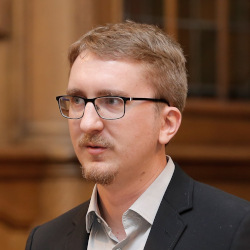
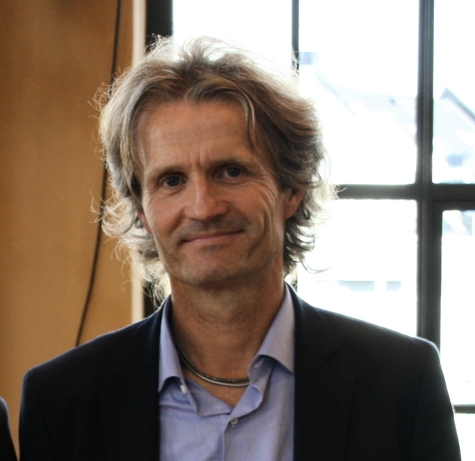
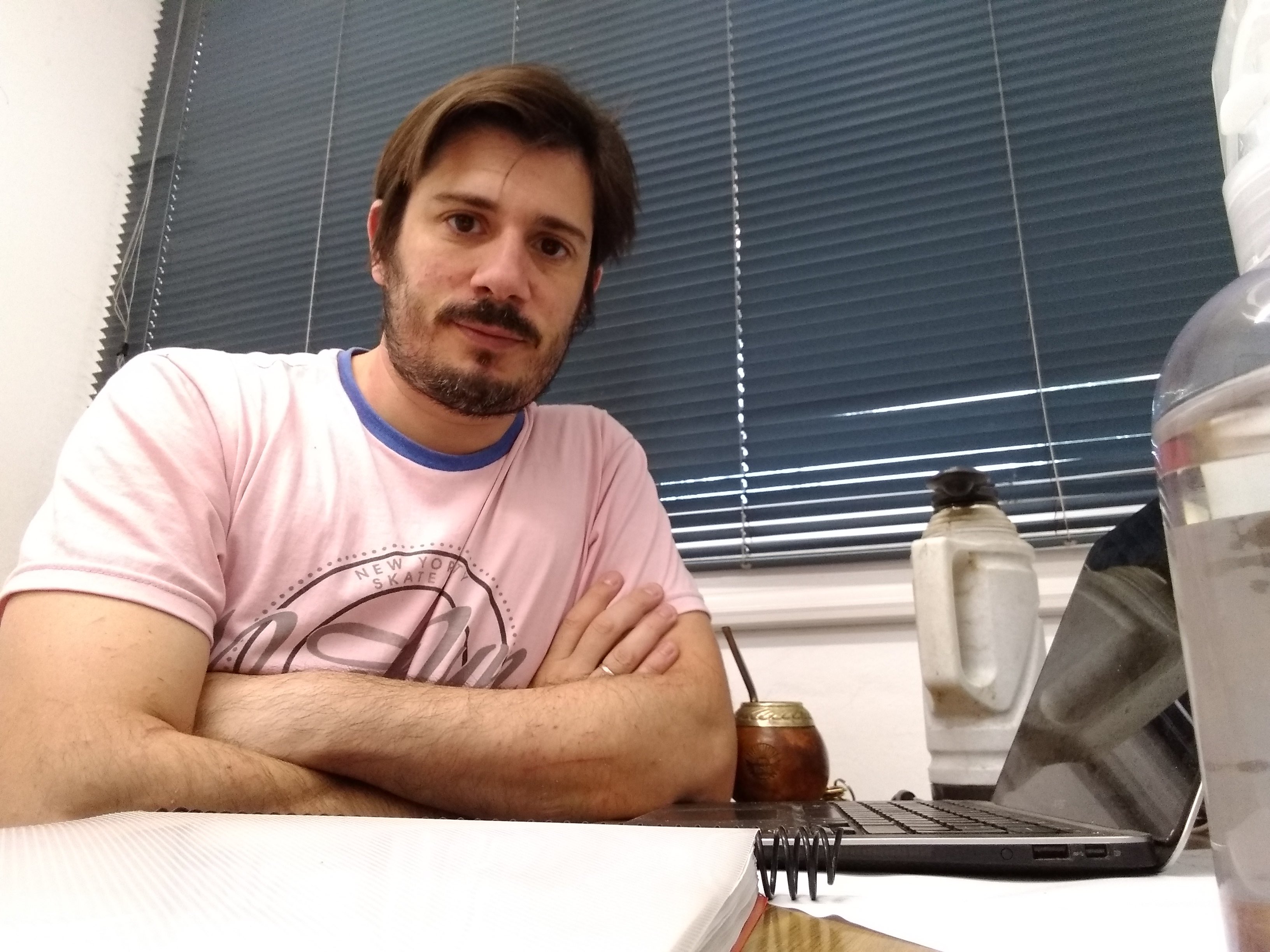
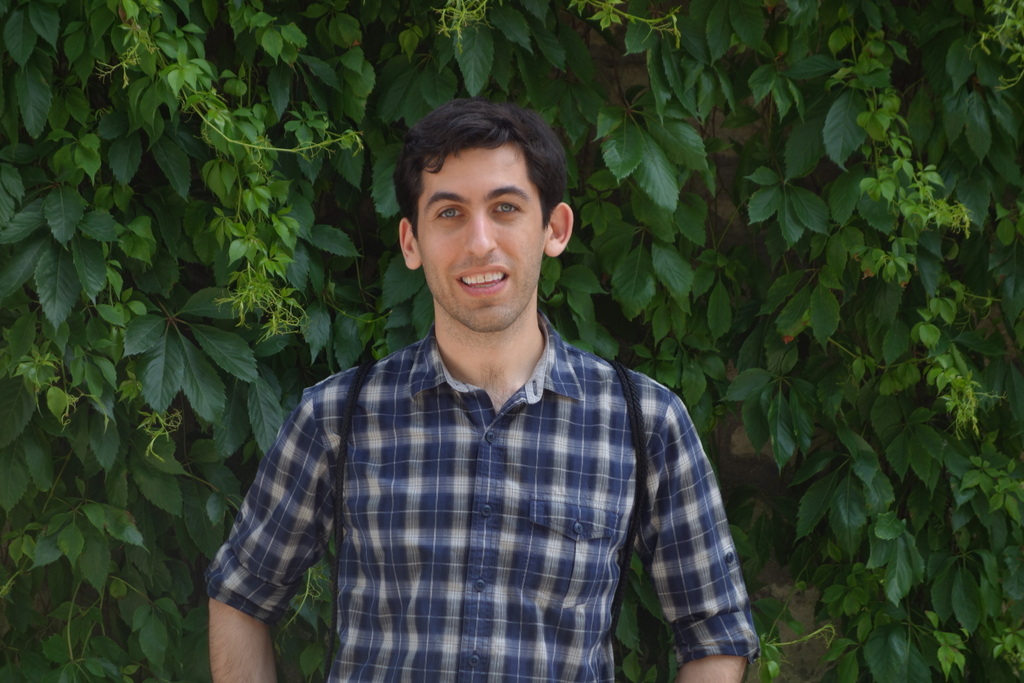
Guy Van den Broeck directs the Statistical and Relational Artificial Intelligence Lab at UCLA. His research develops tractable probabilistic models bridging machine learning with logical reasoning. Core research themes: Neuro-symbolic integration Scalable inference methods Probabilistic circuit architectures He serves on editorial boards and program committees for AI/ML conferences including NeurIPS and ICML.
Yap Roland is an Associate Professor at the School of Computing, National University of Singapore (NUS), and a member of the Institute of Operations Research and Analytics (IORA). His research focuses on constraint programming and solving, optimization, combinatorial problems, vehicle routing, and big data applications. He actively contributes to advancing methodologies in computational logic, software security, and algorithm design. His work spans theoretical foundations of constraint satisfaction (CSP/SAT) and practical applications in database systems, graph neural networks, and transportation logistics. Notable contributions include benchmarking tools like OSS-Bench for coding LLMs, novel approaches to detecting logic bugs in graph databases, and enhancing security through randomized pointer techniques. His research bridges algorithmic theory and real-world challenges in AI, cybersecurity, and efficient resource allocation. Yap Roland has published extensively in top-tier venues such as the International Conference on Principles and Practice of Constraint Programming (CP) and the International Conference on Theory and Applications of Satisfiability Testing (SAT). His recent work emphasizes scalability, fairness in machine learning, and robustness against memory errors in software systems.
Jan Arne Telle is a Professor in the Department of Informatics at the University of Bergen. His research focuses on algorithms, computational complexity, and graph theory, with recent contributions to explainable AI (XAI) and machine teaching. He leads the Norwegian Research Council-funded project 'Machine Teaching for Explainable AI' and has taught courses such as INF339 on Algorithmics of Causality. His work spans graph algorithms, parameterized complexity, and combinatorial optimization, with notable contributions to graph decomposition techniques like mim-width, cliquewidth, and boolean-width. Collaborations include researchers from institutions like the University of Rostock and the University of Montpellier. Key research trends include analyzing time series classification interpretability, optimizing robust simplifications for machine learning models, and solving combinatorial problems in machine teaching. Telle's algorithms for problems like Feedback Vertex Set and Perfect Matching Cut have advanced the field of parameterized complexity. Despite no listed awards, his extensive publication record reflects significant academic impact. He is involved in the Algorithms Research Group at UiB and contributes to computational theory education and outreach, including participation in programming competitions and academic leadership roles.
Fred J. Hickernell is Professor of Applied Mathematics at Illinois Institute of Technology's College of Computing. His research develops novel methods in numerical analysis, including measures of uniformity for experimental designs, error bounds for Monte Carlo integration, and algorithms for high-dimensional approximation problems. Dr. Hickernell leads the Guaranteed Automatic Integration Library (GAIL) project and QMCPy framework for quasi-Monte Carlo methods. He holds affiliations with multiple professional societies including the American Mathematical Society and Society for Industrial and Applied Mathematics. Fellow of the American Scientific Affiliation Fellow of the Institute of Mathematical Statistics Elected Member of International Statistical Institute
Marco Zaffalon is Professor and Scientific Director at IDSIA (Istituto Dalle Molle di Studi sull'Intelligenza Artificiale), affiliated with the Università della Svizzera italiana's Faculty of Informatics. He leads a 30-member research group on probabilistic machine learning and has published over 150 papers. Education: M.Sc. in Computer Science (Università degli Studi di Milano) Ph.D. in Applied Mathematics (Università degli Studi di Milano) Research spans probabilistic machine learning, causal AI, imprecise probabilities, and quantum computation. His work develops theoretical foundations for uncertainty reasoning and applies them to AI systems. Recent publications focus on causal inference with LLMs, counterfactual computation, and quantum decision models. Articles consistently explore intersections of probability theory, computational methods, and real-world applications like healthcare. Trends include advancing tractability in causal queries and bridging logical frameworks with machine learning. Administrative roles include co-founding Artificialy (as Chief Scientist) and directing IDSIA since 2019. He teaches courses in Causal AI, Uncertain Reasoning, and Probability.
Dr. Max Bannach is a Research Fellow in Computer Science and Applied Mathematics at the European Space Agency's Advanced Concepts Team in Noordwijk, Netherlands. Prior to this role, he completed his Ph.D. at Universität zu Lübeck under Prof. Dr. Till Tantau. His work bridges theoretical insights in structural graph theory with practical applications in highly parallel optimization, including space mission planning and quantum computing. Education: Ph.D. in Computer Science (Universität zu Lübeck, Germany) Max Bannach's research focuses on parameterized algorithms, descriptive complexity, and logic-based optimization. He explores problems with tree-like structures via treewidth, leveraging Courcelle's theorem to develop efficient algorithms. His work extends to space applications, neuromorphic hardware, and quantum computing, aiming to integrate theoretical logic with real-world challenges. His recent publications span conferences like STACS, NFM, IAC, GECCO, and IPEC. Key topics include automated reasoning, MaxSAT variants, structural decomposition, and structural parameterization. He has organized computational challenges like PACE and SpOC, contributing to the advancement of exact and parallel algorithms. Dr. Bannach's collaborative efforts include projects with the European Space Agency, technical teams at conferences, and academic institutions like Universität zu Lübeck. He maintains active participation in program and steering committees for PACE and SpOC.
Marco De Angelis is a Lecturer at the Centre for Intelligent Infrastructure within the Department of Civil and Environmental Engineering at the University of Strathclyde's Faculty of Engineering. His work focuses on computational methods for handling uncertainty in engineering systems, with applications in structural reliability and health monitoring. Education: PhD in Risk and Uncertainty (2015) from University of Liverpool's Institute for Risk and Uncertainty Master of Engineering (cum laude) in Civil and Environmental Engineering from University of Rome, Roma Tre Bachelor of Engineering (cum laude) in Civil and Environmental Engineering from University of Rome, Roma Tre Dr. De Angelis specializes in computing with imprecision, developing methods to propagate uncertainty through models using interval analysis, probability bounds, and other mathematical frameworks. His research enables rigorous inference with scarce empirical data and builds trust in simulation for structural reliability assessment. His work intersects civil engineering, computer science, and statistics, with particular emphasis on practical applications in infrastructure monitoring and risk assessment. His recent publications demonstrate a strong focus on high-dimensional uncertainty analysis, optimization under uncertainty, and verified computational methods for reliability engineering. The research shows increasing sophistication in handling complex uncertainty representations while maintaining computational tractability for real-world engineering problems. Scientific Awards: Best student paper (June 18, 2025) The NASA and DNV Challenge on Optimization under Uncertainty (June 17, 2025) Bronze poster award (July 27, 2021) Teaching and Learning Award (May 17, 2017) ISIPTA-IJAR Young Researcher Award (August 2015) Dr. De Angelis teaches structural engineering theory, computer programming, interval computation, probability theory, and machine learning to undergraduate students. He has developed teaching materials from scratch for advanced dynamics courses. He serves as Co-investigator on the REUN project (Reduction of Uncertainties in risk assessment of structures and infrastructures against Natural hazards) funded by the Royal Society of Edinburgh, running from April 2025 to March 2027. His professional activities include conference participation, journal peer review, and invited talks in his specialty areas. He is actively involved with the Centre for Intelligent Infrastructure, where he contributes to research on digital twins and computational methods for infrastructure monitoring and assessment.
Pablo Francisco Castro is a Professor and current Chair of the Department of Computer Science at Argentina's National University of Rio Cuarto (UNRC), while simultaneously serving as a Researcher at the Argentinean National Research Council (CONICET). His dual-role positions demonstrate significant academic leadership in both institutional administration and national research infrastructure. His educational foundation includes: Licenciatura in Computer Science from UNRC PhD in Computer Science from McMaster University, Canada Castro's research program centers on the theoretical and practical applications of logic to computing systems, with deep specialization in fault-tolerance mechanisms, computational complexity theory, and functional programming paradigms using Haskell and Python. His work bridges abstract logical frameworks with concrete implementation challenges, particularly in concurrent systems verification and probabilistic reasoning models. His 2023 JELIA conference publication on satisfiability bounds for adaptive knowing-how logic exemplifies his research trajectory toward formalizing complex cognitive processes within computational models, revealing consistent focus on the intersection of epistemic logic, AI reasoning, and computational tractability. While no specific awards are documented in the provided materials, his extensive service as program committee member for premier conferences (FM, CONCUR, CLEI) and reviewer for top-tier journals (Artificial Intelligence, IEEE Transactions) indicates substantial peer recognition within the formal methods community. No information regarding student advisement or research grants appears in the source texts. Similarly, no dedicated laboratory structures or formal research teams are explicitly described, though his GitHub repositories suggest independent tool development aligned with his publication topics.
Yann Strozecki is an Associate Professor (Maître de Conférences HDR) at the University of Versailles Saint-Quentin, where he is based in the DAVID Laboratory and leads the ALMOST research team focused on algorithms and stochastic models. He is currently on a part-time assignment at LIGM, Gustave Eiffel University, and has previously held positions at LIP6 (RO team), Paris-Sud University (ALGO team), and completed a postdoctoral fellowship at the University of Toronto's Theory Group. He earned his PhD from Paris Diderot (Paris 7) under Arnaud Durand. His research lies at the intersection of theoretical computer science and discrete mathematics, with core interests in: Enumeration complexity, especially delay and space constraints Algorithmic game theory, particularly simple stochastic games (SSGs) Graph and matroid algorithms Cheminformatics and molecular structure generation Sparse polynomials and algebraic complexity Analysis of his recent publications reveals a strong trend in developing efficient enumeration algorithms with provable delay and space bounds, advancing the theoretical foundations of output-sensitive computation. He also contributes to practical algorithms for Cloud RAN scheduling and cheminformatics, often combining theoretical rigor with real-world applications. His work on geometric amortization and strategy improvement in SSGs demonstrates innovation in algorithm design. Notable scientific contributions include: Generic strategy improvement methods for SSGs Polynomial-delay enumeration via closure operations Efficient deterministic scheduling for low-latency networks Tools for molecular cage generation in chemistry Yann Strozecki actively supervises PhD and master’s students, including Noé Demange, Maël Guiraud, and Xavier Badin de Montjoye. He co-organizes the ALMOST team seminar and has advised numerous interns in algorithmics and game theory. His research has been supported through collaborations with Nokia Bell Labs (CIFRE thesis) and interdisciplinary projects in cheminformatics and networking.
Robert Gens is a researcher at the University of Washington , affiliated with the College of Engineering and the Department of Computer Science and Engineering . His work focuses on advancing machine learning architectures, particularly Sum-Product Networks (SPNs) , with applications in computer vision and deep learning. Education: S.B. in Electrical Engineering and Computer Science from MIT (2009) , Ph.D. in Computer Science and Engineering from the University of Washington ( 2016 ). His research integrates insights from neuroscience, graphics, and mathematics to develop algorithms capable of modeling infinite visual data as stable concepts. Key contributions include structural learning, discriminative training, and computational efficiency in SPNs. Notable publications span NIPS , ICML , and ICLR venues, with a focus on SPN optimization and compositional modeling. Trends in his work emphasize tractable probabilistic models , neural network efficiency , and cross-disciplinary algorithm design . Awards include the Google PhD Fellowship in Deep Learning and an NIPS 2012 Outstanding Student Paper Award . Current research involves Deep Symmetry Networks at the Seattle Laboratory of Robotics.