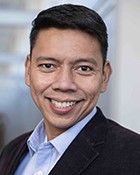
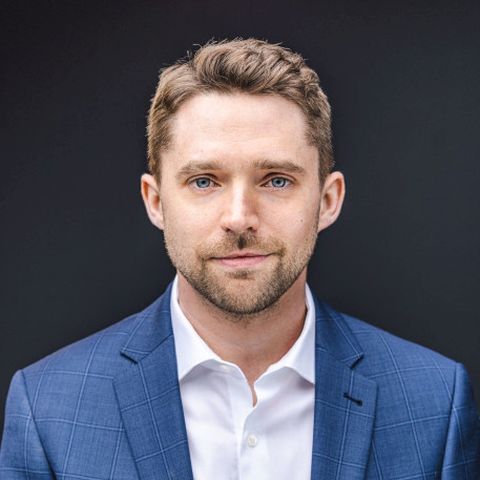
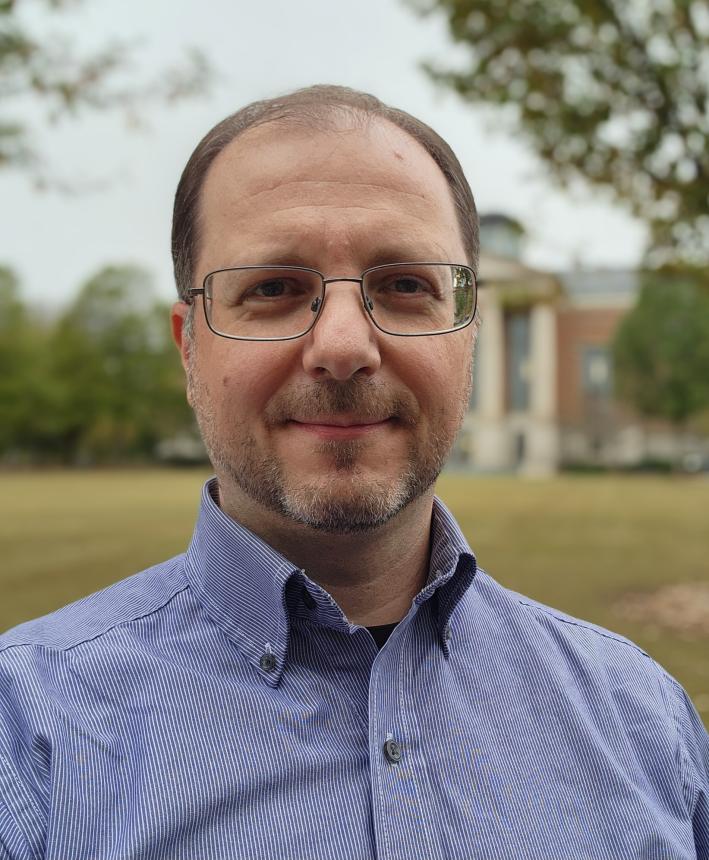
Björn Eskofier is a Principal Investigator for the Translational Digital Health Group at AI for Health and leads the research group at Helmholtz Zentrum Munich. He is Professor at Friedrich-Alexander-University Erlangen-Nuremberg (FAU), where he founded the Machine Learning and Data Analytics (MaD) Lab in 2013 and established the Department of Artificial Intelligence in Biomedical Engineering (AIBE). Education: PhD in Biomechanics (University of Calgary, 2006-2013), MSc in Electrical Engineering (FAU, 2006). His research focuses on building a Digital Health Ecosystem through multidisciplinary collaboration, emphasizing Machine Learning, Data Analytics, Biomechanics , and AI-driven clinical translation. Recent publications highlight his work in federated health data systems, predictive disease modeling, and digital symptom monitoring. He is an active academic leader , serving as Area Editor for IEEE journals, General Chair of BHI 2023, and co-director of the EmpkinS initiative. His awards include the Unipreneurs award (2023), multiple best paper prizes, and recognition as a Heisenberg Professor (DFG, 2017-2022).
Roummel F. Marcia is a Professor and current Chair of the Department of Applied Mathematics at the University of California, Merced, within the School of Natural Sciences. He received his Ph.D. from UC San Diego under Professor Philip Gill and previously held postdoctoral positions at the San Diego Supercomputer Center and University of Wisconsin-Madison, as well as a research scientist position in electrical engineering at Duke University. His research spans multiple areas in optimization and its applications, with a focus on signal processing, data science, machine learning, linear algebra, and mathematical biology. Dr. Marcia's work has significant interdisciplinary impact, particularly in biomedical imaging, computational biology, and quantum computing applications. His research methodology often combines theoretical optimization approaches with practical applications in data-intensive fields. Dr. Marcia's recent publications demonstrate a strong trend toward integrating optimization theory with deep learning architectures, particularly in applications requiring sparse data handling, biomedical imaging, and quantum computing. His work shows increasing focus on developing novel optimization algorithms specifically designed for machine learning contexts, including quasi-Newton methods adapted for deep learning and specialized techniques for handling non-convex optimization problems. School of Natural Sciences Faculty Award for 'Developing or Improving Academic Programs and Tracks' (2021-22) Leadership roles in SIAM Activity Group on Applied Mathematics Education Recognition as a Math Alliance Mentor for supporting underrepresented students Dr. Marcia has successfully mentored numerous doctoral students to completion, with graduates moving to positions at Meta, Johns Hopkins University Applied Physics Laboratory, Lawrence Livermore National Laboratory, and other prestigious institutions. His research has been consistently funded by major agencies including NSF (with grants IIS 1741490, DMS 1840265, DMS 2229495, CCF 2343610), DARPA, and ARPA-E. As the current graduate chair of the Applied Math Graduate Program, he plays a key role in shaping the next generation of mathematical scientists. His work with the SMaRT (Scientific Mathematics Research and Training) team demonstrates his commitment to collaborative, interdisciplinary research.
Francesco Maisano, MD , is Full Professor of Cardiac Surgery at Vita-Salute San Raffaele University (Milan) since 2021, where he also serves as Director of the Cardiac Surgery Clinic and of the Valve Center at IRCCS San Raffaele Hospital. From 2014 to 2020 he held the Chair of Cardiac Surgery and directed the Department at University Hospital Zurich. Education & Training 1990 – MD, Catholic University of Rome 1994 – Clinical Fellowship, University of Alabama at Birmingham 1995 – Specialization in Cardiac Surgery, La Sapienza University of Rome Research Interests Professor Maisano’s work centres on innovative therapies for heart-valve disease, spanning surgical reconstruction, catheter-based interventions (TAVI, MitraClip, transcatheter tricuspid devices), and hybrid approaches. He leads translational programmes in biomedical engineering, multimodality cardiac imaging, and artificial-intelligence-guided interventions, with emphasis on the multidisciplinary “Heart Team” model for complex cardiovascular disease. His recent publications (2024-2025) demonstrate intense activity in transcatheter mitral and tricuspid repair, long-term durability of surgical mitral repair, AI-driven procedural guidance, and renal protection strategies during mechanical circulatory support. A dominant theme is translating imaging innovations and device concepts into first-in-human studies and large-scale registries. Scientific Awards & Recognitions European Society of Cardiology Silver Medal (2018) ICI Lifetime Achievement in Research & Teaching (2018) ICI Best Technology Parade Presentation (2010) C. Walton Lillehei Young Investigator Award (1999) Leadership & Grants He directs multiple postgraduate programmes, including Certificate of Advanced Studies (CAS) tracks at the University of Zurich in multimodality imaging, aortic valve, and mitral–tricuspid interventions. He is principal investigator on investigator-initiated grants, coordinates industry-partnered device trials, and mentors numerous doctoral and post-doctoral researchers. His team has filed >24 patents and spun off several cardiovascular start-ups. Labs & Teams At IRCCS San Raffaele he leads the Valve Science Center , a multidisciplinary hub integrating cardiac surgeons, interventional cardiologists, imaging specialists, biomedical engineers, and data scientists focused on next-generation valve repair/replacement technologies and personalised cardiovascular medicine.
Dr. John W. Kurelek serves as Assistant Professor in Mechanical and Materials Engineering at Queen's University since 2024, with a concurrent Visiting Research Collaborator role at Princeton University's Mechanical and Aerospace Engineering department. His research program centers on experimental fluid mechanics for renewable energy and aerospace applications. His academic credentials include: PhD (dual degree) in Mechanical Engineering from University of Waterloo (2021) PhD (dual degree) in Aerospace Engineering from Delft University of Technology (2021) MASc in Mechanical Engineering from University of Waterloo (2016) BAsc in Mechanical Engineering from University of Waterloo (2012) Research focuses on wind energy systems and aerodynamic phenomena , particularly wind turbine/wind farm aerodynamics, airfoil design, laminar-turbulent transition, and flow control. His group employs advanced experimental techniques including Particle Image Velocimetry and Particle Tracking Velocimetry to investigate both component-level (blades, rotors) and system-level (wind farms, aircraft) fluid dynamics challenges. Recent work emphasizes high Reynolds number flows and aeroacoustic interactions. Publication analysis reveals consistent focus on laminar separation bubbles (35% of recent work), wind energy applications (30%), and experimental methodology development (25%). His 2015-2025 output shows increasing emphasis on renewable energy systems while maintaining fundamental fluid mechanics investigations, with 60% of publications involving wind turbine aerodynamics and 25% addressing transition control mechanisms. No scientific awards are documented in the provided materials. Dr. Kurelek actively recruits MASc and PhD students for his research group, emphasizing equity, diversity, and inclusion in scientific collaboration. Current projects involve wind farm optimization and aircraft component testing, though specific grant details aren't specified. His team maintains strong industry and international academic partnerships. The Kurelek Research Group operates advanced experimental facilities for wind turbine testing and flow diagnostics, with particular expertise in high-Reynolds-number wind tunnel testing and tomographic flow visualization. Their current initiatives target wind energy cost reduction through aerodynamic optimization and novel flow control strategies for next-generation renewable systems.
Dr. João F. Henriques is a Research Fellow at the Royal Academy of Engineering and a core member of the Visual Geometry Group (VGG) at the University of Oxford. His work spans the intersection of machine learning , deep learning , and computer vision , with notable contributions to visual tracking , 3D reconstruction , and robotics . He actively mentors DPhil students and collaborates across disciplines including AI safety , NeRFs , and optimisation . Current Students: Marian Longa, Tim Franzmeyer, Dominik Kloepfer, Yash Bhalgat, Shivani Mall, Lorenza Prospero, Mark Eid Graduated Students: Xu Ji, Mandela Patrick, Shu Ishida, Andreea Oncescu Research Trends from his recent work include advances in 3D scene reconstruction (e.g., Flash3D, GST), robotic adaptation (Rapid Motor Adaptation), and multimodal learning (Text2Loc, SCENES). His publications frequently address theoretical guarantees in unsupervised detection and reinforcement learning for POMDP environments. Scientific Recognition includes: Research Fellow, Royal Academy of Engineering CVPR Best Paper Finalist (2012) for Kernelized Correlation Filters (KCF) SIGBOVIK 2020 Most Timely Paper Award for Deep Industrial Espionage He also develops open-source tools like OverBoard , a Python dashboard for deep learning experiment monitoring, and advocates for preregistration workshops to improve machine learning research transparency.
Ola Andres Erstad is a tenured Professor and Dean of the Faculty of Educational Sciences at the University of Oslo , with over three decades of academic leadership and research excellence. Specializing in Digital Literacy , Educational Technology , and Learning Sciences , his work bridges formal/informal learning and explores the sociocultural impacts of digital platforms on education. Academic Tenure: Professor (2008–present), Visiting Professor (UC San Diego, 2010–2011) Leadership: Institute Director (2015–2020), National PhD School Leader (2012–2014) Research Themes include: Digital Competence: Analyzing consequences of digitalization on youth education Learning Lives: Tracking cross-contextual educational trajectories in Groruddalen Platformization: Investigating digital platforms' impact on pedagogical structures Recent Publications (2022–2025) focus on dialogic learning in polarized societies, digital family ecosystems , and multimodal literacy . His international collaborations span Portugal, Denmark, and the U.S., with projects funded by NFR , COST Actions , and Science Europe . Currently leading the PlatFams initiative, Erstad explores cross-generational digital integration.
Roberto Perdisci is a Professor at the University of Georgia , holding the Patty and D.R. Grimes Distinguished Professorship in Computer Science . He also serves as an Adjunct Associate Professor at the Georgia Tech School of Cybersecurity and Privacy and is a faculty member of the UGA Institute for Artificial Intelligence . His research focuses on securing networked systems through web security , malware detection , and machine learning applications. Directed the UGA Institute for Cybersecurity and Privacy Post-Doctoral Fellow at Georgia Institute of Technology Research Scholar at Georgia Tech Information Security Center His work combines systems research with data mining to address challenges in network security , malware analysis , and Internet-scale measurements . Key contributions include DNS reputation systems analysis , CAPTCHA attack frameworks , and robocall mitigation prototypes . He has received the NSF CAREER award for adaptive malware detection research. Conference service includes: Program Chair for ACSAC 2024 and EuroS&P 2024 Area Chair for WWW 2024 Security Track Best Reviewer Award at ACM CCS 2022 Current affiliations span multiple institutions, with research groups focusing on: Phishing and Social Engineering (PhishInPatterns, TRIDENT projects) Web Browser Forensics (WEBRR, Clickminer) IoT Device Identification (IoTFinder)
Dr. Tatsuya Mori is a Professor at the Department of Computer Science and Communication Engineering , Faculty of Science and Engineering, Waseda University . He also holds visiting researcher positions at RIKEN Center for Advanced Intelligence Project (since 2018) and National Institute of Information and Communications Technology (since 2019). Education: Ph.D. in Information Science (2005), Waseda University Research Interests: Spanning information security and privacy across emerging technologies like autonomous driving , AI , 3D sensing , VR , biometric measurement , and Web3 . His work focuses on offensive security and interdisciplinary research , including physical-layer attacks on sensors and behavioral studies on phishing detection. Scientific Awards: Recipient of multiple prestigious awards, including the Distinguished Paper Award Runners-Up at IEEE EuroS&P 2024 , IPSJ Outstanding Paper Award 2024 , and CSS2024 Concept Research Prize . His research has been recognized in top conferences like USENIX Security , NDSS , and ACM CCS . Professional Leadership: Active in academic governance as Chief Investigator for NISC Working Groups and Committee Member for JST Research Areas . He serves on program committees for NDSS , IMC , and ACM CCS .
Gül Varol is a permanent researcher at École des Ponts ParisTech's IMAGINE group, an ELLIS Scholar, and Guest Scientist at Max Planck Institute. She holds a PhD from Inria Paris/ENS with awards from ELLIS and AFRIF. Her academic service includes Program Chair at ECCV'24 and Area Chair roles at major conferences. Current affiliations: IMAGINE group (École des Ponts ParisTech), Max Planck Institute Previous roles: Postdoctoral researcher at University of Oxford Her research focuses on vision-language applications, particularly in 3D human motion synthesis, sign language technology, and audio description generation. Key techniques include text-conditioned diffusion models, temporal context modeling, and synthetic data utilization. Scientific contributions recognized through: Google Research Scholar award (2023) ELLIS PhD Award (2020) AFRIF PhD thesis award (2020) Best application paper at ACCV'20 Recent publications demonstrate expertise in: Text-driven 3D motion editing (MotionFix, 2024) Cross-dataset generalization studies (TMR++, 2024) Temporal action composition frameworks (TEACH, 2022) Sign language dense annotation methods (BOBSL, 2022) Zero-shot audio description generation (AutoAD-Zero, 2024) She actively contributes to dataset development including BOBSL (British Sign Language corpus) and SURREACT synthetic action dataset, while pioneering new evaluation metrics for audio description quality and motion retrieval benchmarks.
Muhammad Ali Gulzar is an Assistant Professor in the Computer Science Department at Virginia Tech and an Amazon Scholar at Amazon Web Services. His research focuses on improving developer productivity through automated debugging and testing for applications in emerging domains, including data-intensive software such as dataflow programs, ML/AI applications, and computational notebooks. Education Ph.D. in Computer Science from University of California, Los Angeles (Google Ph.D. Fellow 2017-2020) Research Interests Gulzar's research spans three primary areas: (1) automated tracking-code localization techniques in web applications, (2) re-engineering testing and debugging for data-intensive applications, and (3) advancing current testing and debugging practices in Federated Learning Applications. His work addresses the challenges of debugging in complex systems where traditional approaches fail due to the scale and distributed nature of modern applications. His research has significant implications for improving software quality, developer productivity, and accessibility in web applications. Research Trends Recent publications demonstrate a strong focus on debugging and testing challenges in emerging application domains. His work bridges traditional software engineering with machine learning, data-intensive systems, and web technologies. Notably, he has made significant contributions to Federated Learning debugging (FedDebug), accessibility challenges in ad-driven web applications, and semantic caching for Large Language Models. His approach often combines novel algorithmic insights with practical implementations that address real-world challenges in software development and maintenance. Scientific Awards Google Ph.D. Fellow (2017-2020) $1.1 million NSF award for Federated Learning research ACM CCS 2024 Distinguished Artifact Award Advising and Grants Gulzar leads a productive research group with multiple students contributing to publications in top-tier venues. His NSF-funded research on Federated Learning demonstrates his ability to secure competitive funding for innovative projects. His advising style appears to emphasize practical impact alongside theoretical contributions, with students often taking lead roles in publications. Current research directions include debugging techniques for Large Language Models, accessibility challenges in modern web applications, and novel testing approaches for distributed data processing systems.
Professor Cecilia Mascolo serves as Professor of Mobile Systems at the University of Cambridge, leading the Mobile Systems Research Laboratory within the Department of Computer Science and Technology. She additionally directs the Mobile and Wearable Systems and Augmented Intelligence Centre and holds the position of Chief Scientific Officer at auryx. Her pioneering research establishes fundamental building blocks for wearable and mobile devices, with transformative applications in health diagnostics. Key contributions include mobile audio systems for respiratory health monitoring and innovative hearable computing frameworks for fitness and wellness tracking, bridging engineering with medical applications. Professor Mascolo's exceptional impact on engineering innovation was formally recognized through her 2025 election as a Fellow of the Royal Academy of Engineering (FREng), which honors the UK's foremost engineering researchers and industry leaders.
John McDonald is a Professor in the Department of Computer Science at Maynooth University, where he has held a faculty position since 2001. He is affiliated with the Maynooth University Hamilton Institute and the Assisted Living and Learning Institute (ALL). His research focuses on computer vision, robotics, and AI, emphasizing spatial perception and autonomous systems. He has contributed to areas such as visual SLAM, intelligent vehicle systems, and digital holography, with funding from SFI, EU, and other agencies. Currently, he is a Funded Investigator in Lero (SFI Research Centre for Software) and collaborates on the SFI Blended Autonomy Vehicles Spoke. Key research themes include simultaneous localization and mapping (SLAM), robotic navigation, 3D reconstruction, and applications in autonomous driving. His work integrates cutting-edge techniques in computer vision and machine learning to address challenges in spatial intelligence and perception. Publications highlight advancements in dense mapping, fisheye camera systems, and geospatial analysis. He has held visiting roles at MIT’s CSAIL and the National Centre for Geocomputation. His contributions span academic journals, conferences, and technical reports, reflecting a strong emphasis on both theoretical and applied robotics research. John McDonald has supervised numerous research projects and contributed to initiatives like the John and Pat Hume Doctoral Scholarships. His work bridges academia and industry, with a focus on real-world applications of autonomous systems and AI-driven robotics.
Ying-Cheng Lai is an ISS Endowed Professor of Electrical Engineering and Affiliated Professor of Physics at Arizona State University, with a 20-year track record in academic leadership. His research bridges classical and quantum dynamics, pioneering fields like Relativistic Quantum Chaos (RQC) and transient chaos theory, impacting materials science, nanotechnology, and medicine. Developed RQC to study chaos in relativistic quantum systems Authored Transient Chaos (Springer, 2011), redefining natural system dynamics Advanced seizure prediction through nonlinear dynamics Innovated compressive-sensing applications in network science Awarded PECASE, NSF Career, and Vannevar Bush Fellowships, Lai collaborates globally across Europe, Asia, and China, generating 80+ high-impact publications in five years. His lab trains influential researchers and hosts visiting scholars worldwide.
Rajesh Krishna BALAN is a Full-Time Professor at the School of Computing and Information Systems (SCIS) at Singapore Management University (SMU) . His research focuses on Human-Machine Collaborative Systems , Pervasive Sensing , and Health & Wellbeing technologies. Based in Singapore, he leverages mobile computing to address urban sustainability and quality-of-life challenges. PhD from Carnegie Mellon University (2006) Specializes in WiFi sensing , VR/AR , and health monitoring Advises PhD students in areas like urban mobility , empathetic design , and cyber-physical systems Beyond academia, BALAN's work bridges ubiquitous computing and public health , with applications in ageing populations , mental health analytics , and smart city optimization . His recent publications highlight cross-disciplinary approaches to sleep analysis , group behavior modeling , and contactless physiological sensing . BALAN actively contributes to educational technology through projects like Technology-Enhanced Learning frameworks. He is also a mentor in collaborative research areas including biomedical informatics and lifestyle monitoring , with a focus on mobile GPU optimization and low-power systems .
Kunhee (KC) Choi is a Professor in the Department of Construction Science at Texas A&M University, holding the History Maker Homes Endowed Professorship and serving as a Chancellor EDGES Fellow. His research focuses on enhancing transportation systems through cyber-enabled solutions, including digital twinning, artificial intelligence, and data-driven modeling. B.E. in Architectural Engineering, Korea University (1999) M.S. in Construction Science, Texas A&M University (2002) Ph.D. in Civil and Environmental Engineering, University of California, Berkeley (2008) Dr. Choi’s work addresses four key areas: (1) AI-powered mobility and safety solutions for highway projects, (2) cost-time-risk tradeoff analyses under alternative contracting methods, (3) infrastructure sustainability through life-cycle assessment, and (4) stochastic modeling for civil planning and management. His research has been funded by NSF, USDOT, NCHRP, and TxDOT. Recent publications highlight his emphasis on predictive analytics, flood resilience, pavement engineering, and AI-driven disaster recovery frameworks. The i²dEAS Lab, which he directs, has produced 130+ peer-reviewed publications and secured $500k+ in annual research funding. Chancellor EDGES Fellow (2022) NSF Grant Recipient for Road Safety Research Texas Sea Grant Program Award (NOAA Funding) for AI-based evacuation route modeling Dr. Choi’s teaching philosophy emphasizes integrative learning and interdisciplinary critical thinking in construction management. His lab collaborates with academia, government, and industry to optimize transportation infrastructure performance through safer, more efficient management strategies.