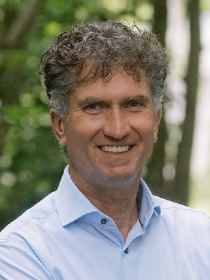
Tony Porter is a Professor in the Department of Political Science at McMaster University , Canada. He specializes in global governance and business regulation , with a particular focus on financial regulation , digital technologies , and the organizational effects of time in governance systems. Research Highlights : Currently leads SSHRC-funded research on the interplay of geopolitics and cross-border infrastructures related to digital currencies , GPS systems , and global supply chains . Co-editor of the Handbook of Business and Public Policy (2021) and author of multiple influential books on transnational financial governance. Academic Contributions : Published 15+ articles since 2014 on topics ranging from big data governance to cybersecurity policy . Key research areas include algorithmic governance , transnational temporalities , and benchmarking networks . Educational Background : BA in Political Science from McGill University MA and PhD in Political Science from Carleton University Teaching Roles include graduate courses on Global Governance , Digital Democracy , and Political Economy , along with undergraduate courses on Globalization and International Relations .
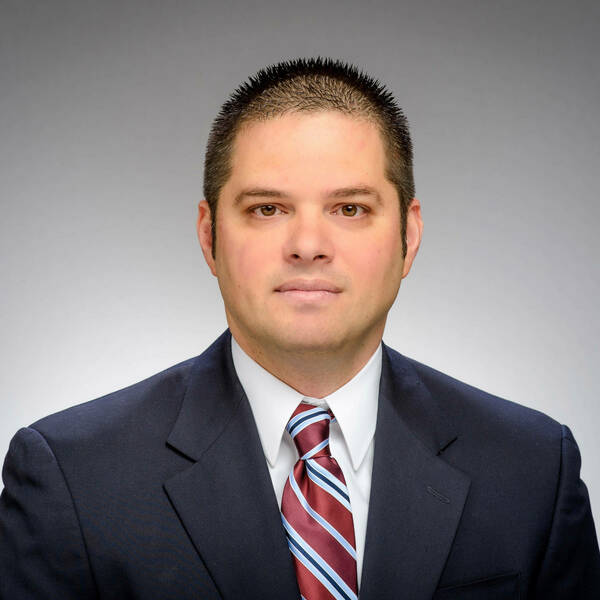
Kyojin Choo is a Tenure Track Assistant Professor at the Swiss Federal Institute of Technology Lausanne (EPFL) in the School of Engineering , affiliated with the Mixed-Signal Integrated Circuits Lab (MSIC-LAB). He also holds teaching roles in Microengineering and Electrical and Electronics Engineering at EPFL. B.S. and M.S. in Electrical Engineering from Seoul National University (2007, 2009) Ph.D. in Electrical Engineering from the University of Michigan (2018) His research focuses on charge-domain analog/mixed-signal circuits , low-power sensor interfaces , and compact ADCs for IoT, wearables, and millimeter-scale systems. He has pioneered charge-injection cell techniques for energy-efficient circuits in energy management, sensor front-ends, and communication. His work emphasizes reducing power consumption to nanowatt levels while enabling ultra-compact designs. His recent publications highlight advancements in compact SAR ADCs , low-power MEMS accelerometers , millimeter-scale imaging systems , and ultra-low-power timing generators . His research integrates charge-domain circuit design with sensor interface optimization , energy harvesting , and high-speed link architectures . He holds over 20 US patents and has taught courses in Microengineering and Electrical Engineering at EPFL. His group (MSIC-LAB) addresses challenges in battery-free sensor design, power-constrained system scaling, and commercialization of wearables with unconventional form factors.
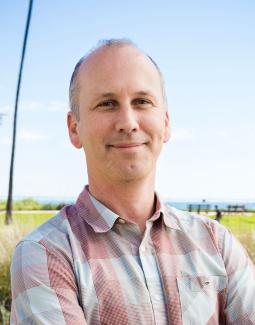
Dr. Thilina Halloluwa is a Teaching Focused Lecturer in the Department of Human-Centred Computing at The University of Queensland (UQ). He holds a PhD in Human-Computer Interaction from Queensland University of Technology (2019) and a Computer Science undergraduate degree from the Sri Lanka Institute of Information Technology. With over 15 years of academic and industry experience, his research emphasizes real-world impact in education technology, financial inclusion, smart agriculture, and HCI. Educational Background: PhD in Human-Computer Interaction, Queensland University of Technology (2019) Bachelor of Computer Science, Sri Lanka Institute of Information Technology Research Interests: Education for All: Leveraging technology to enhance collaborative learning and social experiences in education. Human Money Interaction: Designing ethical AI solutions for financial services, particularly for underserved communities. Smart Agro: Developing AI-driven tools for crop disease detection, yield optimization, and precision agriculture. Software Project Estimation: Improving effort estimation accuracy through explainable AI (Metrix project). Key Contributions: Developed UrbanAgro (tomato disease detection) and BellCrop (bell pepper disease datasets). Pioneered Dhana Labha , a financial management tool for rural Sri Lankan communities. Advanced online exam proctoring systems for low-resource settings. Previous Roles: Lecturer at University of Sydney (2023) Senior Lecturer at University of Colombo (2013–2023) Lab/Team Affiliations: Smart Agro Project: AI-driven agricultural solutions Metrix Initiative: Software project estimation frameworks
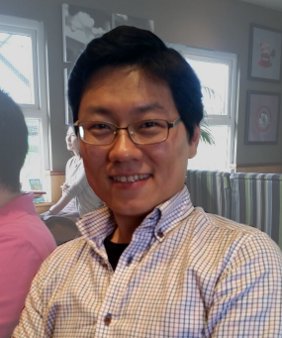
Vicente Grau Colomer is a Professor of Engineering Science and Biomedical Image Analysis at the University of Oxford, affiliated with the Institute of Biomedical Engineering. He serves as Director of the Centre for Doctoral Training in Healthcare Innovation and a Professorial Fellow at Mansfield College. His work bridges biomedical engineering, medical imaging, and artificial intelligence. Education: PhD in medical image analysis from Universidad Politécnica de Valencia, Spain. Postdoctoral research at Harvard University and LSU Health Sciences Center. Joined Oxford in 2004, awarded full professorship in 2015. Research focuses on medical image analysis, AI-driven diagnostics, and collaborations between academia, industry, and clinicians. Notable tools include the MSP-tracker software for cellular analysis and advancements in bone marrow fibrosis quantification. Recent articles highlight interdisciplinary efforts in AI applications, MPN pathophysiology, and biomedical software development. Awards include recognition as a Professor at Oxford. Advising: Leads the Healthcare Innovation CDT and mentors students in biomedical engineering. Active in Oxford’s e-Research Centre and Systems Approaches to Biomedical Sciences CDT. Collaborates globally to translate research into clinical solutions.
Prof. Koert van Ittersum is a Professor of Marketing and Consumer Well-Being at the Faculty of Economics and Business, University of Groningen (since 2013). He holds a PhD from Wageningen University (2001) and previously worked at the University of Illinois and Georgia Institute of Technology. His research focuses on consumer behavior, particularly linking marketing strategies to consumer well-being through healthier and sustainable diets. Key collaborations include the Centre for Public Health in Economics and Business and the Aletta Jacobs School of Public Health (RUG). Research interests center on consumer psychology, health, sustainability, and spending behaviors. Notable projects involve interventions with Dutch retailers to reduce food waste via transparency tools and studying decision-making dynamics in grocery shopping. Recent work explores self-control mechanisms, pride/guilt effects, and health-promoting digital interventions. Publications span journals like Journal of Consumer Research , Annals of Internal Medicine , and Preventive Medicine , addressing topics from food waste to mHealth adoption. His work bridges academic research with real-world applications in public health and retail strategy.
Bo Zhu is an Assistant Professor in the School of Interactive Computing at Georgia Institute of Technology. His research focuses on computational approaches for complex physical systems, including fluid dynamics, topology optimization, and robotics control. He holds a Ph.D. from Stanford University and completed postdoctoral research at MIT CSAIL. He has been recognized with the NSF Career Award (2022) and multiple best paper awards at SIGGRAPH conferences. Education: B.E.-M.S., Software Engineering, Shanghai Jiao Tong University Ph.D., Computer Science, Stanford University Postdoc, EECS, MIT Research Interests: Develops numerical algorithms and machine learning techniques to simulate fluidic systems, soft materials, and multi-scale phenomena. His work emphasizes vorticity preservation, real-time simulation, and physics-based AI integration. Key Contributions: Pioneered Particle Flow Map (PFM) methods for fluid simulation, developed open-source libraries like SimpleX and PFM Hub, and contributed to projects like Genesis physics engine. Over 50 peer-reviewed publications in top venues (SIGGRAPH, NeurIPS, IEEE TVCG). Awards: NSF Career Award (2022) Best Paper Honorable Mention (SIGGRAPH 2025) Best Paper Award (SIGGRAPH Asia 2024) Grants & Projects: Leads NSF-funded research on Physical AI Design, collaborating with Sandia National Labs on real-time CFD solvers. Active in open-source software development for computational physics and graphics.
Konstantinos Pelechrinis is an Associate Professor in the Department of Informatics and Networked Systems at the University of Pittsburgh's School of Computing and Information. He holds a Ph.D. in Computer Science from the University of California, Riverside. His research focuses on network science, urban informatics, and sports analytics. He has been recognized with the Army Research Office Young Investigator Award for his contributions. Education: Ph.D. in Computer Science, University of California, Riverside Research Interests: Urban mobility patterns and infrastructure analysis Sports performance quantification and strategy Data-driven decision-making in transportation systems Network science applications in social and urban systems His recent work explores topics such as implicit biases in sports refereeing, anomaly detection in NFT markets, and optimizing bike-sharing systems using predictive models. He also investigates urban infrastructure resilience through projects like the Epui platform for experimental urban informatics. Awards: Army Research Office Young Investigator Award He contributes to academic outreach through courses like TELCOM2125 (Network Science and Analysis) and collaborates on initiatives like the Healthy Ride Pittsburgh bike-sharing study. His lab focuses on bridging theoretical models with real-world urban and sports datasets.
Jonathan Hauenstein is the Robert and Sara Lumpkins Collegiate Professor in the Department of Applied and Computational Mathematics and Statistics at the University of Notre Dame, serving as Department Chair. He holds a Ph.D. from Notre Dame (2009) and M.S. from Miami University (2005). His research focuses on numerical algebraic geometry and computational methods for solving nonlinear equations, implemented in the Bertini software package. Applications span engineering, ecology, sports science, and machine learning. Education: Ph.D., Applied and Computational Mathematics, University of Notre Dame (2009) M.S., Mathematics, Miami University (2005) Research Interests: Development of numerical algorithms for polynomial systems, real algebraic geometry, and scientific computing. Key areas include homotopy continuation methods, parameter space decomposition, and applications in mechanism design, ecological modeling, and sports biomechanics. His work bridges theoretical mathematics with practical computational tools. Awards: Sloan Research Fellowship DARPA Young Faculty Award Army Research Office Young Investigator Award Office of Naval Research Young Investigator Award College of Science Research Award Advising & Grants: Advised numerous undergraduates, graduate students, and postdoctoral researchers. Active in securing grants for computational mathematics projects, including NSF-funded initiatives. His work emphasizes interdisciplinary collaboration between mathematics and engineering. Labs/Teams: Leads computational algebraic geometry research groups at Notre Dame, focusing on software development (e.g., Bertini) and numerical methods innovation.
Ben Halpern is a Professor at the Bren School of Environmental Science & Management and Director of the National Center for Ecological Analysis and Synthesis (NCEAS) at UC Santa Barbara. He holds a PhD in Ecology from UCSB and a BA in Biology from Carleton College. His research focuses on marine ecology and conservation planning, with expertise in cumulative impact assessments, marine reserves, and the Ocean Health Index. He has led global projects on ocean health, biodiversity threats, and sustainable aquaculture, collaborating with institutions worldwide. Notable roles include co-founding the Conservation Aquaculture Research Team (CART) and serving as a part-time Chair in Marine Conservation at Imperial College London (2013–2018). Research interests span marine biodiversity conservation, climate change impacts on ecosystems, and the integration of ecological and social data into policy. His work emphasizes interdisciplinary approaches to address environmental challenges, such as mapping wastewater impacts, evaluating aquaculture sustainability, and developing tools for marine spatial planning. Awards include the Smith Fellowship Program (sponsored by The Nature Conservancy) during his postdoctoral work. He teaches Bren School courses, mentors graduate students, and leads collaborative research teams. Current projects include analyzing climate change effects on aquaculture and advancing the Ocean Health Index framework to support global conservation efforts.
Jesper Rindom Jensen is an Associate Professor in the Department of Electronic Systems at Aalborg University, Denmark, under the Technical Faculty of IT and Design. He is the Head of the Audio Analysis Lab, a leading research group in audio signal processing, since 2023. His work bridges theoretical signal processing and practical applications in artificial intelligence and audio systems. Full Name: Jesper Rindom Jensen Institution: Aalborg University School: The Technical Faculty of IT and Design Department: Department of Electronic Systems Research Lab: Audio Analysis Lab Email: jrj@es.aau.dk Office: Fredrik Bajers Vej 7B, B5-206, 9220 Aalborg Øst, Denmark Education: M.Sc. in Electronic Systems, Aalborg University (cum laude, 2009) Ph.D. in Signal Processing, Aalborg University (2012) Research Interests: Jesper Rindom Jensen's research centers on audio signal processing, with a strong emphasis on artificial intelligence, speech enhancement, noise reduction, beamforming, and multichannel systems. His work applies to diverse domains including robot and drone audition, spatial audio, and active noise control. He develops novel filtering techniques, including variable span linear filters and harmonic beamformers, to improve speech quality and intelligibility in noisy and reverberant environments. Publication Trends: His recent publications (2023–2025) show a strong trend toward integrating deep learning with classical signal processing, particularly in direction-of-arrival estimation, underwater acoustics, and robust multichannel systems. There is a clear focus on real-world applications, including sound zone control, active noise control, and limited-data scenarios using knowledge distillation. His work consistently emphasizes robustness, efficiency, and practical deployment. Scientific Awards and Recognition: AAU Talent for emerging research leaders Recipient of a competitive postdoc grant from the Danish Independent Research Council Advising and Grants: Jesper has supervised multiple PhD and master’s students, including Nørholm, Karimian-Azari, Zhang, and Wang. He has led significant research projects such as 'Sound Processing for Robots and Drones' (2018–2020) and participated in others related to joint audio-visual tracking and speech enhancement. His research has been supported by national funding bodies, reflecting its innovation and impact. Labs and Teams: He is a founding and core member of the Audio Analysis Lab at Aalborg University, which focuses on cutting-edge audio signal processing and AI-driven solutions. The lab fosters interdisciplinary collaboration and has produced numerous publications, datasets, and real-world applications. Jensen’s leadership since 2023 underscores his pivotal role in shaping the lab’s research direction.
Dr. Hyung Jin Chang is an Associate Professor at the School of Computer Science, University of Birmingham, and a Turing Fellow at the Alan Turing Institute. He holds a Ph.D. and B.S. from Seoul National University. His research focuses on human-centered visual learning, particularly in human-robot interaction, with expertise in computer vision, machine learning, and deep learning. He has been involved in organizing conferences like ECCV and ICCV workshops (e.g., VOTS Challenge, HANDS Workshop) and serves on program committees including AAAI and CVPR. His work spans areas like gaze estimation, domain adaptation, 3D pose estimation, and robotic perception for assistive technologies. Key achievements include receiving the Royal Society Research Grant (2019–2020) and Wellcome Trust funding. Notable contributions include frameworks for unsupervised domain adaptation, gaze estimation models (e.g., RT-Gene), and collaborative learning methods for hand-object reconstruction. He has led projects in medical robotics, personalized dressing assistance, and safety-critical systems like driver attention prediction. His 15 most recent articles (2024–2025) emphasize advancements in diffusion models, domain adaptation, 3D reconstruction, gaze-controllable systems, and generative AI for motion and interaction modeling. These reflect a trend toward integrating multimodal data (vision + language) and bridging theoretical foundations with applied robotics. Awards: Royal Society Grant, Wellcome Trust, Turing Fellowship Grants: Active in securing funding for robotics, vision, and healthcare applications He leads the Personal Robotics Lab and collaborates on projects like the VOTS Challenge for visual object tracking. His research bridges academia and real-world applications in healthcare robotics and human-technology interaction.
Michele DiBenedetto is an Assistant Professor in the Department of Mechanical and Aerospace Engineering at Princeton University, associated with the High Meadows Environmental Institute (HMEI). Her research focuses on environmental fluid mechanics, ocean waves, and turbulent flows, with applications in contaminant transport, biomonitoring, and ocean sensing. She holds a PhD from Stanford University (2019) and moved to Princeton in 2025 after serving as an Assistant Professor at the University of Washington (UW). Her work integrates laboratory experiments, mathematical modeling, and field observations to study interdisciplinary challenges like plastic pollution, renewable energy, and air-sea interactions. Key achievements include an NSF CAREER Award (2023) and NOAA Sea Grant funding (2024). She advises a team of graduate and undergraduate students, including Carlos, Julio, Andrew, and Ethan, whose research contributes to understanding particle dynamics in turbulent systems. Notable projects include investigating buoyant particles in wind-driven ocean boundary layers and developing methods to track particle orientation using collimated light. Her lab’s move to Princeton in 2025 marks a strategic shift to enhance collaborations in environmental fluid mechanics. Publications span experimental fluid mechanics and environmental applications, emphasizing ocean transport and marine biology.
Professor Itai Einav is a renowned academic in civil engineering and geomechanics at The University of Sydney. He serves as Director of SciGEM (Science of Granular and Multiphase Energy Materials) and holds an honorary professorship at University College London. His research focuses on granular materials, particulate systems, and geomechanics, with particular emphasis on breakage mechanics and applications in mining, heat transfer, and fault dynamics. He advises PhD students on topics like robotic navigation inspired by earthworms and soil mechanics. Einav's work bridges fundamental physics and engineering applications, leveraging advanced imaging techniques (e.g., X-ray tomography) and computational models. He is affiliated with The Net Zero Institute and collaborates globally on projects like granular flow dynamics and porous media behavior. Notable contributions include the 2007 development of breakage mechanics theory and innovations in granular rheology and fault modeling.
Dr. Serena Ding is a Max Planck Research Group Leader at the Max Planck Institute of Animal Behavior, where she heads the Genes and Behavior department. She leads an interdisciplinary team studying the mechanisms and evolution of collective behaviors in nematodes through genetic, neuronal, and behavioral approaches. Education: PhD in C. elegans Developmental Cell Biology, University of Oxford (2011-2016) Postdoc in C. elegans Quantitative Behavior, Imperial College London (2016-2021) B.Sc. in Biology, University of Richmond (2007-2011) Research Focus: Dr. Ding investigates fascinating collective phenomena in nematodes including towering (collective dispersal), wurmuration (density-dependent swarming), and strain-specific aggregation behaviors. Her lab combines molecular biology, neuroscience, evolutionary biology, and complex systems modeling to understand both proximate mechanisms and ultimate evolutionary drivers of these behaviors across wild nematode strains. Publication Trends: Her research emphasizes quantitative behavioral analysis and innovative imaging methodologies, as exemplified by her 2020 work developing bioluminescence-based tracking of C. elegans foraging patterns. This aligns with her group's focus on high-throughput phenotyping of natural genetic variations in behavior. Team Leadership: Dr. Ding mentors a diverse research team including: 2 postdoctoral researchers (Daniela Perez, Assaf Pertzelan) 3 doctoral students (Narcís Font Massot, Youn Jae Kang, Gopika Ranjith) 1 master's student (Iris Bernstein) 1 technical assistant (Ryan Greenway)
Jeffrey Krolik is a Professor of Electrical and Computer Engineering at Duke University's Pratt School of Engineering. He holds a Ph.D. in Electrical Engineering from the University of Toronto (1987) and previously served as an Assistant Professor at Concordia University and Assistant Research Scientist at Scripps Institution of Oceanography. Ph.D. University of Toronto (1987) M.A. University of Toronto (1983) B.A. University of Toronto (1980) His research focuses on physics-based and statistical signal processing with applications in radar, sonar, microwave remote sensing, and medical imaging. Key projects include adaptive beamforming for ocean acoustic waveguides, aircraft height finding via HF radar, and motion-robust fMRI algorithms. Recent publications cover multipath mitigation in sonar arrays, vibrational radar backscatter communication, and CNN implementations for radar signal processing. His work spans underwater acoustics, urban radar tracking, and distributed sensor networks. He teaches advanced courses in sensor array signal processing, digital audio systems, and radar applications. His research has been supported through collaborations with institutions like Scripps and consulting roles with ONR, DARPA, and Air Force Rome Laboratories. Key contributions include waveguide invariant processing, matched-field beamforming, and novel approaches to radar clutter suppression in urban and maritime environments. His work integrates statistical signal processing with physical propagation models across diverse domains.