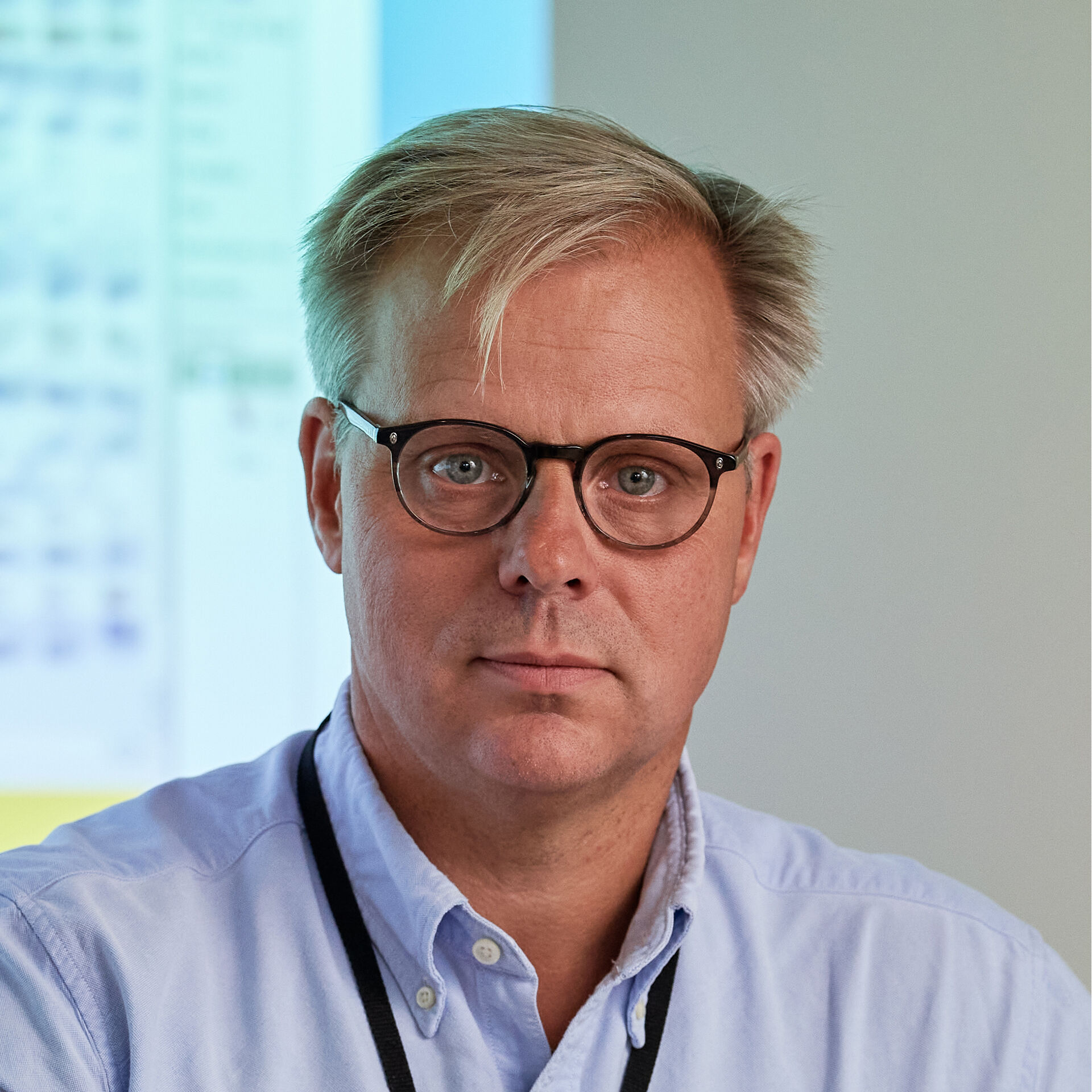
Yury Korolev is a Lecturer in the Department of Mathematical Sciences at the University of Bath. His research focuses on applied analysis, inverse problems, variational methods, mathematical imaging, and machine learning. He actively organizes workshops, including the Second Workshop on Machine Learning in Infinite Dimensions at ETH Zurich (2025), sponsored by ETH Zurich and the EPSRC Hub ProbAI. His work emphasizes infinite-dimensionality in machine learning, operator learning, and neural networks for partial differential equations (PDEs). He leads multiple funded projects from institutions like the Royal Society and EPSRC, addressing operator learning in inverse problems and regularization theory. Korolev is open to supervising PhD students in machine learning theory, inverse problems, and imaging. Key projects include 'Operator Learning in Inverse Problems' (Royal Society, 2024–2026) and 'Regularisation Theory in the Data Driven Setting' (EPSRC, 2022–2024). His research integrates mathematical rigor with applications in imaging, computational methods, and theoretical foundations of AI. Collaborations span academia and industry, emphasizing interdisciplinary problem-solving.
Odd Kolbjørnsen is an Associate Professor at the University of Oslo's Department of Mathematics, affiliated with the Faculty of Mathematics and Natural Sciences. His primary research focuses on geophysics, seismic inversion, Bayesian statistics, and data-driven reservoir modeling. He holds a strong academic background in mathematical geosciences, with contributions to methodologies like Bayesian inversion, Markov mesh modeling, and deep learning applications in geoscience. His work bridges traditional geophysical analysis with modern computational techniques, emphasizing uncertainty quantification and high-resolution imaging in reservoir characterization. Key research areas include seismic data reconstruction, multi-task neural networks for flow metering, and 4D seismic inversion for lithology-fluid prediction. His publications span journals like Geophysics , Mathematical Geosciences , and Neural Networks , reflecting interdisciplinary collaborations in geostatistics and energy engineering. No scientific awards are explicitly listed, though his extensive publication record underscores his research impact. His advisory role and involvement in research groups like 'Statistics and Data Science' at UiO highlight his academic leadership. Ongoing work focuses on integrating machine learning with geophysical data analysis and CO2 sequestration optimization.
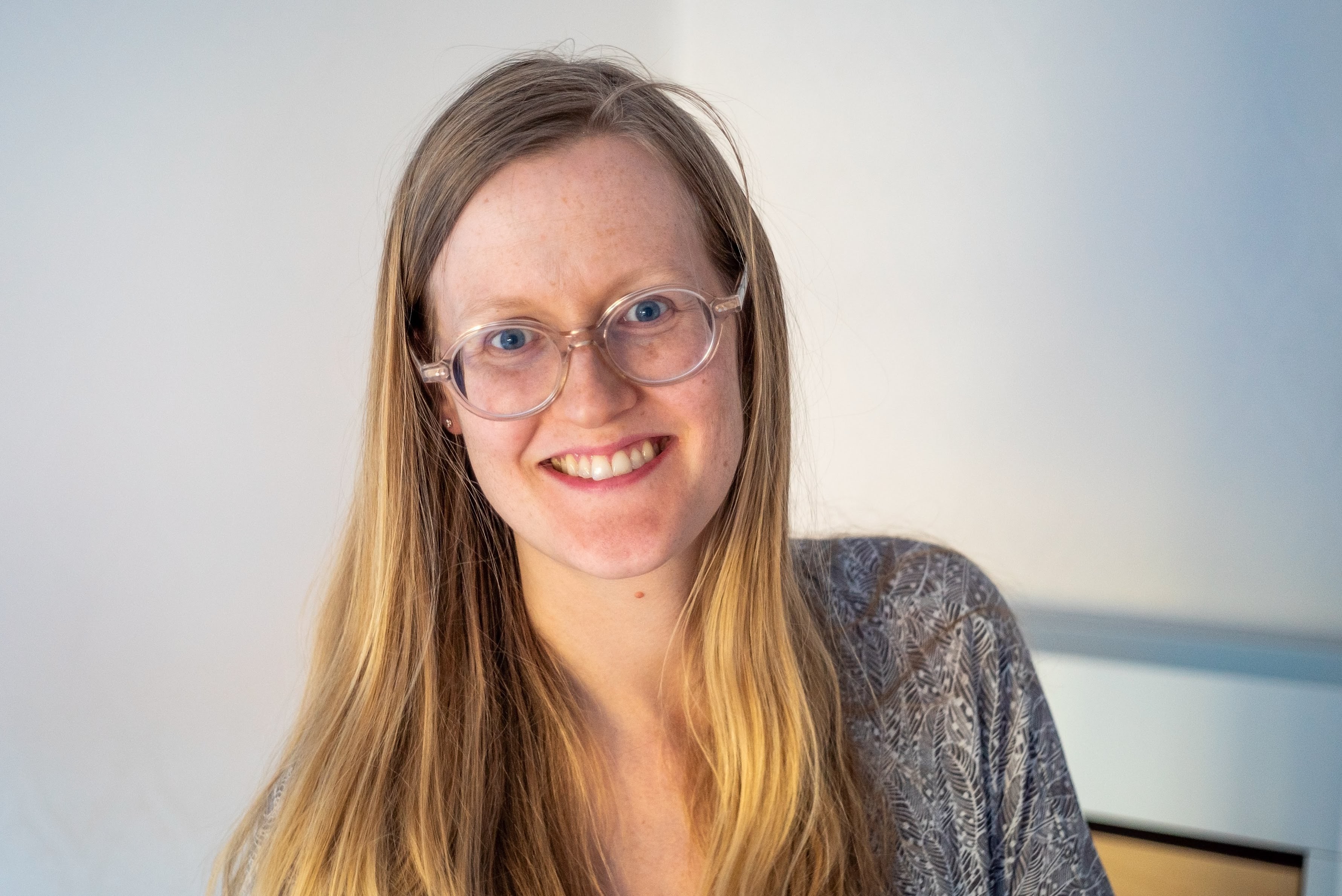
Malin Palö Forsström is a Visiting Lecturer at Gothenburg University and lectures at Chalmers University of Technology. She previously held a postdoctoral position at KTH Royal Institute of Technology, focusing on probability theory under supervision of Fredrik Viklund and Jonatan Lenells. Her PhD, completed in 2019, was at Chalmers University of Technology under Jeffrey E. Steif. She has also taught courses at multiple institutions, including Chalmers, KTH, and Gothenburg University. Malin Palö Forsström earned her PhD in 2019 from Chalmers University of Technology, supervised by Jeffrey E. Steif. Prior to that, she pursued academic training leading to her doctoral studies. Her primary research interests lie in discrete probability theory, particularly applying probabilistic methods to study lattice gauge theories and related models. She also investigates properties of Boolean functions, including noise sensitivity, volatility, and total influence. Her work bridges theoretical probability with applications in mathematical physics and statistical mechanics. Her recent publications focus on lattice gauge theories, exploring Wilson loops and Higgs models, as well as the analysis of Boolean functions' sensitivity properties. Her work often combines probabilistic techniques with insights from mathematical physics, contributing to both theoretical frameworks and applied models in statistical mechanics. Scientific Awards and Grants: 2021: Ruth och Nils-Erik Stenbäcks stiftelse 2019: Kungliga vetenskapsakademin, Stiftelsen G S Magnusons fond 2015: Stiftelsen Olle Engkvist byggmästare 2014: SveFuM Malin has received several grants supporting her research, including notable awards from the Ruth och Nils-Erik Stenbäcks Foundation and the Swedish Research Council. She has not listed specific advising roles or grants beyond those mentioned. Her work has been presented at numerous events, including the Nordic Congress of Mathematicians, the Mittag-Leffler Institute, and international conferences like ICMP 2021.
Samer Dweik is an Assistant Professor at Qatar University. His research focuses on optimal transport theory, calculus of variations, partial differential equations, and free boundary problems. He has contributed significantly to understanding regularity properties of solutions in weighted and nonlocal PDEs, as well as geometric optimization problems involving transport densities and boundary conditions. Education: Ph.D. in Mathematics (2018), Thesis: Lp, q estimates on the transport density with Dirichlet region on the boundary via symmetrization techniques His work explores topics such as the least gradient problem, BV functions, and the interplay between optimal transport and Sobolev regularity. Recent trends in his publications emphasize the analysis of nonlocal operators, fractional Laplacians, and geometric constraints in transport problems. He collaborates with researchers like A. Sabra, P. Rybka, and F. Santambrogio on boundary value problems and regularity estimates. No scientific awards are explicitly mentioned in the provided text. His research involves advanced techniques from functional analysis and geometric measure theory, often addressing open questions in free boundary regularity and optimal control. His Ph.D. thesis laid foundational work for his current studies on transport densities and boundary conditions.
Elisa Davoli is a Full Professor at TU Wien's Institute for Analysis and Scientific Computing, leading the Multiscale Calculus of Variations research group. Her work focuses on materials science, calculus of variations, and partial differential equations, with applications in solid mechanics, plasticity, and magnetoelasticity. She has been awarded the Richard von Mises Prize (2020) and the FWF START Prize (2020). Her research bridges theoretical analysis with practical applications, including homogenization theory, phase transitions, and optimal control in material systems. Key research interests include multiscale modeling, variational methods for material failure, and mathematical aspects of metamaterials. Recent projects address high-contrast materials, nonlocal denoising models, and magnetic skyrmions. Davoli has organized workshops on fracture mechanics, calculus of variations, and imaging challenges. She teaches courses in mathematical analysis, partial differential equations, and elasticity theory, and has mentored students in applied mathematics and mechanics. Grants: FWF START Project (Tunable materials), Elise Richter Grant (Plasticity and magnetoelasticity), GAČR Joint Project (Large Strain Challenges). Events: Organized Bio-PDE Days (2024), 3rd Austrian Calculus of Variations Day (2023), GAMM Microstructure Seminar (2023).
Professor Christoph Scheven holds a W2 professorship in the Faculty of Mathematics at Universität Duisburg-Essen. His research focuses on nonlinear partial differential equations, regularity theory, and calculus of variations, with particular expertise in boundary regularity problems and integrability theory for degenerate systems. Scheven's mathematical investigations center on regularity properties of solutions to nonlinear PDE systems, including obstacle problems for porous medium equations and doubly nonlinear systems. His publications demonstrate consistent attention to boundary regularity in diverse geometric domains, blow-up analysis for variationally biharmonic maps, and differentiability theory for Stokes systems.
Rosemary Renaut is a Professor and Associate Director for Faculty Development at the School of Mathematical and Statistical Sciences, Arizona State University. Her research focuses on computational algorithms for solving inverse problems in medical and geophysical applications, emphasizing regularization techniques and numerical linear algebra. She holds a Ph.D. in Applied Mathematics from the University of Cambridge (1985). Education: Ph.D. in Applied Mathematics, University of Cambridge, UK (1985) Research Interests: Dr. Renaut specializes in developing algorithms for solving ill-posed inverse problems, particularly in medical imaging (e.g., PET, MRI) and geophysics (e.g., gravity/magnetic data inversion). Her work addresses challenges like data noise, model ill-posedness, and parameter regularization. She has contributed to methods like total variation regularization, χ²-based parameter estimation, and iterative solvers (e.g., LSQR). Articles Trends: Recent publications (2020–2025) emphasize large-scale inversion techniques, sparsity-driven reconstruction, and efficient regularization parameter estimation. Key applications include geophysical exploration (e.g., iron oxide deposits, kimberlites) and medical imaging (e.g., EEG source localization). Her work often combines numerical methods with domain-specific challenges, such as joint inversion of multimodal geophysical data. Awards: SIAM Fellow (2022) Technische Universitaet Muenchen Ambassador (2013) J.T. Knight Prize in Mathematics (1982) Grants & Service: Dr. Renaut has led numerous grants (e.g., NSF, DOD) on inverse problems and computational methods. She serves on editorial boards (BIT, SIAM News) and has held roles like Program Director at the NSF. Her service also includes mentoring junior faculty and advancing computational biosciences education. Labs/Teams: Collaborates with interdisciplinary teams in geophysics (e.g., gravity/magnetic data inversion) and biomedical imaging (e.g., PET parametric imaging). Active in conferences like International Conference on Spectral and High Order Methods.
Jose A. Iglesias Martínez is an Assistant Professor in the Department of Applied Mathematics at the University of Twente, affiliated with the Mathematics of Imaging and AI (MIA) group within the Faculty of Electrical Engineering, Mathematics and Computer Science. He conducts research at the intersection of variational analysis, inverse problems, shape analysis, and machine learning, with a geometric perspective on regularization and optimization. University: University of Twente School: Faculty of Electrical Engineering, Mathematics and Computer Science Department: Department of Applied Mathematics Research Group: Mathematics of Imaging & AI (MIA) His research focuses on analytic and variational methods for inverse problems in imaging, particularly involving total variation and related regularization models. The geometric structure of function domains and convex geometry in minimization problems plays a central role in his work. He applies these methods to imaging, shape analysis, and machine learning, with strong mathematical foundations in PDEs, functional analysis, and optimization. The recent publications reflect a consistent focus on variational regularization, extremal point analysis, sparse optimization, and PDE-constrained problems. Key themes include total variation, TGV, nonlocal perimeters, and shape optimization, with applications in image denoising, optical flow, and fluid dynamics. His work spans both theoretical convergence analysis and algorithmic development, often with computational implementations. Scientific Awards and Recognition: Member of the Editorial Board, Numerical Functional Analysis and Optimization (since August 2023) He actively teaches in applied mathematics, including courses such as Analysis 3, Mathematics behind Data-Driven Methods, and interdisciplinary topics like Art, Mathematics and Technology. He has supervised tutorials and projects in calculus, linear algebra, and modeling. His academic training includes dual MSc degrees in Mathematics and Telecommunication Engineering from Madrid, a PhD (2015) and habilitation (2021) in Mathematics from the University of Vienna, followed by postdoctoral work at the Radon Institute in Linz. He has no listed students yet, but is actively publishing and contributing to the mathematical imaging community. He is involved in editorial work and maintains a strong publication record in top-tier applied mathematics journals.
Ralf Hielscher is a Professor at the Institute of Applied Analysis within the Faculty of Mathematics and Computer Science at the Technical University of Freiberg, Germany. His research lies at the intersection of applied mathematics, materials science, and imaging, with a strong focus on crystallographic texture analysis and electron backscatter diffraction (EBSD). He is a core developer and leading figure behind MTEX, a widely used open-source MATLAB toolbox for texture and orientation data analysis. Research Interests: His work centers on mathematical methods for analyzing crystallographic orientations, including spherical harmonic transforms, kernel density estimation on rotation groups, manifold-valued data processing, and inverse problems in tomography and texture reconstruction. He develops algorithms for parent grain reconstruction, orientation mapping, denoising, and visualization of microstructures. The recent publications reveal a consistent trend in advancing computational techniques for EBSD and texture analysis, particularly through the MTEX platform. His work bridges theoretical mathematics with practical materials characterization, enabling more accurate and efficient analysis of polycrystalline materials across geology, metallurgy, and engineering. Email: ralf.hielscher@math.tu-freiberg.de Scientific Contributions: While no formal awards are listed, his extensive publication record in high-impact journals such as SIAM Journal on Imaging Sciences , Journal of Applied Crystallography , and Inverse Problems underscores his significant contributions to the field. He has developed foundational algorithms now embedded in MTEX, which is used globally by researchers in materials science and geology. Teaching and Advising: He teaches courses such as Function Theory, Analysis 3, and Mathematics for Engineers. Although specific students are not mentioned, his leadership in MTEX and numerous collaborative publications suggest he mentors researchers and contributes to training the next generation of scientists in computational materials analysis. Labs and Teams: He is part of the team at the Institute of Applied Analysis and leads research efforts related to signal and image processing in crystallography. The MTEX project serves as a virtual research platform involving international collaborators in Germany, France, the UK, and beyond, facilitating open science in texture analysis.
Dr. Thomas Humphries is an Associate Professor in the Division of Engineering and Mathematics at the University of Washington Bothell since 2022. He earned his Ph.D. in Applied and Computational Mathematics from Simon Fraser University and holds a B.Math from the University of Waterloo. His research focuses on tomographic image reconstruction and mathematical optimization techniques. Ph.D., Applied and Computational Mathematics, Simon Fraser University (2011) M.Sc., Applied and Computational Mathematics, Simon Fraser University (2007) B.Math, Joint Honours Applied Math and Computer Science, University of Waterloo (2005) His work in Medical Imaging addresses challenges in CT and SPECT reconstruction, particularly for polyenergetic/sparse data. He also explores derivative-free optimization in oil field operations and has developed open-source MATLAB code for polyenergetic CT reconstruction available on GitHub. Recent publications focus on superiorization methodology and machine learning integration. Key research trends include iterative reconstruction algorithms, metal artifact reduction, dynamic SPECT imaging, and regularization techniques. No formal scientific awards are listed in the provided text. Dr. Humphries teaches mathematics courses including calculus, linear algebra, and numerical analysis. His professional journey includes postdoctoral work at Memorial University (2011-2013) and Oregon State University (2013-2015) before joining UW Bothell in 2015.
Ann Franchois is a Full Professor at Ghent University in the Faculty of Engineering and Architecture, specifically within the Department of Information Technology (EA05). She is affiliated with the Internet Technology and Data Science Lab, where she leads research in electromagnetic imaging and inverse problems. Her academic career spans several decades with continuous contributions to the field of microwave and millimeter wave imaging. Professor Franchois specializes in microwave imaging , electromagnetic scattering , and inverse problems , with significant applications in biomedical imaging (particularly breast cancer detection) and non-destructive testing (for concrete structures and steel fiber analysis). Her research integrates advanced mathematical techniques including regularization methods, numerical optimization, and computational electromagnetics to solve complex imaging problems. She has developed innovative approaches such as value picking regularization, piecewise smoothing techniques, and Huber regularization for improving reconstruction quality in quantitative imaging. Her recent publications (2013-2023) demonstrate a consistent focus on advancing 3D and 2.5D electromagnetic modeling techniques, with particular emphasis on medical applications and non-destructive testing. The research shows an evolution from fundamental electromagnetic theory to practical applications, especially in breast cancer detection through microwave tomography. Her work often involves collaborations with experts in image processing and signal reconstruction. Professor Franchois has supervised several PhD students to completion, including Funing Bai (2010-2014), Sara Van den Bulcke (2010), and Jürgen De Zaeytijd (2009). She has secured research funding from prestigious organizations, notably the Research Foundation - Flanders (FWO) for projects such as "Scattering-type scanning near-field mm-wave microscope" (2008-2013). Her laboratory work centers around the Internet Technology and Data Science Lab at Ghent University, where she develops and applies advanced computational methods for electromagnetic imaging. Current research directions include improving the accuracy and efficiency of microwave imaging systems, particularly for medical diagnostics and structural assessment applications.
Egor Dmitrievich Kosov is an Associate Professor at the Faculty of Computer Science of the National Research University Higher School of Economics (HSE), where he has been working since 2016. He also serves as a Senior Research Fellow at the International Laboratory of Stochastic Algorithms and Multidimensional Data Analysis within HSE's Institute of Artificial Intelligence and Digital Sciences. Additionally, he holds positions as Senior Researcher at the Steklov Mathematical Institute's Department of Function Theory and Junior Researcher at the Laboratory of Multidimensional Approximation and Applications. Dr. Kosov earned his Candidate of Physical and Mathematical Sciences degree from Lomonosov Moscow State University in 2018, where he also completed postgraduate studies specializing in Mathematics and Mechanics with a qualification as Researcher. His research focuses on measure theory , particularly Gaussian measures , measures on infinite-dimensional spaces , logarithmically concave measures , and measurable polynomials . Kosov's work bridges theoretical mathematics with applications in stochastic analysis, exploring the regularity properties of distributions and developing discretization techniques for functional norms. His research has significant implications for understanding complex probabilistic structures in high-dimensional spaces. Analysis of Kosov's recent publications reveals a strong focus on polynomial mappings of random variables, particularly Gaussian and log-concave distributions. A significant portion of his research addresses discretization problems—developing methods to approximate continuous mathematical structures through discrete sampling. His publications demonstrate growing recognition in the mathematical community, with appearances in prestigious journals across multiple subfields of mathematical analysis. Letter of gratitude from the First Vice-Rector of HSE (March 2023) Letter of Gratitude from the Faculty of Computer Science at HSE (September 2019) Bonus for publication in List A journals (2023-2024) Multiple bonuses for international peer-reviewed publications (2019-2023) Best Teacher award (2018) Moscow Mathematical Society award (2021) At HSE, Kosov teaches Mathematical Analysis, Probability Theory, and Functional Analysis to undergraduate students in the Applied Mathematics and Computer Science program across both the Faculty of Computer Science and the Faculty of Economic Sciences. His teaching spans multiple academic years (2020-2023), demonstrating his commitment to education alongside research. Dr. Kosov is actively involved in research teams including the International Laboratory of Stochastic Algorithms and Multidimensional Data Analysis at HSE and the Laboratory of Multidimensional Approximation and Applications. His work connects with the broader mathematical community through collaborations with researchers such as V.I. Bogachev, V.N. Temlyakov, and others, contributing to Russia's strong tradition in mathematical analysis and probability theory.
Dr. Guang Deng serves as an Adjunct Associate Professor in the College of Engineering at La Trobe University, where he has maintained academic appointments since 1994. His technical expertise bridges communications engineering, signal processing, and advanced image analysis with practical applications in medical devices and computer vision systems. Academic Background: BSc from Sun Yat-Sen University MEng from Chinese Academy of Sciences PhD from La Trobe University Dr. Deng's research program centers on generalized linear image processing and statistical signal processing , with significant contributions to lossless image compression algorithms and noise reduction techniques specifically engineered for cochlear implant devices. His methodology combines theoretical mathematical frameworks with practical hardware implementation constraints, particularly evident in his recent work on fixed-point acceleration methods for resource-limited systems. His publication trajectory reveals consistent innovation in image filtering techniques, evolving from foundational work on discrete Laplacian operators to contemporary deep learning applications in marine imaging. Key thematic developments include the progression from traditional signal processing to hybrid approaches incorporating machine learning, with growing emphasis on real-world constraints like embedded system limitations and illumination variability in agricultural imaging. Funded Research Initiatives: Virtual Speech Pathologist (National ICT Australia, 2013-2016) ARC Centre of Excellence in Electromaterial Sciences (Australian Research Council, 2009-2013) Dr. Deng maintains active research collaborations across engineering and life sciences domains, particularly evident in his cross-disciplinary work on plant phenotyping systems and medical device signal processing. His current research demonstrates increasing focus on edge computing applications and biometric security systems alongside his longstanding image processing expertise.
Yuyuan Ouyang is an Associate Professor in the Department of Mathematical and Statistical Sciences at Clemson University. He holds a Ph.D. in Mathematics from the University of Florida (2013). His research focuses on nonlinear optimization, stochastic approximation, and algorithm design for big data analytics. His work bridges theoretical foundations with practical applications in machine learning, network flow programming, and convex optimization. Dr. Ouyang teaches advanced courses including Machine Learning I/II, Network Flow Programming, and Nonlinear Programming. His recent publications emphasize gradient sliding methods, decentralized optimization, and saddle-point problem analysis. He has contributed to SIAM Journal on Optimization, Mathematical Programming, and Operations Research Letters. His research trends show a strong emphasis on algorithmic innovation for large-scale systems, with notable work on complexity bounds, convex reformulations, and statistical estimation techniques. He has collaborated widely on topics ranging from variational inequalities to MRI image reconstruction.
Sebastien Van Bellegem is a Professor at Université Catholique de Louvain (UCLouvain), affiliated with the Center for Operations Research and Econometrics (CORE) and the Louvain Institute of Data Analysis and Modelling in Economics and Statistics (LIDAM). His work focuses on econometric theory, nonparametric methods, and statistical methodologies, with applications in time series, inverse problems, productivity analysis, and economic modeling. He has contributed extensively to areas such as nonparametric instrumental regression, density deconvolution, and forecasting techniques for economic data. Affiliations: CORE and LIDAM at UCLouvain. Education: Not explicitly detailed in provided text, but inferred through professional trajectory. His research interests span nonparametric estimation , inverse problems , time series analysis , and productivity measurement . He has developed methodologies for handling measurement errors, endogeneity, and structural breaks in economic data. His work often bridges theoretical statistics and applied econometrics, with contributions to frontier estimation, volatility modeling, and policy evaluation in education systems. Key themes in his publications include: Nonparametric instrumental regression and penalization techniques. Statistical methods for density deconvolution and wavelet thresholding. Forecasting productivity indices and economic time series with time-varying variance.