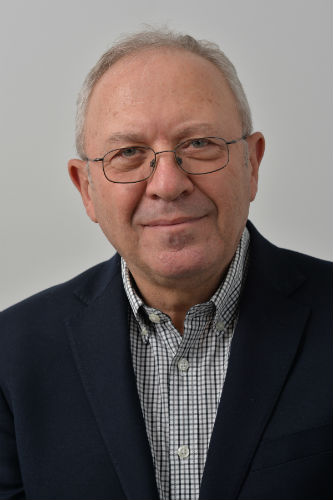
Professor Carlo Harvey is a creative technologist at the School of Digital Arts (SODA), Manchester Metropolitan University. His interdisciplinary research merges games , machine learning , virtual production , and cultural heritage reinterpretation . He leads industry collaborations with entities like Jaguar Land Rover and Epic Games, focusing on AI-driven interactive audio, real-time visualization, and accessibility solutions. Award-winning projects : TIGA, Innovate UK, and Epic Games MegaGrant for Accession Industry partnerships : Automotive sector, cultural institutions His research spans human-computer interaction , multisensory virtual environments , and acoustic-visual cross-modal perception . Recent publications address robotic simulations, motion alignment, and haptic feedback systems. Scientific recognition : TIGA Award, Innovate UK Funding, Epic Games MegaGrant Advocacy : Digital inclusion, creative collaboration, social impact of technology
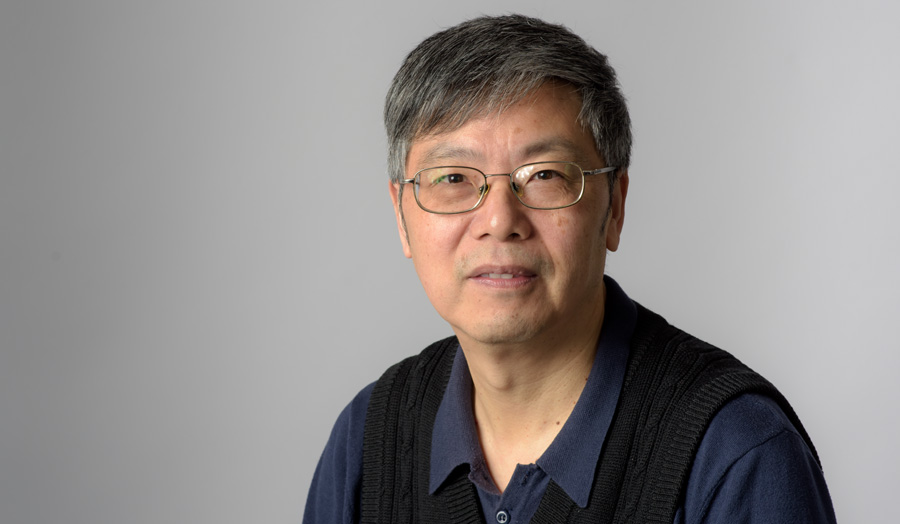
Michael Farber is a Professor of Mathematics at Queen Mary University of London's School of Mathematical Sciences. Previously, he held professorships at the Universities of Warwick, Durham, and Tel Aviv. His research focuses on applied and computational topology, topological robotics, stochastic topology, and their applications in distributed computing, genomics, and brain connectivity modeling. He has authored influential monographs such as Invitation to Topological Robotics and Topology of Closed One-Forms . Farber's current research includes projects funded by the Leverhulme Trust and EPSRC, addressing probabilistic and deterministic topology, automated motion planning, and topological robotics. He advises PhD students including Lewin Strauss, Gabriele Beltramo, and Lewis Mead. His work has been recognized with the Royal Society Wolfson Research Merit Award. Key research interests include parametrized topological complexity, sequential motion planning algorithms, and the intersection of topology with AI and robotics. His collaborations span interdisciplinary fields, such as using topological methods in cancer research and genomic analysis. Grants and funding include the Leverhulme Trust's 'Probabilistic and Deterministic Topology' and EPSRC's 'Topology of Automated Motion Planning.' Farber is affiliated with Queen Mary's Centre for Geometry, Analysis, and Gravitation, contributing to advancing topological methodologies in algorithmic and stochastic systems.
Mark Jenkinson is a Professor of NeuroImaging at the University of Oxford's Nuffield Department of Clinical Neurosciences and also holds positions at the University of Adelaide's Australian Institute for Machine Learning and the South Australian Health and Medical Research Institute (SAHMRI). He heads the Structural Modelling and Analysis Group at the FMRIB Centre, where his research focuses on multimodal population modeling and structural brain segmentation. Education: DPhil in Robotics Research (University of Oxford, 1999) BSc (Hons I) in Mathematical Physics (University of Adelaide, 1994) BE (Hons I) in Electrical and Electronic Engineering (University of Adelaide, 1993) Professor Jenkinson's research spans two major themes: multimodal modeling of populations to describe disease processes and apply to individual patient diagnoses, and structural segmentation and analysis of brain anatomy and pathology, particularly focusing on sub-cortical structures and lesions. His work integrates advanced computational methods with neuroimaging to develop tools for understanding neurological disorders. As the developer of key components of the FMRIB Software Library (FSL), he has significantly contributed to standard neuroimaging analysis pipelines used worldwide. His recent publications demonstrate a strong focus on deep learning applications in neuroimaging, uncertainty quantification in medical AI, and advanced segmentation techniques. There's a clear trend toward developing more robust, anatomically plausible models that preserve topological structures while improving diagnostic capabilities for conditions like multiple sclerosis, Huntington's, and Parkinson's diseases. Scientific Awards: Highly Cited Researcher (Clarivate Analytics 2018-2021, Thomson Reuters 2014-2016) ISMRM Outstanding Teacher Award (2009, 2014) Teaching Excellence Award, University of Oxford (2012) David Phillips Fellowship from BBSRC (2005-2010) Professor Jenkinson has supervised over 25 doctoral students whose work spans brain segmentation, connectivity analysis, and clinical applications of neuroimaging. His research is supported by significant grants including the Medical Research Future Fund (AU$2m), Wellcome Trust Centre for Integrative Neuroimaging (£11m), and NIH Human Connectome Project (US$30m), reflecting the high impact and translational potential of his work. As head of the Structural Modelling and Analysis Group at FMRIB, Jenkinson leads a team developing the FSL (FMRIB Software Library), one of the most widely used neuroimaging analysis packages globally. His group collaborates extensively with clinical researchers on applications ranging from multiple sclerosis to traumatic brain injury, translating computational advances into clinical practice.
Dr. Tingkai Wang is a Senior Lecturer in the School of Computing and Digital Media at London Metropolitan University. His research focuses on mobile robots, intelligent systems, artificial intelligence, control systems, image/signal processing, and virtual reality. He teaches the Programming for Computer Science module and has led projects like the Virtual Environment and Simulation System (2000-2002) and Navigation and Control of Mobile Robots (1995-1998). His work emphasizes interdisciplinary approaches, combining expert systems, neural networks, and fuzzy logic to address challenges in autonomous systems. Notable contributions include AGV navigation algorithms, hybrid control systems, and predictive modeling. Over 30 publications span robotics, control engineering, and AI applications. He collaborates internationally and has presented at venues like the International Conference on Intelligent Systems Engineering and the IEEE Conference on Engineering in Medicine and Biology. Dr. Wang’s expertise bridges theoretical modeling and practical implementation, with applications in manufacturing automation, environmental monitoring, and industrial management systems. His current research continues exploring adaptive control mechanisms and AI-driven robotics solutions.
Professor Kais Atallah is a Professor in Electrical Engineering at the University of Sheffield's School of Electrical and Electronic Engineering, with a secondary role as a Lecturer in Aerospace Engineering. He joined the University in 1989 as a PhD student and became academic staff in 2000. His research focuses on electromechanical energy conversion, magnetic torque systems, and applications in renewable energy, electric vehicles, and aerospace actuation. He is a member of the Centre for Research Into Electrical Energy Storage and Applications (CREESA) and leads the Electrical Machines and Drives Research Group. His research interests include novel drivetrain designs for wind turbines, flywheel systems, and fault-tolerant machine systems for safety-critical aerospace applications. He has advised multiple PhD students and contributed to over 150 publications, with recent work emphasizing magnetic gear design, high-performance ferrite machines, and modular multilevel converters. His articles explore themes like high-efficiency power transmission, magnetic gear optimization for wind turbines, and traction machine control systems. Collaborations include work on subsea ROV propulsion and flywheel energy storage. He oversees research labs focused on advanced electrical machine design and energy storage solutions.
Felipe Thomaz is an Associate Professor of Marketing at Saïd Business School, University of Oxford, and Deputy Director of the Oxford Future of Marketing Initiative. He holds a PhD in Marketing from the University of Pittsburgh and previously taught at the University of South Carolina. His research focuses on marketing strategy, AI ethics, illicit markets, and ESG integration, with notable contributions to frameworks like Ad Net Zero for net-zero advertising emissions. He collaborates with UN agencies, NGOs, and tech companies to address global sustainability goals and wildlife trafficking networks. Education: PhD in Marketing (University of Pittsburgh), MSc in Marketing & Finance (University of Pittsburgh), BSc in Animal Sciences (University of Florida). Research interests include digital marketing channels, brand performance via social networks, AI-driven marketing strategies, and conservation science linked to wildlife trade. His work bridges academia and industry, resulting in spinouts and IP transfers from Saïd Business School. Key projects include: Ad Net Zero: Global standard for reducing advertising emissions UN collaboration on wildlife trafficking through dark web analysis UNESCO partnerships on eliminating stereotypes in advertising His interdisciplinary approach spans marketing, mathematics, and conservation science, with publications in top journals like Journal of Marketing and Conservation Science and Practice .
Pawel Ladosz is a Lecturer in Engineering Systems for Robotics at the Department of Mechanical and Aerospace Engineering, The University of Manchester. His research focuses on applying machine learning and computer vision to mobile robots, particularly in extreme environments such as total darkness or cluttered spaces. He is actively involved in developing autonomous navigation systems, wireless signal mapping, and high-level decision-making for robotic swarms. He teaches courses including Robotic Systems Design Project and Autonomous Mobile Robots. Education: PhD in Establishing and Optimising Unmanned Airborne Relay Networks (Loughborough University, 2014–2019) MEng in Aerospace Engineering (The University of Manchester, 2010–2014) Research Interests: Ladosz’s work emphasizes reinforcement learning for robotics, vision-based autonomous systems, and exploration in challenging environments. His projects often intersect with UN Sustainable Development Goals, contributing to innovations in robotic autonomy and sensor networks. Awards: He received the 2nd Autonomous Flying Technology Competition award in 2021, recognizing his contributions to autonomous flight systems. His research has also led to the establishment of the Centre for Robotic Autonomy in Demanding and Long-Lasting Environments (CRADLE), fostering cross-disciplinary collaborations. Grants & Projects: As Principal Investigator in the Aerospace Engineering initiative (2010–2035), he explores UAV communication networks and trajectory planning. His work addresses urban environment challenges, including relay positioning and signal prediction. Labs/Teams: Ladosz contributes to CRADLE, advancing robotic autonomy in extreme scenarios. His lab focuses on integrating AI and robotics for real-world applications.
Dr Sean Anderson is a Senior Lecturer at the Department of Automatic Control and Systems Engineering , University of Sheffield , with over 15 years of experience in interdisciplinary research spanning robotics, control systems, and computational biology. He earned his MEng and PhD from the University of Sheffield, focusing on control systems and chemical engineering. Education: MEng in Control Systems Engineering, University of Sheffield (2001) PhD in Chemical and Process Engineering, University of Sheffield (2005) Research Interests include: Bioinspired robotics Adaptive and optimal control in biological systems Nonlinear system identification Computational neuroscience Acoustic and visual sensor fusion for localization His recent publications highlight innovations in robotic localization in hazardous environments, interpretable deep learning for control systems, acoustic sensing technologies, and data-driven modeling of complex systems. Key projects involve autonomous navigation in pipe networks, turbulence modeling, and biomedical signal processing. Grants and Funding: He has secured major grants from EU H2020 (£4M), EU FP7 (£2.9M), and EPSRC (£5.7M), focusing on bioinspired control algorithms, robotic safety, and infrastructure assessment. Teaching: He leads the ACS61011 Deep Learning module, emphasizing practical applications in robotics and signal processing.
Dr. Allahyar Montazeri is a Senior Lecturer in Control and Electronics Engineering at Lancaster University's School of Engineering, specializing in advanced control systems and signal processing. His research focuses on adaptive signal processing, robust control, system identification, and applications in robotics, active noise/vibration control, and wave energy conversion. He has over 110 publications and serves on editorial boards such as Frontiers in Robotics and AI, and IFAC Technical Committees. Montazeri holds a Humboldt Research Fellowship (2011) and ERCIM Fellowship (2010). His industrial collaborations include Bosch for automotive noise control and Fraunhofer Institute. He has supervised PhD students in acoustic signal processing and leads projects on autonomous robotics and environmental monitoring. Notable awards include 'Outstanding Associate Editor' (2023) and 'Fellow of The Higher Education Academy.' He actively participates in conferences like IEEE CDC and chairs sessions on mechatronics systems. His work bridges theoretical control advancements with practical applications in extreme environments, including nuclear robotics and underwater systems.
Oscar Mendez Maldonado is a Lecturer in Robotics and Artificial Intelligence at the University of Surrey's School of Computer Science and Electronic Engineering, affiliated with the Robotics Department and CVSSP Centre. He holds a PhD (2018) and BEng (2013) from the University of Surrey. His research focuses on Machine Learning, Computer Vision, and Robotics, with emphasis on autonomous systems, localisation, and SLAM applications. Key projects include the Autonomous Valet Parking (AVP) system for indoor navigation and the SMILE project for sign language assessment using AI. He has supervised students like James Ross (Autonomous Vehicles), Xihan Bian (Reinforcement Learning), and Nimet Kaygusuz (Visual Odometry). Notable achievements include the Sullivan Thesis Prize (2018) and impactful publications in IEEE conferences (e.g., ICRA, CVPR, IROS). Research spans topics like 3D hand pose estimation via diffusion models, graph-based visual odometry fusion, and Raman spectroscopy for localisation. He contributes to open-source tools (e.g., RaSpectLoc GitHub) and collaborates with industry partners like Parkopedia. His work bridges theoretical advances with real-world applications in autonomous systems and healthcare.
Professor Geraint Jewell is affiliated with the University of Sheffield , serving as Director of the Rolls-Royce University Technology Centre in Advanced Electrical Machines (since 2006) and Director of the EPSRC Future Electrical Machines Manufacturing Hub (since 2019). He is a graduate of the university (BEng 1988, PhD 1992) and has held academic roles since 1994. EPSRC Advanced Research Fellowship (2000-2005) Royal Society Industry Fellowship at Rolls-Royce (2006-2008) Former Faculty Director of Research and Innovation (2008-2011) Former Head of Department (2013-2019) His research focuses on power-dense electrical machines for aerospace applications , including permanent magnet machines , switched reluctance machines , and linear actuators . He has supervised ~20 PhD students and led collaborations with Rolls-Royce on high-temperature devices (up to 800°C) and aero-engine starter-generators. Recent publications analyze stator insulation thermal degradation , eddy current control in additively manufactured materials , and magnetic loss prediction in silicon steel. His work spans electromagnetic modeling , core loss calculation , and advanced manufacturing techniques for electrical machines. EPSRC Advanced Research Fellowship (2000-2005) Royal Society Industry Fellowship (2006-2008) He has advised PhD students across topics like consequent-pole PM machines , doubly salient SynRMs , and core loss characterization . His Electrical Machines and Drives Research Group explores modular motor design and magnetic material optimization for aerospace and electric vehicles.
Dr. Aryan Kaushik is an Associate Professor at Manchester Metropolitan University (Manchester Met), UK, since 2024, affiliated with the Department of Computing and Mathematics. He also serves as Chief Advisor at RakFort, Ireland, since 2025. Previously, he was an Assistant Professor (senior grade) at the University of Sussex, UK, from 2021-24, and held roles as Recruitment and Admissions Tutor and Academic Advisor there. His academic journey includes a Research Fellow position at University College London (2020-21), and a PhD in Communications Engineering from the University of Edinburgh (2019). He holds an MSc in Telecommunications from the Hong Kong University of Science and Technology (2015). Education: PhD in Communications Engineering, University of Edinburgh (2019) MSc in Telecommunications, Hong Kong University of Science and Technology (2015) Professional Roles: Chair of IEEE ComSoc ETI on Electromagnetic Signal and Information Theory (since 2024) Core Member of IEEE P1955 Standard on 6G-Empowering Robotics Editorial roles across multiple IEEE journals and conferences His research focuses on 5G/6G wireless communications , integrated sensing and communications , reconfigurable holographic surfaces , non-terrestrial networks , and AI-driven network optimization . He has led UKRI-funded projects on topics like AI-assisted ISAC and Net Zero 6G, and collaborates globally with institutions like IIIT-Delhi, University of Bologna, and Imperial College London. Dr. Kaushik has received awards including the Top Editor Award 2025 (IEEE IoT Magazine), Best Editor Awards 2023-2024 (IEEE Open Journal), and was shortlisted for teaching excellence awards at Sussex. He actively contributes to standardization, serves on over 14 IEEE conference committees, and has delivered 110+ keynote/tutorial talks worldwide. His leadership extends to roles like TPC Co-Chair at IEEE ICC 2025 and Chair of Special Interest Groups on AI-driven Non-Terrestrial Networks and Fluid Antenna Systems.
Dr. Iulia Ionescu is a Senior Lecturer and Programme Director for Creative Computing and Robotics postgraduate courses at UAL's Creative Computing Institute, with additional Visiting Senior Lecturer appointments at Royal College of Art and Imperial College London. She holds a Microsoft-sponsored PhD in AI design from RCA, complemented by an MA in Design (RCA), MSc in Mechanical Engineering (Imperial College), and BArch (Nottingham University). Her interdisciplinary research examines social phenomena in algorithmic societies, focusing on co-construction of meaning in human-AI interaction and anthropomorphism in technology design. Core interests include technology-mediated social dynamics, perceptual interfaces, and ethical implications of autonomous systems. Recent publications demonstrate consistent focus on human-centered technology design across robotics, linguistics, and interaction paradigms, with emerging patterns in embodied cognition and generative systems. Teaching includes course leadership for MA/MSc Creative Computing and development of 'Methods 1: Creative Computing Research Methods' curriculum.
Dr. Mingfeng Wang is a Senior Lecturer in Robotics and Autonomous Systems at Brunel University London, affiliated with the Department of Mechanical and Aerospace Engineering within the College of Engineering, Design and Physical Sciences. His research focuses on specialized robotic systems including continuum, legged, soft, precision farming, and miniaturized robots. Chartered Engineer (CEng) with Engineering Council UK Fellow of the Higher Education Academy (FHEA) Member of IEEE, IEEE-RAS, IMechE, and IFToMM Editorial roles: Associate Editor of International Journal of Advanced Robotic Systems (JCR-Q3); Associate Editor of Frontiers in Robotics and AI (JCR-Q2); Editor of Information Processing in Agriculture (JCR-Q1), Biomimetic Intelligence and Robotics (JCR-Q1), and STEM Education Research expertise includes: Continuum Robotics : Design of extra-slender continuum robots (diameter-to-length ratio Legged Robotics : Parallel mechanism-based biped and hexapod robots for extreme environments Miniaturized Robotics : Active locomotion and drug delivery in capsule endoscopes Soft Robotics : Compliant end-effectors and bio-inspired designs Precision Farming : Laser weeding systems and agricultural automation Key scientific awards: BRIEF award (2022) TAROS Best Paper Post Nomination (2022) IFToMM Asian-MMS Best Paper Award (2014) Recent publications focus on: Cochlear implant surgery robotics Passive compliance in train fluid servicing Snake-biomimetic sealing surfaces Parallel kinematic manipulators Capsule endoscope image enhancement Professional services include conference organization (TAROS 2023/2024 Steering Committee; TAROS 2024 Programme Chair) and journal refereeing for IEEE-ASME Transactions on Mechatronics and Scientific Reports.
Sean Hanna is a Professor of Design Computing at The Bartlett School of Architecture , University College London , and a member of the UCL Space Syntax Laboratory . His interdisciplinary work bridges architecture, computational modeling, and machine learning.