Don Zagier is a distinguished mathematician holding positions as Scientific Member and former Director at the Max Planck Institute for Mathematics in Bonn. He has been a Professor at the University of Bonn, University of Maryland, Kyushu University, University of Utrecht, and Collège de France. His work bridges number theory, algebraic geometry, topology, and mathematical physics. Born in 1951, he studied at MIT (1966–1968), earned a D.Phil. from Oxford (1971), and completed his habilitation at Bonn (1975). He has held roles in the Sonderforschungsbereich (SFB) Theoretische Mathematik, served as ICTP Distinguished Staff Associate since 2014, and is an Honorary Member of the London Mathematical Society (2019). Research interests include modular forms, zeta functions, quantum invariants, and algebraic geometry. Notable works include studies on the Birch-Swinnerton-Dyer conjecture, polylogarithms, and the theory of Jacobi forms. His contributions span over 200 publications, including foundational texts like Zetafunktionen und quadratische Körper (1981) and co-edited volumes on modular forms. His awards include the Carus Prize (1984), Frank Nelson Cole Prize (1987), and Karl Georg Christian von Staudt Prize (2001). Research trends in his articles focus on modular forms, knot theory, quantum topology, and the interplay between number theory and geometry. Grants and collaborations are extensive, though specifics remain unspecified. He leads research at the MPI and contributes to global mathematical communities through educational initiatives and editorial roles in journals like Communications in Number Theory and Physics .
Victor Flynn is a Professor at the Mathematical Institute, University of Oxford, specializing in Number Theory and Arithmetic Geometry. He holds a PhD from the University of Cambridge and leads research in the Number Theory group at Oxford's Mathematical Institute, located at the Andrew Wiles Building. His research focuses on: Abelian varieties and Jacobians of curves Structure and visualization of Shafarevich-Tate groups Brauer-Manin obstructions in Diophantine equations Cryptographic applications of isogenies in genus two curves Arithmetic properties of algebraic surfaces and coverings Recent publications demonstrate a consistent focus on Tate-Shafarevich groups, with 2023-2024 works exploring p-torsion growth and Kummer surface isogenies. His research connects arithmetic geometry with post-quantum cryptography, particularly through genus two isogeny constructions.
Anant Narula is a postdoctoral researcher at Chalmers University of Technology, Sweden, affiliated with the Department of Electrical Engineering. His work focuses on power electronics in power systems, stability analysis of grid-forming converters, and renewable energy integration. PhD in Electrical Engineering (2023), Chalmers University of Technology Postdoc since 2023 at Department of Electrical Engineering Research Interests: Narula specializes in power electronics for power systems, analyzing grid-forming converter dynamics, stability, and control strategies. His work addresses challenges in renewable energy integration, microgrid protection, and converter-based grid support. Publication Trends: His recent articles (2024–2025) explore small-signal analysis of converters, reactive behavior impacts, and stability enhancement techniques. Earlier works (2016–2023) cover fault ride-through, parameter tuning, and modular converter design. Scientific Affiliation: He is a member of IEEE, contributing to power electronics and renewable energy research through collaborations and conference proceedings.
Prof. Dr. Georg Hein is a Professor in the Department of Mathematics at the University of Duisburg-Essen, Campus Essen. His office is located at WSC-O-3.58, Thea-Leymann-Str. 9, 45117 Essen, with office hours held every Tuesday from 2-3 PM and by appointment. He serves as Director of the Research Group Hein, focusing on Algebraic Geometry. His research centers on Algebraic Geometry with specific expertise in vector bundles, moduli spaces, elliptic surfaces, and sheaf theory. Hein's work demonstrates deep engagement with stability conditions, Fourier-Mukai transforms, and geometric invariant theory. His publications reveal a consistent focus on foundational structures in algebraic geometry, particularly through the lens of vector bundles on curves and surfaces. Analysis of his 15 most recent publications (2017-2007) shows a strong thematic continuity in moduli space theory and vector bundle classification. His work bridges abstract algebraic constructions with computational approaches, as evidenced by algorithmic developments for elliptic surfaces and lattice-theoretic investigations. The publications collectively emphasize stability criteria across diverse geometric contexts. Hein actively supervises PhD students including Asbjørn Michelsen, with former advisees Quyet Thang Truong and Dr. Dario Weißmann. He contributes to academic outreach through the Essen Math Circle for students, organizing weekly sessions for grades 5-13 covering advanced mathematical topics beyond standard curricula. His teaching portfolio includes courses such as Mathematische Miniaturen and Topologie .
Alexander D Maloney serves as the Kathy and Stan Walters Endowed Professor of Quantum Science and Director of the Institute for Quantum and Information Science at Syracuse University's College of Arts and Sciences, Department of Physics. His leadership bridges theoretical physics and quantum information science through institutional and research initiatives. His academic foundation includes a Ph.D. in Physics from Harvard University (2003) with dissertation "Time-Dependent Backgrounds of String Theory," complemented by dual B.Sc. and M.Sc. degrees in Physics and Mathematics from Stanford University (1998). Maloney's research centers on quantum gravity and information theory, exploring black hole physics through string theory frameworks. His work connects quantum field theory, cosmology, and information paradox resolution, with particular focus on wormhole geometries, resurgence phenomena, and holographic dualities. This interdisciplinary approach examines how quantum information principles shape spacetime structure. Recent publications reveal evolving emphasis on Narain ensemble statistics, modular invariance applications, and quantum cosmology in reduced dimensions. His 2020-2025 output demonstrates methodological progression from semiclassical gravity to non-perturbative quantum gravity techniques, increasingly integrating machine learning concepts with theoretical frameworks. His scientific recognition includes: James McGill Professor at McGill University (2023) Sir William Macdonald Chair in Physics at McGill University (2020) Maloney secures major research funding including NSERC Discovery Grants (2015-2020, 2020-2025) and Simons Foundation's "It from Qubit" collaboration (2015-2022). He actively shapes academic discourse through search committee leadership, journal reviewing (Journal of High Energy Physics since 2007), and international conference organization at Aspen Center for Physics and Institute for Advanced Study. As Director of Syracuse's Institute for Quantum and Information Science, he cultivates collaborative research environments exploring quantum gravity applications to quantum computing and cosmological modeling.
Rajesh S. Kulkarni is a Professor in the Department of Mathematics at Michigan State University (MSU), located in East Lansing, MI. His research focuses on noncommutative algebra and algebraic geometry, with a particular emphasis on the interplay between these fields. He has made significant contributions in areas such as maximal orders on varieties, Brauer groups, and Ulrich bundles. His work has been supported by the National Science Foundation (NSF) since 2002. Research Interests: Kulkarni's research explores noncommutative algebra through algebraic geometry techniques, including sheaves of maximal orders, Brauer groups of fields, and applications of Clifford algebras. Recent work includes studies on Ulrich bundles and their geometric implications, as well as the structure of maximal orders on surfaces. His interdisciplinary approach bridges abstract algebra with geometric constructions, contributing to foundational understanding in both fields. Advising & Mentoring: Kulkarni has mentored multiple postdoctoral researchers, including Manish Kumar and Adam Chapman, and has supervised PhD students such as Emre Coskun, Casey Machen, and Charlotte Ure. He has also engaged undergraduate researchers like Brandon Alberts and Jonathan Jonker in projects related to algebraic structures and number theory. Labs & Outreach: He co-founded and leads the Kinawa MathCircle, a program for middle school students in Okemos, Michigan. This initiative fosters mathematical curiosity through problem-solving workshops and hands-on activities, emphasizing critical thinking and collaborative learning.
Ramses Martinez is an Assistant Professor in the Department of Industrial Engineering and Biomedical Engineering at Purdue University . He holds a B.A. in Applied Physics from Universidad Autonoma de Madrid (2004) and a Ph.D. in Physics and Materials Science from the Spanish National Research Council (CSIC) in 2009. Prior to joining Purdue, he conducted postdoctoral research in the lab of Prof. George M. Whitesides at Harvard University, focusing on nanofabrication, microfluidics, and soft robotics. Education B.A. in Applied Physics, Universidad Autonoma de Madrid (2004) Ph.D. in Physics and Materials Science, Spanish National Research Council (CSIC) (2009) His research bridges soft robotics , flexible electronics , and nanofabrication , with a focus on creating self-powered e-textiles , omniphobic paper-based devices , and programmable mechanical metamaterials . His work has led to over 25 publications and 9 patents, emphasizing practical applications in health monitoring and industrial automation . Notable projects include waterproof electronic decals for biofluid monitoring, smart bandages for chronic wound detection, and laser nanoforming methods for scalable metallic structures. His research has been recognized through the Fulbright Fellowship and the Marie Curie IOF Grant .
Grigory Mikhalkin is a Full Professor at the University of Geneva, where he has been a faculty member since 2008. He is considered one of the founders of Tropical Geometry, a domain of algebraic geometry governed by (max,+)-calculus where geometric objects degenerate to their piecewise-linear limits. He leads the "ALGEBRA AND GEOMETRY" research group at the university. Mikhalkin studied at Leningrad and Michigan State University under the supervision of Oleg Viro and Selman Akbulut. After receiving his PhD in 1993, he completed postdoctoral training at Princeton, Bonn, Toronto, Berkeley, and Harvard (1993-2000). He served as associate and then full Professor at the University of Utah before moving to the University of Toronto, eventually joining the University of Geneva in 2008. Mikhalkin's primary research areas are Geometry and Topology, with a particular focus on Tropical Geometry. His work bridges algebraic geometry with combinatorial structures, exploring how complex geometric objects can be understood through their piecewise-linear tropical counterparts. This approach has proven fruitful in solving problems in enumerative geometry and has connections to mathematical physics through the study of sandpile models and self-organized criticality. His research group actively explores the connections between tropical geometry, symplectic geometry, and real algebraic geometry, organizing regular seminars including the "Séminaire Fables Géométriques." The recent publications of Professor Mikhalkin demonstrate a strong focus on the intersection of tropical geometry with sandpile models and self-organized criticality. His work has evolved to examine tropical aspects of number theory, lattice sums, and even applications to economics through auction theory. A significant portion of his recent research explores the patterns and structures that emerge in sandpile models across various lattices and dimensions, connecting discrete mathematics with continuum limits through tropical techniques. Prize of the St. Petersburg Mathematical Society (1999) Silver Medal of the Mexican Mathematical Society (2011) Canada Research Chair (2004-2009) Friedrich-Wilhelm-Bessel Research Award of the Alexander-von-Humboldt Foundation (2007-2008) European Research Council Advanced Grant (2010-2015) Chair of Fondation Sciences Mathématiques de Paris (2013-2015) Mikhalkin has successfully advised several PhD students to completion, including Kristin Shaw (2011), Lionel Lang (2014), Nikita Kalinin (2015), Mikhail Shkolnikov (2017), and Johannes Josi (2018). His research has been supported by prestigious grants including the ERC Advanced Grant and the Canada Research Chair. He presented his work at the Bourbaki seminar in 2003 and was selected as a Geometry speaker at the International Congress of Mathematicians in 2006, highlighting the significance of his contributions to the field. Professor Mikhalkin leads the "ALGEBRA AND GEOMETRY" research group at the University of Geneva, which includes current members Thomas Blomme, Francesca Carocci, Aloïs Demory, Gurvan Mével, and Antoine Toussaint. The group has a strong track record of postdoctoral fellows and alumni, including notable researchers such as Ivan Bazhov, Johan Bjorklund, Rémi Crétois, and others. They organize several seminars including the "Séminaire Fables Géométriques" and have historical connections to the Battelle Seminar and Tropical working group Seminar.
Dr. Dominic Williamson is a theoretical quantum physicist and DECRA Research Fellow at the School of Physics, University of Sydney. He specializes in quantum phases of matter and their applications to quantum error correction and computing. His work bridges condensed matter theory and quantum information science, focusing on fracton topological phases and fault-tolerant quantum architectures. Education: PhD in Physics from the University of Vienna (2017); Postdoctoral research at Yale University, Stanford University, and IBM Quantum. Current roles include faculty membership at the University of Sydney’s Quantum Science Group and prior industry experience at IBM and PsiQuantum. Research interests: Topological phases of matter, quantum error correction codes (e.g., fracton codes, QLDPC systems), fault-tolerant quantum computing architectures, and non-Abelian anyon systems. Recent breakthroughs include low-overhead quantum architectures and novel approaches to parallelized logical measurements. Grants: 2022 ARC Discovery Early Career Researcher Award for topological phases in quantum computation. Collaborations include projects on gauging logical operators and quantum code surgery. Professional activities: Editor for Quantum , frequent speaker at international conferences, and mentor for students at all levels (undergraduate to postdoctoral). Active in open-source research and public engagement through platforms like arXiv and Google Scholar.
Adrian Clingher is an Associate Professor in the Department of Mathematics and Statistics at the University of Missouri-St. Louis (UMSL), within the College of Arts and Sciences. His research spans algebraic geometry, mathematical physics, and data science, with particular focus on K3 surfaces, modular forms, and string dualities. PhD in Mathematics, Columbia University (2002) Research interests include: Algebraic Geometry of special surfaces and fibrations Mathematical aspects of string theory dualities Data science and machine learning applications Moduli spaces and lattice polarizations Connections between algebraic geometry and number theory Recent work (2021-2025) examines K3 surfaces with specific automorphism groups, Néron–Severi lattice structures, and isogenies of abelian varieties. Publications often involve collaborations with A. Malmendier, C. Doran, and T. Shaska, exploring geometric structures relevant to theoretical physics. As Graduate Director for UMSL's Master's Program in Mathematics, Clingher oversees both Traditional Mathematics and Data Science emphases. Teaching includes courses like Discrete Structures and Statistical Learning & Modeling (Spring 2025). Contact: clinghera@umsl.edu | Office: ESH 350 | Phone: (314) 516-6338
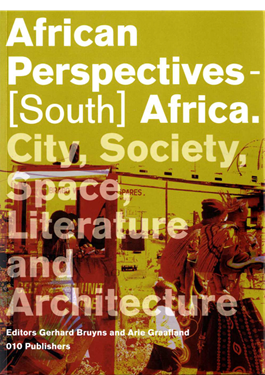
Dr. ir. Gerhard Bruyns is a tenured Associate Professor at the School of Design, The Hong Kong Polytechnic University , where he serves as Associate Dean (Academic Programmes) and Director of RPg Studies . Previously, he held tenured positions at the Delft University of Technology , Netherlands, in both the Delft School of Design and the Department of Urbanism. His expertise spans spatial morphology, volumetric urbanism, and critical environments in dense urban contexts.
Shachar Carmeli is a researcher in the Department of Mathematics at the Weizmann Institute of Science. He previously held a postdoctoral position at the University of Copenhagen's Department of Mathematical Sciences, working with the Copenhagen Centre for Geometry and Topology. Carmeli earned his PhD from the Weizmann Institute under the supervision of Professor Dmitry Gourevitch, focusing on advanced topics in algebraic topology and representation theory. His research interests span homotopy theory, chromatic homotopy theory, algebraic geometry, and representation theory, with a current emphasis on higher semiadditivity in chromatic homotopy theory and its connections to algebraic K-theory. He also explores Nash stacks and geometric representation-theoretic frameworks. Notable collaborations include work with Tomer M. Schlank, Lior Yanovski, and Allen Yuan on cyclotomic extensions, redshift phenomena, and categorified trace constructions. Carmeli's recent publications highlight contributions to topics like chromatic Fourier transforms, descent in algebraic K-theory, and the topology of crystalline materials. His work bridges abstract algebraic structures with geometric and topological applications, often leveraging tools from higher category theory and spectral algebraic geometry.
Michael Rapoport is a Professor at the University of Bonn, with a distinguished academic career spanning multiple institutions including the University of Cologne (1996-2003), University of Wuppertal (1989-1996), and the University of Heidelberg (1982-1986). He is a member of the Academy of Europe (elected 2012) and has held significant roles in mathematical research communities, such as serving on the Scientific Committees of the MPI Bonn (1988-2008) and IHES Paris (2001-2005). Current Position: Professor at University of Bonn Previous Positions: University of Cologne, Wuppertal, Bonn, Heidelberg Academic Affiliation: Mathematics Section Rapoport's research focuses on advanced mathematical structures in Algebraic Geometry and Number Theory. His work explores Shimura varieties, moduli spaces of abelian varieties, and locally symmetric algebraic varieties, with a particular emphasis on their geometric and arithmetic properties. Additionally, he has contributed to the study of p-divisible groups, affine flag varieties, and G-bundles on curves, shaping theoretical frameworks in these domains. His scholarly contributions include influential publications such as "Smooth compactifications of locally symmetric varieties" (2010) and "Period spaces for p-divisible groups" (1996). These works span topics like modular forms, special cycles, and coefficient spaces, reflecting a deep integration of geometry and number theory. Scientific Awards Heinz-Hopf-Preis (2011) Prix Gay-Lussac/Humboldt (2000) Gottfried-Wilhelm-Leibniz-Preis (1992) Akademiestipendium of the VW-foundation (1991) Rapoport has also played a pivotal role in academic governance, serving on editorial boards and selection committees. He was an Associate Editor of the Duke Mathematical Journal (1995-2000) and a member of the Scientific Committee at the Max Planck Institute for Mathematics in Bonn for two decades (1988-2008).
Alexis Kouvidakis is a Professor at the Department of Mathematics and Applied Mathematics within the School of Sciences and Engineering at the University of Crete . His research focuses on Algebraic Geometry , particularly in areas such as divisors, moduli spaces, Hodge theory, and the geometry of cubic hypersurfaces. He has published extensively on symmetric products of curves, Hurwitz spaces, and Fano surfaces, with recent work exploring effective divisors on projectivized Hodge bundles and geometric properties of cubic fourfolds. His email address is kouvid@uoc.gr . The trends in his publications reflect a deep engagement with geometric structures in algebraic varieties. His work spans topics like Modular Forms in Hodge bundles, Monodromy in cubic threefolds, and Divisorial Loci in Hurwitz spaces. He has also contributed to applied mathematics through research in Medical Physics , including dosimetry modeling for ophthalmic brachytherapy.
Willem Leterme is a Professor of High Voltage Technology at RWTH Aachen University, specializing in advanced power systems engineering. His research focuses on high-voltage direct current (HVDC) grids, fault protection mechanisms, and grid integration challenges. His work addresses critical issues such as DC fault mitigation, converter control strategies, and system resilience under fault conditions. He leads projects on HVDC grid protection algorithms, cable aging analysis, and interoperability solutions for multi-vendor systems. Key research themes include: DC grid protection and fault detection Modular multilevel converter (MMC) control High-frequency insulation testing Renewable energy grid integration Recent studies (2023-2025) emphasize: Advanced DC fault response modeling Hybrid AC/DC grid stability Multi-terminal HVDC interoperability Transformer insulation under harmonic stresses Publications highlight contributions to protection system design, DC cable testing methodologies, and grid-forming wind turbine applications. He collaborates on EU-funded initiatives for HVDC infrastructure development and standardization efforts.