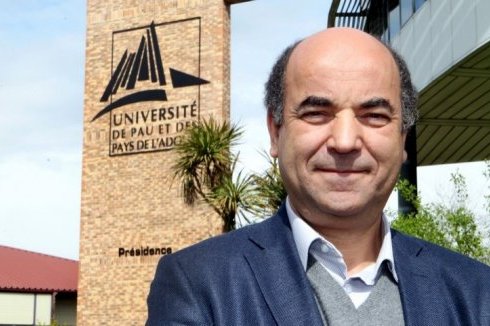
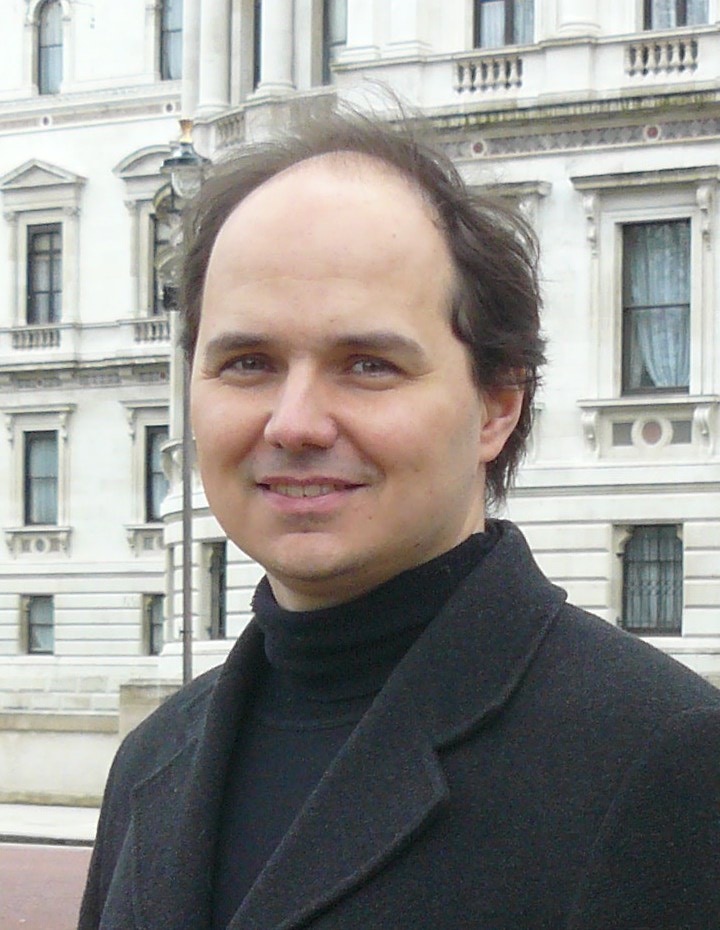
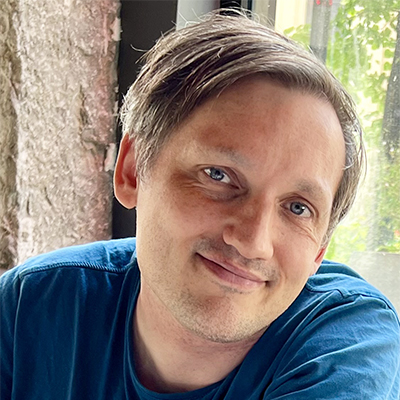
Mohamed Amara is a Professor and President of the Université de Pau et des Pays de l'Adour (UPPA). He is a member of the Inria MAGIQUE-3D team, specializing in numerical analysis and mathematical modeling. His research focuses on finite element methods, computational fluid dynamics, and photovoltaic technologies. He has contributed to advancements in solar energy systems, thermal management of photovoltaic cells, and materials science. Amara has supervised PhD students Elvira Shishenina and Izar Azpiroz, who successfully defended their theses. His work bridges applied mathematics with engineering applications, including studies on estuarian river flows and phase change materials. Roles: Professor, President of UPPA, Inria MAGIQUE-3D researcher Key Research Themes: Numerical Analysis, Solar Energy, Fluid Dynamics Amara's recent publications emphasize structural color metasurfaces, radiative cooling of solar modules, and perovskite solar cell optimization. He collaborates internationally on photovoltaic systems and thermal modeling, addressing challenges in energy efficiency and material performance.
Souvik Paul is an Assistant Professor in the School of Physics at Indian Institute of Science Education and Research Thiruvananthapuram, where he leads the Computational Materials Science (CMS) Laboratory established in 2023. His research employs advanced computational techniques to investigate fundamental properties of magnetic materials and topological phenomena. Education: Ph.D. (2015), Indian Institute of Technology Guwahati, India M.Sc. (2008), Presidency College, Kolkata, India B.Sc. (2006), University of Calcutta, India Dr. Paul's research focuses on computational materials science with particular emphasis on magnetism in two and three dimensions, topological magnetic quasiparticles like skyrmions, surface physics, strongly correlated systems, and multifunctional materials including Heusler alloys. His work primarily utilizes Density Functional Theory (DFT) to predict and explain material properties at the atomic scale, bridging computational predictions with experimental observations through international collaborations. His publication record reveals a consistent trajectory in magnetic skyrmions research, transition metal systems, and Heusler alloys, with significant contributions to understanding spin interactions, stability mechanisms, and electronic properties. His work frequently appears in high-impact journals including Physical Review Letters, Nature Communications, and npj Computational Materials, demonstrating both theoretical depth and practical relevance to materials design. Scientific Awards: Prime Minister Early Career Research Grant (2025) from Anusandhan National Research Foundation Departmental Postdoctoral Fellowship (2015), Uppsala University Doctoral fellowship (2009), IIT Guwahati Graduate Aptitude Test in Engineering (GATE) (2009), MHRD, India Dr. Paul actively mentors graduate students including Moinak Ghosh and Bipin Babu. Through the International PhD Program, he has established formal collaborations with Prof. Stefan Heinze at CAU Kiel, Germany, providing students with international research opportunities, access to high-performance computing facilities, and extended research stays at partner institutions. His recently awarded Prime Minister Early Career Research Grant supports innovative work on antiferromagnetic skyrmions. The Computational Materials Science Laboratory employs Density Functional Theory to investigate structural, electronic, magnetic, and optical properties of materials at the atomic level. The lab maintains strong international collaborations with research groups at CAU Kiel and Forschungszentrum Jülich in Germany, focusing on discovering novel materials, explaining fundamental material behaviors, and developing predictive materials theory with applications in electronics and energy technologies.
Sonia Fliss is a Full Professor at ENSTA Paris , affiliated with the Department of Applied Mathematics and the POEMS laboratory (UMR CNRS-INRIA-ENSTA) . She teaches applied mathematics courses on partial differential equations (PDEs) , finite element methods , and periodic homogenization to undergraduate and graduate students. Doctor in Applied Mathematics (2009) Authorized to supervise research (2019) Research Interests : Sonia Fliss specializes in the modeling and numerical analysis of wave propagation in periodic, quasi-periodic, and random media . Her work includes transparent boundary conditions , guided waves , and asymptotic methods for acoustic, electromagnetic, and elastic wave phenomena . Recent Publications highlight her contributions to the Half-Space Matching Method , edge states in honeycomb structures , and scattering problems in unbounded domains . Her numerical techniques address multi-scale waveguides and time-harmonic propagation . Laboratory : As a member of the POEMS team, she collaborates on interdisciplinary projects involving mathematical analysis , computational physics , and engineering applications in domains like defence, energy, and transport .
Tarik Yefsah is a Researcher at the Physics department of École Normale Supérieure, affiliated with the Kastler Brossel Laboratory. His research focuses on quantum simulation, quantum gases, and many-body physics. He contributes to advancements in ultracold fermi gases and precision measurements in quantum systems. His work includes experimental and theoretical studies of correlated quantum systems, with a particular emphasis on imaging techniques and understanding collective phenomena in cold atom systems. Yefsah leads the Ultracold Fermi Gases Lab, exploring topics such as quantum correlations, superfluidity, and topological phases in ultracold matter. Recent research highlights include quantum gas microscopy of fermionic systems, in situ imaging of single-atom wave packets, and investigations into many-body localization transitions. His studies bridge fundamental physics with potential applications in quantum technologies and analog quantum simulation platforms.
Dr. Daniel Lanzillotti-Kimura is a CNRS Researcher at the Centre de Nanosciences et de Nanotechnologies (C2N), Université Paris-Saclay, and holds an ERC Starting Grant. His work focuses on nanophononics—studying acoustic phonon interactions with photons, electrons, and other phonons at the nanoscale, with applications in quantum technologies and optoelectronics. Education: PhD in Physics (2009), Instituto Balseiro (Argentina) and Université Paris VI (France) His research emphasizes engineering nanomechanical structures to control light-matter interactions in classical and quantum regimes. Key methodologies include ultrafast laser spectroscopy and sol-gel fabrication of mesoporous materials. Recent publications highlight innovations in hypersound manipulation via elliptical micropillars and mesoporous thin films. His team explores topological phononic devices and chiral acoustoplasmonics, pushing boundaries in nanoscale acoustic dynamics. Scientific Awards: ERC Starting Grant Advising the recipient of the Dylan Cattiaux Thesis Award (Anne Rodriguez, 2023) Dr. Kimura collaborates across institutions, including Universidad Nacional de San Martin (Argentina), and leads projects at the intersection of nanotechnology, quantum physics, and materials science.
Clément Delcamp is a CNRS Researcher at the Institut des Hautes Etudes Scientifiques (IHES), focusing on theoretical physics at the intersection of condensed matter and algebraic topology. He was previously a Junior Professor at IHES since 2023, following postdoctoral fellowships at Ghent University, the Max Planck Institute for Quantum Optics (Munich), and the Max Planck Institute for the Physics of Complex Systems (Dresden). His academic journey includes a PhD from the University of Waterloo and the Perimeter Institute for Theoretical Physics, preceded by an MSc in Quantum Fields and Fundamental Forces at Imperial College London (2013–2015). Education: MSc in Quantum Fields and Fundamental Forces (Imperial College London, 2015), PhD (University of Waterloo & Perimeter Institute, 2018) His research explores the algebraic structures underlying quantum lattice systems, emphasizing generalized symmetries, dualities, and topological field theory applications. He has pioneered tensor network methods to study electromagnetic duality in (3+1)d systems and non-abelian Kramers-Wannier dualities in generalized Ising models. His work bridges abstract category theory with concrete physical models, particularly in topological phases and renormalization group techniques. Recent publications highlight his contributions to quantum lattice duality frameworks, defect calculus, and tensor network-based renormalization. His 2024 paper with Lootens and Verstraete demonstrates optimized DMRG simulations for gapped phases via dual models. At IHES, he leads research on non-invertible symmetries and solicits postdocs in theoretical physics. Scientific Awards: Walter Zellidja Scholarship (French Academy), FWO Postdoctoral Fellowship Delcamp's affiliations span leading institutions including the Perimeter Institute, Max Planck Institutes, Ghent University, and IHES. He actively promotes collaboration through seminars and lectures at venues like the Collège de France, Les Houches, and Queen Mary University.
Clément Delcamp is a CNRS Researcher in Physics at the Institut des Hautes Études Scientifiques (IHES), a position he has held since February 2025. Previously, he served as a Junior Professor of Physics at IHES from October 2023. His research bridges condensed matter theory, algebraic topology, and quantum field theory, focusing on symmetry, duality, and topological phases in quantum lattice models. He translates abstract category theory into physical frameworks using tensor networks. His educational background includes undergraduate studies in France, an MSc in Quantum Fields and Fundamental Forces from Imperial College London (2013–2018, supported by a Walter-Zellidja fellowship), and a PhD from the Perimeter Institute for Theoretical Physics and the University of Waterloo (2018). Delcamp investigates algebraic structures underlying quantum lattice many-body systems, leveraging tensor networks to develop classifying schemes and construct novel physical models. His work addresses how generalized symmetries and dualities manifest in systems ranging from (1+1)d to (3+1)d, with implications for quantum simulation and phase classification. Recent efforts include revisiting real-space renormalization group flows and formalizing the SymTFT proposal on lattices. His publications reveal a trajectory from foundational work on string-like excitations and ϕ4 theory to cutting-edge explorations of non-abelian dualities and entanglement in the generalized Landau paradigm. Key themes include topological field theory applications, categorical symmetries, and tensor network methodologies across dimensions, emphasizing connections between mathematical structures and physical phenomena. Award highlights include: Walter-Zellidja fellowship for graduate studies FWO Postdoctoral Fellowship from the Research Foundation – Flanders (2022) Delcamp has held postdoctoral positions at the Max Planck Institute of Quantum Optics (Munich, 2018–2021) and the Max Planck Institute for the Physics of Complex Systems (Dresden, 2021–2022), followed by a postdoc at Ghent University (2022–2023). He actively recruits postdocs for theoretical physics research at IHES and collaborates internationally on topics including topological order and symmetry classification. His work integrates seminars, lectures, and workshops to advance lattice-based approaches to quantum phases. He operates within IHES's theoretical physics group, leading projects that connect category theory with quantum many-body systems. Current initiatives involve developing tensor network frameworks for duality circuits and exploring electromagnetic duality in higher-dimensional topological models, supported by institutional resources and collaborative networks.
Dr. Amal Medhi is an Associate Professor at the School of Physics, Indian Institute of Science Education and Research Thiruvananthapuram (IISER TVM). His research focuses on theoretical condensed matter physics with emphasis on topological insulators, fractional quantum Hall states, ultracold atomic gases, tensor product states of quantum matter, and strongly correlated electron systems. Education: Ph.D. in Condensed Matter Physics (Theory), Indian Institute of Technology Guwahati (2005-2010) M.Sc. in Physics, Gauhati University (2002-2004) B.Sc. in Physics, Cotton College (1999-2002) His research addresses fundamental questions about quantum phases and transitions in low-dimensional systems. Key areas include edge states in topological insulators, superfluid phases in optical lattices, and interlayer coupling effects in bilayer systems. Recent studies show his work spans 2D materials , quantum magnetism , superconductivity , and strongly correlated systems , with methodological expertise in variational Monte Carlo and continuum theory approaches. Awards: Centenary Postdoctoral Fellowship (2010, IISc Bangalore) Senior Research Fellowship (2004, CSIR) Junior Research Fellowship (NET) (2002, CSIR) He has taught foundational courses like PHY 111: Mechanics and maintains active research collaborations.
Sylvain Nascimbene is a Professor at Ecole Normale Supérieure (ENS-PSL) in Paris since 2023, affiliated with the Laboratoire Kastler Brossel at Collège de France. His research focuses on experimental quantum physics with ultracold Dysprosium and Rubidium atoms, particularly in topological matter simulation and quantum-enhanced sensing. 2023–present: Professor at ENS 2011–2023: Assistant Professor at ENS 2022: Junior member of Institut universitaire de France 2020: Habilitation à diriger des recherches 2010–2011: Postdoc at Max Planck Institute for Quantum Optics 2006–2010: PhD under C. Salomon and F. Chevy at Laboratoire Kastler Brossel His research includes: Quantum-enhanced sensing with ultracold Dysprosium Simulation of quantum Hall effect and topological phases Studies of 2D Bose gases and spin mixtures Notable projects: TOPODY (2018–2023): ERC-funded exploration of topological matter MAFAG (2016–2017): Investigation of Majorana fermions Scientific Awards: ERC Starting Grant (TOPODY) Junior member of Institut universitaire de France He teaches courses at ENS including classical optics, quantum optics, and ultracold atom physics, and has contributed to curriculum development and exam materials.
Michele Casula is a Professor and CNRS Research Director (DR2) at Sorbonne University, leading the Théorie quantique des matériaux group since 2018. He holds a position at the Institut de Minéralogie, de Physique des Matériaux et de Cosmochimie (IMPMC), a joint research unit of Sorbonne University and CNRS. His research focuses on quantum many-body systems, strongly correlated materials, and theoretical methods like quantum Monte Carlo (QMC) and dynamical mean-field theory (DMFT). Education: Casula earned his PhD in Condensed Matter Theory from SISSA (Trieste, Italy) in 2005, followed by a habilitation (HDR) from Sorbonne University in 2017. He held postdoctoral positions at École Polytechnique (France) and the University of Illinois at Urbana-Champaign (USA), collaborating with renowned scientists like Silke Biermann and David Ceperley. Research Interests: His work spans quantum materials, including superconductivity in iron-based compounds and alkali-doped organic crystals, topological Dirac materials (e.g., BaNiS₂), and advanced computational techniques for electronic structure. He pioneered methods to compute quantum anharmonicity and developed the TurboRVB software for correlated systems. Awards & Collaborations: Casula contributed to the TREX European Center of Excellence for exascale computing. His group actively collaborates across experimental and theoretical domains, addressing topics like hydrogen phase transitions and quantum effects in low-dimensional systems. Advising & Labs: He supervised multiple PhD theses and co-advised students in quantum simulations. His lab integrates theoretical frameworks with cutting-edge computational tools, advancing understanding of complex materials' electronic and structural behavior.
Frédéric CHEVY is a Professor at the Ecole Normale Supérieure (ENS-PSL) and Director of the Physics Doctoral School in Ile de France (EDPIF). He is also a Lecturer at École Polytechnique and a Senior member of the University Institute of France. His research focuses on theoretical and experimental aspects of quantum and classical fluids. Affiliations: Laboratoire de physique de l’ENS (LPENS), LabEx ENS-ICFP, École Polytechnique Physics department His work spans ultracold atom-based quantum simulations of many-body physics, capillary phenomena, atomtronics, and topological systems. Recent studies include non-Abelian gauge field dynamics, quantum transport in optical lattices, and relativistic system analogs. He has co-authored over 30 publications including in Physical Review Letters , Science , and Nature Communications . Scientific contributions include: Landau criterion deviations in superfluids Quasi-thermalization in collisionless systems Quantum polaron dynamics Classical physics analyses (e.g., phantom glass mystery, cobra waves) He teaches advanced quantum mechanics in the ICFP Master’s program and relativity/electromagnetism at ENS. His group collaborates with institutions in Paris, Singapore (NTU), and Toronto.
Nicolas SANSON is a Maître de Conférence (Associate Professor) at Sorbonne University, affiliated with the Sciences et Ingénierie de la Matière Molle (SIMM) laboratory—a joint research unit (UMR 7615) of ESPCI Paris, CNRS, and Sorbonne University. Based at ESPCI Paris (10 rue Vauquelin, Paris), his work bridges fundamental soft matter research with industrial applications in petroleum engineering and biosensing. His educational background includes: PhD (2005) from Université de Montpellier II on Assemblages de copolymères à bloc double hydrophile et de cations multivalents , supervised by Dr. Corine Gérardin and Dr. François Fajula Postdoctoral research at the University of Toronto (2005) under Prof. Eugénia Kumacheva Postdoctoral research at RHODIA's CRPP (Bordeaux, 2006) under Dr. Virginie Ponsinet SANSON's research focuses on self-assembly of nanoparticles, synthesis of stimuli-responsive microgels, and physico-chemistry of macromolecular assemblies. He specializes in thermoresponsive hydrogels (particularly PNiPAM-based systems) and zwitterionic polymers, investigating structural transitions, mechanical properties, and colloidal stability. His work frequently addresses industrial challenges in enhanced oil recovery and biosensor development. Analysis of his 15 most recent publications (2011-2018) reveals consistent emphasis on LCST-type hydrogels, nanoparticle-polymer hybrids, and responsive microgels. Key trends include topology-dependent mechanical behavior in polymer networks, crack bifurcation in phase-separated systems, and colloidal stability mechanisms in zwitterionic systems. His interdisciplinary approach spans polymer chemistry, colloid science, and materials engineering, with publications in high-impact journals like Macromolecules and Advanced Materials . No formal advisees or scientific awards are documented in the source material. However, SANSON actively teaches undergraduate and graduate courses including colloidal chemistry, polymer thermodynamics, and materials science at Sorbonne University and Polytech'Paris-UPMC. He operates within the CAID (Colloïdes, Assemblages et Interfaces Dynamiques) team at SIMM laboratory, which provides advanced facilities for soft matter synthesis and characterization. The SIMM—directed by J.B. d’Espinose—hosts multiple research groups focused on non-equilibrium soft matter, polymer networks, and colloidal systems, fostering collaborative work in soft materials science.
Xavier Rocquefelte is a Professor at ISCR (Institut des Sciences Chimiques de Rennes) within the University of Rennes 1, which is affiliated with CNRS (Centre National de la Recherche Scientifique). His office is located at Campus de Beaulieu, Building 10B - Room 212, 263 avenue du Général Leclerc, Rennes, France. He maintains an active research profile with numerous publications in advanced materials science and condensed matter physics. Professor Rocquefelte's research spans multiple domains within materials science, with particular emphasis on magnetic materials, crystallography, and computational approaches to understanding material properties. His work frequently intersects with condensed matter physics, particularly in the study of antiferromagnetism, multiferroics, and topological materials. He has made significant contributions to the understanding of defect engineering in perovskites and other complex oxide materials, as well as the development of novel synthesis methods for functional materials. His research also extends to optical materials, particularly those exhibiting mechanoluminescent properties, and to the computational modeling of material behaviors under various conditions. Analysis of his recent publications reveals a strong focus on the intersection of magnetism and material structure, with increasing attention to quantum materials and topological phenomena. His work demonstrates expertise in both experimental synthesis techniques and advanced computational methods, allowing for comprehensive characterization of material properties. The research portfolio shows consistent productivity across multiple subfields, with particular emphasis on the relationship between crystal structure, defects, and functional properties in advanced materials. Professor Rocquefelte maintains an active research program with collaborations across multiple institutions, as evidenced by his extensive publication record in high-impact journals. His work contributes significantly to the understanding of fundamental material properties while maintaining relevance to potential applications in energy storage, electronics, and optical technologies.
Marzena Szymańska is a Professor of Physics in the Department of Physics and Astronomy at University College London (UCL), where she leads the Quantum Collective Dynamics in Light-Matter Systems group. She holds a PhD from the University of Cambridge (2002–2008) and has held academic positions at UCL since 2014, including Reader (2014–2018) and Professor (2018–present). Her research focuses on quantum systems, topological states, and light-matter interactions. Recent work includes studies on edge modes in open quantum systems and polariton superfluidity. She advises students like Igor Timofeev, who recently completed his PhD. Her research has been featured in *Nature Communications* and highlighted in media such as New Scientist.
Andrew Pell is a Professor at the Chemistry Department of ENS de Lyon and a member of the Very High Field NMR Center (CRMN). He specializes in solid-state NMR spectroscopy to study paramagnetic materials, with a focus on their structural and electronic properties. His research explores energy storage systems, magnetic materials, and the application of advanced NMR techniques to resolve complex material behaviors. In 2024, he was appointed a Junior Member of the Institut Universitaire de France (IUF). Education: Bachelor's in Natural Sciences (Chemistry) from Selwyn College, University of Cambridge, UK PhD in Chemistry from the University of Cambridge (2009), focusing on high-resolution NMR methods Research Interests: His work centers on using solid-state NMR to elucidate geometric and electronic structures of complex magnetic materials. This includes paramagnetic systems like topological insulators, quantum spin materials, and energy storage materials. He develops novel NMR methodologies to address challenges in resolving atomic-scale features in these systems. Scientific Awards: Junior Member of the Institut Universitaire de France (2024) Advising & Grants: While specific grant details are not provided, his prolific publication record reflects sustained research activity. His advising contributions are inferred through his academic roles but no student names are listed in the provided texts. Labs & Collaborations: Active in the CRMN (ENS de Lyon), a leading facility for high-field NMR research. Collaborates with international institutions on projects involving advanced NMR techniques and materials science.