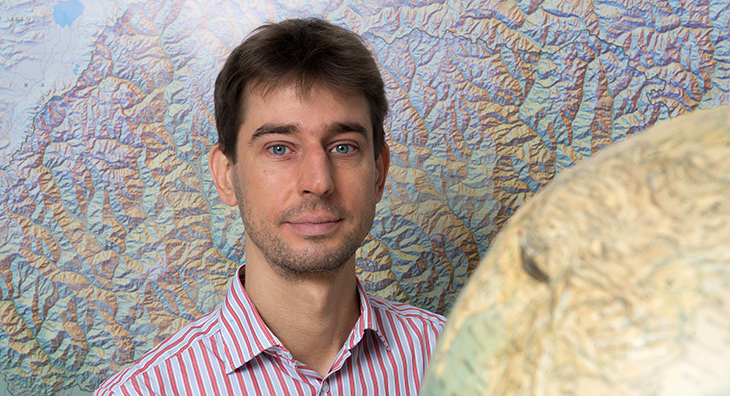
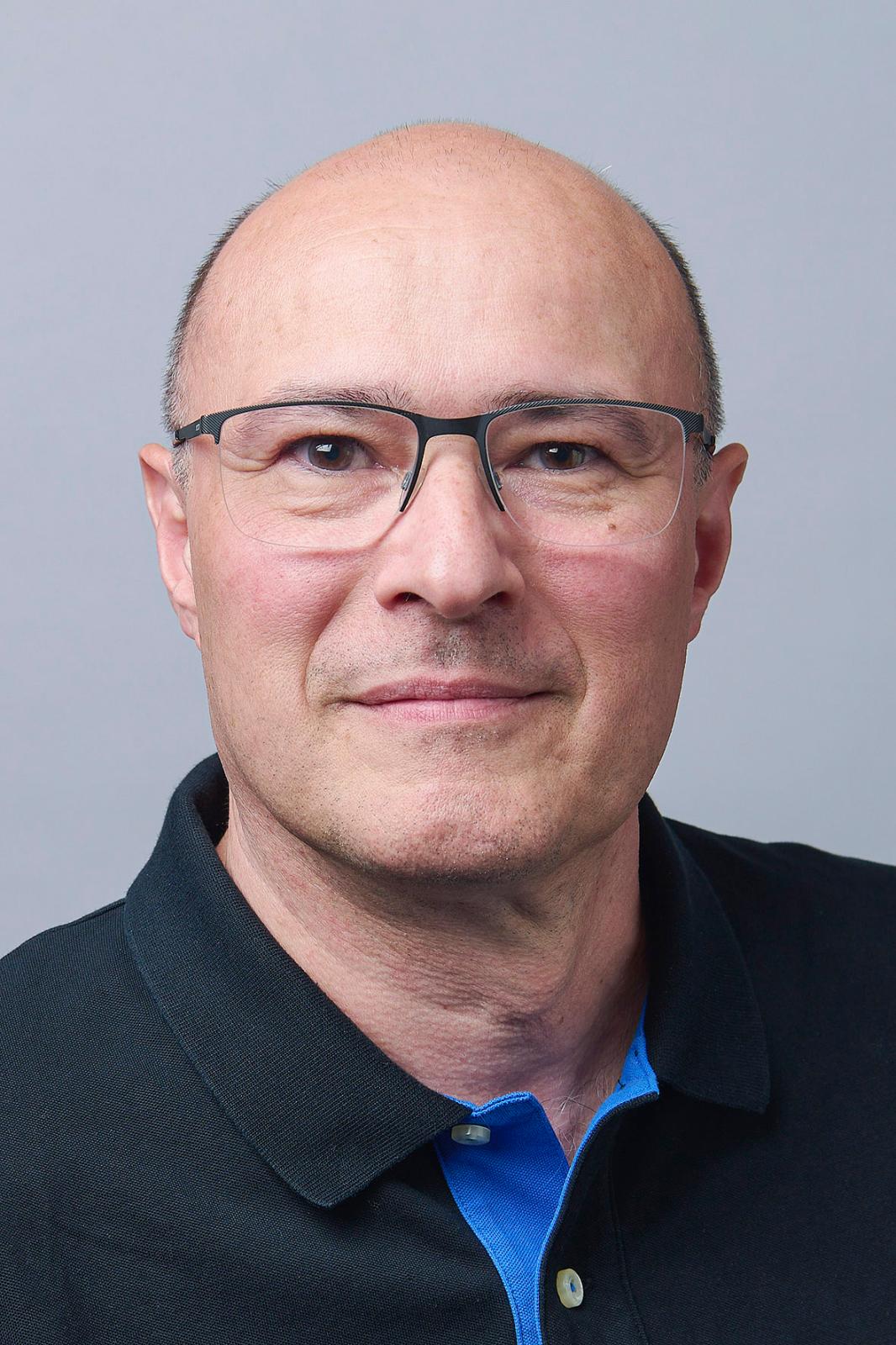
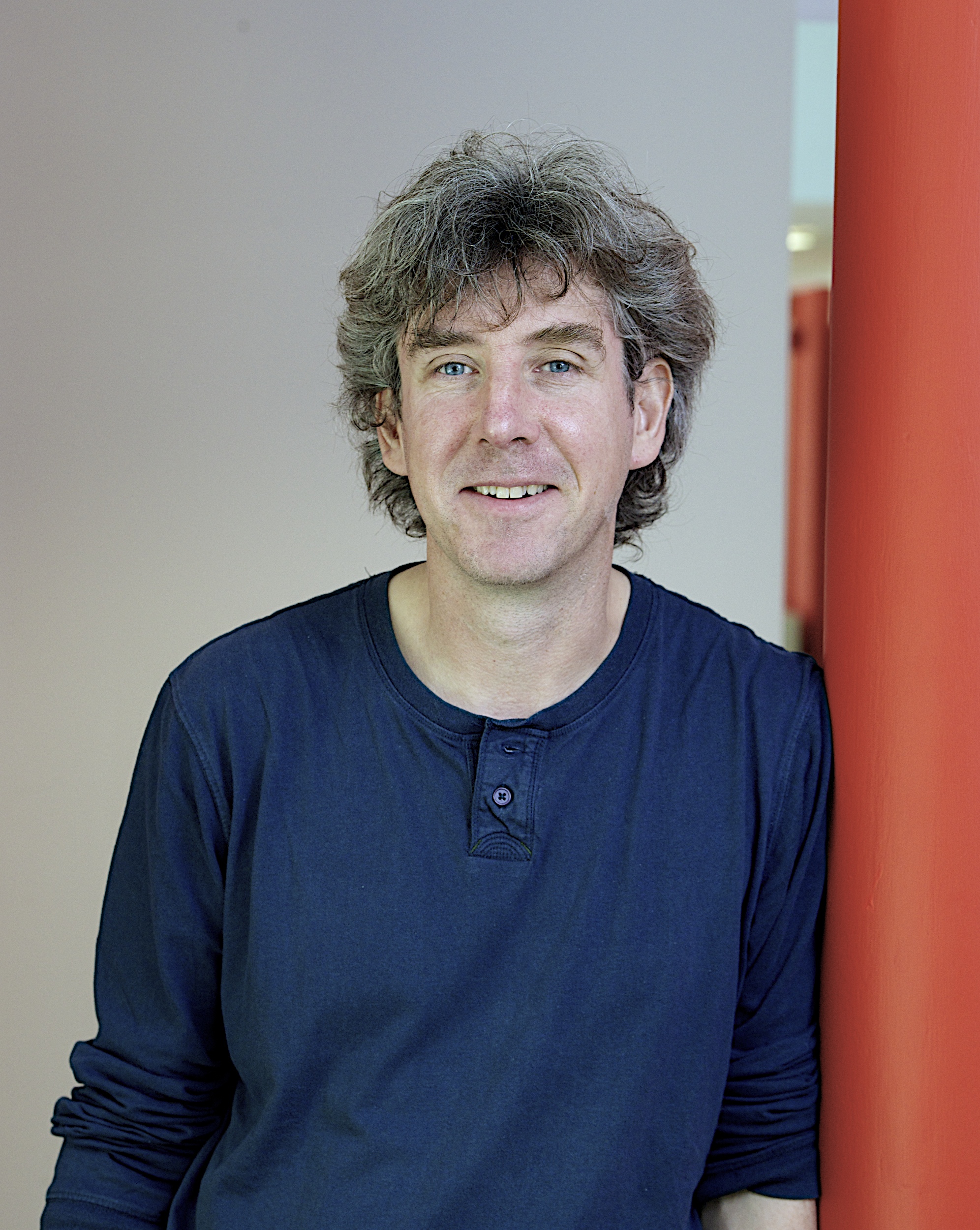
György Hetényi is an Associate Professor at the Institute of Earth Sciences, University of Lausanne, specializing in large-scale geophysics. His research focuses on mountain-building processes, earthquake dynamics, and tectonic deformation of the Himalayas and Alps. He leads the AlpArray project, deploying the largest academic seismic network in Europe. Since 2015, he has held an SNSF Assistant Professorship, advancing to his current role in 2020. Education: Bachelor's in Geophysics at Eötvös University (Budapest) Master's and PhD at École Normale Supérieure (Paris), studying Himalayan deformation Research Interests: Combining seismic and gravity data to model crustal structures, numerical modeling of orogenic processes, and educational seismology initiatives in Nepal. Active in field campaigns across Bhutan, Nepal, and the Ivrea-Verbano Zone. Publications: Over 48 peer-reviewed articles since 2007, emphasizing crustal imaging, seismic tomography, and Himalayan tectonics. Recent work includes participatory gravity modeling challenges and pan-Alpine gravity database development. Awards: Prize of the Chancellery of the Universities of Paris (2007) for doctoral research on Himalayan deformation. Teaching & Outreach: Developed the 'Geophysics Across Scales for Geologists' module in the UNIL-UNIGE program. Co-leads the Nepal School Seismology Network, integrating low-cost seismic education tools. Grants & Projects: AlpArray, DIVE (scientific drilling in Ivrea Zone), and seismic hazard assessments in Bhutan. Collaborates with international networks like ICDP and European seismic consortia. Labs/Teams: Part of the Institute of Earth Sciences (UNIL) and leads the OROG3NY project on mountain-building dynamics.
Cynthia Brewer is a Professor of Geography and Information Sciences and Technology at Pennsylvania State University. She currently serves as the Associate Dean for Faculty Affairs in the College of Information Sciences and Technology (IST), a position she began in August 2024. Previously, she was a faculty member in the College of Earth and Mineral Sciences (EMS) where she served as head of the Department of Geography from 2014 to 2021. Dr. Brewer's research focuses on cartographic communication and visualization, map design, color theory, multi-scale mapping, atlas production, and topographic maps. She is especially well known for her ColorBrewer online tool for selecting map color schemes and her work on ScaleMaster for organizing multiscale mapping. Her research falls primarily within the Geospatial Big Data Analytics and Spatial Modeling and Remote Sensing research clusters at Penn State. Her publications include more than 30 peer-reviewed articles and 60 additional publications and cartographic design resources, generating over 7,000 citations. She has authored four books, including the popular 'Designing Better Maps' with the 3rd edition published by Esri Press in 2024. Carl Mannerfelt Gold Medal from the International Cartographic Association (ICA) in 2023 O. M. Miller Cartographic Medal from the American Geographical Society (AGS) in 2019 Henry Gannett Award for Exceptional Contributions to Topographic Mapping from the U.S. Geological Survey (USGS) in 2013 EMS Wilson Award for Outstanding Service in 2014 As an administrator, Dr. Brewer has extensive experience in departmental leadership, having served as head of the Department of Geography for seven years. She has also served on numerous university committees, was elected to the University Faculty Senate, and served as an Administrative Fellow shadowing the Provost. She is not currently taking on graduate advisees due to her full-time administrative role in IST.
Marcus Christl is a Lecturer at the ETH Zürich Department of Physics and Head of the Laboratory of Ion Beam Physics (LIP) . His academic profile focuses on Accelerator Mass Spectrometry (AMS) , cosmogenic nuclide dating, and environmental applications of isotope geochemistry. Office: HPK H 33, Otto-Stern-Weg 5, 8093 Zürich, Switzerland Phone: +41 44 633 38 84 / +41 44 633 65 07 Email: mchristl@phys.ethz.ch ORCID: 0000-0002-3131-6652 Dr. Christl teaches courses in Accelerator Mass Spectrometry and Quaternary Dating Methods , including: 402-0180-00L Ethics and Scientific Integrity for Doctoral Students in Physics 402-0620-00L Current Topics in Accelerator Mass Spectrometry and Its Applications 402-0621-00L Introduction to Accelerator Mass Spectrometry His research spans multiple disciplines through cosmogenic isotope analysis: Climate Science : Using 10 Be and 14 C records to reconstruct solar activity cycles and climate fluctuations over millennial timescales Geochronology : Developing novel dating techniques using 36 Cl/ 10 Be ratios for ice cores and landscape features Geomorphology : Quantifying erosion dynamics in diverse environments from the Alpine foreland to South African pediments Oceanography : Tracing Atlantic water transport patterns using 129 I– 236 U dual tracers Radiochemistry : Advancing methods for nuclear forensics and environmental pollutant analysis Recent publications reveal trends in: Refining AMS systems for analyzing transuranic elements Quantifying landscape evolution through multi-isotope approaches Understanding ocean circulation pathways using artificial radionuclides Investigating soil dynamics in glaciated and tropical environments Correlating cosmogenic production with sea level and climate changes
Professor Ian Gregory , Distinguished Professor of Digital Humanities at Lancaster University's School of Global Affairs , is a pioneer in integrating Geographical Information Systems (GIS) with humanities research. His work bridges historical demography, literary studies, and social geography through projects like the European Research Council-funded Spatial Humanities: Texts, GIS, Places and the Leverhulme Trust's Geospatial Innovation in the Digital Humanities . BA in Geography (Lancaster), MSc in GIS (Edinburgh), PhD in Historical GIS (London) Co-founder of Lancaster’s Digital Humanities Centre Former Head of Department of History (2018-2022), now Associate Dean of Research Research Interests : Historical GIS for long-term change in Britain and Ireland Textual GIS to analyze large corpora (e.g., Lake District literature, 19th-century newspapers) Developing spatial methodologies for humanities scholarship Publications span GIS applications in literary geography, historical demography, and corpus linguistics, with recent trends focusing on emotional mapping of testimonies and deep mapping of cultural landscapes. Grants include 25 major awards (14 as PI) from the ERC, AHRC, ESRC, and Leverhulme Trust, supporting projects on topics like space-time narratives and historical vegetation change. Labs/Teams : Co-directs Lancaster’s Digital Humanities Centre, fostering collaboration in spatial humanities, NLP, and AI.
Kanchana Kariyawasam serves as Associate Professor in the Department of Accounting, Finance and Economics within Griffith University's Business School. Holding a PhD in IP Law from Griffith University, an LL.M (Advanced) in IP Law from The University of Queensland, and an LL.B (Hons) from the University of Colombo, she maintains active research affiliations with the Law Futures Centre (2009-2024) and Griffith Asia Institute (2019-present). Her research spans Intellectual Property Law with specialized focus on Copyright and Artificial Intelligence, IP and Right to Repair, Patent Law in Biotechnology, and Gender Equality in IP systems. Current projects examine AI-generated works, digital exhaustion doctrine, and NFT legality under Australian copyright frameworks, reflecting strong alignment with Sustainable Development Goals 4 (Quality Education) and 9 (Industry Innovation). Professor Kariyawasam's funded research portfolio includes significant projects such as the WIPO Study on Illegal Retransmission of Live Broadcasts (2023), Queensland Government Ewaste initiatives (2022), and Griffith University's Right to Repair Workshop (2020). Her publications demonstrate consistent output in high-impact journals including European Intellectual Property Review and International Journal of Law and Information Technology , with recent works analyzing AI copyright challenges, spatial data protection, and medical device repair rights. Deputy Vice-Chancellor's 2024 Student Experience of Teaching Survey Commendation Green Impact Gold Award Recipient (2023, Griffith Repair Cafe) Highly Commended Griffith Award for Excellence in Teaching (Large Classes) Two GBS teaching citations She currently supervises five doctoral candidates researching AI data privacy, patent law intersections, and agricultural IP issues, while having successfully completed supervision of four doctoral theses including works on female entrepreneurship and agribusiness marketing. As Coordinator of Griffith Repair Cafe and Steering Committee Member of Australian Repair Network, she bridges academic research with community engagement on repair rights and e-waste reduction.
Dr. Marion Schrumpf is a Group Leader in the Soil Biogeochemistry research group at the Max Planck Institute for Biogeochemistry, affiliated with the Department of Biogeochemical Processes. Her work focuses on soil carbon dynamics, mineral-organic matter interactions, and climate change impacts on soil systems. Research areas: Soil biogeochemistry, carbon cycling, mineral-soil interactions, nutrient stoichiometry, microbial ecology, and climate modeling. Email: mschrumpf@... Phone: +49 3641 57-6182 Office: B2.015 Her recent publications address themes like mineral control over soil carbon stabilization, drought effects on soil processes, microbial stoichiometric adaptation, and the Jena Soil Model's role in simulating carbon-nutrient interactions. She leads efforts to disentangle the complex relationships between land use, mineralogy, and soil organic matter turnover across diverse ecosystems.
Li Li is a Professor in the Department of Civil and Environmental Engineering at Pennsylvania State University. She leads the Li Reactive Water research group, focusing on the Critical Zone and its response to climate change and human activities. Her work examines interactions between water, soils, rocks, roots, and microbes, with implications for water quality and sustainability. Research interests include reactive transport modeling, stream chemistry dynamics, and the impacts of climate extremes on hydrological systems. She has contributed to high-profile studies such as the discovery of ancient carbon release via rivers and the effects of extreme rainfall on nutrient loss in American soils. Recent recognitions include dual awards from the Earth and Space Association (2024) and being named an Institute of Energy and the Environment Fellow. Her lab actively collaborates on projects like the BioRT-HBV model and applications of deep learning in hydrological data analysis. Key projects: Facilitating environmental investigations with single-column models, maximizing CO₂ trapping in geological formations Leadership roles: IEE Fellow, Principal Investigator of NSF-funded research
Grant Parker is an Associate Professor at Stanford University , with appointments in the Department of Classics and African and African American Studies . He also holds a courtesy appointment in Comparative Literature . Since joining Stanford in 2006, he has led projects like Aftermaths of Enslavement: Curating Legacies , Egypt in South Africa , and Voortrekker Monumentality , focusing on colonial ideologies and legacies of enslavement through digital databases. Education : B.A. in English and Latin, University of Cape Town (1987) B.A. (Honours) in Latin, University of Cape Town (1988) M.A. in Latin, University of Cape Town (1991) Ph.D. in Classical Philology, Princeton University (1999) His research integrates Roman imperial culture with postcolonial and comparative frameworks, examining memorialization , public history , and historical cartography . He works across the ancient Mediterranean and South Africa, comparing imperial legacies. Recent publications analyze monumentality (e.g., obelisks), myth in late antiquity , and subaltern voices in Latin . His edited volume South Africa, Greece, Rome: Classical Confrontations (2016/7) bridges classical and African studies. Honors : Nominated as 'Standout Scholar' under forty, Black Issues in Higher Education (2003) He advises doctoral candidates and leads CESTA projects on South African museums and historical memory. Current teaching includes courses on empire-building , slavery narratives , and classical California .
Catherine Badgley is a Professor in the Department of Ecology and Evolutionary Biology at the University of Michigan. She serves as a Research Scientist at the Museum of Paleontology and the Residential College, with a career spanning over four decades since joining as a Michigan Fellow in 1982. Her work bridges paleoecology, biogeography, and sustainable agriculture, focusing on biodiversity responses to global change across deep time scales. Ph.D. in Geology from Yale (1982) MFS from Yale School of Forestry and Environmental Studies (1974) B.A. in Geology from Radcliffe College (Harvard) Her research integrates four major themes: Paleoecology: Quantitative analysis of fossil assemblages, taphonomy, and Cenozoic mammal community dynamics Climate Change: Using mammal databases to link modern ecological patterns with paleoclimatic inference Spatiotemporal Biodiversity: Tracking mammal-plant co-evolution since the Last Glacial Maximum using isotopic and morphological proxies Agricultural Sustainability: Pioneering studies demonstrating organic agriculture's capacity to meet global food demands Recent publications reveal trends combining 4D geodynamic modeling , C3/C4 vegetation transitions , and functional morphology across Neogene records in Pakistan, Spain, and North America. Her fieldwork spans the Siwalik sequence, Mojave Desert, and Great Basin regions. She leads the NSF-funded NARLEE (North American Rodent Landscapes Evolution & Ecology) Research Coordination Network and teaches courses like EEB 318/319 on Food Systems and EEB 445 Biogeography, featuring immersive fieldwork and interdisciplinary analysis of agricultural impacts on biodiversity.
Marta San Millán Alonso is a Lecturer in the Department of Medical Sciences at the University of Girona, Faculty of Medicine. She specializes in Human Anatomy and Embryology and is an active member of the NEOMA Research Group (Clinical Anatomy, Embryology, and Neuroscience). Her academic journey began with a biology degree, followed by a competitive Master’s in Physical Anthropology and an FPU-funded PhD from the University of Barcelona, awarded cum laude and with international distinction. Her educational background includes: Bachelor’s in Biology Interuniversity Master’s in Physical Anthropology (with top-tier thesis) PhD in Anatomy and Embryology (University of Barcelona, FPU scholarship, cum laude, international mention) Postgraduate training in soft tissue anatomy and dissection techniques (University of Girona) Her research bridges human anatomy with applications in forensic medicine , clinical anatomy , and public health . She has developed pioneering anatomical databases and conducts research on acetabular anatomy and senescence. Her work in medical education includes over 800 hours of teaching training and participation in educational innovation networks at UdG. The trends in her recent publications show a strong focus on interdisciplinary anatomy, combining detailed morphological studies with clinical, forensic, and public health implications. Her work frequently involves collaboration across institutions and countries, utilizing both cadaveric and population-based studies. Her scientific awards include: FPU Grant (University Teaching Staff Training) PhD with Excellent Cum Laude and International Mention Competitive Postgraduate Scholarship Recognition for top Master’s thesis Marta is actively involved in mentoring, currently co-directing a PhD thesis on acetabular labrum anatomy, which has secured funding from SECOT+FEA. She has participated in numerous funded research projects and educational innovation initiatives. Her teaching spans multiple disciplines including Medicine, Biomedicine, Nursing, Physiotherapy, and Biomedical Engineering, reflecting her adaptability and commitment to pedagogy. She is also engaged in national and international conferences, often serving on scientific and organizing committees. She is a core member of the NEOMA research group, where she contributes to projects integrating experimental neurophysiology and clinical anatomy. Her lab work emphasizes anatomical dissection, morphometric analysis, and the development of teaching and research databases. Future work continues to explore the functional and clinical implications of anatomical variations, particularly in the hip joint and pelvic region.
Dimitrios Zekkos is an Associate Professor at the University of Michigan's College of Engineering, Department of Civil and Environmental Engineering. He holds affiliations with the Center for South Asian Studies (CSAS) as faculty and serves as Founder & CEO of ARGO-E LLC, a geotechnical consultancy. His expertise spans geotechnical engineering, natural hazards, and remote sensing applications. Education: PhD (2005), MS (2002) – University of California, Berkeley; Ptychion (2001) – University of Patras, Greece. Research focuses on landslide dynamics, seismic ground response, UAV-enabled disaster assessment, and waste management systems. His work integrates field observations with advanced computational methods to address challenges in infrastructure resilience and environmental sustainability. Key projects include: Regional landslide hazard modeling in Nepal/Puerto Rico Co-seismic landslide mobility prediction Flood impact analysis in mountainous regions Structural health monitoring of civil infrastructure Zekkos' contributions to geotechnical engineering include novel liquefaction assessment procedures for gravelly soils and innovative applications of unmanned aerial vehicles for post-disaster reconnaissance. His research has been supported by NSF, NASA, and international collaborations.
Mateusz Zawadzki is an Assistant Professor at the Department of Geomatics and Cartography, Faculty of Earth Sciences and Spatial Management, Maria Curie-Skłodowska University (UMCS). He holds a Ph.D. in Geography (2019, UMCS) and an MA in History (2011, KUL). His career spans roles at UMCS (2017–present), GIS-Expert Sp. z.o.o. (2012–2017), and leadership in the "GIS across the border" research team (2013–2014). Education: Ph.D. in Geography (UMCS, 2019), MA in History (KUL, 2011) Employment: Assistant Professor (UMCS, 2021–present), Research Associate (UMCS, 2017–2021) His research focuses on Historical GIS (HGIS), Spatial Humanities, and reconstruction of Old-Polish communication networks using Web-GIS tools. He has contributed to digital repositories like Polegli1939.pl , analyzed 19th-century Polish military cartography, and explored WWII impacts on Białowieża Forest through interdisciplinary lenses. Recent publications address methodological challenges in multi-sheet historical map georeferencing and metadata frameworks for post-Paris Peace Conference boundary studies. He teaches GIS procedures, Web-GIS applications, and coordinates geoinformatics studies at UMCS. As a consultant for the "GIS in history" Dialog project (2018–2020) and coordinator of the DARIAH-PL digital infrastructure initiative (2021–2024), he bridges geospatial technology with humanities research. Collaborative works include Roman artifact mapping in Krajna region and 3D archaeological site modeling.
Julia Heideklang is a Scientific Researcher at the Philologisches Seminar of Eberhard-Karls-Universität Tübingen since 2022, specializing in early modern translation cultures and paratextual strategies in scientific literature. Her work bridges Neo-Latin studies with the history of botany, examining how marginal textual elements shaped scientific knowledge formation. PhD in Classics at Humboldt-Universität zu Berlin (2017-2024) Doctoral candidate at DFG Graduate School 2190 (2017-2021) LBI Fellow at Ludwig Boltzmann Institute for Neo-Latin Studies (2022) Her research focuses on paratexts in early modern prints and their role in constructing botanical knowledge. She investigates how title pages, dedicatory letters, and marginal annotations in works like the Herbarius Latinus (1484) functioned as epistemic catalysts during science's institutionalization. Current publications analyze translation functions in Machiavelli's Il Principe adaptations, Campanella's spatial concepts in Latin translations, and database methodologies for tracking early modern translation processes. Her work reveals critical insights into knowledge transmission through textual framing devices. 2025: Paul-Oskar-Kristeller Fellowship, Renaissance Society of America 2022: LBI Fellow, Ludwig Boltzmann Institute for Neo-Latin Studies Active in academic events, she presented on topics ranging from gender diversity in translation cultures to Machiavellian thought recreation in Latin. As blog contributor to Übersetzungsgeschichte(n) , she promotes public engagement with translation research.
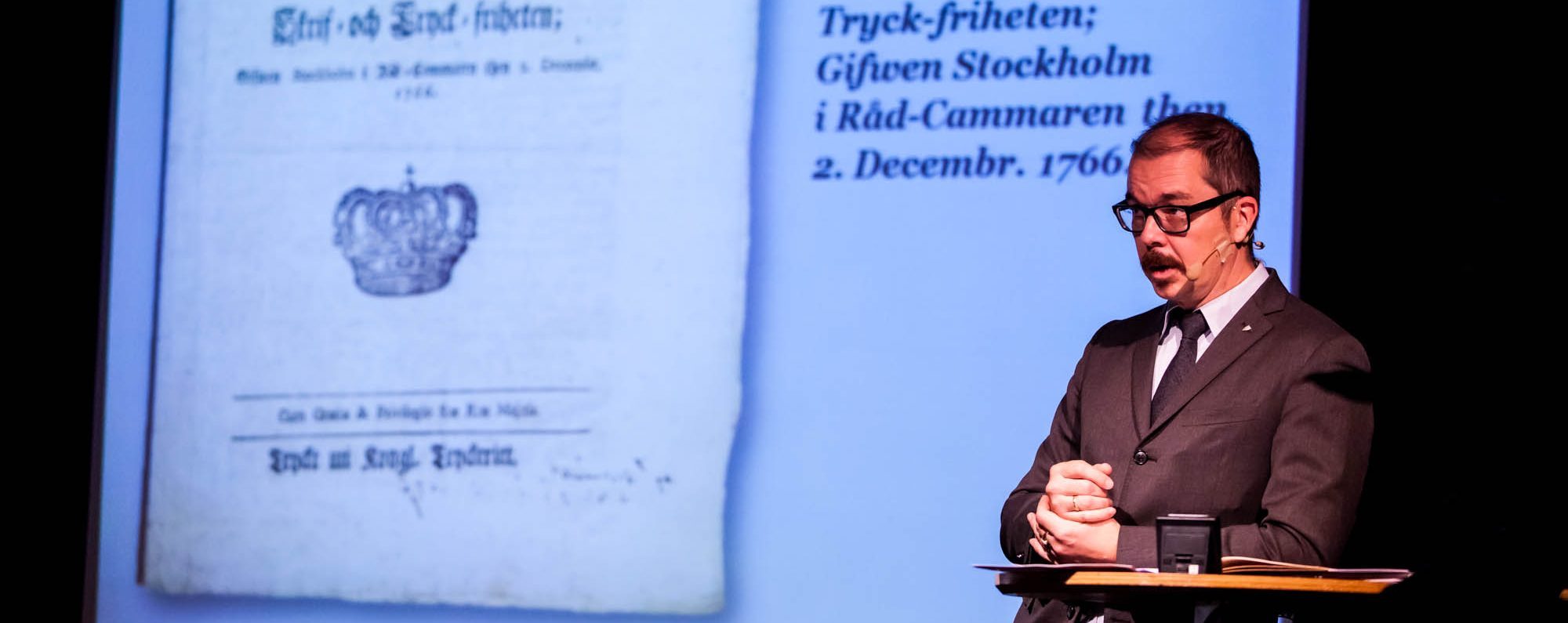
Jonas Nordin serves as Professor of Book and Library History and Assistant Head of Department with responsibility for research and doctoral education at Lund University's Department of Arts and Cultural Sciences, where he also manages the Division of Book History. His academic career spans multiple prestigious institutions, including Stockholm University where he holds an associate professorship in history, and the Royal Library/The National Library of Sweden where he worked from 2007-2018. Nordin earned his PhD in history from Stockholm University, establishing the foundation for his specialized expertise in early modern European history. His educational trajectory has uniquely positioned him to examine the complex interplay between political structures, cultural production, and knowledge dissemination during transformative historical periods. Nordin's research program centers on the critical intersection of book history, library history, and political history during the 17th and 18th centuries, with particular emphasis on Scandinavian contexts. His groundbreaking work on Sweden's Freedom of the Press Ordinance of 1766 has established him as a leading authority on early press freedom developments. Nordin frequently employs a methodological approach that combines political history with cultural history, revealing how visual representations, censorship mechanisms, and intellectual networks shaped national identity formation. His extensive scholarship on Erik Dahlbergh's Suecia antiqua et hodierna demonstrates his commitment to reevaluating historical works beyond simplistic characterizations of propaganda, instead revealing their complex historical significance. Analysis of Nordin's recent scholarly output reveals a consistent interdisciplinary focus spanning history, law, political science, and cultural studies. His publications demonstrate remarkable depth in examining the historical development of freedom of expression, particularly through multiple angles on Sweden's pioneering 1766 legislation. A distinctive feature of his work is the seamless integration of visual culture analysis with political history, as evidenced by his studies of Dahlbergh's topographical works and private library collections. Nordin's research also extends to scholarly networks of the Linnaean era and the complex relationship between Sweden and Finland before 1809, showcasing his ability to connect micro-historical studies with broader historical narratives. Principal investigator for Royal Library's Suecia antiqua et hodierna digitization project (2011-2016) Author of successful UNESCO World Heritage nomination for Swedish Freedom of the Press Ordinance (2023 designation) President of the Swedish Society for Eighteenth-Century Studies Co-editor of significant volumes including 'Media and Mediation in the Eighteenth Century' and 'The Baltic Battle of Books' As Manager of Research and Research Education, Nordin oversees doctoral programs and research activities within his department. His teaching portfolio includes ABMM50 (Library and Information Studies), BBHK02 (Book History), ETNK02 (Ethnology), ILHK03 (History of Ideas), and MUVK02 (Musicology). Beyond his institutional responsibilities, Nordin actively engages with public history through media appearances, including participation in SVT's 'History of Sweden' series and contributions to digital archives like the 'Visiteurs de Versailles' database. Nordin's scholarly approach bridges traditional historical methods with digital humanities techniques, exemplified by his creation of a seamless digital wallpaper of all Suecia antiqua et hodierna images. His current research directions suggest continued exploration of media and mediation in the eighteenth century, with potential expansion into innovative digital approaches to historical materials and deeper examination of connections between visual culture, political power, and intellectual networks.
Laura Poggio serves as a Research Associate at ISRIC - World Soil Information, which operates under Wageningen University & Research. Her work focuses on advancing digital soil mapping methodologies and global soil information systems through interdisciplinary research combining remote sensing, machine learning, and soil science. Her primary research interests include: Digital Soil Mapping at multiple scales (local to global) Soil Organic Carbon monitoring using satellite imagery Machine learning applications for soil property prediction Global soil information systems development (notably SoilGrids) Integration of remote sensing data with soil databases Analysis of her 15 most recent publications reveals strong emphasis on continental-scale soil monitoring systems, particularly using Sentinel-2 satellite data for soil organic carbon assessment across Europe. Her work consistently addresses methodological challenges in handling spatial uncertainty, integrating multi-source data, and developing scalable models applicable from local to global contexts. Key technological approaches include machine learning algorithms (particularly Random Forest), survival probability models for censored data, and multi-sensor remote sensing integration. Her research output demonstrates significant collaboration across European institutions through projects like EJP SOIL and contributions to the Global Soil Partnership. While no specific awards are documented in the available materials, her work shows substantial scholarly impact through high citation counts and dataset adoption. Dr. Poggio actively contributes to soil science through conference presentations and supervised research work, particularly focusing on operational implementation of digital soil mapping for environmental monitoring and policy support.