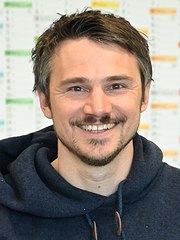
Tim Derdenger is an Associate Professor of Marketing and Strategy at Carnegie Mellon University’s Tepper School of Business. He holds a Ph.D. in Economics from the University of Southern California and a B.B.A. from George Washington University. His research focuses on technology markets and sports marketing, including platform dynamics, bundling strategies, celebrity endorsements, and dynamic demand modeling. He coordinates the Technology Strategy and Product Management Track for MBA students. As an Associate Editor for Management Science and editorial board member of Marketing Science , he contributes to academic publishing. His work spans empirical studies on golf equipment endorsements, EV subsidies, and AI regulation. He advises on topics like NIL in college football and generative AI bias. His affiliations include roles in executive education and industry panels on golf and tech strategy.
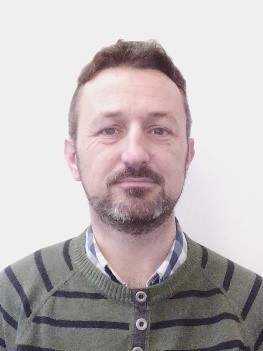
Jesper Rangvid is a Professor of Finance and Director of the Pension Research Centre (PeRCent) at Copenhagen Business School (CBS), where he also serves as Associate Dean of the Executive MBA program . His research focuses on financial markets, macroeconomics, financial crises, household finance, and mutual funds. He has authored influential works such as How Low Interest Rates Change the World (Oxford University Press, 2025) and From Main Street to Wall Street (Oxford University Press, 2021), exploring topics like interest rate trends, economic growth, and policy impacts. He chairs the Council for Return Expectations and holds board positions at Formuepleje, Advantage Investment Partners, and Finansiel Stabilitet, among others. His advisory roles include Levring & Levring and projects for Danish institutions like Forenet Kredit and BankInvest. Recent research highlights include analyzing Denmark’s pension system reforms, fiscal-monetary policy interactions, and the implications of low interest rates on global economies. Rangvid’s publications combine rigorous academic analysis with policy relevance, addressing topics like dividend predictability, economic growth’s impact on asset returns, and the behavior of professional investors. His work often bridges theoretical frameworks with empirical data, offering insights into macro-financial linkages and policy design.
Helena Webb is a Visiting Lecturer in the Department of Computer Science at the University of Oxford, where she contributes to research and teaching within the Human Centred Computing theme. Her work bridges social science and computer science, focusing on responsible innovation, AI ethics, and user interactions with digital technologies. PhD in Social Sciences, University of Nottingham Bachelor’s in Social and Political Sciences, University of Cambridge Former Senior Researcher, University of Oxford Department of Computer Science Researcher at Work, Interaction and Technology (WIT) Research Centre, King’s College London (2009–2014) Her research interests include human-computer interaction, algorithmic fairness, privacy in smart homes, and ethical design of social robots. She specializes in qualitative research methods and interdisciplinary collaboration to understand how technology shapes and is shaped by social practices. She has led and contributed to major projects such as Digital Wildfire , UnBias , ReEnTrust , and RoboTIPS , all focused on responsible governance and design of digital systems. Her recent publications span topics from algorithmic accountability to ethical black boxes in robotics, reflecting a strong trend toward integrating ethical considerations into the technical design of AI and interactive systems. These works emphasize participatory design, transparency, and societal impact. Scientific Awards and Recognition: Named one of the Brilliant Women working in AI Ethics She actively supervises and co-supervises students, contributes to ethics education, and is involved in outreach and diversity initiatives at Oxford. She has also served on the Departmental Equality and Diversity Committee and the Research Ethics Committee. Helena is a member of the advisory board for the ReEnTrust project and continues to develop the ethical hackathon model with colleagues. Her work exemplifies a deep commitment to interdisciplinary, socially responsible research in computing.
Emmanuel Saez is a Professor of Economics and Director of the Stone Center on Wealth and Income Inequality at the University of California, Berkeley , where he has been a leading figure in the Department of Economics within the College of Letters and Science. His research is foundational in the study of income and wealth inequality, optimal taxation, and empirical public policy. His academic journey began with a PhD from MIT in 1999. His work, particularly in collaboration with Thomas Piketty and Gabriel Zucman, has revolutionized how economists measure and understand economic inequality. He is best known for constructing long-term top income share series, which reveal the dramatic rise in U.S. inequality since the 1980s. His influential 2019 book, The Triumph of Injustice , co-authored with Gabriel Zucman, presents a compelling critique of the decline in U.S. progressive taxation and proposes bold policy reforms for the 21st century. Saez's recent research spans a wide range of topics including real-time inequality measurement, wealth tax enforcement, labor market dynamics for older workers, and macroeconomic models of unemployment. His publications, often appearing in top journals like the Quarterly Journal of Economics , American Economic Review , and Brookings Papers on Economic Activity , consistently focus on empirical analysis with direct policy relevance. His work shows a strong trend toward integrating macroeconomic models with distributional data and evaluating the real-world impact of fiscal and social policies. John Bates Clark Medal, American Economic Association, 2009 MacArthur 'Genius' Fellowship, 2010 Honorary degree from Harvard University, 2019 Saez is deeply involved in mentoring and advising, though specific student names are not listed in the provided texts. He has been instrumental in major data initiatives such as the World Inequality Database (WID.world) and Real-Time Inequality , which provide open-access, high-quality data on economic distribution. He has also secured significant research funding from foundations like the Bill & Melinda Gates Foundation, the Russell Sage Foundation, and the Alfred P. Sloan Foundation. He leads the Stone Center on Wealth and Income Inequality, fostering interdisciplinary research on economic disparity.
Alex Wilson is an Associate Professor at Queen's Business School, Queen's University Belfast. He holds leadership roles including Director of Internationalisation and Direction of Reputation and Rankings at Queen's Business School, and previously held directorships at Loughborough University's School of Business and Economics. Research Interests: Open Strategy, Digital Strategizing, Strategy as Practice, Future of Management Education. Expertise in qualitative methods, IT/social media's role in strategic work, and business school innovation. His research explores how technology mediates strategic processes, organizational legitimacy, and the evolving purpose of business schools. He has advised on strategic initiatives for institutions globally and contributed to defining digital strategizing frameworks. Key Achievements: Recipient of CABS Research Fellowships (2017, 2018) Dean’s Award for Early Career Teaching Excellence (2015) Led studies on Singapore Management University's strategic evolution and UK business school competitiveness. Advises PhD students focusing on topics like corporate sustainability tensions, services offshoring, and Christian values in business. Active in hosting international delegations and delivering invited talks on open strategy and digital transformation.
Arpit Gupta is an Associate Professor of Finance at the Leonard N. Stern School of Business, New York University, where he has been a faculty member since 2016. His research lies at the intersection of real estate, household finance, and urban economics, with a strong empirical focus on using large datasets to analyze financial behavior and market dynamics. Ph.D. in Finance and Economics, Columbia Business School B.S. in Mathematics and Economics, University of Chicago His research interests include household finance, real estate markets, mortgage default, bankruptcies, urban economics, and the financial impacts of health shocks and pandemics. He explores how financial constraints affect minority borrowers, how remote work reshapes urban real estate, and how public infrastructure influences property values. His recent publications span top journals such as the Journal of Finance , American Economic Review , Journal of Financial Economics , and PNAS . Themes across his work include the economic consequences of the COVID-19 pandemic, the valuation of private equity, and the spillover effects of foreclosures. His research often combines innovative data sources with rigorous econometric methods. Notable scientific awards include the Brattle Prize First Place (2019) and the 2016 Top Finance Graduate Award from Copenhagen Business School. He has advised on policy-relevant topics such as office-to-residential conversions, housing equity, and bail reform, and has received media attention for his insights on urban development and real estate trends. Professor Gupta collaborates with a wide network of researchers and maintains active engagement through a Substack newsletter and public data repositories. He advises students and contributes to academic discourse through conference presentations and policy discussions. He is affiliated with research labs and teams focused on urban economics and financial innovation, often collaborating with scholars at Columbia, NYU, and other institutions. His ongoing projects continue to explore the evolving dynamics of housing, finance, and urban resilience in the post-pandemic era.
Professor Ingrid Bouwer Utne is a faculty member at the Department of Marine Engineering, Norwegian University of Science and Technology (NTNU). Her primary research focuses on risk analyses of ships, marine systems, and autonomy, with emphasis on operational safety, maintenance management, and risk control in autonomous maritime technologies. Key Projects: Leader of the Risk Group at NTNU, involved in the SFI Autoship initiative and ERC AdG BREACH project addressing risk-based rationality in autonomous systems. Research Interests: Autonomous systems design, probabilistic risk assessment, safety engineering, and risk-informed decision-making for marine operations. Grants & Funding: Secured funding from the Research Council of Norway, MAROFF, and industry partners for projects like ORCAS (Online Risk Management for Autonomous Ships) and UNLOCK (Supervisory Risk Control). She supervises numerous PhD students and postdocs, focusing on topics such as autonomous vessel navigation, risk modeling for underwater robotics, and decarbonization of maritime systems. Her work bridges theoretical risk analysis with practical applications in marine autonomy and safety systems.
Dr. Abdallah Chehade is an Associate Professor in the Department of Industrial and Manufacturing Systems Engineering at the University of Michigan-Dearborn , where he leads the Informatics, Reliability, and Data Analytics (IRDA) lab . He holds a Ph.D. in Industrial Engineering from the University of Wisconsin-Madison (2017), with minors in Computer Sciences and Statistics, alongside an M.S. in Mechanical Engineering and a B.E. in Mechanical Engineering from the American University of Beirut. Research Interests span safe and robust deep learning solutions , explainable AI , data fusion for degradation modeling , and Bayesian statistical modeling . His work integrates AI/ML with prognostics and Internet of Things (IoT) to address challenges in reliability analytics and industrial data science . Publications highlight advancements in deep autoencoders , LSTM networks , and hybrid models for warranty forecasting , with applications in battery cells , sheet metal stamping , and rail transportation . His grants from Ford, Honda, and the U.S. Army focus on smart manufacturing , AI for sensor modeling , and digital twins . Lab Members include Ph.D. students working on topics like physics-based AI , computer vision , and deep learning for prognosis . He serves on the INFORMS Quality, Statistics, and Reliability (QSR) Council and maintains affiliations with IEEE , INFORMS , and IISE .
Nelly V. Litvak is a Full Professor in Algorithms for Complex Networks at Eindhoven University of Technology (Mathematics and Computer Science). She works on mathematical methods and algorithms for complex networks (social networks, WWW) using random graph models. She joined TU/e as a part-time professor in 2017 after being an Associate Professor at the University of Twente since 2012. Affiliations: 4TU Applied Mathematics Institute, Data Science Center Eindhoven, CTIT Industry Partners: ABN-AMRO Bank, Philips Lighting, Thales Editorial Role: Managing Editor of Internet Mathematics Her research focuses on extracting value from network data across three areas: (1) Information extraction and prediction, (2) Mathematical analysis of network characteristics, and (3) Efficient algorithms for incomplete network data. Key topics include PageRank, HITS algorithm, random graphs, homophilic networks, and network epidemiology. Recent work (2022-2025) spans network growth mechanisms, fairness in ranking algorithms, educational pedagogy, and pandemic forecasting dashboards. She contributes to SDGs through data-driven approaches to societal challenges. Teaching activities include course development at TU/e and earlier institutions, with innovative methods for computer engineering students' statistical understanding.
Douglas C. Ligor is a Professor of Policy Analysis at the RAND School of Public Policy and Director of the Management, Technology, and Capabilities Program at RAND's Homeland Security Research Division. He holds dual roles as a Senior Behavioral Scientist and academic researcher, specializing in homeland/national security law, immigration policy, space governance, and international legal frameworks. Education: J.D. from University of Connecticut School of Law (2000s) and B.S. in Economics from U.S. Military Academy at West Point (1990s). Prior to RAND, he served in federal legal roles including Deputy Chief Counsel at USCIS and Assistant District Counsel at DOJ/ICE. Research focuses on border security, asylum processing, outer space regulation, and federal-state-local coordination. His work frequently addresses intersections between statutory compliance and operational realities in domains like immigration enforcement and space traffic management. Notable contributions include policy analyses on Title 42 immigration restrictions, ISIS prisoner management in Syria, and frameworks for international space traffic governance. He regularly engages in public commentary through podcasts and op-eds on topics like U.S. border policy and emerging space law challenges.
Prof. Dr. Janick Edinger is a Professor of Distributed Operating Systems at the Department of Informatics, Faculty of Mathematics, Informatics and Natural Sciences, University of Hamburg, Germany. He leads a research group focused on distributed, context-aware, and adaptive computing systems, with a strong emphasis on edge computing, computation offloading, and assistive technologies. Education: PhD in Computer Science, University of Mannheim Studies at National Taiwan University Studies at University of Alberta, Canada Research stays at University of British Columbia, Hong Kong Polytechnic University, and Georgia State University, USA His research explores how edge computing and computation offloading can enable efficient, privacy-preserving processing of sensor and video data close to their sources, particularly in dynamic environments. He investigates the integration of autonomous and heterogeneous systems—such as drone fleets and mobile devices—into scalable middleware platforms for real-time monitoring and decision-making in logistics and industrial operations. His work also emphasizes societal impact, contributing to accessible routing, adaptive interfaces, and crowd-sourced mapping. The recent publications reflect a strong trend in edge computing, federated learning, privacy-preserving analytics, and assistive technologies. Topics include WebAssembly-based offloading, emotion prediction via eye tracking, real-time traffic detection, and predictive maintenance in Industry 4.0, showcasing a blend of foundational systems research and applied human-centered computing. Scientific Awards: PerCom 2021 Mark Weiser Best Paper Award Best Paper Award at IEEE PerCom 2021 for 'Voltaire: Precise Energy-Aware Code Offloading Decisions with Machine Learning' Prof. Edinger actively advises students and leads research projects involving grants and collaborations. His team includes PhD candidates and researchers working on middleware, edge systems, and context-aware applications. He has served on conference program committees, such as shadow PC member for EuroSys 2021, and publishes in top venues including IPDPS, PerCom, CHIIR, and COMPSAC. Labs and Teams: He leads the Distributed Operating Systems research group at the University of Hamburg, where he mentors students and collaborates on projects involving edge computing, IoT, and adaptive systems.
Professor Eric Morgan at Queen's University Belfast leads parasitology research in the School of Biological Sciences , focusing on climate-driven epidemiology of parasitic infections in animals. His work integrates predictive modeling, parasite transmission dynamics at the wild-domestic interface, and sustainable livestock health solutions. Veterinary parasitology and climate change impact Anthelmintic resistance mitigation strategies AI-enhanced diagnostic systems for animal health Current research students include Anthony George, who investigates Combining alternative approaches for helminth control in grazing livestock . Public engagement initiatives like the BUG Consortium and Poo Patrol translate findings into practical parasite management. His recent publications in 2025 address topics like flood reactors, zoonotic toxocariasis, and precision agriculture tools for parasite risk assessment.
Samuel Jean Bassetto is an Associate Professor in the Department of Mathematics and Industrial Engineering at Polytechnique Montréal. He serves as Director of the Continuous Improvement Laboratory (LABAC) and holds membership in multiple prestigious research groups including the Research Group on Globalisation and Management of Technology (GMT), Poly-Industries 4.0 Laboratory, Interuniversity Research Centre on Enterprise Networks, Logistics and Transportation (CIRRELT), and Institute for Data Valorization (IVADO). Dr. Bassetto's research spans multiple disciplines, focusing on continuous improvement through the integration of engineering, artificial intelligence, cognitive science, psychology, and design. His primary sphere of excellence is in New Frontiers in Information and Communication Technologies, with secondary expertise in Modeling and Artificial Intelligence and Human Health. He develops tools that place humans at the center of technology to enhance organizational performance while respecting human rhythms and cognitive limitations. His recent publication portfolio reveals a strong interdisciplinary approach, with research bridging industrial engineering, cognitive neuroscience, and AI ethics. His work addresses practical challenges in lean manufacturing assessment, racial bias in medical AI systems, cognitive data collection in natural environments, and condition monitoring for industrial machinery. The research consistently demonstrates a commitment to developing practical solutions that integrate human factors with technological innovation. NSERC Synergy Prize for Innovation recipient Principal investigator on multiple research grants from NSERC, FRQ, and MITACS Collaborations with over a dozen institutions across multiple countries Supervision of over 150 highly qualified personnel throughout his career Dr. Bassetto teaches specialized courses including CAP7011 (Creativity in Research), IND8444 (Continuous Improvement), IND8203 (Industrial Launch), and previously taught IND8178 (Production). His teaching philosophy emphasizes practical application, with courses featuring hands-on exercises, real-world scenarios, and gamification techniques to enhance learning. His supervision portfolio includes numerous Ph.D. and Master's students working on topics ranging from human-technology collaboration to reinforcement learning for production management. Through LABAC, Dr. Bassetto leads research initiatives focused on developing human-centered tools for continuous improvement in organizational settings. The laboratory conducts projects related to industrial IoT applications, cognitive aspects of process improvement, and the development of practical frameworks for organizations to enhance performance while maintaining respect for human rhythms and cognitive capabilities.
James Alexandre Goulet is a Professor in the Department of Civil, Geological and Mining Engineering at Polytechnique Montréal. His research focuses on Machine Learning Methods for Civil Engineering applications such as structural health monitoring (SHM) and infrastructure maintenance planning. He leads the Canari project for online change point detection in SHM and contributes to open-source libraries like cuTAGI for Bayesian neural networks. Affiliations : Chair in Machine Learning for Infrastructure Monitoring at Polytechnique Montréal, IVADO Institute member, and GRS (Structural Engineering Research Group) member Expertise : Building engineering, structural safety, applied probability, learning theories Recent research trends include Bayesian state-space models, LSTM neural network integration for infrastructure forecasting, and uncertainty quantification in SHM systems. His work emphasizes probabilistic methods and analytical inference over black-box approaches. Teaching includes courses on structural reliability and probabilistic data analysis for civil engineers. He supervises graduate students in topics ranging from damage detection algorithms to stochastic deterioration modeling of infrastructures.
Steven D. Levitt is a Professor at the University of Chicago 's Booth School of Business and director of the Becker Center on Chicago Price Theory . His work spans economics, criminology, education, and behavioral science, with a focus on empirical analysis of real-world issues. Education: BA from Harvard (1989), PhD from MIT (1994) Key Research Areas: Crime economics, educational incentives, behavioral economics, and market dynamics Scientific Awards: 2004 John Bates Clark Medal, Time Magazine's 100 Most Influential People (2006) Levitt's article portfolio includes groundbreaking studies on topics like early childhood education (CogX program), abortion's impact on crime , cheating detection algorithms , and behavioral economics in education . His work often challenges conventional wisdom through unconventional data analysis. Prior research collaborations with Roland Fryer , John List , and Chad Syverson have produced influential papers on racial disparities , real estate markets , and juvenile crime . His NBER working papers demonstrate consistent methodological rigor and innovation.