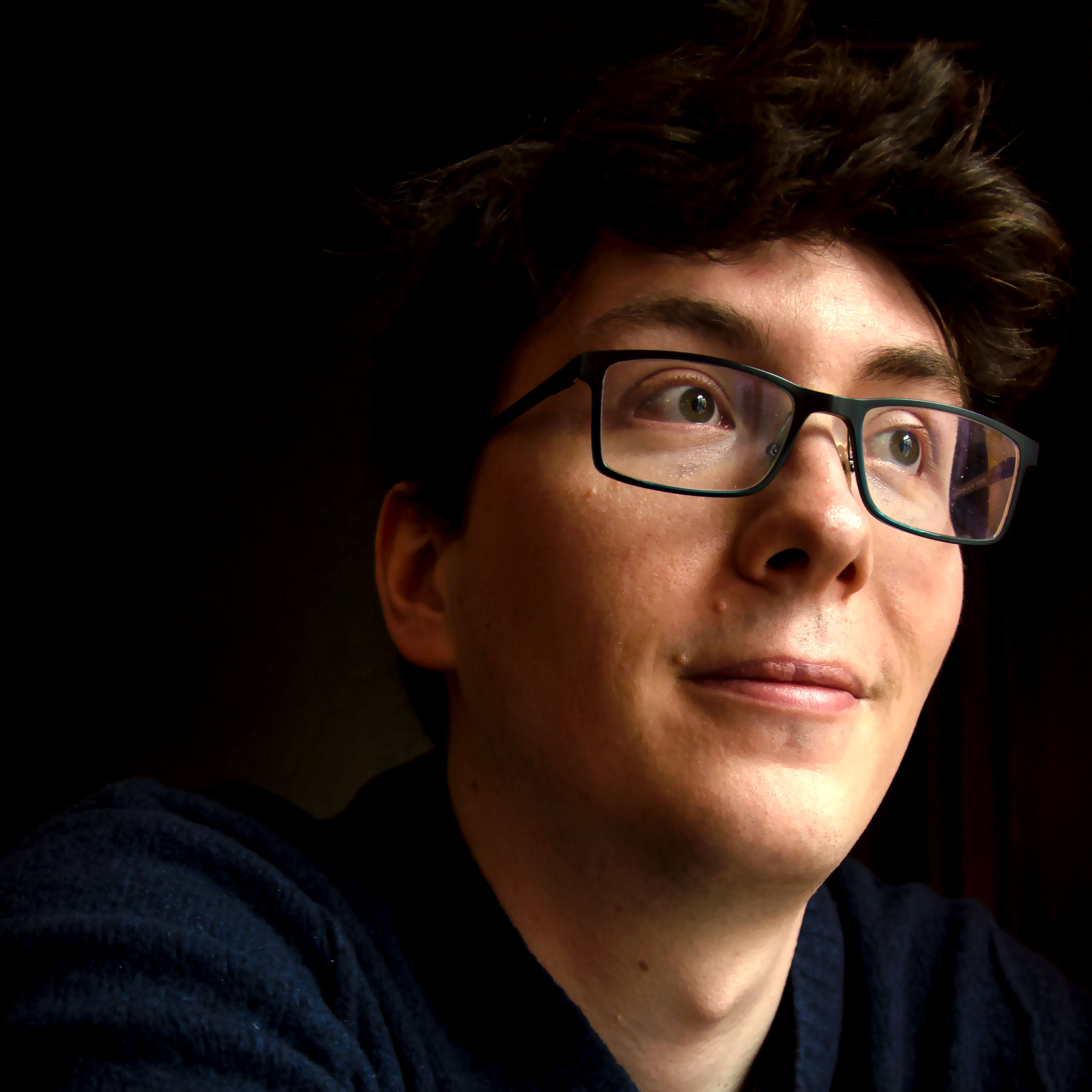
Christian Rupprecht is an Associate Professor at the Department of Computer Science, University of Oxford, specializing in computer vision and machine learning. His research focuses on unsupervised learning, 3D reconstruction, and visual understanding. His work includes contributions to conferences such as GCPR'25, ICCV'25, and CVPR'25, with papers spanning topics like correspondence estimation, animal pose modeling, and synthetic data generation. He leads projects within the prestigious Visual Geometry Group (VGG). Notably, his paper VGGT received the Best Paper Award at CVPR'25. His research integrates deep learning and geometric modeling, emphasizing robustness and generalization in visual systems. Best Paper Award at CVPR'25
Melvyn R.W. Hamstra is a Full Professor at IÉSEG School of Management in France since 2023. His academic career includes roles as Associate Professor (2021–2023) and Assistant Professor (2020–2021) at IÉSEG, as well as Assistant Professor positions at the University of Maastricht (2015–2020) and the University of Amsterdam (2013–2015). He holds a Ph.D. in Behavioural and Social Sciences from the University of Groningen (2013), preceded by a Master’s (2009) and Bachelor’s (2007) in Psychology from the same institution. Research Interests : His work centers on organizational behavior, leadership, and employee motivation, with a strong emphasis on regulatory focus theory, employee voice dynamics, and knowledge management. Key themes include how leadership styles (e.g., promotion vs. prevention focus) influence team innovation, conflict resolution, and workplace morale. Publication Trends : Recent publications (2025–2024) explore topics such as gender bias in leadership evaluation, financial stress and counterproductive behavior, ethical conflict in teams, and the dual-edged role of humor in workplace negotiations. His longitudinal studies on religious engagement and life satisfaction, as well as theoretical models on knowledge withholding, highlight interdisciplinary breadth. Teaching : He contributes to bachelor and master’s programs at IÉSEG, focusing on leadership development, positive leadership, and organizational learning.
Deian Stefan is an Associate Professor at the University of California San Diego (UCSD) in the Department of Computer Science and Engineering . His research spans security , programming languages , and systems , with a focus on building principled and practical secure systems. He has served as a co-founder and Chief Scientist at Intrinsic (acquired by VMWare) and contributed to standards bodies like the W3C WebAppSec and Node.js Security Working Groups . His research interests include: Secure Systems : Web frameworks, browser designs, sandboxing, runtime systems Language-Based Security : Constant-time programming, memory safety, information flow control Verification : Security verification, static/symbolic analysis tools WebAssembly and JavaScript JITs security Deian Stefan has received multiple scientific awards , including several Distinguished Paper Awards at venues like POPL, ICFP, and USENIX Security, as well as the IEEE Cybersecurity Award for Practice (2022) and CSAW 2020 First Place for Applied Research. He has taught courses on Computer Security (CSE 127, CSE 227) and advanced topics in Building Secure Systems (CSE 291) using Rust, WebAssembly, and blockchain security. His work has been supported by collaborations with industry and academia, including projects like RLBox and COWL .
Alexandre RUBESAM is an Associate Professor at IÉSEG School of Management (France), specializing in Finance with a focus on asset pricing, financial econometrics, and quantitative trading. He holds a Ph.D. in Finance from Cass Business School (UK), an MSc in Statistics from the State University of Campinas (Brazil), and a Bachelor in Statistics from the same university. Education: Ph.D., Finance, Cass Business School, UK (2008) MSc., Statistics, State University of Campinas, Brazil (2004) Bachelor, Statistics, State University of Campinas, Brazil (2001) His research interests span behavioral finance, risk management, machine learning applications in finance, and portfolio optimization. Notably, he explores topics like market herding during crises, volatility forecasting, and the low-beta anomaly through behavioral lenses. Prof. Rubesam has authored influential papers on information transmission in financial markets, risk parity strategies, and the efficacy of linear models in volatility prediction. His work bridges theoretical finance with practical applications, such as developing machine learning-based portfolio construction methods for emerging markets. Awards: 2007 Dimitris N. Chorafas Foundation Prize 2006 Best Paper Award, Cass Business School His professional roles include Chief Risk Officer at Itaú-Unibanco (2013–2017) and Quantitative Researcher/Trader at Principia Capital Management (2009–2011). He is a member of LEM (Laboratory of Economics and Management) and teaches courses on financial programming, risk management, and portfolio analysis.
Cezary Kaliszyk is a Professor in Theoretical Computer Science at the University of Melbourne, previously affiliated with the University of Innsbruck. He is actively involved in research and leadership in formal methods, automated reasoning, and machine learning for theorem proving. Research Interests: Automated Reasoning and Interactive Theorem Proving Formalized Mathematics and Proof Automation Machine Learning for Logic and Theorem Proving Integration of AI with Proof Assistants (Coq, Isabelle) Dependent Type Theory and Higher-Order Logic His recent publications (2023–2025) span topics in dependently-typed logic, learning for proof guidance, formalization of surreal numbers, and blockchain-based formal methods. The works consistently bridge formal logic with machine learning, emphasizing automation, explainability, and cross-system integration. Scientific Leadership and Projects: Principal Investigator, ERC project FormalWeb3 Lead Developer, CoqHammer , Tactician , ProofWeb WG5 Leader, COST Action EuroProofNet (until 2024) Contributor to HOL(y)Hammer , Isabelle Enigma He supervises multiple PhD students and has mentored several graduates in formal methods and AI. He teaches courses in theoretical computer science, logic, and machine learning. There are no listed awards in the provided data, but his extensive publication record and project leadership indicate significant recognition in the field. Labs and Research Groups: He leads a research group focused on formal methods and learning-based reasoning, collaborating internationally on projects involving proof automation, formal libraries, and semantic technologies.
Caroline Andre is an Associate Professor of Law at NEOMA Business School, specializing in private law with a focus on labor law, marketing law, and cooperative law. She teaches undergraduate and graduate students in both initial and continuing education programs, and has practiced law professionally. Her research bridges legal and management disciplines, addressing topics like social and solidarity economy (SSE), circular economy intersections, CSR policies, and entrepreneurial values. Her academic contributions span legal journals and management science publications, including monographs like Creating the Circular Economy (2024). She actively participates in national/international communities like EURAM and ACfas. Recent work examines SSE's role in ecological transition, pandemic crisis adaptation, and labor law compliance in SMEs. Key research outputs include analyses of social audits in SME acquisitions (2022), employer pooling models (2019-2020), and legal frameworks for SSE organizations. Her work frequently explores regulatory pressures and ethical governance in business environments. Caroline has no listed scientific awards but has contributed to numerous regionally funded research projects. Her teaching extends to professionals via continuing education, emphasizing practical legal applications in business contexts.
Michael Haenlein is a Professor of Marketing at ESCP Business School in Paris. He holds a Ph.D. from WHU, Otto Beisheim School of Management, and a Habilitation from Pantheon-Sorbonne University. His research focuses on the impact of emerging technologies such as AI, social media, and video gaming on businesses and consumers. He has published over 50 articles and received the 2021 Jan-Benedict Steenkamp Award for long-term academic impact. Haenlein serves on the editorial boards of journals like the Journal of Marketing and International Journal of Research in Marketing . He is actively involved in professional organizations, including the American Marketing Association (AMA) Academic Council and the European Marketing Academy (EMAC), where he chairs the Publications Committee. His work bridges academic research with industry applications, emphasizing digital transformation and strategic marketing. Recent publications explore topics like metaverse retailing, AI-driven consumer insights, and influencer marketing strategies. He advises companies across sectors such as telecommunications and finance on leveraging technology for competitive advantage.
Raphaël Beuzart-Plessis is a CNRS Research Fellow affiliated with Aix-Marseille University and the Institute of Mathematics of Marseille (I2M) at Luminy Campus. He specializes in advanced areas of mathematics, including harmonic analysis, automorphic forms, representation theory, and number theory, with a focus on unitary groups and conjectures like Gan-Gross-Prasad. His work bridges algebraic geometry, differential geometry, and operator theory. Arithmetic, Geometry, Logic and Representations Group (AGLR) 2022-2027 ERC RELANTRA grant recipient Research interests span automorphic representations, L-functions, periods of automorphic forms, and harmonic analysis on real spherical spaces. He works extensively on the local and global Gan-Gross-Prasad conjectures, endoscopy, and supercuspidal representations. His recent publications analyze Plancher1el formulas, spherical characters, and congruences of automorphic forms. His 15 most recent publications (2014-2022) address topics such as the Gan-Gross-Prasad conjecture, Jacquet-Rallis's fundamental lemma, and the Asai Rankin-Selberg integrals. These works reflect his expertise in automorphic forms, representation theory, and number theory, often involving collaborations with leading mathematicians. 2016-2017 Peccot Prize for young mathematicians under 30 2022-2027 ERC RELANTRA grant for research in automorphic forms and representation theory Beuzart-Plessis has no listed students or laboratory teams but participates in the AGLR-RGR (Reduction Group Representations) team and has been an invited speaker at the 2022 International Congress of Mathematicians. His career includes guest lectures at Collège de France, including four sessions on Period factorizations and Plancherel formulas in 2017.
Mélanie Ouvry is an Associate Professor and Dean of Faculty at MBS Education since 2017. With over 15 years of experience in higher education, she has held roles as program director for specialized master's programs, department head for marketing and interim management, and served as a communication strategy consultant at Publicis Group. Her research focuses on consumer behavior, retail dynamics, and cross-cultural marketing experiences. Her academic expertise includes strategic marketing, buyer behavior analysis, and advertising strategy. Key research themes explore multi-store shopping behaviors, consumer experience valuation, loyalty mechanisms, and the cognitive dimensions of retail environments. She has conducted extensive studies in retail distribution systems, communication strategies, and tourism-related consumer behavior in historical commercial districts like the Medina of Sousse. Her publications span topics from grocery shopping decision-making to television audience engagement, reflecting her interdisciplinary approach bridging marketing, cognitive science, and cultural studies. Teaching responsibilities include advanced marketing strategy courses and consumer behavior analysis modules.
Yoann Demoli is a Lecturer in Sociology at the University of Versailles Saint-Quentin-en-Yvelines (UVSQ), part of the Université Paris-Saclay. He is affiliated with the PRINTEMPS Laboratory (CNRS-UVSQ) and the Quantitative Sociology Laboratory at CREST. His academic career spans over a decade with teaching and research positions at various prestigious French institutions including Sciences Po Paris and Paris 8 University. His educational background includes: Doctoral thesis in sociology under Philippe Coulangeon at Sciences Po Paris (2010-2015) Master 2 in Sociology and Statistics from School for Advanced Studies in Social Sciences and ENS Paris (2009-2010) Master 1 in Sociology from University of Paris IV (2007-2008) Bachelor's degrees in Sociology and Economics from Universities of Paris IV and I (2006-2007) Preparatory classes at Lycée Carnot and Lycée Henri IV (2003-2006) Demoli's research focuses on the sociology of consumption, social stratification, environmental sociology, and particularly the sociology of the automobile. His work employs quantitative methods to analyze how automobile use and ownership patterns reflect and reinforce social inequalities. He examines how factors like class, gender, and geography influence mobility practices, with particular attention to working-class households in peri-urban and rural areas. His research reveals complex relationships between environmental attitudes and actual car use behaviors, challenging simplistic narratives about ecological conversion. His publications demonstrate a consistent focus on the intersection of social structure and mobility practices, with particular attention to historical trends and class analysis. The collection shows a progression from analyzing specific aspects of automobile culture to broader questions of ecological conversion and social stratification in transportation systems. His scientific work has been recognized with the Young Author Prize at the 22nd GERPISA International Conference in 2014. He regularly contributes to academic discourse through peer review for journals such as Acts of Research in Social Sciences and Transport Security Review. As an advisor, Demoli has supervised numerous undergraduate research projects and master's theses on topics ranging from police uniforms to online dating sociology. His current research projects include CONDUIRE (financed by ADEME), a study on magistrates' mobility funded by the Ministry of Justice, and research on the social drivers of ecological conversion coordinated by Philippe Coulangeon. Within the academic community, Demoli co-organizes the workshop 'Quantitative Sociology and Sociology of Quantification' and co-leads the Mobility theme of the Federation for Research in Computer, Human and Social Sciences at UVSQ. He also serves as Director of the Department of Sociology and Geography at UVSQ and is an active participant in research dissemination through media appearances.
Clément Mallet is a Senior Researcher and Director of the LASTIG laboratory at Université Gustave Eiffel, IGN, and École Nationale des Sciences Géographiques (ENSG) in Champs-sur-Marne, France. He leads research in geospatial computer vision, focusing on the intersection of remote sensing, computer vision, and machine learning. His responsibilities include overseeing 75 laboratory members and directing the STRUDEL research team focused on spatio-temporal information modeling. Education: Habilitation (HDR) in Geographical Information Science, Université Paris-Est (2016) PhD in Image and Signal Processing, Télécom ParisTech (2010) Engineering Degree in Geographical Information Science, ENSG (2005) Master's in Remote Sensing, Université Paris 6 (2005) Research Interests: Dr. Mallet specializes in multi-modal land-cover mapping, change detection, geohistorical image analysis, and airborne lidar processing. His work integrates deep learning with geospatial data analysis to solve complex problems in environmental monitoring, urban studies, and historical geography. Current research explores foundation models for earth observation and semantic change detection using hybrid data generation techniques. Publication Trends: Mallet's recent articles (2021-2025) demonstrate strong focus on deep learning applications for geospatial challenges: 40% address land-cover mapping innovations, 30% develop novel change detection methodologies, 20% advance lidar data processing, and 10% explore historical map analysis. His work consistently bridges computer vision theory with operational remote sensing applications. Awards and Recognition: Schwidefsky Medal from ISPRS (2016) 5x Outstanding Reviewer awards (CVPR/ECCV/ICCV 2017-2024) Best Paper Awards at GEOBIA 2016 and ISPRS 2014 Young Researcher Award from GDR ISIS (2010) EuroSDR Best PhD Thesis supervision (2020) Research Leadership: Directs multiple national and international projects including MAESTRIA (ANR-funded multi-modal EO analysis) and HIATUS (historical image analysis). Supervised 14+ PhD students in geospatial AI topics. Secured funding from ANR, CNES, EU H2020 (VOLTA, LandSense), and industrial partners. Leads the STRUDEL team developing cutting-edge methods for territory dynamics analysis. Professional Service: Editor-in-Chief of ISPRS Journal of Photogrammetry and Remote Sensing (2021-present). Organized major conferences including ISPRS Congress (2020-2022 Program Chair) and JURSE events. Active in ISPRS working groups since 2008, currently leading initiatives in large-scale machine learning applications for geospatial data.
Yvain Bruned is a Professor of Mathematics at Université de Lorraine, Nancy, France, where he leads research in singular stochastic partial differential equations and related fields. He serves as Principal Investigator for the ERC Starting Grant LoRDeT (2023-2028), which focuses on advancing the theory of decorated trees and Hopf algebraic structures for solving singular SPDEs and dispersive PDEs at low regularity. Previously, he was a Lecturer at the University of Edinburgh (2019-2022) and completed postdoctoral work at Imperial College London and University of Warwick under Martin Hairer. His educational background includes: PhD in Mathematics (2012-2015), UPMC (Paris 6), on "Singular KPZ type equations" under Lorenzo Zambotti Master 2 in Probability and Statistics, ENS Cachan / Rennes 1, with honors Master 1 in Mathematics, ENS Cachan, with honors Bachelor in Mathematics and Computer Science, University of Rennes 1, with honors Student at ENS Cachan Brittany extension (2009-2013) Classes Préparatoires in Mathematics and Physics (2007-2009) Bruned's research centers on singular stochastic partial differential equations, with particular focus on Regularity Structures, renormalization theory, and their connections to Hopf algebras. His work bridges theoretical mathematics with applications in quantum field theory, wave turbulence, and numerical analysis. He has developed novel approaches using decorated trees to handle renormalization procedures for singular SPDEs and has extended these methods to dispersive PDEs with random initial data. His research program aims to establish existence and uniqueness results for quasilinear and dispersive SPDEs while developing algebraic tools through deformations of Hopf algebras. His extensive publication record demonstrates consistent contributions to the field of singular SPDEs, with a clear trajectory from foundational work on Regularity Structures to more recent applications in dispersive PDEs and numerical methods. The publications reveal a strong collaborative network with leading researchers in stochastic analysis, mathematical physics, and algebra. His work shows increasing sophistication in handling renormalization procedures through algebraic structures, with recent papers exploring connections between different mathematical frameworks. His major scientific recognition includes: ERC Starting Grant LoRDeT (2023-2028) Bruned actively supervises a large group of researchers, currently advising 4 PhD students and 2 postdoctoral researchers at Université de Lorraine, with several former PhD students having completed their degrees at the University of Edinburgh. His ERC grant has enabled him to organize multiple international workshops in Nancy, fostering collaboration between researchers in singular SPDEs, algebraic structures, and numerical analysis. The grant also supports the development of software platforms for decorated trees and their Hopf algebraic structures. As Principal Investigator of the ERC LoRDeT project, Bruned leads a vibrant research team based at the Elie Cartan Institute of Lorraine, which includes postdocs, PhD students, and visiting researchers. The team regularly organizes specialized workshops on topics including operads, symmetries for quantum field theory, and normal forms for singular dynamics, creating a dynamic research environment that bridges multiple mathematical disciplines.
Chao Liu is a Research Scientist at CNRS (French National Center for Scientific Research) since 2008, affiliated with the DEXTER team and the Department of Robotics, LIRMM at University of Montpellier, France. He earned his Ph.D. in Electrical & Electronic Engineering from Nanyang Technological University, Singapore (2006). Current research focuses on surgical robotics , haptics , teleoperation , and nonlinear control theory with applications in computer vision. His work addresses challenges in robotic-assisted telesurgery, including: Stable and transparent human-robot interaction through wave variable compensators and passivity filters Physiological motion compensation using spatio-temporal LSTM and dual Kalman filters EMG-based motion recognition for surgical skill assessment 3D soft-tissue reconstruction with stereo-endoscopes and deep learning Dr. Liu leads European and French projects like: TS2RT (CNRS-funded): Safer teleoperation with motion compensation ROBACUS (ANR-funded): Needle positioning with MPC control HaTUMoCo (CNRS-funded): Haptic teleoperation with uncertainty handling ARAKNES (EU-funded): Microrobotic systems for endoluminal surgery Scientific honors include Senior Member of IEEE and Member of Sigma Xi . He supervises Ph.D. and Master's students working on topics such as concentric tube robot optimization, haptic teleoperation, and EMG-based force estimation. Dr. Liu serves on IEEE Technical Committees for Telerobotics and Haptics , and as Technical Editor of IEEE/ASME Transactions on Mechatronics.
Jean Ponce is a Professor at Ecole Normale Supérieure - PSL and a Global Distinguished Professor at New York University's Courant Institute and Center for Data Science. He serves as Scientific Director of PRAIRIE Interdisciplinary AI Research Institute and co-founded Enhance Lab, commercializing super-resolution imaging software. His research focuses on computer vision, machine learning, robotics, and image processing. Ponce has held roles at Inria, MIT, Stanford, and the University of Illinois, and is an IEEE and ELLIS Fellow. He has served as chair of major conferences like CVPR, ECCV, and ICCV, and authored the textbook 'Computer Vision: A Modern Approach.' Research interests include statistical models for exoplanet detection, neural networks for 3D reconstruction, and self-supervised learning. His work combines theoretical foundations with practical applications in astrophysics, robotics, and imaging. Notable awards include the IEEE CVPR Longuet-Higgins Prize (2016, 2020) and ICML Test-of-Time Award (2019). Key projects include Enhance Lab's high dynamic range imaging and PRAIRIE's interdisciplinary AI initiatives. Ponce's articles explore cutting-edge topics like neural object priors, geodesic motion planning, and satellite image analysis. His contributions bridge academic research and industrial applications, emphasizing both fundamental theory and real-world impact.
Patrick Präg serves as an Associate Professor of Sociology at CREST/ENSAE (part of the Institut Polytechnique de Paris) and holds an associate faculty position at Oxford University’s Nuffield College. His research integrates quantitative methods and survey data to address social stratification, demography, health, and work-family dynamics. He earned his PhD in Sociology from the ICS/University of Groningen in 2015. His work has been recognized with the Aage B. Sørensen Award (2014). Education: PhD in Sociology, ICS/University of Groningen (2015) Master’s Thesis: Nonresponse to Items on Self-Reported Delinquency, University of Hamburg Research Interests: Patrick’s work explores the interplay between social structure and individual wellbeing. Key topics include: Intergenerational mobility and health outcomes Work-life balance and gender inequalities Pandemic-driven societal changes Algorithmic bias in social science Subjective socioeconomic status measurement Grants & Collaborations: He contributed to the EU-funded ‘Families and Societies’ project, producing deliverables on assisted reproduction and demographic consequences. His research often involves cross-national datasets and methodological innovation, with replication materials shared via Open Science Framework (OSF). Labs & Teams: He is affiliated with CREST (Center for Research in Economics and Statistics) and collaborates with institutions like the Max Planck Institute for Demographic Research (MPIDR) and the Nuffield College. His work frequently intersects with interdisciplinary teams addressing health, education, and labor market policies.