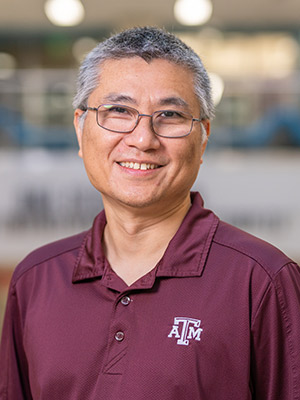
Xiaoning Qian is a Professor in the Department of Electrical and Computer Engineering at Texas A&M University, holding the Segers Family Dean's Excellence Professorship II. He is also affiliated with the Department of Computer Science and Engineering and has a joint appointment at Brookhaven National Laboratory's Computational Science Initiative. His research focuses on machine learning, Bayesian methods, bioinformatics, and materials science. Education: B.S.E. and M.S.E., Shanghai Jiaotong University M.Ph. and Ph.D., Yale University Research Interests: Bayesian learning and experimental design Signal and image processing Applications in bioinformatics, genomics, and materials science Awards: NSF CAREER Award (2016) TEES Faculty Fellow (2017) J. T. Oden Faculty Fellow (2019) College of Engineering Excellence Faculty Award (2020) Labs & Collaborations: Biomedical Imaging, Sensing, and Genomic Signal Processing Group (Texas A&M) Brookhaven National Laboratory (Applied Math group)
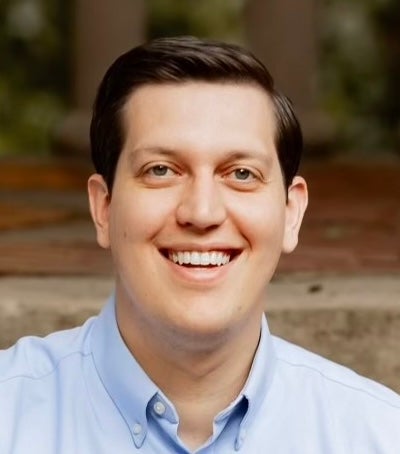
Lorenzo Luzi is a Teaching Professor in the Department of Statistics at Rice University, affiliated with the D2K Lab. He holds a B.S. in Electrical Engineering from Washington State University and an M.S. and Ph.D. in Electrical and Computer Engineering from Rice University, where he was advised by Dr. Richard Baraniuk. His research focuses on artificial intelligence, generative models, and machine learning, with significant contributions to bias mitigation, overparameterization, and GAN evaluation techniques. He has collaborated with Pacific Northwest National Laboratory (PNNL) on projects related to computational methods and imaging. Lorenzo emphasizes teaching and pedagogy, developing courses in machine learning, data science, and electrical engineering. His work bridges theoretical advancements in AI with practical educational strategies. Beyond academia, he enjoys family time and outdoor activities.
Felice Dell'Orletta is a researcher at the Institute of Computational Linguistics "Antonio Zampolli" (ILC), part of the Italian National Research Council (CNR). With numerous publications spanning from 2023 to 2025, Dell'Orletta is actively contributing to the field of computational linguistics and natural language processing. The researcher's work demonstrates strong collaboration with colleagues including Alessio Miaschi, Giulia Venturi, and Dominique Brunato across multiple projects. Dell'Orletta's research interests focus on the intersection of linguistics and artificial intelligence, particularly in the development and evaluation of Large Language Models. Key areas include linguistic profiling methodologies, text style transfer applications, and the analysis of text coherence across languages. The researcher has made significant contributions to Italian language processing, developing specialized techniques for adapting language models to the Italian linguistic context. The publication record shows a clear trend toward practical applications of NLP research, particularly in healthcare communication (reducing physician-patient expertise gaps), software engineering (feature extraction from mobile app reviews), and mental health assessment (linguistic markers of psychological conditions). Dell'Orletta's work bridges theoretical linguistic concepts with real-world AI applications, demonstrating both academic rigor and practical relevance. Dell'Orletta has been involved in multiple collaborative research projects, as evidenced by the extensive co-authorship network across publications. The research spans both technical NLP advancements and interdisciplinary applications in healthcare, education, and psychology. Recent work on linguistic profiling of LLMs represents a significant contribution to understanding the linguistic capabilities and limitations of current language models.
Dr. Orhan Elmaz is a Senior Lecturer in Digital Humanities at the School of Modern Languages, University of St Andrews. His research focuses on Arabic linguistics, Quranic exegesis, and Digital Humanities methodologies, particularly corpus and computational linguistics. Notable contributions include analyzing Quranic hapax legomena, developing a Media Arabic dictionary based on a 200-million-token corpus, and examining adaptations of One Thousand and One Nights . Current projects explore Hadith Arabic and transcultural Muslim women’s rights movements in the 19 th -20 th centuries. His teaching spans classical/modern Arab culture, Arabic literature, and language modules such as Media Arabic and Classical Arabic Poetry. Research collaboratives include editing special journal issues on Digital Modern Languages and translating Turkmen poetry. Elmaz supervises three PhD students and has served as an external examiner for doctoral candidates. Publications reflect interdisciplinary strengths: combining linguistic analysis with cultural studies (e.g., Hadith corpus linguistics) and bridging historical Islamic texts with modern computational methods. His work frequently intersects with transcultural themes, such as women’s rights movements and global literary traditions.
Professor Duncan Sheehan is a Professor of Business Law at the University of Leeds, leading the Centre for Business Law and Practice. He holds a doctorate from the University of Oxford and previously served at the University of East Anglia as Professor of Commercial Law. His expertise spans unjust enrichment, trusts, and personal property law, with a recent focus on crypto-assets and secured transactions law reform. He is President of the Society of Legal Scholars (2024-2025), having held roles such as Honorary Membership Secretary and Research Committee member. Academic memberships include the Chancery Bar Association and involvement with the Law Commission on projects like Electronic Trade Documents. His teaching covers Trusts, International Credit & Security Law, and Principles of International Finance at postgraduate level. Research interests include comparative private law theory, particularly in mixed jurisdictions (Scotland, South Africa), and philosophical underpinnings of unjust enrichment. Notable contributions include organizing conferences on secured transactions law reform (2017) and digital assets (2024), alongside a forthcoming book on the scope and structure of unjust enrichment (2024). His work bridges legal theory and practice, addressing modern challenges like blockchain and cryptocurrency regulation. Professional activities include advising the City of London Law Society on secured transactions and serving on the AHRC Peer Review College. His leadership roles within Leeds Law School include REF 2021 Unit of Assessment Lead and Director of Postgraduate Research Studies. Recent research trends highlight interdisciplinary approaches, integrating philosophy of action with private law, as evidenced by his podcast on 'Is Unjust Enrichment a Thing?' (2023).
Sergio Escalera is a Professor at the Department of Mathematics and Informatics, Universitat de Barcelona, and leads the Human Behavior Analysis Group (HuPBA). He holds affiliations at Aalborg University (Distinguished Professor), Computer Vision Center (UAB), and Mathematics Institute of Barcelona. His roles include editorships at journals like TPAMI and Data-centric Machine Learning. He co-created the Codalab platform and co-founded NeurIPS competitions. His research focuses on human-centric AI, including visual and multimodal data analysis, and he has pioneered challenges like ChaLearn Looking at People. Education: Doctorate in Computer Science (Universitat de Barcelona). Research spans computer vision, machine learning, and topological deep learning. He has published over 560 papers and holds patents in AI and biometrics. Research Interests: Inclusive human analysis, transparent AI, affective computing, and sports analytics. Notable projects include SoccerNet for sports video understanding and MyoPS for cardiac MRI analysis. His work bridges theory (e.g., Cellular Transformers) and applications (e.g., mental health monitoring). Awards: ICREA Academia, ELLIS Fellow, AAIA Fellow, multiple best-paper nominations. He has advised 20+ PhD/Master students and led grants totaling millions in funding. Key labs include HuPBA and collaborations with institutions like NVIDIA Jetson Research. Current Projects: MetrikaMind (mental health AI platform), SoccerNet 2024 challenges, and TopoX (topological machine learning software). Active in 3D human motion generation, unlearning algorithms, and robust OOD detection.
Luis de la Cruz Piris is an Assistant Professor in the Department of Telematics Engineering at Universidad de Alcalá. His research focuses on network optimization, cybersecurity, and intelligent transportation systems. He is part of the NetIS research group (Networks and Intelligent Systems). He earned his Ph.D. in 2019 with a thesis on multi-objective optimization strategies for vehicle coordination at urban intersections, supervised by Dr. Iván Marsá Maestre and Dr. Miguel Ángel López Carmona. His research interests include wireless network optimization (e.g., Wi-Fi channel assignment), IoT security frameworks, and AI-driven threat mitigation. Notable projects include the EnvAdapt-CRO-SL algorithm for dynamic channel management and CloudWall, a resilient healthcare IT infrastructure framework. Recent work explores unsupervised learning for cybersecurity, cooperative approaches to Wi-Fi performance, and distributed multi-agent systems for network resilience. His publications span topics like smart traffic light management, OAuth token configuration in IoT, and fuzzy ontology-based driver behavior analysis.
Miguel Ángel Sicilia Urbán is a Full Professor in the Department of Computer Science at Universidad de Alcalá, Spain. His research focuses on software engineering, data management, and fuzzy systems, with recent work extending into blockchain technology, cryptocurrency, and semantic web applications. He holds a Ph.D. from Universidad Carlos III de Madrid (2003), where his thesis explored adaptive hypermedia models with imperfect information support. Research Interests His expertise spans collaborative filtering algorithms, software cost estimation, and the application of fuzzy logic in database systems. Current projects include metadata traceability, privacy-preserving computing, and the analysis of cryptocurrency markets. Sicilia is also active in semantic web technologies, including linked data integration and knowledge graph development. Publications & Collaborations With over 20 years of research output, Sicilia has authored/co-authored 11 indexed publications since 2001, including foundational work on OWA-based collaborative filtering and Choquet integral aggregation. Notable collaborations include projects with researchers like Elena García on usability criteria modeling and Juan J. Cuadrado-Gallego on software estimation models. Awards & Recognition While no specific awards were explicitly mentioned, his contributions to software engineering and data management have been recognized through multiple co-edited conference proceedings and citations in interdisciplinary fields like medical informatics and environmental economics. Contact Email: msicilia@uah.es
Xue Liu is a Professor and William Dawson Scholar at McGill University's School of Computer Science, affiliated with the Department of Mathematics and Statistics (courtesy appointment) and the Department of Electrical and Computer Engineering. He holds positions as Vice President R&D and Chief Scientist at Samsung AI Center Montreal, and serves as Chair (2021-2023) of ACM SIGBED. His research focuses on intelligent computing, cyber-physical systems, sustainable computing, AI/ML applications, IoT, and blockchain technologies. Dr. Liu has received multiple Best Paper Awards from conferences such as IEEE GLOBECOM, IEEE HPCC, and IEEE/ACM IWQoS. He is a Fellow of the Canadian Academy of Engineering (FCAE) and IEEE (FIEEE). His work bridges academia and industry, with entrepreneurial ventures including advisory roles at Infinity Stones Inc., TandemLaunch, and Aerial Technologies. He co-edits the Journal of Blockchain Research and serves on editorial boards of major journals like ACM Transactions on Cyber-Physical Systems and IEEE Transactions on Networking. Key research contributions include innovations in blockchain infrastructure, smart grid optimization, and AI-driven systems. His labs, including the Cyber-Physical Intelligence Lab and MILA affiliation, advance interdisciplinary research in machine learning, robotics, and networked systems. Dr. Liu mentors startups and advises initiatives like Learnable Inc., integrating AI into education and healthcare. Education Affiliations: McGill University School of Computer Science (prestige rankings include top 25 globally per QS 2023) Awards: Multiple Best Paper Awards, FCAE & FIEEE Fellowships Labs: Cyber-Physical Intelligence Lab, MILA, CIM, SYTACom Publications: Over 150 peer-reviewed articles, including books on cloud computing, smart grids, and cyber-physical systems
Ramón García Alarcia is a Research Associate and Doctoral Candidate at the Chair of Spacecraft Systems, Technical University of Munich (TUM), under Prof. Alessandro Golkar. He holds dual Bachelor's degrees in Aerospace and Telecommunication Systems Engineering from the Polytechnic University of Catalonia (UPC), and a Master's in Aerospace Engineering (Space Systems specialization) from ISAE-SUPAERO. His research focuses on applying Large Language Models (LLMs) to streamline space mission design, particularly in requirements generation and high-level documentation. This work aims to reduce costs and democratize access to space. Key areas include generative AI for complex systems, autonomous space systems, and federated satellite networks. Ramón teaches courses on spacecraft systems, including 'Design and Simulation of Microsatellites' and 'Systems Engineering – Advanced.' He has authored/co-authored over a dozen peer-reviewed publications, covering topics like AI-driven mission design tools, event-based cameras for situational awareness, and telecommunication network analysis. His doctoral project involves developing a prototype AI-assisted mission design tool, leveraging generative models to enhance efficiency in early-stage spacecraft planning. Collaborations span institutions like ISAE-SUPAERO and UPC, with a focus on interdisciplinary aerospace challenges.
Professor Toyin Ajibade Adisa is a faculty member at the University of East London (UEL), affiliated with the Royal Docks School of Business and Law and the Department of Strategy and Leadership. He holds the academic rank of Professor of Organisational Behaviour and HRM. As the course leader for the BSc Human Resource Management programme, he teaches both undergraduate and postgraduate courses in HRM and Organisational Behaviour. His research focuses on HRM/OB, Sub-Saharan Africa employee relations, diversity and inclusion, workplace discrimination, and work-life balance. He is a Senior Fellow of the Higher Education Academy, a Fellow of the Chartered Management Institute (CMI), and an Academy Fellow of the Chartered Institute of Personnel Development (CIPD). Professor Adisa’s research interests include African HRM practices, contemporary Sub-Saharan employment relations, and work-life interface dynamics. His recent publications emphasize racial and gender disparities in policing, tokenism among Black academics in the UK, and corporate ethics in Nigerian banking. He has authored/co-authored multiple books and edited volumes, including Work-Life Interface: Non-Western Perspectives (2021) and HRM 5.0: Unpacking the Digitalisation of Human Resource Management (2024). His work has been recognized with the Emerald Literati Network Award (2017). His articles highlight themes like workplace diversity, digitalization’s impact on HRM, and cultural barriers to work-life balance. Beyond academia, his research addresses practical challenges in global HRM, such as managing diasporic operations in banking and exploring military migrants’ career choices. He actively contributes to advancing HRM practices in developing economies and critically examines the intersection of culture and organizational policies.
Nizar Habash is a Professor of Computer Science at New York University Abu Dhabi (NYUAD) and a Global Network Professor at the Courant Institute of Mathematical Sciences. He is the director of the Computational Approaches to Modeling Language (CAMeL) Lab, where he leads research in natural language processing, computational linguistics, and Arabic language technologies. His educational background includes a BS in Computer Engineering and a BA in Linguistics and Languages from Old Dominion University, and MS and PhD degrees in Computer Science from the University of Maryland, College Park. Habash's research focuses on artificial intelligence, particularly natural language processing for Arabic and its dialects. His work spans machine translation, morphological and syntactic analysis, sentiment analysis, dialogue systems, and dialect identification. He has developed foundational resources such as the MADAR corpus, CODA orthography, and tools like MADAMIRA and CamelParser. His publications reflect a strong emphasis on creating robust, multilingual, and dialect-aware NLP systems for low-resource and complex linguistic environments. Habash has been involved in over 20 research grants and has authored more than 150 publications, including the influential book Introduction to Arabic Natural Language Processing . His recent work centers on improving machine translation, modeling Arabic orthography and morphology, and building large-scale annotated corpora for dialectal Arabic. His scientific recognition includes the ELRA Antonio Zampolli Prize in 2024 for outstanding contributions to language resources and evaluation in human language technologies. Habash advises numerous research projects and capstone theses at NYUAD. He has taught courses such as Natural Language Processing, Arabic Computational Linguistics, Discrete Mathematics, and the Computer Science Research Seminar. He has secured significant grant funding, particularly through projects like QALB and MADAR, which have advanced Arabic NLP research globally. He leads the CAMeL Lab, a vibrant research group focused on AI-driven language modeling, with active projects in Arabic readability (SAMER), dialect identification (ADIDA), dialogue systems (TOIA, BOTTA), and corpus development (GUMAR, Curras, Arab-Acquis).
Zhuowen Tu is a Professor in the Department of Cognitive Science at the University of California, San Diego (UCSD), with an affiliate appointment in the Department of Computer Science and Engineering. He leads the Machine Learning, Perception, and Cognition Lab (mlPC), where his research lies at the intersection of computer vision, machine learning, deep learning, natural language processing, and neural computation, focusing on statistical models for structured, large-scale, and multi-modal data. He received his Ph.D. from The Ohio State University and held faculty positions at UCLA before joining UCSD in 2013. He also served as a Lead Researcher at Microsoft Research Asia (2011–2013) and was an Amazon Scholar (2021–2022). His academic trajectory includes progression from Assistant to Associate and then Full Professor at UCSD. His research interests span computer vision , deep learning , generative modeling , vision-language models , diffusion models , and structured prediction . He has made seminal contributions to image parsing, auto-context models, introspective neural networks, and holistically-nested edge detection. His recent work emphasizes Bayesian diffusion models, panoptic 3D parsing, and multimodal learning. The analysis of his recent publications shows a strong trend toward diffusion-based generative modeling , particularly in 3D vision, image restoration, and vision-language tasks. He also continues to advance work in multimodal understanding, continual learning, and efficient transformers. His lab actively publishes in top venues such as CVPR, ICCV, NeurIPS, and TPAMI. Selected Scientific Awards and Honors: IEEE Fellow David Marr Prize (2003) David Marr Prize Honorable Mention (2015) NSF CAREER Award (2009) Test-of-Time Award, AISTATS 2025 (for Deeply-Supervised Nets) First Prize, MICCAI Grand Challenge on Caudate Segmentation (2007) Talbert Abrams Award Honorable Mention (2003) Advising and Grants: He has advised numerous PhD students who are now faculty at NYU, CMU, and Stanford, or research scientists at Apple, Microsoft, Intel, and Facebook. His lab has been supported by significant grants from the National Science Foundation (NSF) , Office of Naval Research (ONR) , Intel , Qualcomm , Samsung , and Northrop Grumman . Current and recent grants include NSF IIS-2433768 on Bayesian Diffusion Models and NSF IIS-2127544 on Panoptic 3D Parsing. Laboratories and Teams: He leads the Machine Learning, Perception, and Cognition Lab (mlPC) at UCSD, which brings together students and researchers working on fundamental and applied problems in AI, vision, and cognition. The lab has strong collaborations with industry and other academic institutions.
Professor Danilo Gligoroski is affiliated with the Norwegian University of Science and Technology (NTNU) under the Department of Information Security and Communication Technology. His work bridges cryptography, blockchain technology, and 5G network security, with a focus on decentralized systems and privacy-preserving protocols. Key research trends in his recent publications include blockchain applications in healthcare and reseller markets, verifiable delay functions for consensus mechanisms, and cryptographic frameworks for chat-based systems. He explores data integrity, network coding, and scalable storage solutions for blockchain ecosystems. Major collaborations include co-authors like Mayank Raikwar, Katina Kralevska, and Anton Karl Oskar Hasselgren. His work often intersects with GDPR compliance, network slice isolation, and secure service implementation in modern telecommunications.
Dr. Carla Lagorio is an Associate Professor of Psychology at the University of Wisconsin-Eau Claire, affiliated with the College of Arts and Sciences. She conducts research in experimental and theoretical behavior analysis, with specific focus areas including behavioral economics, pharmacology, and social/environmental sustainability applications. Education : Postdoctoral work at University of Michigan (Behavioral Pharmacology), Ph.D. and M.A. from University of Florida (Experimental Psychology - Behavioral Science), B.S. from University of Wisconsin-Eau Claire (Psychology - Behavior Analysis) Her research explores: Risky choice decision-making mechanisms Compulsive-type behavior patterns Delay discounting processes Behavioral economics principles Behavioral pharmacology interactions Social/environmental sustainability applications Dr. Lagorio's publications demonstrate expertise in behavioral neuroscience, cognitive psychology, and comparative analysis. Her work spans from basic research in animal models to applied interventions addressing real-world problems like food waste reduction and canine adoptability. Scientific Awards : Multiple research competition placements, honor society recognition, and specialized program funding Advising : Mentors students in applied behavior analysis, drug administration studies, and sustainability initiatives Professional Roles : Past-President of Mid-American Association for Behavior Analysis, Treasurer for Society for Quantitative Analysis of Behavior, program coordinator for ABA International