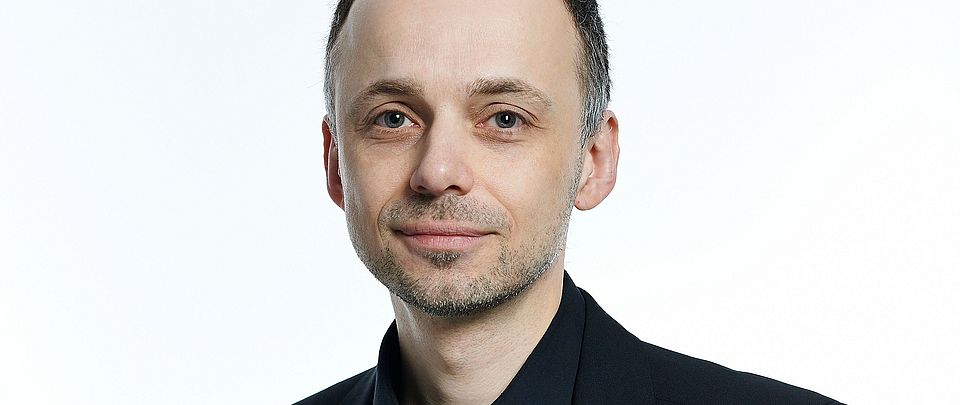
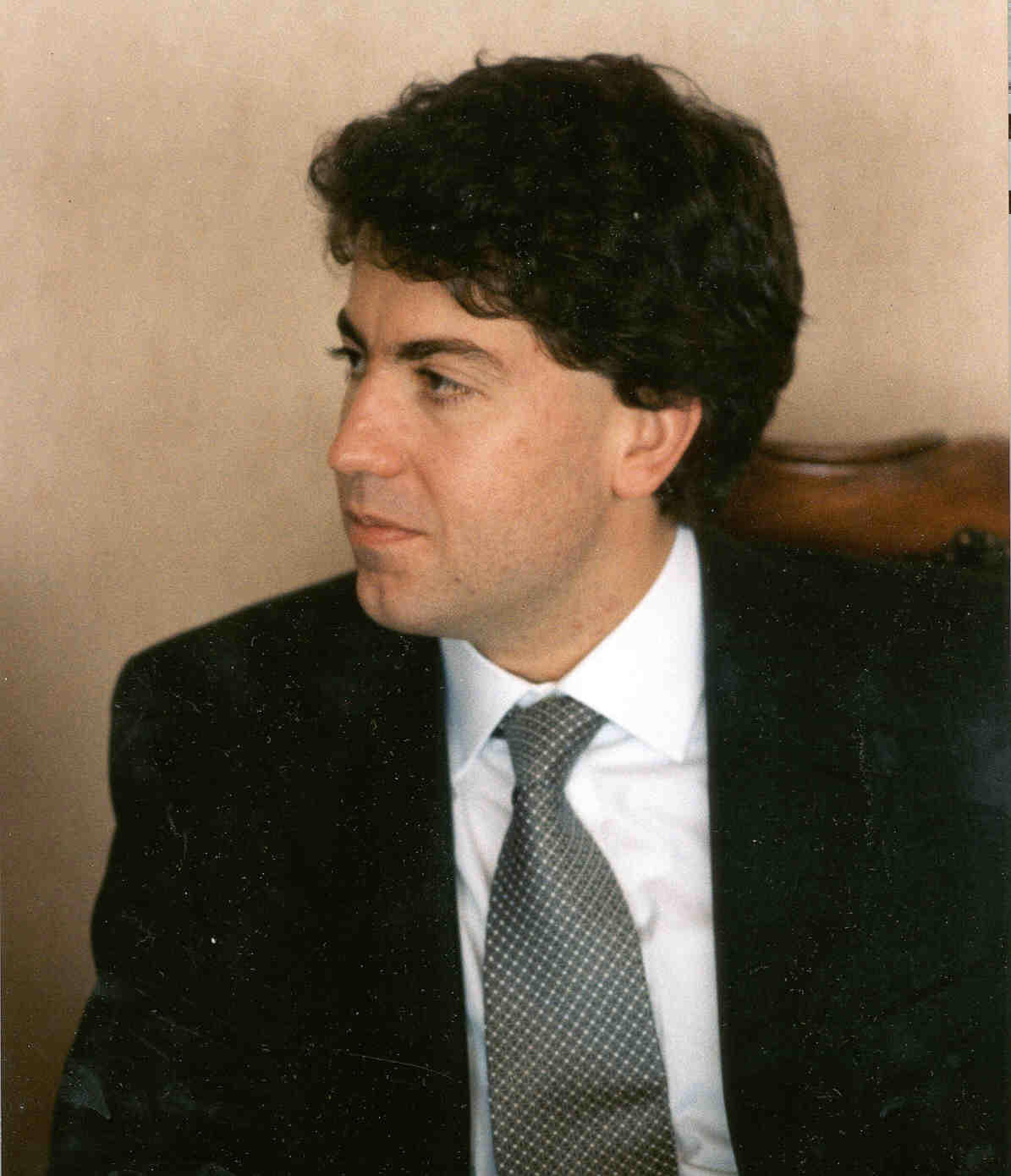
Fabio Sigrist is a Professor of Applied Statistics and Data Science at the Institute of Financial Services Zug (IFZ) , part of the Lucerne University of Applied Sciences and Arts . He also holds a Senior Scientist and Lecturer position at the Seminar for Statistics, ETH Zurich . His career spans academic research, industry consulting, and project leadership in finance and data science. PhD in Statistics (2013), ETH Zurich MSc in Mathematics with distinction (2008), ETH Zurich MEd in Mathematics Education (2008), ETH Zurich Sigrist’s research focuses on integrating Machine Learning with Spatial Statistics for applications in Financial Econometrics and Credit Risk . His work includes developing novel algorithms like GPBoost and KTBoost , advancing spatio-temporal modeling , and applying tree-based boosting to financial problems. Projects such as CreHos (credit risk in hospitality) and NISMO (interpretable real estate modeling) highlight his interdisciplinary approach. His publications address challenges in large-scale spatial data , loss given default modeling , and stock volatility prediction . He contributes to software development with tools like spate (R package) and varycoef (spatially varying coefficients).
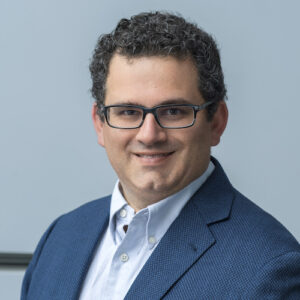
Adam M. Rosen is a Professor of Economics at Duke University's Department of Economics, where he has served since 2019. Previously, he held academic roles at University College London (UCL), including Associate Professor (2013–2016) and Assistant Professor (2006–2013). He is an affiliated researcher with the Centre for Microdata Methods and Practice (CeMMAP) and the Institute for Fiscal Studies (IFS). His research focuses on econometric theory and applications, particularly in instrumental variable methods, partial identification, and structural models. Rosen earned his Ph.D. in Economics from Northwestern University (2006) and a B.A. in Economics and Mathematics with Computer Science from Cornell University (1999). His work has been published in top journals such as the Review of Economic Studies, Econometrica, and the Journal of Econometrics. He has received numerous awards, including Fellow of the Journal of Econometrics (2024) and the Best Associate Editor Award (2024). Rosen's research interests span econometric theory, partial identification, instrumental variables, and applied microeconometrics. His recent work includes advancements in IV methods for Tobit models, discrete choice models, and counterfactual analysis. He has advised over a dozen PhD students and contributes actively to professional service, including editorial roles at the Journal of Econometrics and Econometrics Journal. He has held grants from the European Research Council and ESRC, among others, and his teaching spans advanced econometrics courses at both UCL and Duke. His affiliations with CeMMAP and IFS reflect his commitment to advancing microdata methods and policy analysis.
Andrew Chesher is the William Stanley Jevons Professor of Economics and Economic Measurement at University College London (UCL) and holds Honorary Professor status at Beihang University. He previously served as Professor of Econometrics at the University of Bristol (1984–1999) and Lecturer in Econometrics at the University of Birmingham (1971–1983). He earned a Bachelor of Social Science from the University of Birmingham (1970) and a Doctor of Science, Honoris Causa from the University of Birmingham (2017). His research focuses on econometric methods, structural modeling, measurement error analysis, and applied microeconometrics. Key contributions include work on instrumental variable methods, panel data analysis, and applications in transportation economics, population policy, and market structure. Chesher has advised international agencies like the World Bank and UNDP, contributing to real-world policy solutions. He is a Fellow of the British Academy, Econometric Society, and Academy of Social Sciences. Chesher founded UCL’s Centre for Microdata Methods and Practice (2000), a global leader in econometric methodology. His awards include the 2017 Doctor of Science (honoris causa) and leadership roles such as President of the Royal Economic Society (2016–2018). Research highlights include modeling highway maintenance costs in Brazil/India (World Bank), Malaysia’s marriage/fertility policies (UNDP), and private-sector efficiency studies with firms like EDF Energy and regulators like Ofcom. His work bridges theory and practice, emphasizing robust methods for endogeneity, discrete choice models, and incomplete data scenarios.
Andrei Zeleneev is a Lecturer in Economics at University College London (UCL), Department of Economics, where he joined in 2020. He holds a PhD from Princeton University and is affiliated with CeMMAP (Centre for Microdata Methods and Practice). His research focuses on econometric methodologies, particularly addressing challenges in panel models, network models, and errors-in-variables. His work emphasizes nonparametric identification, robust estimation, and applied econometric techniques to handle unobserved heterogeneity and measurement errors. Dr. Zeleneev’s academic background includes advanced training in econometrics, and his research spans both theoretical and applied domains. He has published extensively on topics such as treatment effects in large panels, latent variable modeling, and structural econometric approaches to network analysis. His articles highlight innovations in handling complex data structures and improving the reliability of econometric inferences in settings with non-classical errors or latent factors. He maintains an active research agenda, with recent work addressing methodological advancements in semiparametric models and interactive fixed effects. Dr. Zeleneev’s professional activities include teaching at UCL and contributing to the econometrics community through publications and affiliations with leading institutions.
Hyungsik Roger Moon is Professor of Economics in the Department of Economics at the University of Southern California's Dornsife College of Letters, Arts and Sciences, where he has served since 2000 after beginning his career at UC Santa Barbara. His academic trajectory progressed from Assistant Professor (2000) to Associate Professor (2004) and full Professor (2008), reflecting sustained contributions to econometric methodology. His educational foundation includes: Ph.D. in Economics, Yale University, 1998 M.A. in Economics, Yale University, 1995 B.A. in Economics, Seoul National University, 1989 Moon's research centers on econometric theory development and applied methodology, with particular expertise in panel data analysis, dynamic modeling, and high-dimensional estimation. His theoretical innovations address complex challenges in interactive fixed effects, unit root testing, and heterogeneity modeling, while applied work spans labor economics (income dynamics), health economics (pancreatic cancer trials), and macroeconomics (Covid-19 forecasting). This dual focus bridges rigorous mathematical frameworks with real-world policy applications across multiple economic subfields. Analysis of recent publications reveals an intensifying focus on robust estimation techniques for dyadic data, Bayesian approaches to sparse heterogeneity, and methodological innovations in forecasting with censored panel data. His work increasingly integrates machine learning concepts with traditional econometrics, particularly in high-dimensional seemingly unrelated regression systems and network-based peer effect modeling. His distinguished scientific contributions have been recognized through: Fellow of the Econometric Society (2023) Fellow of the Journal of Econometrics (2019) RK Cho Economics Award (2018) Maekyung/KAEA Economist Award (2012) Econometric Theory Multa Scripsit Award (2006-2007) Korea-America Economic Association Young Scholar Award (2005) Moon has secured significant research funding including an NSF grant of $180,675 for 'Forecasting with Dynamic Panel Data Models' (2016-2020) and $68,000 for 'Asymptotic Analysis of Panel Regression Models' (2009-2010). His academic leadership extends to editorial roles at the Journal of Business and Economic Statistics, Econometric Theory, and Journal of Econometrics, plus administrative service as Director of Graduate Studies for USC's Economics Ph.D. program (2018-2021) and Associate Director of USC Dornsife INET (2015-2017). Through his position at USC Dornsife INET and graduate program leadership, Moon actively shapes research directions in new economic thinking while mentoring future econometricians through advanced courses like Big Data Econometrics.
Christian Kleiber is a Professor of Econometrics and Statistics at the University of Basel (Faculty of Business and Economics) since 2006. Trained as a statistician in Germany and the UK, he obtained his PhD from the Technical University of Dortmund. Research Interests: Heavy-tailed phenomena, income distribution, inequality measurement, statistical distributions, stochastic orders, data science foundations, count data regression, time series analysis, econometric computing, and the history of statistics. Methodological Focus: Specializes in statistical modeling of economic data, reproducibility in research, and computational methods. Recent Publications span count data regression, structural change detection, reproducible research frameworks, and statistical distribution theory. Key contributions include software packages like countreg , strucchange , and plm for R programming.
James Ryan serves as an Assistant Professor in the Department of Accounting & Finance at the University of Limerick. His research focuses on empirical finance with international scope, particularly examining capital markets, derivatives, inflation dynamics, and model selection techniques across UK, Chinese, Hong Kong, and European financial contexts. Education: Bachelor of Business Studies (BBS), awarded 1990 Ryan's scholarly work centers on econometric analysis of financial phenomena, including corporate leverage adjustments, stock return predictability in emerging markets, and derivatives usage determinants. His methodological approach frequently employs the Tobit model to address model instability and selection challenges, while maintaining strong connections to practical investment and corporate finance applications. The recurring emphasis on macro-finance linkages—particularly inflation's impact on market timing—demonstrates his integrated perspective on economic forces and financial decision-making. Analysis of his publication trajectory reveals consistent methodological rigor in empirical finance research, with increasing focus on international comparative studies since 2014. His work demonstrates particular expertise in adapting econometric frameworks to volatile markets, while maintaining relevance for institutional investors and corporate treasury operations across diverse regulatory environments. Scientific Awards: No scientific awards or honors were documented in the provided materials. Regarding academic supervision and research funding, the available information does not indicate any graduate students supervised or competitive research grants secured. His professional activities appear concentrated within departmental teaching responsibilities and peer-reviewed journal publications, with documented expertise in Wealth Management, International Corporate Finance, Banking, and Portfolio Management instruction.
James A. Duffy is an Associate Professor of Economics at the University of Oxford and the Andrew Glyn Tutorial Fellow at Corpus Christi College. He joined Corpus in 2016 after a postdoctoral fellowship at Nuffield College, Oxford, and holds dual appointments in the Department of Economics and his college. His educational background includes: PhD in Economics from Yale University (2014) Undergraduate studies in Economics and Mathematics at the University of Sydney Duffy's research centers on econometrics, with emphasis on macroeconometrics and time series analysis. He develops statistical methods for economic models involving nonlinear or highly persistent time series data, common in macroeconomics and finance. His work spans econometric theory , mathematical statistics , cointegration , and structural macroeconomic models , addressing inference challenges in strongly dependent processes. His 2016-2024 publications in premier journals reveal consistent innovation in time series methodology, particularly in unit root processes, fractional integration, and nonlinear cointegration. Key contributions include Tobit modeling for dynamic systems, robust inference for weakly nonstationary data, and discrete choice estimation techniques, bridging theoretical rigor with empirical applications. At Oxford, Duffy serves as course convenor for Quantitative Economics and lectures for the MPhil programme on instrumental variables, generalized method of moments, and maximum likelihood estimation. He also provides undergraduate tutorials in Microeconomics and Quantitative Economics at Corpus Christi College, integrating research insights into teaching.
Ilze Kalnina is an Assistant Professor of Economics at the Department of Economics, Poole College of Management, North Carolina State University. She previously held an Assistant Professor position at the University of Montreal. Her research focuses on econometrics, particularly nonparametric estimation and inference for volatility using high-frequency data. Kalnina obtained her PhD in Economics from the London School of Economics in 2009. She is affiliated with the Poole College's Econometrics group and contributes to the Economics Graduate Program. Education: PhD in Economics, London School of Economics (2009) Research Interests: Econometrics methodologies High-frequency financial data analysis Volatility modeling and leverage effect estimation Nonparametric statistical techniques Her publications consistently address volatility dynamics, leverage effect, and high-frequency econometric challenges. Articles span technical innovations like subsampling methods to applied topics such as risk premia and beta estimation. No scientific awards are explicitly listed in the provided texts. Advising and grants: No formal advisees or grant records are mentioned. She has not been associated with any labs or research teams in the available data.
Prof. Aleksander Welfe is a full professor and head of the Department of Econometric Models and Forecasts at the Faculty of Economic Sciences and Sociology, University of Łódź. He has held academic positions including Adjunct Professor at Warsaw School of Economics for over two decades. His primary role involves leading research in macroeconomic modeling and econometric time series analysis. Education & Affiliations : He holds a habilitation (doctorate) in econometrics and has collaborated internationally, notably with Nobel laureate Lawrence R. Klein. He is the founder and editor-in-chief of the Central European Journal of Economic Modelling and Econometrics . Research Focus : Specializes in macroeconomic modeling, time series analysis, non-stationary stochastic processes, and cointegration. His work emphasizes practical applications like Poland’s national economy models (WM-1), inflation dynamics, and energy price formation. He has pioneered structural break analysis in econometric models and developed methodologies for simulating economic policy scenarios. Awards : Elected Full Member of the Polish Academy of Sciences for contributions to macroeconometric modeling, particularly Poland’s macroeconomic models used in policy analysis. Grants & Labs : Leads research teams focused on economic forecasting and structural modeling. His department operates Poland’s primary macroeconomic modeling laboratory, producing influential policy reports and academic publications. Teaching : Teaches advanced econometrics and macroeconomic modeling at both University of Łódź and Warsaw School of Economics, mentoring multiple generations of economists.
Ryan Zurakowski is an Associate Professor and Interim Department Chair in the Department of Electrical and Computer Engineering at the University of Delaware. He holds a Ph.D., M.S., and B.S. in Electrical and Computer Engineering from the University of California, Santa Barbara. His research focuses on developing mathematical models to understand viral disease dynamics, particularly HIV, with applications in biomedical engineering and control systems. Dr. Zurakowski’s work combines advanced modeling techniques with Bayesian inference to study cryptic HIV replication, drug efficacy, and reservoir persistence. His lab has demonstrated HIV’s ability to replicate in hidden body regions despite antiretroviral treatment, validated by collaborators at institutions like IRSI-Caixa and UCSF. He has also pioneered system identification methods for censored data, including the Tobit Kalman Filter, with applications in tracking and surveillance for the Army Research Laboratories. Research interests include information-optimal experiment design, censored-data estimation, and applying engineering principles to biomedical challenges. He collaborates with global institutions and prioritizes translating mathematical insights into actionable clinical strategies. For joining his lab, interested students and postdocs should contact him directly via ryanz@udel.edu with a CV and research interests.
Dr. Dimitriou Loukas is an Associate Professor in the Department of Civil and Environmental Engineering at the University of Cyprus, leading the Laboratory of Transportation Engineering. He holds a PhD from the National Technical University of Athens (NTUA) and has held academic positions at King Saud University and the University of Cyprus. His research focuses on sustainable transportation systems, leveraging AI, big data, and econometrics to optimize transport performance and policy design. He teaches 2 mandatory undergraduate and 5 postgraduate courses in Transport Infrastructure Management. His work spans smart city mobility, micromobility systems, freight transport optimization, and emerging transport technologies. He has secured significant national and EU research funding, reviews for top journals, and participates in international conference committees. Key research areas include: Equity in transit budget allocation Spatiotemporal analysis of shared mobility Electric vehicle policy optimization Data-driven infrastructure maintenance Airport network pandemic control strategies His laboratory develops decision-support frameworks for transport systems, integrating machine learning with traditional engineering methods to address urban mobility challenges.
Hakan Öndes is a Lecturer in the Department of Statistics at Bandirma Onyedi Eylul University's Faculty of Economics and Administrative Sciences. He also serves as Deputy Dean and has held research assistant roles at Gazi University (2014-2017). His academic focus includes econometrics, panel data analysis, spatial econometrics, and environmental economics. He has advised at least one master’s thesis on economic growth factors and contributed to projects like the 'Socioeconomic and Ecological Evaluation of Amateur Fishing'. He teaches courses ranging from econometrics to artificial neural networks and has published extensively in indexed journals. Research interests span economic growth determinants, financial development, migration patterns, and environmental policy impacts. His work frequently employs advanced statistical methods like panel data and spatial econometrics. Recent articles address financial inequality in emerging economies and suicide rate analysis in OECD countries. He has authored chapters in books such as Theory and Research in Social, Human and Administrative Sciences II (2020) and Economic Development and Financial Markets (2020). Professional contributions include organizing regional development symposiums and serving on academic committees. His teaching portfolio includes advanced mathematics, econometrics, and quality management courses at both undergraduate and graduate levels. Current administrative roles include Vice Dean responsibilities and leadership in academic governance.
Marco Riani is Full Professor of Statistics at the Department of Economic and Business Sciences, Faculty of Economics, University of Parma since 2006. He directs the Interdepartmental Center Ro.S.A. (Robust Statistics Academy) and has held academic positions including Post Doctoral Fellow (1996-1998), Lecturer (1998-1999), and Associate Professor (1999-2006) at the same institution. Education: Bachelor of Science in Economics (cum laude), University of Parma (1986-1990) PhD in Statistics, University of Florence (1992-1995) His research centers on robust statistics with methodological focus on robust regression , time series , and multivariate analysis . Applied work spans risk management , quality evaluation , international trade monitoring , and medical statistics (neonatal health parameters). He pioneers outlier detection without arbitrary thresholds and robust machine learning. Recent publications highlight robust transformations for regression, explainable AI, and applications in environmental/medical fields. Key trends include automated fraud detection in trade data, soil moisture estimation through time series, and biomarker analysis for birth anomalies. Scientific awards: Best Italian PhD thesis in Statistics (1997) Best contribution at MATLAB expo 2016 (Milan) As advisor, he has supervised five PhD theses and over 100 degree theses. His grant leadership includes Horizon 2020 PrimeFish (2014-2019) and multiple Italian Ministry projects on robust methods. External expertise spans EU Automated Monitoring Tool projects (AMT3-AMT5) for trade fraud detection. Principal Investigator: 11 national/EU projects (2000-2019) Steering roles: ICORS, SIS CLADAG, Ro.S.A. center He co-developed the FSDA toolbox (MATLAB/R) with the European Commission, enabling robust multivariate analysis for institutions like the Joint Research Centre. The Ro.S.A. center drives his collaborative work on outlier detection and data mining.
Frank Schorfheide is the Christopher H. Browne Distinguished Professor of Economics at the University of Pennsylvania's Department of Economics. His research focuses on macroeconomics, econometrics, and dynamic stochastic general equilibrium (DSGE) models. He specializes in Bayesian methods, policy analysis under uncertainty, and the evaluation of economic forecasting models. Schorfheide's work addresses topics such as monetary policy effects, income heterogeneity, model misspecification, and real-time forecasting during crises like the pandemic. Key contributions include advancements in DSGE model estimation, analysis of zero lower bound (ZLB) constraints, and methodologies for handling sparse heterogeneity in panel data. His research emphasizes robustness in decision-making under partial identification and explores the aggregation of microeconomic heterogeneity into macroeconomic outcomes. Publications highlight innovations in sequential Monte Carlo techniques, mixed-frequency VAR models, and clustering approaches for multi-dimensional heterogeneity. Schorfheide collaborates on projects involving financial frictions, nonlinearities in macroeconomic dynamics, and improving GDP measurement accuracy.