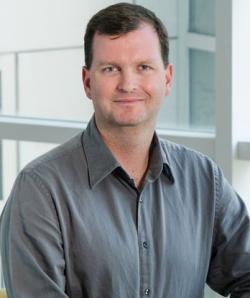
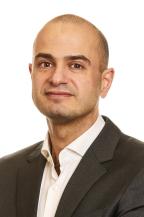
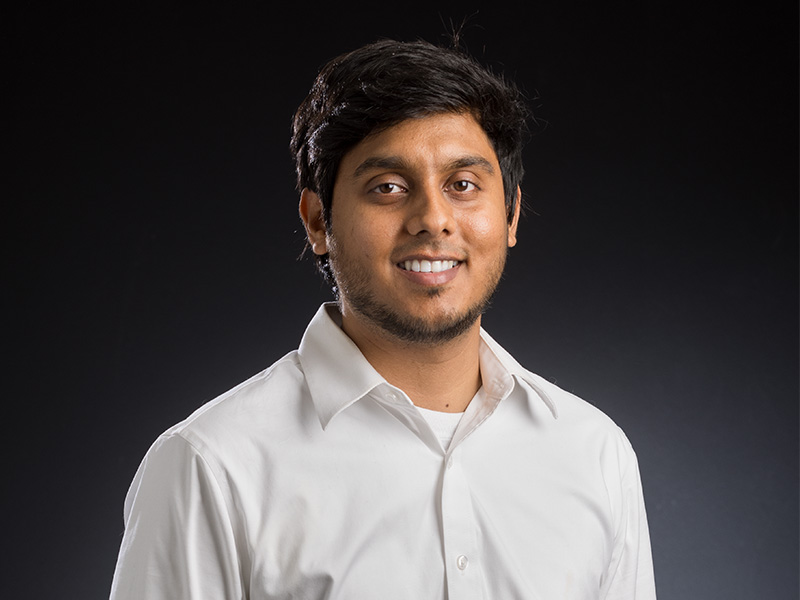
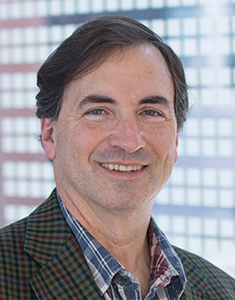
Balas Konstantinos is a tenured Professor at the School of Electronic & Computer Engineering , Technical University of Crete , and Director of the Electronics Laboratory . His academic journey began with a B.Sc. (1988) and Ph.D. (1992) in Medical Physics from the University of Patras, followed by postdoctoral research and industry consulting before joining FORTH-IESL in 1995. In 2002, he transitioned to academia at TUC, leading the Optoelectronics Group and founding DySIS-Medical Ltd. , a medical imaging spin-off with global reach.
Dr. Chris A. Flask is a Professor at the Case Western Reserve University School of Medicine, with joint appointments in Radiology, Pediatrics, and Biomedical Engineering. He serves as Co-Director of the Imaging Research Core and Associate Director of the Medical Scientist Training Program, while also contributing to the Cancer Imaging Program at the Case Comprehensive Cancer Center. Research Focus Quantitative Magnetic Resonance Imaging (MRI) MRI Physics and Pulse Sequence Design Lung Imaging in Cystic Fibrosis Kidney Imaging in Polycystic Kidney Disease, Sickle Cell Disease, and Diabetic Nephropathy Liver Imaging for Inflammation and Fibrosis Scientific Recognition Distinguished Investigator Award 2023 from The Academy for Radiology and Biomedical Imaging Research Reviewer with Distinction for Magnetic Resonance in Medicine Semi-Finalist for ISMRM Young Investigator Award 2013 His recent publications focus on pH-responsive imaging agents, MR fingerprinting techniques, and applications in pediatric and adult diseases. Dr. Flask's work bridges technical MRI innovation with clinical translation across multiple organ systems.
Jacqueline Cole is an Associate Professor in the Department of Biomedical Engineering at North Carolina State University, part of the College of Engineering. Her research focuses on bone mechanics, musculoskeletal development, and regenerative therapies for conditions like brachial plexus birth injury and stroke-related bone deficits. She leads the Orthopaedic Mechanobiology Lab, which employs advanced imaging (e.g., CT, microscopy) and computational modeling to study bone-tissue interactions. Cole teaches courses in orthopedic biomechanics and bone mechanobiology. Education: Ph.D. (2007), M.S. (2004) Mechanical Engineering from Cornell University; B.S. (2001) Mechanical Engineering from Auburn University. Research interests include stroke and obesity effects on bone, brachial plexus injury recovery, and tissue engineering. Awards span teaching (NC State Alumni Outstanding Teacher Award) and research mentorship (Michael Dickey Award). She has pioneered studies on bone-vascular interactions and suture materials for tendon repair. Her lab’s long-term goals involve developing therapies to prevent musculoskeletal dysfunction via mechanobiological approaches. Grants include NIH TIGRR and K12 funding. Recent work explores ischemic stroke’s impact on osteovascular structure and brachial plexus injury’s effects on joint morphology.
Jonathan Mamou is a Professor of Electrical Engineering in Radiology at Weill Cornell Medical College since 2024. His research focuses on quantitative ultrasound imaging, biomedical engineering, medical imaging, and acoustic microscopy. Ph.D., University of Illinois (2005) M.S., University of Illinois (2002) B.S., Telecom Paris (2000) His research bridges electrical engineering and radiology, developing advanced ultrasound techniques for medical diagnostics. Key areas include quantitative acoustic microscopy , biomechanical tissue analysis , and machine learning in ultrasound imaging . Recent work spans prostate cancer detection , placental microstructure characterization , and myopia-related scleral changes . His publications (2025–2023) highlight innovations in high-frequency ultrasound for ophthalmology, quantitative imaging for cancer diagnostics, and quantum-driven resolution enhancement in acoustic microscopy. Grants from the Melanoma Research Alliance , National Institute of Biomedical Imaging & Bioengineering , and Stand Up To Cancer support his work on pancreatic cancer screening , interstitial lung diseases , and radiotherapy toxicity assessment .
Maurice S. Fabien is an Assistant Professor in the Department of Mathematics at the University of Wisconsin-Madison and a SIAM-MGB Early Career Fellow. In 2025, he will join MIT's Schwarzman College of Computing as an MLK Assistant Professor while on leave from UW-Madison. His research focuses on computational mathematics with specialization in partial differential equations, high-performance computing, and numerical methods including discontinuous Galerkin formulations and multigrid solvers. Research interests span: Development of structure-preserving discretizations for hyperbolic systems GPU-accelerated computational algorithms Hybridizable discontinuous Galerkin (HDG) frameworks Multiscale modeling in porous media and biomechanics Numerical analysis of nonlinear PDEs Publications demonstrate strong focus on: High-order methods for conservation laws Efficient solvers for elliptic/parabolic systems Applications in fluid dynamics and materials science GPU-based performance optimization Error analysis of energy-stable schemes Awards & Honors: SIAM-MGB Early Career Fellowship (2025) Research Team: Austin Anyanwu (Undergraduate) - Finite precision arithmetic Alexis Liu (Alumni) - GPU-accelerated elliptic solvers Patrick Li (Undergraduate) - GPU-based mesh refinement Neer Mehta (Alumni) - Adaptive mesh refinement algorithms Significant involvement since 2007 in STEM diversity initiatives focused on recruitment/retention of underrepresented groups in academia.
Harald E. Möller is a Professor and Head of the Nuclear Magnetic Resonance Research and Development Unit at the Max Planck Institute for Human Cognitive and Brain Sciences in Leipzig. With a career spanning over four decades, he has held academic positions including Honorary Professor at the University of Leipzig and leadership roles in institutions like Duke University Medical Center and the University of Münster. His research focuses on advancing MRI methodologies, biophysical imaging principles, and their applications in neurology and neuroscience. Education: 1979-1985: Chemistry & Physics studies at Universities of Dortmund and Münster 1985: M.Sc. (Diploma) in Chemistry 1988: PhD in Physical Chemistry (summa cum laude) 2000: Habilitation in Physical Chemistry 2002: Habilitation in Biophysical Chemistry Research Interests: Development of novel MRI methods Quantitative tissue characterization Myelin sheath imaging Cerebral blood flow dynamics High-field MRI hardware
Dr. Srikanthan Ramesh serves as an Assistant Professor in the School of Industrial Engineering and Management within Oklahoma State University's College of Engineering, Architecture and Technology. Since establishing the Advanced Materials and Additive Manufacturing Laboratory in August 2022, he has led interdisciplinary research at the intersection of materials science, physical phenomena, and advanced manufacturing technologies, with applications spanning healthcare, aerospace, and electronics sectors. His educational foundation includes a Ph.D. in Mechanical and Industrial Engineering from Rochester Institute of Technology (2022) and an M.S. in Industrial and Manufacturing Systems Engineering from Iowa State University (2017). This academic background enables his innovative approach to manufacturing science. Dr. Ramesh's research program focuses on biological and micro-scale additive manufacturing (bio-AM), specializing in biomaterial development for tissue engineering and regenerative medicine. His work integrates computational fluid dynamics, machine learning, and real-time process monitoring to achieve precise control over mechanical, biological, and electrical properties of manufactured structures. He develops experimental tools and process frameworks for droplet-based and extrusion-based AM systems, with particular emphasis on wound healing applications and space-compatible microelectronics. Analysis of his 14 publications from 2020-2025 reveals a strong trajectory toward AI-driven manufacturing solutions, with increasing emphasis on multi-objective Bayesian optimization for bioink design, aerosol jet printing process refinement, and bioprinted tissue construct development. His recent work demonstrates sophisticated integration of machine learning with physical manufacturing processes to solve complex biomedical challenges. His scientific recognition includes: Doctoral Dissertation Pitch Competition (Runner-up), IISE, 2021 Best Oral Presentation, Graduate Showcase, Rochester Institute of Technology, 2019 Gilbreth Memorial Fellowship, IISE, 2018-2019 Wakonse College Teaching Fellowship, Iowa State University, 2018-2019 Graduate Research Excellence Award, Iowa State University, 2017 Best Overall Oral Presentation, Nano@IAstate, Iowa State University, 2017 Dr. Ramesh currently leads significant research initiatives including as Principal Investigator for an NSF REU Site on Additive Manufacturing and Cybersecurity ($464,606, 2025-2028) and a NASA EPSCoR Travel Grant for aerosol jet printing in space missions (2024-2025). As Co-PI on an NSF grant for Privacy-aware Collaborative Design in additive biofabrication ($599,981, 2025-2028), he develops frameworks for mass personalization in medical applications while addressing data security challenges. These projects support his lab's mission to advance manufacturing science through rigorous experimentation and computational innovation. The Advanced Materials and Additive Manufacturing Laboratory operates as a collaborative hub where Dr. Ramesh directs research teams in developing novel biomaterials, optimizing printing processes, and creating functional prototypes for wound dressings, liver tissue models, and space-rated microelectronics. The lab's interdisciplinary approach combines expertise in materials characterization, computational modeling, and machine learning to push the boundaries of what's possible in additive manufacturing for critical applications.
Peter J. Basser is a leading research scientist at the National Institutes of Health (NIH), specifically within the Eunice Kennedy Shriver National Institute of Child Health and Human Development (NICHD), where he heads the Section on Quantitative Imaging and Tissue Sciences (SQITS). His work bridges physics, engineering, and neuroscience to develop non-invasive MRI methods for probing tissue microstructure, particularly in the brain. His educational background is not explicitly mentioned, but his scientific achievements reflect deep training in biophysics and medical imaging. He earned his Ph.D. and has built a career at NIH as a principal inventor of key neuroimaging technologies. Basser's research focuses on quantitative imaging and tissue sciences , especially using diffusion MRI to study brain structure and function. He pioneered Diffusion Tensor MRI (DTI) , Streamline Tractography , and advanced methods like MAP MRI , CHARMED , and AxCaliber , enabling in vivo measurement of axon diameters and microstructural features previously accessible only through histology. His work aims to translate these tools into clinical use for diagnosing developmental disorders, trauma, and neurodegeneration. The 15 most recent articles reflect a consistent focus on developing novel MRI biomarkers, particularly through diffusion and relaxometry methods. They explore water exchange, restriction, glymphatic clearance, latency connectomes, and cortical microstructure, demonstrating a trajectory toward in vivo MRI histology and precision imaging for pediatric and neurological applications. Scientific Awards: National Academy of Engineering (NAE), Inducted 2020 National Academy of Inventors (NAI) Fellow, 2024 Eduard Rhein Technology Award, 2021 ISMRM Gold Medal, 2008 ISMRM Lauterbur Lecturer, 2020 American Society of Neuroradiology Honorary Member, 2019 Victor M. Haughton Award, 2017 ISMRM Fellow, 2010 AIMBE Fellow Best Paper Award, Frontiers in Physics, 2023 Basser leads a dynamic research group that mentors postdoctoral fellows and trainees, many of whom have received prestigious awards. His lab has secured significant grants from the NIH BRAIN Initiative, NICHD, USUHS, and the Bill & Melinda Gates Foundation. The SQITS lab develops open-source software tools like TORTOISE , dmritool , and HI-SPEED , which are widely used in the neuroimaging community. The lab collaborates with institutions such as Uniformed Services University and participates in major initiatives like the Human Placenta Project and the Human Connectome Project. Basser’s vision is to transform clinical MRI scanners into quantitative scientific instruments for precision medicine and large-scale brain mapping. Labs and Teams: Section on Quantitative Imaging and Tissue Sciences (SQITS), NICHD, NIH Neuropathology-Neuroradiology Integration Core (with USUHS) Advanced Translational Neuroimaging Research & Development Core Diffusion – Data Processing Center (DPC)
Edward Sander is a Professor in the Department of Biomedical Engineering at the University of Iowa's College of Engineering, where he has been a faculty member since 2011. He also holds researcher positions at the Iowa Institute for Biomedical Imaging and the Iowa Technology Institute, contributing to interdisciplinary research in biomedical engineering and imaging sciences. Education: PhD in Biomedical Engineering, Tulane University, 2006 MS in Biomedical Engineering, Tulane University, 2004 BSE in Chemical Engineering, The University of Texas at Austin, 2000 His research focuses on multiscale mechanics and modeling of biological tissues, with particular emphasis on wound healing, skin tissue engineering, microvessel formation, and the biomechanics of connective, vascular, and ocular tissues. He employs advanced microscopy and image-based computational modeling techniques to study tissue damage and mechanical behavior across scales. His work integrates biomaterials, tissue engineering, and mechanobiology to develop engineered tissue systems and understand native tissue function. Dr. Sander is a member of the Biomedical Engineering Society and leads the Sander 3MT Lab, which focuses on mechanistic, microstructural, and multiphysics modeling of biological materials. While specific publications are not listed in the provided text, his research output is tracked through Google Scholar, indicating an active publication record in his fields of expertise. Scientific Awards and Honors: Robert and Virginia Wheeler Faculty Fellow in Engineering Dr. Sander advises graduate students and likely participates in externally funded research projects, though specific grants and advisees are not detailed. His affiliations with major research institutes at the University of Iowa underscore his role in advancing translational biomedical research and engineering innovation. Research Affiliations: Iowa Institute for Biomedical Imaging Iowa Technology Institute
Dr. Daniel Tward is an Assistant Professor at the University of California, Los Angeles (UCLA), holding joint appointments in the Department of Neurology and the Department of Computational Medicine. He earned his Ph.D. in Biomedical Engineering from Johns Hopkins University and completed postdoctoral training at the Kavli Neuroscience Discovery Institute. His research integrates neuroimaging, machine learning, and differential geometry to analyze brain structure changes in neurodegenerative diseases like Alzheimer's, with a focus on bridging molecular pathology and clinical imaging. Research Interests: Dr. Tward's work addresses challenges in neuroimaging data complexity, developing computational tools to map brain anatomy across scales (from centimeters to microns). Key areas include neurodegeneration in the medial temporal lobe, multi-modal image registration, and spatial transcriptomics. His lab emphasizes high-dimensional statistics and geometry-driven analysis to improve diagnostic accuracy and clinical trial design. Grants & Projects: Secured NIH funding for: A 3D multimodal human brain atlas integrating MRI and histology. CloudReg—a distributed framework for massive neuroimage registration. Contributions to the BRAIN Initiative Cell Census Network (BICCN) for mouse/rat brain atlases. Students & Training: Mentors undergraduate researchers via the BIG Summer program, with projects on neural networks, spatial transcriptomics, and MRI analysis. No PhD/Master's advisees listed.
Thao (Vicky) Nguyen is a Professor of Mechanical Engineering at Johns Hopkins University, with a secondary appointment in the Department of Materials Science and Engineering. She is co-Deputy Director of the Hopkins Extreme Materials Institute (HEMI). Her research focuses on biomechanics of soft engineering and biological materials, including adaptive polymers, fracture mechanics, and ocular biomechanics related to glaucoma. Key collaborators include the National Eye Institute and National Science Foundation. Nguyen holds a B.S. from MIT (1998), and M.S. and Ph.D. from Stanford (2000, 2004). She previously worked at Sandia National Laboratories. Awards include the James R. Rice Medal (2025), NSF CAREER Award, and multiple ASME honors. Her lab integrates experimental and computational approaches, with notable work on shape-memory polymers and scleral biomechanics. Research interests include collagen growth, liquid crystal elastomers, and architected materials. She leads studies on optic nerve head mechanics, funded by DOD, NEI, and BrightFocus. Nguyen serves on editorial boards for ASME journals and professional societies.
Johan Jansson is an Associate Professor in Scientific Computing at KTH Royal Institute of Technology and BCAM (Basque Center for Applied Mathematics). He leads research in predictive Direct FEM Simulation (DFS) for aerodynamics and multiphase flows, and co-founded Icarus Digital Math as CEO. His work includes the FEniCS open-source finite element software project and MOOC-HPFEM educational initiatives. He holds roles as Director of the Center for Digital Math and collaborates internationally in computational science. Research focuses on high-performance computing (HPC), fluid-structure interaction (FSI), biomedical modeling, and renewable energy systems. Notable contributions include adaptive FEM frameworks for turbulent flow, vocal fold simulations, and wave energy converter modeling. His work bridges academic research with industrial applications, leveraging FEniCS-HPC and Unicorn solvers. Key achievements include election to the IVA Royal Swedish Academy of Sciences 100-list and securing the Severo Ochoa Center of Excellence Award. He has pioneered open-source tools like SimTek and contributed to major projects like the Salter Sink and vocal production modeling. Teaching responsibilities include courses on database technology, computational fluid mechanics, and research methodology. He actively engages in large-scale simulation projects involving marine energy, cardiac ablation protocols, and aerodynamic optimization.
Dr. Yuxiao Zhou is an Assistant Professor in the J. Mike Walker '66 Department of Mechanical Engineering at Texas A&M University, with an affiliation to the School of Engineering Medicine. His research focuses on multi-scale musculoskeletal biomechanics, addressing challenges in aging, bone disease, and injury through implantable device design, computational modeling, and medical imaging. He holds a Ph.D. in Mechanical Engineering from Pennsylvania State University (2020), an M.S. from Rutgers University (2015), and a B.S. from Harbin Institute of Technology (2012). Research interests include biomechanical analysis of bone-implant interactions, bone regeneration mechanisms, and mechanobiology. Dr. Zhou's lab develops patient-specific biomedical devices and computational tools for surgery planning and disease diagnosis. His work integrates advanced imaging techniques like micro-CT and atomic force microscopy (AFM) to study bone mechanics across scales. Key awards include the Maryland Stem Cell Research Fund Postdoctoral Fellowship (2021) and the C. Norwood Wherry Memorial Graduate Fellowship (2020). His research has led to innovations in bone implant design, osteoporosis treatment strategies, and tissue engineering scaffolds. Recent publications explore topics like mineralization processes in tooth development and wireless microfluidic systems for dental implants. Dr. Zhou collaborates on grants related to biomechanical modeling and medical device development. His lab emphasizes translational research, aiming to bridge engineering and clinical applications. Ongoing projects include 3D-printed oxygen-releasing scaffolds for bone regeneration and aerogel-based solutions for bone cement interfaces.
Mostafa Barigou is a Professor of Chemical Engineering and Head of Postgraduate Studies (Research) at the School of Chemical Engineering, University of Birmingham. He holds a BEng (1st Class Honours) in Mechanical Engineering (1982), PhD in Chemical Engineering (1987), and DSc in Experimental and theoretical studies of complex flows and complex fluids (2011). His research focuses on fluid dynamics, rheology, and transport processes in complex fluids, leveraging advanced techniques like Positron Emission Particle Tracking (PEPT), CFD, and PIV. Professor Barigou has supervised over 20 PhD students and 10 postdoctoral researchers, contributing to industries such as food processing, pharmaceuticals, and metallurgy. His work has been funded by UK Research Councils and industry partners like Procter & Gamble, Nestlé, and Johnson Matthey. He is a Fellow of the Institution of Mechanical Engineers (FIMechE) and a Chartered Engineer (CEng). Research interests include: complex fluid dynamics, multiphase systems, foam and emulsion stability, and CFD modeling. His lab uses PEPT to study opaque systems, developing novel insights into mixing and flow dynamics. Collaborations span biomedical engineering (e.g., blood flow studies) and food engineering (e.g., mycoprotein pastes). Awards include the Elijah-Hepworth Memorial Prize (1982) and leadership roles in EPSRC grants. He edits journals like the International Journal of Food Properties and serves on national/international committees for chemical engineering and food engineering.
Dr Orestis L. Katsamenis is a Lecturer in Biomedical Imaging at the University of Southampton , affiliated with the Faculty of Engineering and Physical Sciences (FEPS) and the Faculty of Medicine (FoM) . He leads the 3D X-ray Histology and Biomedical Imaging Theme at the μ-VIS X-ray Imaging Centre and holds a visiting position at the University Hospital Southampton NHS Foundation Trust in the Biomedical Imaging Unit of Cellular Pathology and Child Health. Education: BSc in Materials Science (University of Patras, 2007), MSc in Materials Science (University of Patras, 2009), PhD in Bioengineering (University of Southampton, 2012). His research focuses on 3D X-ray Histology (XRH) and Microfocus Computed Tomography (μCT) applied to biological and clinical imaging , pharmaceutical technology , and bone nanostructure . He has pioneered μCT protocols for clinical histology and developed advanced 3D imaging tools for applications in drug delivery , tissue engineering , and evolutionary biology . His work spans multidisciplinary collaborations with engineers, medical professionals, and paleontologists. Recent publications highlight his contributions to 3D imaging of bone , microneedle design , 4D-printed polypills , and paleontological studies . He has received awards including the EPSRC Doctoral Prize Award (2012) and multiple scientific presentation honors (2018) . Dr Katsamenis supervises PhD student Ayesha Mohiud Din and collaborates with research groups like the Engineering Materials and Surface Engineering Group and the Institute for Life Sciences . His Google Scholar profile lists over 20 recent articles, showing his prolific and diverse research output.