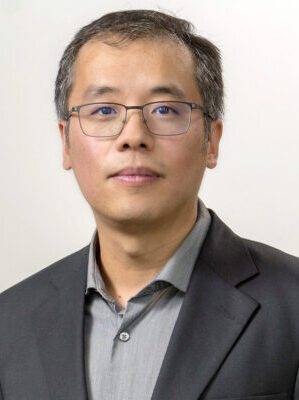
Prof. Dr. Sören Laue is a Professor of Machine Learning at the University of Hamburg's Department of Informatics. His research focuses on optimization algorithms, machine learning frameworks, and high-performance computing. He leads the Machine Learning research group and developed the GENO optimization framework and the Matrix Calculus toolset. His work emphasizes GPU acceleration, tensor operations, and scalable solutions for classical machine learning problems. Projects: GENO solver (Python-based optimization), Matrix Calculus (derivative computation), and SQL-based tensor operations. Key Research Themes: Optimization frameworks, GPU computing, neural network scalability, and algorithm design. Selected recent publications highlight contributions to tensor calculus benchmarks, GPU-optimized machine learning pipelines, and novel optimization methods. His work bridges theoretical foundations and practical software tools for the machine learning community.
Dr. Gordon Hodson is a Distinguished Professor of Psychology at Brock University, Canada. He specializes in intergroup relations, prejudice, and dehumanization, with a focus on linking human-animal relations to broader systems of oppression. His work bridges academia and advocacy, exploring how ideologies like social dominance underpin both speciesism and ethnic prejudice. Education: Ph.D. (Psychology) from Western University (formerly University of Western Ontario). Research Interests: His studies examine intergroup contact's role in reducing bias, the psychological roots of prejudice, and the cognitive mechanisms underlying dehumanization. Key areas include: Intergroup contact theory Prejudice dynamics Human-animal relations Political radicalization Publications & Awards: Authored/edited over 150 peer-reviewed articles and books, including Why We Love and Exploit Animals . Honors include the SPSSI Gordon Allport Award (2019) and the APA Division 34 award (2016). Lab & Team: Leads the Brock Intergroup Attitudes Scholarship (BIAS) Lab, training students in prejudice research. Collaborates internationally on projects addressing speciesism, climate change, and pandemic risks linked to meat consumption. Grants & Future Work: Active in securing funding for research on intergroup contact generalization effects and policy implications of dehumanization. Current projects include longitudinal studies on prejudice trends and interventions to enhance cognitive liberalization.
Dr Sudip Mittal is an Assistant Professor in Computer Science & Engineering at Mississippi State University and Associate Research Director of the PATENT Lab. His research spans cybersecurity, artificial intelligence, and cyber-physical systems, with a focus on building self-protecting systems and predictive security for unmanned vehicles. He leads the SECRETS Lab and has published over 70 papers in top venues, with work featured in The LA Times and WIRED. Research interests include: Autonomous intrusion response systems AI-driven threat detection in IoT/CPS Adversarial machine learning His publications (2019-2025) show a strong emphasis on AI security applications, particularly in malware detection, healthcare compliance, and anomaly detection using large language models. Recent articles explore MLOps security, adaptive cyber defense, and synthetic data generation for critical systems.
Marco Valtorta is a Professor and Graduate Director in the Department of Computer Science and Engineering at the University of South Carolina’s Molinaroli College of Engineering and Computing. He specializes in Artificial Intelligence, with a focus on normative reasoning under uncertainty, Bayesian networks, causal models, and computational complexity. His work includes developing algorithms for structure learning in graphical models, causal inference, and applications in multiagent systems. Education: Ph.D., Computer Science, Duke University (1987) M.A., Computer Science, Duke University (1984) Laurea, Electrical Engineering, Politecnico di Milano (1980) Research Interests: Dr. Valtorta’s work integrates logical and probabilistic reasoning, with contributions to causal models, chain graphs, and adversarial machine learning. His funded projects include collaborations with the Office of Naval Research (ONR), IARPA, and the U.S. Department of Agriculture (USDA). Notable collaborations include applying Bayesian networks to healthcare and developing frameworks for trustworthiness assessment in AI systems. Grants & Collaborations: Multi-institution IARPA project on Wigmorean/Bayesian networks for argumentation ONR-funded research on Markov properties of directed hypergraphs with Dr. Linyuan Lu Causal analysis for performance modeling of configurable systems His recent publications emphasize causal inference in AI, automated evaluation of text and sentiment analysis systems, and robustness of foundation models. He has pioneered algorithms for learning chain graphs and addressing adversarial attacks in probabilistic models.
Eli Murray is an Adjunct Professor at the University of South Florida , specializing in Data Visualization . He is also a graphics editor at the New York Times , where he leverages coding for investigative reporting and data analysis. Prior to joining the New York Times , Murray spent eight years at the Tampa Bay Times as a data-focused investigative reporter. Education : Associate degree from Sauk Valley Community College, Bachelor’s in Journalism from the University of Illinois Awards : 2022 Pulitzer Prize for Investigative Reporting (with Corey and Rebecca) for the Poisoned series exposing lead smelter hazards in Tampa Research Interests : Data-driven storytelling, visual communication of complex information, investigative methodologies, and the intersection of journalism with computational tools
Dr. Mawuli Kouami Segnon is a researcher at the Chair of Empirical Economics, School of Business and Economics, University of Münster. His work focuses on econometric modeling, financial time series analysis, and volatility forecasting across various domains including cryptocurrencies, energy markets, and macroeconomic indicators. Research interests include: Development of advanced volatility models (GARCH, multifractal, regime-switching) Applications to financial markets, energy economics, and macroeconomic policy High-frequency data analysis and mixed-frequency forecasting Count data modeling with conditional heteroscedasticity Portfolio risk management using copula and multifractal approaches Recent publications demonstrate expertise in: Geopolitical risk impacts on stock volatility Comparative analysis of realized variance measures Inflation uncertainty modeling in G7 countries Electricity price volatility in Australian markets Bitcoin market forecasting Historical economic data analysis Current projects (since 2020) involve: Innovative economic/financial time series forecasting Financial market volatility modeling Applications of multifractal structures in econometrics
David Wanik is an Assistant Professor in the Department of Operations and Information Management and Associated Faculty in the Department of Civil and Environmental Engineering at the University of Connecticut. He serves as Academic Director for Business Data Analytics at the Stamford campus and conducts research in the Eversource Energy Center, focusing on data science, natural hazards, remote sensing, and IoT applications in utility systems. PhD, MS, and BS in Environmental Engineering from University of Connecticut His research bridges natural hazard prediction, power grid resilience, and environmental data science. Key themes include: Machine learning for power outage prediction Climate change impact on energy demand Remote sensing for population and environmental monitoring IoT-enabled infrastructure hardening Recent publications emphasize deep learning for nighttime light imagery analysis, hybrid physics-data-driven models for grid resilience, and climate-integrated demand forecasting. His work integrates satellite data, LiDAR, and utility infrastructure records for predictive analytics. Teaching includes courses in business analytics, Python-based data science, and deep learning for the MS Business Analytics and Project Management program.
Donato Totaro is a Part-time Lecturer in Film Studies at Concordia University's Faculty of Fine Arts in Montreal, Canada, where he has taught since 1990. He holds a PhD in Film & Television from the University of Warwick (UK), supervised by Victor F. Perkins, and serves as founding editor of the online film journal Offscreen since 1997. Totaro is also a member of the Association québécoise des critiques de cinéma (AQCC) since 2004. Education: PhD in Film & Television, University of Warwick (UK) Research Interests: Totaro's work spans film criticism , the horror genre , Andrei Tarkovsky , cinema and temporality , and film style . His research explores theoretical and aesthetic dimensions through projects like The Face at the Window (analyzing horror motifs), Women in Horror (documenting post-2010 female contributions), and Monster Kid Generation (tracing cultural impacts of 1950s-1970s horror fandom on filmmakers like Spielberg and Del Toro). He pioneers audio-visual essays as critical tools. Publication Trends: His scholarship reveals evolving focus from Tarkovsky's temporal aesthetics to contemporary horror studies and genre hybridity (e.g., apocalyptic westerns). Recent works demonstrate increasing interdisciplinary reach, connecting film theory with cultural studies, gender analysis, and fan communities while maintaining rigorous formal analysis of cinematic techniques. Scientific Awards: Canada Council for the Arts Grants to Literary Magazines (2002-2019, $200,000+) SSHRC Scholarship (1997-2000) FCAR Quebec Research Grants (1987-1989) York University Research Grant (1988-89) Teaching & Editorial Impact: Totaro has received multiple teaching honors including the Faculty of Fine Arts Distinguished Teaching Award (2017) and Oksana and John Locke Award (2018). He teaches courses ranging from introductory film studies to specialized seminars on horror, Tarkovsky, and film criticism. As Offscreen's editor, he has shaped critical discourse for 25+ years, publishing hundreds of essays while mentoring emerging critics through this influential platform.
Yuan-Fang Li is an Associate Professor in the Department of Data Science & AI at Monash University's Faculty of Information Technology. He also serves as Associate Dean International. His research focuses on knowledge graphs, natural language processing, multimodality, and graph representation learning. He holds a PhD from National University of Singapore (2006) and a Bachelor of Computing (Honours) from the same institution (2002). Affiliations: Monash University (since 201?), National University of Singapore (PhD 2002-2006) Key Projects: Leading research on neuro-symbolic systems (HARNESS project), large-scale multimodal knowledge management, and maritime knowledge graphs Teaching: Taught courses including FIT4002, FIT4004, and supervised over 20 PhD students Research interests include complex question answering over knowledge graphs, knowledge extraction from text/images, and structural/temporal graph learning. He has published 152+ works with notable contributions to scene graph generation, event extraction, and LLM-based reasoning. Key awards include the 2020 Best Student Paper Award and 2017 Kurzweil Prize. Grants: ARC Discovery Projects, industry collaborations (e.g., Outotec Oy) Labs/Teams: Active in Monash's Data Science & AI research groups, leading neuro-symbolic AI initiatives
Scott W. Linderman is an Assistant Professor of Statistics at Stanford University and a Faculty Scholar at the Wu Tsai Neurosciences Institute. He holds courtesy appointments in Computer Science and is affiliated with Stanford Bio-X and the Stanford AI Lab. His research focuses on developing probabilistic models and statistical methods to analyze neural data, bridging computational neuroscience and machine learning. Linderman earned his PhD in Computer Science from Harvard University, with postdoctoral training at Columbia University under Liam Paninski and David Blei. He previously worked as a software engineer at Microsoft and holds an undergraduate degree in Electrical and Computer Engineering from Cornell University. Research Interests : Machine learning, computational neuroscience, state space models, neural data analysis, and probabilistic modeling. His lab develops tools like the SSM and Dynamax packages, applying methods to problems such as neural decoding, behavioral tracking, and understanding latent neural dynamics. Awards : 2023 McKnight Scholar Award, 2022 Sloan Research Fellowship, Leonard J. Savage Award (2016). Linderman has advised over 20 PhD students and postdocs, contributing to breakthroughs in neuroscience and machine learning. His work includes collaborations with experimental neuroscientists like David Anderson and Sebastian Seung. Labs & Teams : Linderman Lab focuses on advancing statistical methods for neuroscience. Key projects include state space models (e.g., rSLDS, Gaussian Process SLDS) and behavioral analysis tools like Keypoint MoSeq. The lab emphasizes open-source software and interdisciplinary collaboration.
Nick Heard is a Professor and Chair in Statistics at the Department of Mathematics, Faculty of Natural Sciences, Imperial College London. His research focuses on computational Bayesian inference, clustering, and changepoint analysis applied to dynamic networks (e.g., computer networks, social networks) and bioinformatics. He leads the EPSRC-funded NeST project on Network Stochastic Processes and Time Series, collaborating with universities including Bristol, Oxford, and LSE. His work bridges statistical theory with applied problems in cyber-security and neuroscience. Research Interests - Modelling large dynamic networks - Changepoint analysis and anomaly detection - Statistical methods for cyber-security - Bayesian computation and inference - Spectral clustering and graph embeddings Grants & Collaborations - Co-leads the NeST project on Dynamic graph embeddings: procedures and inference - EPSRC Programme Grant (EP/T004870/1) supporting Network Stochastic Processes and Time Series research Software & Tools - Developed open-source packages for Bayesian changepoint analysis (e.g., changepoints ) - Code for p-value combination methods ( standardised_partial_product )
Lexin Li is a Professor in the Department of Biostatistics and Epidemiology at the University of California, Berkeley School of Public Health, with additional affiliations at the Helen Wills Neuroscience Institute, the UC Berkeley-UCSF Joint Program on Computational Precision Health, and the Center for the Theoretical Foundations of Learning, Inference, Information, Intelligence, Mathematics and Microeconomics at Berkeley (CLIMB). He received his BE in Electrical Engineering from Zhejiang University (1998) and PhD in Statistics from the University of Minnesota (2003), followed by postdoctoral training at UC Davis School of Medicine. He joined North Carolina State University as Assistant Professor in 2005, was promoted to Associate Professor in 2011, and served as visiting faculty at Stanford University and Yahoo Research Labs (2011-2013) before joining UC Berkeley as Associate Professor in 2014, where he was promoted to Full Professor in 2018. Dr. Li's research spans statistical methodology development for neuroimaging data analysis, tensor statistics, and machine learning applications to biomedical problems. His work focuses on brain connectivity and network analysis, imaging causal inference, tensor regression, dimension reduction, and statistical machine learning with applications to Alzheimer's disease, Parkinson's disease, and other neurological disorders. His methodological innovations bridge theoretical statistics with practical neuroscience applications, particularly in multimodal neuroimaging analysis and brain network modeling. His recent publications demonstrate a strong trajectory in integrating deep learning with classical statistical inference, particularly in tensor analysis, functional data modeling, and causal inference. The research shows increasing sophistication in handling high-dimensional, complex neuroimaging data while developing rigorous statistical frameworks for inference. His work increasingly focuses on multimodal data integration and developing methods that can handle the complexity of real-world neurological data. Dr. Li has received numerous prestigious honors including being elected as a Fellow of the American Statistical Association (2017), Fellow of the Institute of Mathematical Statistics (2021), Elected Member of the International Statistical Institute, and Fellow of the American Association for the Advancement of Science (2024). Fellow, American Statistical Association (2017) Fellow, Institute of Mathematical Statistics (2021) Elected Member, International Statistical Institute Fellow, American Association for the Advancement of Science (2024) Editor-in-Chief, Annals of Applied Statistics (2025-2027) As an academic leader, Dr. Li serves as Co-Director of the Biostatistics Program (2019-) and Director of Graduate Admissions (2015-) at UC Berkeley. He is an active editor, currently serving as Editor-in-Chief of the Annals of Applied Statistics (2025-2027), and has held associate editor positions at multiple top statistical journals including the Journal of the American Statistical Association and Journal of Computational and Graphical Statistics. He also serves as a Standing Member of the NIH Emerging Imaging Technologies in Neuroscience Study Section (2023-2027). His research has been supported by various NIH grants focused on statistical methodology for neuroimaging analysis. Dr. Li leads a vibrant research group focused on statistical neuroimaging and machine learning methodology, with strong connections to the Helen Wills Neuroscience Institute and collaborations across multiple departments at UC Berkeley. His team develops innovative statistical methods that address real challenges in neuroscience research while maintaining rigorous theoretical foundations. The group maintains active collaborations with neuroscientists and clinicians working on Alzheimer's disease, Parkinson's disease, and other neurological conditions.
Professor Stuart Phinn is a distinguished academic at the University of Queensland, serving as Professor in the School of the Environment and Centre Director of the Remote Sensing Research Centre (Earth Observation Research Centre). He also maintains affiliations with the Centre for Marine Science. With a career spanning over two decades, Professor Phinn has established himself as a leading expert in earth observation and environmental monitoring, with over 559 publications including 295 journal articles. His educational background includes a Bachelor (Honours) of Science (Advanced) from The University of Queensland and a Doctor of Philosophy from San Diego State University. Professor Phinn's leadership extends to founding directorships of Australia's national earth observation coordination body (www.eoa.org.au) and collaborative research infrastructure (www.tern.org.au), as well as a world-leading research-to-operational program supporting government environmental monitoring (www.jrsrp.org.au). He also leads the Earth Observation for Government Network. Professor Phinn's research focuses on monitoring environmental change using earth observation and field data. His work primarily involves using images collected from satellites and aircraft, combined with field measurements, to map and monitor Earth's environments and how they change over time. This research is conducted in collaboration with environmental scientists, government agencies, NGOs, and private companies. A growing aspect of his work focuses on national coordination of earth observation activities and the collection, publishing, and sharing of ecosystem data. His work provides solutions to support sustainable development and resource use for governments, industries, and communities. His recent publications demonstrate a consistent focus on applying earth observation technologies to solve environmental challenges across multiple domains. The 15 most recent articles reveal strong themes in coral reef mapping and monitoring, land cover change detection, fire resilience analysis, and advanced remote sensing techniques including multi-sensor fusion and machine learning applications. His work spans terrestrial, coastal, and marine environments, with significant contributions to understanding environmental change in Australia and internationally, particularly in Indonesia. Professor Phinn has secured substantial research funding from diverse sources including government agencies (Queensland Government, Great Barrier Reef Marine Park Authority), industry partners (SmartSat CRC, Blue Economy CRC), and international organizations (Google Inc, Vulcan Inc). Current projects include evaluating impacts of threats to endangered reptiles, automating tree-scale vegetation structure monitoring, and continuing the Joint Remote Sensing Research Program. As an academic supervisor, Professor Phinn has mentored numerous PhD and Master's students, with current supervision spanning topics from forest disturbance analysis to kelp forest mapping and fire resilience of mine site rehabilitation. His extensive supervision history demonstrates his commitment to training the next generation of earth observation scientists. The Earth Observation Research Centre he directs fosters a collaborative research environment focused on transforming satellite and airborne images with field survey data into meaningful environmental information for decision-making.
Samuel Kou is the Chair of the Department of Statistics and a Professor of Biostatistics at Harvard University. He holds dual affiliations with the Harvard T.H. Chan School of Public Health and the Department of Statistics, Faculty of Arts and Sciences. With a Ph.D. in Statistics from Stanford University (2001), he has held academic positions at Harvard since 2001, advancing from Assistant Professor (2001–2005) to John L. Loeb Associate Professor (2005–2008), and ultimately Professor (2008–present). His research focuses on stochastic inference in biophysics, Bayesian modeling, nonparametric methods, and Monte Carlo techniques, with applications in single-molecule biophysics, financial modeling, and big data analytics. Notable contributions include the development of the equi-energy sampler and foundational work on stochastic networks in nanoscale biophysics. Publications span high-impact journals like the Journal of the American Statistical Association and Biometrika, with a consistent emphasis on bridging statistical theory and real-world applications in biology and finance. His work often integrates computational methods to address complex systems at the molecular and macroeconomic scales. Administratively, he oversees the Department of Statistics and collaborates across interdisciplinary initiatives. His educational background includes a B.S. in Computational Mathematics from Peking University (1997) and an M.S. in Statistics from Stanford (2000).
Jonathan Weare is a Professor of Mathematics at the Courant Institute of Mathematical Sciences, New York University. He holds affiliations with the Faculty of Arts and Science and the Graduate School of Arts and Science. His academic journey includes roles as an Associate Professor at the University of Chicago (2014–2019) and Assistant Professor (2011–2014), following postdoctoral work as a Courant Instructor at NYU. He earned his Ph.D. in Mathematics from UC Berkeley in 2007. His research focuses on stochastic algorithms and models, with applications in astrophysics, biophysics, computational chemistry, and climate science. Key areas include Monte Carlo methods, rare event simulation, and machine learning-driven scientific analysis. Collaborations with domain experts ensure his work addresses real-world challenges in diverse fields. Recent publications emphasize advancements in trajectory stratification, rare event prediction using machine learning, and efficient algorithms for high-dimensional problems. Notable contributions include the BAD-NEUS framework and AI-based solar system instability predictions. His group’s interdisciplinary approach bridges computational methods with scientific inquiry. Weare has advised numerous students and mentored postdocs, fostering talent in applied mathematics and computational science. His work on Mercury’s orbital dynamics and extreme weather prediction showcases the societal impact of his research. Current projects explore AI applications in weather modeling and rare event analysis, leveraging cutting-edge machine learning techniques. Labs/Teams: His research group at Courant develops stochastic algorithms and collaborates with interdisciplinary teams in computational chemistry, climate science, and astrophysics. Key collaborations include the University of Chicago and Columbia University.