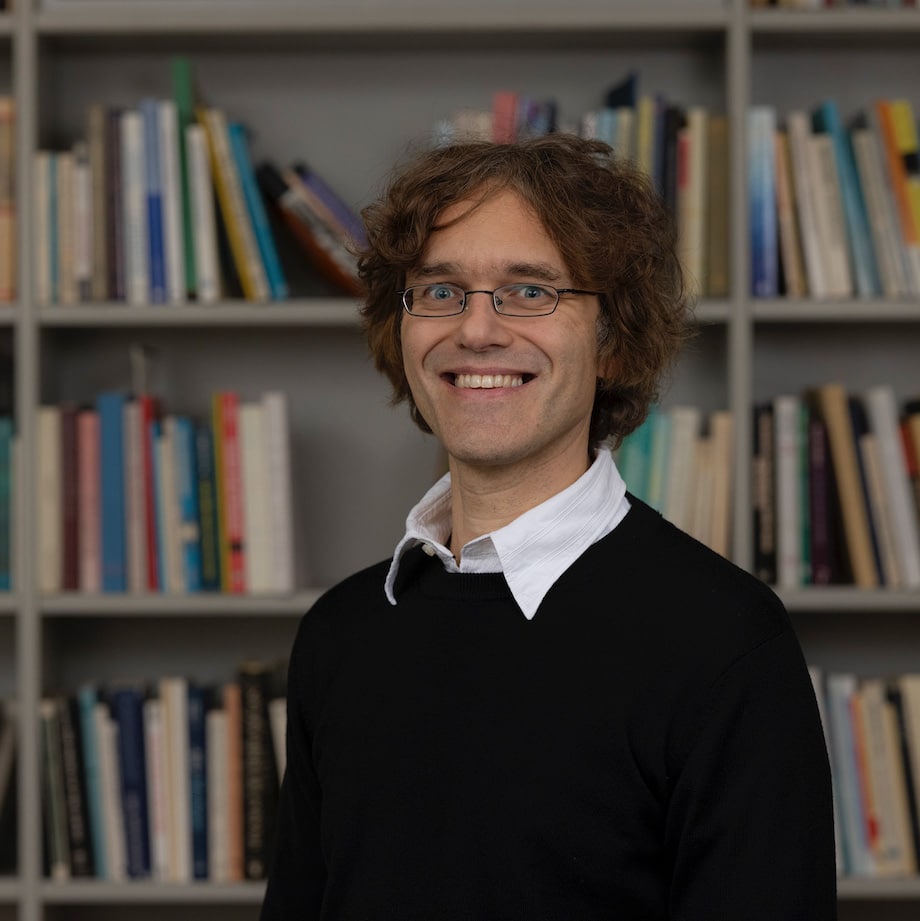
Robert Bosman is a Professor affiliated with the University of Hamburg's Medical Faculty, Department of Structural Biology. His research focuses on elucidating molecular mechanisms of membrane proteins and light-driven processes using advanced structural biology techniques such as X-ray crystallography, XFEL-based methods, and time-resolved spectroscopy. Key areas of interest include protein dynamics, photoactive proteins (e.g., rhodopsins, phytochromes), and enzymatic catalysis in metalloproteins. Affiliation: University of Hamburg Medical Faculty Key Techniques: Serial femtosecond crystallography (SFX), synchotron/XFEL applications, time-resolved studies Highlighted Research: Structural basis of sensory rhodopsin photocycles, dynamics of cytochrome c oxidase, photosynthetic reaction centers, and phytochrome photoactivation
Pascal Ruello is a Professor of Physics at Le Mans University , France, affiliated with the Institute of Molecules and Materials of Le Mans (CNRS UMR 6283). His work bridges Condensed Matter Physics and Ultrafast Phenomena , focusing on electron-phonon interactions, phase transitions, and nanoscale dynamics in semiconductors and multiferroic materials. His research explores ultrafast laser-induced phenomena , including coherent acoustic phonons, magnetoelastic couplings, and spin-to-charge conversion in interfaces. Collaborations span institutions in France, Poland, and Italy, with frequent work on topological insulators (e.g., Bi 2 Te 3 ) and multiferroics (e.g., BiFeO 3 ). Recent studies highlight Brillouin scattering for nanoscale imaging and THz spintronics for ultrafast charge manipulation. Key trends in his publications include lattice dynamics , nonequilibrium carrier transport , and confined systems . He has contributed to Nanophononics reviews and pioneered time-domain optomechanics in ferroelectrics and plasmonic structures. Prof. Ruello actively participates in international conferences, serving on program committees for SPIE Photonics West and EMRS Spring Meetings . He organizes workshops like the International Summer School CNRS 'Son et Lumière' and chairs committees for major events such as EUPHONON 2014 .
Alfredo Bellisario holds a postdoctoral position at Uppsala University, affiliated with the Department of Physics and Astronomy (X-ray Photon Science) and the Department of Cell and Molecular Biology (Molecular Biophysics) . He is part of the Biophysics Network at the faculty. His research focuses on Deep Learning for XFEL imaging experiments , plasma spectroscopy , and molecular fragmentation , with expertise in coherent diffractive imaging and computational methods. Education details are not explicitly stated, but his current roles indicate advanced academic standing. His recent work bridges machine learning with X-ray photon science, addressing challenges in phase retrieval and noise reduction in imaging. He has contributed to advancements in XFELs (X-ray Free-Electron Lasers) and experimental techniques like 3D-printed liquid sample delivery systems. Publications (2022–2024) highlight interdisciplinary research in quantum physics, biophysics, and engineering. Key collaborations include work on microsecond time-resolved X-ray scattering and neural network applications in imaging. No awards are explicitly listed, though his publications suggest significant contributions to the field. He has no listed advisees (students), but his research teams involve collaborators like Tomas Ekeberg and Patrick Konold. His work aligns with Uppsala's Biophysics Network and experimental facilities at Ångströmlaboratoriet.
Professor Adam Kirrander is a Fellow and Tutor in Chemistry at St Peter's College, University of Oxford, and Professor of Physical and Theoretical Chemistry. His research focuses on ultrafast imaging of quantum processes using X-ray free-electron lasers (XFELs) and ultrafast electron sources, combining theoretical and computational methods with experimental collaboration. He has taught physical chemistry at Oxford and previously at the University of Edinburgh, UCL, Uppsala University, and Université Paris-Sud. Education: Biophysics, Uppsala University MSc in Theoretical Chemistry, University of Oxford DPhil in Theoretical Chemistry, University of Oxford His research has been recognized with the Royal Society of Chemistry Horizon Prize (2021), U.S. Department of Energy Breakthrough status, and a Falling Walls finalist nomination (2020). His group is funded by EPSRC, STFC, the Leverhulme Trust, and the UK XFEL Physical Sciences Hub. Recent work spans ultrafast X-ray scattering for structural determination, nonadiabatic dynamics in photochemical reactions, and quantum simulations of electron correlation. He maintains a visiting position at Brown University since 2020 and collaborates globally on advancing imaging techniques at XFEL facilities.
Peter Littlewood is a Professor at the School of Physics and Astronomy at the University of St Andrews, where he conducts research in condensed matter physics. He is affiliated with the Centre for Clean Energy Research and has made significant contributions to understanding quantum materials and phenomena. His research interests include: Magnetoresistance and Fermi surface phenomena Quantum interference and transport in complex materials Ferroelectricity and phase transitions Non-equilibrium and nonreciprocal systems Synchrotron radiation applications for materials and biological imaging Littlewood's recent publications (2022-2025) demonstrate a strong focus on quantum phenomena in condensed matter systems, particularly examining magnetoresistance anomalies, quantum interference effects, and ferroelectric behavior. His work often involves sophisticated theoretical frameworks combined with experimental validation across multiple disciplines. Notably, his 2023 roadmap paper on battery technologies involved collaboration with over 45 researchers worldwide, highlighting his engagement with practical applications of physics research for sustainability. Professor Littlewood has established extensive international collaborations, with research outputs featured in high-impact journals including Nature Materials, Physical Review Letters, and Proceedings of the National Academy of Sciences. His work contributes to UN Sustainable Development Goals, particularly those related to clean energy and sustainable technologies.
Patrick Konold is a Researcher in the Department of Cell and Molecular Biology at Uppsala University, specializing in advanced X-ray techniques for structural biology. His work focuses on developing high-speed methodologies for studying biological molecules. His research interests center on time-resolved X-ray scattering and sample delivery systems for X-ray free-electron lasers (XFELs). Key areas include MHz repetition rate technologies, microsecond dynamics analysis, and precision liquid jet systems. This work enables unprecedented observation of protein conformational changes and molecular interactions in near-native states. Recent publications demonstrate a consistent focus on instrumentation innovation for XFEL applications, particularly in overcoming technical barriers for high-repetition-rate experiments. His contributions bridge engineering solutions with biological discovery, emphasizing stability and resolution in megahertz-range imaging. While no formal awards are documented in the source material, his publications in high-impact journals like Nature Methods and IUCrJ reflect significant contributions to the field. The research shows strong collaborative networks across international teams, with applications spanning structural biology and biophysics.
Per-Anders Carlsson is a Full Professor in Applied Chemistry at Chalmers University's Department of Chemistry and Chemical Engineering, and Head of the Chalmers Materials Analysis Laboratory (CMAL). His research focuses on materials and surface sciences, emphasizing green chemistry and catalysis for environmental protection and sustainable chemical production. Key areas include developing catalytic materials using physical inorganic chemistry approaches and advanced operando characterization techniques. His work integrates time-resolved experimental methods at international facilities, with applications in energy carriers, chemicals, and food production. He leads initiatives such as the Competence Centre for Catalysis (KCK). Recent research highlights include studies on catalyst deactivation, operando XANES analysis, and gallium-modified zeolites for aromatics synthesis. Publications span catalytic conversion mechanisms, surface reactivity, and reaction engineering, with a focus on CO oxidation, methane oxidation, and SCR catalysts. His research bridges fundamental material science with industrial applications, emphasizing sustainability and environmental impact mitigation.
Claribel Dominguez is a Researcher in the Department of Physics at the University of Geneva (UNIGE), affiliated with Prof. Jean-Marc Triscone's research group. Her work focuses on understanding electronic and structural properties of nickelate-based heterostructures, particularly exploring metal-insulator transitions, interfacial couplings, and emergent phenomena in oxide superlattices. She received the UNIGE Subside tremplin award in 2021 to support her research on nickelate superlattices, which revealed novel coupling mechanisms between nickelates with distinct metal-insulator transition temperatures. Her research integrates advanced materials synthesis (e.g., topochemical reduction, epitaxial growth) with cutting-edge characterization techniques including scanning transmission electron microscopy (STEM), X-ray diffraction, and optical spectroscopy. Key contributions include mapping orthorhombic domain structures, analyzing spin disproportionation effects, and probing electrically induced phase transitions at the atomic scale. These studies aim to bridge fundamental physics with potential applications in next-generation electronic devices. Awards: UNIGE Subside tremplin (2021) Labs/Groups: Triscone Group (Physics Section, UNIGE) Key Themes: Oxide heterostructures, electronic phase control, interface engineering Publications span topics like structural study of nickelate thin films, electronic coupling mechanisms, and domain engineering, demonstrating interdisciplinary approaches at the physics-chemistry interface.
Dr. Andrew Martin is the Deputy Head of the Department of Physics at RMIT University's School of Science. His research focuses on developing advanced imaging techniques using X-rays and electrons, particularly at the Australian Synchrotron and international X-ray free-electron lasers. He specializes in diffraction-based methods for applications in condensed matter physics, biochemistry, cell biology, and materials science. Dr. Martin teaches undergraduate courses in Introductory Physics, Quantum Physics, and Scientific Programming, while also supervising postgraduate research. His work emphasizes classical and quantum coherence phenomena, with recent projects addressing crystal structure determination, ionic liquid behavior, and nanostructure analysis using cutting-edge X-ray and electron microscopy techniques. His research group collaborates with institutions globally, leveraging XFEL facilities to explore ultrafast dynamics and structural changes in materials. He is committed to advancing methodologies for real-time, high-resolution structural analysis in complex systems.
John B. Vincent is a Professor in the Department of Chemistry and Biochemistry at the University of Alabama . His research focuses on the structure, function, and therapeutic potential of metallobiomolecules, particularly chromium-containing species relevant to diabetes and metabolic disorders. NIH Postdoctoral Fellow, University of Virginia (1990-1991) Postdoctoral Research Associate, University of Virginia (1988-1990) PhD, Indiana University (1988) BS, Murray State University (1984) Vincent's research bridges biochemical and synthetic inorganic methods to study metallobiomolecules. Notable work includes elucidating the role of chromium in insulin signaling through the chromodulin complex, developing synthetic biomimetics like Cr3 for cholesterol regulation, and innovating metalloprotein affinity metal chromatography for actinide removal. His methodologies span chromatography, spectroscopy (electronic, Raman, ESR, NMR), and mass spectrometry. Recent publications highlight chromium's interactions with DNA, mechanistic studies of chromium(III) in electrospray ionization, and structural analysis of chromium-transferrin complexes. Research trends emphasize chromium's physiological relevance, biomimetic design, and environmental applications of metal-binding proteins. Vincent's laboratory investigates chromium's role in diabetes management, the biophysical properties of metalloproteins, and sustainable metal recovery techniques. Collaborative projects span nutritional biochemistry, toxicology, and materials science.
Dr. Amir Koushyar Ziabari is a Senior R&D Staff Data Scientist at Oak Ridge National Laboratory (ORNL), working in the Multimodal Sensor Analytics group under the Electrification and Energy Infrastructure Division. His career spans advanced research in physics-informed computational imaging, signal processing, and machine learning applications for scientific imaging. Education: PhD in Electrical and Computer Engineering, Purdue University (2012-2016) MS in Electrical and Computer Engineering, University of California Santa Cruz (2009-2012) MS in Electrical and Computer Engineering, Sharif University of Technology (2006-2008) BS in Electrical and Computer Engineering, Amirkabir University of Technology (2001-2005) Dr. Ziabari's research focuses on "data science for science", combining data-driven and physics-based methodologies to develop computational imaging and machine learning algorithms. His work addresses image reconstruction, segmentation, and classification challenges across domains like advanced manufacturing, medical imaging, nuclear materials, and materials science. Key innovations include the SIMURGH software for X-ray CT reconstruction and diffusiveINR for energy-efficient foundation models. Recent publication trends show expertise in multi-modal imaging for additive manufacturing, thermal transport analysis at nanoscale, and physics-informed neural networks. His scientific awards include the R&D 100 Finalist, IEEE Senior Member (2022), IEEE Computational Imaging Technical Committee Member (2023), and multiple best paper recognitions. He has secured $3.5M+ in funding as PI/Co-PI and holds patents in tomographic reconstruction and thermal imaging. Dr. Ziabari contributes to professional societies (IEEE, ASTM, OSA), organizes symposia on additive manufacturing imaging, and mentors postdocs to build inclusive research environments. His collaborations with ZEISS, INL, and NIST demonstrate his ability to bridge academic research with industrial applications.
T. Bischoff is a researcher at DESY's Photon Science Division, specializing in X-ray free-electron lasers and coherent diffractive imaging. Their work focuses on capturing structural dynamics in nanoparticles using advanced X-ray techniques at facilities like FLASH and the European XFEL. Dr. Bischoff's research interests include: X-ray free-electron lasers Coherent diffractive imaging Nanoparticle dynamics Structural dynamics Time-resolved imaging X-ray diffraction Recent research by Dr. Bischoff has focused on developing techniques to capture the structural evolution of nanoparticles following X-ray exposure. Their work addresses the fundamental challenge of sample destruction during imaging, which limits achievable resolution in coherent diffractive imaging with high-intensity X-ray pulses. By creating methods for double diffraction imaging and two-frame movies, they're advancing our understanding of spatiotemporal evolution of matter on the nanoscale. Dr. Bischoff's publications demonstrate expertise in utilizing the unique capabilities of X-ray free-electron lasers to study dynamic processes in nanoscale systems, contributing to the broader field of time-resolved X-ray science.
Professor A. Föhlisch is a prominent researcher at the University of Hamburg's Faculty of Mathematics, Informatics and Natural Sciences, specifically within the Institute for Experimental Physics. With over 50 publications spanning from 2018 to 2025, Föhlisch has established a significant research presence in advanced X-ray spectroscopy techniques at major international facilities including DESY and the European XFEL. The research program focuses on cutting-edge investigations of quantum materials, ultrafast dynamics, and magnetic phenomena using state-of-the-art X-ray methodologies. Föhlisch's research interests encompass X-ray spectroscopy, ultrafast dynamics, quantum materials, magnetism, photochemistry, synchrotron radiation, and free electron lasers. The work explores fundamental questions about electron and spin dynamics at femtosecond timescales, with applications ranging from quantum materials to catalytic processes. A significant portion of the research involves developing and utilizing advanced X-ray techniques to probe matter under extreme conditions and at unprecedented temporal resolutions. Analysis of the publication record reveals a strong focus on developing and applying time-resolved X-ray spectroscopy methods, particularly at the European XFEL facility. The research spans both fundamental investigations of quantum phenomena in materials and more applied studies relevant to energy research and catalysis. Key methodological contributions include advancements in resonant inelastic X-ray scattering (RIXS), transient absorption spectroscopy, and techniques for probing magnetic dynamics with circularly polarized X-rays. The research group maintains strong collaborations with major international facilities including DESY, European XFEL, and various synchrotron radiation sources. This collaborative approach enables access to cutting-edge instrumentation and facilitates interdisciplinary research spanning physics, chemistry, and materials science. The work has significant implications for understanding fundamental quantum phenomena and developing next-generation materials for technological applications.
Stephen Hall is a Senior Lecturer in the Department of Solid Mechanics at the Faculty of Engineering, Lund University. He is an active researcher with significant contributions in solid mechanics, material characterization, and multiscale modeling, particularly using advanced imaging techniques such as neutron and X-ray tomography. He is affiliated with key research profile areas including Nanoscience and Semiconductor Technology, Light and Materials, and The Energy Transition at Lund University. Research Interests: His expertise lies in the mechanical behavior of heterogeneous materials, with a focus on localized deformation, strain field analysis, microstructure evolution, and hydromechanical coupling in porous media. He applies digital image correlation and tomographic methods to study phenomena in geological materials, polymers, and sustainable packaging. His work bridges fundamental mechanics with industrial and environmental applications, including energy systems and food processing. Publication Trends: His recent publications (2024–2025) emphasize experimental and computational studies of porous rocks and engineering materials using neutron and X-ray imaging. These works explore multiscale deformation, fluid flow deviations from classical laws, and microstructural responses under stress, reflecting a strong trend toward correlative, non-destructive 3D characterization techniques. Scientific Awards: No awards listed in the provided text. Supervision and Grants: Hall actively supervises PhD students and research projects. He is Principal Investigator (PI) on multiple externally funded projects such as AI-TOMO, FUNKYPACK, and plant-based meat analogue imaging, all funded by Vinnova. He also contributes as a researcher and supervisor in projects funded by the Swedish Research Council, demonstrating strong grant acquisition and collaborative leadership. Labs and Teams: He manages the 4D Imaging Lab at Lund University, a key infrastructure for advanced material characterization using time-resolved tomography. The lab supports interdisciplinary research across material science, geomechanics, and sustainable technology development.
Dr. Margie Olbinado is an Industrial Liaison Scientist at the Paul Scherrer Institute (PSI) in Switzerland, affiliated with the PSI Center for Photon Science and its Laboratory for Macromolecules and Bioimaging . She specializes in advanced X-ray imaging techniques at the TOMCAT beamline. Education: B.S. and M.S. in Physics, University of the Philippines Ph.D. in Physics, University of Tokyo (2010-2013) Research Interests: Dr. Olbinado is a leading expert in X-ray phase-contrast imaging , tomography , and time-resolved X-ray techniques . Her work focuses on industrial applications, including material characterization, failure analysis, and virtual histology, with recent innovations in X-ray ghost imaging. Publications: Her research spans ultra-fast X-ray microscopy, grating interferometry, and novel imaging modalities like Ghost Tomography. Key collaborations include institutions such as ESRF, Tohoku University, and ANAXAM - Analytics for Advanced Manufacturing. Collaborations: She works closely with PSI Technology Transfer, SLS TT AG, and international research teams to bridge academic advancements with industrial needs.