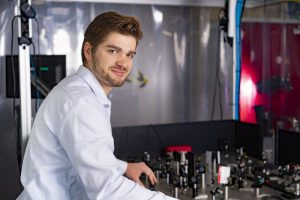
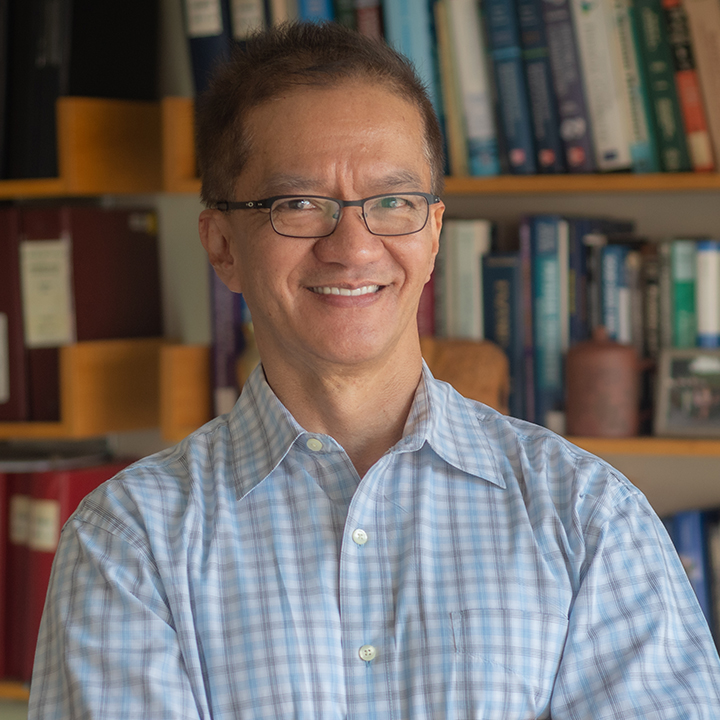
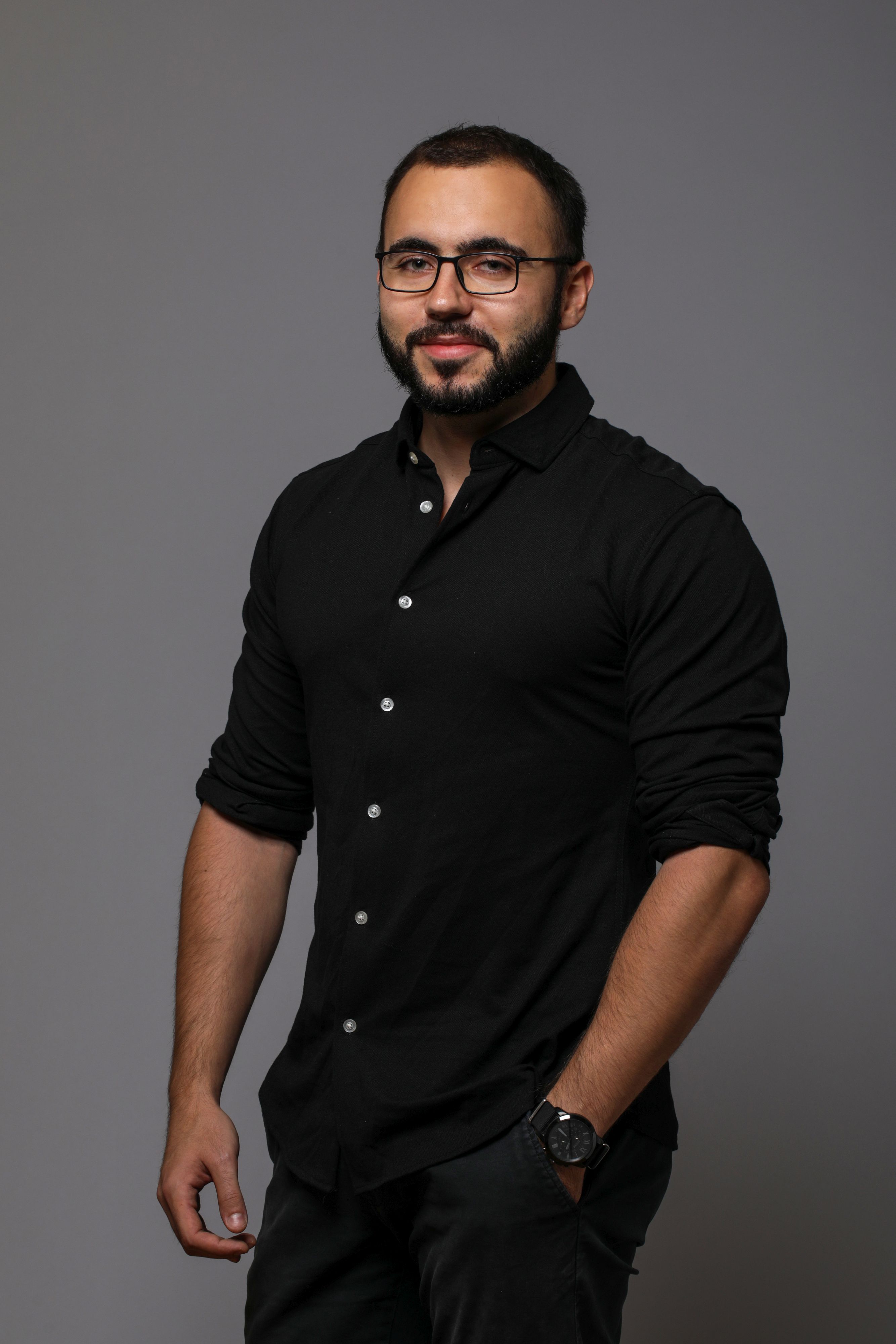
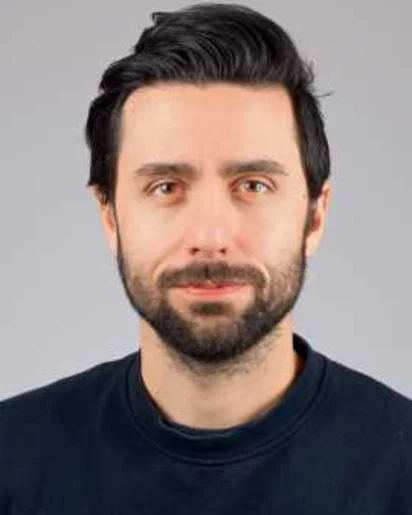
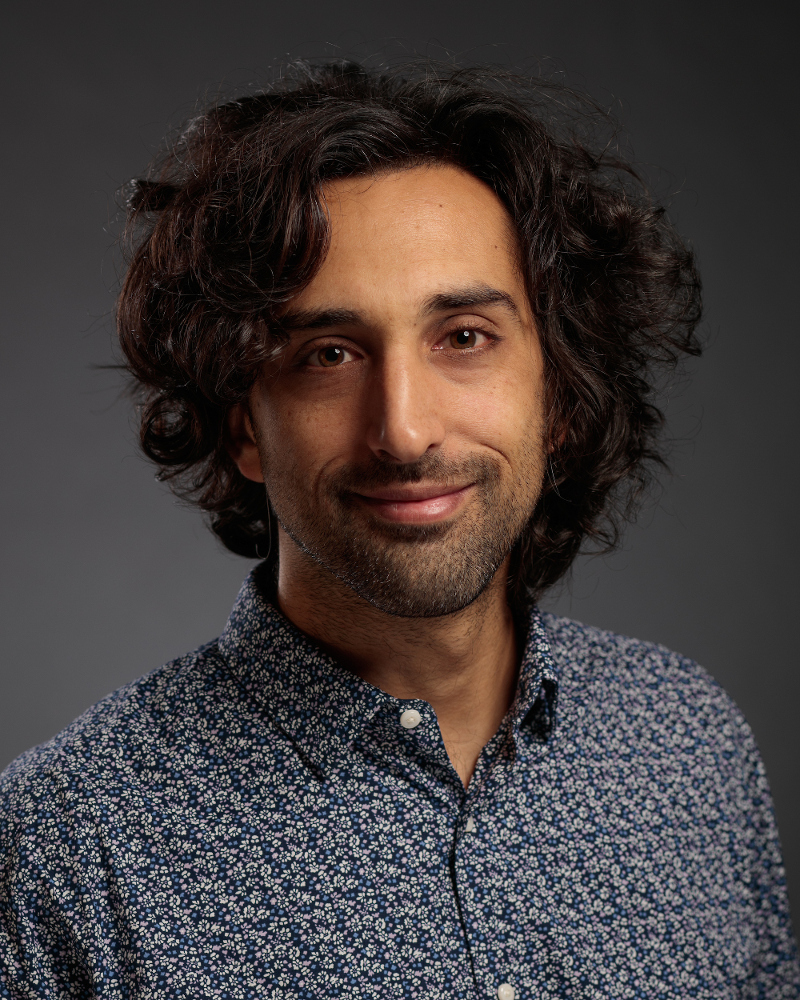
Karol Janulewicz is a researcher affiliated with the Max Born Institute for Nonlinear Optics and Short Pulse Spectroscopy, where he contributed to studies in plasma physics, X-ray lasers, and ultrafast spectroscopy. His work focuses on developing and optimizing X-ray sources, particularly for applications in coherent imaging and absorption spectroscopy. His research interests include the study of laser plasma interactions, transverse coherence in X-ray lasers, and polarization dynamics in plasma-based systems. He has explored high-resolution X-ray spectrometers, polycapillary optics, and collisional effects in soft X-ray lasers. Publications highlight advancements in X-ray source engineering, such as optimizing Kα sources and improving speckle statistics for coherent imaging. His work bridges fundamental plasma physics with applied technologies for X-ray spectroscopy and imaging. While no formal awards or grants are listed, his contributions to X-ray laser development underscore his role in advancing laboratory-based X-ray source capabilities for scientific investigations.
Dr. John Kay Dewhurst is a Researcher at the Max Born Institute for Nonlinear Optics and Short Pulse Spectroscopy, affiliated with the B4 group focusing on "Theory for Dynamics in Quantum Materials" . His work bridges theoretical physics and experimental spectroscopy to explore quantum material dynamics. Education: No details explicitly provided in the text. Research Interests: Dewhurst's research focuses on spin dynamics in quantum materials, ultrafast magnetism, and ab-initio simulations of electronic structure. Key areas include spin-orbit interactions, magnon dynamics, and time-resolved phenomena. His work often involves collaborations with experimental groups to interpret transient absorption spectroscopy data. Publications Trends: His recent articles (2020) emphasize ultrafast spin phenomena, spin-flip mechanisms in magnets, and computational methods for extended systems. This reflects a focus on connecting theory with ultrafast experimental techniques. Awards/Grants: No awards or grants mentioned in the provided text. Advising & Collaboration: No formal advisees listed, but collaborates with experimentalists like S. Sharma and P. Elliott. Active in multi-institutional projects involving institutions like Freie Universität Berlin (implied via MBI affiliation). Labs/Teams: Core member of the B4 theoretical group at MBI, contributing to both fundamental theory and applied spectroscopy research.
Sophie Canton is a Research Fellow at the Department of Chemistry , Technical University of Denmark , specializing in advanced spectroscopic techniques and materials for energy applications. Her work bridges Chemistry , Physics , and Materials Science , focusing on Hot Carrier Dynamics , X-Ray Emission Spectroscopy , and Photocatalysis . Active in Spin State Analysis , Excited State Landscapes , and Quantum Dot Catalysts Supervisor in the Engineering and Mechanistic Investigation on Doped Semiconductor Quantum Dots project (2018–2021) Recent research explores Lead Halide Perovskites and Metalloporphyrin Systems , aiming to enhance Photovoltaic Efficiency and Carbon Dioxide Reduction . Collaborations span international teams, leveraging Ultrafast Spectroscopy to study Electron Transfer mechanisms.
Jonathan Dubois is a CNRS Research Scientist at the Laboratoire de Chimie Physique - Matière et Rayonnement (LCPMR) in Paris. His research focuses on atomic, molecular, and optical (AMO) physics, with an emphasis on nonlinear phenomena in strong-field physics and attophysics. He holds a PhD from Sorbonne University (2019) and has held postdoctoral positions at LCPMR and the Max Planck Institute for the Physics of Complex Systems (MPIPKS). His work combines classical, semiclassical, and quantum approaches to study ultrafast dynamics, Hamiltonian systems, and open quantum systems. Key Positions: CNRS Research Scientist (2025–present) Marie Skłodowska-Curie Fellow (2024) Postdoc at LCPMR (2023–2024) Postdoc at MPIPKS (2019–2022) Research Themes: Attosecond science and real-time electron dynamics Strong-field ionization and recollision processes Quantum chaos and decoherence-free subspaces Hamiltonian systems and invariant tori dynamics Publications: Over 15 peer-reviewed articles in Physical Review Letters , Physical Review A/E , and SIAM Journal on Applied Dynamical Systems , focusing on ultrafast phenomena, quantum control, and nonlinear dynamics. Labs/Teams: Active research in LCPMR and collaborations with international groups in attophysics and strong-field physics.
Oscar Versolato is a Research Professor and Group Leader of the EUV Plasma Processes group at the Amsterdam Center for Nanolithography (ARCNL). He leads the Source Department, focusing on advanced plasma-based EUV light sources for semiconductor applications. His expertise spans plasma physics, laser technology, and spectroscopy of highly charged ions. He holds a PhD cum laude from the University of Groningen (2016 NWO Vidi Grant recipient) and conducted postdoctoral research at the Max Planck Institute and Aarhus University. His work addresses tin plasma dynamics, droplet deformation, and EUV radiation generation. Key achievements include ERC Starting (2018) and ERC Consolidator (2022) grants. Research interests include optimizing EUV sources via laser-driven tin plasmas and understanding plasma kinetics. Education: PhD in Laser Spectroscopy (University of Groningen) Research Focus: EUV plasma dynamics and optimization Laser-driven tin microdroplet systems Spectroscopic analysis of high-charge-state ions Plasma source efficiency and scalability Awards: NWO Vidi Research Grant (2016) ERC Starting Grant (2018) ERC Consolidator Grant (2022) Grants & Projects: Leadership in EUV source development, including the TI-REX tunable infrared laser system for nanolithography applications. Labs/Teams: Head of ARCNL's Source Department, coordinating interdisciplinary efforts in plasma physics and nanolithography.
Dr. Peter Kraus is an Associate Professor of Physics at Vrije Universiteit Amsterdam and Group Leader of the 'High-Harmonic Generation and EUV Science' team at ARCNL. Since July 2024, he has also served as Head of the Metrology Department at ARCNL. His research focuses on developing extreme ultraviolet (EUV) and nonlinear light sources for ultrafast spectroscopy and nanoscale metrology, with applications in nanolithography and strongly correlated materials. Kraus has pioneered techniques such as high-harmonic interferometry and super-resolution microscopy, enabling unprecedented nanoscale imaging without sample labeling. He holds a PhD in Physics from ETH Zurich (2015), where his thesis on high-harmonic spectroscopy earned the ETH Medal and the Jankunas Award. His work bridges fundamental physics and applied metrology, with funding from ERC (Starting Grant 2022, Proof of Concept 2024), NWO (Veni, Vidi), and TTW. Key projects include the HIMALAYA initiative, which explores femtosecond electron dynamics in correlated materials using EUV microscopy. Education: PhD in Physics, ETH Zurich (2015); Postdoctoral Research at UC Berkeley (2015–2018). Professional roles include leadership in ARCNL’s metrology division and academic teaching at Vrije Universiteit. Grants: ERC Starting Grant (2022), ERC Proof of Concept (2024), NWO Vidi (2023), NWO Veni (2018) Awards: ETH Medal (2015), Jankunas Award (2015) Labs/Teams: ARCNL’s High-Harmonic Generation Group, VU Physics Department His research advances include ultrafast transient absorption spectroscopy, attosecond electron dynamics studies, and metrology innovations like harmonic deactivation microscopy. Current efforts target real-time imaging of quantum materials and developing EUV tools for semiconductor manufacturing.
Noel Lazo serves as a Professor in the Carlson School of Chemistry and Biochemistry at Clark University, where he has maintained an active research laboratory since 2006. His work bridges chemistry, biochemistry, and neuroscience through investigations of protein aggregation disorders. Affiliated with both the Chemistry and Biology departments, he directs a multidisciplinary team examining molecular mechanisms underlying neurodegenerative and metabolic diseases. Dr. Lazo's educational background includes a B.S. from the University of the Philippines, M.S. from SUNY Syracuse, and Ph.D. in Chemistry (specializing in solid-state NMR) from Texas A&M University under James Haw. His postdoctoral training spanned biological NMR at Brigham and Women's Hospital and UCLA Neurology before his faculty appointment at Clark. His research focuses on proteolytic degradation and aggregation of proteins implicated in Alzheimer's disease and type 2 diabetes, particularly amyloid-β, ApoE isoforms, insulin-degrading enzyme, and islet amyloid polypeptide. Using integrated approaches including NMR spectroscopy, circular dichroism, mass spectrometry, and biochemical assays, his lab deciphers molecular mechanisms of protein oligomerization and degradation. Current projects investigate how anionic membranes modulate insulin degradation, differential ApoE isoform susceptibilities, and polyphenol effects on amyloid formation. Analysis of his 15 most recent publications (2010-2025) reveals an evolving research trajectory from fundamental peptide self-assembly mechanisms toward disease-relevant pathological processes. Early work characterized helix-to-sheet transitions and thioflavin T binding, while recent studies address Alzheimer's-diabetes connections through insulin-degrading enzyme modulation, ApoE proteolysis, and neurotoxic Aβ amplification cascades. Key thematic areas include membrane-protein interactions, enzyme kinetics regulation, and natural compound interventions. National Institute on Aging/NIH Grant R15AG055043 (2018-2021): 'Determinants of the Proteolytic Degradation of Soluble Amyloid-beta' Lise Ann and Leo E. Beavers II Endowment (recurring support for Alzheimer's/diabetes research) Dr. Lazo has mentored over 50 graduate and undergraduate students since 2006, with current trainees including PhD candidate Merc M. Kemeh and undergraduates Brianna Leckie, Joseph Tramontozzi, and Nathaniel Collins. His laboratory maintains active collaborations across neuroscience and biochemistry fields, with recent work featured in ACS Chemical Neuroscience and presented at Neuroscience 2022. The lab operates from S-335 Sackler Sciences Center, utilizing advanced spectroscopic and biochemical facilities for investigating protein complexes associated with late-onset disorders.
Dr. Luca Bolzonello is a Staff Researcher at the Institute of Photonic Sciences (ICFO) in the Molecular Nanophotonics research group. His work focuses on advancing nonlinear optical spectroscopy techniques and their application to study energy transfer dynamics in molecular systems, quantum materials, and nanophotonic devices. He holds a PhD in Molecular Sciences from the University of Padova (Italy). Education: PhD in Molecular Sciences from the University of Padova, Italy. Research Interests: Nonlinear optical spectroscopy, quantum phenomena in nanomaterials, energy transfer dynamics in organic semiconductors and biological systems, exciton behavior in nanostructured materials, and development of advanced spectroscopic methods. His recent work explores coherent dynamics in 2D materials and organic solar cells. Labs/Teams: Part of the Molecular Nanophotonics group at ICFO, which investigates light-matter interactions at the nanoscale.
Giuseppe Fumero is a Researcher at West Virginia University (WVU), affiliated with the Bristow Group. His research focuses on Ultrafast Spectroscopy, Nonlinear Optics, and Polaritonics, with applications in Femtochemistry and Quantum Light phenomena. He collaborates extensively with leading physicists such as G. Batignani, G. Cerullo, and S. Mukamel. Education: Not explicitly stated in provided texts. His work bridges fundamental physics and applied optics, addressing topics like coherent Raman spectroscopy, light-matter coupling in low-dimensional materials, and pulse shaping techniques. Recent studies include deep learning applications for Raman response analysis and molecular dynamics via impulsive spectroscopy. Key collaborations span institutions including Sapienza University of Rome, Politecnico di Milano, and NIST. He has published over 20 peer-reviewed articles since 2015, with notable contributions to understanding femtosecond lattice dynamics and stimulated Raman spectroscopy.
Uzay Emir is a Joint Associate Professor in Radiology at UNC-Chapel Hill, with cross-institutional roles including Principal Investigator at the University of Oxford and prior experience as an Assistant Professor at Purdue University. His research focuses on advancing MRI/MRS methodologies for neurodegenerative disease biomarker discovery, particularly using ultra-short echo time (UTE) and Rosette trajectory-based imaging techniques. Emir's work emphasizes translational applications across preclinical and clinical settings, including 3T to 9.4T field strengths. He pioneered the PETALUTE sequence for accelerated phosphorus spectroscopic imaging and led the multicenter 'Repeat it with me challenge' for test-retest reproducibility in Rosette MRI(S)I. His innovations include density-weighted concentric ring trajectories and 3D Rosette-based methods for brain iron content mapping and myelin fraction analysis. Research interests span neurochemical profiling, metabolic imaging, and functional MRI-fMRS integration at 7T. Education: PhD in imaging modalities (fMRI signal transients), postdoctoral training in MRS methods at the University of Minnesota's Center for Magnetic Resonance Research Key Methods: UTE MRI/MRSI, Rosette trajectory, 31P-MRSI, PETALUTE sequence Key Projects: ME/CFS metabolic studies, lead toxicity neuroimaging, sodium cartilage quantification Research trends in his articles highlight development of novel imaging sequences (e.g., ZTE fMRI, accelerated J-resolved spectroscopy) and their application to neurological disorders. Emphasis on clinical feasibility of 31P-MRS after decades of technical challenges underscores his translational impact. Recent work includes simultaneous multi-slice MRSI and NIfTI-MRS data standardization efforts. His contributions bridge preclinical-clinical research through standardized protocols enabling biomarker validation. Current efforts explore spatiotemporal dynamics of neural networks using integrated fMRI-fMRS approaches.
Dr. Josip Žubrinić is an Assistant Professor in the Department of Applied Mathematics at the Faculty of Electrical Engineering and Computing (FER), University of Zagreb. His research focuses on applied mathematics, homogenization theory, elasticity, and interdisciplinary applications in materials science and quantum systems. He is affiliated with FER's applied mathematics group and actively contributes to the Bibliography (CROSBI) research repository. Dr. Žubrinić's work spans theoretical and applied domains, including: Homogenization of PDEs in heterogeneous media Statistical mechanics models (e.g., Rydberg atoms, Flory polymer models) Combinatorial optimization for settlement planning Mathematical analysis of elastic structures and poroelastic plates Recent research highlights include studies on critical-contrast PDEs, quantum lattice systems, and multiscale modeling of composite materials. His articles demonstrate a strong emphasis on interdisciplinary methods bridging pure mathematics and real-world engineering problems. No scientific awards or grants are explicitly listed in the provided materials. His teaching includes specialized topics like complexity functions in jammed systems and combinatorial models.
Dr. Elia Razzoli serves as a beamline scientist and group leader at the Paul Scherrer Institute (PSI), where he directs the Furka group at the SwissFEL facility. He spearheads the design and installation of the Furka (LAP) experimental station on the soft X-ray beamline Athos, advancing ultrafast quantum materials research through cutting-edge spectroscopic techniques. His academic foundation includes: Bachelor's and Master's degrees from Politecnico di Milano PhD from École Polytechnique Fédérale de Lausanne (EPFL) focused on unconventional superconductors via angle-resolved photoemission spectroscopy Postdoctoral research at Université de Fribourg on 2D van der Waals materials, followed by an SNF-funded position at the University of British Columbia studying topological matter Razzoli's research centers on quantum materials —specifically unconventional superconductors, van der Waals systems, charge density waves, and topological semimetals. He integrates spin-, time-, and angle-resolved photoemission (ARPES) with resonant X-ray scattering at synchrotrons and free-electron lasers, complemented by density functional theory (DFT) calculations. His work targets the microscopic origins of quantum phenomena through both static and ultrafast dynamical investigations. His 2013–2020 publications reveal a trajectory from cuprate superconductivity to topological materials, emphasizing ultrafast quenching techniques and spin-orbit coupling effects . Key themes include electron-phonon interactions in quantum materials, Weyl semimetal physics, and phase coherence collapse in high-T c systems—all published in high-impact journals like Nature Physics and Science . Recognition includes: 2016 Advanced-Postdoc mobility Fellowship from the Swiss National Science Foundation (SNF) As group leader, Razzoli directs experimental development for the Furka station while securing funding for quantum materials instrumentation. His team pioneers laser-ARPES integration with SwissFEL's soft X-ray capabilities to probe femtosecond-scale material dynamics. The Furka group is establishing a next-generation endstation at SwissFEL specializing in time-resolved studies of quantum matter, with current efforts focused on commissioning laser-based ARPES systems for ultrafast electron dynamics imaging.
Daniel Charles Haynes is a Research Fellow at the Paul Scherrer Institute (PSI) in Villigen, Switzerland, affiliated with the Laboratory for Non-linear Optics within the Center for Photon Science. He actively contributes to SwissFEL operations, specifically commissioning the Diavolezza beamline for advanced attosecond experiments. His academic background includes a PhD from the University of Hamburg, Germany, completed under Prof. Dr. Adrian Cavalieri. His doctoral research centered on adapting laboratory-scale attosecond techniques for application at X-ray free-electron lasers, as detailed in his thesis "Extending attosecond techniques to X-ray free-electron lasers". Dr. Haynes specializes in attosecond time-resolved spectroscopy and XFEL instrumentation development , focusing on translating precision measurement methods from conventional labs to large-scale facilities like SwissFEL. His work enables unprecedented observation of electron dynamics in matter at attosecond timescales, bridging ultrafast physics with cutting-edge photon science. Within the Laboratory for Non-linear Optics, he collaborates on beamline instrumentation and experimental methodologies for the Diavolezza project, positioning PSI at the forefront of ultrafast X-ray science through direct application of his doctoral innovations.
Dipanjan Chaudhuri is a Researcher at the University of Illinois, specializing in Condensed Matter Physics with a focus on electronic and optical properties of quantum materials. His work employs advanced techniques like THz spectroscopy, ARPES, and EELS to study phenomena in superconductors, strange metals, and topological materials. Research Interests: Electronic structure and dynamics in correlated electron systems Superconductivity and quantum criticality Nonlinear optical responses in exotic phases Topological materials and phonon properties Key Research Directions Strange metal behavior in cuprates and heavy-fermion systems Charge density wave transitions and dynamics Ultrafast spectroscopy of photoexcited states Publications (2022–2025) explore topics ranging from Planckian dissipation in strange metals to topological phonons in RhSi, demonstrating expertise in cutting-edge condensed matter phenomena.
Giulio Vampa is an Assistant Professor of Physics at the University of Ottawa and an adjunct professor in the Department of Physics. He is a research scientist at the National Research Council of Canada (NRC), part of the Joint Attosecond Science Laboratory (JASLab) between NRC and the University of Ottawa, and a fellow of the Joint Center for Extreme Photonics (JCEP). His research focuses on attosecond science, high-harmonic generation (HHG), and their applications in nanoscale systems and solid-state materials. Giulio earned his Ph.D. in Physics from the University of Ottawa in 2016 under Prof. Paul Corkum, followed by postdoctoral research at the Stanford PULSE Institute (2016–2020) under Prof. David Reis, where he explored nanoscale applications of extreme photonics. He is a member of The Optical Society (OSA) and the American Physical Society (APS), currently chairing OSA’s technical group on Short Wavelength Sources and Attosecond/High-field Physics. His research interests include fundamental studies of HHG mechanisms in solids, plasmonic enhancements, and attosecond control in nanostructured materials. Key applications target ultrafast imaging, solid-state spectroscopy, and quantum-optical technologies. He collaborates with international teams to advance attosecond technologies and their integration with solid-state systems. Giulio’s work bridges strong-field physics, quantum optics, and materials science, with a focus on nanoscale control and ultrafast dynamics. His contributions include pioneering studies on localized HHG in semiconductors, plasmonic metasurface control, and in-situ nanoscale focusing of extreme ultraviolet harmonics.