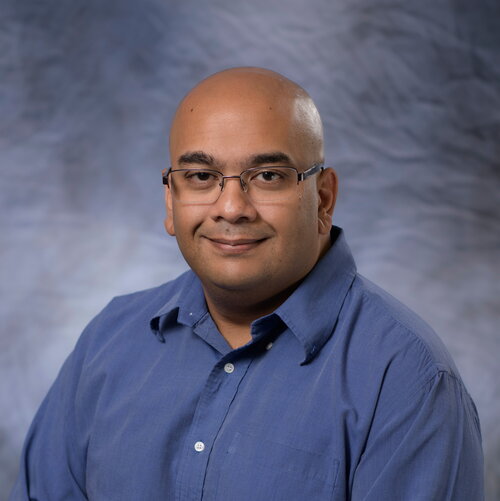
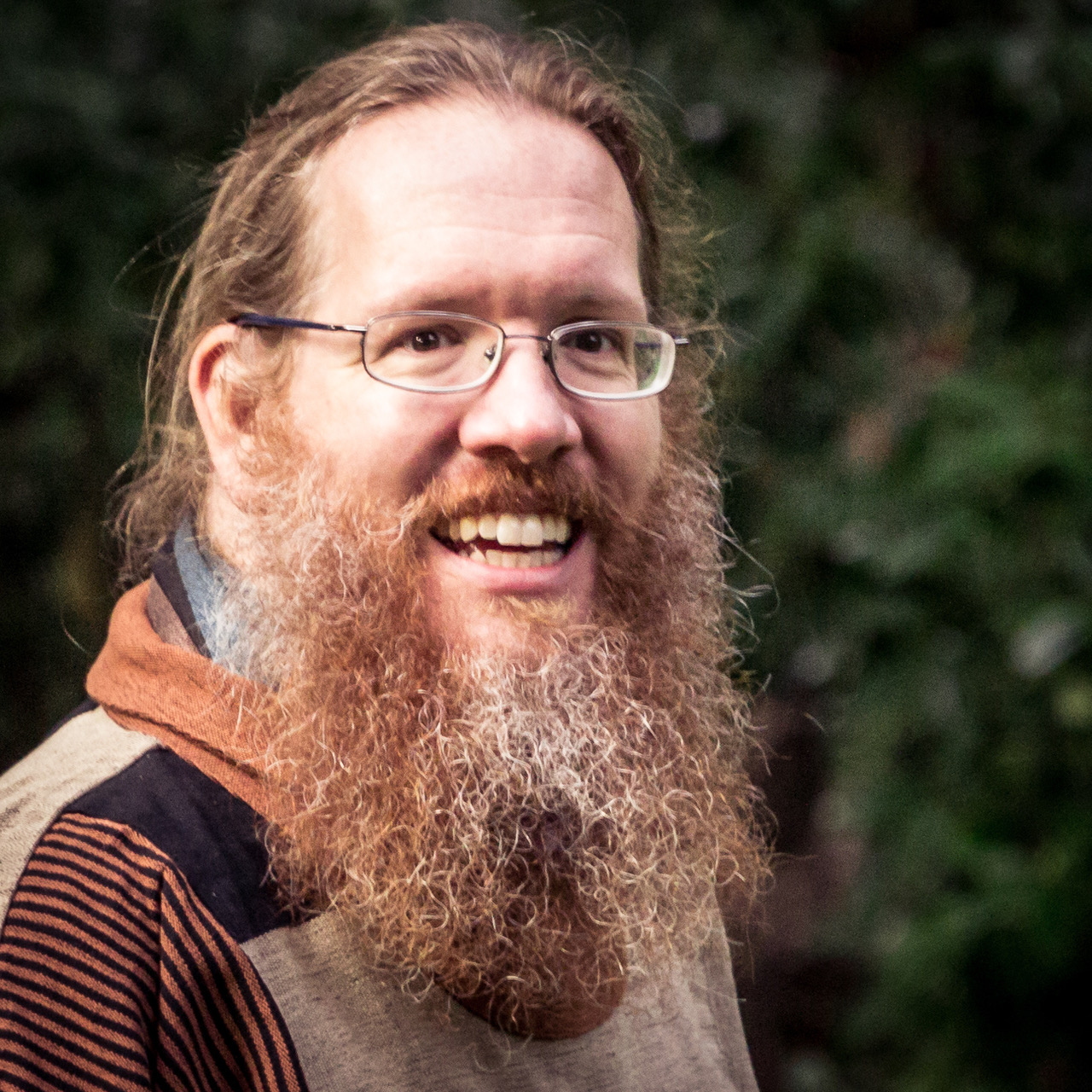
Simon Birrer is an Assistant Professor in Physics and Astronomy at Stony Brook University, specializing in cosmology and gravitational lensing. He holds a PhD from ETH Zurich (2016) and previously served as Kavli Fellow at Stanford University. Birrer leads research probing dark matter and dark energy using gravitational lensing phenomena. His group develops computational tools for analyzing strong gravitational lensing data to study cosmic expansion and dark matter distribution. Research areas include time-delay cosmography, Hubble constant measurements, and machine learning applications in astrophysics. Recent publications focus on multi-messenger gravitational lensing (2025), LSST survey applications (2025), and AI-powered lens modeling pipelines (2025). His work consistently addresses fundamental cosmological tensions like the Hubble constant discrepancy. Awards: Kavli Postdoctoral Fellowship (2019-2022) Kugelpyramide Lifetime Achievement Award Experimental Innovation Award (ETH Zurich) Research Group: Leads the SBU Strong Lensing group with 9+ graduate students and postdocs. The group participates in major collaborations including LSST Strong Lensing Science Collaboration (co-chair), LSST Dark Energy Science Collaboration, and TDCOSMO.
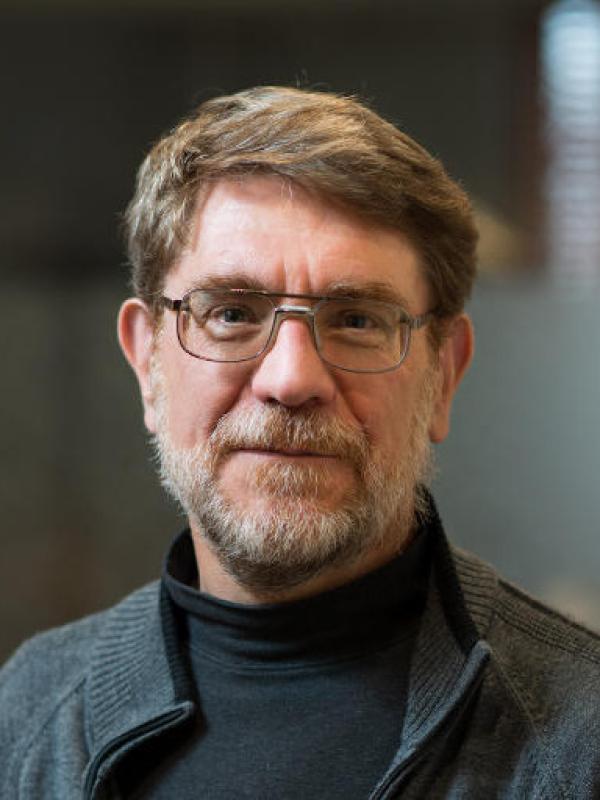
David Allcock is an Assistant Professor in the Department of Physics at the University of Oregon, part of the College of Arts and Sciences. His research focuses on ion trapping, quantum computing, and hybrid quantum systems, with an emphasis on manipulating atomic and molecular systems using electric and magnetic fields for quantum information applications. He leads the Ion Trapping Lab at UO, where he develops scalable quantum technologies and open-source control systems like ARTIQ and Sinara. His work bridges experimental physics with engineering, addressing challenges in qubit control, error mitigation, and large-scale quantum computer design. Education: MPhys from the University of Oxford (2007), D.Phil. in Physics from Oxford (2012). Prior to UO, he was a Lindemann Fellow at the National Institute of Standards and Technology (NIST) in Boulder, CO. His research includes innovations in trapped-ion qubit control, including laser-free entangling gates, scalable architectures, and applications in quantum sensing and dark matter detection. Key research themes include metastable qubit systems, photon scattering error mitigation, and the integration of superconducting detectors for state readout. He collaborates on open-source hardware-software stacks for quantum experiments and mentors students in quantum engineering through programs like the Quantum Technology Master’s Internship. Current projects explore hybrid quantum-classical interfaces and ultra-stable ion trap fabrication. His lab’s contributions span theoretical and experimental domains, with recent advances in geometric phase gates, microwave-driven control, and error-resilient qubit operations. The group also engages in interdisciplinary work linking quantum computing with precision measurement, such as SPUD (SPectroscopy for Ultralight Dark matter) and bosonic sensing tools.
University of Illinois Urbana-ChampaignUnited States
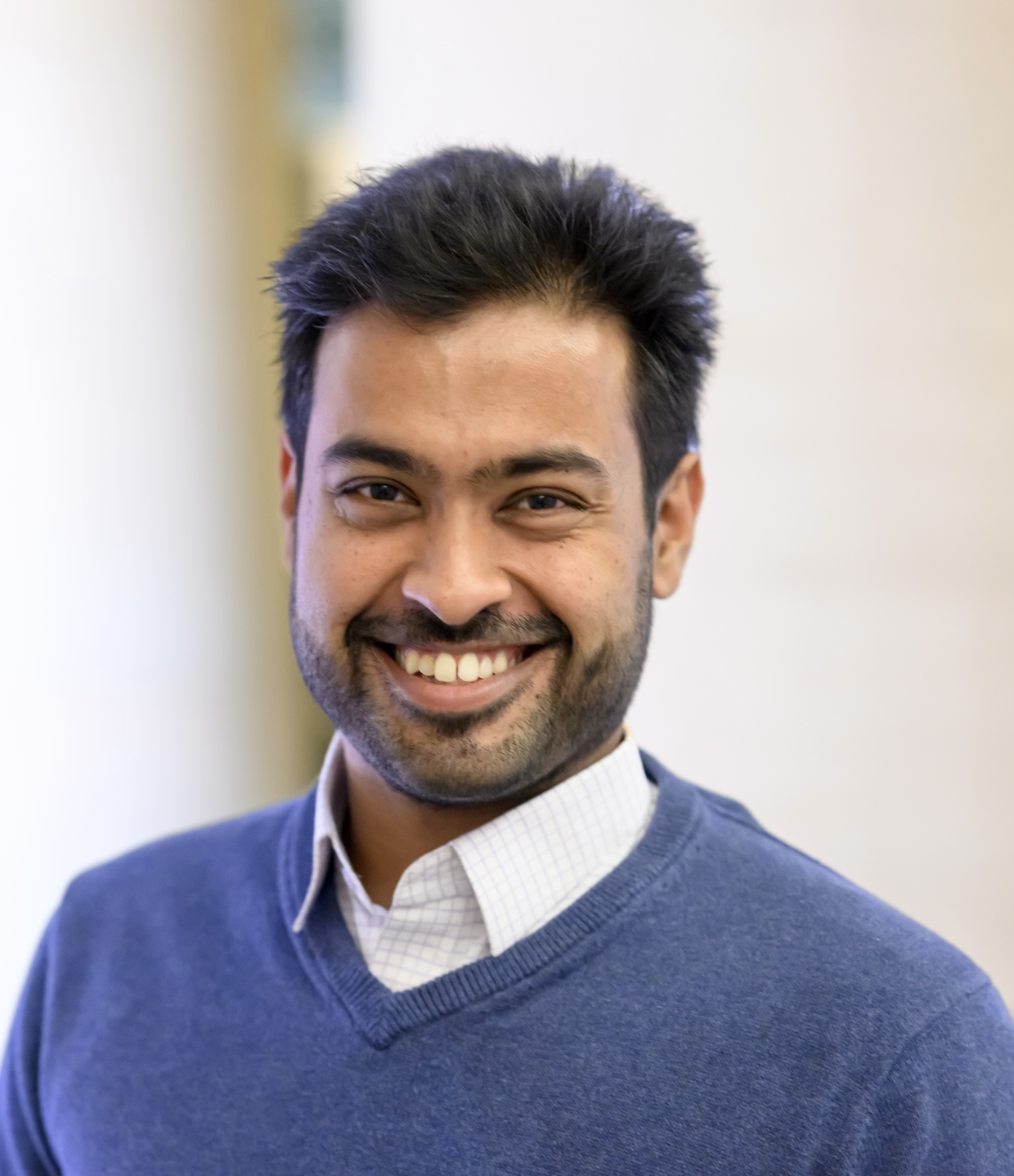
Gautham Narayan is an Associate Professor in the Department of Astronomy at the University of Illinois at Urbana-Champaign (UIUC), with affiliations in Physics and the National Center for Supercomputing Applications (NCSA). He holds roles as Deputy Director for Astrophysics Research at the NSF-Simons SkAI Institute and Deputy Director of the Center for AstroPhysical Surveys. His research focuses on multi-messenger and time-domain astrophysics, cosmology, and machine learning applications in astronomy. Education: PhD in Physics from Harvard University (2013) and BS (Hons) in Physics from Illinois Wesleyan University (2005). His work includes pioneering AI methods for transient detection, leading collaborations like the Young Supernova Experiment (YSE), and developing standards for LSST and WFIRST. He is a Simonyi NSF-CAREER Fellow and Analysis Coordinator for the LSST Dark Energy Science Collaboration. Research interests span cosmology, supernovae, and survey science. Key projects include establishing spectrophotometric standards via HST observations and advancing real-time analysis pipelines like ANTARES. Recent work emphasizes Bayesian models for supernova cosmology and multi-messenger astrophysics. Awards: Simonyi NSF-CAREER Fellowship. Collaborations include DESC, SCiMMA, and the KEGS team. Teaching includes courses on astrophysics and data science, with mentorship of students across undergraduate and graduate levels. Public outreach efforts include Astronomy on Tap events and science communication initiatives.
Jay Strader is a Professor in the Department of Physics and Astronomy at Michigan State University, where he serves as Graduate Director for the astronomy PhD program and Associate Chair for astronomy. His research focuses on compact objects, particularly black holes and neutron stars in globular clusters, neutron star binaries in Fermi gamma-ray sources, and intermediate-mass black holes. He has received a Packard Fellowship for Science and Engineering and grants from NSF and NASA. His research group includes postdoc Ryan Urquhart, graduate students Thomas Do and Rebecca Kyer, and several undergraduates, with past students like Teresa Panurach (now director of NoVEL Consortium) and Samuel Swihart (NRC fellow at Naval Research Lab). Education: PhD in Astronomy, UC-Santa Cruz/Lick Observatory Awards: Packard Fellowship Collaborations: Member of Rubin Observatory's Stars, Milky Way, and Local Volume science collaboration since 2008 Previous Positions: Hubble Fellow and Menzel Fellow at Harvard-Smithsonian Center for Astrophysics (2007-2012) Program Initiatives: Co-founder of PAREDS program for early research opportunities at MSU His work has been supported by NSF and NASA grants, and he has contributed to studies on black holes in M22, hypervelocity globular clusters around M87, and transitional millisecond pulsars. His group collaborates with Laura Chomiuk and contributes to data catalogs like the M31 globular cluster velocity dispersion database.
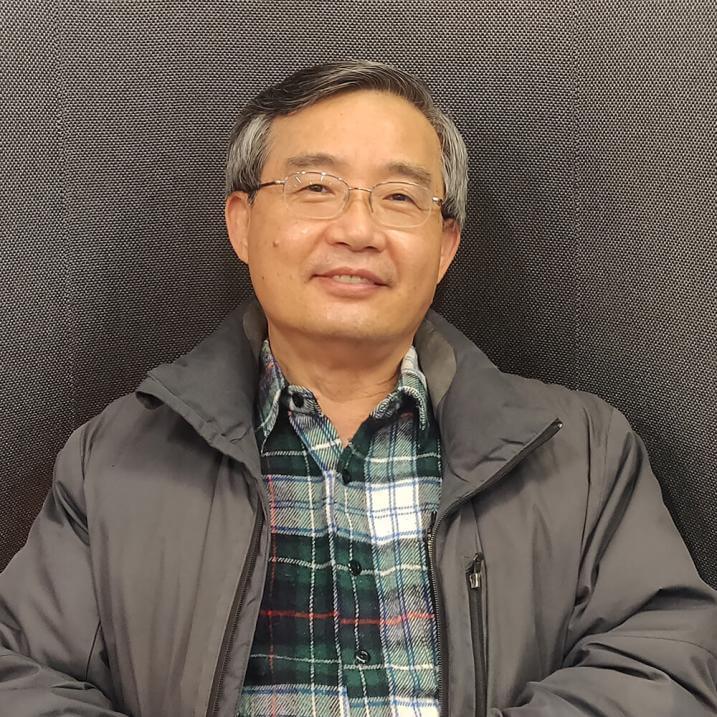
Professor Byung S. Lee is a distinguished faculty member in the Department of Computer Science at the University of Vermont's College of Engineering and Mathematical Sciences. He joined UVM in 1999 and continues to be actively engaged in teaching, research, and service. His office is located in Innovation Hall at the Burlington campus, where he maintains regular office hours and oversees his research lab. Professor Lee holds a Ph.D. from Stanford University, an MS from Korea Advanced Institute of Science and Technology, and a BS from Seoul National University. His educational background provided the foundation for his extensive career in computer science research and education. Professor Lee's research spans multiple domains within computer science, with a particular focus on database systems, data mining, and data science. His work increasingly integrates machine learning techniques with traditional database approaches, especially in the analysis of time series data. He has made significant contributions to graph theory applications, anomaly detection methods, and environmental data analysis. His research often bridges computer science with practical applications in healthcare, environmental science, transportation, and astrophysics through interdisciplinary collaborations. An analysis of his recent publications reveals a strong trend toward time series analysis and anomaly detection, particularly applied to environmental monitoring and healthcare data. His work demonstrates a consistent evolution from foundational database research to more applied machine learning approaches, with increasing emphasis on real-world problem solving across multiple scientific domains. Professor Lee has served as primary advisor for numerous graduate students across multiple cohorts, including PhD candidates, Master's students, and postdoctoral researchers. His advising portfolio reflects the breadth of his research interests, with students working on topics ranging from graph neural networks to medical informatics applications. He has also been actively involved in professional service, serving on program committees for major conferences including SAC, PAKDD, DASFAA, and CIKM. Professor Lee leads a vibrant research laboratory that focuses on cutting-edge data science methodologies and their applications. His team collaborates extensively with researchers in environmental science, hydrology, and healthcare, demonstrating the interdisciplinary nature of modern data science research. The lab maintains active projects in time series analysis, graph analytics, and environmental monitoring systems, often working with large-scale datasets from real-world applications.
California Institute of Technology (Caltech)United States
Kishalay De is an Assistant Professor in the Department of Astronomy at Columbia University and an Associate Research Scientist at the Center for Computational Astrophysics, Flatiron Institute. His research focuses on using wide-field imaging surveys to study cosmic transients from stellar binaries in the Milky Way and distant Universe. He specializes in analyzing data from missions like Palomar Gattini-IR (PGIR), Zwicky Transient Facility (ZTF), and NASA's WISE telescope to understand stellar cataclysms and their role in shaping the universe via gravitational waves and electromagnetic signatures. Affiliations: Columbia University, Flatiron Institute Education: PhD in Astrophysics (Caltech, 2021), B.Sc. Physics (Indian Institute of Science, 2016) His work includes discovering heavily obscured novae in the Galactic plane and characterizing infrared transients linked to stellar mergers and black hole accretion. He is leading a project analyzing 15 years of WISE archival data to study transient mid-infrared phenomena. Awards: NASA Einstein Fellowship (2021–2024), Kavli Institute Fellowship.
Dr. Fengyan Li is a Professor in the Department of Mathematical Sciences at Rensselaer Polytechnic Institute (RPI). She holds a PhD in Applied Mathematics from Brown University (2004) and previously held a postdoc at the University of South Carolina. Her research focuses on numerical analysis and scientific computing, particularly discontinuous Galerkin methods for applications in wave propagation, fluid dynamics, plasma physics, and nonlinear optics. She has received prestigious awards including the NSF-CAREER Award (2009) and Alfred P. Sloan Fellowship (2008). Dr. Li serves on editorial boards of journals like SIAM Journal of Numerical Analysis and IMA Journal of Numerical Analysis. Education: PhD in Applied Mathematics (Brown University, 2004); MS & BS in Computational Mathematics (Peking University, 2000 & 1997). Research interests emphasize multi-scale simulations, reduced-order modeling, and high-order methods. Her work addresses challenges in kinetic transport, nonlinear optics, and plasma dynamics. She has delivered plenary talks at major conferences, including ICOSAHOM (2018) and NAHOMCon (2022). Professional service includes leadership roles in the Association for Women in Mathematics (AWM), co-organizing symposiums, and mentoring. She is a 2025 AWM Fellow and advises RPI's AWM Student Chapter.
California Institute of Technology (Caltech)United States
Matthew J. Graham is a Research Professor of Astronomy at the California Institute of Technology (Caltech), serving as the Project Scientist for the Zwicky Transient Facility (ZTF). His work bridges astronomy, machine learning, and data science, focusing on time-domain sky surveys that produce hundreds of thousands of public transient alerts per night. Previously, he has worked on the Catalina Real-time Transient Survey (CRTS), NOAO DataLab, Virtual Observatory, and Palomar-Quest Digital Sky Survey. Dr. Graham's primary research interests involve applying machine learning and advanced statistical methodologies to astrophysical problems, particularly the variability of quasars and other stochastic time series. His work addresses the unprecedented data volumes generated by 21st-century astronomy while expanding our ability to work with complex information systems beyond simple correlations. His current projects include real-time low latency inferencing via the NSF-funded A3D3 Institute, reinforcement learning for optimizing astrophysical follow-up campaigns, neural differential models for supermassive black hole variability, and functional analysis of multivariate time series. Analysis of Graham's recent publications reveals a strong focus on time-domain astronomy, particularly leveraging the capabilities of the Zwicky Transient Facility. His work spans multiple areas including gravitational wave counterpart identification, active galactic nuclei variability, supernova characterization, and machine learning applications for transient detection. A notable trend is the integration of artificial intelligence techniques to handle the massive data streams from modern sky surveys, enabling real-time analysis and decision-making that would be impossible with traditional methods. Dr. Graham has been instrumental in developing infrastructure for time-domain astronomy, including the alert distribution system for ZTF and data processing pipelines for handling massive transient datasets. His work on the Catalina Real-time Transient Survey established important methodologies for identifying variable and transient sources that continue to influence the field. As Project Scientist for ZTF, Graham leads a major international collaboration involving Caltech, IPAC, and numerous partner institutions worldwide. The facility represents a significant advancement in time-domain astronomy, providing unprecedented coverage of the dynamic sky and enabling discoveries across multiple areas of astrophysics.
David Palmer is an Affiliate Associate Professor in the Department of Astronomy and Astrophysics. He is affiliated with Los Alamos National Laboratory (LANL). His research focuses on speech recognition, natural language processing, and multilingual systems, with particular emphasis on information extraction from audio and speech data. His work bridges computational linguistics and machine learning, addressing challenges in automated systems for audio comprehension and cross-language processing. Key research interests include robust information extraction from speech transcriptions, error detection in speech recognition, and multilingual processing for operational users. He has contributed to advancements in speaker identification, text preprocessing techniques, and domain adaptation in speech processing systems. His publications span over two decades, reflecting a consistent focus on improving automated systems for handling audio and text data in dynamic environments. While no specific awards or grants are listed, his extensive publication record highlights sustained contributions to the fields of speech technology and computational linguistics. His work at LANL likely involves collaborative research in applied computational sciences, though specific lab affiliations or teams are not explicitly mentioned.
Jonathan Weare is a Professor of Mathematics at the Courant Institute of Mathematical Sciences, New York University. He holds affiliations with the Faculty of Arts and Science and the Graduate School of Arts and Science. His academic journey includes roles as an Associate Professor at the University of Chicago (2014–2019) and Assistant Professor (2011–2014), following postdoctoral work as a Courant Instructor at NYU. He earned his Ph.D. in Mathematics from UC Berkeley in 2007. His research focuses on stochastic algorithms and models, with applications in astrophysics, biophysics, computational chemistry, and climate science. Key areas include Monte Carlo methods, rare event simulation, and machine learning-driven scientific analysis. Collaborations with domain experts ensure his work addresses real-world challenges in diverse fields. Recent publications emphasize advancements in trajectory stratification, rare event prediction using machine learning, and efficient algorithms for high-dimensional problems. Notable contributions include the BAD-NEUS framework and AI-based solar system instability predictions. His group’s interdisciplinary approach bridges computational methods with scientific inquiry. Weare has advised numerous students and mentored postdocs, fostering talent in applied mathematics and computational science. His work on Mercury’s orbital dynamics and extreme weather prediction showcases the societal impact of his research. Current projects explore AI applications in weather modeling and rare event analysis, leveraging cutting-edge machine learning techniques. Labs/Teams: His research group at Courant develops stochastic algorithms and collaborates with interdisciplinary teams in computational chemistry, climate science, and astrophysics. Key collaborations include the University of Chicago and Columbia University.
Christopher Kochanek is a Professor and Ohio Eminent Scholar in the Department of Astronomy at The Ohio State University, affiliated with the College of Arts and Sciences. His expertise lies in cosmology, gravitational lensing, and supernovae. He earned his Ph.D. from the California Institute of Technology (1989) and a B.A. from Cornell University (1985). His research focuses on using gravitational lensing to study dark energy, dark matter substructures, and quasar accretion disks. He pioneered time-domain astronomy, exploring variability in massive stars and quasars, and co-led the ASAS-SN project for all-sky supernova detection. Key achievements include the Dannie Heineman Prize for Astrophysics (2020) and the AAS Beatrice M. Tinsley Prize (shared 2020). His work spans binary neutron star mergers, Milky Way mass estimation, and dust-obscured stellar explosions. Recent studies analyze supernova progenitors and long-term variability trends in transient events. Awards: Heineman Prize (2020), Tinsley Prize (2020) Grants & Projects: ASAS-SN collaboration with Prof. Stanek, dark energy constraints via lensing, and Milky Way dynamics. Labs/Teams: Active in the Ohio State Astronomy Instrumentation Group and ASAS-SN observatory network.
David E. Kaplan is a Professor of Physics and Astronomy at Johns Hopkins University, where he has been a faculty member since 2002. He holds a PhD from the University of Washington (1999) and completed postdoctoral research at the University of Chicago/Argonne National Lab and SLAC. His research focuses on theoretical extensions of the Standard Model of particle physics and cosmology, with emphasis on dark matter, axions, quantum gravity, and experimental probes of fundamental physics. Notably, he created and produced Particle Fever , a documentary film awarded the DuPont Journalism Award. Key research interests include exploring new physics beyond the Standard Model, such as models addressing the strong CP problem, probing dark matter interactions via atom interferometry and spin precession, and studying cosmological implications of gravitational theories. He is a Fellow of the American Physical Society (APS), a DOE Outstanding Junior Investigator, Kavli Frontiers Fellow, and Alfred P. Sloan Fellow. His work integrates theoretical frameworks with experimental efforts, such as collaborations at SQMS (Quantum Sensing) and proposals for next-generation experiments like GALILEO (Galactic axion laser interferometer). His recent articles address topics ranging from nonlinear quantum mechanics to gravitational wave detection and cosmological constant relaxation.
Ina Sarcevic is a Professor of Physics and Astronomy at the University of Arizona, holding the title of Primary Faculty. Her research focuses on particle astrophysics, dark matter, neutrinos, and collider physics. She has made significant contributions to the DUNE (Deep Underground Neutrino Experiment) collaboration, leading efforts in detector design, software development, and theoretical modeling. Her work bridges experimental and theoretical particle physics, addressing fundamental questions in astrophysics and cosmology. Education: Ph.D. in Physics from the University of Minnesota (1986), B.S. in Physics from the University of Sarajevo (1981), with notable fellowships including the Humboldt Fellowship (1989-1991) and a Doctoral Dissertation Fellowship (1985-1986). Research Interests: Dark matter detection via neutrinos, neutrino interactions at extreme energies, and the role of particle physics in cosmological phenomena. She explores theoretical frameworks for secret interactions of sterile neutrinos and their implications for the diffuse supernova neutrino background. Her work on detector technology for DUNE includes optimizing liquid argon time-projection chambers (TPCs) and developing algorithms for neutrino interaction reconstruction. Selected Honors: 2006 Fellow of the American Physical Society, recipient of the British Council Fellowship for Young Scientists (1980-1981), and Summa cum laude distinction at the University of Sarajevo. Grants and Collaborations: Principal investigator in DUNE-related projects, including detector design, software computing, and data analysis. Involved in international collaborations such as the LHC’s Forward Physics Facility and ProtoDUNE beam tests at CERN. Labs/Teams: Active member of the DUNE Collaboration, focusing on neutrino oscillation physics, supernova neutrino detection, and dark matter signatures in neutrino telescopes. Her group collaborates on developing advanced machine learning techniques for particle identification in large-scale detectors.
California Institute of Technology (Caltech)United States
Rana Adhikari is a Professor of Physics at the California Institute of Technology (Caltech). Holding a B.S. from the University of Florida (1998) and a Ph.D. from MIT (2004), he has been at Caltech since 2006, progressing from Assistant Professor to full Professor in 2012. His research focuses on advancing detector technologies for fundamental physics experiments in gravitational waves, dark matter, and near-field gravity studies. Education: B.S. in Physics, University of Florida (1998); Ph.D. in Physics, MIT (2004) Caltech Faculty: Assistant Professor (2006-12), Professor (2012-present) Adhikari's group specializes in precision measurements at the intersection of classical and quantum physics. Key research areas include: Mechanical oscillators and their thermodynamic limits Nonlinear optics for interferometric applications Quantum information constraints in classical sensors Adaptive optics using thermal actuation Cryogenic silicon interferometers for cosmological observations High-quality silicon opto-mechanical systems for LIGO applications Laser gyroscope technology for rotation sensing The group's work on gravitational wave detection has produced numerous publications in leading journals like Physical Review X , Physical Review D , and Optics Express . Their research often combines experimental physics with machine learning techniques for noise cancellation in laser interferometers. Adhikari's team also engages with undergraduate researchers through programs like the International LIGO SURF students, creating opportunities for young scientists in gravitational physics. His publications reveal a consistent focus on gravitational wave detector optimization, quantum metrology, and cosmological observations through advanced instrumentation.
Kobus Barnard is a Professor in the Department of Computer Science at the University of Arizona, with his office located in GS 708. His research bridges computer vision, machine learning, and interdisciplinary scientific applications across diverse domains. Education: Ph.D. from Simon Fraser University (1999) His research interests focus on extracting meaningful insights from complex data through computer vision and probabilistic modeling. Key areas include machine learning for environmental monitoring (flood detection, plant disease analysis), social dynamics (interpersonal coordination, emotional coregulation), astronomy (transient classification), and multimodal learning (visual-linguistic integration). His work consistently applies deep learning to real-world problems requiring high-resolution data interpretation. Analysis of his 2022-2025 publications reveals three dominant trends: (1) Environmental applications using satellite imagery for flood mapping and agricultural monitoring, (2) Cognitive modeling of human teams and emotional dynamics through probabilistic frameworks, and (3) Astronomical data analysis leveraging host galaxy properties for transient classification. These threads demonstrate his commitment to solving practical scientific challenges through computational innovation. While scientific awards aren't documented in available sources, his leadership in projects like FloodPlanet and ToMCAT indicates significant contributions to data infrastructure. His advising and grant activities remain unreported in the source material, though his extensive interdisciplinary collaborations suggest substantial mentorship impact. Barnard's work operates at the intersection of multiple scientific communities, evidenced by applications spanning neuroscience, agriculture, astronomy, and social science. His current focus on high-resolution data fusion and multimodal modeling positions him at the forefront of real-world AI deployment.