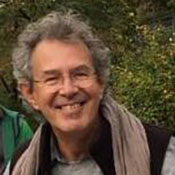
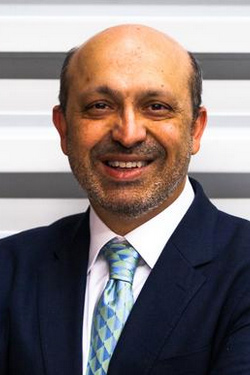
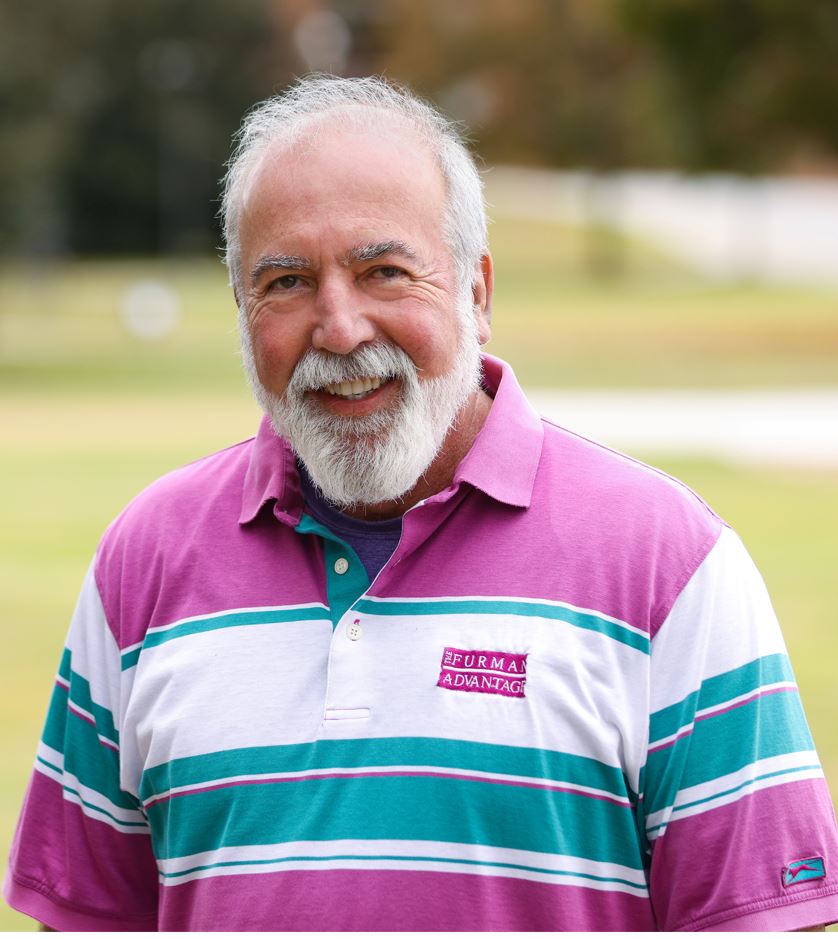
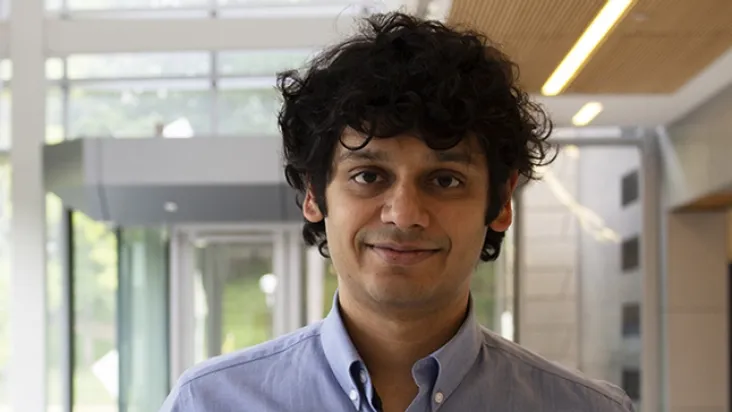
Nicholas Evans is Distinguished Professor of Linguistics and Director of the ARC Centre of Excellence for the Dynamics of Language (CoEDL) at the Australian National University’s School of Culture, History & Language. His work bridges fieldwork-based language documentation with theoretical questions in typology, cultural evolution, and social cognition. Focus on endangered Australian and Papuan languages Director of ARC Laureate Project on 'The Wellsprings of Linguistic Diversity' Co-leader of SCOPIC (Social Cognition Parallax Corpus) study Collaborator in global linguistic diversity initiatives His research explores how micro-level community multilingualism shapes macro-level linguistic diversity, with fieldwork spanning seven years in remote Indigenous communities. Recent projects include PARABANK (paradigm syncretism analysis) and Southern New Guinea language studies, particularly Nen and Yam family languages. Scientific recognition includes the Ken Hale Award (Linguistic Society of America), Anneliese Maier Forschungspreis, and fellowships in the Australian Academy of Humanities, Australian Social Sciences Academy, and the British Academy.
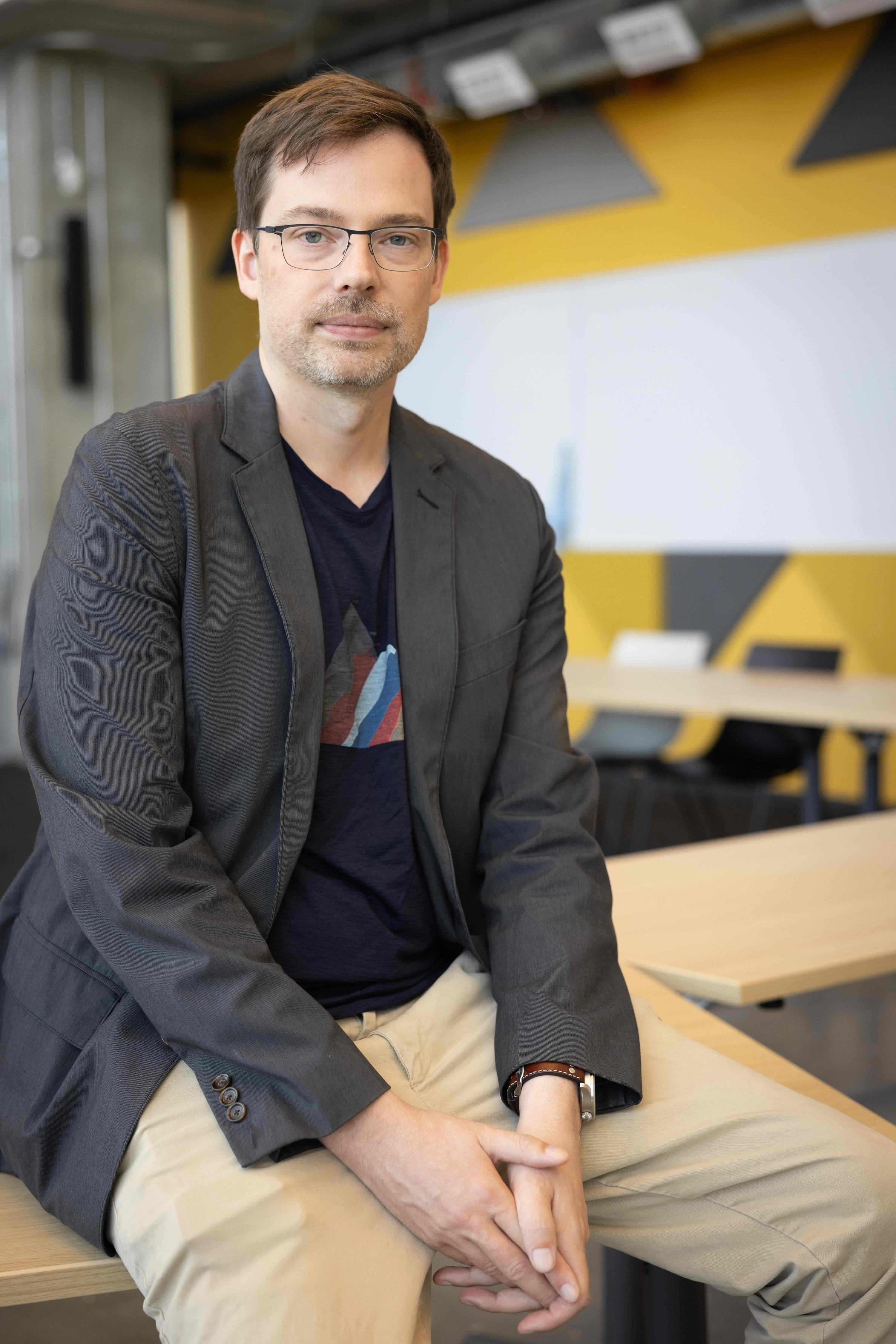
Justin Johnson is an Assistant Professor at the University of Michigan's College of Engineering, Department of Electrical Engineering and Computer Science, and a Research Scientist at Facebook AI Research (FAIR). His work bridges computer vision, machine learning, and deep learning, focusing on visual reasoning, vision-language tasks, image generation, and 3D reasoning using neural networks. PhD, Stanford University (advised by Fei-Fei Li) His research interests span visual reasoning , vision and language , 3D vision , and image generation , with a focus on innovative applications of deep neural networks. Recent publications highlight work on 3D consistency, self-supervised learning, and multimodal integration of vision and text. Notable contributions include PyTorch3D for 3D data processing, and foundational work in visual question answering , neural style transfer , and scene graph-based image generation . Publications span top conferences like ICCV, CVPR, and NeurIPS. He teaches courses including EECS 498/598: Deep Learning for Computer Vision and EECS 442: Computer Vision at University of Michigan, with prior involvement in Stanford's CS 231N in co-teaching roles. Software projects include open-source frameworks like fast-neural-style for real-time artistic style transfer, and PyTorch3D for efficient 3D deep learning. These tools demonstrate his commitment to practical implementations and community-driven research.
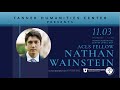
Nathan Wainstein is an Assistant Professor in the English Department at the University of Utah's College of Humanities, where he has been teaching since July 2023. His academic work bridges literary studies with contemporary digital media, particularly focusing on video game aesthetics alongside modernist literature. Wainstein maintains an active scholarly presence through publications, editorial work, and his podcast "Authors Die Twice" co-hosted with Bryan Counter. Wainstein's educational background includes: PhD from Stanford University (2013-2020) BA from Swarthmore College (2007-2011) His research interests span video game aesthetics, modernism, the novel, literary theory, narrative theory, and the intersection of literature and philosophy. Wainstein approaches these fields with a particular focus on paradox, difficulty, and aesthetic experiences that challenge conventional interpretations. His work often examines how seemingly simple literary devices like light descriptions can reveal deeper theoretical tensions within texts. Wainstein's recent publications demonstrate a consistent trajectory exploring the boundaries of literary aesthetics, from his analysis of James Joyce's photomimesis to his examination of narrative glitches in Faulkner's work. His scholarship connects historical literary theory with contemporary concerns, particularly in how he applies these frameworks to video game analysis. The upcoming book "Grant Us Eyes: The Art of Paradox in Bloodborne" exemplifies this interdisciplinary approach, bridging literary criticism with video game studies. Wainstein has held prestigious postdoctoral positions including an ACLS Emerging Voices Fellowship at the University of Utah and a Stanford Humanities and Sciences Dean's Fellowship. As an educator, Wainstein teaches innovative courses that reflect his research interests, including "On Difficulty," "Aesthetics of Violence in Video Games and Literature," "Games with Time," and "Videogame Storytelling." His teaching philosophy appears to emphasize the connections between traditional literary studies and contemporary digital media forms.
Prof. Christian Holz is an Associate Professor at the Department of Computer Science and Deputy Head of the Institute of Intelligent Interactive Systems at ETH Zürich. His work focuses on advancing human-computer interaction through innovations in wearable technologies, mixed reality systems, and sensor-driven applications. Key research areas include motion capture, physiological signal processing, and adaptive user interfaces. Holz leads the SIPLab (siplab.ethz.ch), producing influential work at the intersection of computer science and biomedical engineering. His research explores cutting-edge topics such as egocentric vision systems, wearable health monitoring devices, and VR/AR applications. Recent studies investigate cybersickness detection via EEG, heart rate estimation from eye-tracking cameras, and scalable motion capture using inertial/UWB sensors. Holz's work emphasizes practical applications in healthcare, education, and human-centered computing. Publications reflect a strong focus on interdisciplinary solutions, combining machine learning with sensor data analysis. Notable contributions include the EgoSim multi-view simulator, WildPPG biomedical dataset, and MiBOT cardiovascular modulation device. His research bridges theoretical advancements with real-world usability in domains like emergency response training, chronic disease monitoring, and immersive education.
Massachusetts Institute of TechnologyUnited States
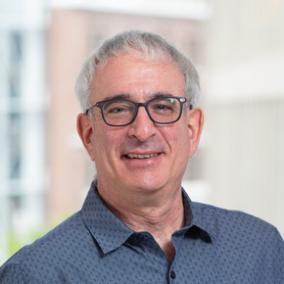
Joshua D. Angrist is the Ford Professor of Economics at the Massachusetts Institute of Technology, where he has been a faculty member since 1996. He is also a co-founder and director of MIT's Blueprint Labs and a Research Associate at the National Bureau of Economic Research. Angrist shares the 2021 Nobel Prize in Economic Sciences with David Card and Guido Imbens for their methodological contributions to the analysis of causal relationships. Angrist received his B.A. from Oberlin College in 1982 and completed his Ph.D. in Economics at Princeton University in 1989. Prior to joining MIT, he taught at Harvard University and the Hebrew University of Jerusalem. His academic journey began somewhat unconventionally, as he left high school early after 11th grade, worked for over a year, and only later discovered his passion for economics through an inspiring teacher at Oberlin. Angrist's research focuses on developing and applying innovative econometric methods to answer important economic questions using natural experiments. His work spans labor economics, education economics, and causal inference methodology. He is particularly known for his contributions to instrumental variables methods and the Local Average Treatment Effect (LATE) framework developed with Guido Imbens. His research explores the economics of education and school reform, the impact of social programs on labor markets, and the effects of immigration and regulation. His recent publications reveal a continued focus on causal inference methods applied to education policy questions, labor market issues, and health economics. The trend shows increasing sophistication in research design, with particular attention to addressing selection bias and developing methods for external validity. His work spans theoretical econometric contributions alongside empirical applications in education, labor markets, and health. Sveriges Riksbank Prize in Economic Sciences in Memory of Alfred Nobel (2021) Fama Prize for Graduate Education (2018) Fellow of the American Academy of Arts and Sciences Fellow of the Econometric Society Angrist is deeply committed to teaching and mentoring. He has developed influential econometrics textbooks including 'Mostly Harmless Econometrics' and 'Mastering Metrics' with Jörn-Steffen Pischke. At MIT, he teaches courses including Labor Economics I (14.661), Econometric Data Science (14.32), and Labor Economics and Public Policy (14.64). He emphasizes selecting UROP students who have mastered foundational economics through courses like 14.64 and 14.32. Beyond MIT, Angrist co-founded Avela, a software startup using cutting-edge research to help schools improve enrollment and operations. Angrist co-founded and directs MIT's Blueprint Labs, which brings together researchers from economics, computer science, and education to develop innovative solutions for educational challenges. Through Blueprint Labs and Avela, his work bridges academic research with practical applications in education policy and technology.
David Noyce is a Professor and Executive Director of the Traffic Operations and Safety (TOPS) Laboratory at the University of Wisconsin-Madison's Department of Civil & Environmental Engineering. He also serves as Associate Director of the Safety Research Using Simulation (SaferSIM) Center, a University Transportation Center. His work focuses on transportation safety, traffic operations, and automated/connected vehicle systems. Key roles include leading over $35M in research since 2003 through the TOPS Lab and advancing technologies like V2V/V2I communication, winter maintenance strategies, and work zone safety. Education: PhD (Texas A&M, 1999), MS (Civil Engineering, UW-Madison, 1995), MBA (UW-Whitewater, 1994), BS (UW-Madison, 1984). Research interests span traffic control devices, driver behavior analysis, crash reconstruction, and multi-modal transportation systems. He pioneered the national implementation of flashing yellow arrow signals and developed the Wisconsin Connected and Automated Transportation Consortium. Current projects include C-V2X localization frameworks, automated vehicle safety testing, and winter maintenance efficiency. Recognized with 20+ awards, including ITE and ASCE Fellowships and the Dr. Arthur F. Hawnn Professorship. His labs offer full-scale driving simulators and field-testing capabilities for real-world validation of innovations.
Alan Ritter is an Associate Professor at the School of Interactive Computing , Georgia Institute of Technology, with additional affiliation to the Machine Learning Center . His research focuses on Natural Language Processing , particularly robust models across domains/languages with fewer labels and efficient resource use, plus data-driven dialogue agents for open-topic conversations. Research Interests : Robust NLP models, cross-lingual transfer, resource-efficient learning, dialogue systems, cultural bias measurement, and privacy-aware language models Students : Mentors Ph.D. students in Georgia Tech's ML and CS programs, including Junmo Kang, Yang Chen, and Duong Minh Le. Alumni include Fan Bai (Ph.D. 2023), Yang Chen (Ph.D. 2024), and Andrew Li (M.S. 2024). Awards : NSF CAREER Award, Amazon Research Award, ACL 2024 Best Social Impact Paper, IUI 2009 Best Student Paper. Recent Work : Studies training budget allocation between supervised and preference-based finetuning, cross-lingual information extraction, cultural bias in LLMs, and privacy risk mitigation in social media disclosures. Service : Served as Program Chair for NAACL 2025, Area Chair for multiple top-tier conferences (COLM, EMNLP, ACL, EACL, AAAI). Email : alan.ritter@cc.gatech.edu
Sanjiv Singh is a Research Professor at the Robotics Institute within Carnegie Mellon University's School of Computer Science. His academic journey at CMU spans from Systems Scientist (1995-2001), to Senior Research Scientist (2001-2003), Associate Research Professor (2003-2007), and finally Research Professor since 2007. He also holds an adjunct faculty position in Mechanical Engineering since 2009. Singh serves as Editor-in-Chief of the Journal of Field Robotics, demonstrating his leadership in the robotics community. His educational background includes a Ph.D. and M.S. in Robotics from Carnegie Mellon University (1995, 1992), an M.S. in Electrical Engineering from Lehigh University (1985), and a B.S. in Computer Science from the University of Denver (1983). Dr. Singh's research focuses on three primary themes: Autonomous Navigation (developing motion planning and control for ground and air vehicles with applications in agriculture, exploration, and low-flying aircraft), Coordinated Multi-Robots (examining team-based tasks like structure assembly and search/rescue operations), and Forceful Interaction with the world (using physical models to enable robots to handle complex, high-force interactions). His work spans aerial robotics, agricultural and forestry robotics, mining robotics, 3D vision, sensing and perception, visual servoing, motion planning, and field service robotics. Analysis of his recent publications (2016-2020) reveals a strong focus on collision avoidance algorithms, sensor fusion techniques, and real-time navigation systems. His research demonstrates consistent advancement in SLAM (Simultaneous Localization and Mapping) technologies, particularly in GPS-denied environments, with increasing sophistication in handling complex aerial maneuvers and multi-robot coordination. Editor-in-Chief of Journal of Field Robotics Dr. Singh has advised numerous graduate students throughout his career, with current advisees including Matt Aasted (Ph.D), Andrew Chambers (M.S), Hugh Cover (M.S), Michael Dille (Ph.D), and Justin Haines (M.S). His past students include prominent researchers like Sebastian Scherer, Joe Djugash, Fred Heger, Geoff Hollinger, and Ji Zhang who have gone on to make significant contributions in robotics. His research has been supported through various projects including CASC (agricultural applications), Riverine, Transformer, Trestle, and Ember. His laboratory work focuses on developing practical robotic systems capable of operating in challenging real-world environments, with particular emphasis on agricultural applications, search and rescue operations, and coordinated multi-robot teams that can work effectively alongside humans.
Anthony Caterisano is a Professor of Health Sciences at Furman University, with over 35 years of academic and athletic leadership. He holds a Ph.D., M.A., and B.S. from The University of Connecticut, SUNY, and UNC Chapel Hill. His research focuses on exercise physiology, resistance training, and sports medicine, with notable publications in journals like Medicine and Science in Sports and Exercise . Dr. Caterisano is a Fellow of the American College of Sports Medicine (FACSM) and has authored/co-authored books on football training and resistance techniques. He has served as wrestling coach at Furman, Spartanburg Methodist College, and currently coaches at Wade Hampton High School. As a competitive powerlifter, he has secured 16 South Carolina state titles, 10 national titles, and 10 world gold medals in masters-level competitions. His work bridges scientific research and practical application, with grants and presentations on topics like strength training methodologies and cardiovascular adaptations. Key contributions include studies on Tsunami Barbell training, metabolic responses to exercise, and core muscle engagement. His awards reflect both academic excellence and athletic achievement, while his grants and presentations underscore his commitment to advancing sports science.
Rolf Halden is a Professor and Center Director at Arizona State University, holding appointments in the School of Sustainable Engineering and the Built Environment, the Biodesign Center for Environmental Health Engineering, and the Global Futures Scientists and Scholars program. He is a leading expert in environmental health engineering, wastewater-based epidemiology, and bioremediation. Education: Ph.D. in Civil (Environmental) Engineering, University of Minnesota (1997) M.S. in Civil (Environmental) Engineering, University of Minnesota (1994) M.S. in Biology, Technical University of Braunschweig, Germany (1992) Postdoctoral Fellow, Environmental Science, Lawrence Livermore National Laboratory (1998) Research Focus: Halden’s research integrates environmental chemistry, public health, and sustainability to understand how anthropogenic chemicals affect ecological and human health. His lab uses advanced mass spectrometry (LC-MS/MS, MALDI-TOF) to track pollutants such as PPCPs, microplastics, pesticides, and dioxins across air, water, soil, and biological systems. He pioneered the use of wastewater treatment plants as public health observatories, enabling real-time tracking of disease, drug use, and environmental exposures. Scientific Awards & Recognition: Leadership Award, Arizona State University (2018) Rocky Mountain Emmy Award (2018) Leroy E. Burney Lecturer, Johns Hopkins School of Public Health (2011) ACS Expert Program Member (2014–present) NIEHS Superfund R01 Working Group National Leader (2012–2014) Labs & Teams: Halden is the Founding Director of the Biodesign Center for Environmental Health Engineering at ASU, where he leads a multidisciplinary team focused on environmental proteomics, bioremediation, and diagnostic tool development. He also co-leads the Human Health Observatory , a national wastewater monitoring network. Grants & Funding: Halden has secured major funding from NSF, NIH, EPA, DoD, and private industry. Notable projects include the development of in-situ groundwater monitoring devices, national wastewater surveillance of SARS-CoV-2, and studies on microplastics and neurodegenerative disease.
Wim VAN LENT is a Full Professor of Management at IÉSEG School of Management , France. He holds an HDR in Management from IAE Paris Sorbonne and a Ph.D. in Business Administration from ESSEC Business School. His academic career includes roles as Visiting Professor at Curtin University (Australia), Griffith University (Australia), and Researcher at the University of Paris I Panthéon-Sorbonne. He coordinates the 'Strategy and Sustainability' track and is a member of the LEM research group. His research focuses on Management Strategy , Business Ethics , Innovation and Entrepreneurship , and Historical Methodology . Notable areas include corporate archives' strategic use, temporal dynamics in organizations, and ethical repair mechanisms. His work often employs historical case studies, such as the Dutch East India Company (VOC) and colonial-era corporations, to analyze organizational adaptation and institutional contradictions. Van Lent's publications span top journals like Academy of Management Review , Small Business Economics , and Business Ethics Quarterly . His recent studies explore periodization practices in organizations, entrepreneurial time narratives, and moral repair frameworks. Teaching includes international strategy and corporate social responsibility at the MSc level. His research bridges historical analysis with contemporary management challenges, emphasizing how understanding past institutional dynamics informs modern organizational behavior and ethical decision-making.
Prof. Stefan Leutenegger is a tenure-track Assistant Professor at Technische Universität München (TUM), leading the Machine Learning for Robotics group within the TUM School of Computation, Information, and Technology. Previously, he held roles as Senior Lecturer (2018–2021) and Lecturer (2014–2018) at Imperial College London's Dyson Robotics Lab, where he founded the Smart Robotics Lab. He earned his PhD (2014) from ETH Zurich, focusing on autonomous solar-powered aircraft navigation, and holds BSc (2006) and MSc (2009) in Mechanical Engineering from ETH Zurich. His research centers on mobile robotics, particularly enabling robots (e.g., drones) to perceive and navigate complex environments using machine learning and sensor data fusion. Key focus areas include SLAM, event-based vision, 3D reconstruction, and autonomous exploration. He has pioneered algorithms like BRISK (2011), OKVIS (2014), and ElasticFusion (2016), advancing real-time robotics perception. Notable Awards: Imperial College President's Award (2018), Best ECCV Paper (2016), ETH Medal for Dissertations (2015). Labs: TUM's Machine Learning for Robotics Group, Imperial's Smart Robotics Lab. Publications: Over 100 papers, including seminal works in CVPR, ECCV, and Robotics: Science and Systems. Current projects include DigiForests (forest inventory via robotics), aerial additive manufacturing, and object-centric semantic mapping. His work bridges theory and practice, with applications in autonomous drones, construction robotics, and human-robot interaction.
Ram Vasudevan is an Associate Professor and Associate Chair of Graduate Studies in the Department of Robotics at the University of Michigan. His research focuses on developing tools for safe and robust deployment of robotic systems, emphasizing optimization, nonlinear control, and real-world applications. Key areas include legged robot locomotion, shared control systems, and safety-critical autonomous systems. Research Interests: Optimization and control of nonlinear systems, locomotion of legged robots, shared control active safety systems, and automation of diagnostic/rehabilitative tasks. His ROAHM Lab prioritizes mathematical guarantees for robotic performance, with applications in medical robotics, autonomous vehicles, and soft robotics. Recent work emphasizes trajectory optimization, sensor fusion, and safety-aware control strategies. He has contributed to benchmarks for autonomous vehicle perception and novel methods in thermal image restoration using neural radiance fields. Awards: None explicitly listed in provided text. Labs/Teams: Directs the ROAHM Lab, collaborating on projects like robotic tail mechanics, real-time motion planning, and sensor data analysis. Active in academic conferences including RSS and ICRA.
Jeff Huang is an Associate Professor and Associate Chair of Computer Science at Brown University. His research focuses on Human-Computer Interaction (HCI), with emphases on personalized systems using behavioral data, health informatics, and user interfaces. Huang holds a PhD from the University of Washington and degrees from the University of Illinois at Urbana-Champaign. His work is funded by NSF, NIH, and ARO, and he has received awards including the NSF CAREER Award and ARO Young Investigator Award. Education: PhD in Information Science, University of Washington (2013) MS in Computer Science, University of Washington (2013) BS and MS in Computer Science, University of Illinois at Urbana-Champaign (2007) Research Interests: His work spans health informatics (e.g., sleep tracking systems like Self-E and SleepCoacher), user interface design, and leveraging behavioral data for personalized systems. Notable projects include WebGazer (webcam eye tracking), filtered.ink (creative illustration tools), and Sochiatrist (mental health analytics). Teaching: He teaches courses on user interfaces, HCI, and research methods, including CSCI 0130/1300 (User Interfaces), CSCI 2300 (HCI Seminar), and CSCI 2000 (Research Methods). Awards: NSF CAREER Award Facebook Fellowship ARO Young Investigator Award Grants & Advising: Huang leads a research group advising over 50 students, many of whom have pursued academic and industry roles. His grants support projects in HCI, health tech, and collaborative systems.
Brenden Lake is an Associate Professor of Computer Science and Psychology at Princeton University, starting Fall 2025. Previously, he was an Associate Professor of Psychology and Data Science at New York University. He is the principal investigator of the lab for Human & Machine Intelligence, which moved from NYU to Princeton in 2025 and is jointly affiliated with the Department of Computer Science and the Department of Psychology. His lab is located in Princeton's Peretsman Scully Hall, rooms 117, 120, and 121. Ph.D., Massachusetts Institute of Technology, 2014 Lake's research focuses on the intersection of human and machine intelligence, specifically examining human cognitive abilities that elude current AI systems. His work centers on few-shot learning of new concepts, learning by generating new goals, learning by asking questions, and learning by producing novel combinations of known components. He employs modern neural network modeling approaches including meta-learning, fine-tuning LLMs, neuro-symbolic modeling, and learning from child headcam videos. His research aims to advance both psychology and computer science by exploring what makes human intelligence unique and using those insights to develop more powerful AI systems. Lake's recent publications demonstrate significant trends in grounded language acquisition through child perspectives, systematic generalization in neural networks, and the intersection of developmental psychology with AI. His work has appeared in top-tier venues including Science (2024) and Nature (2023), with multiple publications exploring how insights from human cognition can improve machine learning systems. His research shows how incorporating human cognitive ingredients can make AI systems more powerful and human-like while addressing longstanding debates about neural network capabilities. Science publication (2024) on Grounded language acquisition through the eyes and ears of a single child Nature publication (2023) on Human-like systematic generalization through a meta-learning neural network Multiple publications covered by major media outlets including New York Times and Washington Post Lake advises Ph.D. students in computer science, psychology, and related fields through his lab. His research is supported by publications in top venues across computer science and cognitive science. He teaches courses including Computational Cognitive Modeling and Advancing AI through Cognitive Science, bridging the theoretical and practical aspects of his research. Lake leads the lab for Human & Machine Intelligence, which studies the ingredients of intelligence in humans and machines. The lab investigates human cognitive abilities that current AI systems cannot replicate, with the dual goal of advancing psychological understanding of human intelligence while developing more capable artificial intelligence systems. Current research focuses on few-shot concept learning, learning through goal generation, and learning by asking questions.