Nagarajan Kandasamy is a Professor and Interim Department Head in the Department of Electrical and Computer Engineering at Drexel University. His research focuses on computer engineering, with expertise in neuromorphic computing, embedded systems, fault-tolerant architectures, and distributed systems. Prior to Drexel, he worked as a research scientist at Vanderbilt University's Institute for Software Integrated Systems. PhD, University of Michigan (2003) MS, University of Connecticut BE, Guindy Engineering College, Anna University, Chennai, India His research interests include neuromorphic computing, spiking neural networks, and reliable system design. He has contributed to fields like deformable image registration, self-testing hardware, and wireless security frameworks. Kandasamy's publications emphasize neuromorphic architectures, medical imaging algorithms, and secure communication protocols. His work often intersects hardware-software co-design and machine learning applications. National Science Foundation Early Faculty (CAREER) Award (2007) Best Paper Award, IEEE International Conference on Autonomic Computing (2006) He collaborates across disciplines in neuromorphic engineering, with grants from NSF and industry partners. His team develops tools for radiation oncology, low-power AI systems, and FPGA-based security protocols.
Alaa Sheta is a tenured Professor of Computer Science at Southern Connecticut State University , New Haven, CT, USA. With over 180 refereed publications, three authored books, and extensive funded research, he is a globally recognized authority in machine learning, evolutionary computation, image processing, and robotics. Education B.E. Electronics & Communication Engineering, Cairo University, 1988 M.Sc. Electronics & Communication Engineering, Cairo University, 1994 Ph.D. Computer Science, George Mason University, USA, 1997 Research Interests Prof. Sheta’s research integrates machine learning , deep learning , and evolutionary algorithms to solve complex real-world problems. Core themes include image and signal processing for medical and industrial applications, autonomous robotics for navigation and inspection, big-data analytics for environmental and financial forecasting, and software reliability modeling using computational intelligence. His work frequently leverages meta-heuristic optimization techniques such as genetic algorithms, particle swarm optimization, and hybrid neuro-fuzzy systems. Publication Trends From 2015-2021, Prof. Sheta’s publications reveal a clear pivot toward deep learning and healthcare informatics , with multiple studies on obstructive sleep-apnea diagnosis using ECG and depth-sensor data, brain-tumor detection in MR images, and mobile-health applications. Earlier work emphasizes industrial process modeling , power-system optimization , and software effort estimation , reflecting sustained contributions across both theoretical algorithmic advances and high-impact interdisciplinary applications. Scientific Awards & Honors Best Poster Award, SGAI International Conference on Artificial Intelligence, Cambridge, UK, 2011 Senior Member, IEEE Vice-President, Arab Computer Society (2011) Associate Editor, International Journal of Advanced Computer Science and Applications (IJACSA) Associate Editor, International Journal of Computational Complexity and Intelligent Algorithms (IJCCIA) Advising & Grants Prof. Sheta has successfully supervised more than 30 master’s and Ph.D. students in the United States, United Kingdom, Jordan, and Syria. His research has been funded by the U.S. National Science Foundation , as well as agencies in Egypt, Saudi Arabia, and Jordan. He has also consulted for the Egyptian Ministry of Communication & IT (2002-2004) and UNDP Smart Schools project (2003). Labs, Workshops & Leadership He is the founder and chair of the Advanced Computation for Engineering Applications (ACEA) workshop series, held five times across Egypt, Jordan, and Saudi Arabia. He served as Program Chair of the Science and Information Conference 2013 in London and has held academic leadership roles such as Associate Dean (2008-2009) and Assistant Dean for Planning & Development (2006-2008) at Al-Balqa Applied University, Jordan.
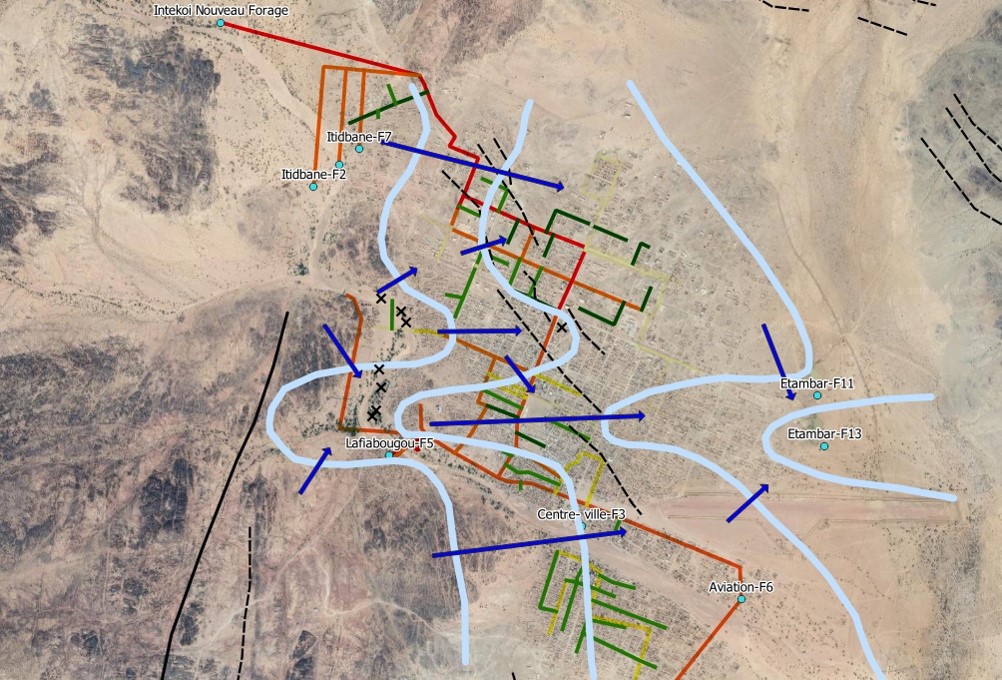
Andreas Braun is a Senior Lecturer at the Department of Geography, University of Tübingen, Germany. He leads lectures and courses on physical geography, geospatial methods, and remote sensing applications. Currently serving since January 2022, his academic responsibilities include teaching, thesis supervision, and research in geoinformatics with a focus on humanitarian response applications. PhD in Geography (2014-2019), University of Tübingen Baden-Württemberg Certificate in University Didactics (2015-2017) Professional experience at Stuttgart's Land Surveying Office (2013) His research bridges geospatial technologies with humanitarian applications, emphasizing remote sensing for environmental monitoring in refugee camps, urban structure analysis, and climate change adaptation. Key areas include SAR data utilization, geosimulation for landscape dynamics, and machine learning applications in geospatial projects. Scientific publications span topics like urban heat island effects in Vietnam, refugee camp monitoring using satellite imagery, and landscape change modeling. His work appears in journals such as IEEE Journal of Selected Topics in Applied Earth Observations , Remote Sensing , and Journal of Flood Risk Management . Teaching activities cover physical geography methods, GIS, remote sensing, and applied geoinformatics for both B.Sc. and M.Sc. programs. He supervises interdisciplinary projects connecting geography with social sciences, focusing on urban planning, climate adaptation, and environmental justice.
Ehsan Namjoo serves as a Research Fellow in the Department of Electronics & Computer Engineering at the University of Limerick, with a primary affiliation at Lero – the Irish Software Research Centre. His multidisciplinary work bridges theoretical signal processing, machine learning applications, and hardware implementation for real-world systems. His research spans signal processing (DOA estimation under non-ideal noise conditions, EEG source imaging), machine learning (explainable AI for medical diagnostics, feature selection in cancer detection), and computer engineering (polar code decoders, visible light communication systems). Notable biomedical applications include breast cancer diagnosis and epileptic source analysis, while cybersecurity work focuses on intrusion detection in cloud environments. Recent publications (2021-2025) reveal a consistent trajectory toward developing lightweight, interpretable models for tabular medical data alongside robust signal processing frameworks for communication systems. His work increasingly integrates hardware-aware algorithms, particularly in polar coding implementations, and emphasizes practical validation through experimental demonstrations in visible light networks. As an active Lero researcher, Namjoo participates in Ireland's national software research ecosystem, contributing to interdisciplinary projects that connect theoretical innovations with healthcare, communications, and security applications through collaborative frameworks.
Ziad Ibbini is a Research Fellow at the University of Plymouth's School of Biological and Marine Sciences, affiliated with the Embryo Phenomics research group. His work focuses on advancing bioimaging and computational methodologies to study developmental physiology in aquatic organisms. University: University of Plymouth School: School of Biological and Marine Sciences Position: Research Fellow Email: ziad.ibbini@plymouth.ac.uk His research integrates cutting-edge technology with developmental biology, emphasizing environmental adaptation and automated phenotyping systems. Key contributions include open-source tools like LabEmbryoCam and HeartCV for cardiovascular and behavioral analysis in embryos. Recent work applies deep learning (Dev-ResNet) and computer vision to detect developmental events and predict thermal responses in aquatic embryos, advancing understanding of physiological resilience under climate change stressors. The Embryo Phenomics research group develops spectral and imaging techniques to quantify thermodynamic and environmental responses across species, supporting comparative studies in developmental physiology.
Dr. Omid Chatrabgoun serves as an Assistant Professor in Data Science and AI at the CEES School of Science, holding a PhD in Data Science from Shahid Chamran University (Iran, 2015). Previously affiliated with Malayer University, he teaches undergraduate and postgraduate courses including Statistical Learning, Data Science, and Machine Learning while actively supervising PhD students. His research focuses on uncertainty quantification and Bayesian machine learning for complex systems. Education: PhD in Data Science, Shahid Chamran University, Iran (2015) Dr. Chatrabgoun specializes in Modelling, Optimization, and Uncertainty Quantification (UQ) using (Deep) Gaussian processes, with applications spanning bioinformatics (Gene Regulatory Networks, Protein-Protein Interactions) and environmental engineering (coastal protection, flood modeling). He develops novel approaches for machine learning of linear operational equations to quantify uncertainty in highly complex systems, emphasizing computational efficiency through sparse approximations and kernel methods. His work bridges theoretical statistics with practical implementations in healthcare, environmental science, and industrial applications. Analysis of his 29 publications (2016-2025) reveals a consistent trajectory in Gaussian process methodologies, evolving from foundational graphical models to advanced deep Gaussian processes and probabilistic surrogate modeling. Key thematic clusters include bioinformatics network inference, environmental risk assessment, and computational optimization techniques, demonstrating interdisciplinary impact across computer science, statistics, and domain-specific applications. Dr. Chatrabgoun has secured research funding and conducted consultancy projects with the Iran National Science Foundation (INSF) and Research Institute for Grapes and Raisin (RIGR). His collaborative network spans international institutions, as evidenced by co-authorships across civil engineering, bioinformatics, and environmental science domains. Current projects involve developing machine learning frameworks for linear differential operators and expanding applications of pair-copula Bayesian models in high-dimensional data analysis. His research group actively explores uncertainty propagation in PDE-based models and spatio-temporal environmental simulations, maintaining strong industry-academia partnerships for knowledge exchange in data-driven decision systems.
Chris Develder is an Associate Professor with the research group IDLab in the Department of Information Technology (INTEC) at Ghent University - imec, Ghent, Belgium. He received his MSc degree in computer science engineering and PhD in electrical engineering from Ghent University in Jul. 1999 and Dec. 2003 respectively (as a fellow of FWO). He has held research visitor positions at UC Davis, CA, USA (Jul.-Oct. 2007) and at Columbia University, NY, USA (Jan. 2013 - Jun. 2015). Prof. Develder leads two research teams within the Internet Technology and Data Science Lab (IDLab): one focused on converting text to knowledge (NLP, primarily information extraction using machine learning), and another on data analytics and machine learning for smart grids. His Text-to-Knowledge (T2K) research group has a strong track record in information extraction across various domains including news, human resources, and biomedical applications, as well as text classification tasks such as sentiment analysis. More recently, the group has expanded into conversational agents and generative models for educational applications. With his team, Prof. Develder has published over 200 papers in international journals and conferences including EMNLP, CoNLL, EACL, ACL, ECIR, CIKM, WSDM, WWW, and NIPS. His recent publications demonstrate a growing focus on practical applications of NLP in healthcare (personality style recognition from speech, biomedical adverse drug event extraction), education (question generation, gap-filling exercises), and labor market analysis (career path prediction, skill extraction). His work bridges theoretical advances in machine learning with real-world applications across multiple domains. Prof. Develder actively supervises PhD students and has co-supervised numerous successful doctorates, including Maarten De Raedt (2024), Semere Kiros Bitew (2024), Yiwei Jiang (2024), Amir Hadifar (2023), and Klim Zaporojets (2022). His former students have gone on to work at organizations including EarlyTracks, Zoom, Nokia Bell Labs, Clarivate, and various academic institutions.
Dr. William Claster is an Associate Teaching Professor and Associate Program Director in the Master’s in Information Systems (MSIS) program at Northeastern University’s Arlington, VA campus. He holds a PhD from Ritsumeikan Asia Pacific University, an MA in Mathematics from Temple University, and a BS in Physics from Bard College. His research focuses on machine learning, big data analytics, fintech, natural language processing, and generative AI. He authored Mathematics and Programming for Machine Learning with R: From the Ground Up (CRC Press, 2020) and a Japanese textbook on data science fundamentals. His work includes over 10 peer-reviewed articles, such as studies on social media perception accuracy and medical informatics. Dr. Claster’s academic excellence was recognized with the Ritsumeikan Asia Pacific University Award for Outstanding Research (2014). Professionally, he has consulted for fintech firms like Paidy Finance, Union Bank of Switzerland, and Goldman Sachs. His teaching emphasizes innovative methods, with alumni at Google and Facebook. He leads a comprehensive data science curriculum development effort and actively bridges academia-industry collaboration.
Benjamin Auder is a statistical researcher affiliated with the Institut de Mathématiques d'Orsay (IMO) at Université Paris-Saclay , specializing in the probabilités-statistiques team. He holds an engineering position focused on applied statistics projects and computational infrastructure. Education: PhD in statistical modeling from CEA Cadarache (2008-2011), MSc in Sherbrooke (2006-2007), and engineering studies at ENSIMAG (Grenoble). Key roles include: Research collaboration at Lokad (2011-2012) optimizing forecasting engines Co-administration of laboratory computing clusters Teaching: Database Systems (Paris-Sud), C++ (ENSTA), Probability (Polytech) Research interests span statistical methodologies, clustering algorithms, computational tools, and database systems. Notable projects include mixmod classification library and epclust energy load classification. Active in open-source software development for statistical computing.
Chen-Yi Lu is a Graduate Research Assistant at Purdue University's Department of Agricultural & Biological Engineering under Major Professor Chaterji. His research bridges digital agriculture and data science. University: Purdue University Department: Agricultural & Biological Engineering Advisor: Professor Somali Chaterji His work focuses on applying artificial intelligence, machine learning, and Internet-of-Things (IoT) to agricultural systems. Key areas include automated pest monitoring, anomaly detection in animal behavior, and AI-driven decision-support tools for sustainable food production. Recent publications highlight his expertise in deep learning for real-time agricultural monitoring systems, generative adversarial networks (GANs) for data augmentation, and AIoT-based solutions for pest management. His research spans interdisciplinary domains like computational modeling, sensor networks, and digital ecosystem design. Chen-Yi Lu's contributions emphasize integrating scalable databases and machine learning with agricultural safety, automation, and environmental stewardship. Current projects involve optimizing data flow for precision agriculture and developing cloud/edge computing platforms to enhance rural disaster response systems.
Professor Longbing Cao is the Distinguished Chair in Artificial Intelligence and Director of the Frontier AI Research Centre at Macquarie University. He holds dual PhDs in Artificial Intelligence and Computing Science, an MSc in Communication, and a Bachelor's degree in Electrical Engineering. His research spans AI, data science, behavior informatics, and enterprise innovation, with over 400 publications and significant industry collaborations. Education: PhD in Pattern Recognition and Intelligent Systems, Graduate University of Chinese Academy of Sciences PhD in Computing Science, University of Technology Sydney MSc in Communication Bachelor's in Electrical Engineering Research Interests: Focuses on AI systems, federated learning, time series forecasting, and humanoid robotics. His work integrates theoretical advancements with real-world applications in finance, healthcare, and smart cities. Recent Articles: Explores cutting-edge topics like generative AI (ProgDiffusion), federated learning (FedSI), and pandemic modeling (waning effect of interventions). These contributions highlight advancements in both foundational AI and applied data science. Awards: Eureka Prize (2019), ACM Distinguished Scientist (2019) Grants & Projects: Leads major initiatives such as the Federated Omniverse Facilities for Smart Digital Futures (2024-2025) and Data Complexity and Uncertainty-Resilient Deep Variational Learning (2024-2027). Prior roles include Founding Director of UTS Advanced Analytics Institute (2011-2014). Labs & Teams: Directs the Frontier AI Research Centre and collaborates with global institutions like Microsoft, Commonwealth Bank, and Shanghai Stock Exchange.
Marcin Hernes is a Lecturer and Head of the Department of Process Management at Wrocław University of Economics. He also serves as Director of the Center for Intelligent Management Systems. His academic career spans undergraduate, graduate, and postgraduate teaching, alongside extensive research collaboration. He is actively involved in national and international conferences, and holds memberships in IEEE, the Polish Association of Artificial Intelligence, and the Scientific Society for Economic Informatics. His research interests include artificial intelligence, cognitive technologies, machine learning, and decision support systems in production and management contexts. Education details are not explicitly stated in the provided text, but his professional trajectory indicates advanced academic qualifications. His research focuses on resolving knowledge conflicts in multi-agent systems, optimizing production processes, and leveraging AI for business sustainability. He has developed dozens of software applications for industrial and public administration use cases, emphasizing practical technological solutions. Hernes supervises doctoral students and maintains active engagement with the socio-economic environment through collaborative projects. His consultations are held on Wednesdays, and master's seminars are conducted remotely via MS Teams with specific schedules for full-time and part-time students. Notably, he has pioneered frameworks integrating cognitive architecture into financial decision support systems and contributed to ERP 4.0 systems aligning with Industry 4.0 standards. His work emphasizes sustainability across domains, from reducing urban carbon footprints through cloud technology to environmental life cycle costing in network organizations. He has also addressed challenges in supply chain management, such as the Forrester effect reduction, and explored blockchain applications in public administration digital transformation.
Sebastian Otte is a Professor at the Institute for Robotics and Cognitive Systems at the University of Lübeck, where he leads the Adaptive AI research group. Prior to this, he was a postdoctoral researcher and substitute professor at the University of Tübingen, contributing significantly to the Cognitive Modeling and Distributed Intelligence groups. University of Lübeck, Professor (since 2023) University of Tübingen, Postdoc and Substitute Professor (2016–2023) Centrum Wiskunde & Informatica (CWI), Humboldt Fellow (2022–2023) His research focuses on recurrent and spiking neural networks, bio-inspired computing, efficient learning, and adaptive AI systems. He explores how neural models can perform online learning, handle multiple time scales, and solve complex cognitive tasks such as binding, prediction, and motor control. His work bridges machine learning with cognitive science and robotics. The recent publications show a strong trend toward physics-informed neural networks, finite volume methods for PDE modeling, and explainable AI via counterfactual reasoning. His work integrates deep learning with scientific computing, emphasizing robust, interpretable, and efficient models for real-world applications. Scientific awards include: Best Paper Award at ICANN 2019 Humboldt Research Fellowship Editor's Highlight in Water Resources Research He has supervised over 70 bachelor’s and master’s theses and actively mentors students in areas such as spiking neural networks, reservoir computing, and robotics. His teaching includes core computer science and advanced neural network courses. He has been involved in research projects with industry partners like Daimler AG and Mercedes-Benz AG. Otte leads the Adaptive AI research group, which focuses on developing next-generation AI systems that learn efficiently, adapt dynamically, and model complex cognitive and physical processes using biologically inspired architectures.
Prof. Dr.-Ing. Ingo Neumann is a Professor of Engineering Geodesy and Geodetic Analysis Methods at Leibniz University Hannover's Faculty of Civil Engineering and Geodetic Science. He serves as Executive Director of the Geodetic Institute and leads research in geodetic sensor systems, structural monitoring, and multi-sensor fusion. His work focuses on advancing terrestrial laser scanning (TLS), UAV-based calibration, and machine learning applications in civil infrastructure analysis. Research interests include deformation monitoring, sensor calibration, and geospatial data processing. Notable projects involve fusion of SAR/InSAR data with TLS for ground movement analysis, and development of automated damage detection algorithms for port and marine structures. He teaches courses on sensor technology, geodetic measurement methods, and industrial surveying. Publications span 2006–2025, with recent emphasis on robust outlier detection, Kalman filter applications, and B-spline modeling for structural analysis. His work integrates geodesy with computer vision and machine learning to enhance infrastructure monitoring precision.
Georgios Manis is an Associate Professor in the Department of Computer Science and Engineering at the School of Engineering, University of Ioannina, Greece. He holds a PhD from the National Technical University of Athens and has been a faculty member at the University of Ioannina since 2002, progressing from Lecturer to Associate Professor in 2018. He has also served as temporary teaching staff at the University of Patras, University of Crete, and University of Ioannina in the late 1990s and early 2000s. Education: B.Sc. in Computer Engineering (Diploma), National Technical University of Athens (NTUA), 1987–1992 MSc in Advanced Methods in Computer Science (Distributed and Parallel Systems), Queen Mary, University of London, 1992–1993 PhD in Computer Engineering, NTUA, School of Electrical and Computer Engineering, 1993–1997 His research interests lie at the intersection of Biomedical Engineering and Computing Systems , with a strong emphasis on Biomedical Signal Processing , Entropy Analysis , and Machine Learning . He has pioneered work in Bubble Entropy —a parameter-free entropy measure—and developed fast algorithms for entropy computation. His work also extends to compiler design and parallel computing, particularly in the automatic parallelization of recursive functions and loops. The trends in his recent publications reflect a dual focus: (1) biomedical applications involving entropy, heart rate analysis, and disease diagnosis using machine learning (especially Random Forests and SVMs), and (2) high-performance computing, including parallelization techniques and compiler optimizations for multi-core and SVP architectures. His research is highly interdisciplinary, combining signal processing, algorithm design, and clinical applications. Scientific Leadership and Recognition: Guest Editor, Special Issue on “Entropy in Biomedical Engineering”, Entropy (MDPI) Member of the IPAN Laboratory, University of Ioannina Active contributor to IEEE, Elsevier, and MDPI journals He has supervised several graduate students and is involved in funded research projects such as Palimpsest and Homore , focusing on smart systems for cultural interaction and elderly monitoring. His advising contributions are evident in co-authored papers with students like Evanthia Tripoliti and Aristeidis Mastoras. He teaches both undergraduate and postgraduate courses, including Compilers I/II and Biomedical Data Analysis . Laboratories and Teams: He is a member of the IPAN lab at the University of Ioannina, which supports interdisciplinary research in informatics and biomedical applications. His collaborative network includes researchers from Greece and abroad, particularly in the fields of biomedical signal analysis and entropy-based methods.