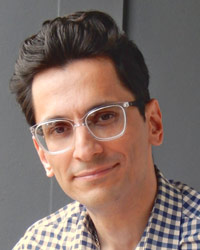
Kayvan Kousha is a Senior Researcher at the University of Wolverhampton, leading the Statistical Cybermetrics and Research Evaluation Group within the Faculty of Arts, Business, and Social Sciences. With a PhD in Information Science and Scientometrics from the University of Tehran, his career spans academic appointments in both Iran and the UK. His research focuses on innovative methods for assessing research impact through digital sources, including: Developing AI-driven tools for evaluating REF impact case studies Analyzing grey literature and social media citations Studying peer review acceleration during global crises Creating semi-automatic URL classification systems for non-academic impact Key contributions include: 15+ recent publications on research evaluation Editorial roles at Scientometrics and Springer's AI for Scientometrics Being ranked among the top 2% of global scientists in information management Pioneering methods for assessing educational impact through online syllabi His work has significantly influenced how institutions measure research impact beyond traditional citations, incorporating digital footprints like Wikipedia, Goodreads, and YouTube.
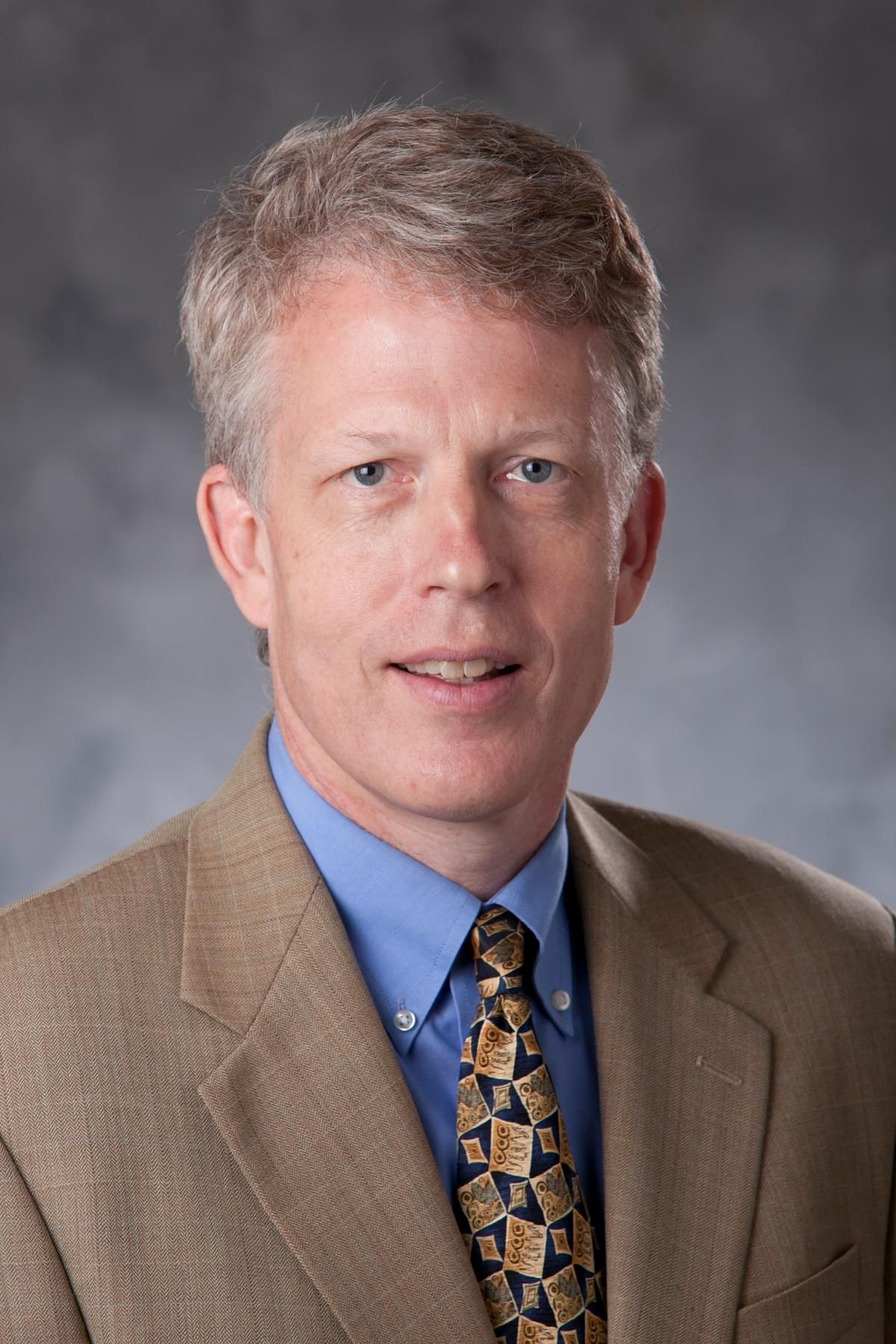
Azim Ahmadzadeh serves as an Assistant Professor in the Department of Computer Science at the University of Missouri–St. Louis within the College of Arts and Sciences. Holding a Ph.D. in Computer Science from Georgia State University (2021), he maintains office hours in 329 ESH on Mondays and Wednesdays from 5:00-6:30 PM via Zoom or in person, with flexible scheduling options for students. Education: Ph.D. Computer Science, Georgia State University, 2021 Dr. Ahmadzadeh's research pioneers machine learning applications for space weather forecasting, specializing in solar flare prediction through innovative time series analysis and computer vision techniques. His work systematically addresses critical challenges including extreme class imbalance in solar datasets, temporal coherence requirements, and data scarcity through novel algorithmic developments. Key contributions include advanced similarity metrics for multivariate time series, synthetic data generation frameworks, and anomaly detection systems specifically designed for solar observations. His publication trajectory (2022-2025) reveals a strategic focus on operationalizing machine learning for heliophysics, with significant output in solar filament detection systems (Elements, MAGFILO), time series analysis innovations (Multiscale Dubuc, Ts-miou), and practical guides for scientific data annotation. This work bridges theoretical machine learning with real-world space weather forecasting needs, evidenced by roadmap documents for SEP monitoring and solar research cyberinfrastructure. Dr. Ahmadzadeh actively develops open resources for the solar physics community including manually annotated datasets, standardized annotation protocols, and ML-ready data pipelines. His research program demonstrates strong interdisciplinary collaboration potential with space agencies and observatories, particularly through contributions to white papers on solar research infrastructure and operational forecasting requirements.
Timothy Garvey Turkington is an Associate Professor in the Department of Radiology at Duke University School of Medicine and a Faculty Network Member of the Duke Institute for Brain Sciences. Holding a Ph.D. from Duke University (1989), his academic career spans over three decades with continuous contributions to nuclear medicine physics. His research focuses on PET imaging physics, including instrumentation development, reconstruction algorithms, and image processing techniques. Key research thrusts include improving quantitative accuracy in PET, reducing scan times and radiation doses in PET/CT systems, developing novel imaging devices for PET and SPECT applications, and expanding PET's clinical utility in oncology, neurology, and cardiology. His work bridges theoretical physics with practical clinical implementation, particularly in breast imaging and quantitative biomarker development. Analysis of his 15 most recent publications reveals a strong emphasis on instrumentation optimization (particularly for breast imaging), quantification accuracy in clinical settings, and the development of standardized protocols for PET/CT systems. His work increasingly focuses on translational applications where physics innovations directly impact clinical decision-making, especially in cancer imaging and therapy response assessment. Dr. Turkington teaches graduate courses including PHYSICS 523: Modern Medical Diagnostic Imaging System, MEDPHY 782: Advanced Practicum for Clinical Development in Medical Physics, and MEDPHY 530: Modern Medical Diagnostic Imaging System, training the next generation of medical physicists. His research has been supported by significant grants including the RSNA 2016 Project (2014-2018), Simultaneous Emission and Transmission Mammotomography (2002-2014), and the Harmonized PET Reconstructions for Cancer Clinical Trails (2013-2014), demonstrating sustained funding for his innovative work in medical imaging physics.
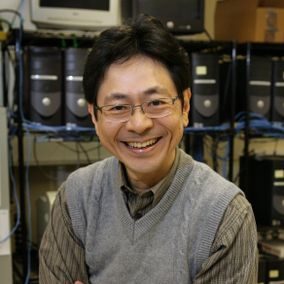
Yingguang Chu is an Associate Professor at the Institute of Mechanical and Electrical Engineering, University of Southern Denmark, specializing in Mechatronics. His research focuses on co-simulation systems, digital twins, and marine engineering applications. Research Interests : Digital twin technologies, co-simulation frameworks, marine crane systems, hydraulics, and control algorithms. Projects : Active participant in the ShippingLab II project (2024-2027) on digital twins and human factors in vessel performance. Research Output Trends : Recent work emphasizes physics-inspired neural networks for mobile machinery dynamics, environmental load sensitivity analysis, and Vico-based co-simulation systems for marine operations. Publications frequently address crane path planning, digital twin implementation, and dynamic response optimization. Scientific Awards : IEEE Robotics and Automation Magazine Best Paper Award (2024) Teaching Responsibilities : Supervises master's theses on topics like CFD simulations, membrane valve systems, and fluid mechanics, while teaching mobile hydraulics courses.
Dr. Wei Cai is a Research Associate Professor in the Department of Ocean Science and Engineering at the Southern University of Science and Technology (SUSTech). He also serves as Assistant to the President of the Academy of Marine Sciences at SUSTech and Assistant Director of the Shenzhen Branch of the Laboratory of Marine Science and Engineering of Guangdong Province. Additionally, he is the Deputy Director of the Marine Robot & Power System Laboratory and a member of the National Technical Committee for the Standardization of Submersibles. Dr. Cai received his educational background as follows: Doctor of Biomedical Engineering : Zhejiang University, September 2007 - June 2012 Bachelor of Biomedical Engineering : Zhejiang University, October 2002 - June 2007 Dr. Cai has dedicated his career to marine technology research for nearly 15 years, with expertise spanning multiple disciplines of ocean science and engineering. His primary research interests focus on marine sensors , scientific applications of submersibles , and polymetallic sulfide resources in the international seabed area . His work bridges engineering innovation with practical oceanographic applications, particularly in deep-sea exploration technologies. Dr. Cai has extensive field experience, having participated in 12 cruises on China Ocean Voyages, where he served as chief scientist for several important missions including sea trials of the "Qianlong II" AUV in 2016, "Qianlong III" AUV in 2018, and Deep-Sea Drilling Rig in 2021. His January 2019 expedition with the "Deep Sea Warrior" manned submersible reached a depth of 2,773 meters in the Southwest Indian Ocean, demonstrating his hands-on expertise in extreme deep-sea environments. Dr. Cai's research portfolio demonstrates a clear progression from fundamental sensor development to sophisticated deep-sea exploration systems. His early work focused on chemical sensors for water quality monitoring, particularly for heavy metal detection, which laid the foundation for his later specialization in marine applications. Over time, his research evolved toward deep-sea technologies, with increasing emphasis on autonomous underwater vehicles (AUVs), hydrothermal vent systems, and polymetallic sulfide resource exploration. His publications reveal strong interdisciplinary connections between chemical engineering, robotics, marine geology, and environmental science, with practical applications in both resource exploration and environmental protection. Dr. Cai's scientific achievements have been recognized with several prestigious awards: Second Prize of National Science and Technology Progress Award (Team), 2019 Outstanding Contribution Award of China Marine Engineering Consulting Association (Team), 2019 Outstanding Graduate of Zhejiang Province, 2012 2022 Pearl River Talent Plan Young Top Talent 2022 Shenzhen "Pengcheng Peacock Plan" Special Post C As a principal investigator, Dr. Cai has secured significant research funding, including the National Key Research and Development Program of China, projects from the Deep Blue Project Fund by Shanghai Jiao Tong University, and various provincial and national research grants. His leadership extends to serving as deputy chief designer of technical upgrade and scientific application of the "Qianlong II" AUV. Dr. Cai has also contributed to major scientific endeavors as a participant in numerous China Ocean Voyage projects, with funding ranging from millions to tens of millions of RMB per project. Dr. Cai leads the Marine Robot & Power System Laboratory at SUSTech, where his team focuses on developing advanced marine technologies for deep-sea exploration. His laboratory work integrates robotics, sensor development, and data analysis to create comprehensive solutions for underwater research and resource exploration. The lab's current projects include developing high-sensitivity methane sensors for deep-sea environments, systems for detecting heavy metals in hydrothermal plumes, and wireless sensor networks for red tide early warning systems. This multidisciplinary approach positions Dr. Cai's team at the forefront of marine technology innovation in China.
DIEGO FERNANDEZ NOVOA is a postdoctoral researcher affiliated with the Department of Applied Physics at the Faculty of Sciences , University of Vigo. He is associated with the Marine Research Center of the University of Vigo in Ourense campus, working within the research group FA9 EphysLab (Earth Physics Laboratory). Research interests focus on hydrology , climate change impact modeling , and remote sensing for coastal and riverine systems. His work includes: Flood risk management using numerical simulations Machine learning applications for river flow forecasting Climate change projections for extreme hydrological events Salinity dynamics in estuaries under extreme precipitation Hydrodynamic modeling of historical catastrophic floods Publications reveal expertise in MODIS satellite data applications for turbid plume characterization (Iberian Peninsula, French Atlantic) and interdisciplinary collaborations in oceanography education . His work spans from 2013 to 2025, covering multiscale analyses and knowledge transfer initiatives.
Erko Jakobson is an Associate Professor in Remote Sensing of Landscapes at the University of Tartu's Faculty of Science and Technology, specifically at the Tartu Observatory. He has held this full-time position since January 1, 2021. Prior to this, he served as a Senior Research Fellow at the Tartu Observatory and was a Visiting Research Fellow at the National Center for Atmospheric Research (NCAR) in the USA. His educational background includes a PhD in Environmental Physics from the University of Tartu (2004-2009), an MSc in Environmental Physics (2002-2004), and a BSc in Physics (1997-2002). His doctoral dissertation focused on the 'Spatial and temporal variability of atmospheric column humidity,' supervised by Hanno Ohvril. Dr. Jakobson's research focuses on Arctic climate and its teleconnections with European climate, environmental physics, and the study of atmospheric water vapor content variability. His work combines theoretical approaches with practical measurements and data analysis. He has made significant contributions to understanding the relationships between Arctic climate phenomena and weather patterns in the Baltic Sea region and Europe. His expertise spans atmospheric science, climate science, meteorology, and remote sensing. His extensive publication record demonstrates consistent research activity with a clear focus on Arctic-Baltic climate connections, greenhouse gas effects, and atmospheric teleconnections. His work often involves analyzing large datasets from various reanalysis models and observational networks, contributing to our understanding of climate dynamics in polar regions. Estonian Physics Student Society title of honor 'Motivator' (2014) Dr. Jakobson teaches multiple courses including 'Environmental Data Management,' 'Large-Scale Physics,' and 'Measurement Data Processing' (in English). He serves on the Council of Tartu Observatory and has previously participated in defense boards for Environmental Technology and Applied Measurement Science programs. He also engages in voluntary non-profit work as a board member of a Waldorf school. His research activities at the Tartu Observatory focus on atmospheric phenomena with particular emphasis on Arctic-Baltic connections. His international collaborations, including his position at NCAR, demonstrate his standing in the global atmospheric science community.
Dr. Usman Hadi serves as an Assistant Professor in the School of Engineering within Ulster University's Faculty of Computing, Engineering and Built Environment at the Jordanstown campus. His academic trajectory includes a Ph.D. in Electronic Engineering from the University of Bologna (2020), followed by postdoctoral research at Aalborg University and industry experience as an External Research Engineer at Nokia Bell Labs in Denmark (2019-2021). His educational foundation comprises: PhD in Electronic Engineering, University of Bologna (2020) Master's in Digital Predistortion for Compensation of Nonlinearities in Radio over Fiber Links, University of Bologna Dr. Hadi's research spans cutting-edge domains in wireless communications and AI-driven networking solutions. His primary focus includes 5G/6G technologies, Time Sensitive Networks, Radio over Fiber systems, and machine learning applications in telecommunications. Recent work emphasizes AI-enhanced signal detection for MIMO systems, UAV-based communication frameworks, and IoT security architectures, with significant contributions to optical front-haul optimization and wireless sensor networks. Analysis of his publication record reveals a strategic emphasis on AI integration for next-generation wireless systems. Key trends include deep learning applications for MIMO detection in 6G networks, digital twin implementations for UAV fault detection, and secure IoT frameworks for drone communications. His work consistently bridges theoretical advancements with practical implementations in optical and wireless front-haul systems, particularly through the MADNI (Made in UU) drone platform. Notable recognitions include: Top 2% Cited Researcher designation for three consecutive years (2021-2023) Research and Impact Fund Award (2023) Dr. Hadi supervises two PhD students: Ms. Cara Rose (Department of Economy-funded, 2023-present) and Mr. M.Y. Daha (Vice Chancellor's Research Studentship, 2022-present). His active research portfolio includes drone-based climate resilience initiatives funded by the British Council (2025-2026) and IoT-driven cybersecurity frameworks supported by Innovate UK (2025), alongside participation in EPSRC-funded infrastructure projects. He leads the MADNI drone research platform, which integrates state-of-the-art 5G connectivity, object detection, and facial recognition capabilities. His laboratory maintains active collaborations with Nokia Bell Labs, University of Manchester, University of East Anglia, Manchester Metropolitan University, University of Texas, and Boise State University, focusing on next-generation communication technologies and sustainable development applications aligned with UN SDGs.
Pavel Kejik is a part-time Lecturer at the Swiss Federal Institute of Technology Lausanne (EPFL), affiliated with the School of Engineering. He joined EPFL's Institute of Microelectronics and Microsystems in 1999 and concurrently works at Monolithic Power Systems (formerly Sensima Technology SA) since 2014. His dual industry-academia role focuses on magnetic sensor industrialization. Education: Diploma degree, Czech Technical University in Prague (1994) PhD, Czech Technical University in Prague (1999) Research Interests: Dr. Kejik specializes in integrated magnetic sensor systems, including Hall effect and fluxgate magnetometry. His work emphasizes low-noise circuit design, offset cancellation techniques, CMOS integration, and applications in contactless current measurement, angular sensing, and non-destructive testing (NDT). Key innovations involve micro-Hall probes, orthogonal fluxgate structures, and noise-reduction methodologies for industrial applications. Publication Trends: His recent articles (2007-2014) demonstrate a consistent focus on CMOS-integrated magnetic sensors, particularly Hall effect devices and fluxgate systems. Research themes include miniaturization, power efficiency optimization, angular position detection, and novel compensation architectures for industrial sensing applications. Advising: Supervised one PhD student: Özge Zorlu. No grants or awards mentioned. Industry Collaboration: Active in sensor industrialization through Monolithic Power Systems and contributes to the Europractice course 'Smart Sensor Systems'. Patents cover innovations in Hall arrays, fluxgate structures, and magnetic anomaly detection.
Maria Grazia Galantino serves as Full Professor of General Sociology at Sapienza University of Rome's Department of Social and Economic Sciences. She currently presides over the Degree Program Council in Social Work Sciences and Techniques (since 2021) and previously coordinated the European Sociological Association's Research Network 22 on "Sociology of Risk and Uncertainty," establishing her as a leading international scholar in risk theory. Her research program integrates four interconnected domains: Risk in Multidimensional Contexts : Critical analysis of risk manifestations in migration flows, health crises, international conflicts, and urban security frameworks Conflict Dynamics : Examination of media framing and political discourse around security threats and migration narratives Public Opinion Formation : Investigation of how risk language shapes societal perceptions through media channels Methodological Innovation : Application of mixed-methods approaches combining quantitative surveys with qualitative ethnography Recent publications (2023-2025) demonstrate intensified focus on territorial stigma in marginalized Roman neighborhoods (particularly Quarticciolo), pandemic-induced societal transformations, and care professions within superdiverse urban environments. Her work bridges theoretical advancements in risk society concepts with empirical studies of community resilience and institutional responses to contemporary crises. Professor Galantino directs the "SECOND GENERATIONS AT UNIVERSITY" research initiative analyzing career trajectories of migrant-background students in care professions. She actively contributes to the NextCityLAB project developing participatory governance models for Rome's neighborhoods through civic mapping and community engagement. Her scholarly leadership extends through international networks including the European Sociological Association and current collaborations with urban research collectives focused on risk communication, community resilience, and innovative pedagogical approaches in sociology.
Isaac Park is an Assistant Professor in the Department of Biology at Georgia Southern University, joining in 2024. His research focuses on plant ecology, phenology, and climate change impacts on vegetation, contributing to UN Sustainable Development Goals in environmental sustainability and plant conservation. Dr. Park's research centers on plant phenological responses to climate change, utilizing herbarium specimens and ecological observatory data to model spatiotemporal patterns. His work spans grasslands, shrublands, and Mediterranean ecosystems with emphasis on anthesis, flowering dynamics, and plant-pollinator interactions. Key methodologies include digital herbarium data analysis and cross-scale phenological forecasting. Recent publications demonstrate innovative integration of museum collections and ecological data to track climate-induced shifts in flowering and pollinator behavior. Themes include vulnerability of endemic species to fire regimes, macrophenology modeling, and resource availability changes for specialist versus generalist bees. Dr. Park serves as Co-Principal Investigator on two National Science Foundation grants: Active (2021-2026): Modeling phenology across spatiotemporal and taxonomic scales using ecological observatory and digital herbarium data Completed (2016-2020): Phenological sensitivity to climate across space and time through digital herbarium analysis His collaborative network spans ecological observatories and research institutions, leveraging mobilized digital collections for large-scale phenological studies while developing datasets for testing flowering prediction accuracy.
Lajos Hanzo is a distinguished Professor at the University of Southampton's School of Electronics and Computer Science (ECS), where he has established himself as a leading authority in wireless communications and signal processing. His academic profile showcases extensive contributions to the field with over 1400 publications and significant recognition through multiple prestigious fellowships. Dr. Hanzo received his degree in electronics in 1976 and his doctorate in 1983, followed by an honorary doctorate in 2009. His educational background laid the foundation for a career that has continually evolved with communication technologies from early wireless systems through to contemporary 6G research and quantum communications. Hanzo's research spans wireless communications, optical wireless systems, MIMO technologies, and increasingly intersects with artificial intelligence applications for next-generation networks. His work demonstrates remarkable synergy between theoretical foundations and practical implementations, addressing challenges in spectral efficiency, channel capacity, and reliable transmission across diverse communication scenarios. He has made seminal contributions to space-time coding, non-orthogonal multiple access (NOMA), and index modulation techniques that have influenced multiple generations of wireless standards. Analysis of his recent publications reveals a clear progression toward more complex communication paradigms, with increasing focus on 6G technologies, integration of deep learning with traditional communication theory, and exploration of quantum-inspired communication approaches. His work consistently addresses the tension between theoretical capacity limits and practical implementation constraints, with recent papers demonstrating particular interest in millimeter-wave communications, visible light communication, and massive connectivity solutions for IoT applications. FREng (Fellow of the Royal Academy of Engineering) FIEEE (Fellow of the IEEE) FIET (Fellow of the Institution of Engineering and Technology) Fellow of EURASIP (European Association for Signal Processing) DSc (Doctor of Science) While specific details of his advising activities aren't prominently featured in the provided materials, Hanzo's extensive publication record spanning multiple decades suggests significant mentorship of graduate students and postdoctoral researchers. His research has clearly attracted substantial funding to support investigations across wireless communications, with particular emphasis on coding theory, MIMO systems, and next-generation network architectures. The collaborative nature of his recent work indicates ongoing engagement with international research consortia addressing 5G evolution and 6G standardization.
Hayriye Eşbah Tunçay is Professor and former Head (2011–2019) of the Department of Landscape Architecture at Istanbul Technical University (ITU), Faculty of Architecture , where she also serves as Vice-Dean for Research & Development. A Fulbright Visiting Scholar at Harvard Graduate School of Design and founding director of HET Landscape & Urban Design Ltd. , she is a leading voice in ecological landscape planning, climate-resilient urbanism and digital design technologies. Education PhD, Environmental Design & Planning – University of Arizona, USA (2001) Master of Landscape Architecture – University of Arizona, USA (1996) Bachelor of Landscape Architecture – Çukurova University, Turkey (1990) Research focus Her work integrates landscape ecology, sustainability science and advanced geospatial modelling to create nature-based solutions for cities facing climate change. Key themes include: Sponge cities & water-sensitive urban design: storm-water mitigation, blue-green infrastructure, urban river restoration. Climate adaptation & resilience: scenario-driven urban growth modelling (SLEUTH), risk mapping, ecological networks. Digital landscape architecture: AI-driven generative design (GANs, diffusion models), remote sensing & GIS-based decision support. Heritage landscapes & inclusive design: historic urban parks, sensory accessibility, urban agriculture in cultural settings. Publications & impact With 150+ refereed articles and an h-index of 9 (Scopus), her 2021-2024 outputs reveal a methodological shift toward AI-assisted design and post-pandemic healthy city paradigms, while earlier works laid the foundation for large-scale ecological planning in protected areas of Turkey. Scientific awards XV. National Landscape Architecture Awards 2024 – 1st Prize (Urban Design) Ribas-Pierra Honour Award, Barcelona Landscape Biennale 2023 National Landscape Architecture Awards 2016–2021 – multiple 1st & 2nd prizes Over 25 national & international design competition accolades since 2010 Research leadership & funding Principal investigator of 7 active/completed projects funded by TÜBİTAK, EU-COST, ITU-BAP (>€2 million), supervising 22 graduate theses. Recent projects include: Green infrastructure for climate-resilient cities (2022) SLEUTH-based urban growth & landscape change analysis, Istanbul (2015-2021) Ecological restoration of Istanbul rivers and historic water systems (2016-ongoing) Laboratories & teams She directs the TETA Lab at ITU for landscape research infrastructure and leads interdisciplinary teams within the Environmental and Urban Research Centre , collaborating with Harvard, Seoul National University, University of Arizona and multiple EU institutions.
Prof. Dr. Yasin Çağatay Seçkin is a Professor at Istanbul Technical University Faculty of Architecture , Department of Landscape Architecture since 2017. He previously served as Associate Professor (2012-2017) and Assistant Professor (2007-2012) at the same institution. Currently holds public office as Deputy Mayor of Üsküdar Municipality since 2024, following roles as Advisor to Istanbul Metropolitan Mayor (2023-2024) and Director of Parks and Green Spaces (2019-2023). PhD in Urban Design from Istanbul Technical University (2004) MSc in Architectural History from Istanbul Technical University (2000) BArch from Mimar Sinan Fine Arts University (1998) Research focuses on Sustainable Landscape Construction , Barrier-Free Design , and Ecological Urbanism . His work integrates digital landscape analysis , cultural heritage conservation , and climate adaptation strategies . Scientific output shows strong emphasis on cultural landscapes (100% related publications), Istanbul (100% geographical focus), and landscape architecture (52% keyword occurrence). Notable scientific awards include: 2024 National Landscape Architecture Contribution Award 2023 World Parks Foundation Silver Award 2021 Design Turkey Industrial Design Award Professional activities include project leadership in 8 funded research projects (2015-2024), 18 research outputs, and editorial board membership in international journals including JoDLA and A|Z ITU Journal . Current projects focus on urban resilience , cultural landscape documentation , and digital landscape architecture .
Katsushi Arisaka is a Distinguished Professor in the Department of Physics and Astronomy at the University of California, Los Angeles (UCLA), within the College of Physical Sciences. His research spans multiple disciplines including particle physics, cosmology, biophysics, and neurophysics. Dr. Arisaka began his academic journey at the University of Tokyo in 1979 as a graduate student under Professor Masatoshi Koshiba, working on the development of the world's largest 20-inch photomultiplier for the Kamiokande Experiment. He moved to the United States in 1985 and established his research group at UCLA in 1988. His educational background includes a Ph.D. from the University of Tokyo, though specific dates are not provided in the available materials. Professor Arisaka's research interests center around answering fundamental questions about the universe and life itself. His work explores three primary areas: the origin of the universe through dark matter research and cosmic ray studies; the origin of life through biophysics and molecular tracking; and the origin of consciousness through neurophysics. His approach consistently leverages advanced photon detection technologies across these diverse fields. Early in his career, he focused on rare decay processes of kaons to understand CP-violation at BNL and Fermilab, then shifted to cosmology in 1998, participating in the Pierre-Auger Cosmic Ray Observatory and CMS Endcap Muon Chambers for LHC at CERN. Since 2007, his main focus has been dark matter experiments including XENON100 at Gran Sasso in Italy and its successor XENON 1Ton, while also collaborating with DarkSide and MAX projects. His recent publications (2020-2023) reveal a strong trend toward interdisciplinary research, particularly at the intersection of physics, neuroscience, and consciousness studies. The 2022-2023 publications show a significant focus on visual perception, neural holographic tomography, and the grand unified theory of mind and brain. Earlier works (2017-2020) demonstrate continued activity in dark matter detection with experiments like XENON and DarkSide, as well as applications of advanced photon detectors to biological imaging. Grand Unified Theory of Mind and Brain (2022 series) Visual Perception of 3D Space and Shape (2022 series) Transverse sheet illumination microscopy (2023) DarkSide direct dark matter search (2017) Dr. Arisaka has been actively involved in major international collaborations including the CMS experiment at CERN's Large Hadron Collider, the XENON dark matter project at Gran Sasso in Italy, and the DarkSide experiment. His laboratory has developed innovative imaging techniques such as the Spatio-Temporal Multiplexing (STEM) microscope for multiple plane imaging and high-speed confocal microscopy systems capable of capturing 1,000 frames per second. The STEM microscope, developed with Adrian Cheng, allows simultaneous scanning of multiple planes using time differences between beams. At UCLA, Professor Arisaka has established productive collaborations across campus, particularly with the Medical School, where his advanced photon detection technologies have been applied to neuroscience research. His laboratory has contributed to significant discoveries in hair cell oscillation measurements and neural development studies. He teaches several physics courses including Physics 6B, 6C, 89 for 6B, 89 for 6C, and Physics 19, and regularly seeks graduate and undergraduate students interested in his research directions. His group has developed virtual reality systems for rats to study spatial recognition in the hippocampus in collaboration with Prof. Mayank Mehta's group. The Arisaka Lab maintains state-of-the-art facilities including a Photon Detector Lab and collaborates with multiple research groups on campus. Current research directions include the development of Transverse Sheet Illumination Microscopy (TransIM) and continued work on dark matter detection with next-generation XENON experiments. His lab's philosophy centers on using physics principles to answer the fundamental questions: 'Where do we come from? What are we? Where are we going?' through experimental approaches rather than philosophical speculation.