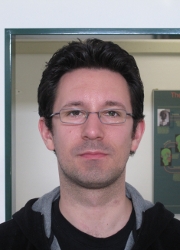
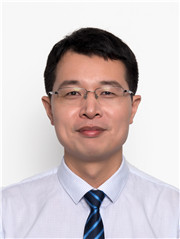
Jürgen Hauer is a Professor at the Technische Universität München (TUM) within the TUM School of Natural Sciences . He leads the Professorship for Dynamic Spectroscopy , focusing on ultrafast chemical processes using femtosecond laser spectroscopy. His work spans energy transfer pathways, photocatalytic reactions, and molecular dynamics across ten timescale orders. Research Interests Ultrafast energy transfer in photosynthetic systems Femtosecond spectroscopy for reaction bottlenecks Development of advanced time-resolved methods Photochemical kinetic resolution of enantiomers Application to sustainable chemistry and catalysis Recent Publications (2025) highlight innovations in transient absorption anisotropy, Stokes shift dynamics, and FT-IR bacterial analysis. His scientific awards include the FWF's START Prize and Lise Meitner Fellowship. Teaching activities at TUM include courses in Biophysical Chemistry and Experimental Physical Chemistry.
Stephan Kessler is a researcher at the Technical University of Munich , affiliated with the Department of Mechanical Engineering and the Chair of Conveying Technology, Material Handling, and Logistics . His work focuses on construction logistics, digital twins, and IoT integration in building processes. Contact: stephan.kessler@tum.de Key research areas: Digital Twin, BIM, DEM simulations, IoT in construction Collaborates with Prof. Johannes Fottner on construction automation projects His research emphasizes digitalization of construction processes through technologies like RFID, machine learning, and simulation tools. Recent publications address tower crane planning, co-robot integration, and bulk material handling standards. Article trends show consistent focus on construction automation (IoT, digital twins, BIM), material flow optimization (DEM simulations, screw conveyor standards), and equipment lifecycle management (telematics, RFID identification). Kessler contributes to industry-university collaborations through projects like BauFlott (fleet management systems) and TEP (Tower Crane Deployment Planner). His work bridges theoretical research with practical implementations in construction site logistics.
Anne Fischer, M.Sc., is a researcher at the Chair of Material Handling, Material Flow, and Logistics at the Technical University of Munich (TUM). Her work focuses on digital twins, construction automation, and resource scheduling in heavy civil engineering. She is based in Garching near Munich and collaborates with institutions like UC Berkeley and Stanford University. Research Interests: Digital Twin frameworks, simulation-based optimization, BIM integration, activity recognition in construction, and sustainable logistics systems. Collaboration: Serves as a contact person for international exchanges with U.S. institutions. Publication Trends: Her recent articles (2024–2021) address construction automation, digital twin applications, and variability management in civil engineering projects. Key Projects: Engaged in initiatives like Bauen 4.0 , MiProcess2Twin , and SiteRoute , which focus on digitalization and automation in construction. Location: Boltzmannstraße 15, Garching bei München (Room: 5505.EG.501).
Prof. Dr. Katja Dörschner Boyaci is a Professor at Justus-Liebig-Universität Gießen , Faculty of Psychology and Sports Science, leading the Perception & Active Exploration Group . Her research focuses on understanding how the human brain constructs rich perceptual experiences from sensory input, particularly in the perception of material properties like softness, glossiness, and roughness. Research Interests: Computational and neural mechanisms of material perception Integration of visual and haptic information Expectation-driven modulation of perception Neuroimaging (fMRI, EEG) and psychophysical approaches Virtual reality and computational modeling Her work combines psychophysics , neuroimaging , and computational modeling to explore how humans judge material properties from static and dynamic images, and how prior experiences shape these perceptions. Scientific Contributions: Published extensively on material perception, with recent papers in Nature Human Behaviour , Journal of Neuroscience , and Vision Research . Leads the collaborative B8 project on integrating experience and sensory information in material perception. Collaborations & Funding: Co-leads the B8 project with Prof. Hüseyin Boyaci, funded to investigate neural mechanisms of expectation-based perception. Employs interdisciplinary methods including EEG, fMRI, VR, and behavioral experiments. Laboratory & Team: The Perception & Active Exploration Group at Giessen University studies how humans perceive intrinsic object qualities through active exploration and sensory integration, with implications for product design, computer graphics, and robotics.
Dr. Torsten Sattler is a computer vision researcher at RWTH Aachen University, Germany, specializing in image-based localization and 3D scene reconstruction. His work focuses on developing efficient algorithms for camera pose estimation relative to large 3D models, with significant contributions to mobile localization systems and scalable reconstruction techniques. His primary research interests include: Image-based localization and pose estimation Large-scale 3D scene reconstruction Structure-from-Motion techniques Efficient correspondence search algorithms Mobile vision applications Point cloud processing and rendering Dr. Sattler's publication record shows a clear progression from fundamental algorithm improvements to practical systems for real-world applications. His research demonstrates particular expertise in optimizing RANSAC implementations, developing direct 2D-to-3D matching techniques, and creating memory-efficient solutions for mobile devices. The trend in his work moves toward increasingly complex systems that address practical challenges in urban-scale localization and reconstruction. Award: Best Paper Award at the ICCV Workshop on Big Data in 3D Computer Vision (2013) Dr. Sattler has maintained strong collaborations with researchers including Bastian Leibe and Leif Kobbelt. His work bridges theoretical computer vision with practical applications in augmented reality, robotics, and mobile navigation systems, often providing publicly available source code and project pages to support reproducibility and further research.
Zhao Zhigang is an Associate Professor at the School of New Materials and New Energy, Shenzhen University of Technology, where he has been employed since May 2017. Previously, he served as a Lecturer at the School of Optoelectronic Engineering, Shenzhen University (2013-2017) and completed postdoctoral research at Shenzhen University (2010-2012) after earning his PhD from Huazhong University of Science and Technology. His academic journey began with undergraduate and master's studies at PLA Ordnance Engineering College (now Army Engineering University). His educational background includes: PhD in Optical Engineering, Huazhong University of Science and Technology (2005-2010) Master's in Optical Engineering, PLA Ordnance Engineering College (2002-2005) Bachelor's in Military Optoelectronic Engineering, PLA Ordnance Engineering College (1995-1999) Zhao's research focuses on hyperspectral imaging systems and machine learning applications for material classification. His work emphasizes embedded image data acquisition and processing using ARM and FPGA platforms, with significant contributions to micro-hyperspectral imaging technology. His research spans three primary areas: hyperspectral image processing on ARM/FPGA systems, machine learning applications in spectral analysis, and embedded AI implementations on FPGA/Zynq platforms. This interdisciplinary work bridges optical engineering, computer vision, and hardware design. Analysis of his recent publications reveals a strong emphasis on hyperspectral data compression techniques , machine learning applications for spectral analysis , and embedded system implementations . His work demonstrates a consistent focus on practical applications of hyperspectral imaging in fields ranging from food quality assessment to battery health monitoring, with increasing incorporation of deep learning techniques in recent years. His scientific recognition includes: Multiple teaching awards at Shenzhen University of Technology (2019-2024) Shenzhen City high-level professional talent designation (2016) Numerous national competition awards as student supervisor (2016-2023) Outstanding Paper Award at Shenzhen Optical Society (2010) Zhao has secured substantial research funding as Principal Investigator, including horizontal projects (2023-2024), Shenzhen Postdoctoral Research Funding (2019-2020), and Shenzhen Basic Research Projects. He has successfully guided students in academic competitions, resulting in five national first prizes. His research group maintains strong industry connections through multiple school-enterprise cooperation projects focused on practical applications of hyperspectral imaging technology. His laboratory work centers on FPGA-based embedded systems for hyperspectral imaging, with recent projects developing micro-hyperspectral spectrometers for UAV platforms, real-time video processing systems, and specialized hardware for spectral data acquisition and compression. These efforts demonstrate a clear trajectory from fundamental optical engineering toward practical applications of machine learning in spectral analysis.
Prof. Monika Sester is a distinguished Professor and Executive Director of the Institute of Cartography and Geoinformatics at Leibniz University Hannover, within the Faculty of Civil Engineering and Geodetic Science. She also serves as Spokesperson for the Leibniz Research Center FZ:GEO and holds multiple leadership roles including Faculty Information Officer (FIO) for the Faculty of Civil Engineering and Geodetic Science, Ombudsman for Good Scientific Practice, and Exchange Coordinator for Geodetic Science and Geoinformatics. Her research focuses on the intersection of geospatial information science, cartography, and urban mobility. Prof. Sester's work spans several key areas: Geospatial data processing and analysis Cartographic representation and visualization Urban mobility and transportation systems Spatial data uncertainty and quality Digital mapping technologies and applications Historical map analysis and interpretation Prof. Sester's recent publications demonstrate a strong focus on applying advanced computational techniques to geospatial problems. Her work shows increasing emphasis on machine learning applications for map analysis, urban mobility optimization, and 3D spatial modeling. She has been particularly active in researching applications of deep learning for historical map interpretation, urban mobility patterns, and spatial uncertainty visualization. Her contributions to the field have been recognized through leadership positions in major research initiatives: Executive Director, Institute of Cartography and Geoinformatics Spokesperson, Leibniz Research Center FZ:GEO Faculty Information Officer, Faculty of Civil Engineering and Geodetic Science Ombudsman for Good Scientific Practice Member of multiple academic committees including the Admissions and Examination Board Prof. Sester actively collaborates with students and researchers across multiple projects focused on geospatial information systems, urban mobility, and cartographic visualization. Her leadership extends to guiding research directions within the Leibniz Research Center FZ:GEO, which brings together interdisciplinary expertise to address complex spatial challenges.
Zoi Kaoudi is a researcher at the IT University of Copenhagen , specializing in Data Management , Knowledge Graphs , and Machine Learning . Her work focuses on cross-platform data processing, query optimization, and scalable systems for graph analytics. She has published extensively in venues like SIGMOD , VLDB , and ISWC , with recent contributions to Apache Wayang , DORIAN , and Space-Efficient Graph Algorithms . Her research bridges theoretical advancements with practical frameworks for data science pipelines. Collaborations include Volker Markl, Jorge-Arnulfo Quiané-Ruiz, and Ioana Manolescu. She has explored topics such as Parameter Servers , Knowledge Graph Embeddings , and RDF Data Management in the cloud. Her work emphasizes open science and system integration.
Wenhao Sun is a researcher at the Chair of Design Automation at the Technical University of Munich (TUM). His work focuses on advancing neural network design and electronic design automation (EDA), particularly in areas like accuracy enhancement and class-based quantization for AI models. Research: Neural Networks, Accelerators, Analog EDA, Timing Analysis Contact: wenhao.sun@tum.de Recent publications highlight his contributions to optimizing neural networks for hardware efficiency, with two papers presented at the 2023 Design, Automation and Test in Europe (DATE) conference. His work bridges the gap between machine learning and EDA, focusing on incremental and quantization-based improvements.
Ermeson Carneiro de Andrade is a Professor at the Department of Systems and Computer Engineering within the Center of Informatics at the Federal University of Pernambuco (UFPE) in Brazil. His research focuses on dependability engineering, performability analysis, and fault tolerance in distributed and embedded systems. Over his career spanning more than 15 years, he has established himself as a prominent researcher in the field of system reliability through numerous publications in top-tier journals and conferences. Dr. Andrade's research interests primarily center on the analysis and modeling of system dependability, with particular expertise in UAV-based monitoring systems, cloud computing environments, and IoT architectures. His work bridges theoretical modeling with practical applications, particularly in environmental monitoring, disaster recovery solutions, and mission-critical systems. He has made significant contributions to understanding software aging phenomena in various computing environments and developing performability-aware solutions for real-time systems. The analysis of his recent publications reveals a strong focus on UAV systems for environmental monitoring, particularly deforestation detection, with increasing attention to weather impacts and vehicle density-aware traffic monitoring. His research demonstrates a consistent pattern of applying stochastic modeling techniques to solve practical problems in distributed systems, with recent work expanding into NoSQL database performance, satellite constellation dependability, and the performance-interpretability trade-offs in machine learning models. This evolution shows his ability to adapt to emerging technologies while maintaining core expertise in system reliability. Dr. Andrade has been actively involved in mentoring students and collaborating with researchers across Brazil and internationally. His work often involves interdisciplinary teams addressing complex system challenges. While specific awards aren't detailed in the available publication records, his consistent output in high-impact venues demonstrates recognition within the dependability engineering community. His laboratory work appears to focus on system modeling and analysis, with particular emphasis on experimental validation through simulation and real-world testing. Current projects suggest involvement in UAV-based monitoring systems for environmental applications, with strong connections to public sector institutions in Pernambuco state.
Pengcheng Xu is a Researcher at the Technical University of Munich's Chair of Circuit Design under Prof. Ralf Brederlow, specializing in analog and mixed-signal circuit design. His work spans energy harvesting systems, neuromorphic hardware, and wireless sensor technologies, with strong industry connections including prior roles at Huawei and Fraunhofer EMFT. Education: Bachelor of Physics, Shanghai Normal University (2013) Master of Integrated Circuit Engineering, Tongji University (2016) Ph.D. in Electrical Engineering, Université catholique de Louvain (2021) Exchange Student, University of Erlangen-Nuremberg (2015) Xu's research focuses on practical applications of circuit design including RF energy harvesting for battery-less IoT sensors, neuromorphic accelerators for edge computing, and precision analog systems for electrochemical/ mechanical stress sensing. His work bridges theoretical circuit innovation with real-world implementation in semiconductor processes from 28nm FDSOI to emerging memory technologies. His publications demonstrate consistent high-impact contributions to IEEE journals and conferences including JSSC, ISSCC, and ESSCIRC, with particular expertise in impedance-aware rectifier design and low-power circuit architectures. Xu holds a pending European/US patent for RF energy harvesting systems. Awards and Recognition: Shanghai Outstanding Graduate Award (2013, 2016) Chinese Government Award for Outstanding Self-Funded Students Abroad (2020) Chinese National Scholarship (2012, 2014, 2015) Meritorious Winner, Mathematical Contest in Modeling (2013) Xu actively contributes to the academic community as IEEE Young Professionals Germany Chair (2023-2024), IEEE Design Automation Conference TPC member (2022-2024), and reviewer for multiple IEEE journals. He supervises student theses in analog circuit design and neuromorphic hardware through TUM's Chair of Circuit Design, which maintains strong industry partnerships with semiconductor companies.
Prof. Cornelia Ortlieb is a W3 Professor for Modern German Literature with a focus on Classical Modern at the Free University of Berlin. She serves as Deputy Managing Director of the Institute for German and Dutch Philology and leads PR efforts for the Cluster of Excellence Temporal Communities. Her academic journey includes professorships at FAU Erlangen-Nuremberg, LMU Munich, and TU Berlin. Education: Magister Artium in Modern German Philology, Comparative Literature, and Philosophy (TU/FU Berlin); Habilitation at TU Berlin on Friedrich Heinrich Jacobi; Doctorate on Baudelaire to Trakl at TU Berlin Research Interests: Specializing in materiality studies within literature and arts, her work spans 18th-21st century European literature with emphasis on Classical Modern (1880-1930), literary multilingualism, translation practices, and avant-garde material culture. She explores intersections between textuality and physical artifacts, focusing on Goethe's collections, Mallarmé's paper works, and 1900s cultural theories. Literary Output: Recent publications examine paper's four dimensions in Albers' art, Kafka's Berlin exile, and interwar film credits. Her 2024 monograph Gefaltete Verse, Blumenkomplimente und Stein-Gaben analyzes Mallarmé's occasional poetry, while 2023's Weiß auf Weiß investigates his ephemeral writings. She contributes to debates about digital authorship, collective writing, and postcolonial translation ethics. Academic Leadership: Currently directs research projects on Berliner Moderne and A Dialogue from Time to Time (2021-). She co-organized 13 Translation Talks audio series and leads the Temporal Communities research area on literary currencies. Previous projects include Artefakte der Avantgarden (DFG-funded 2019-2023), Die Sprache der Objekte (BMBF 2015-2018), and Mallarmés Papierarbeiten (2011-2014). Collaborative Work: Collaborated with institutions like Klassik Stiftung Weimar, Seoul National University, and Daegu University. Co-edited Grüner Apfel... (2025) with Katharina Mevissen and Felicitas Pfuhl. Maintains research teams with Sophie König (research assistant) and Vera Vogel (student assistant).
Prof. Dr. Katharina Oberpriller is a faculty member at the Department of Mathematics, University of Munich, working in the Financial and Insurance Mathematics research group. Her research focuses on model uncertainty, insurance risk markets, and credit risk modeling. She collaborates extensively on publications related to stochastic processes, affine models, and financial risk management.
Dorothea Pantförder, Dr.-Ing., is a researcher at the Chair of Automation and Information Systems at the Technical University of Munich, working under Prof. Vogel-Heuser. Her office is located at Boltzmannstr. 15, 85748 Garching b. Munich, where she maintains regular office hours on Mondays from 8:30 a.m. to 9:15 a.m. Her research focuses on human-machine interaction with particular emphasis on digital twin technology, industrial augmented reality applications, and advanced process data visualization techniques. She has pioneered work in 3D visualization for process control systems and has extensively explored how mixed reality technologies can enhance industrial maintenance procedures and operator training in manufacturing environments. Analysis of her publication history reveals a consistent research trajectory centered around making complex industrial processes more accessible through innovative visualization techniques. Her work bridges the gap between theoretical human-computer interaction principles and practical industrial applications, particularly in the context of Industry 4.0 initiatives and cyber-physical production systems. Throughout her career, Pantförder has collaborated extensively with Prof. Vogel-Heuser and other researchers across multiple institutions, contributing to numerous research projects focused on automation technologies, information systems, and human-centered design in industrial contexts. Her work has been supported by various research grants and has contributed to several demonstration projects showcasing Industry 4.0 applications. She has been instrumental in developing visualization techniques that help operators better understand complex production processes, with applications ranging from maintenance support to team knowledge management systems. Her research has evolved from foundational work on 3D process visualization to more recent explorations of digital twins integrated with mixed reality technologies for industrial applications.
Vlad-Costin Andrei is a Researcher at the Chair of Theoretical Information Technology , Technical University of Munich (TUM), specializing in wireless communication systems and digital twinning. He joined the ACES Lab (TUM's Chair of Theoretical Information Technology) in late 2021 after 3.5 years in the aerospace and defense industry. Research Focus: Joint Communications and Sensing (6G), Neuromorphic PHY Layer, Digital Twins, MIMO-OFDM Resilience Projects: 6G-life, 6G Future Lab Affiliation: ACES Lab, TUM His work bridges theoretical foundations with practical implementations, including demonstrations of digital twinning platforms and sensing-assisted receivers. Recent publications emphasize anti-jamming frameworks, federated learning over wireless networks, and trajectory optimization for UAV-enabled ISAC systems. Scientific Awards: Best Paper Award, IEEE Symposium on Joint Communications and Sensing (2023) His research is supported by third-party grants such as BMBF's 6G-life, DFG's Gottfried Wilhelm Leibniz Prize, and multiple collaborative projects.