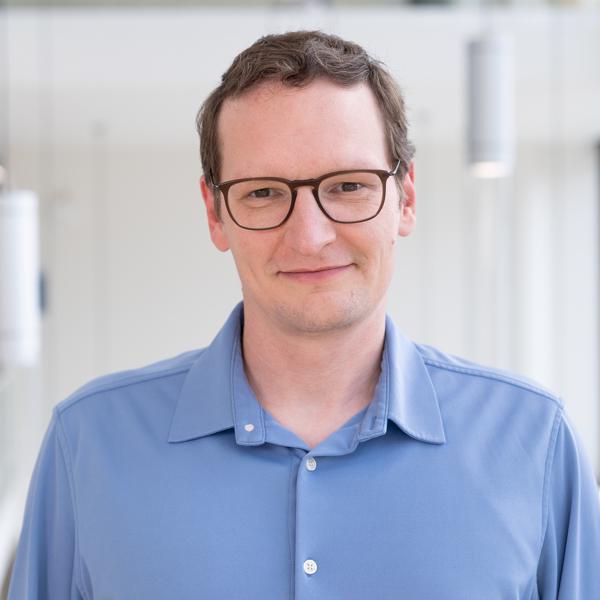
Prof. Dr.-Ing. Ahmad Osman is a Professor at the Saarland University of Applied Sciences (htw saar), specializing in Test Technologies and Test Methods within the Faculty of Engineering. He also holds an Adjunct Professor position at Laval University in Quebec, Canada, in the Department of Electrical Engineering and Computer Science. His research focuses on Artificial Intelligence applications in Signal and Image Processing for Non-destructive Testing (NDT) , with extensive work on Deep Learning , 3D Ultrasound Tomography , and Sensor Data Fusion in industrial contexts. Engineering Artificial Intelligence Signal Processing Image Processing Non-destructive Testing Quality Control Augmented Reality Osman leads the AutomaTiQ research group and serves as Head of the Algorithms/Signal and Data Processing Department at Fraunhofer IZFP . His recent publications (2017–2022) emphasize Deep Learning for defect detection in CFRP , Terahertz Imaging for artwork diagnostics, and Acoustic Sensors for agricultural quality control. He has organized international conferences on Structural Health Monitoring and contributed to Springer books on NDT technologies. His projects include ComforTex-AI (2024) and development of 3D positioners for ultrasound measurements. Collaborations span institutions in Germany, Canada, Italy, and Brazil, with advisory roles in the German Society for NDT and technical committees for conferences in Montreal and Egypt.
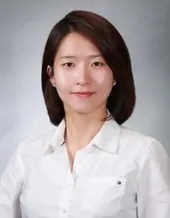
Jihyun Lee is an Assistant Professor in the Department of Mechanical and Manufacturing Engineering at the Schulich School of Engineering, University of Calgary. She was awarded the Anna Boyksen Fellowship by the Technical University of Munich Institute for Advanced Study (TUM-IAS) in 2021, hosted by Prof. Michael Zäh. Doctorate in Mechanical Engineering from University of Michigan-Ann Arbor (2016) Prior post at Korea Institute of Machinery and Materials (2016-2019) Her research focuses on mechatronics, robotics, manufacturing automation, and control systems , with applications in machine tools, additive manufacturing, and precision measurement. She integrates artificial intelligence and optimization to enhance industrial automation. Recent publications highlight work on vibration control , sensor fusion , and flexible manufacturing systems . Her team explores dynamic modeling , nanocomposite sensors , and human-in-the-loop robotics for industrial and marine applications. 2020 Remote Teaching Award, Schulich Engineering 2020 Early Achievement Award, Association of Korean-Canadian Scientists and Engineers 2018 Best Achievement Award, KIMM She supervises doctoral and master’s students at the University of Calgary, emphasizing hands-on experience and MATLAB/Python simulation skills in her lab. Her work bridges quantum logic and industrial robotics through interdisciplinary collaborations.
Prof. Dr. Mareike Kühne is a full-time Professor of Business Administration at the Department of Business and Management, Brandenburg University of Technology. With a unique interdisciplinary background spanning economics, business administration, philosophy, and neuroscience, she bridges affective dimensions with economic rationality to develop holistic decision-making frameworks. Doctorate in Economics, Otto von Guericke University Magdeburg (1992-1997) Fulbright Scholar, San Diego State University (1997-1998) Studies in Philosophy, Humboldt University (2007-2011) Doctoral and Master’s in Neuroscience, Berlin School of Mind and Brain (2011-2013) Her research integrates insights from psychology and neuroscience into capital market-oriented corporate reporting, corporate governance, and normative rationality frameworks. She critiques current economic models for neglecting the embodied nature of cognition, advocating for a more nuanced understanding of rationality that incorporates lived experience. Her 15 most recent works span sustainability reporting (2025), neuroeconomics (2021), M&A disputes (2017), and IFRS standard evolution (2005-2012). These publications highlight her focus on reconciling traditional accounting principles with interdisciplinary approaches to decision-making. Fulbright Scholar (1997-1998) Prof. Kühne has taught at Humboldt University, HHL Leipzig, and the Berlin School of Mind and Brain. She actively participates in professional organizations including the German Society for Philosophy, European Accounting Association, and European Financial Reporting Advisory Group. Her work emphasizes the practical impact of neuroscientific findings on economic policy and standard-setting.
Jens Behley is a Lecturer (Privatdozent) and postdoctoral researcher at the Department of Photogrammetry, University of Bonn. He completed his habilitation in 2023 with a thesis on LiDAR-based spatio-temporal scene understanding for autonomous vehicles and earned his PhD in 2014 under Prof. Armin Cremers. His research focuses on LiDAR perception, agricultural robotics, and 3D scene understanding. Behley is an Associate Editor at IEEE Robotics and Automation Letters (RA-L) and has authored influential datasets like SemanticKITTI and BonnBeetClouds3D. Education: PhD in Computer Science, University of Bonn, 2014 Habilitation in Photogrammetry, University of Bonn, 2023 Research Interests: LiDAR-based perception in urban and agricultural environments, machine learning for robotics, semantic mapping, SLAM algorithms, and 3D reconstruction. His work bridges computer vision and robotics, with applications in autonomous vehicles and precision agriculture. Awards: Best Agri-Robotics Paper Award (IROS 2024) Outstanding Reviewer Awards (ECCV, CVPR, ICRA) Faculty Award for Geodesy (2021) Advisees & Grants: Behley collaborates extensively with the PRBonn lab and researchers like Cyrill Stachniss, focusing on projects funded by EU Horizon and industry partners. His team develops open-source tools for LiDAR processing (e.g., KISS-ICP, VDBFusion). Labs/Teams: Part of the Photogrammetry and Robotics Institute (IGG) at the University of Bonn, contributing to the PRBonn research group.
Prof. Dr. Tobias Gemmeke is a University Professor at RWTH Aachen University's Faculty of Electrical Engineering and Information Technology, leading the Chair of Integrated Digital Systems and Circuit Design. His work focuses on neuromorphic computing, hardware accelerators, and energy-efficient electronics. He has pioneered advancements in FPGA-based computational neuroscience simulators, neuromorphic processor architectures, and sensor integration for industrial and medical applications. Research interests include time-domain computing, ReRAM reliability, and co-optimization of neural networks with hardware. Notable contributions include the neuroAIx framework for accelerated neuroscience simulations and energy-efficient ASIC designs for post-quantum cryptography. He actively explores memristive devices and domain generalization techniques for edge computing. Recent publications highlight innovations in spiking neural networks, sensor systems for plain bearings, and time-domain compute-in-memory engines. His work bridges theoretical neuroscience with practical hardware implementations, emphasizing scalability and real-time performance.
Krishna Gummadi is a Scientific Director and Professor at the Max Planck Institute for Software Systems (MPI-SWS) in Germany, where he leads the Networked Systems Research Group. He also holds a professorship at the University of Saarland, demonstrating his dual commitment to research and academic instruction in computer science. His educational background includes: Ph.D. in Computer Science and Engineering from the University of Washington (2005) B.Tech. in Computer Science and Engineering from the Indian Institute of Technology, Madras (2000) Gummadi's research spans networked and distributed computer systems with a current focus on social computing systems. His work addresses critical challenges in algorithmic fairness, privacy in social media, trustworthiness of online identities, and information dissemination in social networks. He approaches these problems through interdisciplinary methods combining user-centric studies, data-centric analysis, and systems-centric design to create practical solutions that enhance fairness, transparency, and user control in online platforms. His methodology integrates large-scale observational studies, computational modeling, and system implementation to tackle complex human-computer interaction challenges at societal scale. His recent publications reveal a strong emphasis on fairness in algorithmic decision making, with significant contributions to quantifying and addressing discrimination in machine learning systems. His work bridges computer science, social science, and ethics, creating frameworks for fair classification, understanding media bias, and developing privacy-preserving techniques that maintain functionality while protecting user data. The research demonstrates a progression from technical system design to addressing societal implications of computing systems. Among his notable scientific achievements: ERC Advanced Grant in 2017 for 'Foundations for Fair Social Computing' Test of Time Awards at ACM SIGCOMM and AAAI ICWSM Casper Bowden Privacy Enhancing Technologies (PET) and CNIL-INRIA Privacy Runners-Up Awards IW3C2 WWW Best Paper Honorable Mention Multiple Best Paper awards across prestigious conferences Gummadi has advised numerous PhD students and postdoctoral researchers who have gone on to prominent positions in academia and industry. His ERC Advanced Grant has supported extensive research into fair social computing, while his leadership in major conferences (including serving as General Chair for ICWSM 2016 and Program Chair for WWW 2015) has shaped research directions in the field. His teaching portfolio includes courses on Distributed Systems, Human-Centered Machine Learning, and Social Media Analysis. He leads the Networked Systems Research Group at MPI-SWS, which has developed several publicly available systems including tools for fair classification, privacy risk assessment, trust evaluation in social media, and information diet management. The group's work bridges theoretical advances with practical implementations that address real-world challenges in social computing, with numerous software releases and datasets made available to the research community.
Prof. Dr. Gerold Alsmeyer is a faculty member at the Institute of Mathematical Stochastics, Department of Mathematics and Computer Science, University of Münster. He is an active researcher with a focus on stochastic processes, particularly stochastic fixed-point equations and iterated function systems. His work is supported by his role as an Investigator in Mathematics Münster in the project EXC 2044 - C1: Evolution and asymptotics. His primary research interests include the theory of stochastic processes, branching processes, Markov random walks, renewal theory, and the asymptotic analysis of random structures such as random trees and polytopes. He has made significant contributions to the understanding of fluctuation theory, perpetuities, and the smoothing transform. His recent publications (2017–2023) reveal a sustained focus on theoretical probability, with recurring themes in random difference equations, iterated function systems, and limit theorems for stochastic processes. The work spans pure mathematical theory and applications in mathematical biology and combinatorics, indicating a broad yet deep research profile. Prof. Alsmeyer has supervised numerous doctoral and master’s students, including Viet Hung Hoang, Christopher Eick, Philipp Godland, and Fabian Buckmann, whose dissertations cover topics in branching processes, random walks, and stochastic fixed-point equations. He has no listed scientific awards in the provided texts. He teaches courses in probability theory, mathematical statistics, branching processes, and stochastic recursion equations, demonstrating a strong commitment to academic mentoring and education.
Torsten Grust is a Professor of Computer Science at the University of Tübingen, leading the Database Systems research group since 2008. Previously, he held professorships at TU München and TU Clausthal. He earned his M.Sc. (Diploma) and Ph.D. in Computer Science from Universität Konstanz in 1994 and 1999, respectively. His research focuses on database languages, query and programming language technology, and scalable processing of non-relational queries. He bridges database and programming language research, emphasizing mutual benefits between the fields. **Education:** Ph.D. in Computer Science, University of Konstanz (1999) M.Sc. (Diploma), Computer Science, University of Konstanz (1994) Visiting Scientist, IBM Silicon Valley Laboratories (2000) **Research Interests:** Design and optimization of database languages Query compilation and execution engines Integration of functional programming with SQL Query provenance and debugging **Awards and Honors:** ACM SIGMOD Reproducibility Award (2021) University of Tübingen Teaching Award (2021/22) Winner of Dyalog 2019 APL Program Solving Competition Member of the VLDB Endowment Board of Trustees (2022–2027) **Advising & Grants:** Guided numerous students, including alumni such as Alexander Ulrich, Benjamin Dietrich, and Christian Duta Recipient of grants supporting research in query compilation, provenance analysis, and database language design **Labs & Teams:** Leads the Database Systems research group at University of Tübingen Collaborates with the National Institute of Informatics (Tokyo) on query and programming languages
Prof. Dr.-Ing. Lars Linsen is a full Professor of Computer Science at the Westfälische Wilhelms-Universität (WWU) Münster, leading the VISualization & graphIX (VISIX) group. His primary affiliation is the Institute of Computer Science within the Faculty of Mathematics and Computer Science. He holds adjunct professorships at Jacobs University, Bremen, and has held previous academic roles including Full Professor at Jacobs University (2012–2017) and Associate/Assistant Professor roles in Germany and the U.S. His research focuses on interactive visual analysis, medical visualization, and scientific visualization, with applications in life sciences and engineering. Education: PhD (Dr.-Ing.) in Computer Science from Universität Karlsruhe (2001), M.Sc. (Diplom) in Computer Science (1997), B.Sc. (Vordiplom) in Computer Science (1994). Awards: IEEE Visualization Design Contest Winner (2008, 2022, 2018), Preis des Fördervereins des Forschungszentrum Informatik (2002). Research Highlights: Develops visualization tools for medical imaging (e.g., mass spectrometry imaging, MRI data analysis) and physical simulations (e.g., wildfire spread analysis, asteroid impact modeling). Active in EU-funded projects like Pig-Pro-QuO (surface coatings) and cells-in-motion initiatives. Supervised over 20 PhD/MS advisees, including notable graduates in medical visualization and simulation ensemble analysis. Publications: Over 100 peer-reviewed articles in top venues like IEEE Transactions on Visualization and Computer Graphics, Computers & Graphics, and EuroVis. Key works include SciVis contest-winning wildfire analysis frameworks and medical visualization tools for stenosis detection. Teaching: Offers courses on visualization, computer graphics, and computational science. Actively involved in thesis supervision and curriculum development at both WWU Münster and Jacobs University. Grants & Collaborations: Principal investigator on DFG-funded projects (e.g., hemodynamics simulations, ensemble visualization) and industry collaborations (e.g., Tascon GmbH for coating quality analysis). Member of the Cells-in-Motion Interfaculty Centre and CDH board at WWU.
Michael Schaub is a tenure-track Assistant Professor in the Department of Computer Science at RWTH Aachen University, specializing in Computational Network Science. His research focuses on analyzing complex systems through network and graph models, integrating dynamical systems, control theory, and machine learning. He leads the Computational Network Science group, advancing methodologies for higher-order network models like simplicial complexes and hypergraphs. Schaub holds a PhD from Imperial College London and has held postdoctoral positions at MIT and Oxford. He is an ERC Starting Grant recipient (2022) and a Marie Curie Fellow, recognized for contributions to network dynamics and topological data analysis. Education: PhD in Mathematics, Imperial College London (2011-2015) MSc in Biomedical Engineering, Imperial College London (2010) BSc in Electrical Engineering, ETH Zurich (2007-2010) Research Interests: Schaub’s work spans interdisciplinary applications of network science, including biological systems, social networks, and technical infrastructures. Key areas include: Higher-order network models (hypergraphs, simplicial complexes) Graph signal processing and dynamics on networks Community detection and dynamical systems analysis Topological data analysis and machine learning Grants & Awards: ERC Starting Grant (2022): HIGH-HOPeS project Marie Skłodowska-Curie Fellowship (2017-2019) Junior Fellow, German Informatics Society (GI) Member of Junges Kolleg (North Rhine-Westphalia Academy) Labs & Teams: Leads the Computational Network Science Lab at RWTH Aachen, collaborating internationally on projects like the ELLIS Society and the European Laboratory for Learning and Intelligent Systems (ELLIS). Active in organizing workshops (e.g., Toponets, SIAM MDS).
Dr. Peter Bartsch serves as curator of the fish collection and construction project officer at the Museum für Naturkunde (MfN), Leibniz Institute for Evolution and Biodiversity Science, which is affiliated with Humboldt University Berlin. With expertise in ichthyology, embryology, and comparative anatomy, Dr. Bartsch has been instrumental in the museum's collection management and building renovation projects since joining the institution as a research associate before becoming curator in 2000. Dr. Bartsch received his academic training in ichthyology, embryology, and comparative anatomy at the University of Cologne. His academic career includes positions as a research assistant at the University of Tübingen and a postdoctoral fellowship at the Natural History Museum in Stockholm before joining the Museum für Naturkunde. Dr. Bartsch's primary research focuses on the evolution and systematics of major groups of bony fishes (Osteichthyes), with particular emphasis on primitive ray-finned fish lineages. His work integrates morphological analysis of both fossil and extant species to understand evolutionary relationships. A significant portion of his research centers on the developmental biology of ancient fish groups, especially the Polypteridae (bichirs), examining embryonic development, skeletal formation, and sensory systems. More recently, his interests have expanded to include the logistics and optimal management of research collections, reflecting his administrative responsibilities at the museum. Analysis of Dr. Bartsch's recent publications reveals a consistent focus on fish morphology, evolution, and development, with particular attention to primitive actinopterygian lineages. His work spans both systematic taxonomy and functional morphology, with increasing attention to museum collection management challenges. The publications demonstrate expertise in comparative anatomy across diverse fish groups including chondrichthyans (sharks, rays, and chimaeras) and basal actinopterygians. Recent work shows integration of molecular phylogenetic approaches with traditional morphological analysis. Dr. Bartsch has held significant administrative roles at the Museum für Naturkunde, serving as head of the collections department from 2011 to 2013. He was responsible for the museum's construction program for the east wing reconstruction, completed in 2010, which created modern facilities for the storage and scientific processing of the museum's wet collections. Currently, he manages the second phase of the building's renovation that began in 2011 and participates in planning for the future development of the museum's facilities. The Museum für Naturkunde houses extensive ichthyological collections that form the basis for Dr. Bartsch's research. His work involves close collaboration with various research teams within the museum, particularly in the areas of molecular phylogenetics, collection preservation, and paleontological research. The museum's facilities include specialized laboratories for morphological analysis, molecular studies, and collection management that support his research activities.
Prof. Dr. Markus Bachmayr is a full professor at the Institute for Geometry and Practical Mathematics, RWTH Aachen University, holding the chair for Applied Mathematics. His research focuses on nonlinear approximation, high-dimensional partial differential equations (PDEs), uncertainty quantification, and numerical methods in quantum chemistry. He leads the ERC Consolidator Grant project Computational Complexity of Highly Nonlinear Approximations (COCOA) and contributes to CRC 1481 Sparsity and Singular Structures, and RTG 2326 Energy, Entropy, and Dissipative Dynamics. His recent work emphasizes adaptive low-rank and sparse approximation techniques for parametric and stochastic PDEs, including applications in radiative transfer and poroviscoelastic flow modeling. He serves as Editor-in-Chief of Foundations of Computational Mathematics and Associate Editor for multiple journals. Scientific Awards: John Todd Award 2013 Borchers Plakette 2014 Erwin Wenzl Preis 2007 He has taught courses such as Numerische Analysis I/II, Numerische Mathematik für Elektrotechniker, and seminars on numerical methods and approximation theory.
Alexey Bufetov is a Professor at Leipzig University, holding an ERC Starting Grant for his research in Integrable Probability (2022-2027). Previously, he served as a W2-Professor ("Bonn Junior Fellow") at the Hausdorff Center for Mathematics (2018-2021) and as a CLE Moore Instructor at Massachusetts Institute of Technology (2015-2018). His research centers on Probability Theory , with deep connections to Mathematical Physics and Combinatorics . Key areas include integrable probability, stochastic particle systems (ASEP/TASEP), random tilings, Schur generating functions, and representation-theoretic aspects of probability. His work often bridges abstract mathematical structures with physical models from statistical mechanics. Bufetov's recent publications reveal a strong focus on integrable systems and asymptotic analysis , particularly exploring connections between Mallows measures, vertex models, and random matrix theory. His 2025 work on Aztec diamond domino tilings exemplifies his signature approach combining combinatorial structures with probabilistic methods. His primary recognition is the ERC Starting Grant "Integrable Probability" (2022-2027), supporting his cutting-edge research program. Bufetov has maintained a prolific collaborative network, frequently publishing with leading researchers including Alexei Borodin, Vadim Gorin, Leonid Petrov, and Kailun Chen. His work appears in top journals such as Advances in Mathematics , Duke Mathematical Journal , and Communications in Mathematical Physics .
Nils Ole Tippenhauer is a faculty member at the CISPA Helmholtz Center for Information Security , leading the SCy-Phy research group . His academic journey includes an Assistant Professorship at the Singapore University of Technology and Design (SUTD) (2014–2018), a PhD in Computer Science from ETH Zurich (2012), and a Diploma in Computer Engineering from Hamburg University of Technology (2007). He also holds an exchange study year at the University of Waterloo (2004–2005) supported by a DAAD scholarship. Research Interests focus on practical systems security , particularly Security of Cyber-Physical Systems Industrial Control Systems (ICS) and Industrial IoT (IIoT) Physical-Layer Security and Wireless Security Privacy-Preserving Technologies (e.g., DP3T project) Embedded Systems Security Threat Detection & Defenses His work integrates both theoretical and applied approaches, addressing vulnerabilities in critical infrastructures like water systems and power grids. Recent Publications highlight trends in Anomaly detection evasion in industrial networks Microarchitectural side-channel defenses Localization techniques in cellular networks Security analysis of ICS protocols Data-driven vulnerability assessments for robotics Cyber-physical simulation for infrastructure security Scientific Awards include Best paper at DIMVA'23 Distinguished Paper at ACSAC 2022 Best paper at CPSIOTSEC 2022 Best paper at CPSS 2017 K-H Ditze Award for diploma thesis (2007) SG Mark Institution award (2016) Runner-Up at smart energy hackathon (2013) Advising and Grants feature PhD defenses of Daniele Antonioli and Hamid Reza Ghaeini (2022), co-organizing conferences like WiSec and CPSS , and leading projects such as the National Science Experiment (NSE) with 50,000 mobile sensors in Singapore. He also contributed to the DP3T project for privacy-preserving contact tracing. Labs and Teams include the SCy-Phy research group at CISPA and the development of testbeds like SWaT (Secure Water Treatment), WADI (Water Distribution), and EPIC (Electric Power and Industrial Control) at SUTD. These platforms enable hands-on security research in realistic industrial environments.
Ke Xu is a Professor in the Department of Computer Science at Tsinghua University's School of Information Science and Technology. With extensive research contributions in network security, privacy-preserving technologies, and machine learning applications for networking, Professor Xu has established himself as a leading researcher in computer science. Professor Xu's research interests span network security, privacy-preserving technologies, machine learning for networking, federated learning, internet protocols, encrypted traffic analysis, blockchain applications, and AI in networking. His work bridges theoretical foundations with practical implementations, focusing on real-world security challenges and network optimization problems. He has developed novel frameworks for secure network operations, privacy-preserving data sharing, and efficient AI deployment in distributed environments. Professor Xu's publication record shows a clear trend toward integrating artificial intelligence with traditional networking challenges. His recent work explores federated learning security, encrypted traffic analysis using deep learning, and novel approaches to network security that leverage machine learning techniques. The interdisciplinary nature of his research spans computer networking, security, privacy, and artificial intelligence. Professor Xu has received recognition for his contributions to network security and privacy-preserving technologies through publications in top-tier venues including IEEE journals, ACM conferences, and security symposia. His work has appeared in IEEE Transactions on Dependable and Secure Computing, IEEE/ACM Transactions on Networking, and security conferences like CCS and NDSS. Professor Xu actively collaborates with researchers across institutions, supervising students and junior researchers in exploring cutting-edge problems in network security and AI. His research has been supported by significant grants focusing on network security, privacy, and intelligent networking infrastructure. He leads projects that address fundamental challenges in secure communication, privacy-preserving data analysis, and intelligent network management. Professor Xu is involved with research laboratories focusing on network security and intelligent systems at Tsinghua University. His team works on developing practical security solutions, privacy frameworks, and AI-enhanced networking protocols that address real-world challenges in today's increasingly connected world.