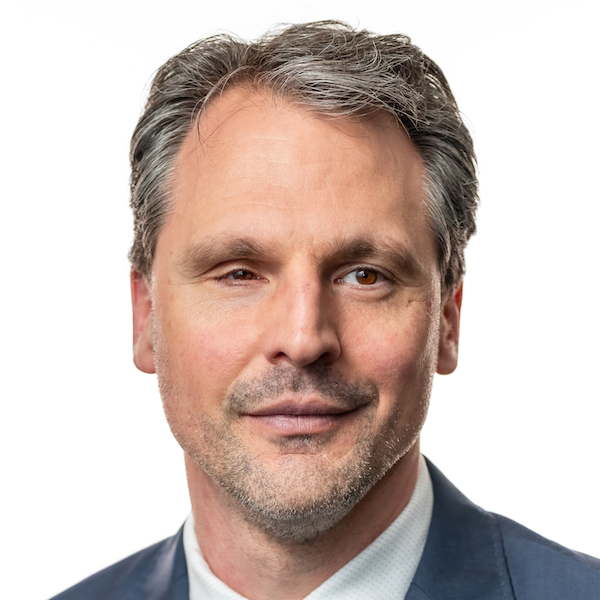
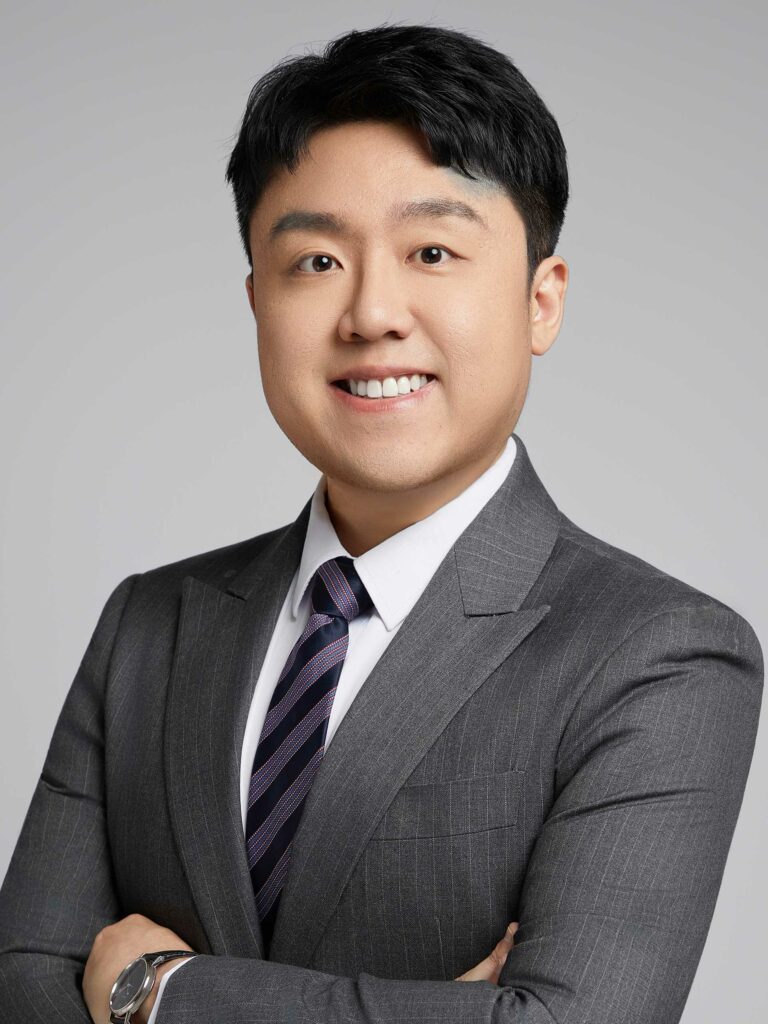
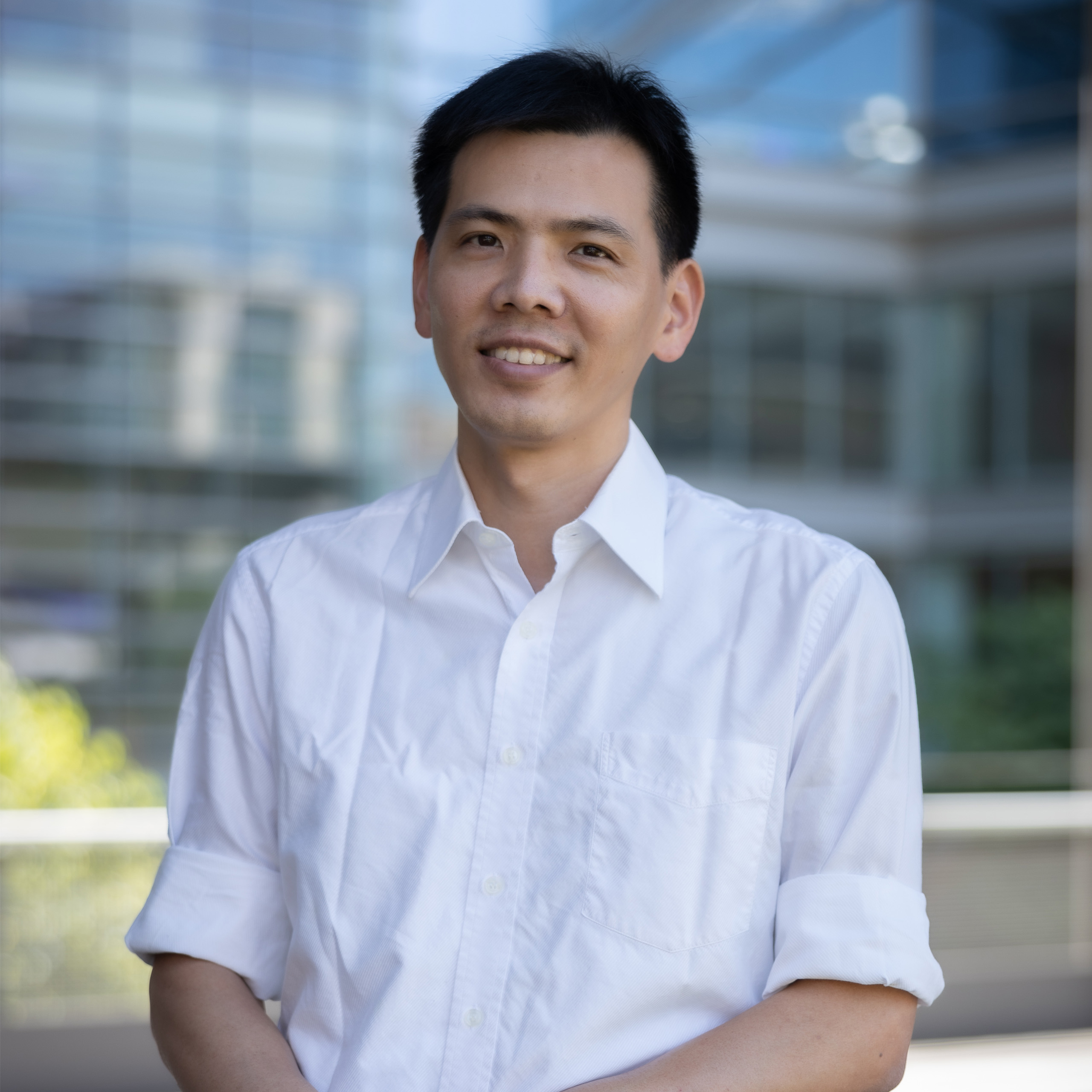
Professor Heinrich Schmidt is an Adjunct Professor in the School of Science at RMIT University, Australia. His research focuses on Software Engineering, Distributed Systems, and Cyber-Physical Systems. He specializes in areas such as formal verification, safety-critical systems, and cloud computing. His work emphasizes practical applications in industrial automation, IoT, and HPC environments. Key research interests include spatio-temporal analysis, fault tolerance, and adaptive systems design. He has supervised projects on IoT data contextualization, software fault characterization, and spatial modeling in PRISM. Over 98 publications highlight his contributions to formal methods, distributed systems, and industrial software solutions. Professor Schmidt collaborates on projects like Chiminey (cloud/HPC integration) and VxLab (industrial visualization). His teaching covers parallel systems, trusted components, and model-based monitoring. No specific awards are listed, but his extensive publication record underscores his academic impact.
Tao Yang is a Professor in the Department of Computer Science at the University of California, Santa Barbara, where he has been a faculty member since 1993. His research spans web search and mining, database and information systems, machine learning and data mining, parallel and distributed systems, and cloud computing. He serves as an active educator, teaching courses including CS170 Operating Systems (Spring 2024), CS291A Neural Information Retrieval (Fall 2024), and CS140 Parallel Computing (Winter 2025). PhD in Computer Science, Rutgers University ME in Artificial Intelligence, Zhejiang University MS in Computer Science, Rutgers University BS in Computer Science, Zhejiang University Professor Yang's research focuses on advancing the field of information retrieval with particular emphasis on neural approaches to search and ranking. His recent work explores neural document ranking, privacy-aware search systems, and versioned data search. He has led significant projects including Neptune clustering infrastructure, Sorrento self-organizing storage cluster, and TMPI for MPI execution optimization. His research bridges theoretical advances with practical implementations, particularly in scaling search architectures to handle billions of documents while maintaining relevancy, performance, and freshness. His publication record shows a clear evolution from foundational work in parallel and distributed systems toward contemporary research in neural information retrieval. Recent publications demonstrate expertise in optimizing both sparse and dense retrieval methods, with particular focus on efficiency improvements for multi-vector representations. His work consistently addresses real-world challenges in search scalability and privacy preservation. Faculty Research Award, Google Research Research Initiation Award, NSF (1994) UC Regents' Junior Faculty Award (1994) Computer Science Faculty Teacher Award (1995) CAREER Award, NSF (1997) Noble Jeeviant Award, AskJeeves (2002) Professor Yang has supervised numerous graduate students, many of whom have gone on to prominent positions at companies like Google, Apple, and Coursera, or academic positions at universities worldwide. His industry experience as Chief Scientist for Ask.com (2001-2010) and founding Chief Scientist for Teoma (2000-2001) has informed his research direction and provided valuable practical context for his academic work. He has served on program committees for major conferences including WWW, SIGIR, KDD, WSDM, CIKM, ECIR, and EMNLP. His research group maintains active projects in neural information retrieval, privacy-aware search, similarity computing, and parallel computing systems. The group collaborates closely with industry partners, particularly in the search technology space, and has developed systems that power major search engines serving over 100 million users.
Dao Zhou is an Associate Professor at Aalborg University's Department of Mechatronic Systems, part of The Faculty of Engineering and Science. His research focuses on power electronics reliability, wind turbine systems, and grid integration of renewable energy. He holds a PhD in Electrical Engineering from Aalborg University (2014), specializing in reliability assessment of wind turbine systems. His key research areas include power converter control strategies, semiconductor reliability, and grid-forming/grid-following inverter technologies. He has led projects such as the Physics-informed AI for Prognostics in Power Converters and the HELP laboratory platform initiative. Zhou has supervised four PhD students and authored over 198 publications, with notable awards including the IEEE ICPE 2023-ECCE Asia and MPCE 2021 Best Paper Award. Recent work emphasizes predictive maintenance via physics-informed neural networks and seamless control transitions between grid modes. His lab collaborations span Europe, focusing on improving renewable energy system reliability and educational lab infrastructure.
Martin Uecker is a Professor at the Institute of Biomedical Imaging at TU Graz. His research focuses on advanced MRI reconstruction techniques, real-time imaging, and open-source software tools like the Berkeley Advanced Reconstruction Toolbox (BART). He specializes in developing methods for fast and accurate medical imaging, including applications in cardiac MRI, fetal brain imaging, and disease monitoring. His work emphasizes reproducibility, quantitative imaging, and clinical translation. Key research areas include generative models for MRI reconstruction, model-based inversion of the Bloch equations, and interactive real-time MRI systems. His team collaborates on projects involving hardware-software integration, such as portable MRI scanners and MRI-guided interventions. Notable contributions include advancements in multi-echo radial FLASH techniques, motion-resolved T1 mapping, and Bayesian uncertainty estimation in imaging. Uecker’s publications highlight innovations in accelerating MRI acquisition and reconstruction, with applications in pulmonary function assessment, neonatal imaging, and cardiovascular diagnostics. His work bridges theoretical physics, computational methods, and clinical practice, fostering open-source frameworks to democratize access to cutting-edge imaging tools.
Hang Li is a Researcher in the Department of Molecular Biophysics and Biochemistry at Yale University’s Yale School of Medicine. Their work focuses on advancing neural network architectures, quantization techniques, and spiking neural networks (SNNs). They are affiliated with the Molecular Biophysics and Biochemistry department and contribute to interdisciplinary research in artificial intelligence and computational neuroscience. Research interests include optimizing neural networks for efficiency through quantization, exploring spiking neural networks for low-power computing, and developing methods like hybrid SNN designs, post-training calibration, and neuromorphic architectures. Their recent work addresses challenges in extreme low-bit quantization, data augmentation for object detection, and temporal coding in SNNs. Publications highlight innovations in quantization methods (e.g., TesseraQ, GenQ), spiking transformer architectures, and workload-balanced pruning strategies. While no awards are explicitly listed, their contributions to model efficiency and neuromorphic computing are notable in the field. Hang Li collaborates on projects involving neuromorphic hardware, system inconsistency benchmarking (SysNoise), and data-driven spatio-temporal analysis. Their research bridges theoretical advancements and practical applications in AI and biomedical informatics.
Stephen J. Riederer, Ph.D., is a Professor of Radiology at Mayo Clinic, holding dual appointments in the Department of Radiology and the Department of Physiology & Biomedical Engineering. He leads the Magnetic Resonance Laboratory, focusing on advancing MRI physics and clinical applications. His research emphasizes high-resolution prostate MRI, super-resolution T2SE imaging, and contrast-enhanced magnetic resonance angiography (CE-MRA). Dr. Riederer has developed fast-scanning techniques, real-time signal processing, and parallel acquisition methods, many of which are now industry standards. Education: B.A. in Mathematics, University of Wisconsin-Madison SM in Nuclear Engineering, MIT Ph.D. in Medical Physics, University of Wisconsin-Madison Research Interests: Dr. Riederer’s work bridges MRI physics and clinical implementation. Key areas include: Prostate cancer imaging via high-resolution T2SE and DCE-MRI Super-resolution MRI for improved anatomic detail Real-time MRI scanning and interactive triggering Parallel acquisition techniques and coil array optimization Publications & Impact: Over 300 peer-reviewed articles highlight his contributions to MRI innovation. Recent work focuses on AI-driven prostate MRI quality assessment and coil array improvements. His methods are widely adopted in commercial MRI systems. Awards & Leadership: Gold Medal (International Society for Magnetic Resonance in Medicine, 2002) President, Society of Magnetic Resonance Angiography (2008) George M. Eisenberg Professor I, Mayo Clinic (2024) Advising & Grants: Mentor to over two dozen doctoral students. Active in training via courses at the Mayo Clinic Graduate School. Leads grants on prostate MRI super-resolution and spatiotemporal imaging, funded by NIH and the U.S. Army. Labs & Affiliations: Part of the Center for Advanced Imaging Research, collaborating across radiology, biomedical engineering, and oncology. Facilities include state-of-the-art MRI scanners and imaging laboratories.
Gerhard Wellein is a Professor for High Performance Computing at the Department of Computer Science of Friedrich-Alexander-Universität Erlangen-Nürnberg (FAU). He is the head of NHR@FAU (Erlangen National Center for High Performance Computing) and a member of the board of directors of the German NHR-Alliance. Since 2024, he has also served as a Visiting Professor for HPC at the Delft Institute of Applied Mathematics, Delft University of Technology. He holds a PhD in theoretical physics from the University of Bayreuth and has over two decades of experience in HPC education and research. Research Interests: His research focuses on performance modeling and engineering, architecture-specific code optimization, novel parallelization techniques, and the development of hardware-efficient building blocks for sparse linear algebra and stencil solvers. His work bridges computer science, applied mathematics, and computational physics, aiming to maximize efficiency on current and future HPC architectures, including exascale systems. Publication Trends: His recent publications emphasize analytical performance modeling (e.g., Roofline, oscillator models), energy efficiency, GPU optimization, and scalable linear algebra. They reflect a strong focus on both theoretical modeling and practical implementation, with applications in CFD, quantum physics, and molecular dynamics. Scientific Awards: 2011 Informatics Europe Curriculum Best Practices Award (shared with Jan Treibig and Georg Hager) for outstanding teaching contributions in HPC. Grants and Advising: He has led numerous third-party funded projects from the EU, BMBF, and DFG, including EoCoE-III, ESSEX, EXASTEEL, and ProPE. These projects focus on exascale software, performance engineering, fault tolerance, and multiscale simulation. He has mentored multiple researchers and students, contributing to the development of tools such as LIKWID, ClusterCockpit, and GEOPM. Labs and Teams: He leads the HPC research group at FAU and is deeply involved in national and international HPC initiatives. His team collaborates extensively on open-source HPC software and performance tools, fostering a strong community-driven approach to performance engineering.
Morteza Davari is an Associate Professor at SKEMA Business School (France) and Visiting Professor at KU Leuven (Belgium). He holds a Ph.D. in Operations Research from KU Leuven (2016), an M.Sc. in Advanced Business Studies (2012), and a B.Sc. in Industrial Engineering (2011). His research focuses on Combinatorial Optimization, Stochastic Optimization, and their applications in Sports Planning, Project Scheduling, and Supply Chain Management. Professional affiliations include: SKEMA Business School: Full-time faculty since 2020 (Assistant Professor until 2024) KU Leuven: Visiting faculty since 2020, Postdoctoral Researcher (2017–2020) Research interests span: Exact algorithms for scheduling problems Resource-constrained project scheduling Sports timetabling Data-driven optimization Uncertainty management in operations Notable contributions include: Developed hybrid scheduling models integrating inventory constraints Pioneered proactive/reactive scheduling frameworks Designed multi-league sports scheduling algorithms Modeling pandemic ripple effects on supply chains Academic leadership roles include: PhD co-supervisor for 5 ongoing/done theses Jury member for multiple international PhD defenses Reviewer for top journals like European Journal of Operational Research and Annals of Operations Research Labs/Teams: Active contributor to SKEMA's Centre for Analytics and Management Science.
Victoria Shao is a Teaching Associate Professor in the Department of Electrical and Computer Engineering at the University of Illinois Urbana-Champaign (UIUC). She specializes in electromagnetic compatibility (EMC), computational electromagnetics (CEM), and high-power microwave technology. Her work focuses on advancing numerical methods for transient electromagnetic analysis, stochastic modeling in complex enclosures, and the design of integrated electronic systems. Affiliations: Holonyak Micro and Nanotechnology Laboratory at UIUC Education: B.S. in Electrical Engineering (USTC, 2003), Ph.D. in Electromagnetics (Chinese Academy of Sciences, 2008) Prior positions: Researcher at ElectroScience Laboratory, Ohio State University (2009–2014) Research Interests: Dr. Shao’s work bridges computational methods with practical engineering challenges, emphasizing: Stochastic Green’s function approaches for statistical wave physics Multi-physics analysis of electronic systems Development of scalable algorithms for high-performance computing Nanotechnology integration for 3D RF components Her research has led to innovations in: Self-rolled-up membrane (S-RuM) nanotechnology for compact inductors Supercomputing-driven radio wave propagation models for urban environments Parallel-in-space-and-time electromagnetic simulation methods Awards: She has received multiple recognitions, including Best EMC Paper finalist awards (2022, 2023) and a Best Paper Award in IEEE Transactions (2017). Teaching and Contributions: Dr. Shao teaches core ECE courses such as ECE 110, ECE 210, and specialized EMC courses (ECE 498 YS3/YVS). She pioneers educational strategies using visualization tools and asynchronous learning to enhance STEM accessibility.
Pooran Memari is a CNRS Researcher at the Laboratoire d'Informatique de l'École Polytechnique (LIX), UMR CNRS 7161, Institut Polytechnique de Paris, and an Affiliate Professor (part-time) at École Polytechnique. She leads research in geometric modeling within the GeomeriX team at LIX-Inria, focusing on theoretical foundations and applications in accessibility and neurocognition. Her academic journey includes: HDR (Habilitation à diriger des recherches), Institut Polytechnique de Paris, 2024 Ph.D. in Geometric Modeling, INRIA Sophia-Antipolis, 2010 Master in Image and Geometry, University of Nice-Sophia Antipolis, 2006 Engineering Degree, École Polytechnique, 2005 Bachelor in Mathematics, Sharif University of Technology, 2002 Dr. Memari's research bridges geometric modeling, computational geometry, and computer graphics with real-world impact. She pioneers techniques in shape representation, point pattern synthesis, and surface reconstruction, advancing proximity encoding and clustering algorithms. Her work extends to accessibility applications—developing geometric models for visually impaired navigation through multisensory perception—and neurocognition validation via tactile interfaces. This interdisciplinary approach integrates theoretical rigor with practical tools like the CGAL library. Recent publications (2024-2019) reveal a cohesive trajectory in geometric processing: advancing point pattern synthesis through image-based editing (Patternshop), stability-incorporated neighborhood graphs (SING), and multi-class disk distributions; innovating surface reconstruction via Voronoi-based methods (BallMerge); and expanding applications to virtual worlds simulation and neurocognitive accessibility. Key themes include bridging discrete geometry operators with high-dimensional data analysis and translating theoretical insights into tools for visual computing. Dr. Memari actively mentors the next generation of researchers, advising eight PhD students on topics ranging from generalized Voronoi diagrams to neurocognition-driven tactile navigation. She coordinates Computer Science Projects for École Polytechnique's Bachelor program since 2019 and co-leads the Interaction, Graphics & Design master's program at IP-Paris. Her leadership extends to editorial roles at Computer Graphics Forum and Graphical Models Journal, alongside prominent conference positions including SGP Program Co-Chair (2023) and Eurographics STARs Co-Chair (2025). As a core GeomeriX team member, she drives collaborative projects in geometric modeling and virtual environments. She coordinates the LIX Seminar since May 2025 and serves on the French Eurographics Chapter board, fostering community engagement through initiatives like the IGD master's program and Eurographics symposia.
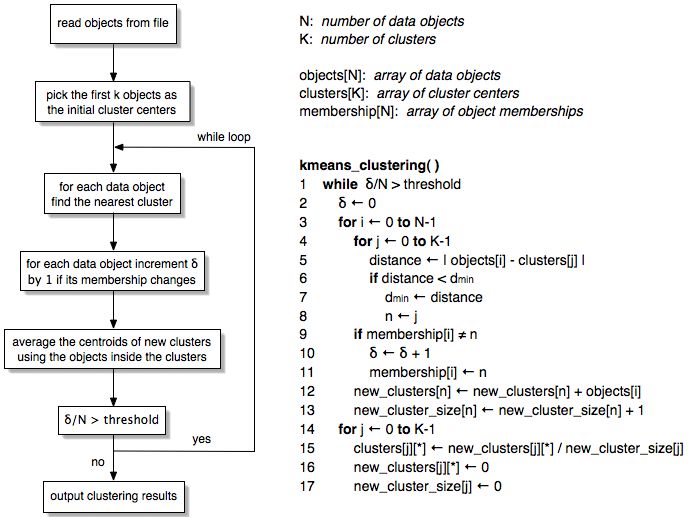
Wei-keng Liao is a Research Professor in the Department of Electrical Engineering and Computer Science at Northwestern University's McCormick School of Engineering. His research spans high-performance computing with a focus on parallel and distributed systems. Dr. Liao's research interests include parallel and distributed file I/O and storage system design, data mining algorithm design and their parallelization, data management for large-scale scientific applications, and computational model design for large-scale applications on parallel and distributed environments. He is a key contributor to the Parallel netCDF project, which provides parallel I/O capabilities for scientific applications. His recent work shows strong trends in high-performance computing infrastructure, particularly in optimizing I/O systems for scientific applications, parallel data clustering algorithms, and machine learning acceleration in distributed environments. His publications span computational science, parallel computing, and data-intensive applications across various scientific domains including materials science, astrophysics, and healthcare. Best Paper Award at IEEE International Conference on Cluster Computing (2016) for Parallel DTFE Surface Density Field Reconstruction Dr. Liao has supervised numerous research projects funded by DOE, NSF, NASA, and Argonne National Laboratory, with recent work focusing on data libraries for exascale science, machine learning-driven resilience for extreme-scale systems, and scalable data clustering for scientific computing. He leads research on the Parallel K-means Data Clustering software package and is a principal developer of Parallel netCDF. His work connects multiple research groups through the Center for Ultra-scale Computing and Information Security (CUCIS) at Northwestern University, where he collaborates with scientists across disciplines to develop scalable computing solutions for complex scientific problems.
Toby Murray is a Professor in the School of Computing and Information Systems at the University of Melbourne, where he serves as Director of the Defence Science Institute and Co-Lead of the Computer Science Research Group. His work bridges formal methods, cybersecurity, and practical system security, with significant contributions to verified security and vulnerability detection. Murray's research focuses on building highly secure computing systems cost-effectively, with expertise in formal verification, information flow security, and vulnerability detection. His current research projects include Verisimilar (Verified, Secure Machine Learning), EDEFuzz (Detecting excessive data exposure in web applications), COVERN (Proving information flow security of concurrent programs), and Time Protection (Proving timing channel freedom for seL4). His work combines theoretical rigor with practical implementation, resulting in multiple open-source tools including SecC, Legion, and Underflow. Murray's recent publications demonstrate a consistent focus on verified security properties across diverse domains, from neural networks to concurrent systems. His work often bridges the gap between formal methods and practical security concerns, with increasing attention to machine learning security and policy implications of technical security measures. His publications span top venues in security, formal methods, and software engineering. Distinguished Paper Award at ICSE 2024 for EDEFuzz work on detecting excessive data exposure in web applications Extensive media commentary on cybersecurity issues including CrowdStrike outage analysis and social media regulation Regular contributions to The Conversation and Pursuit on cybersecurity policy matters Murray has advised numerous PhD students to completion, including Lianglu Pan (EDEFuzz), Zhiyuan Zhang, Mo Zhang, and Renlord Yang. He currently supervises multiple PhD students working on security verification, machine learning security, and web application security. His service includes being Program Chair for CSF'25, Associate Editor for IEEE Security & Privacy and ACM TOPS, and membership in IFIP's WG 1.7 and WG 2.3. His research group has developed multiple significant software tools including SecC (Verified Security for Concurrent C Programs), Legion (Principled Automatic Test Case Generation), and Underflow (Compositional Vulnerability Detection for C Programs), all available under open source licenses. Murray's work often involves discovering and reporting bugs in security analysis tools during his research, demonstrating the practical impact of his verification approaches.
Mart Susi is a Professor of Human Rights Law at Tallinn University 's School of Governance, Law and Society. He serves as a Member of the European Union Agency for Fundamental Rights' Management Board (2022–2026) and leads the Global Digital Human Rights Network (2020–2024). His work bridges law, digital society, and international cooperation. Doctor of Juridical Sciences (2008, University of Tartu) MSc in Sociology (1992, University of Wisconsin-Madison) Diploma in Law (1988, University of Tartu) Research Interests: Mart's scholarship focuses on human rights in the digital age , including topics like AI ethics , data protection , and proportionality theory . He pioneered the Internet Balancing Formula to reconcile conflicting rights online and has led EU/Nordic-funded projects on digital governance. Scientific Awards: Doctor of Humane Letters honoris causa, College of New Rochelle (1990) Advising & Grants: Mart has supervised doctoral research and led 14+ projects, including EU-funded Mind the Metaverse (2022) and Global Digital Human Rights Network (2020–2024). His 2023–2028 project Boosting Societal Adaptation in Digitalizing Europe addresses mental health in post-pandemic digital societies. Labs & Teams: He founded and leads the International Research Center of Fundamental Rights at Tallinn University and serves as Editor-in-Chief for East-West Studies and East European Yearbook on Human Rights .
Xubo Yue is an Assistant Professor in the Department of Mechanical and Industrial Engineering at Northeastern University. His research focuses on federated data analytics, Bayesian optimization, continuous optimization, Gaussian processes, and deep learning. He holds a PhD in Industrial & Operations Engineering from the University of Michigan, Ann Arbor (2023). His work bridges theoretical advancements with practical applications in advanced manufacturing, predictive maintenance, and sustainable materials discovery. Key affiliations include the Institute of Industrial and Systems Engineers (IISE), INFORMS, and the American Statistical Association (ASA). Recent research emphasizes scalable federated learning frameworks for distributed systems, causal inference in sensor networks, and sharpness-aware optimization techniques to enhance generalization. His methodologies are applied to interdisciplinary domains such as materials science, IoT systems, and renewable energy simulations. Research trends reveal a focus on: Federated learning architectures for privacy-preserving analytics Bayesian optimization for high-dimensional design spaces Integration of causal reasoning with machine learning systems Autonomous experimentation for accelerated materials discovery No scientific awards are explicitly listed in the provided information. His academic advising and grant activities are not detailed in the current data.
Dr. Wei-Tang Chang is an Assistant Professor in the Department of Radiology at the University of North Carolina School of Medicine. His research focuses on advancing ultrahigh-resolution functional and diffusion MRI techniques, with emphasis on improving spatial and temporal resolution while reducing scan times. Key projects include submillimeter isotropic-resolution fMRI for hippocampal subfield analysis (funded by NIH R21), novel dMRI approaches to overcome resolution limits, and clinical translation of robust imaging methods resistant to motion/noise artifacts. Dr. Chang holds a PhD in Biomedical Engineering from National Taiwan University and completed postdoctoral training at the Martinos Center for Biomedical Imaging (MGH), Massachusetts General Hospital, and Singapore BioImaging Consortium (SBIC). His research innovations include SORDINO fMRI for awake rodent imaging, pPRISM diffusion MRI for submillimeter resolution, and ZTE pulse sequences for ultra-fast acquisitions. Awards include the 2011 OHBM Trainee Award for work on MEG source localization and fMRI temporal resolution breakthroughs. Current work bridges basic neuroimaging science with clinical applications, particularly in neurodegenerative disease biomarker development and rodent disease model studies. Education: PhD in Biomedical Engineering, National Taiwan University Postdoctoral Fellowships: Martinos Center for Biomedical Imaging (MGH) Singapore BioImaging Consortium (SBIC) Key Technologies Developed: ZTE pulse sequences (25 ms temporal resolution fMRI) pPRISM diffusion MRI (navigator-free submillimeter imaging) Draining-vein suppression layer-dependent fMRI Awards & Funding: NIH R21 Grant (2019) for hippocampal subfield fMRI OHBM Trainee Award (2011) Dr. Chang's translational focus involves adapting laboratory innovations for clinical use, with particular interest in Alzheimer's disease biomarkers through hippocampal network analysis and Huntington's disease models using rodent functional connectivity studies. His lab actively develops open-source MRI reconstruction algorithms and collaborates internationally on multi-center neuroimaging projects.