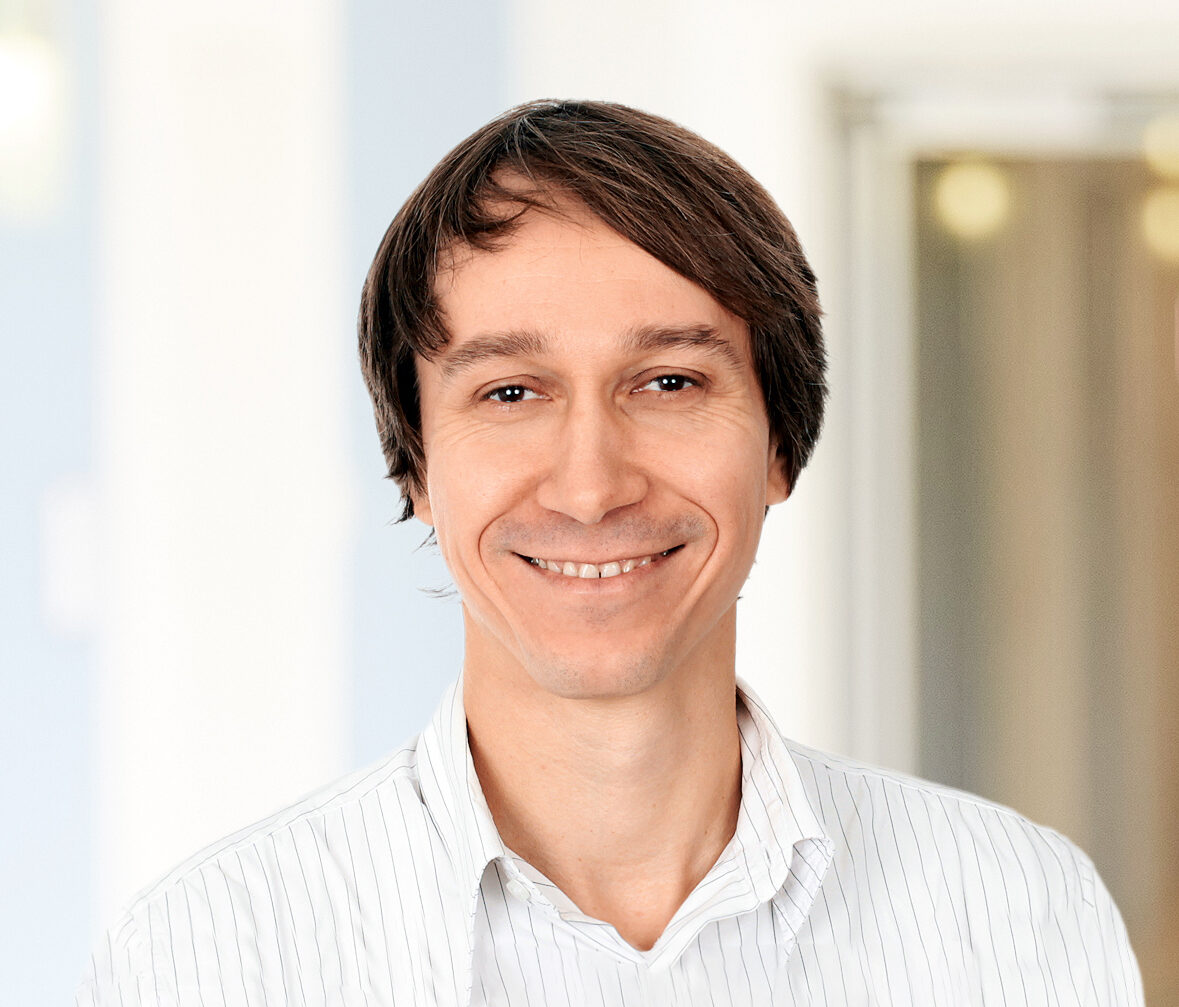
Professor Ihab Ilyas is a leading figure in data management and machine learning at the Cheriton School of Computer Science , University of Waterloo , where he holds the Thomson Reuters Research Chair in Data Quality . He is currently on leave from the university, serving as a Distinguished Engineer, Proactive Intelligence at Apple Inc . His research focuses on data cleaning , large-scale data integration , knowledge graphs , and machine learning applications in data quality . He has pioneered systems like HoloClean and Saga , with commercial impacts through co-founded startups Inductiv (acquired by Apple) and Tamr . PhD in Computer Science from Purdue University Co-founder of Inductiv (acquired by Apple) Co-founder of Tamr Research Interests include: Probabilistic and uncertain data management Machine learning for data quality and enrichment Big data systems and information extraction Knowledge graph construction and optimization Scientific Awards and Recognitions include: Fellow of the Royal Society of Canada (2024) C.C. Gotlieb Computer Award (2024) IEEE Fellow (2021) ACM Fellow (2020) Cheriton Faculty Fellowship (2013-2016) Ontario Early Researcher Award
Min Yen Kan is an Associate Professor and Vice Dean of Undergraduate Studies at the National University of Singapore's School of Computing, Department of Computer Science. With a PhD from Columbia University (2002), he leads the Web Information Retrieval / Natural Language Processing Group (WING.NUS) and serves as ACL Ethics Committee co-chair. His research spans Natural Language Processing , Large Language Models , Digital Libraries , and Information Retrieval , with specific focus on scientific discourse analysis, fact verification, and multimodal systems. Current projects include Scholarly Document Information Extraction (TRL 6), Task-Oriented Dialogue Systems (TRL 4), and Recommendation Systems (TRL 5). Recent publications reveal strong trends in LLM limitations (bias, hallucination, evaluation), conversational recommendation systems , and misinformation detection . His work consistently bridges theoretical NLP with real-world applications in digital libraries and scientific communication. Award highlights include: CIKM 2019 Best Paper Award ACL Distinguished Service Awards Vannevar Bush Best Paper Award (JCDL 2012) ACM Distinguished Speaker designation Kan mentors PhD students with placements at Google and USTC, and serves as associate editor for Information Retrieval and survey editor for Journal of AI Research . His lab WING.NUS develops practical tools like SciWING for scientific document processing and FANG for fake news detection. Media engagements include commentary on AI regulations in Southeast Asia and workforce implications in the AI era.
Jonathan T. Barron is a Researcher at Google DeepMind in San Francisco, specializing in Computer Vision , Neural Rendering , and 3D Scene Reconstruction . He earned his PhD at UC Berkeley under Jitendra Malik and has pioneered advancements in NeRF (Neural Radiance Fields) and diffusion-based 3D generation. Research Interests : Computer Vision, Deep Learning, Generative AI, Image Processing, and 3D Reconstruction via Radiance Fields. His work includes Bolt3D for rapid 3D scene generation, CAT3D/CAT4D for text-to-3D/4D, and Zip-NeRF for anti-aliased radiance fields. He has also developed real-time rendering frameworks like SMERF and NeRF-Casting for reflections. Scientific awards: PAMI Young Researcher Award He has served as Area Chair for CVPR, ICCV, and NeurIPS, and his research is widely adopted in applications like Google's Lens Blur , Portrait Mode , and Jump VR .
Charles D. Sprenger is a Professor of Economics at the California Institute of Technology (Caltech), where he has served since 2020 and held the position of Executive Officer from 2022 to 2025. He is affiliated with Caltech's Division of the Humanities and Social Sciences (HSS) and holds key roles at the Ronald and Maxine Linde Institute of Economic and Management Sciences and the Center for Theoretical and Experimental Social Sciences (CTESS). His external appointments include Board of Editors for the American Economic Review and Associate Editor roles for the Journal of the European Economic Association and Quantitative Economics . His educational background includes a B.A. from Stanford University (2002), an M.Sc. from University College London (2005), and a Ph.D. from the University of California, San Diego (2011). These credentials established his foundation in economic theory and experimental methodology. Sprenger is a leading behavioral and experimental economist specializing in intertemporal decision making and choices under uncertainty. His research designs innovative experiments across diverse contexts—from food deserts in the United States to polio vaccination drives in Pakistan—to test the validity of standard economic models. His work consistently reveals significant deviations from rational choice theory, particularly regarding time inconsistency, risk preferences, and reference-dependent behaviors. He has pioneered methods for measuring time preferences and testing cumulative prospect theory, with implications for public policy and behavioral interventions. Analysis of his 15 most recent publications (2015-2024) shows a cohesive research program centered on behavioral anomalies in decision making. His work bridges laboratory precision with real-world field applications, demonstrating how psychological factors like procrastination and loss aversion manifest in high-stakes environments. Key trends include the development of tailored incentive structures, validation of rank-dependent utility models, and exploration of dynamic inconsistency across domains including health, finance, and public policy. His notable recognition includes: Sloan Foundation Fellowship (2016-2018) Sprenger actively contributes to the academic community through editorial leadership and collaborative research. His work has been featured in Caltech news for projects like "Reducing Procrastination with Tailored Incentives" (2023) and the graduate summer program "Experimental Economics in Theory and Practice" (2023). Though specific advisees aren't listed, his teaching of advanced courses like Experimental Economics (SS 212 abc) indicates mentorship of graduate researchers. He secures significant research funding through fellowships and institutional support, enabling large-scale field experiments. As a core member of CTESS, Sprenger leads a multidisciplinary team conducting cutting-edge experimental economics research. His lab integrates theoretical modeling with empirical validation, focusing on how behavioral insights can improve policy design in areas like tax compliance, vaccination programs, and financial decision making. Current work emphasizes scalable interventions for procrastination and preference-based incentive customization.
Susan J. Simkins is a Professor of Psychology at The Pennsylvania State University, where she serves as Lead of the CTSI-Team Science Core and is based in Moore Building at University Park. Her contact details include email sxm40@psu.edu and phone (814) 863-7387. Education Ph.D., Ohio State University, 1996 Research Interests Dr. Simkins' research centers on effective teamwork and performance through three interconnected streams: team composition/diversity (examining demographic, cognitive, and personality-based diversity within contingency frameworks), team cognition/mental models (focusing on shared understanding of tasks and teamwork dynamics), and temporal integration in teams (investigating time-based diversity, temporal leadership, and pacing styles). Her work emphasizes individual differences, cognitive processes, and temporal dynamics as critical determinants of team effectiveness in organizational contexts. Publication Trends Her 2013-2017 publications reveal a strong focus on temporal dimensions of teamwork, including polychronicity diversity, temporal conflict in specialized teams (e.g., culinary environments), and time-sensitive mental models. Key methodological approaches involve multilevel analysis and contingency frameworks, with applications spanning leadership theory, decision-making diversity, and climate interactions. Work appears consistently in top organizational psychology journals like Journal of Applied Psychology and Organizational Behavior and Human Decision Processes. Scientific Awards No scientific awards were documented in the provided text. Advising and Grants While the text confirms her faculty role and research leadership, specific details about graduate student advising, grant funding, or sponsored projects were not included in the source material. Labs and Teams Dr. Simkins leads the CTSI-Team Science Core, an initiative dedicated to advancing methodologies for studying team-based research structures and improving collaborative effectiveness in scientific and organizational settings.
Renée J. Miller is a Professor and Canada Excellence Research Chair in Data Intelligence at the Cheriton School of Computer Science, University of Waterloo. Her research focuses on data integration, data management, and open data systems. She holds a PhD in Computer Science from the University of Wisconsin-Madison and bachelor’s degrees in Mathematics and Cognitive Science from MIT. Her work addresses challenges in data preparation, integration, and curation, aiming to reduce the burden on data scientists. She co-authored foundational papers on data exchange and schema mapping, earning the ICDT Test-of-Time Award (2013) and the Alonzo Church Award (2020). Miller has led major initiatives like the NSERC Business Intelligence Network and the International Very Large Data Base Foundation. Her grants include NSERC Accelerator Awards and funding from IBM, SAP, and Microsoft. Notable students include Ariel Fuxman (SIGMOD Dissertation Award winner) and Oktie Hassanzadeh (IBM PhD Fellow). Her research group, the Miller Lab, develops tools like Clio for schema mapping and systems for data lake exploration (RONIN, JOSIE).
Sebastian Kube is a Professor of Behavioral and Experimental Economics at the University of Bonn, Germany. He holds concurrent positions as Senior Researcher at the Max Planck Institute for the Study of Public Goods, Research Fellow at the Institute for the Future of Labor (IZA), and Vice Director of the BonnEconLab. He also coordinates the European Doctoral Program in Quantitative Economics and serves on multiple editorial/research boards. University of Bonn Max Planck Institute for Research on Collective Goods Institute for the Study of Labor (IZA) BonnEconLab European Doctoral Program in Quantitative Economics His experimental research examines social preferences , cooperation mechanisms , incentive design , and norm enforcement . Key areas include: how remuneration schemes affect workplace cooperation, the effectiveness of social sanctions in social dilemmas, and the psychological foundations of environmental behavior. Recent work explores trust communication strategies for maintaining cooperation, information asymmetry effects in group dynamics, and incentive reversal phenomena where higher rewards paradoxically reduce effort. His 2025 publications particularly focus on sanction removal strategies and environmental behavior. Scientific Awards: Excellence in Teaching Award (2017, 2016, 2015, 2012) IZA Young Labor Economist Award (2011) Etienne-Laspeyres Prize (2011) Heinz Sauermann Prize (2004) As Vice Director of BonnEconLab, he oversees experimental infrastructure for economic research. His methodological approach combines field experiments with laboratory studies , often using behavioral game theory frameworks. He has published extensively in top journals including American Economic Review , Journal of Public Economics , and Management Science .
Wenpeng Yin is an Assistant Professor in Computer Science and Engineering, specializing in Natural Language Processing and Machine Learning. His research focuses on advancing Large Language Models (LLMs) and their applications in scientific, societal, and interdisciplinary domains. Research Interests : LLMs, medical QA, financial AI, model consistency, and instruction-following frameworks. Recent Work : Investigates low-resource NLP tasks, bias evaluation (Gptbias), and adaptive trading systems using LLMs. Current trends in his publications highlight innovations in multimodal learning, symbolic reasoning, and ethical AI, with a strong emphasis on practical implementations across diverse fields.
Professor Begona Dominguez is a faculty member in the School of Economics at The University of Queensland (UQ), within the Faculty of Business, Economics and Law. She holds a Doctor of Philosophy in Economics from Universitat Autònoma de Barcelona. Her research focuses on Macroeconomics, Public Finance, and Monetary Economics, with emphasis on fiscal policy design, central bank balance sheets, and optimal taxation frameworks. Her key projects include Supporting Entry and Growth of Australian Businesses via Tax and Transfers (2022–2024) and The role of a central bank's balance sheet in shaping the economy (2021–2024) . She is available for PhD supervision and actively contributes to applied macroeconomic analysis, particularly in urban economic advantages and policy evaluation. Publications span topics like fiscal sustainability, inflation dynamics under central bank policies, and the implications of constitutional constraints on taxation. Her work bridges theoretical models (e.g., Ramsey frameworks) with empirical applications in tax policy and public debt management. Professor Dominguez maintains affiliations with the Centre for Applied Macroeconomic Analysis (ANU) and has reviewed prominent texts such as John Taylor's Reform of the International Monetary System . She is based in Room 507, Colin Clark Building at UQ.
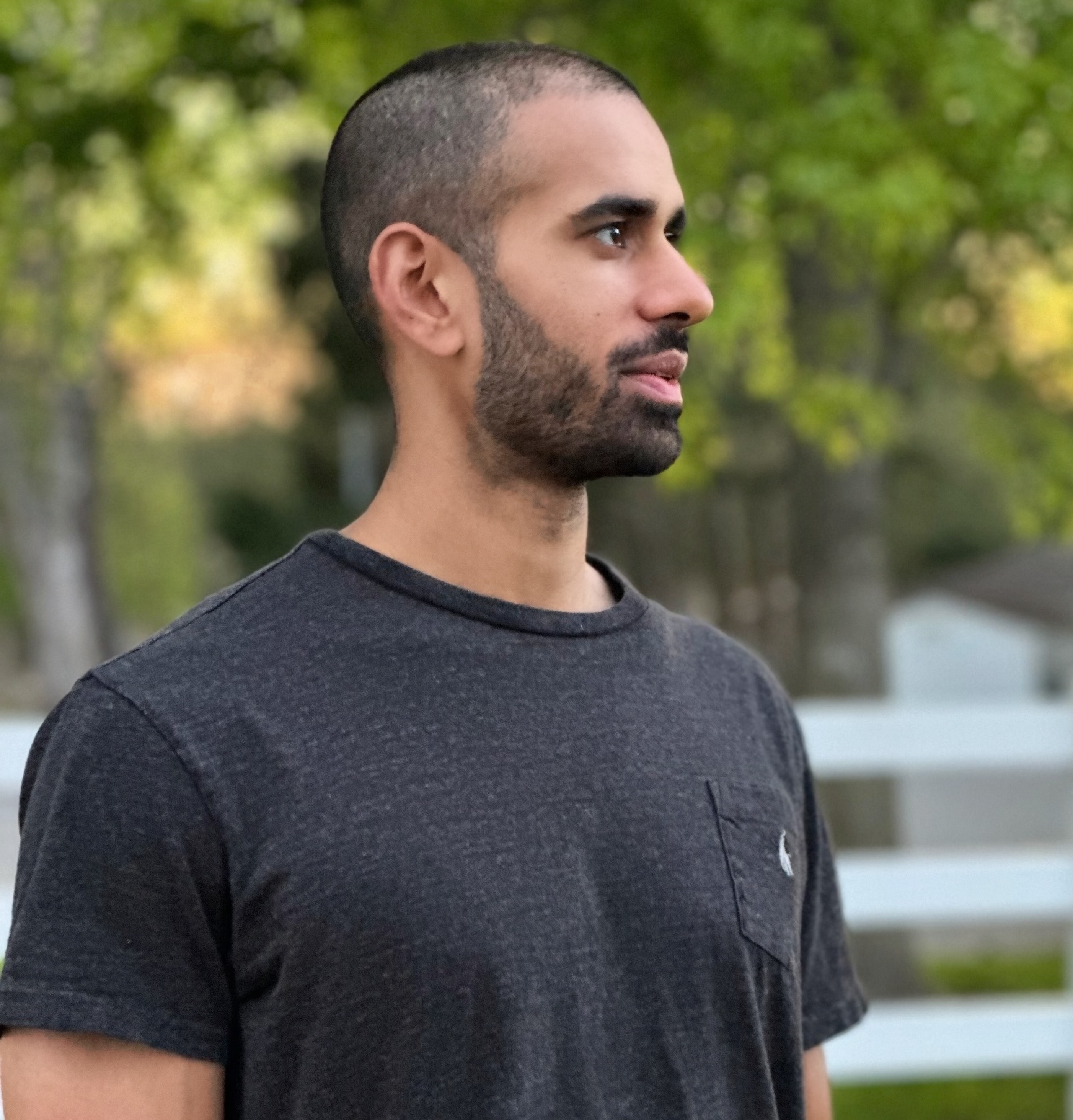
Pratul Srinivasan is a Researcher at Google DeepMind specializing in Neural Radiance Fields (NeRF) , 3D scene reconstruction , and view synthesis at the intersection of computer vision , graphics , and machine learning . He earned his PhD from the EECS Department at UC Berkeley in 2020 under Ren Ng and Ravi Ramamoorthi , with prior research at Duke University on medical computer vision under Sina Farsiu . Research Interests: Pratul focuses on 3D reconstruction using neural fields, light field synthesis , illumination modeling , and diffusion-based 3D generation . His work addresses challenges in photorealistic rendering , real-time view synthesis , and inverse rendering with applications in astronomy and medical imaging . Publication Trends: Recent articles emphasize real-time NeRF (e.g., Bolt3D), refractive material modeling , shadow-based illumination recovery , and cross-scale generative synthesis . Collaborations span institutions including MIT , NVIDIA , and ETH Zurich . Scientific Awards: 2025 SIGGRAPH Significant New Researcher Award 2021 ACM Doctoral Dissertation Award Honorable Mention 2020 David J. Sakrison Memorial Prize Best Paper Awards at ECCV 2020, ICCV 2021, and CVPR 2022 Advising & Collaborations: Advised by Ren Ng and Ravi Ramamoorthi during his PhD, Pratul collaborates with researchers like Jonathan T. Barron , Ben Mildenhall , and Katherine L. Bouman . His work integrates differentiable simulations , Fourier feature networks , and multiplane image extrapolation . Technical Contributions: Key innovations include anti-aliased NeRF , memory-efficient rendering , refractive relighting , and multi-view relighting techniques , with impacts on virtual reality , astronomical imaging , and 3D content creation .
Jin Ma is a Professor in the Department of Mathematics at the University of Southern California (USC), where he has served since 2007. He previously held professorships at Purdue University (1994–2008). His research focuses on stochastic analysis, stochastic differential equations, mathematical finance, and control theory. He directs USC's Mathematical Finance Program and serves on editorial boards for journals like Probability, Uncertainty and Quantitative Risk and SIAM Journal on Control and Optimization . Ma received his Ph.D. in Mathematics from the University of Minnesota (1992) and M.S./B.S. in Applied Mathematics from Fudan University (1985/1982). His work bridges theoretical stochastic analysis and applied domains like finance and insurance, with notable contributions to forward-backward SDEs and mean-field games. Research Highlights: Developed frameworks for stochastic control and backward SDEs in financial and insurance contexts. Advanced mean-field game models for limit order book dynamics and equilibrium analysis. Explored set-valued stochastic differential equations and their applications in risk management. Grants & Advising: Advised numerous graduate students in stochastic processes and mathematical finance. Research supported by NSF grants and industry collaborations.
Dr. Thomas Bennett is a Lecturer in Law at City Law School, City, University of London, specializing in Media Law, Privacy Law, and Defamation Law. He holds degrees from Newcastle University (LL.B (Hons)) and City University (LL.M (Distinction)), and a Ph.D. from Durham University (2018). His research focuses on judicial decision-making in common law, legal philosophy, and the interplay between law and language. He teaches Tort Law and Media Law and supervises Ph.D. students in these areas. Key achievements include co-founding the Media Law Podcast (2018) and being a Senior Fellow of the Higher Education Academy. Bennett has authored multiple books and articles, including Law and Imagination in Troubled Times (2020) and The Campbell Legacy (2017). His work bridges legal theory with practical applications in media and privacy law. Education: Ph.D., Durham University (2018) LL.M. (Distinction), City University LL.B. (Hons), Newcastle University Awards: Senior Fellow, Higher Education Academy (2018–present) Bennett’s recent publications analyze tensions between free speech and privacy, judicial coherence in defamation cases, and the evolution of common law privacy torts. His research emphasizes the role of legal imagination in shaping jurisprudence, particularly in troubled socio-political contexts.
Alexander R. Pruss is a tenured Professor in the Department of Philosophy at Baylor University , within the College of Arts and Sciences . He holds a dual PhD in Philosophy (University of Pittsburgh, 2001) and Mathematics (University of British Columbia, 1996), and has held previous academic positions at Georgetown University. His work is deeply interdisciplinary, bridging metaphysics, philosophy of religion, formal epistemology, and ethics. Education: Ph.D. in Philosophy, University of Pittsburgh (2001) Ph.D. in Mathematics, University of British Columbia (1996) B.Sc. (Hon.) in Mathematics and Physics, University of Western Ontario (1991) Pruss’s research interests include metaphysics—particularly the Principle of Sufficient Reason , modality , and infinity —philosophy of religion, divine attributes , cosmological arguments , and sexual ethics . He is known for integrating rigorous formal methods with classical theistic metaphysics. His recent publications explore the intersection of probability theory, paradox, and theology, particularly in infinite domains. He has authored influential books such as The Principle of Sufficient Reason: A Reassessment (2006), Infinity, Causation and Paradox (2018), and One Body: An Essay in Christian Sexual Ethics (2012). The trends in his recent articles show a sustained focus on the philosophical implications of infinity, symmetry, and probability. He frequently investigates paradoxes in probability (e.g., infinite lotteries), challenges to modal realism, and the metaphysical coherence of divine attributes. His work combines analytic rigor with theological depth, often aiming to defend classical theism through logical and mathematical reasoning. Scientific awards and honors: Aquinas Medal, American Catholic Philosophical Association (2025) Wilde Lecturer, Oriel College, University of Oxford (2019) Outstanding Tenured Faculty Research Award, College of Arts and Sciences (2013) National Endowment for the Humanities Summer Stipend (2002) Social Sciences and Humanities Research Council of Canada Fellowship (1997–2000) Pruss has been actively involved in academic service, including serving on the Executive Council of the American Catholic Philosophical Association (2021–2024) and the Society of Christian Philosophers (2011–2013) . He has held editorial roles for journals such as American Philosophical Quarterly and Analysis and Existence . He has delivered numerous invited lectures globally, including at Oxford, Notre Dame, and MIT. There is no mention of formal PhD or Master’s students in the provided text, but he advises through graduate seminars and research supervision. He has not received specific grant mentions beyond fellowships and stipends. He is affiliated with research groups such as the Baylor Institute for Faith and Learning and the Thomistic Institute , and contributes to philosophy of science and theology dialogues. His work continues to shape contemporary debates in analytic philosophy of religion and metaphysics.
Vera Liao is a Principal Researcher at Microsoft Research, where she is part of the FATE (Fairness, Accountability, Transparency, and Ethics of AI) group. She will join the University of Michigan Computer Science and Engineering department as an Associate Professor in fall 2025. Her work focuses on human-AI interaction, explainable AI, and responsible computing. Liao has made significant contributions to IBM products such as AI Explainability 360 and Uncertainty Quantification 360 during her time at IBM T.J. Watson Research Center. Dr. Liao received her education from the University of Illinois at Urbana-Champaign and Tsinghua University. Her academic journey has positioned her at the intersection of human-computer interaction and artificial intelligence, with a strong emphasis on creating AI systems that are transparent, accountable, and user-centered. Vera Liao's research primarily centers around human-centered AI explainability and transparency. She investigates how to design AI systems that effectively communicate their capabilities, limitations, and decision-making processes to users. Her work examines the intersection of AI transparency with trust, control, and user experience. Liao has pioneered approaches to bridging the socio-technical gap in AI evaluation and has developed frameworks for contextualized evaluation of explainable AI systems. Her research spans multiple domains including conversational interfaces, data storytelling, and creative work with generative AI. Liao's publications reveal a clear trend toward addressing the challenges of large language models and their impact on human-AI interaction. Her recent work focuses on understanding how uncertainty communication affects user trust, how to design for appropriate reliance on AI systems, and how to create authentic co-creation experiences with generative models. She has been examining the risks in AI-infused information ecosystems and developing methods for human-centered evaluation of language technologies. Her scientific contributions have been recognized with multiple honors: Best Paper Award, Honorable Mention at CHI 2025 (two papers) Best Paper Award at CHI 2024 Best Paper Award, Honorable Mention at FAccT 2023 Best Paper Award, Honorable Mention at HCOMP 2022 Best Paper Award, Honorable Mention at CHI 2021 Best Paper Award, Honorable Mention at CHI 2014 Outstanding Paper Award at IUI 2019 Dr. Liao is an active mentor, having guided numerous research interns from top universities including Cornell, Princeton, CMU, Stanford, and MIT. She serves in editorial roles as Co-Editor-in-Chief of the Springer Human-Computer Interaction Book Series and as an Editor for ACM CSCW. Liao has secured research funding through her work at Microsoft Research and previously at IBM, focusing on projects related to AI explainability, transparency, and responsible AI development. As part of Microsoft Research's FATE group, Liao collaborates with a multidisciplinary team of researchers focused on the ethical implications of AI technologies. Her work bridges the gap between technical AI development and human-centered design principles, ensuring that AI systems are developed with user needs and societal impacts in mind.
Ali Lazrak is an Associate Professor at the Sauder School of Business , University of British Columbia , specializing in Finance . He holds the Peter Lusztig Professorship in Finance and teaches courses such as International Financial Markets and Institutions and Theory of Finance (2024-2025). His research bridges Political Economy , Asset Pricing , and Behavioral Finance , with a focus on ESG concerns , Voting Theory , and Time Inconsistency . Education: ENSAE (B.Sc.), Sorbonne (M.Sc.), Toulouse (Ph.D.) Contact: Henry Angus Building (HA 872), +1 604.822.9481, ali.lazrak@sauder.ubc.ca His work explores group decision-making in corporate investment, green finance (e.g., the green premium in ESG markets), and time-inconsistent preferences in continuous games. Recent publications highlight how responsible consumption and demand elasticity shape asset prices, and how institutional divestiture impacts harmful asset stranding through informational and economic channels. Scientific accolades include the Jacob Gold & Associates Best Paper Prize (2019), Best Paper Awards at HEC-McGill, UBC, Luxembourg, and Stanford conferences, and the Peter Lusztig Professorship . His methodological expertise spans stochastic control , recursive utility , and dynamic equilibrium analysis .