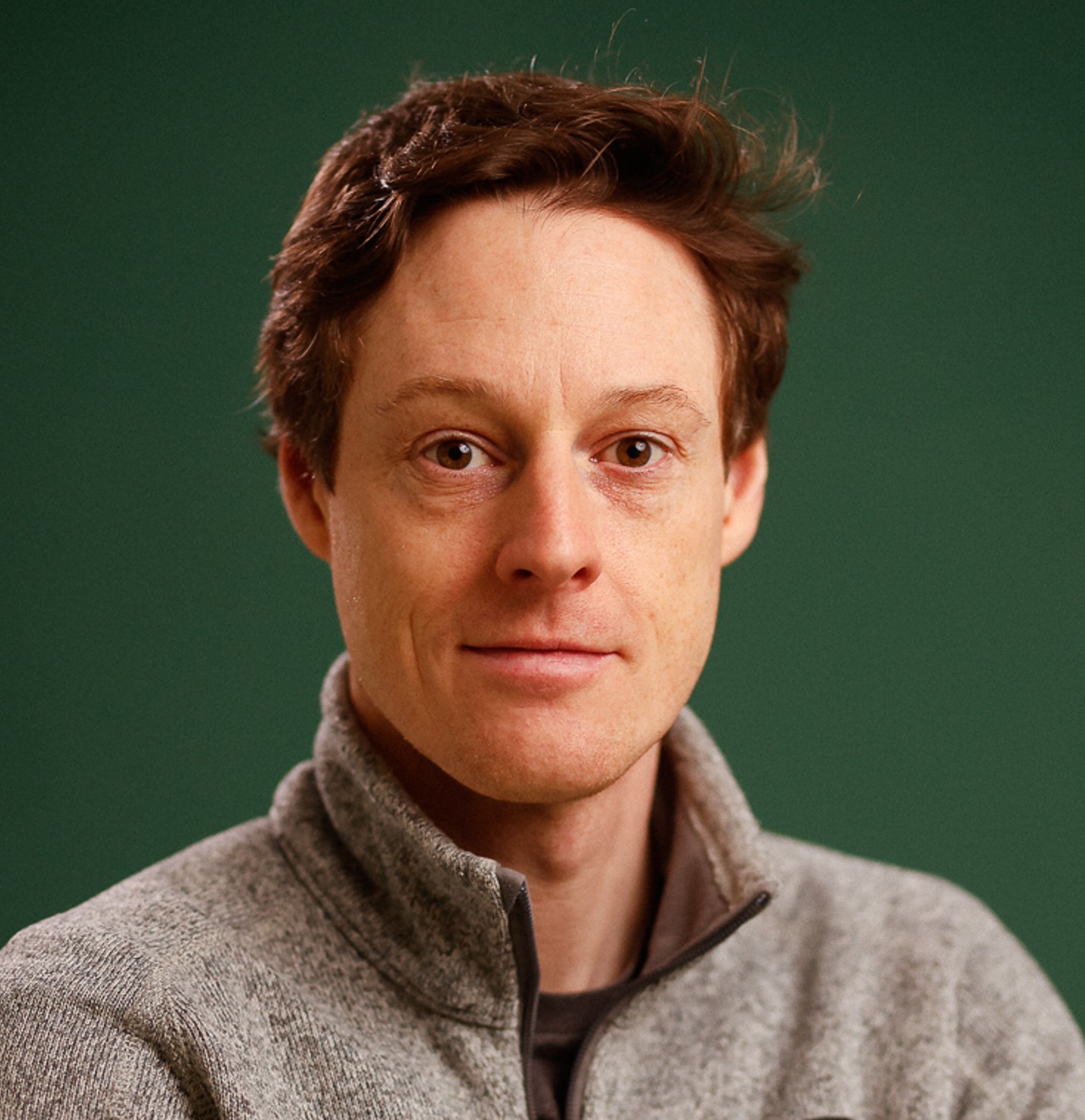
Tobias Ofner-Graff is a researcher at the Institute of Forest Growth within the Department of Ecosystem Management, Climate and Biodiversity at the University of Natural Resources and Life Sciences, Vienna (BOKU). Based at Peter-Jordan-Straße 82, 1190 Wien, his work focuses on advanced forest monitoring technologies. His research interests include: LiDAR and remote sensing applications in forestry Automated forest inventory systems Forest regeneration quantification Airborne Laser Scanning (ALS) data analysis Sustainable forest harvesting planning Recent project contributions include: Leading lidar-based forest monitoring systems development Developing spatial forest growth models Implementing digital inventory workflows His publications demonstrate expertise in: Quantifying forest resources through 3D point clouds Advanced timber stack measurement techniques ALS data integration for forest modeling Mobile laser scanning applications Forest climate adaptation strategies
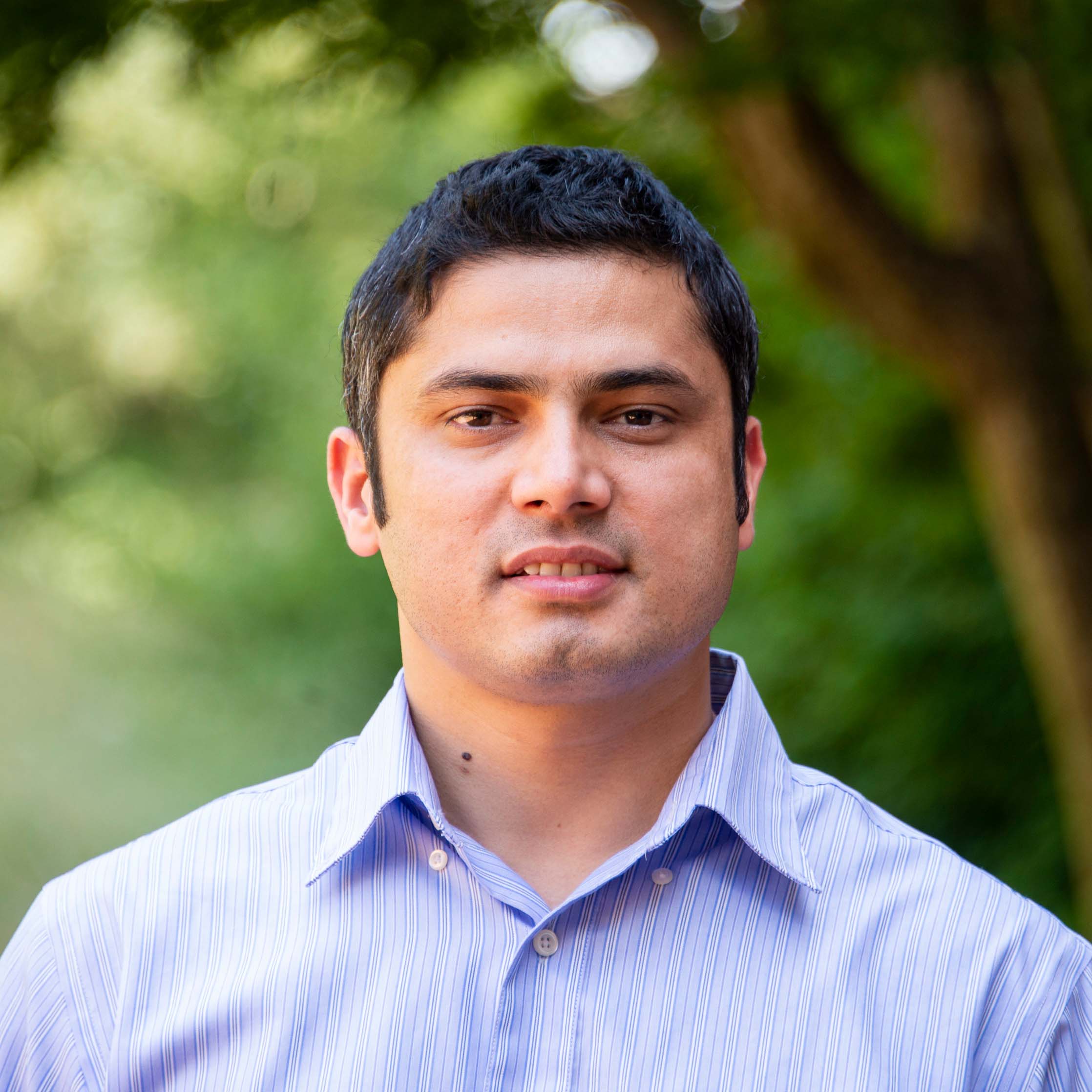
Dr. Krishna P. Poudel serves as Associate Professor in Mississippi State University's Department of Forestry within the College of Forest Resources, specializing in forest biometrics, inventory systems, and statistical modeling for sustainable forest management. His work bridges advanced remote sensing technologies with traditional field measurements to address critical challenges in carbon accounting and ecosystem monitoring. His educational foundation includes: Ph.D. in Forestry, Oregon State University M.S. in Statistics, Oregon State University M.S. in Forestry, Louisiana State University B.S. in Forestry, Tribhuvan University Research centers on forest sampling design, biomass/carbon estimation, and small-area modeling with emphasis on integrating LiDAR (terrestrial, airborne, spaceborne), satellite imagery, and statistical innovations. Current projects span temperate forests in the Lower Mississippi Alluvial Valley and tropical ecosystems in Southeast Asia, focusing on species-specific allometry, short-rotation woody crops, and uncertainty quantification in forest attribute prediction. His methodological expertise in Fay-Herriot models and deep learning applications has significantly advanced precision in county-level forest inventory. Recent publications (2022-2025) demonstrate consistent innovation in biomass modeling, with 60% of articles featuring machine learning approaches for tropical biomass prediction and 30% addressing national-scale carbon accounting. Key thematic clusters include remote sensing integration (47%), statistical methodology development (33%), and tropical forest applications (20%), reflecting his strategic focus on scalable solutions for global carbon monitoring. Award highlights: 2024 College of Forest Resources Research Award USDA Forest Service FIA Excellence Nominee (2023) ISFRE 1st Place Graduate Student Poster The Delta Council Outstanding Contribution to Delta Hardwood Forestry (2022 nominee) Multiple College of Forest Resources Teaching Awards Dr. Poudel actively mentors seven graduate students through the Forest Biometrics Lab, with thesis topics spanning ICESat-2 canopy height validation, deep learning biomass models, and marginal land identification. His lab maintains strong partnerships with USDA Forest Service programs including Forest Inventory and Analysis (FIA) and the Center for Bottomland Hardwoods Research, securing collaborative funding for projects on carbon dynamics in Conservation Reserve Program lands and shortleaf pine restoration. Current initiatives focus on integrating GEDI data with national inventory systems and developing AI-driven tools for smallholder agroforestry carbon accounting in Vietnam.
Professor Sami Pajunen is affiliated with the Department of Civil Engineering at Tampere University, within the Faculty of Built Environment. His research focuses on structural engineering, timber and steel composites, fire safety, computational modeling, and sustainable construction practices. He has contributed significantly to the analysis of timber structures, impact sound insulation, and fire resistance of materials like cross-laminated timber (CLT). His work bridges experimental methods with advanced numerical simulations, addressing challenges in structural acoustics, nonlinear behavior, and eco-friendly construction systems. Key research interests include: structural integrity of glued laminated timber (glulam), optimization of steel-timber composite systems, fire performance of CLT panels, and vibration analysis of timber floors. He has explored innovative solutions such as the HB structural timber system and design-for-disassembly principles. His studies often involve collaboration with Finnish industry on case studies related to industrial wood construction productivity and bridge engineering practices. Publications emphasize parametric studies on structural components under fire conditions, mechanical testing of composite beams, and the application of finite element methods (FEM) for acoustic and thermal modeling. His work highlights the integration of computational tools with experimental validation to advance sustainable construction technologies.
Bassem O Andrawes is a Professor in the Department of Civil and Environmental Engineering at the University of Illinois, affiliated with the National Center for Supercomputing Applications (NCSA). His research focuses on innovative materials like shape memory alloys (SMAs) and their applications in civil infrastructure, including reinforced concrete, bridge engineering, and structural rehabilitation. He has been recognized with prestigious awards including the ASCE Fellow (2024) and NSF CAREER Award (2011). Key research interests include: Active confinement and prestressing systems using SMAs Structural health monitoring and data-driven performance evaluation Bridge deck and girder analysis under dynamic and static loads Sustainable solutions for mass timber and concrete structures Recent work highlights include developing adaptive prestressing systems for concrete crossties, SMA-based crack healing for concrete structures, and digital twin models for bridge monitoring. His studies bridge materials science with civil engineering applications, emphasizing durability and resilience in infrastructure systems. Notable achievements include over 100 peer-reviewed publications and leadership in projects addressing seismic retrofitting, FRP composites, and material testing integrated (MTI) simulation paradigms. Collaborations span academia and industry, focusing on practical solutions for infrastructure challenges.
Dr. Amar Khennane serves as a Senior Lecturer at the University of New South Wales (UNSW) Canberra campus within the School of Engineering and Information Technology. His academic career spans multiple institutions including previous appointments as Maitre de Conferences in Tizi-Ouzou, Algeria, Research Associate in Newcastle, Australia, and Lecturer/Senior Lecturer at the University of Southern Queensland (USQ). His research interests focus on sustainable construction materials, particularly bio-cementitious materials, composite materials, timber engineering, reinforced concrete, and hybrid structures. Dr. Khennane has published extensively in these fields with 47 peer-reviewed journal papers, 33 conference papers, 6 other publications, and 2 books including the widely recognized "Introduction to Finite Element Analysis Using MATLAB (R) and Abaqus" (2013). His recent work emphasizes recycling timber waste into geopolymer cement composites, sustainable wood-geopolymer masonry units, and fire response of timber structures. His scholarly output shows a clear trend toward sustainable construction materials and advanced structural analysis techniques, with significant contributions in finite element modeling, seismic performance evaluation, and fire resistance of composite structures. The majority of his recent publications (2020-2024) focus on developing sustainable building materials using recycled components and analyzing structural behavior under various loading conditions. Dr. Khennane actively contributes to engineering education through teaching courses in Structural Analysis, Finite Element Method, Reinforced Concrete, and Stress/Strain Analysis. His educational background includes authoring textbooks that bridge theoretical concepts with practical computational tools like MATLAB and Abaqus.
Associate Professor David Lange serves as Deputy Director of Higher Degree by Research at the School of Civil Engineering , University of Queensland . With academic qualifications from the University of Edinburgh (PhD and MSc), he specializes in fire safety engineering and structural engineering , focusing on timber buildings, lithium-ion battery fire safety, and risk analysis techniques. Chartered Engineer (CPEng), Fellow of Engineers Australia (FIEAust) Registered Professional Engineer of Queensland (RPEQ) APEC Engineer and International Professional Engineer (IntPE) His research explores fire behavior in mass timber structures , vertical fire spread , and infrastructure resilience . Publications highlight his expertise in probabilistic modeling, fire dynamics, and structural response to extreme conditions. Recent collaborative studies examine flame spread in ventilated façades, compartment fire behavior, and risk evaluation frameworks. He actively supervises PhD projects in areas like fire safety of low-carbon concrete, diagrid structures, and physics-informed machine learning for fire modeling.
Nancy S. Steinhardt is a Professor of East Asian Art and Curator of Chinese Art at the University of Pennsylvania since 1982. She holds affiliations in the Department of History of Art, Department of Architecture, and the Penn Museum. With a PhD from Harvard (1981) and former Junior Fellowship there, her research focuses on Chinese art, architecture, and archaeology from the 2nd to 14th centuries, emphasizing cultural interactions at China's borders. She has authored/co-edited over 12 books, including China: an Architectural History (2019), and published over 100 articles. Steinhardt has received prestigious awards like the Alice David Hitchcock Book Award (2021) and multiple fellowships from the Guggenheim Foundation, NEH, and others. Her research projects include Mongolia: Architecture and Archaeology and Modern Chinese Architecture: 180 Years . She has organized major conferences on topics like 'Middle-Period Archaeology in Mongolia' and 'Global Cities.' As an advisor and guest curator for institutions like the Metropolitan Museum and the Penn Museum, she promotes international collaborations in China, Korea, Japan, Mongolia, and Russia. Her teaching spans courses on Chinese archaeology, East Asian funerary arts, and the architectural history of the Mongol Empire. Steinhardt’s work bridges academic and public spheres, with over 400 lectures and roles like Ailsa Mellon Bruce Senior Fellow at the National Gallery (2017). Her grants include the 2018 Penn Museum Director’s Field Research Grant and the 2001 Guggenheim Fellowship. She serves on the Society of Architectural Historians board, reflecting her leadership in architectural historiography.
Steven Collins is a Professor of Practice in Civil Engineering at Aalto University , specializing in industrial wood construction. His work bridges scientific research and industry applications to enhance timber's role in sustainable structural engineering. Research Interests : Species-specific timber behavior (particularly birch), focusing on modeling, testing, and variance analysis. Non-destructive testing techniques like laser scattering, grain orientation analysis, and digital image correlation. Statistical and Bayesian approaches for probabilistic modeling of material properties and uncertainty quantification. Timber finger joint mechanics and wood processing techniques (e.g., densification, chemical treatment). Scientific Contributions : His recent publications (2022–2025) emphasize mechanical behavior of timber , predictive modeling , and innovative processing methods . Key trends include optimizing birch timber for structural applications, advancing Bayesian statistical models for wood mechanics, and improving non-destructive testing protocols using laser technologies and digital image correlation. Laboratory & Collaborations : Actively involved in experimental testing (destructive and non-destructive) and statistical analysis of wood properties. Collaborates with researchers like Gerhard Fink , Lauri Rautkari , and Farid Vafadar on timber mechanics and reliability studies. Part of the Structures – Structural Engineering, Mechanics and Computation research group at Aalto University.
Malgorzata Zboinska is an Associate Professor at Chalmers University of Technology within the Department of Architecture and Civil Engineering . She is a licensed architect and member of the Swedish Association of Architects and National Chamber of Architects of Poland . Hybrid architecture-technology-art research Focus on bio-based materials , digital fabrication , and creative robotics Development Leader of Chalmers' Robotic Fabrication Laboratory Editorial board member of TAD | Technology, Architecture + Design journal Research Themes bridge architecture , digital technology , and art , with expertise in: Sustainable and circular architectural practices 3D printing and robotic construction Material bioinnovation and upcycling Interactive and kinetic architectural solutions Her publications demonstrate strong output in digital fabrication , bio-material applications , and environmental architecture , with international exhibitions at Tempe Center for the Arts (USA) , Dutch Design Week (NL) , and Färgfabriken (Sweden) .
Yuxiang Chen is an Associate Professor in the Department of Civil and Environmental Engineering at the University of Alberta. His research focuses on high-performance buildings, net-zero energy systems, and sustainable construction practices. He integrates advanced modeling techniques, renewable energy solutions, and intelligent design strategies to optimize building performance in cold climates. PhD, Building Engineering (2013), Concordia University MASc, Building Engineering (2008), Concordia University BEng, Building Engineering (2006), Concordia University Dr. Chen’s work emphasizes modular construction, thermal energy storage, and data-driven modeling for building systems. He explores the use of robotics in construction, thermal resistance of masonry walls, and energy-efficient community greenhouses tailored for cold regions. His recent publications highlight trends in building thermal dynamics, with a focus on resistor-capacitor (RC) models, hybrid heating systems, and snow accumulation impacts on solar panels. He also contributes to cold-climate energy management and smart home integration.
Thomas Reynolds is a Senior Lecturer and Chancellor's Fellow in Civil Engineering at the University of Edinburgh School of Engineering. He holds an MEng in Engineering Science from Oxford (2005), PhD from Bath (2013), and PGCert in Teaching from Cambridge (2017). A Chartered Engineer and ICE member since 2010, his industry experience includes structural design for WYG and AKT on projects ranging from Swansea sea lock to Masdar Institute in Abu Dhabi. Research focuses on timber engineering innovation, structural health monitoring, and disaster-resilient construction. Current investigations include cyclone resilience of traditional housing in Madagascar, CLT connection robustness, and bicycle-based bridge monitoring techniques. Publications emphasize experimental mechanics of timber systems, climate impact modeling on structures, and sustainable construction technologies. Recent work explores novel materials applications and field measurement methodologies. He leads projects like 'Sustainable Improvement of Cyclone Resilience for Traditional Houses in Coastal Madagascar' (EPSRC) and 'EDACAB: Efficient Data Acquisition for Condition Assessment of Bridges'. Teaching covers structural mechanics, materials engineering, and design courses.
Mina Konaković Luković is an Assistant Professor in the Department of Electrical Engineering and Computer Science at Massachusetts Institute of Technology (MIT) , affiliated with the Computer Science and Artificial Intelligence Laboratory (CSAIL) . She leads the Algorithmic Design Group , focusing on computational design and fabrication, geometry processing, and robotics. Education: PhD in Computer Science (EPFL), MS & BS in Mathematics (University of Belgrade) Research Interests: Spanning computer graphics, computational fabrication, and 3D geometry processing with applications in smart materials, architectural geometry, and physics-based simulations. Her work integrates machine learning and differential geometry to optimize design algorithms for novel materials and deployable structures. Articles Trends: Recent publications emphasize multi-objective optimization for 3D printing materials, graph grammar in robot design, and computational methods for auxetic structures. Themes revolve around data-driven design, deployable shells, and terrain-adaptive robotics. Scientific Awards: Schmidt Science Fellows Additional Study Grant (2020) ACM SIGGRAPH Outstanding Doctoral Dissertation Honorable Mention (2020) Eurographics PhD Award (2020) Patrick Denantes Memorial Prize (2019) Doctoral Program Thesis Distinction from EDIC EPFL (2019) SIAM Early Career Prize (2020) Eurographics Junior Fellows (2021) Advising & Grants: Mentored by Prof. Dr. Wojciech Matusik and Prof. Dr. Mark Pauly, with funding from Swiss National Centre of Competence in Research (NCCR) Digital Fabrication. She actively participates in program committees and summer schools.
Dr. Yelda Turkan is an Associate Professor in the School of Civil and Construction Engineering at Oregon State University and a Hans Fischer Fellow at the Technical University of Munich (TUM-IAS). Her research focuses on leveraging computer vision, machine learning, and digital twins to enhance sustainability and resilience in the built environment. She holds a Ph.D. in Civil Engineering from the University of Waterloo, Canada, and dual B.Sc. degrees in Civil Engineering and Geomatics Engineering from Istanbul Technical University, alongside an M.Sc. in Remote Sensing. Her work integrates advanced technologies like LiDAR and BIM to improve construction monitoring, structural safety, and fire protection. She has authored over 80 peer-reviewed publications and secured $4.5M in grants from agencies like the NSF. Dr. Turkan serves as Vice President of the International Association for Automation and Robotics in Construction and chairs the ASCE Computing Division Executive Committee. Her research spans digital twins for infrastructure performance, fire safety simulations, and automated progress tracking. Key contributions include frameworks for bridge construction monitoring, fire safety management in timber structures, and BIM-based energy fault detection. Awards include the Robert C. Wilson Faculty Scholar (2023–2025) and ASCE ExCEEd Teaching Fellow (2015).
Nicholas Vlachopoulos is a Professor of Civil Engineering at the Royal Military College of Canada (RMC) with cross-appointments at Queen's University's Department of Geological Science and Geological Engineering and School of Environmental Studies. He holds a PhD (2009) from Queen's University and B/A.Sc/M.A.Sc degrees from RMC. His research focuses on geotechnical engineering, geomechanics, and environmental engineering, emphasizing physical testing, field observations, and analytical techniques to advance engineering practices. Key roles include Research Director of the GeoEngineering Centre, CEO of Geologos Inc., and Director of RMC's Green Team addressing environmental challenges in military facilities. Education: PhD in Geological/Geotechnical Engineering - Queen's University (2009) M.A.Sc in Civil Engineering - Royal Military College (1995) B.A.Sc in Civil Engineering - Royal Military College Research Interests: Geotechnical Engineering (rock mechanics, tunneling) Environmental remediation in defense facilities Structural health monitoring using fiber optics Rock bolt and ground support systems Military infrastructure resilience Professional Contributions: Founder of Geologos Inc., specializing in geotechnical solutions Recipient of DND Innovation Award for environmental solutions Teaching excellence awards (2018) Supervised award-winning graduate students (2017-2021) Lab/Team Leadership: RMC Green Team: Environmental engineering solutions for Canadian Forces bases GeoEngineering Centre: Interdisciplinary geotechnical research
Francis E. Putz is a Distinguished Professor in the Department of Biology at the University of Florida, with affiliations in the School of Forest Resources and Conservation and the Center for Latin American Studies. He holds a Prince Bernhard Professorship at Utrecht University (Netherlands) and is a Senior Research Associate at CIFOR (Indonesia). His work focuses on tropical forest ecology, conservation, and sustainable management, with field projects in Florida, South America, South Africa, and Southeast Asia. Education: B.S. in Education/Biology (University of Wisconsin, 1973), Ph.D. in Botany (Cornell University, 1982), NATO Postdoctoral Fellowship (Oxford University, 1985). Research interests include conservation biology, tropical forestry, fire ecology, and the impacts of logging and climate change. He advocates for sustainable practices such as reduced-impact logging and carbon offset mechanisms. His recent work emphasizes carbon dynamics in tropical forests, liana ecology, and the role of forests in mitigating climate change. Putz has advised numerous graduate students focusing on topics like ecological restoration and plant functional traits. His publications span over 200 articles, addressing topics from liana biology to policy frameworks for forest management. He also teaches courses in introductory botany and plant ecology, emphasizing inquiry-based learning.