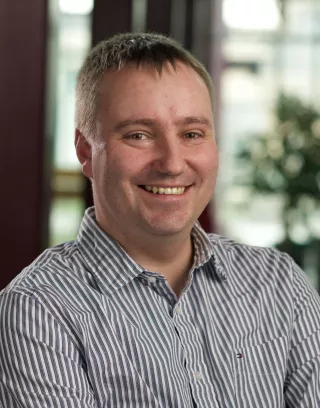
Maik Gehloff is a Senior Lab Instructor in the Master of Engineering in Integrated Wood Design program at the University of Northern British Columbia (UNBC). He holds a Dipl.-Ing. (FH) in Wood Science and Technology from the University of Applied Sciences in Eberswalde, Germany, and a MASc in Timber Engineering from the University of British Columbia (UBC). His expertise focuses on timber engineering, sustainable building materials, and construction design. Currently, he also serves as the founder and owner of Gehloff Consulting Inc., applying his knowledge to industry standards and professional development. Maik actively participates in global conferences and trade shows, emphasizing knowledge-sharing in his field. He is a member of the Timber Framers Guild of North America and the Timber Frame Engineering Council, further contributing to industry collaboration and advancement.
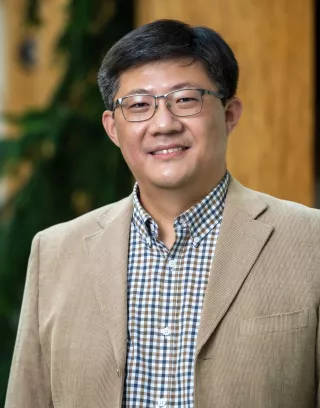
Dr. Thomas Tannert is a Professor of Wood Engineering and Canada Research Chair in Hybrid Wood Structures Engineering at the University of Northern British Columbia (UNBC). He holds a PhD from the University of British Columbia, a Master’s in Wood Science from the University of Bio-Bio (Chile), and a Civil Engineering degree from Bauhaus-University Weimar (Germany). His research focuses on timber joints, hybrid structures, and structural analysis, emphasizing sustainable materials and seismic resilience. Key roles include leading UNBC’s Wood Interdisciplinary Research Laboratory (WIRL) and collaborating with industry partners like Fast+Epp and Aspect Structural Engineers. Tannert’s work addresses disproportionate collapse prevention, CLT shear walls, and innovative timber-steel hybrids. He has secured grants exceeding $5M, including NSERC and CFI funding. Research interests span timber-concrete composites, seismic design methods, and connections for tall wood buildings. He actively participates in international standards committees (e.g., CSA-O86) and publishes extensively on CLT performance, hybrid systems, and robustness. Tannert’s interdisciplinary team bridges academia and industry, advancing sustainable construction practices. He is affiliated with the NRES Graduate Program and mentors students in MASc Engineering. His lab conducts full-scale testing of floor systems, shear walls, and connectors, with a focus on real-world applications and environmental impact.
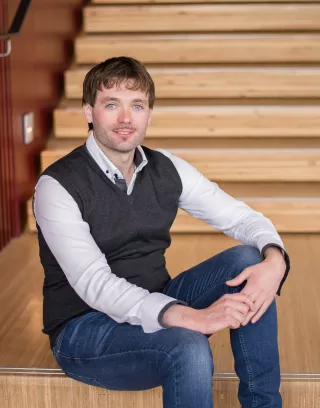
Dr. Fei Tong is an Assistant Professor in the Civil Engineering program at the University of Northern British Columbia (UNBC), School of Engineering. He is also affiliated with the NRES Graduate Program and holds a Professional Engineer (PEng) designation. His contact information includes office 10-2528 on the Prince George campus, phone number 250-960-5657, and email fei.tong@unbc.ca . He maintains a research website at https://tong.opened.ca . Dr. Tong earned his PhD from the University of Toronto and both his master's and bachelor's degrees in Structural Engineering from Tsinghua University. Before academia, he worked for over 20 years in the industry with global consulting firms like Ove Arup & Partners and Buro Happold Consulting Engineers, contributing to major projects in Beijing, Tokyo, and Dubai, including world-renowned skyscrapers and bridges in earthquake-prone and typhoon-affected regions. His research emphasizes seismic resilience , earthquake engineering , and structural dynamics , with a focus on innovative systems for high-rise buildings and infrastructure. Key areas include low-damage structural systems, rocking systems, kinematic seismic isolation, supplemental damping technologies, and advanced numerical simulations. He also explores sustainable designs in concrete, steel, timber, and composite/hybrid structures. Dr. Tong currently supervises graduate students in the following programs: PhD in Natural Resources and Environmental Studies (NRES) MASc in Engineering MEng in Integrated Wood Design MSc in NRES MNRES in NRES He actively recruits students through his website and collaborates with industry to validate research through experiments and design. No scientific awards are explicitly mentioned in his profile. He leads a research group dedicated to bridging academic innovation with industrial applications, addressing challenges such as unconventional architectural designs and extreme natural hazards. His work involves theoretical studies, numerical analysis, and experimental validation to ensure practical implementation of resilient engineering solutions.
Lin Hu is an Adjunct Professor at the University of Northern British Columbia (UNBC) and a Scientist in the Advanced Building Systems Department at FPInovations. He is actively involved in Canada’s Timber Design & Research Community, contributing to advancements in building systems and materials. His primary affiliation is with the College of Engineering at UNBC. While no specific educational background is listed, his roles suggest expertise in engineering disciplines. His research interests focus on timber-based structural systems, sustainable construction practices, and innovative building technologies, leveraging his position at FPInovations to bridge academic and applied research. No recent articles, scientific awards, or grants are explicitly mentioned in the provided text. He currently has no listed advisees or students, and no specific details about laboratories or research teams at UNBC are provided beyond his FPInovations affiliation.
Dr. Cristiano Loss is an Adjunct Professor at the University of Northern British Columbia (UNBC) and an Assistant Professor in Wood Buildings Design and Construction at the University of British Columbia (UBC). His research focuses on innovative wood-based construction techniques, structural design, and sustainable building practices within the engineering field. Dr. Loss holds a PhD and MSc in an unspecified engineering discipline, alongside a Professional Engineer (PEng) designation. His expertise spans wood materials science, timber engineering, and the integration of advanced technologies in construction. While no specific scientific awards, articles, or grants are listed in the provided text, his roles suggest active involvement in academic and professional engineering communities. There is no mention of advised students, labs, or teams at either institution.
Dr. John Ting is a Senior Lecturer in the Department of Architecture, Design & Built Environment at the University of Canberra. He holds a PhD in Architecture from the University of Melbourne (2015), specializing in the indigenization of institutional architecture in 19th-century Sarawak. His research focuses on colonial architecture in Southeast Asia, vernacular building traditions, and heritage conservation. He has taught at the University of Melbourne and RMIT University and has extensive professional experience in architectural practice across Australia and Malaysia. Dr. Ting currently advises on heritage projects in Victoria, Australia, and Sarawak, Malaysia. Education PhD in Architecture, University of Melbourne (2015) Research Interests Dr. Ting's work explores the mobility of timber colonial buildings in 19th-century Southeast Asia and Australia, with a particular emphasis on Sarawak's architectural history pre-1963. Key themes include vernacular architecture's role in migration, sustainability in construction, and the indigenization of built environments. He investigates colonial-era institutional buildings, prefabrication techniques, and the intersection of cultural identity and architecture. Projects and Grants KCLP 2030: Kuching City Local Plan 2030 Conservation and Heritage Buildings (2020–2025) Colonial Collaborations: The Design, Procurement, and Implementation of the 1957 KMC Flats in Kuching, Sarawak (2020–2025) Labs/Teams Consults on heritage and conservation projects in Sarawak, Malaysia, and Victoria, Australia, integrating academic research with practical applications.
Yanlin Guo is an Associate Professor in the Department of Civil and Environmental Engineering at Colorado State University and Director of the Center for Sustainable and Intelligent Transportation Systems. Her research focuses on mitigating wind and compound hazards through structural health monitoring, physics-integrated simulations, and remote sensing technologies to enhance infrastructure resilience. Education: B.S. Civil Engineering, Southeast University (2007) M.S. Civil Engineering, Hong Kong Polytechnic University (2010) Ph.D. Civil Engineering, University of Notre Dame (2015) Her work integrates natural hazard engineering with data science to evaluate buildings, transportation, and energy infrastructure. Key innovations include real-time monitoring systems for emergency response and climate adaptation strategies for coastal communities. Recent publications focus on hurricane resilience, autonomous inspection systems, and AI-driven structural assessment. Trends show strong emphasis on machine learning applications in wind engineering and UAV-based monitoring technologies. Awards: NSF CAREER Award (2024) DOE RACER Grant (2023) NSF Wind Hazard Grant (2022) Best Paper Award, Journal of Structural Engineering (2020) Dr. Guo leads multiple DOE and NSF projects on solar tracker resilience and urban wind risks. She advises PhD students in structural monitoring and climate adaptation research, and directs a center developing sustainable transportation solutions. The Guo Research Group specializes in full-scale structural testing and collaborates with national labs on field deployments. Current work includes developing cloud-based risk assessment platforms for engineers.
Kai Kanafani is an Associate Professor at the Department of the Built Environment, Aalborg University, within the Faculty of Engineering and Science. He specializes in sustainable construction and environmental assessment, focusing on life cycle analysis (LCA), energy efficiency, and circular economy principles in building design and construction processes. Education: Ph.D. in Architecture from the Royal Danish Academy – Architecture, Design, Conservation. Research interests include minimizing environmental impacts of construction through innovative materials, fire safety strategies, and waste reduction. Key areas are LCA tools for carbon optimization, resource-efficient construction sites, and regulatory frameworks for sustainable buildings. Recent projects include 'Minimering af ressourceforbrug på byggepladser' (reducing resource consumption on construction sites) and 'LCA tools for carbon optimised fire safety strategies in biobased buildings.' Prizes: Won 'Det Bæredygtige Element - Produktprisen' (2019) for contributions to sustainable construction. Advising: Supervisor for multiple PhD projects on LCA tools, fire safety, and sustainable construction processes. Labs/Teams: Active in the LCAbyg project, bridging scientific knowledge with industry practices.
Dr. Sardar Malek is an Associate Professor in the Department of Civil Engineering at the University of Victoria, Canada, within the Faculty of Engineering and Computer Science. He holds a PhD in Civil Engineering from the University of British Columbia (2014), an MASc in Mechanical Engineering from UBC (2009), and a BSc in Mechanical Engineering from Tehran Polytechnic (2007). His expertise spans computational mechanics, composite materials, viscoelasticity, and bio-inspired structural design. He focuses on sustainable composites for green buildings and bio-inspired composites for lightweight applications in automotive/aerospace industries. Research interests include multi-scale computational methods for simulating mass timber products, bio-inspired cellular composites, and additive manufacturing integration. He teaches courses in dynamics, finite element methods, and composite structures. Notable projects involve predicting structural responses of sustainable composites under dynamic loads and developing machine learning-driven design strategies for 3D-printed materials. He actively recruits postdoctoral researchers with expertise in solid mechanics and FEA for interdisciplinary projects. Teaching philosophy emphasizes adapting methods to student backgrounds, leveraging his experience across multiple disciplines (Mechanical, Civil, Materials Engineering) and international teaching environments (Australia, Canada, USA). His work bridges computational modeling with practical engineering challenges in sustainable construction and renewable materials.
Dr. Phalguni Mukhopadhyaya is a Professor and Director of the Master of Engineering in Building Envelopes and Structures program at the University of Victoria's Department of Civil Engineering (Faculty of Engineering and Computer Science). He holds a PhD from the University of Sheffield and certifications including P.Eng. His research focuses on energy-efficient buildings, hygrothermal performance, novel construction materials, and retrofit technologies. Key areas include thermal insulation innovations (e.g., VIPs, aerogels), climate change impacts on building durability, and sustainable design practices. Education: BTech (NIT, India), MS (City University, London), PhD (University of Sheffield). He leads interdisciplinary projects combining experimental, numerical, and field studies, with emphasis on envelope materials' lifecycle performance. He organizes the International Conference on New Horizons in Green Civil Engineering (NHICE) and collaborates with industry on applied research. Research interests span building envelope durability, moisture management, green roofs, and empathetic engineering education. His work integrates design thinking and systems approaches to address sustainability challenges. He currently supervises graduate students and accepts applications for MS/PhD research in building science and materials engineering. Notable contributions include development of thermal performance metrics, hygrothermal modeling frameworks, and sensor technologies for envelope diagnostics. His laboratory work combines hot box testing, CFD simulations, and field assessments to bridge theory and practice.
Dr. Lina Zhou is an Associate Professor in the Department of Civil Engineering at the University of Victoria, Canada. She holds a PhD from the University of New Brunswick (UNB) and is a Professional Engineer (P.Eng.). Her research focuses on innovative wood structural systems, timber connections, seismic performance of mid/high-rise timber buildings, and wood-masonry hybrid systems. She teaches courses in structural analysis, timber structures, and earthquake engineering. Education: PhD in Civil Engineering, University of New Brunswick (UNB) MS in Civil Engineering, Tongji University BS in Civil Engineering, Tongji University Research Interests: Dr. Zhou specializes in timber structural systems, particularly in enhancing the seismic resilience of light wood frame buildings. Her work includes developing hybrid timber-core systems, improving nail and screw connections, and evaluating the behavior of cross-laminated timber (CLT) components under cyclic and lateral loading. She also investigates the impact of loading protocols on nail joint performance and the application of advanced materials like CFRP in timber reinforcement. Publications: Her recent work explores topics such as dowel laminated veneer lumber bending properties, CLT connection behavior, and seismic equivalency of shear walls. These studies emphasize practical applications in midrise timber construction and sustainable building practices. Labs/Teams: Dr. Zhou leads research on timber structural systems within the University of Victoria’s Civil Engineering department, collaborating with industry partners to advance wood-based construction technologies.
William Horan is a Researcher at the School of Engineering, University of Limerick, with a focus on environmental impact assessment and sustainability transitions. His work integrates Life Cycle Assessment methodologies to evaluate environmental impacts of human activities, particularly in construction materials and industrial water systems. PhD (2015) BSc (2016) Research interests include: Life Cycle Assessment and Carbon Footprint analysis Sustainability transitions in higher education and industrial sectors Environmental impact modeling for construction and water systems Recent publications highlight contributions to: Whole-life carbon assessment of cross-laminated timber Industrial water stewardship frameworks Biogenic carbon accounting in construction Previously served as: Senior Researcher at 20FIFTY Partners (2020–present)
Wendy Pearce Miller is the Chair and Associate Professor of English at the University of North Carolina at Pembroke. She holds a Ph.D. in English from the University of Mississippi. Her expertise spans American Literature, with a focus on Southern Literature, Gender Studies, and the intersection of history and narrative. She teaches in the English department and maintains office hours MWF and TR from 8:30 AM to 5:00 PM. Her research explores themes of gender, regional identity, and social dynamics in works by authors like William Faulkner, Mary Lee Settle, and Harry Crews. Recent publications analyze Southern Gothic traditions, environmental narratives, and the construction of gender roles in 20th-century American fiction. Earlier work also includes studies on energy efficiency in timber-drying processes. Miller’s articles highlight interdisciplinary approaches, blending literary analysis with historical and cultural context. Her scholarship often emphasizes marginalized voices and the socio-political undercurrents in Southern literature. No specific grants or awards are listed, but her academic leadership as department chair reflects her institutional contributions.
Jane Burry is an Adjunct Professor at Swinburne University of Technology’s School of Design and Architecture. Her research integrates mathematics, computing, and digital fabrication in architectural design, with emphasis on sensory environments, sustainable materials, and computational methods. Recent publications explore olfactory design’s impact on human emotions (2025), chain mail structures in architecture (2024), and functionally graded biochar composites for carbon sequestration (2023). Her work bridges theoretical inquiry with practical applications in sustainable construction and human-centered design. Burry received the ACADIA Teaching Award (2020) and Robots in Architecture Pioneers Award (2016). She supervises doctoral candidates in computational design and sustainable materials, and leads projects on biochar cementitious composites and spatial analytics. As former Dean of Design, she emphasizes interdisciplinary pedagogy and industry engagement.
Dr Gabriel Tang is a Senior Lecturer in Architecture at Sheffield Hallam University, UK. He holds a PhD from the University of Edinburgh (2010) on deployable gridshells as concrete formwork and trained at the Bartlett, UCL. His research focuses on architecture-structure synergies, sustainable design, and deployable systems for disaster relief. He has worked at Foster + Partners on projects like the McLaren Group Headquarters and the Leslie L Dan Pharmacy Building. Teaching includes construction technology, design studios, and leading the MScTA's Concept and Design module. He has supervised 7 master's theses and won student-voted Inspirational Tutor awards. His students excel in competitions like RIBA White Rose Awards and IABSE Design Awards. Research activities include keynote speeches at international conferences (e.g., Nanjing Southeast University, 2016), co-authoring Timber Gridshells: Architecture, Structure and Craft (Routledge, 2016), and peer-review roles for journals like Journal of Architectural Engineering . He is a member of the International Association for Shell and Spatial Structures (IASS) and chairs Working Group 12 on Timber and Bio-based Structures. Professional memberships include the Architects Registration Board (ARB) and Higher Education Academy (HEA). He advises on consultancy projects and accepts PhD supervision in architecture, structures, and engineering.