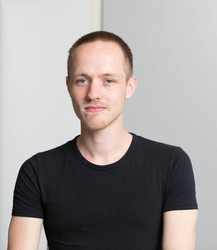
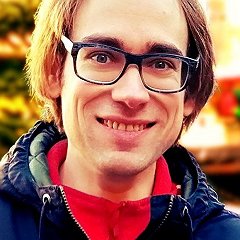
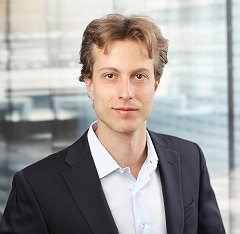
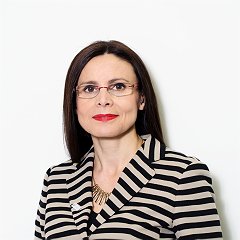
J. Garrett Morris is a researcher and teacher at the University of Iowa's Department of Computer Science, with previous affiliation to the University of Kansas. His work focuses on programming languages, type systems, and formal verification. Active contributor to conferences like POPL, ICFP, and Haskell Recognized for research in session types, linear logic, and functional programming His publications span topics including Exceptional Asynchronous Session Types , Partial Type Constructors , and Constrained Type Families . While no specific awards or students are mentioned in the scraped data, his academic activities include committee roles and keynote sessions.
Professor Phil Trinder is a Professor of Computing Science at the University of Glasgow's School of Computing Science. He leads the Glasgow Parallelism Group (GPG) and is a member of the Glasgow Systems Section (GLASS) and the Scottish Programming Languages Seminar (SPLS). His research focuses on parallel and distributed programming models, functional programming, and applications in computational algebra. Trinder holds a DPhil from Oxford University and has over 100 publications. He has led 12 major research projects as Principal Investigator and coordinated EU projects. Collaborations include Ericsson, Maplesoft, Microsoft, and Motorola. His work emphasizes scalable distributed systems, actor-based platforms, and reliable computation. Notable contributions include the SymGridPar framework for computational algebra and research on Erlang scalability. He also explores IoT architectures and tierless programming languages. Key projects include improving Erlang's network scalability and developing frameworks for exact combinatorial search (YewPar). He has supervised numerous researchers and contributed to high-performance systems like HPC-GAP.
Mart Lubbers is an Assistant Professor at Radboud University , focusing on Computer Science . He transitioned from a PhD candidate (2018–2023) and Researcher roles to his current faculty position, with a research emphasis on Task-Oriented Programming and IoT systems . Academic affiliations: Radboud University (current), Netherlands Defence Academy (2017), Max Planck Institute for Psycholinguistics (2013–2015) Teaching: Compiler Construction , New Devices Lab , and Sustainable IoT workshops in SusTrainable summer schools His research bridges Embedded Systems , Functional Programming , and Green Computing , particularly through the development of the mTask framework for IoT orchestration. Publications highlight innovations in DSL design , low-power computing , and tierless language architectures . Current supervision includes PhD candidates Niek Janssen and Benedikt Rips , alongside BSc advisees. He actively contributes to conferences as PC member/chair (TFP, IFL, CompSys).
Pascal Weisenburger is a researcher at the School of Computer Science , University of St. Gallen. His work focuses on programming languages for distributed systems , emphasizing multitier programming, reactive paradigms, and type-driven placement reasoning. Research Themes : Multitier programming languages, CRDTs, dynamic placement type systems, reactive microservices, compiler correctness, and domain-specific scheduling. Recent Articles : Explored E-graphs for disequality reasoning (POPL 2025), array type duality in functional languages (ECOOP 2024), and formal verification of CRDTs (PLDI 2023). Committee Roles : Participated in program/steering committees for ECOOP, SPLASH, APLAS, and IEEE BigData conferences. Key Contributions : Developed the ScalaLoci language for multitier systems, proposed Propel for algebraic property verification, and introduced Dyno for static reasoning in dynamic placement scenarios.
Guido Salvaneschi is a Professor at the School of Computer Science , University of St. Gallen, leading the Programming Group . His work bridges Programming Languages and Software Engineering with applications in Distributed Systems, Reactive Programming, and Secure Software Systems. Research Interests Dr. Salvaneschi focuses on: Multitier Programming Languages Consistency Models in Distributed Systems Reactive Programming for HPC and IoT Secure Software Development with Trusted Execution Environments Recent Publications Trends His recent work spans Infrastructure as Code testing ( CONFLANG ), consistency verification ( POPL ), and CRDT-based local-first software ( TSE journal ). Key themes include hybrid consistency enforcement, type-safe distributed abstractions, and automated verification of algebraic properties. Committee Roles ICSE 2026: Research Track Committee POPL 2025: Reviewer ‹Programming› 2025: Steering Committee Chair ISSTA 2025: Program Committee
Mira Mezini is a Professor of Computer Science at the Technical University of Darmstadt, Germany, leading the Software Technology Lab. She serves on steering committees, program committees, and editorial boards of top-tier conferences and journals. Her affiliations include the National Research Center for Applied Cybersecurity ATHENE and co-directorship of hessian.AI, the Hessian Center for Artificial Intelligence. Her research focuses on programming systems for reliable distributed software and AI, automated software analysis, and foundational code models. She has developed large-scale module concepts for adaptability, extensible programming languages, and intelligent software development environments that leverage web-based resources to generate programming rules and patterns. Specializes in software engineering Expert in programming language design Contribution to cybersecurity and AI Her recent work emphasizes static analysis, distributed systems, and programming language design, with trends in API misuse detection, decentralized applications, and secure local-first programming. The focus spans from foundational type systems to practical tools enhancing software quality and developer productivity. Scientific Awards Two-time IBM Eclipse Innovation Award recipient (2005, 2006) Google Research Award (2017) Horst Görtz IT Security Award (2014) ERC Advanced Grant (2012) ACM Fellow Dahl-Nygaard Prize (2025) She has held leadership roles including Dean of Computer Science at TU Darmstadt (2013-2014) and Vice President positions (2014-2019). Her service extends to international juries, funding panels, and editorial boards. Labs & Teams Leads the Software Technology Lab at TU Darmstadt, driving research in programming paradigms and tools. Co-directs hessian.AI and contributes to the Excellence Cluster 'Reasonable Artificial Intelligence.'
Professor Phil Trinder is a Professor of Computing Science at the University of Glasgow's School of Computing Science. He leads the Glasgow Parallelism Group (GPG) and is a member of the Glasgow Systems Section (GLASS). His research focuses on parallel and distributed programming models, functional programming, and scalable systems. Education: DPhil (Doctor of Philosophy) from the University of Oxford. Research Interests: Design and implementation of high-level distributed/parallel programming models, computational algebra applications, and collaboration with industry (Ericsson, Microsoft, etc.). Publications span over 78 works, emphasizing parallel algorithms, distributed systems, and functional programming frameworks like Erlang. Recent work explores tierless IoT architectures and reliability in distributed platforms. Grants/Projects: Principal Investigator on 12 major projects, including EU funding and EPSRC grants. Notable contributions to SD Erlang and SymGrid-Par frameworks. Labs/Teams: Glasgow Parallelism Group (GPG), GLASS section, and involvement in the Scottish Programming Languages Seminar (SPLS).