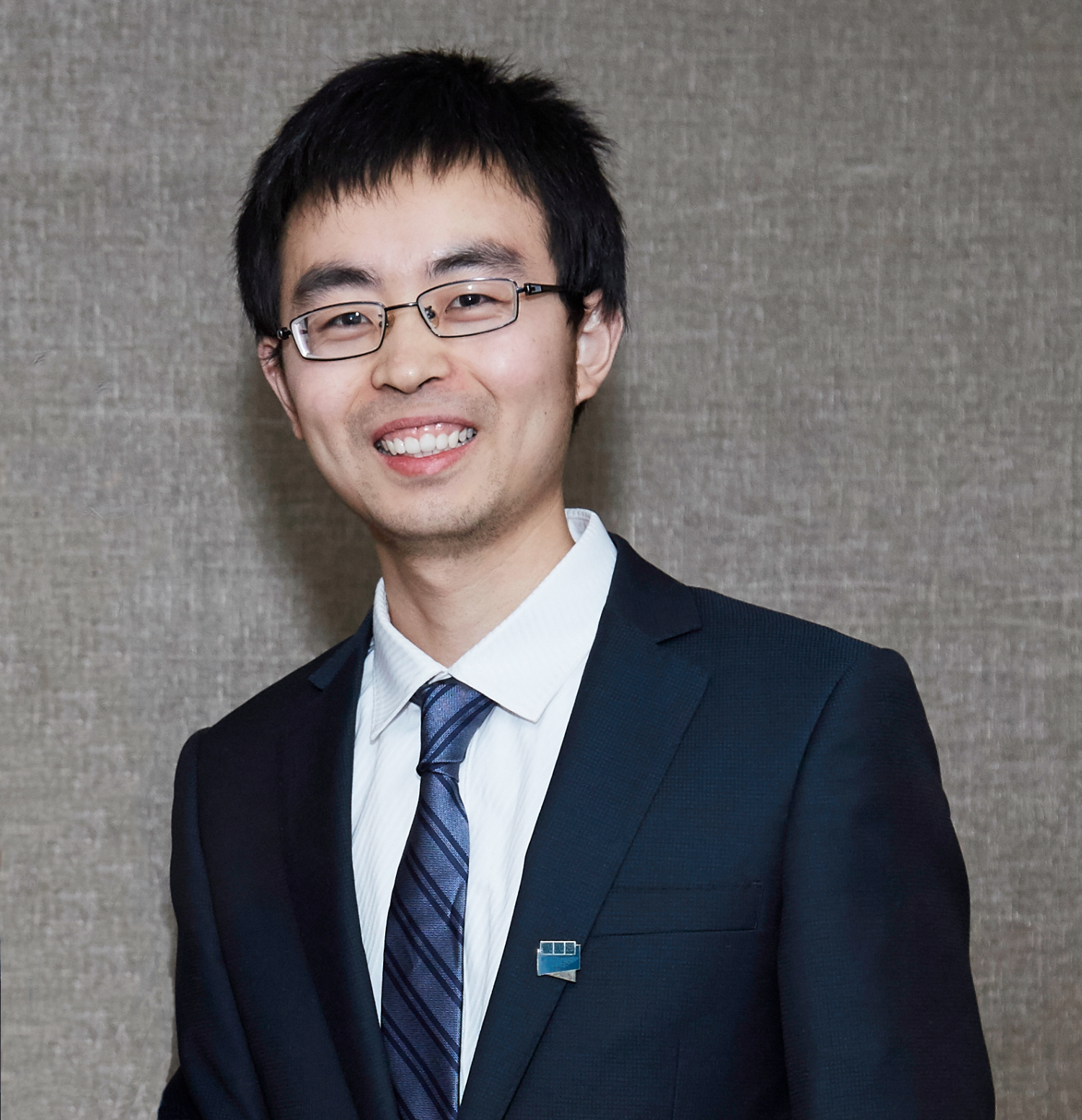
Dr. Longji Cui is an Assistant Professor in the Thermo Fluid Sciences, Materials, and Micro/Nanoscale disciplines at the University of Colorado Boulder, affiliated with the Department of Mechanical Engineering within the College of Engineering and Applied Science. His laboratory focuses on high-precision instrumentation and computational techniques to explore energy transport, conversion, and dissipation at extreme scales, including scanning thermal microscopy, picowatt-resolution sensors, and nanophotonics. Lab Location: ECME 1B66F / ECME 108 Office Location: ECME 267B Research Interests: Dr. Cui's work spans thermal energy sciences, ultrahigh-resolution sensing, scanning probe microscopy, nano-optics, and quantum engineering. His interdisciplinary projects address critical challenges in sustainable energy systems, next-generation microelectronics, and advanced sensor technologies for high-performance applications. Notable contributions include innovations in thermophotovoltaic systems, molecular-scale thermal transport, and plasmonic light emission mechanisms. Recent publications emphasize near-field thermal radiation, quantized thermal transport in single-atom junctions, and enhanced energy conversion through nanoscale engineering. These studies bridge fundamental physics with practical applications in renewable energy and nanotechnology. Awards: 2025 CEAS Innovation & Entrepreneurship Fellow 2024 ASME Rising Star Award 2023 NSF CAREER Award 2023 CU Boulder Lab Venture Challenge Award His research group collaborates across disciplines to advance instrumentation for atomic-scale thermal measurements and develop novel materials for energy applications. Ongoing efforts include optimizing thermophotovoltaic devices and exploring hot-carrier dynamics in plasmonic systems.
Yi Zheng is an Associate Professor in the Department of Mechanical and Industrial Engineering at Northeastern University, where he directs the Nano Energy Laboratory. He previously held positions at the University of Rhode Island before joining Northeastern in 2019. His research focuses on nanoscale thermal transport, renewable energy systems, photon-based cooling, and sustainable materials derived from biomass. Zheng serves on editorial boards for Scientific Reports and Journal of Photonics for Energy , and actively participates in conferences like ASME IMECE. He holds a PhD in Mechanical Engineering from Columbia University (2015), with earlier degrees from Columbia and Tsinghua University. Education: Ph.D., Mechanical Engineering, Columbia University (2015) M.S., Mechanical Engineering, Columbia University (2011) B.S., Mechanical Engineering, Tsinghua University (2009) Research Interests: Prof. Zheng’s work bridges nanotechnology and energy systems, emphasizing novel materials for thermal management, radiative cooling, and sustainable energy harvesting. His lab develops biomass-derived composites for solar desalination, thermophotovoltaics, and smart cooling paints. Key projects include ultra-dark solar absorbers, phase-change material-based thermal devices, and recyclable cellulose-based materials. Grants & Awards: 2024 ASME Rising Star Award 2019 NSF CAREER Award 2025 NASA Glenn Faculty Fellow 3M Non-Tenured Faculty Award (2022) Labs/Teams: The Nano Energy Laboratory at Northeastern collaborates internationally on projects like photonics-enabled biosensors and adaptive radiative cooling systems. Recent innovations include self-cleaning cellulose composites and cooling paints for urban heat reduction.
California Institute of Technology (Caltech)United States
Shanhui Fan is the Joseph and Hon Mai Goodman Professor of the School of Engineering at Stanford University, with a courtesy appointment in Applied Physics and a Senior Fellowship at the Precourt Institute for Energy. He directs the Edward L. Ginzton Laboratory and holds a Ph.D. in theoretical condensed matter physics from MIT. His research focuses on nanophotonics, including photonic crystals, metamaterials, quantum optics, and radiative cooling technologies. He has published over 700 papers and holds 80+ patents, with awards including the R. W. Wood Prize and membership in the National Academies of Sciences and Engineering. Education: B.Sc. (Physics, 1992) University of Science and Technology of China; Ph.D. (Physics, 1997) MIT. Affiliations: Edward L. Ginzton Laboratory, Department of Electrical Engineering, Stanford University. Research Highlights: Radiative cooling systems (e.g., subambient cooling), photonic synthetic dimensions, quantum optics with free electrons, and energy-efficient materials. His work bridges theoretical and experimental photonics, with applications in renewable energy, imaging, and quantum technologies. Recent advancements include nighttime electric power generation via radiative cooling and nonreciprocal metasurface devices. He advises over 20 graduate students and postdocs, contributing to breakthroughs in photonics and energy systems. Awards & Honors: R. W. Wood Prize (Optica, 2022) Simons Investigator in Physics (2021) Member, National Academy of Sciences (2025) Member, National Academy of Engineering (2024) Grants & Teams: Leads the Light-Matters Initiative (LMI EFRC) and co-founded Skycool Systems and Flexcompute. His lab collaborates on radiative cooling textiles and photonic neural networks.
Marina S. Leite is a Professor in the Department of Materials Science and Engineering at the University of California, Davis. Her research focuses on novel materials for renewable energy, optical devices, and materials under extreme environments. She leads the Leite Lab, pioneering work in perovskite photovoltaics, thermophotovoltaic emitters, and transient photonics using machine learning for accelerated materials discovery. Her group combines advanced characterization techniques with computational methods to address challenges in energy harvesting and optical material performance. PhD: Not explicitly listed in provided text Her research interests include: Machine learning-driven materials discovery Halide perovskites for stable solar cells High-temperature optical materials Transient photonics using magnesium-based systems Thermophotovoltaic emitter design Key research trends from recent articles emphasize AI integration for predicting material behaviors, environmental stressor impacts on optoelectronics, and alloy systems for dynamic optical properties. Her lab has developed methods for automated experimentation and spectral selectivity in emitters. 2025 Optica Fellow 2025 SPIE Fellow Advising: Supervises students like Hannah Darr. Active in DARPA cross-disciplinary projects and editorial roles in energy journals. Leads grants focused on machine learning in materials science and photonic device development. The Leite Lab collaborates on projects involving transient materials and high-temperature photonics. Future work includes scaling superabsorber technologies, developing eco-friendly Pb-free perovskites, and advancing AI tools for material property prediction.
Mool C. Gupta is the Langley Distinguished Professor and Founding Director of the NSF Industry/University Cooperative Research Center for Lasers and Plasmas at the University of Virginia. He holds affiliations with the Department of Electrical and Computer Engineering within the School of Engineering and Applied Science. Previously, he served as Director of the Applied Research Center at Old Dominion University and worked at Eastman Kodak Company and NASA's Jet Propulsion Laboratory. His academic roles include Adjunct Professor at Cornell University and Editor-in-Chief of the Handbook of Photonics . Education: Senior Research Fellow, California Institute of Technology (1978–1979) Postdoctoral Fellow, Cornell University (1976–1978) Ph.D. in Physics, Washington State University (1973) Research Interests: His work focuses on photon processing of materials, photovoltaics, nanomaterials, and optoelectronic devices. Key areas include laser processing for solar cell optimization, anti-icing surface technologies, and advanced materials characterization. His research bridges fundamental materials science with practical applications in energy and aerospace. Publications & Trends: Gupta's recent work emphasizes laser-based manufacturing, thermoelectric materials, and photovoltaic innovations. His 2023 study on silicon solar cell passivation and 2020 research on anti-icing surfaces highlight his dual focus on energy and materials engineering. He frequently publishes in journals like Applied Physics , Journal of Alloys and Compounds , and IEEE Transactions . Awards: Member of Kodak's Inventors' Gallery Fellow of the National Academy of Inventors Grants & Advising: Past PI for NSF, DARPA, AFOSR, and NASA projects. Courses taught include Photovoltaics and Electrical Engineering Projects . His lab collaborates on solar-land coexistence solutions and advanced materials for energy systems. Labs & Teams: Directs the NSF Center for Lasers and Plasmas, leveraging interdisciplinary teams for laser-materials innovation. His lab focuses on photonics, nanotechnology, and sustainable energy solutions.
Professor Jifeng Liu is a Professor of Engineering and Program Area Lead for Materials Science & Engineering at Dartmouth College's Thayer School of Engineering. He holds a BS/MS from Tsinghua University and a PhD from MIT's Materials Science department. His research focuses on optoelectronic materials, nanophotonics for energy-efficient IT, and advanced semiconductor devices. Notable contributions include GeSn alloys for mid-infrared photodetectors and integrated photonics systems. Education: BS/MS, Materials Science, Tsinghua University (2001) PhD, Materials Science, MIT (2006) His research interests span: Photovoltaic materials and solar thermal systems Nanophotonic structures for light trapping High-entropy alloys for solar absorbers Infrared and UV sensors for environmental monitoring Awards: Fellow of The Optical Society (2021) NSF CAREER Award (2012) MRS Graduate Student Gold Award (2004) Advising & Grants: Supervises PhD candidates like Gideon Kassa and Zhiyuan Wang. Recent grants include DoD-funded solar power upgrades and DOE clean energy projects. Active in collaborative research with industry partners like Solar-Tectic LLC. Labs & Teams: Leads projects on semiconductor integration, thermoelectric cells, and Zintl-phase photovoltaics. Collaborates on interdisciplinary initiatives like the Dartmouth NSF I-Corps Program.
Dmitry Donetsky is an Associate Professor in the Department of Electrical and Computer Engineering at Stony Brook University. His research focuses on optoelectronic devices, semiconductor heterostructures, and molecular beam epitaxy. He holds a Ph.D. in Electrical Engineering from SUNY Stony Brook (2000) and a Physics Ph.D. from St. Petersburg State Technical University (1996). His work emphasizes long-wavelength optoelectronic devices, including photovoltaic cells, photodetectors, and high-power diode lasers. Key research areas include carrier kinetics in semiconductors, InAsSb alloy development, and Type-II superlattice structures. He has published over 50 articles in journals like Applied Physics Letters and IEEE Photonics Technology Letters , with contributions to high-power laser arrays and thermophotovoltaic technologies. His 1991 award from the St. Petersburg Physical Society recognizes early-career contributions to semiconductor optoelectronics. Donetsky’s teaching includes courses on digital systems design, analog integrated circuits, and electronics. He collaborates with institutions like the Institute of Physics (Russia) and has been a faculty member since 1996.
Dr. Bo Zhao is an Assistant Professor in the Department of Mechanical and Aerospace Engineering at the University of Houston . He leads the Thermal PhotoniX (TPX) Lab , focusing on theoretical and experimental research in thermal photonics, plasmonics, and nonreciprocal thermal radiation. His work addresses global challenges in energy conversion, thermal management, and photonics for sustainable technologies. Education: Ph.D. in Mechanical Engineering from Georgia Institute of Technology. Research Highlights : Nonreciprocal thermal emitters for energy harvesting and photonic systems Solar thermophotovoltaics and advanced radiative cooling Weyl semimetals for topological optoelectronics Experimental validation of Kirchhoff’s law violations Awards & Recognition : NSF CAREER Award (2025) 2023 Elsevier/JQSRT Raymond Viskanta Young Scientist Award NSF I-CORPS Award (2024) University of Houston’s 50-in-5 Scholar (2022) Advising & Grants : Advises over 10 graduate students including Sina, Bardia, and Yasmine Funded by NSF, DOE, and UH’s SEED Program Patent applications on nonreciprocal solar harvesting TPX Lab collaborates with institutions like Georgia Tech, Stanford, and Caltech to advance thermal photonics through interdisciplinary research.
Scott J. McCormack is an Assistant Professor in the Department of Materials Science and Engineering at the University of California, Davis. His research focuses on materials in extreme environments, with an emphasis on crystallography, thermodynamics, and synthesis of complex oxides, carbides, and nitrides under high-temperature and high-pressure conditions. The McCormack Lab explores how material symmetry and atomic structure influence thermochemical and thermophysical properties to develop materials for space exploration and hypersonic applications. Key research areas include entropy-stabilized oxides, ultra-high-temperature ceramics, and non-equilibrium materials. McCormack has secured significant funding, including a $1.4M grant for ceramic processing and an NSF CAREER Award. His work merges experimental methods (e.g., in-situ XRD, aerodynamic levitation) with computational modeling to characterize materials under extreme conditions. Awards: NSF CAREER Award, $1.4M Research Grant Labs/Teams: McCormack Lab Key Technologies: High-temperature synthesis, carbothermal reduction, entropy stabilization His publications span advanced ceramics, thermal expansion analysis, and phase transformation kinetics, with a focus on applications in aerospace and energy systems.
Dr. Eric Tervo is an Assistant Professor in the Department of Electrical and Computer Engineering at the University of Wisconsin–Madison, with a joint appointment in Mechanical Engineering and a collaborative role at the National Renewable Energy Laboratory (NREL). His research focuses on semiconductor materials and devices for energy conversion and thermal management, particularly in thermophotovoltaic (TPV) cells, solid-state refrigeration, and nanoengineered heat transfer control. He holds a PhD from Georgia Institute of Technology (2019) and a BS from UW-Madison (2012). Prior to UW-Madison, he was a Nozik Postdoctoral Fellow at NREL, where he developed thermal energy conversion technologies. Education: PhD 2019, Georgia Institute of Technology BS 2012, University of Wisconsin-Madison Research Interests: Thermal energy conversion via TPV cells and thermoradiative systems Nanomaterials engineering for thermal management High-efficiency solar energy systems Energy policy and economic impacts of sustainable technologies Recent Scientific Contributions: His work spans high-impact areas such as achieving world-record TPV efficiencies (>30%), developing scalable GaInAs devices, and advancing near-field radiative heat transfer modeling with discrete dipole and Green’s function methods. His research bridges theoretical, computational, and experimental approaches to address global energy challenges. Awards: 2022 Young Scientist Award (Thermophotovoltaic Conference) 2020 Sigma Xi Best Thesis Award (Georgia Tech) Multiple NSF Travel Awards and Fellowships Teaching and Mentorship: Dr. Tervo teaches courses in photonics, electrodynamics, and research methods across ECE and Mechanical Engineering departments at UW-Madison. His lab collaborates with NREL to advance energy technologies. Lab and Teams: His research group focuses on interdisciplinary projects combining material science, nanotechnology, and energy systems, with active collaborations in both academia and national labs.
Massachusetts Institute of TechnologyUnited States
Asegun Henry is an Associate Professor in the Department of Mechanical Engineering at the Massachusetts Institute of Technology (MIT), where he directs the Atomistic Simulation & Energy (ASE) Research Group. His work bridges fundamental science with applied engineering to address climate change through innovative energy technologies. Professor Henry received his B.S. in Mechanical Engineering from Florida A&M University in 2004, followed by M.S. and Ph.D. degrees from MIT in 2006 and 2009, respectively. His career path includes postdoctoral research at Oak Ridge National Laboratory and Northwestern University, a fellowship at ARPA-E, and an Assistant Professor position at Georgia Tech before joining MIT in 2018. Research Interests Professor Henry's primary research focuses on heat transfer with an emphasis on understanding energy transport, storage, and conversion at the atomic level. His work spans from fundamental studies of phonon transport in ordered and disordered materials to the development of industrial-scale energy technologies. Key research areas include thermal energy grid storage using multi-junction photovoltaics (TEGS-MPV or "Sun in a Box"), high-temperature concentrated solar power using liquid metals, methane pyrolysis for CO 2 -free hydrogen production, and atomistic modeling of phonon transport. His research combines molecular dynamics simulations, supercell lattice dynamics calculations, and first-principles approaches to understand thermal transport phenomena. Publication Trends Professor Henry's publications demonstrate a clear progression from fundamental phonon transport research toward applied energy systems. His early work focused on thermal conductivity in polymers and nanostructures, while more recent publications address high-temperature energy systems and grid-scale storage solutions. The research shows increasing integration of fundamental physics with practical engineering applications, particularly in developing technologies that can mitigate climate change. A significant portion of recent work focuses on liquid metal systems for high-temperature energy applications, culminating in the development of the world-record-setting ceramic pump for molten metal. Scientific Awards Professor Henry has received numerous prestigious awards recognizing his contributions to energy research and heat transfer, including: The Alan T. Waterman Award from NSF (2023) Physics World Top 10 Breakthroughs for super-efficient electricity generation (2022) Bell Labs Prize Winner (2021) ASME Bergles-Rohsenow Young Investigator Award in Heat Transfer (2018) World Technology Award for Energy (2018) National Science Foundation CAREER Award (2016) He has also been awarded multiple fellowships including the Ford Foundation Postdoctoral Fellowship, UNCF-MERCK Postdoctoral Fellowship, and DOE Computational Science Graduate Fellowship. Professor Henry's research has led to significant technological breakthroughs, most notably the development of the highest-temperature pump on record (capable of pumping liquid metal above 1400°C), which earned a place in the Guinness Book of World Records. This innovation has enabled new high-temperature energy systems concepts, including the "Sun in a Box" grid-level energy storage approach that promises to be cheaper than pumped hydro. His work on phonon transport has also advanced understanding of heat transfer in disordered materials and at interfaces. Labs and Teams Professor Henry directs the Atomistic Simulation & Energy (ASE) Research Group at MIT, which maintains laboratory space on the 3rd floor of building 31, with offices distributed across buildings 3, 31, and 35. The ASE Group works on both fundamental science (studying phonon transport in various materials) and applied engineering (developing novel energy systems for climate change mitigation). The group has achieved multiple world records, including the highest-temperature liquid metal pump (2082°C) and thermophotovoltaic efficiency exceeding 40% in collaboration with NREL.
Dr. Ajeet Rohatgi is a Regents Professor and John H. Weitnauer Jr. Chair in the College of Engineering at Georgia Institute of Technology, specializing in photovoltaics and semiconductor materials. As a Georgia Research Alliance Eminent Scholar, he leads research in silicon solar cells, surface passivation, and advanced metallization techniques. B.S. (E.E.), Indian Institute of Technology (1971) M.S. (Materials Engineering), Virginia Polytechnic Institute (1973) Ph.D., Lehigh University (1977). His research focuses on photovoltaic device innovation , including tunnel oxide passivated contacts (TOPCon), PERC cells, and carrier-selective contact engineering. He pioneered the University Center of Excellence in Photovoltaics Research and Education, a DOE-funded initiative, and founded Suniva as CTO. Analysis of his recent publications reveals expertise in silicon passivation methods , laser processing, charge injection technology, and reliability testing for industrial solar cell applications. Collaborative work includes tandem solar cells and thermophotovoltaic systems. Westinghouse Fellow IEEE Fellow William Cherry Award (IEEE) Thomas D. Callinan Award (Electrochemical Society) Dr. Rohatgi has secured grants from DOE/NREL and led teams advancing low-cost, high-efficiency silicon solar cells. His lab at Georgia Tech focuses on scalable fabrication techniques and stability testing for next-generation photovoltaic devices.
Dr. Dan Kotlyar is an Associate Professor in the Nuclear and Radiological Engineering Department at Georgia Tech’s G.W.W. School of Mechanical Engineering. He holds a B.Sc., M.Sc., and Ph.D. from Ben-Gurion University of the Negev (2008–2013). His research focuses on advanced reactor modeling, nuclear thermal propulsion (NTP), and thermophotovoltaic microreactors. He leads the Computational Reactor Engineering (CoRE) Lab, developing tools for multi-physics analysis and reactor design optimization. Key projects include NTP systems for Mars missions and low-enriched uranium fuels. Education: B.Sc. Nuclear Engineering, Ben-Gurion University of the Negev, 2008 M.Sc. Nuclear Engineering, Ben-Gurion University of the Negev, 2010 Ph.D. Nuclear Engineering, Ben-Gurion University of the Negev, 2013 Research interests include: Monte Carlo depletion-thermal hydraulic coupling Advanced reactor design (NTP, microreactors) Fuel cycle optimization for proliferation resistance Multi-physics code development (e.g., SerpentTools) Notable achievements: Recipient of the NRC Faculty Development Fellowship 2019 AIAA Aerospace Power Systems Best Student Paper (co-authored) 2019 Spring Capstone Expo Best Senior Design Project Advising and grants: Ph.D. student Vedant Mehta won DOE Innovation Award (2019) Funded by BWX Technologies for NTP computational frameworks Labs/teams: Computational Reactor Engineering (CoRE) Lab, focusing on reactor physics tools and advanced system design.
Patrick J. McCann is a Professor at the School of Electrical and Computer Engineering, University of Oklahoma, since 1990. His work focuses on IV-VI semiconductor epitaxial growth, mid-infrared laser development, and chemical sensing applications. B.S. in Engineering Physics, UC Berkeley (1981) Ph.D. in Electronic Materials, MIT (1990) Research spans semiconductor laser fabrication, tunable diode laser spectrometers, and molecular beam epitaxy (MBE) of IV-VI materials. Key contributions include room-temperature mid-infrared light emission, heat dissipation in epitaxial layers, and laser spectrometers for breath analysis. His publications (over 100) highlight trends in thermophotovoltaic materials, quantum well structures, and real-time gas-phase detection. No scientific awards or student advising details are explicitly mentioned in the provided texts.
Daniel Friedman is a Researcher at the National Renewable Energy Laboratory (NREL) in the Chemistry and Nanoscience group. He holds a PhD in Applied Physics from Stanford University and a Bachelor's in Physics from Princeton University. His research focuses on advancing photovoltaic technologies for renewable energy applications. Friedman's core research interests include: Multi-junction high-efficiency solar cells Thermophotovoltaic energy conversion Laser power receivers Performance characterization of emerging solar technologies Semiconductor materials development Renewable energy storage solutions His recent publications (2024-2025) demonstrate a strong focus on GaInAs semiconductor devices, laser power conversion systems, and thermophotovoltaic modeling. Research consistently addresses materials engineering challenges in renewable energy, with particular emphasis on efficiency optimization and novel applications like agrivoltaics. Friedman received significant recognition as a 2018 Fellow of the American Physical Society for his contributions to photovoltaics research. His collaborative work involves extensive partnerships with NREL colleagues and external researchers, evidenced by co-authored publications spanning device development, empirical modeling, and materials innovation.