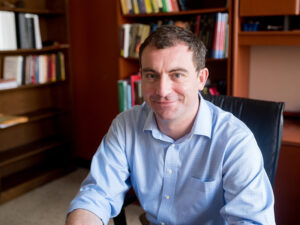
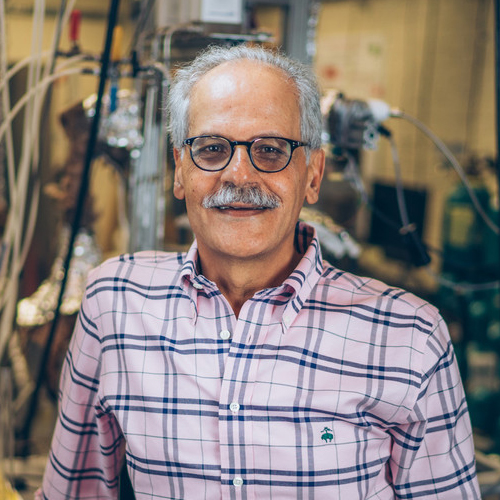
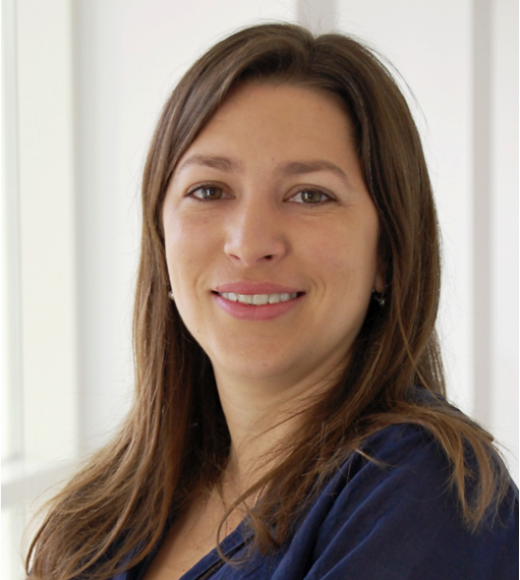
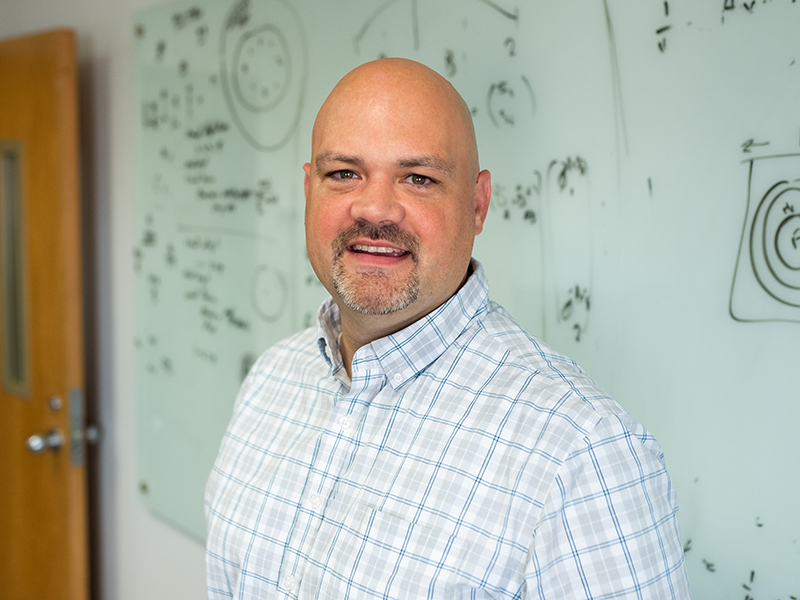
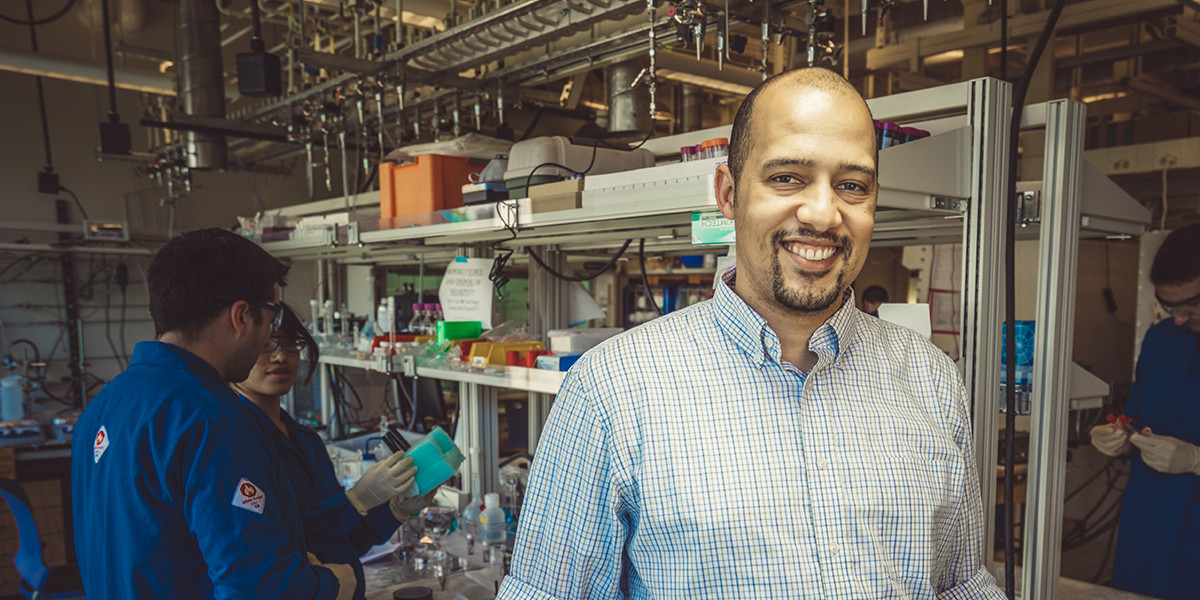
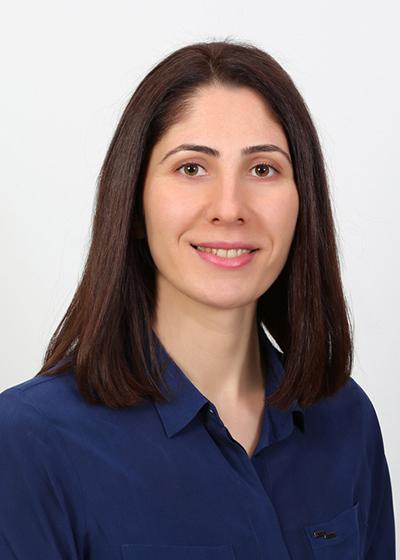
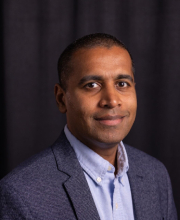
William Chueh is a Professor in the Departments of Materials Science and Engineering and Energy Science & Engineering at Stanford University. He serves as Director of the Precourt Institute for Energy and Faculty Director of the Energy Innovation and Emerging Technologies Program. His research focuses on redox-active materials for energy storage, conversion, and carbon-neutral energy cycles. Education: PhD, Materials Science, Caltech (2010) BS, Applied Physics, Caltech (2005) Research Interests: Energy storage and conversion systems (batteries, fuel cells, electrolyzers) Multi-scale electrochemical and chemical reaction dynamics Materials design rules for redox-active solids Thermodynamic frameworks for sustainable energy Publication Trends: His work spans fundamental materials synthesis, electrochemical characterization, and modeling of redox reactions. Key themes include solar thermochemical cycles, ceria-based systems for CO2/H2O conversion, and advanced battery technologies. Scientific Honors: Outstanding Young Investigator Award (MRS, 2018) Camille Dreyfus Teacher-Scholar Award (2016) Sloan Research Fellowship (2016) CAREER Award (NSF, 2015) Advising: He advises students in energy technologies, materials science, and electrochemistry, including doctoral and master’s candidates. Contact: wchueh@stanford.edu
Michael Baldea is an Associate Professor in the Department of Chemical Engineering at the University of Texas at Austin . He holds a Ph.D. in Chemical Engineering from the University of Minnesota (2006), with prior degrees from 'Babeş-Bolyai' University in Romania (M.Sc. 2001, Diploma 2000). His research group develops theoretical and computational methods for Process and Energy Systems Engineering , focusing on integrated decision-making, performance optimization, and process intensification with industrial validation. Education: Ph.D., Chemical Engineering, University of Minnesota (2006) M.Sc., Interface Process Engineering, 'Babeş-Bolyai' University (2001) Diploma, Chemical Engineering, 'Babeş-Bolyai' University (2000) Research Thrusts: Integrated decision-making in chemical/energy supply chains Process performance monitoring and optimization Process integration and intensification Key applications include grid-responsive chemical plants, intensified distillation/column designs, and renewable energy integration for building systems. Scientific Awards: Frank A. Liddell, Jr. Fellowship NSF CAREER Award (2015-2020) Moncrief Grand Challenges Faculty Award (2014) AIChE Outstanding Young Researcher Award (2017) Implementation : His group has translated research into commercial tools through partnerships with industrial test beds and is working to integrate methods into commercial simulators. They explore predictive approaches for building energy management and strategic capital investment analysis in next-generation energy systems.
Ashwani K. Gupta is a Distinguished University Professor at the University of Maryland, holding the Minta Martin Professorship in Engineering. He serves as Professor in the Department of Mechanical Engineering, Professor at the Institute of Physical Science and Technology, and Affiliate Professor in the Department of Aerospace Engineering. With over 45 years of experience in combustion engineering since graduating from Southampton University in 1970, Gupta has established himself as a leading authority in advanced combustion technologies. Dr. Gupta earned his Ph.D. from the University of Sheffield in 1973, followed by a D.Sc. from the same institution in 1986 and another D.Sc. from Southampton University in 2013. His academic journey includes six years at MIT as a research staff member and three years at Sheffield University as an independent research worker before joining the University of Maryland in 1983. Gupta's research focuses on revolutionizing combustion technology through innovations in swirl flows, high-temperature air combustion (HiTAC), and distributed combustion systems. His pioneering work on 'colorless distributed combustion' has enabled ultra-low emission combustion processes with significant applications in gas turbine engines and waste-to-energy conversion. His research spans biofuels, CO2 utilization, sulfur chemistry, waste conversion, and advanced laser diagnostics, addressing critical challenges in sustainable energy and environmental protection. Analyzing his recent publications reveals a strong emphasis on waste-to-energy conversion, biomass processing, and CO2-assisted technologies. Gupta's work demonstrates a clear trajectory toward sustainable energy solutions, with increasing integration of artificial intelligence for combustion optimization and emission control. His research bridges fundamental combustion science with practical engineering applications for cleaner energy systems. Among Gupta's numerous accolades are: Election to Fellowship of the Royal Academy of Engineering (2023) Honorary Fellowship of the Royal Aeronautical Society (2020) Recognition as one of the top 2% of scientists worldwide by Stanford University (2022-2024) Multiple prestigious medals from ASME and AIAA including the Soichiro Honda Medal (2018) and AIAA Air Breathing Propulsion Award (2014) Honorary doctorates from three international universities Gupta has secured substantial research funding throughout his career, resulting in over 850 technical papers, three books, 18 edited books, and 22 book chapters. He has delivered over 100 plenary/keynote/invited presentations at international conferences. His mentorship has shaped numerous graduate students who continue to contribute to the field of combustion engineering. Gupta directs the Combustion Laboratory at the University of Maryland, which serves as a hub for cutting-edge research in sustainable combustion technologies. The Combustion Laboratory, under Gupta's leadership, has become a center of excellence for advanced combustion research, particularly in distributed combustion systems, waste-to-energy conversion, and alternative fuels. The lab maintains strong collaborations with industry partners and international research institutions, facilitating technology transfer and practical implementation of research findings. Gupta's team employs state-of-the-art diagnostics and computational tools to advance fundamental understanding while developing practical engineering solutions for cleaner energy systems.
Jenny Y. Yang is a Professor in the Department of Chemistry at the University of California, Irvine. Her research focuses on the development of inorganic electrocatalysts for chemical fuel generation and utilization, emphasizing bio-inspired secondary coordination sphere effects and thermochemical property optimization. Institution: University of California, Irvine Department: Chemistry Research Interests: Oxygen activation mechanisms Hydrogen production and oxidation Carbon dioxide reduction for fuel synthesis Thermochemical property effects on catalysis Secondary coordination sphere engineering Electrochemical carbon capture systems Scientific Trends: Recent work spans from 2023–2025, covering CO2-to-methane conversion, quantum dot hybrid systems for hydrogen evolution, and computational approaches to CO2 capture agent design. Articles highlight interdisciplinary methods combining inorganic chemistry, electrochemistry, and sustainability-focused engineering. Contact: Office: 4080 ISEB | Phone: 949-824-1533 | Email: j.yang@uci.edu
Chao Wang is an Associate Professor at the Department of Chemical and Biomolecular Engineering within the Whiting School of Engineering at Johns Hopkins University. He also serves as the Director of the Nano Energy Laboratory and the department’s Master’s Admissions Director. His research focuses on sustainable energy systems and nanomaterials for CO2 capture and conversion, electrocatalysis, thermocatalysis, and green chemical engineering. Education: Bachelor’s degree, University of Science and Technology of China (2004) Doctorate, Brown University (2009) Wang’s research targets efficient energy conversion and storage via nanomaterials with tailored atomic structures, emphasizing catalytic activity, selectivity, and stability. His group explores electrochemical and thermochemical processes for reduced carbon footprints, including CO2 and methane conversion, ammonia recovery, and phosphorus/nitrogen nutrient recycling using zeolite-based systems. Recent publications (2021–2024) highlight his work in high-entropy alloys, solid-state battery materials, CO2 electroreduction, and biomedical nanotechnologies. Collaborative efforts span catalysis, nanoparticle dynamics, and environmental applications. Grants include a $1M DOE award for multi-university research, a $625K DOE grant for electrified transportation systems, and $3M in startup funding for carbon-removal technology commercialization. Alumni under his mentorship include Ph.D. graduates like Michael J. Manto (2018) and Master’s students like Mitchell Keller (2018), with notable achievements in catalyst development for ammonia/phosphorus recovery and industry placements at Grace & Co. and GEA Engineering.
Massachusetts Institute of TechnologyUnited States
Professor Ahmed F. Ghoniem is the Ronald C. Crane (1972) Professor of Mechanical Engineering at MIT, directing the Center for Energy and Propulsion Research and the Reacting Gas Dynamics Laboratory. He holds a B.Sc. and M.Sc. from Cairo University and a Ph.D. from the University of California, Berkeley. His research focuses on computational methods in fluid-thermal sciences, turbulent combustion, energy conversion systems, and CO2 capture technologies. He has authored over 500 publications and mentored over 100 students, many of whom are leaders in academia and industry. His research interests include multiscale simulations of turbulent reactive flows, clean energy systems, and advanced combustion technologies. He has pioneered work on oxy-fuel combustion, gasification processes, and ion transport membrane reactors. Ghoniem’s contributions span fundamental science and applied engineering, addressing challenges in sustainable energy and environmental sustainability. Honors: ASME James Harry Potter Gold Medal (2015), AIAA Propellant and Combustion Award (2016), Fellowships from ASME, APS, and The Combustion Institute. Service: Leadership roles in MIT’s Energy initiatives, KAUST collaborations, and advisory boards for energy research centers. Extensive contributions to curriculum development and graduate education in mechanical engineering. Labs/Teams: Directs the Reacting Gas Dynamics Lab and leads the Center for Energy and Propulsion Research, focusing on integrated energy systems and CO2 capture innovations.
Marina S. Leite is a Professor in the Department of Materials Science and Engineering at the University of California, Davis. Her research focuses on novel materials for renewable energy, optical devices, and materials under extreme environments. She leads the Leite Lab, pioneering work in perovskite photovoltaics, thermophotovoltaic emitters, and transient photonics using machine learning for accelerated materials discovery. Her group combines advanced characterization techniques with computational methods to address challenges in energy harvesting and optical material performance. PhD: Not explicitly listed in provided text Her research interests include: Machine learning-driven materials discovery Halide perovskites for stable solar cells High-temperature optical materials Transient photonics using magnesium-based systems Thermophotovoltaic emitter design Key research trends from recent articles emphasize AI integration for predicting material behaviors, environmental stressor impacts on optoelectronics, and alloy systems for dynamic optical properties. Her lab has developed methods for automated experimentation and spectral selectivity in emitters. 2025 Optica Fellow 2025 SPIE Fellow Advising: Supervises students like Hannah Darr. Active in DARPA cross-disciplinary projects and editorial roles in energy journals. Leads grants focused on machine learning in materials science and photonic device development. The Leite Lab collaborates on projects involving transient materials and high-temperature photonics. Future work includes scaling superabsorber technologies, developing eco-friendly Pb-free perovskites, and advancing AI tools for material property prediction.
Dr. Lin Wei is a Professor and Graduate Coordinator in the Department of Agricultural and Biosystems Engineering at South Dakota State University (SDSU). He holds a B.S. in Agricultural Engineering from China Agricultural University, M.S. in Mechanical Engineering (Guangxi University), and M.S./Ph.D. in Biological Engineering (Mississippi State University). His research focuses on biomass conversion, bioenergy production, smart agriculture, and food safety. He leads projects on biochar-based fertilizers, cold plasma food safety technologies, and AI-driven precision farming. Dr. Wei has authored over 80 peer-reviewed papers and secured $7M+ in grants. He chairs multiple professional committees (ASABE Renewable Energy, USDA-S1075, ISO-WG6) and serves as editor for journals like Agricultural Engineering and Transactions of the ASABE. Recent grants include biochar soil health studies ($583K USDA) and nanobubble dairy waste management ($22K SD WRI). His team develops smart sensors for crop monitoring and biopolymer nanocomposites for food packaging. Notable awards include 2024 Outstanding Researcher (College of Agriculture) and 2022 Excellence in Editing (ASABE). Ongoing work integrates thermochemical processes with AI to enhance biofuel production efficiency and environmental sustainability.
Kevin Clarno is a tenured Associate Professor in the Department of Nuclear and Radiation Engineering at the University of Texas at Austin, holding the Charlotte Maer Patton Centennial Fellowship in Engineering. His research focuses on computational nuclear energy, multiphysics reactor simulation, and high-performance computing (HPC). Previously, he spent 15 years at Oak Ridge National Laboratory (ORNL), where he led major initiatives such as the Consortium for Advanced Simulation of Light Water Reactors (CASL) and contributed to the development of software tools like SCALE, CTF, and VERA. Education and Career: Assistant Professor at University of Tennessee-Knoxville (2010–2016) Senior Research Scientist at ORNL (2006–2021) Research Interests: Multiphysics coupling methods for reactor simulation Multiscale neutronics and thermal-hydraulics modeling Advanced reactor design (e.g., molten salt reactors) HPC-driven software integration for nuclear analysis Uncertainty quantification in coupled simulations Grants and Projects: Lead of CASL’s Physics Integration Focus Area Development of the Advanced Multi-Physics (AMP) fuel code ORNL-led strategic research projects in reactor simulation Labs and Tools: VERA: Virtual Environment for Reactor Applications CTF: Thermal-hydraulic solver for PWR analysis MPACT: Neutronics simulation tool within SCALE
Massachusetts Institute of TechnologyUnited States
Fikile R. Brushett is a Professor and holds the Chevron Chair of Chemical Engineering at the Massachusetts Institute of Technology (MIT), within the Department of Chemical Engineering under the School of Engineering. His research focuses on electrochemical energy storage systems, particularly redox flow batteries, catalyst synthesis, and environmental applications like CO₂ capture. Brushett has received numerous accolades, including the Allan P. Colburn Award and Charles W. Tobias Young Investigator Award for his impactful publications. His work integrates experimental and computational methods to advance energy technologies, emphasizing sustainable materials and system optimization. He leads projects addressing global energy challenges through innovations in battery design, electrolyte development, and process modeling. Education: Ph.D. in Chemical Engineering, University of Illinois at Urbana-Champaign (2010) M.S.E. in Chemical Engineering, University of Illinois at Urbana-Champaign (2009) B.S.E. in Chemical Engineering, University of Pennsylvania (2006) Research: Brushett’s lab explores electrochemical energy conversion/storage, microfluidics, and interfacial phenomena. Key areas include redox flow battery optimization, scalable carbon materials for energy storage, and CO₂ capture via electrochemical methods. His team develops novel diagnostic tools (e.g., microelectrode sensors) and models for system efficiency. Awards: Over two dozen honors, including named chairs and fellowships from organizations like ACS and GEM. Notable recognitions include the 2024 Chevron Chair and 2022 AIChE Colburn Award. Grants & Labs: Active in MIT’s Electrochemical Energy Lab, focusing on grid-scale storage solutions. Collaborates on projects funded by DOE, industry partners (e.g., Chevron), and foundations. Leads initiatives in material sustainability and battery lifecycle analysis. Publications: Over 140 peer-reviewed articles (2022–2025) emphasize interdisciplinary innovations in energy storage, electrolyte design, and environmental electrochemistry. Recent work highlights advancements in non-aqueous systems, CO₂ capture, and Bayesian-optimized material synthesis.
University of Illinois Urbana-ChampaignUnited States
Sanjiv Sinha is a Professor in the Department of Mechanical Science and Engineering at the University of Illinois, serving as the Associate Head for Undergraduate Programs. He is also affiliated with the Micro and Nanotechnology Lab. His research focuses on thermal conductivity, nanomaterials, thermoelectrics, energy storage, and advanced manufacturing. Key contributions include innovations in thermochemical energy storage systems, nanowire thermal properties, and hybrid material fabrication techniques. Sinha has been recognized with prestigious awards including the DARPA Young Faculty Award (2011) and NSF CAREER Award (2010). His recent work spans hydrogel thermal characterization, nanoporous crystalline materials, and intracellular thermometry. Articles highlight interdisciplinary approaches to energy systems, environmental engineering, and biomedical applications. Ongoing projects include developing smart water management systems and advanced thermal interfaces for electronics cooling. Collaborations emphasize sustainable technologies and nuclear materials science. Research Highlights: Thermoelectric materials, nanostructured phase change systems, and ultrasonic welding of metal-polymer composites. Grants & Funding: Supported by DARPA, NSF, and industry partnerships focused on thermal energy storage and nanofabrication. Labs & Teams: Leads the Micro and Nanotechnology Lab, collaborating with interdisciplinary teams in materials science and energy engineering.
Matthew Kanan is a Professor in the Department of Chemistry at Stanford University, teaching core courses including CHEM 31E: Chemical Foundations and 21st Century Problems (Autumn) and CHEM 121: Understanding the Natural and Unnatural World through Chemistry (Spring). He actively mentors students through year-round independent studies (CHEM 90, CHEM 190) and research programs (MATSCI 300, CHEM 301, CHEM 200). His research pioneers sustainable solutions for carbon management, focusing on electrochemical CO 2 reduction, catalyst development for reverse water-gas shift reactions, and novel carbon capture technologies. Key innovations include carbonate-promoted carboxylation processes, membrane-free electrochemical systems for acid-base production, and metamaterial reactor designs for energy-efficient thermochemical conversion. His work bridges fundamental electrochemistry with scalable engineering for carbon-neutral chemical synthesis. Recent publications (2023-2025) demonstrate a cohesive research trajectory toward industrial-scale CO 2 utilization, with emphasis on energy efficiency, catalyst durability, and impurity tolerance. Dominant themes include electrochemical engineering for concentrated product streams, computational modeling of catalyst microenvironments, and thermal processes for mineral-based carbon removal. This integrated approach targets practical implementation in sustainable fuel and chemical production. Professor Kanan supervises undergraduate research (CHEM 190), directed instruction (CHEM 90), and Ph.D. candidates across chemistry and materials science. His research group likely secures substantial funding for projects addressing critical challenges in carbon conversion, though specific grants aren't detailed in the source material. Collaborative work spans electrochemical engineering, materials design, and process optimization for decarbonization.
Dr. Hilal Ezgi Toraman is an Assistant Professor in Penn State's College of Earth and Mineral Sciences, with joint appointments in the John and Willie Leone Family Department of Energy and Mineral Engineering and the Department of Chemical Engineering. She leads an interdisciplinary research program focused on sustainable reaction engineering and catalysis for valorizing non-traditional carbon feedstocks like plastic waste, biomass, and shale gas. Her lab integrates advanced pyrolysis, GC×GC analytics, kinetic modeling, and data science to develop scalable chemical recycling technologies. Education includes: Ph.D. in Chemical Engineering, Ghent University (2016) M.Sc. in Chemical Engineering, Middle East Technical University (2012) B.Sc. in Chemical Engineering, Middle East Technical University (2010) Research focuses on: Developing intrinsic kinetic models for plastic pyrolysis Designing catalysts for mixed-feedstock upgrading Advancing GC×GC analytical methods for complex product characterization Building data infrastructure for process optimization Her work consistently addresses industrial challenges in plastic circularity and sustainable energy. Toraman's publications demonstrate strong emphasis on pyrolysis reaction engineering, catalytic mechanisms, and analytical innovation. Recent work explores metal-modified zeolites for polypropylene conversion, machine learning for co-pyrolysis optimization, and novel reactor designs for efficient thermochemical synthesis. Major awards: C&EN Talented 12 (2023) AIChE Pioneers in Catalysis & Reaction Engineering (2023) ACS Energy & Fuels Rising Star (2023) Wilson Faculty Fellowship (2023-2026) She leads the Toraman Lab, advising 8+ graduate students on projects funded by $5M+ grants from REMADE Institute, Dow Chemicals, and others. Current initiatives include catalytic pyrolysis of mixed plastics and development of open-source data platforms for recycling technologies.
Dr. Manuel Garcia-Pérez is a Professor and Department Chair in the Department of Biological Systems Engineering at Washington State University (WSU), affiliated with the College of Agricultural, Human, and Natural Resource Sciences (CAHNRS). His research focuses on thermochemical conversion of biomass to produce biofuels, bio-oils, and biochars, addressing global energy and environmental challenges. He holds a Ph.D. in Chemical Engineering from Université Laval and has held postdoctoral positions at Monash University, the University of Georgia, and other institutions. His work emphasizes sustainable aviation fuels, biochar applications in soil fertility, and environmental impact mitigation. Dr. Garcia-Pérez leads the Bioproducts Science and Engineering Laboratory (BSEL) at WSU Tri-Cities, advancing bio-refinery concepts and reactor design. He collaborates internationally, including projects in Haiti and the Dominican Republic to develop sustainable biomass industries. His research spans analytical chemistry, reactor engineering, and interdisciplinary partnerships in forestry, soil science, and sociology. He has authored nearly 130 peer-reviewed publications and serves on the Biomass Research Development Initiative Technical Advisory Committee. Key achievements include developing pyrolysis oil characterization methods, optimizing biochar for carbon sequestration, and advancing sustainable aviation fuel (SAF) production. His grants and industry partnerships support innovative technologies for waste-to-energy conversion and environmental remediation. Future work targets integrating biomass resources with aviation fuel supply chains and enhancing biochar's role in climate resilience.
Dr. Thinesh Selvaratnam is an Associate Professor in the Department of Civil and Environmental Engineering at Lamar University. His research focuses on sustainable wastewater treatment technologies, bioremediation of industrial wastewater, and the Food-Water-Environment Nexus. He holds a Ph.D. from New Mexico State University (2014), an M.S. from the University of Surrey (2011), and a B.S. from the University of Peradeniya (2009). His research interests include energy-positive wastewater treatment, algal-based systems for bioremediation, landfill leachate treatment, and resilience frameworks for infrastructure. He leads the Lamar University Center for Resiliency and has advised doctoral, master’s, and undergraduate students in environmental engineering. Key awards include the Richard E. Speece Lead Author Award (2015) and the Overseas Research Scholarship (2011). His work spans over 50 peer-reviewed publications, emphasizing algal biotechnology, produced water treatment, and nutrient recovery. He teaches courses like CVEN 3370 (Water and Wastewater Treatment) and CVEN 5329 (Water Supply and Treatments). Recent projects include developing a regional resilience center, cyanidiales-based metal remediation, and leveraging algal systems to treat anaerobic digester centrate. His research group actively collaborates on interdisciplinary solutions for environmental sustainability.