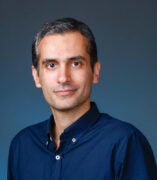
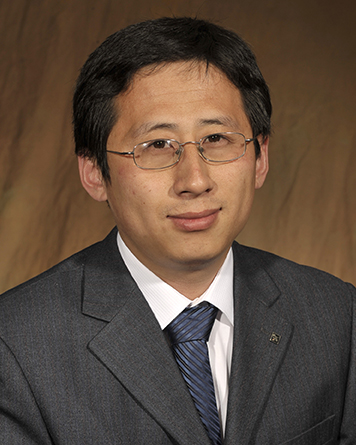
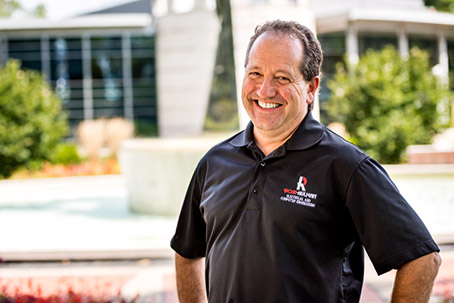
Dr Alexander Daykin-Iliopoulos is a Senior Research Fellow at the University of Southampton, specializing in electric propulsion and plasma engineering for spacecraft systems. His research focuses on heaterless hollow cathodes, thermionic plasma sources, and miniature propulsion technologies. Specialist in Electric Propulsion Systems Member of Tony Davies High Voltage Laboratory Collaborator with European Space Agency His recent work explores low-power cathode development, plasma antenna applications, and high-current hollow cathode characterization. He actively supervises PhD students and participates in interdisciplinary research teams. Research Groups: Electrical Power Engineering Tony Davies High Voltage Laboratory
Paweł Bajurko is an active Assistant Professor at the Institute of Radioelectronics and Multimedia Technology within the Faculty of Electronics and Information Technology at Warsaw University of Technology. His research centers on high-frequency electromagnetic systems with emphasis on antenna design and terahertz applications. Education: Master of Science (2004) Doctor of Philosophy (2012) Dr. Bajurko's work spans antenna engineering, millimeter-wave/terahertz technology, LTCC applications, and radar systems. He specializes in developing measurement systems for sub-THz frequencies and designing reconfigurable antennas using advanced materials. His research integrates electromagnetic theory with practical implementations for wireless communication and sensing applications, frequently involving material characterization and circuit integration. Analysis of his 15 most recent publications (2020-2023) reveals concentrated efforts in terahertz detectors (particularly JLFET-based systems), millimeter-wave switches using AlGaN/GaN semiconductors, and innovative antenna designs leveraging LTCC technology. Emerging themes include graphene-based RF components, optical modulation of THz waves, and calibration techniques for high-frequency measurements. His work consistently addresses challenges in bandwidth, efficiency, and integration for next-generation wireless systems. Scientific Recognition: 10 documented achievements (specific awards not listed) h-index of 10 (Scopus) and 8 (Web of Science) Total CiteScore of 72.3 Dr. Bajurko has supervised 18 promoted theses and participated in 26 research projects, demonstrating strong academic mentorship and collaborative research engagement. His projects frequently focus on developing measurement methodologies and high-frequency components for radar and communication systems. He maintains active involvement in the sub-Terahertz Technology Division, contributing to cutting-edge instrumentation development. Based in room 34 at Warsaw University of Technology, he continues advancing terahertz applications through experimental and theoretical work while mentoring graduate students in antenna and high-frequency circuit design.
Dr. Hugo Dominguez Andrade is a Senior Research Associate at the Interface Analysis Centre, University of Bristol. Holding advanced degrees including an MSc from Vigo, an MSc from Bristol, and a PhD from Bristol, he specializes in materials science with a focus on surface phenomena, thermionic emission, and nuclear energy applications. His work intersects experimental physics, materials engineering, and extreme environment sensing technologies. Education: MSc (Vigo), MSc (Bristol), PhD (Bristol) Key Research Areas: Diamond-based sensors, thermionic energy conversion, plasma-material interactions Recent research outputs highlight his contributions to understanding radiation effects on materials and developing novel energy conversion devices. Active collaborations span nuclear engineering, materials testing, and diamond film technologies. Scientific Awards First Prize Poster Award (2016) Projects Radiation-powered sensors (2017-2021) Thermionic energy converters (2013-2016) Lithium breeding research (2023-2025)
Mohammad Ghashami is an Associate Professor in the Department of Mechanical and Industrial Engineering at the University of Illinois at Chicago (UIC). His research group specializes in energy transport at micro and nanoscales, focusing on near-field thermal radiation, thermionic electron emission, and sub-continuum gas conduction. His work bridges theoretical insights with practical applications in nanoelectronics and aerospace technologies. Education Ph.D., Mechanical Engineering, University of Utah (2019) M.Sc., Mechanical Engineering, University of Utah (2018) B.Sc., Mechanical Engineering, University of Tehran (2012) His research explores fundamental mechanisms in nanoscale energy transport, with recent publications analyzing many-body systems in thermal radiation, microstructured thermionic generators, and precision measurement techniques for gas conduction. His work integrates computational methods with experimental validation. Selected scientific awards include the 2023 NSF Faculty Early Career Development Program (CAREER) Award. His publications span journals like Physical Review B , Physical Review Applied , and Energy Conversion and Management , reflecting interdisciplinary contributions to energy science and mechanical engineering.
Shaloo Rakheja is an Associate Professor in the Department of Electrical and Computer Engineering at the University of Illinois at Urbana-Champaign (UIUC), where she leads the Quantum Nanoelectronics Laboratory. She holds a Ph.D. from Georgia Institute of Technology and has held academic roles at New York University and postdoctoral positions at MIT. Her research focuses on nanoelectronics, spintronics, and semiconductor devices, with emphasis on energy-efficient computing and magnetic materials. She directs the NSF-funded Center for Aggressive Scaling by Advanced Processes for Electronics and Photonics (ASAP). Education: Ph.D., Electrical and Computer Engineering, Georgia Tech (2012) M.S., Electrical and Computer Engineering, Georgia Tech (2008) Bachelor of Technology, Electrical Engineering, IIT Kanpur (2005) Research Interests: Shaloo’s work spans compact modeling of wide-bandgap semiconductors, spin-based devices for memory and computing, and reconfigurable devices using van der Waals materials. She develops physics-based models to bridge materials, devices, and circuits for next-generation technologies. Key Achievements: Recipient of Intel Alumni Faculty Fellowship and Engineering Council Outstanding Advisor Award Co-author of over 200 publications, including books on hardware security and semiconductor devices Principal Investigator on NSF grants and industry partnerships Developed open-source simulation tools on nanoHUB since 2013 Outreach: Founded the Creative Circuit Design (C²D) workshop to inspire high school students in engineering. Active in K-12 STEM education initiatives.
Zhili Zhang serves as the B. Ray Thompson Professor in the Mechanical, Aerospace and Biomedical Engineering Department at the University of Tennessee's Tickle College of Engineering. He has progressed through the academic ranks since joining in 2008, from Assistant Professor (2008-2014) to Associate Professor (2014-2019) to Professor (2019-2023), and currently holds the distinguished B. Ray Thompson Professorship since August 2023. Dr. Zhang's academic credentials include: PhD in Mechanical and Aerospace Engineering from Princeton University (2008) MA in Mechanical and Aerospace Engineering from Princeton University (2006) Bachelor's degree from Tsinghua University (2000) His research focuses on advanced laser diagnostics for combustion and plasma systems, computational imaging, and spectroscopy. Dr. Zhang has pioneered innovative techniques including Resonantly Ionized Photoemission Thermometry (RIPT), Focused Laser Differential Interferometry (FLDI), and Multiplexed Structured Image Capture (MUSIC), enabling high-speed, non-intrusive measurements in challenging environments like supersonic flows and plasma reactors. His recent work (2023-2025) demonstrates continued innovation in plasma-assisted ammonia synthesis, advanced temperature measurement techniques, and high-speed imaging applications for combustion diagnostics. Dr. Zhang's scholarly excellence has been recognized through: AIAA Walter Lempert Best Paper Award Associate Fellowship in the American Institute of Aeronautics and Astronautics ASEE Air Force Summer Faculty Fellowship (2012, 2013) Crocco Teaching Award from Princeton University Tickle College of Engineering Research Achievement Award (2025) Outstanding faculty award for research (2023) B. Ray Thompson Professor award (2023) Dr. Zhang has mentored numerous graduate students to completion of their degrees, including Seth Holladay (PhD, 2024), Walker McCord (PhD), Cary Smith (award-winning student), Alexander Miloshevsky (PhD), Camden Carroll (MS), and Anthony Kim (MS). His research group actively participates in major conferences like AIAA SciTech, where they've presented multiple papers annually. He maintains strong collaborations with Oak Ridge National Laboratory, particularly through the ORNL/UT Joint Faculty program, and serves as a mentor for undergraduate research through programs like EUReCA. Dr. Zhang leads a dynamic research laboratory focused on advanced diagnostics for combustion and plasma systems, with current projects spanning plasma-assisted ammonia synthesis, supersonic flow diagnostics, and high-speed imaging techniques. His group continues to recruit new graduate students and postdoctoral researchers, maintaining an active research environment at the forefront of laser-based diagnostic technologies.
Md Golam Rosul is an Assistant Professor of Engineering at Sweet Briar College. He holds a B.S. in Electrical and Electronic Engineering from Bangladesh University of Engineering and Technology (2015) and a Ph.D. in Electrical Engineering from the University of Virginia (2022). His research focuses on computational material science, solid-state thermoelectric devices, and thermionic energy conversion, with emphasis on semiconductor physics and material properties analysis. He teaches courses such as Foundations of Engineering Analysis, MATLAB Programming, Electrical Circuits, and Semiconductor Physics/Devices. His work explores advanced materials for energy applications, including layered materials like MoSe₂, NbSe₂, and WSe₂, investigating their thermal and electronic transport properties. Recent publications highlight studies on low-resistance contacts in thermionic devices, electron-phonon interactions in bulk materials, and Seebeck coefficient analysis of electrodeposited films. His research bridges computational modeling with experimental validation, aiming to optimize thermoelectric and thermionic systems for energy efficiency. Notable contributions include investigations into gold-graphene heterostructures for thermionic transport and the thermoelectric properties of holey silicon. He collaborates with institutions such as the University of Virginia and international teams on interdisciplinary material science projects.
Dr. Laurent Marot is a Researcher at the Department of Physics, University of Basel, affiliated with the Faculty of Humanities and Natural Sciences. His work focuses on plasma-material interactions, diagnostic systems for nuclear fusion, and advanced materials science. He contributes to ITER-related research through projects like the development of plasma cleaning techniques for first mirrors and studies on plasma-facing materials. Research interests include plasma physics, fusion energy, surface engineering, and catalytic processes. Key projects involve mirror cleaning technologies in tokamak environments (e.g., JET and EAST), optimization of tungsten and rhodium coatings, and nanoscale surface modifications for biomedical and fusion applications. Recent publications address plasma cleaning efficacy, material erosion under high heat loads, and novel catalytic materials. His work bridges experimental and computational approaches to solve challenges in fusion energy and material durability.
Dipanjan Chaudhuri is a Researcher at the University of Illinois, specializing in Condensed Matter Physics with a focus on electronic and optical properties of quantum materials. His work employs advanced techniques like THz spectroscopy, ARPES, and EELS to study phenomena in superconductors, strange metals, and topological materials. Research Interests: Electronic structure and dynamics in correlated electron systems Superconductivity and quantum criticality Nonlinear optical responses in exotic phases Topological materials and phonon properties Key Research Directions Strange metal behavior in cuprates and heavy-fermion systems Charge density wave transitions and dynamics Ultrafast spectroscopy of photoexcited states Publications (2022–2025) explore topics ranging from Planckian dissipation in strange metals to topological phonons in RhSi, demonstrating expertise in cutting-edge condensed matter phenomena.
Edgar Choueiri is a tenured Professor of Mechanical and Aerospace Engineering at Princeton University, Director of the Electric Propulsion and Plasma Dynamics Laboratory (EPPDyL), and Director of the 3D Audio and Applied Acoustics (3D3A) Lab. He holds affiliations with the Astrophysical Sciences Department and Program in Plasma Physics. He earned his Ph.D. from Princeton University in 1991. His research spans advanced spacecraft propulsion, plasma dynamics, and 3D audio technologies. Key areas include magnetoplasmadynamic thrusters, lithium-fed propulsion systems, and spatial audio innovations like the BACCH 3D Sound technology. He has led over 40 research projects funded by NASA, AFOSR, and private entities, with two space experiments on the Space Shuttle and APEX spacecraft. Choueiri has authored over 220 publications and patents, advised over 100 students (10 PhD graduates), and developed novel courses in astronautics and plasma propulsion. His honors include a knighthood from Lebanon and leadership roles in the Electric Rocket Propulsion Society and AIAA’s Electric Propulsion Technical Committee. Education: Ph.D. in Mechanical and Aerospace Engineering, Princeton University (1991) Notable Projects: 3D3A Lab’s BACCH Sound, high-power lithium MPD thrusters for Mars missions Grants: Over $50M in funding from NASA, AFOSR, and NSF Awards: Knight of the Cedar (Lebanon), Lebanese Academy of Sciences President (2008) His labs focus on plasma thruster development, acoustic innovations, and space propulsion systems for future missions.
Natalia Seoane Iglesias is a Professor at the University of Santiago de Compostela, affiliated with the Department of Electronics and Computing within the Higher Technical School of Engineering. She holds a PhD from the same institution (2007), focusing on optimizing parallel 3D simulators for studying HEMT device fluctuations under the guidance of Dr. Antonio García Loureiro. Her research expertise spans semiconductor device simulation, nanoelectronics, and quantum transport phenomena in nanostructures. She has pioneered work on advanced transistor architectures (e.g., nanosheet/nanowire FETs), materials like GaN and SiC for space applications, and machine learning-driven optimization tools for semiconductor technologies. Her work bridges computational modeling (Monte Carlo, NEGF methods) with experimental nanofabrication challenges. Recent contributions include developing MLFoMpy for TCAD data analysis, high-efficiency laser power converters using SiC, and benchmarking future transistor nodes below 2nm. Her research group (ARQCOMP) focuses on variability reduction in nanoscale devices and sustainable semiconductor manufacturing. Her publications emphasize statistical variability studies in FinFET/NFET architectures, quantum corrections in 3D simulations, and the application of AI to reduce carbon footprint in nanodevice design. She has co-authored over 100 peer-reviewed articles, with a focus on device physics, materials innovation, and computational tools for nanoelectronics.
Marc Herniter is a Professor of Electrical & Computer Engineering at Rose-Hulman Institute of Technology. His expertise spans analog electronics, power electronics, and automotive systems. He has taught internationally and served as an expert witness in high-profile cases involving automotive and electronics industries. He advises Rose-Hulman’s NXP Cup Model-Based Design club and organizes a high school autonomous vehicle competition focused on microcontroller programming and image recognition. Education: PhD in Electrical Engineering, University of Michigan, 1989 BSEE and BA, Boston University, 1983 Research Interests: Herniter’s research focuses on analog electronic systems, hybrid electric vehicles, switching power supplies, high voltage instrumentation, alternative energy systems, thermionic cathodes, and model-based design. He utilizes tools like SPICE and MATLAB for system simulation. Awards: Outstanding Faculty Advisor, ChallengeX Advanced Automotive Vehicle Competition Teaching & Advising: He teaches courses in analog electronics, power electronics, and automotive systems. His advising includes the NXP Cup club and a high school competition emphasizing autonomous vehicle design. Labs/Teams: Advises the NXP Cup Model-Based Design club and oversees the high school autonomous vehicle competition.
Patrick G. O'Shea is a Professor and Vice President for Research at the University of Maryland, holding joint appointments in Electrical and Computer Engineering, Physics, and the Institute for Research in Electronics & Applied Physics (IREAP). He previously served as Chair of the Department of Electrical & Computer Engineering at the A. James Clark School of Engineering and Director of IREAP. His research focuses on charged particle beam dynamics, free-electron lasers (FELs), and high-power radiation sources. He leads the Bright Beams Collective Research Group, advancing compact THz FELs and terawatt X-ray sources. O'Shea has held leadership roles including President of University College Cork (Ireland) and Vice President for Research at UMD. His honors include Fellowships from AAAS, APS, IEEE, and the Royal Society of Arts. Recent work emphasizes ultra-high-power XFEL harmonics, beam emittance control, and applications in cancer therapy and quantum technologies. Education: BSc in Physics (National University of Ireland, Cork), M.S. and Ph.D. in Physics (University of Maryland). Key contributions include record-breaking H⁻ beam brightness on the BEAR rocket test stand, discovery of solitary waves in electron beams, and theoretical work on emittance compensation. He chairs UMD's Research Conflict of Interest Committee and has advised students like Liam Pocher (recipient of the NAPAC22 best student paper award). O'Shea collaborates on projects such as the DarkLight experiment at Jefferson Lab and scalable accelerator technologies for future particle physics facilities. Research highlights include developing laser-controlled ion accelerators, achieving 30 MV/m proton gradients, and pioneering THz FEL design. His group explores medical isotope production via electron beams and ultra-fast radiotherapy. Ongoing projects aim to revolutionize XFEL efficiency through novel beam sources and tapered undulators. Awards include the UMD Distinguished Scholar-Teacher Award and multiple professional society recognitions.
Julian Garcia Fernandez is an Assistant Professor at the Department of Electronics and Computing, affiliated with the Higher Technical School of Engineering at the University of Santiago de Compostela. He holds a Doctorate from the same institution, awarded in 2023 for his thesis on "Statistical study of fluctuations in ultrascaled multigate MOSFET transistors," supervised by Dr. Antonio García Loureiro and Dr. Natalia Seoane Iglesias. His research focuses on semiconductor device variability, machine learning integration in semiconductor research, and advanced transistor architectures such as gate-all-around nanowire and nanosheet FETs. Key areas include statistical modeling of process variations (e.g., line edge roughness, metal grain granularity), thermionic cooling optimization, and sustainable semiconductor fabrication practices. His recent publications (2021-2025) emphasize machine learning-driven approaches to semiconductor device optimization, with trends toward predictive modeling of variability effects and energy-efficient cooling solutions. Notable work includes the development of MLFoMpy—a TCAD data post-processing tool—andPelgrom-based models for advanced FET architectures. No scientific awards or grants are explicitly mentioned in the provided texts. He has not listed advisees or lab affiliations, though his research implies involvement in nanoelectronics and semiconductor technology teams.
Dr. Gideon Segev is a senior academic staff member at the School of Electrical Engineering , Tel Aviv University, leading the Energy Devices Research Lab . His work focuses on solar energy conversion, semiconductor devices, and sustainable water treatment technologies. Research Interests : Solar energy conversion with photon-enhanced thermionic emission (PETE) and hybrid photoelectrochemical-photovoltaic systems . Development of ratchet-based ion pumping membranes for low-cost, decentralized water desalination. Advanced characterization of charge collection efficiency in photovoltaic and photoelectrochemical devices. Publications : His recent work explores 2025 ratchet-driven ion separation , 2024 solar fuels roadmaps , and 2023 nanofluidic desalination systems , reflecting his commitment to sustainable energy and water solutions.