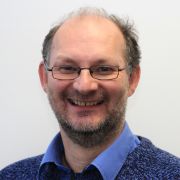
Michael Wright is a Senior Lecturer in the Department of Computer Science at the University of Bath. His research focuses on haptic feedback systems, educational technology, and user interaction design. He is affiliated with the Institute of Coding and has collaborated on projects involving mid-air haptics, wearable technology, and inquiry-based learning environments. His work spans interdisciplinary areas such as thermal technology for social interaction (e.g., WarmConnect), perceptual studies in haptics, and educational platforms like nQuire. Recent projects emphasize the integration of visual and tactile feedback systems to enhance user experiences. Wright's publications highlight trends in mid-air haptics research, exploring thresholds of tactile perception and multimodal feedback systems. His educational research addresses challenges in professional development through degree apprenticeships and online learning. He has supervised a doctoral thesis on gesture recognition and contributed to projects like 'Day of the Figurines,' a narrative-driven mobile game. His work bridges computational methods with human-centered design principles.
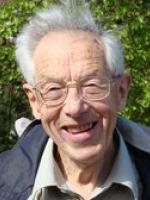
Professor Ross Cameron is a faculty member at the School of Architecture and Landscape, University of Sheffield, specializing in Environmental Horticulture . His research focuses on the intersection of urban green infrastructure, climate change adaptation, and human well-being through plant selection. PhD in Horticulture BSc in Biological Sciences Research interests include: Green infrastructure for climate mitigation (city cooling, flood tolerance) Plant-ecosystem interactions (thermal insulation, biodiversity enhancement) Sustainable resource use (water, soil amendments, energy) Human-plant relationships (well-being, therapeutic landscapes) Recent publications highlight trends in: Phylogenetic approaches to urban tree survival Thermal regulation via green walls and roofs Floral color psychology and mental health Mediterranean species adaptation to urban stress Microbial implications in green infrastructure Scientific awards include: National Horticultural Fellowship (2011) DEFRA LINK project with top rating (9/10) Teaching excellence awards He leads research on plant-people dynamics, advises UK policymakers, and supervises PhD projects in urban ecosystem services. His work bridges applied horticulture with interdisciplinary collaborations across ecology, architecture, and public health.
John Taylor is a Professor of Mathematical Physics at the Department of Applied Mathematics and Theoretical Physics (DAMTP), University of Cambridge. His career includes roles as Reader in Theoretical Physics at Oxford University and earlier positions as Lecturer at Cambridge and Imperial College. His research focuses on Gauge Field Theory, Thermal Field Theory, and fluid dynamics with applications to oceanography and climate science. He leads the High Energy Physics research group at DAMTP and contributes to interdisciplinary projects on carbon sequestration and ocean biogeochemical modeling. Key research interests include turbulence in stratified flows, submesoscale ocean dynamics, and climate-related processes such as ice shelf-ocean interactions. His work integrates theoretical physics, computational modeling, and machine learning to address challenges in environmental science. Taylor has authored influential publications, including Hidden Unity in Nature's Laws (2001) and edited volumes on gauge theories. Recent studies explore carbon dioxide removal via macroalgae cultivation and the impact of fluid dynamics on kelp forests. His collaborative projects include developing the OceanBioME framework for coupled biogeochemical and physical ocean modeling.
Dr David Cooke is a Subject Area Leader in Chemistry & Chemical Engineering at the Department of Physical and Life Sciences, School of Applied Sciences, University of Huddersfield. He is a member of the Structural, Molecular and Dynamic Modelling Centre and Associate Member of multiple research centers including the Centre for Functional Materials and Catalysis Research Centre. Background: PhD in Computational Solid State Chemistry (Prof SC Parker, University of Bath) Postdoctoral Research: University of Bath and Materials Science department at the University of Cambridge Research Interests: Computational Solid State Chemistry, mineral surface modeling, biomineralization processes, crystal growth, and surface defect analysis. His work aligns with UN Sustainable Development Goals for environmental and health applications. Publications: 15 recent works focus on cerium oxide interfaces, plutonium hydration, oxide-polymer composites, and defect dynamics using Density Functional Theory and Molecular Dynamics. Key collaborations include M. Molinari, L. Gillie, and S. Parker. Scientific Activities: Active in research output since 2001 (50+ publications) 5 supervised works 35+ research activities including oral presentations
Nuala Flood is a Senior Lecturer in the Sustainable Built Environment department at Queen’s University Belfast, combining architectural practice with pedagogical innovation. Her work focuses on participatory design methods, climate change adaptation, and urban regeneration. She leads the award-winning Public CoLab initiative, a week-long workshop fostering collaboration between students and communities to address spatial challenges in Northern Ireland. Key areas of expertise include ecotopian design fictions, temporary urban interventions, and codesign for climate resilience. Flood has pioneered climate literacy programs within her institution, integrating sustainability into architectural education curricula. She actively engages in interdisciplinary projects like the Future Island-Island initiative exploring coastal adaptation. Notable achievements include the 2022 Fulbright/Environmental Protection Agency Scholarship and multiple teaching awards. Research interests span urban interventionist practices, architectural pedagogy, and place-based climate solutions. Her publications address topics ranging from extreme heat risks in sports infrastructure to seaweed-based urban symbiosis. Flood has presented at global events such as the Reach’24 Arts & Sustainability Festival and contributed to media discussions on Belfast’s water quality and flood resilience. She supervises PhD research in codesign methodologies and participatory urbanism, reflecting her commitment to bridging academic inquiry with community-driven action. Education: Architectural practice background with ARB registration Grants: Co-investigator on the Future Island-Island project (2024–present) Labs/Teams: Public CoLab, Sustainable Built Environment research group Future Work: Scaling climate adaptation pedagogy, exploring bio-based materials
Dr. Cecilia D'Angelo is an Associate Professor at the University of Southampton, affiliated with the Institute for Life Sciences, Marine Biology and Ecology, and the Southampton Marine and Maritime Institute. Her research explores coral reef ecology, focusing on environmental stress responses, biomineralisation, and artificial light impacts. She investigates nutrient stress in reef corals, coral-symbiont interactions, and the effects of ocean warming. Her work bridges molecular biology and geochemical analysis, with a particular interest in nature-based solutions for reef conservation. Recent studies highlight her contributions to understanding coral bleaching mechanisms, symbiotic mutualism, and light pollution mitigation. Collaborations include Professor Joerg Wiedenmann and Professor Gavin Foster. Dean’s Prize for Outstanding Contributions in Research (2015) FNES Faculty Teaching Award (2018) She supervises PhD students George Clarke and Finley Spencer Chadwick, focusing on ocean and earth science topics. Her active projects span coral adaptation to warming, biomineralisation insights, and 3D-printed artificial reefs. Completed initiatives include ALAN impacts and nutritional bottlenecks in coral growth.
Dr. Adelina Ilie is a Research Professor in the Department of Physics at the University of Bath, where she leads research in Nanoscience and Nanotechnology through multiple interdisciplinary centers including the Centre for Nanoscience and Nanotechnology, Condensed Matter Physics CDT, Centre for Therapeutic Innovation, Condensed Matter and Quantum Materials group, and NanoBioElectronics research. Her research spans fundamental to applied studies of functional nanomaterials with designed atomic-scale behavior. Specializing in graphene and related 2D materials as well as 2D molecular networks, her group employs advanced scanning probe microscopy techniques under ultra-high vacuum and cryogenic conditions to engineer quantum properties for novel applications in nanoelectronics, spintronics, and biomedical sensing. Her recent publications reveal strong trends in quantum materials engineering, particularly in superlattice structures, hybrid 2D systems, and bio-nano interfaces. The research demonstrates sophisticated manipulation of electronic, optical, and thermal properties at the atomic scale, with increasing focus on biomedical applications in recent years. Dr. Ilie actively supervises doctoral students and has served as external examiner for PhD theses at prestigious institutions including University of Cambridge (2024, 2021), University of Oxford (2018), and University of Southampton (2011). Her research is supported by significant grants from EPSRC, MRC, Sir Halley Stewart Foundation, and University of Bath. Her laboratory maintains state-of-the-art facilities for atomically-resolved scanning probe microscopy (STM and AFM) in ultra-high vacuum and cryogenic environments, complemented by chemical vapor deposition systems for nanomaterial fabrication. She maintains active collaborations across Bath's departments of Pharmacy & Pharmacology, Chemistry, and Biology & Biochemistry, as well as with international research institutes specializing in nanoscience.
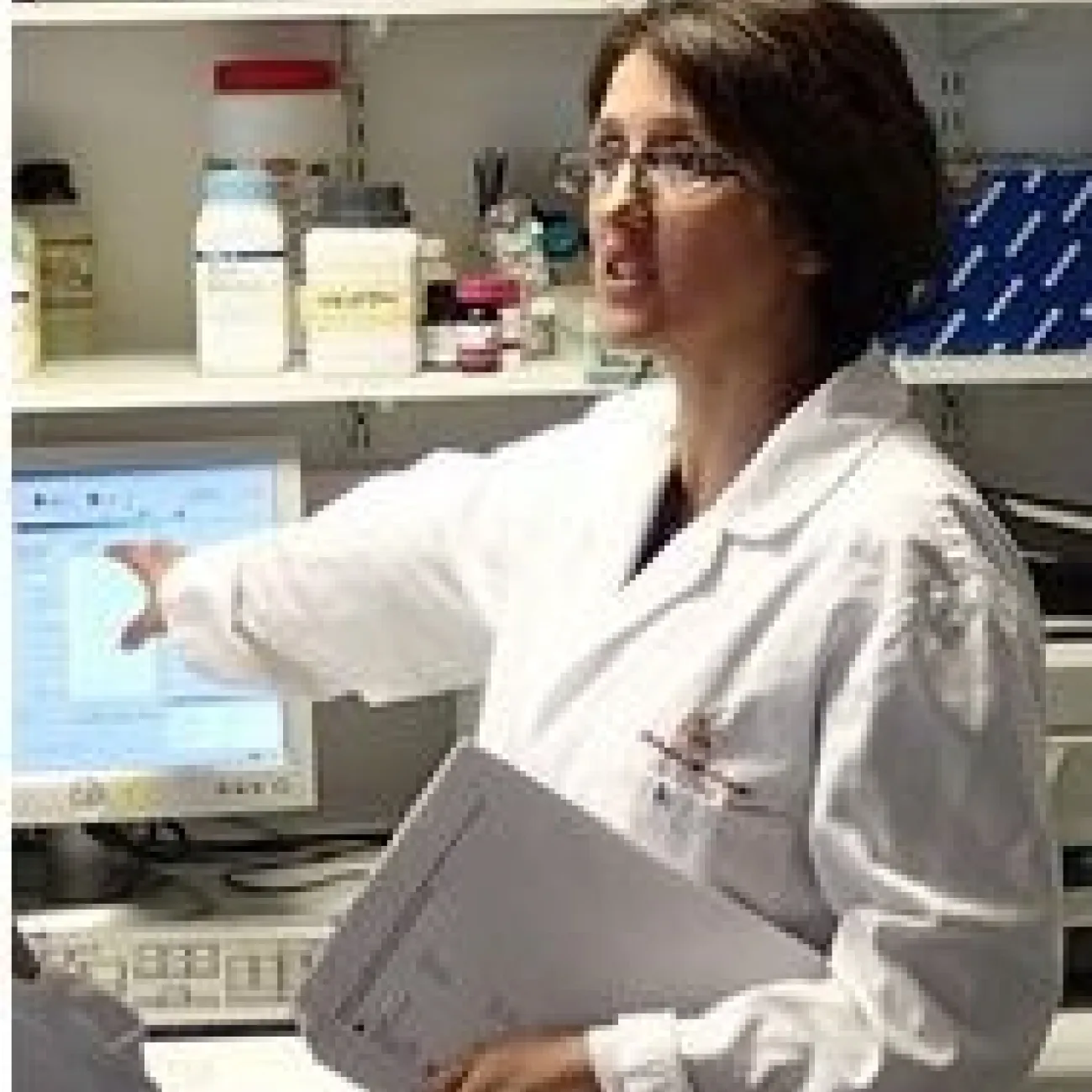
Dr Manuela Truebano is a Lecturer in Marine Molecular Biology at the University of Plymouth, affiliated with the School of Biological and Marine Sciences (part of the Faculty of Science and Engineering). She holds a BSc in Marine Biology from the University of Liverpool, an MSc in Shellfish Biology from Bangor University, and a PhD in Molecular Ecophysiology (focusing on thermal stress) from Swansea University and the British Antarctic Survey. Her research group is part of the Ecophysiology and Development Research group within the Marine Biology and Ecology Research Centre. Her teaching portfolio includes module leadership roles in Marine Molecular Biology, Ecophysiology of Marine Animals, Conservation Physiology, and field courses. She has supervised two postgraduate research degrees: Michael Collins (PhD, 2019) and George Mason (ResM, 2021). Dr Truebano’s research focuses on thermal tolerance, hypoxia, and environmental stress responses in marine organisms, particularly invertebrates. She employs molecular and physiological approaches to study climate change impacts, including the development of tools like Dev-ResNet and HeartCV for automated phenotyping. Her work intersects with global sustainability goals, emphasizing organismal resilience to environmental shifts. Her recent publications highlight advancements in understanding transgenerational plasticity, thermal acclimation, and the interplay of multiple stressors. Teaching and learning grants include a 2015 initiative exploring video tutorials for lab skill training. She collaborates extensively in interdisciplinary projects, contributing to both academic and applied marine science.
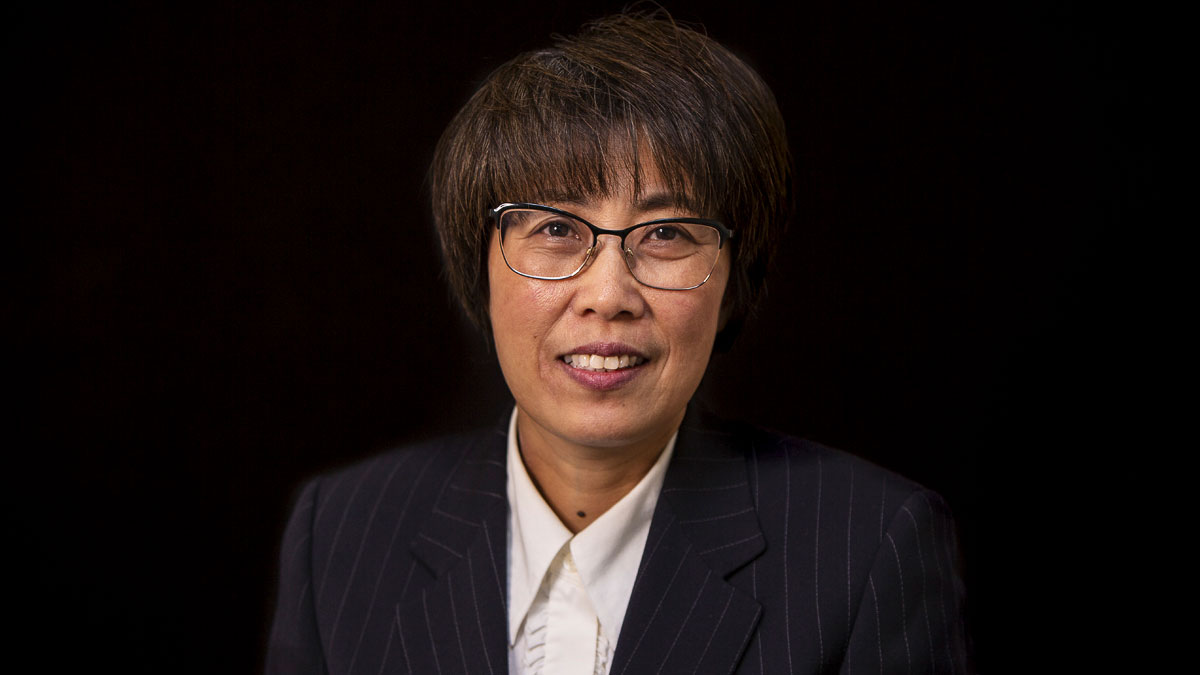
Professor Runming Yao is a leading academic in building and urban sustainability at the University of Reading's School of Construction Management and Engineering. He holds roles as Director of Design and Management of Sustainable Built Environments and Module Convenor for Sustainable Design and Management Principles. His research focuses on energy efficiency, urban microclimates, indoor environmental quality, and thermal comfort, with particular emphasis on UK and China contexts. Yao is an EPSRC College member and serves on editorial boards for journals like the Journal of Building Engineering and Renewable Energy . He has led numerous high-impact projects funded by bodies like the European Commission, EPSRC, and the Chinese government, addressing topics such as low-carbon cities, green building technologies, and climate-resilient urban design. His professional memberships include Fellowships of CIBSE, the Chartered Institute of Building, and FHEA. Yao’s work bridges engineering, policy, and environmental science, with contributions to international standards and guidelines for sustainable construction. Education and Qualifications: BSc, MSc, PhD Research Interests: Yao’s research integrates technical innovation with societal needs, exploring: - Energy-efficient building systems and urban-scale simulations, - Impact of climate change on building design, - Sensor technology for smart building management, - Health implications of indoor/outdoor environmental quality. His work emphasizes cross-disciplinary solutions for sustainable urban development and climate resilience. Projects and Grants: Recent initiatives include: - LoHCool (EPSRC-funded low-carbon heating/cooling of cities), - REELCOOP (EU-funded renewable energy cooperation), - Halton Foundation-funded studies on school ventilation. He has secured over £10M in research funding, spanning academic and industry partnerships. Awards and Recognition: While no formal awards are listed, Yao’s leadership in global sustainability networks and his role in shaping policy frameworks reflect his significant influence in the field. Labs and Collaborations: He leads the Energy and Environmental Research Group and collaborates internationally with institutions like Chongqing University, Cambridge University, and the China Green Building Council. His work frequently involves cross-border initiatives to address climate challenges in rapidly urbanizing regions.
Professor Alexander Breeze is a Chair in the School of Medicine at the University of Leeds, affiliated with the Multidisciplinary Cardiovascular Research Centre. His research focuses on structural biology, drug design, and molecular mechanisms of disease, particularly involving protein-protein interactions and NMR spectroscopy. Key areas include RAS oncogene inhibition, fibroblast growth factor receptors (FGFRs), and amyloid aggregation modulation. Education Background: Details of formal education not explicitly provided in the text, but extensive career history in structural biology and medicinal chemistry suggests advanced degrees in relevant fields. Research Interests: Professor Breeze’s work spans cardiovascular research, cancer biology, and infectious diseases. He develops novel therapeutics targeting oncogenic signaling pathways (e.g., RAS, FGFR) and investigates mechanisms of protein misfolding in amyloid diseases. His lab employs fragment-based drug design, NMR spectroscopy, and computational methods to study protein dynamics and drug interactions. Publications Overview: His recent work highlights advancements in small-molecule inhibitors for RAS proteins, CRACR2A genetic associations with COVID-19 severity, and modulation of amyloid aggregation pathways. Research trends emphasize translational applications, bridging basic science and clinical targets like cancer and neurodegenerative diseases. Awards & Recognition: No specific awards mentioned in the provided text, though his sustained high-impact publications suggest recognition in the field. Grants & Advising: Leadership in multidisciplinary cardiovascular research and training of early-career researchers through collaborative projects. No explicit grant details provided in this dataset. Labs & Teams: Active in the Multidisciplinary Cardiovascular Research Centre, fostering cross-departmental collaborations in cardiovascular and structural biology research.
Professor David Bilton is a Professor of Aquatic Biology at the University of Plymouth and holds a Visiting Professorship at the University of Johannesburg's Department of Zoology. He serves as Deputy Director of the NERC ARIES Doctoral Training Partnership and leads postgraduate research activities in the Faculty of Science and Engineering. His research focuses on ecological and evolutionary questions using aquatic insects as models, with a strong emphasis on South African biodiversity. He has published over 200 papers and authored four books, contributing to global understanding of biogeography, conservation, and speciation. His teaching spans undergraduate modules in biodiversity, marine biology, ecology, and global change biology, with fieldwork in coastal ecosystems like South Africa's Western Cape. He supervises 6–10 student projects annually, covering topics from arthropod zoology to speciation mechanisms. His research highlights include discovering new species, analyzing thermal tolerance in insects, and assessing invasive species impacts. He has supervised 11 PhD students, contributing to projects on invertebrate dispersal, genetic diversity, and conservation strategies. Despite his extensive contributions, no scientific awards are explicitly mentioned in the provided texts. His work bridges field ecology with molecular techniques, advancing conservation efforts in aquatic ecosystems.
Brian Pickles is an active academic researcher affiliated with the University of Reading, School of Biological Sciences, where he contributes to research in ecology, mycorrhizal symbioses, and environmental conservation. His work spans forest ecology, urban biodiversity, paleontology, and forensic science, reflecting a highly interdisciplinary approach to ecological challenges. University: University of Reading School: School of Biological Sciences Department: Department of Ecology and Evolutionary Biology Academic Rank: Senior Lecturer His research focuses on mycorrhizal fungi and their role in plant-soil interactions, forest resilience under climate change, and biodiversity conservation. He investigates how ectomycorrhizal networks influence tree communities, how urban trees affect microclimates, and how decomposition processes alter soil ecosystems. His work integrates field experiments, molecular ecology, and remote sensing techniques. Recent publications show a strong trend in applying ecological theory to practical conservation, including reptile habitat management, invasive species policy, and urban green space planning. His studies often employ robust experimental designs such as before-after control-impact (BACI) and leverage large collaborative networks. Brian Pickles has co-authored numerous high-impact papers in journals like New Phytologist , Proceedings of the Royal Society B , and Frontiers in Forests and Global Change . His work on ectomycorrhizal networks, forest carbon dynamics, and urban tree radiative performance demonstrates both theoretical depth and applied relevance. He has also contributed book chapters on mycorrhizal mediation of soil processes and spatial ecology of fungal communities. Brian Pickles collaborates extensively with researchers across the UK, Canada, and globally. Notable collaborators include Suzanne Simard, Melanie D. Hart, Ian C. Anderson, and Miranda M. Hart. These collaborations span topics from fungal community assembly to inter-plant communication via mycorrhizal networks. No formal scientific awards or prizes are mentioned in the provided text. However, his consistent publication record in top-tier journals suggests recognition within the ecological research community. Brian Pickles contributes to research grants and collaborative projects focused on forest resilience, urban ecology, and soil biodiversity, though specific grant titles or funding bodies are not listed. His leadership in experimental design and data interpretation indicates an active role in securing and managing research funding. He is involved in several research teams and labs, particularly those focused on mycorrhizal ecology and forest dynamics. His work with the Simard Lab (University of British Columbia) and collaborations with UK-based environmental monitoring groups highlight his integration into major ecological research networks. He also contributes to urban ecology initiatives using remote sensing and ground-based validation.
Dr. Robert Oliver is a Lecturer in Sustainable Materials at the University of Sheffield within the School of Chemical, Materials and Biological Engineering . His research focuses on the development of advanced semiconducting materials, particularly metal halide perovskites , to enhance solar energy conversion efficiency and mitigate climate change. He holds a MPhys in Physics from Corpus Christi College, Oxford, and a DPhil in Materials Science from St Anne's College, Oxford, supervised by Professors Henry Snaith and Michael Johnston. Dr. Oliver's work spans materials science, photophysics, and device engineering , with a multidisciplinary approach to studying perovskite solar cells and LEDs. He has received the MRS Graduate Student Award (2022) for his doctoral research. His teaching includes modules on Energy Generation and Storage (MSc) and Chemistry and Biology of Materials (Undergraduate) . Recent publications highlight his expertise in perovskite passivation , interface engineering , and device physics for photovoltaics. His research group, the Optoelectronic Devices and Spectroscopy Group (ODSG) , aims to develop design rules for next-generation optoelectronics. Dr. Oliver is a Member of the Institute of Physics (MInstP) and a Fellow of the Higher Education Academy (FHEA) .
Dr. Katherine Fish is a Research Fellow in Water Systems Microbiology at the School of Mechanical, Aerospace and Civil Engineering, University of Sheffield. She holds a PhD in Civil and Structural Engineering (2013) and an MSc in Biological Science (2009) from the same institution. PhD: The impact of hydraulic regime upon biofilms in drinking water distribution systems , University of Sheffield. MSc: First-Class Honours in Biological Science, Department of Animal and Plant Sciences, University of Sheffield. Her research focuses on applied environmental microbiology, particularly the microbial ecology of natural and engineered environments. Key areas include: Biofilm formation, mobilisation, and stability in drinking water systems Interdisciplinary approaches to biofilm management and water quality Microbial community responses to disinfection practices Impacts of hydraulic regimes and chemical treatments on biofilms Public health implications of biofilm dynamics She collaborates with industry partners such as AkzoNobel, Dŵr Cymru Welsh Water, and South Staffs Water on projects like Managing Aquatic Biofilms via Surface Manipulation (funded by NBIC, BBSRC) and Biomonitoring . Her work also contributes to EPSRC-funded initiatives including TWENTY65, Sheffield Water Centre, PODDS, Pipe Dreams, and Pennine Water Group. Her publications span topics like Pseudomonas aeruginosa interactions in biofilms, disinfection residual behaviour, microplastic contamination in aquatic systems, and climate change impacts on water infrastructure. These studies integrate biological, chemical, and physical analyses to enhance water system management. Contact: k.fish@sheffield.ac.uk | ORCID | LinkedIn
Dr. Ant Shepherd is an Associate Professor in Clinical Exercise Physiology at the University of Portsmouth, affiliated with the School of Psychology, Sport and Health Sciences within the Faculty of Science & Health. He also contributes to the Institute of Life Sciences and Healthcare and the Centre for Integrated Health and Wellbeing. Dr. Shepherd holds an ORCID identifier (0000-0001-6392-7944) and is actively involved in PhD supervision and academic leadership. Education: BSc (Hons) Sports Science (Bangor University), MSc Exercise Rehabilitation (Bangor University), PhD (University of Exeter, 2015) Postdoctoral Experience: University of Exeter Medical School Research Interests: Dr. Shepherd focuses on using novel interventions—such as nutritional strategies and exposure to extreme environments—to improve metabolic and cardiovascular health. His work emphasizes patient-centered outcomes, particularly in chronic conditions like type 2 diabetes, cystic fibrosis, and chronic obstructive pulmonary disease. He explores disease pathophysiology to identify therapeutic strategies. Publications: His recent work includes studies on cardiovascular function in cystic fibrosis patients, the effects of ketone esters in diabetes, and the role of nitrate in vascular health. Articles often employ randomized controlled trials and observational designs. Awards: Runner-up, Inaugural Annual Review Prize of the Physiological Society (2021) Advising & Grants: Supervises multiple PhD students and postdocs. Serves as a grant reviewer for the Medical Research Council and reviews for journals including Journal of Applied Physiology and Thorax . Active in collaborative projects, such as investigating climate adaptation strategies in diabetes and the effects of passive heating on older adults. Labs & Teams: Leads research teams in translational exercise physiology and collaborates internationally on projects related to cystic fibrosis, diabetes, and vascular health.