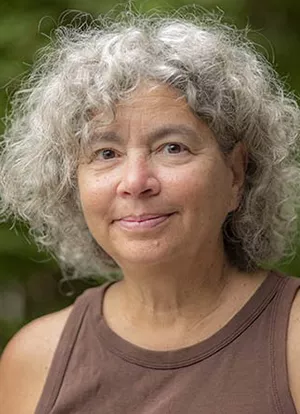
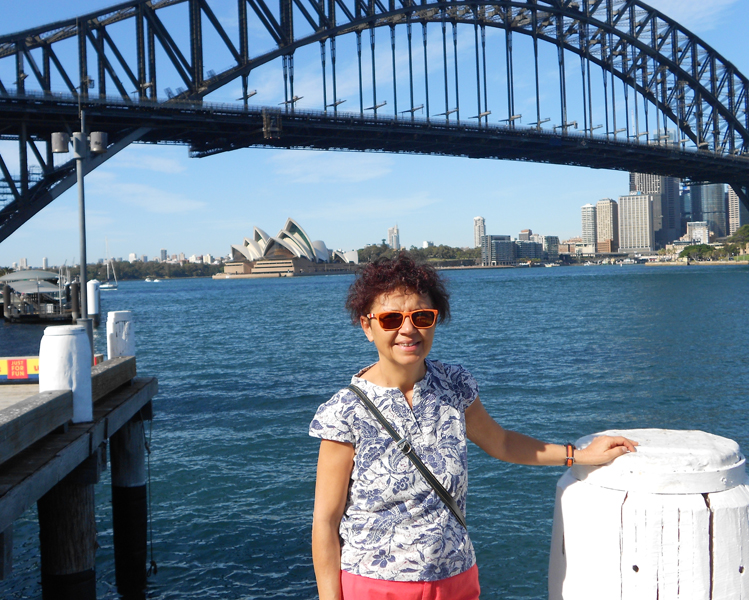
Manami Sato is a Professor at the Department of English and American Language and Culture within the Faculty of Cultural Studies at Okinawa International University. Her expertise spans psycholinguistics, cognitive linguistics, experimental psychology, field linguistics, and endangered languages. She holds a Ph.D. in Linguistics from the University of Hawaii, USA, an MA from the same institution, and a BA with honors from the University of California, Berkeley, USA. Education: Ph.D. in Linguistics, University of Hawaii (USA) MA in Linguistics, University of Hawaii (USA) BA in Linguistics, University of California, Berkeley (USA) Her research focuses on embodied cognition, cross-linguistic studies of event perception, and experimental methods applied to endangered languages like Truku Seediq. Notable activities include invited lectures at institutions such as National Dong Hwa University (Taiwan), Tohoku University, and Harvard University. She has contributed to over 10 peer-reviewed publications and secured multiple grants including JSPS KAKENHI grants (基盤研究) and an NSF Dissertation Research Grant. Her educational activities emphasize bridging theoretical linguistics with field-based research, particularly in Austronesian and Mayan languages. She has collaborated on projects examining the relationship between language structure, gesture, and cognitive processing in OS languages.
Jessica Nowak is a Junior Professor for Historical Linguistics of German at Johannes Gutenberg-Universität Mainz, where she has held her position since November 2016 with several interruptions for acting professorships at other institutions. She has served as Acting Professor for German Grammar at the Free University of Berlin (2023-2024, 2020-2021) and for Historical German Linguistics at the University of Leipzig (2021-2022). Her academic journey began with a Master's degree in German Philology, Romance Studies/Spanish and Journalism from JGU Mainz, followed by her doctoral studies culminating in her promotion to Dr. phil. in 2015, for which she received the Research Award of the Friends of the University of Mainz. Dr. Nowak's research interests center around historical linguistics, German linguistics, morphology (particularly verb morphology), syntax, language change, graphematics (writing systems and capitalization), German as a Foreign Language, language didactics, and onomastics. Her work often bridges theoretical linguistics with practical applications in language teaching, especially regarding language history in school contexts. She has published extensively on topics including sentence-internal capitalization across Germanic languages, historical verb morphology, name research, and linguistic doubt cases in German. Analysis of her recent publications (2020-2024) reveals a strong focus on the intersection of historical linguistics and language education. Her work demonstrates consistent interest in German orthography evolution (particularly capitalization patterns), name research across various contexts, and the application of historical linguistic knowledge to contemporary language teaching. She frequently employs corpus-based methodologies and cross-linguistic comparisons, particularly between German, Dutch, and English. Research Award (for dissertations) of the Friends of the University of Mainz eV (2015) Dr. Nowak has been an active academic advisor, supervising numerous Bachelor's, Master's, and doctoral theses. Her supervision spans various aspects of German linguistics, with particular emphasis on historical linguistics, morphology, syntax, and language variation. She has also been involved in significant research projects, including linguistic processing and annotation of a specialized historical corpus on 17th-century South German nuns' language usage. Her collaborative work with Stefan Hartmann, Uta Nolting, and others demonstrates her commitment to interdisciplinary research. She leads and participates in various academic initiatives, including workshop organization on topics like "The Awful German Language: Grammatical Stolpersteine" for DAAD language assistants, and has contributed to the National Research Data Infrastructure Initiative "Text+" as part of the Scientific Coordination Committee for Lexical Resources.
Adam Przepiórkowski is a Visiting Professor at MIT's Department of Linguistics and Philosophy, affiliated with the Institute of Computer Science, Polish Academy of Sciences (IPI PAN). His primary research focuses on syntax, semantics, and formal grammar, with a strong emphasis on coordination structures, dependency parsing, and computational linguistics. He co-leads projects like the National Corpus of Polish (NKJP) and contributes to linguistic resource development, including valence dictionaries and treebanks. His work bridges theoretical linguistics and computational applications, addressing issues like case assignment, argument-adjunct distinctions, and crosslinguistic coordination patterns. He has collaborated on tools such as Poliqarp (corpus search engine) and contributed to frameworks like LFG and HPSG. Key contributions include studies on Polish syntax, dependency length minimization, and the design of linguistic corpora. Przepiórkowski’s research also involves coordination analysis, valence acquisition, and the development of interoperable linguistic resources. He has received recognition for his work, including the Best Position Paper at COLING 2018.
Roland Hinterholzl is a Full Professor at the Department of Linguistics and Comparative Cultural Studies at Ca' Foscari University of Venice. He serves as the Delegate of the Rector for the Coordination of the European Alliance Eutopia. His research focuses on German linguistics, syntax, historical linguistics, and pragmatics. He teaches courses such as Linguistic Pragmatics and German Language and Translation at both undergraduate and graduate levels. Administrative Role: European Alliance Coordination Delegate Teaching: Courses include LINGUA TEDESCA 3, LINGUISTICA TEDESCA, and LINGUA TEDESCA - LINGUA E TRADUZIONE Research Interests: Modal particles, word order change, syntactic theory, Germanic language evolution He has led research projects on modal particles and word order variation, collaborating with institutions like ZAS Berlin and DFG. His recent publications explore syntactic phenomena in German and English historical syntax.
Carmela BERTONE is an Adjunct Professor at the Department of Linguistics and Comparative Cultural Studies , Ca' Foscari University of Venice . Her research focuses on Italian Sign Language (LIS) , including its grammatical structures, iconicity, translation methodologies, and accessibility for deaf communities. Her recent publications explore: Iconicity in sign production and bimodal bilingualism Translation of literary works (e.g., Pinocchio) into LIS Syntactic analysis of noun modification and pronominal systems Accessibility challenges for deaf individuals in language acquisition Her work bridges theoretical linguistics and practical applications in deaf education, cultural representation, and tourism linguistics.
Edoardo GERLINI is an Associate Professor at the Department of Asian and North African Studies at Ca' Foscari University of Venice, specializing in Japanese literature and textual heritage studies. His research focuses on classical Japanese texts, cultural heritage frameworks, and interdisciplinary approaches to textual revival. GERLINI teaches courses on classical and modern Japanese language, Heian-period poetry, and textual analysis. His work bridges historical methodologies with contemporary digital humanities, exploring how classical texts are reinterpreted and preserved in modern contexts. Recent publications include studies on Heian court poetry, comparative heritage discourses, and the role of Kyoto's palimpsest in cultural preservation. GERLINI actively contributes to editorial projects, including major anthologies of Japanese poetry and critical analyses of classical texts. Teaching responsibilities span undergraduate and graduate programs in Asian studies, emphasizing classical Japanese texts and their socio-cultural contexts. His research often intersects with Italian medieval literature, offering cross-cultural insights. GERLINI's academic contributions include curating collections such as Antologia della Poesia Giapponese and exploring the entanglements of textual heritage in both tangible and intangible forms.
Geraint Wiggins is a researcher at Goldsmiths, University of London, specializing in computational creativity, music cognition, and artificial intelligence applications in music. His work bridges computational models with neuroscientific approaches to explore creativity and musical understanding. He has contributed to studies on musical expectation, statistical learning, and the cognitive mechanisms behind musical perception. His research often intersects disciplines like neuroscience, psychology, and machine learning, with a focus on developing algorithms that model human musical behavior. Wiggins' publications span articles in journals like NeuroImage and New Generation Computing , as well as contributions to edited volumes and conference proceedings. His work includes pioneering studies on melodic segmentation, computational models of composition, and the analysis of minimalist music. Collaborations with experts in neuroscience, psychology, and musicology have enriched his interdisciplinary approach to understanding creativity and auditory perception. He has presented at conferences such as the International Conference on Computational Creativity and the Society for Music Perception and Cognition. His research also explores the application of machine learning in music performance interfaces and the empirical validation of music theoretical frameworks through computational experiments.
Ezra Keshet is an Associate Professor of Linguistics at the University of Michigan, affiliated with the Department of Linguistics and Philosophy (as a faculty affiliate). He holds a Ph.D. from MIT (2008) and an A.B.-A.M. from Harvard University (1999). His research focuses on formal semantics and pragmatics, particularly linguistic focus, intensionality, conditional conjunctions, and dynamic semantics. He has been recognized with the 2024 Individual Award for Outstanding Contributions to Undergraduate Education from the College of LSA for his innovative teaching and inclusive classroom environment. Dr. Keshet’s academic journey includes supervising over 35 students on topics such as tense, discourse structure, and prosody. His research explores how language encodes meaning across different contexts, including studies on pronoun interpretation, anaphora resolution, and the semantics of ASL. He teaches courses like LING 111: Introduction to Language and graduate-level semantics, contributing to both undergraduate and graduate education. Education: Ph.D., MIT, 2008 A.B.-A.M., Harvard University, 1999 His recent publications delve into topics such as plural logic, intensional anaphora, and dynamic semantics frameworks. Beyond academia, he actively engages with computational semantics through projects like the BALLGAME corpus. His work bridges theoretical linguistics with practical applications in language education and computational models.
Avelino Corral Esteban is a Senior Lecturer at the Autonomous University of Madrid (UAM), affiliated with the Faculty of Philosophy and Letters and the Department of Linguistics . His research focuses on theoretical linguistics, linguistic typology, and minority languages. He currently supervises 3 PhD theses at UAM, with prior experience overseeing 35 Bachelor's theses (TFGs) and 3 Master's theses (TFMs). Research Interests: - Syntax-Semantics-Pragmatics Interface - Comparative and Contrastive Linguistics - Endangered/Minority Language Documentation Advising & Education: He welcomes PhD proposals in linguistics, particularly in his core areas of expertise. His teaching spans undergraduate and graduate levels at UAM. Links: UAM Academic Profile Research Portal
Iván Tamaredo Meira is an Assistant Professor in the Department of English Studies: Linguistics and Literature at Complutense University of Madrid (UCM). He holds a BA and MA from the University of Santiago de Compostela and a PhD from the same institution, defended in 2018. Prior to UCM, he held positions at the University of Vigo (2019–2020), University of Salamanca (2020–2021), and was a postdoctoral researcher at Santiago de Compostela (2018–2019). His research focuses on quantitative studies of morpho-syntactic variation in World Englishes (e.g., British English, Indian English, Singapore English), linguistic complexity, and communicative efficiency. Key themes include internal/external factors influencing syntactic alternations and how complexity-efficiency dynamics shape language production in contact varieties. His publications (2015–2021) explore pronoun omission, relative clause structures, legal discourse evolution, and corpus-based methodologies. Notable works include monographs on complexity-efficiency trade-offs and edited volumes on applied linguistic research. His work often integrates corpus linguistics with variationist sociolinguistics. Research Groups: VLCG profile (linked via ResearchGate/ORCID) Supervision: No current PhD students but welcomes proposals in his listed research areas. Awards: None explicitly mentioned. He contributes to interdisciplinary projects like the Corpus of Historical English Law Reports (CHELAR) and has collaborated with institutions across Spain in legal and sociolinguistic corpus development.
Donna Jo Napoli is a Professor of Linguistics and Social Justice at Swarthmore College , where she has taught since 1987. She received the 2024 LSA Victoria A. Fromkin Lifetime Service Award for her career-long contributions to linguistics and social justice. Her work spans theoretical linguistics, sign language research, and literacy development for marginalized communities. Fellow of the American Association for the Advancement of Science (2024) Fellow of the Linguistic Society of America (2015) Napoli's research focuses on sign language syntax , modality effects , and deaf children's literacy . She co-founded the RISE Videobooks project , creating over 150 bimodal-bilingual resources for deaf children in 35 sign languages. Her interdisciplinary work connects linguistics with dance , yoga , and cognitive science , examining embodiment in communication. Recent publications include studies on iconic shadows in sign languages and emblems in Italo-Romance languages. She collaborates with institutions in Germany, Brazil, Italy, and Ireland on gesture-linguistic boundaries and immigrant children's language access. 2024 : RISE Videobooks received the Comenius EduMedia Award for innovative educational media 2020 : Co-authored Taboo in American Sign Language (Cambridge University Press) 2014 : Three LSA award-winning papers on medical education, language acquisition, and articulatory ease Her teaching includes courses on Sign Language Literature , Deaf Literacy , and Corporality in Storytelling (co-taught with Theater and Dance departments). She mentors students in creating STEM-focused children's books and inclusive educational tools .
Michael Fortescue is a Professor of General Linguistics (emeritus) at the University of Copenhagen's Department of General and Applied Linguistics. He holds an associate position at St Hugh’s College, Oxford University since 2011. His career spans over four decades with academic roles including Docent in Eskimology and Head of the Department of Eskimology (1985–1987). He has conducted extensive fieldwork in Greenland, Alaska, Chukotka, and British Columbia, focusing on endangered languages like West Greenlandic, Koyukon, and Kwakwala. Education: B.A. (Slavic Languages, UC Berkeley, 1966), M.A. (Slavic Languages, UC Berkeley, 1970), PhD (Linguistics, University of Edinburgh, 1978). Research interests include linguistic typology, polysynthesis, cognitive linguistics, and the documentation of Eskimo-Aleut and Chukotko-Kamchatkan languages. He has authored major reference works such as The Oxford Handbook of Polysynthesis (2017) and edited the Comparative Eskimo Dictionary (2010). His work bridges theoretical linguistics with empirical fieldwork. Key awards include a Danish government exchange scholarship (1978) and leadership roles in the Linguistic Circle of Copenhagen. His publications emphasize language universals, historical reconstruction, and the intersection of language and cognition. Fieldwork and collaborative efforts have involved indigenous communities across the Arctic and Pacific Northwest. He has held visiting positions at institutions including UC Berkeley, La Trobe University, and the Max Planck Institute for Psycholinguistics.
Maria Teresa Guasti is a Professor of Linguistics and Psycholinguistics at the University of Milano-Bicocca since 2005. Her academic journey includes roles as Researcher at the University of Siena and San Raffaele Hospital, and Research Assistant at the University of Geneva. She holds a PhD from the University of Geneva, focusing on causatives and perception verbs, which remains influential in theoretical linguistics. Her research spans language acquisition , developmental language impairments , dyslexia , and cognitive aspects of language disorders . Notable contributions include discovering timing anticipation deficits in dyslexia and developing interactive technologies (VR/AR) for language applications. She has held visiting positions at MIT, Cambridge University, and Macquarie University. Guasti has authored/co-authored 160+ publications (80+ peer-reviewed articles, 6 books) with a Google Scholar H-index of 42. Major grants include an ERC Synergy Grant (€10.2M) and H2020 funding. She serves on editorial boards for Language Acquisition , Journal of Child Language , and others. Her advisory work includes supervising 14 PhD students, 12 postdocs, and ~100 Master's students. Awards include Foreign Expert status in Beijing and roles in EU-funded initiatives like COST A33 and Multimind. Current research integrates human-computer interaction with linguistic principles.
Hubert Haider is a Professor at the University of Salzburg, currently serving as Vice-Director of the Centre for Neurocognitive Research. He has held academic leadership roles including Chairman of the Department of Linguistics at the University of Salzburg since 1998 and Dean of the Faculty of Philosophy at the University of Stuttgart (1992-1993). His career spans institutions like Harvard, Tübingen, and Lund, where he held visiting positions and fellowships. Education: Ph.D. (1980, University of Vienna, General Linguistics); Habilitation (1987, University of Vienna, General Linguistics). Dr. Haider's research focuses on theoretical and comparative syntax (Germanic & Romance languages), the syntax-semantics interface , and cognitive aspects of language processing, integrating psycho- and neurolinguistics with neuroimaging techniques like fMRI and EEG. His work bridges formal grammar theory with empirical cognitive studies. He has led internationally funded projects such as SFB 340 on computational linguistics foundations (DFG), IGLO on Germanic language intercomprehension (EU Lingua-D), and FWF-funded EEG studies on sentence processing. These projects highlight his interdisciplinary approach to language theory and cognition. Scientific Honors: Member of Academia Europaea.
Ljiljana Progovac is a Distinguished Professor of Linguistics at Wayne State University's College of Liberal Arts and Sciences, where she also serves as Graduate Director of the Linguistics Program. She has held faculty positions at Wayne State since 1991, following appointments at the University of Southern California, Indiana University, and the University of Novi Sad. Her research focuses on the evolution of language and syntax, with particular expertise in Slavic syntax and human cognitive evolution. Progovac's groundbreaking work proposes that early language evolved gradually through identifiable 'living fossils' in modern languages, particularly in playful but derogatory compounds used for naming and verbal aggression. Her research integrates linguistic theory with neuroscience, anthropology, and evolutionary biology. Analysis of her recent publications reveals a clear trajectory toward interdisciplinary work connecting language evolution with human self-domestication theory. Her 2024 'Survival of the Wittiest' framework challenges Brian Hare's 'Survival of the Friendliest' by arguing that verbal aggression and humor played crucial roles in language evolution. Her experimental work using fMRI has identified specific neural correlates of proto-syntax processing in the fusiform gyrus, Broca's area, and basal ganglia. Scientific Awards: Marilyn Williamson Endowed Distinguished Faculty Fellowship (2020, 2014) Charles Gershenson Distinguished Faculty Fellowship (2020) Board of Governors Faculty Recognition Award (2020, 2016) Keal Faculty Fellowship (2016) Sabbatical Leave as Visiting Scholar at MIT (2018/19) Progovac has directed significant research projects including 'Language Evolution, Self-Domestication, and Verbal Aggression' (2020) and the fMRI study 'In Search of Protosyntax in the Brain' (2014). She has taught numerous courses including Syntax, Semantics, and Advanced Studies in Language Variation and Evolution. Her work has been featured in major media outlets including The New York Times and New Scientist, with recent coverage of her theories on Biden's speech patterns and ancient insults spurring language evolution. Her laboratory work focuses on functional MRI studies of Serbian syntax processing, examining how different grammatical structures activate distinct neural pathways that may reflect evolutionary stages of language development. She collaborates extensively with researchers across disciplines, particularly with Antonio Benítez-Burraco on the language evolution/self-domestication connection.